
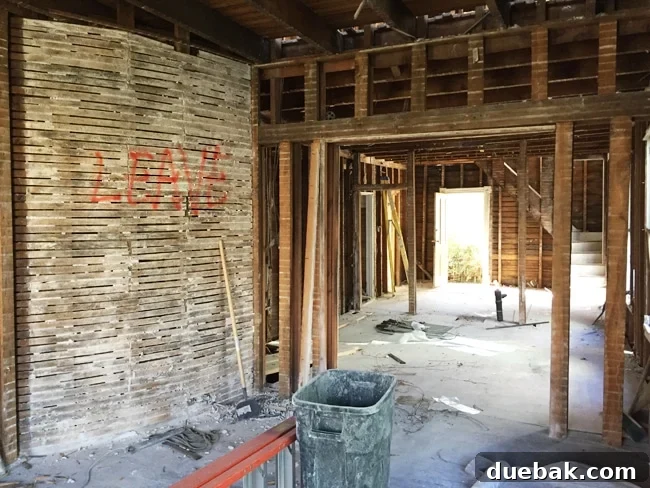
Are you feeling overwhelmed by the constant stream of large-scale home renovations dominating social media and television? It seems like every scroll and every show features elaborate “gut jobs” and complete transformations, far removed from the budget-friendly decorating tips and “use-what-you-have” makeovers of yesteryear. We’ve certainly noticed this trend accelerating, and our own projects have grown in scope over the years. This article delves into how we arrived at this point, explores the understandable craving to scale back, and examines the role of design bloggers and TV programs in contributing to this renovation escalation.
The landscape of home improvement content has dramatically shifted. What once might have been a simple blog post sharing a new piece of art has evolved into comprehensive, multi-stage overhauls of entire kitchens, bathrooms, and even whole houses. This constant exposure to aspirational, often high-budget projects can lead to what we’re calling “Big Renovation Fatigue.” It leaves many homeowners feeling like their efforts are inadequate or that their homes aren’t “enough” without a complete tear-down and rebuild. But is there a tipping point approaching? Are we collectively craving a return to simpler, more attainable projects? Let’s explore this phenomenon, alongside some practical insights into a common tool and an exciting update on our own beach house backyard transformation.
You can download our podcast episode discussing these topics from Apple Podcasts, Google Podcasts, Stitcher, TuneIn Radio, and Spotify – or listen to it below! This page serves as a comprehensive resource for any links, notes, or photos mentioned in the episode. Note: If you’re reading in a feed reader, you may have to click through to the post to see the player.
Beach House Backyard Transformation: Progress and Plans
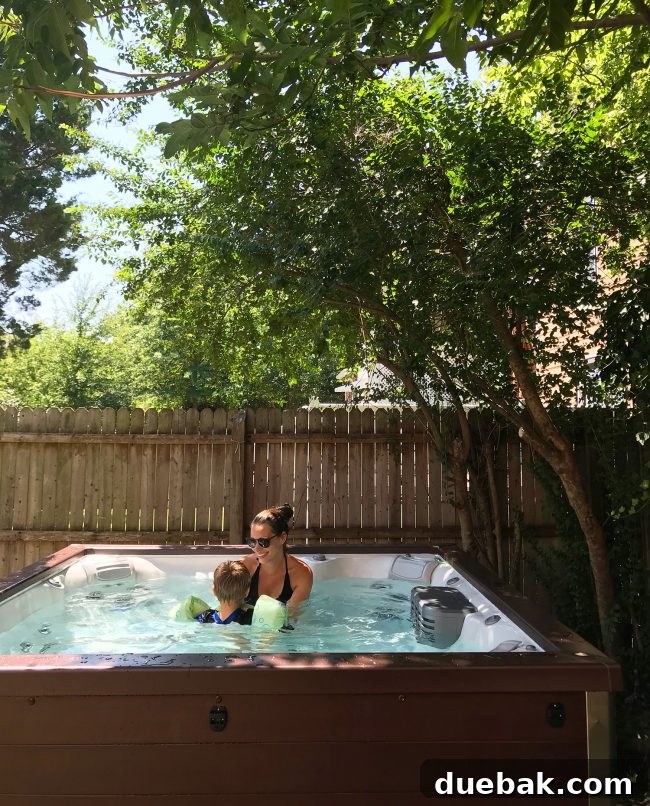
We’re thrilled to share a major milestone in our beach house backyard project: the hot tub is finally in! Despite the rest of the backyard still looking quite unfinished, this significant addition marks a pivotal step towards creating our ultimate outdoor oasis. We opted for this specific Jacuzzi model, and you can dive deeper into our decision-making process and where we sourced it in Episode #104 of our podcast. The installation wasn’t without its prerequisites; we first needed to get the electrical wiring installed and lay down a robust 4-inch concrete pad to serve as its stable foundation. This pad will eventually be seamlessly integrated into a larger paver patio, creating a cohesive and inviting space.
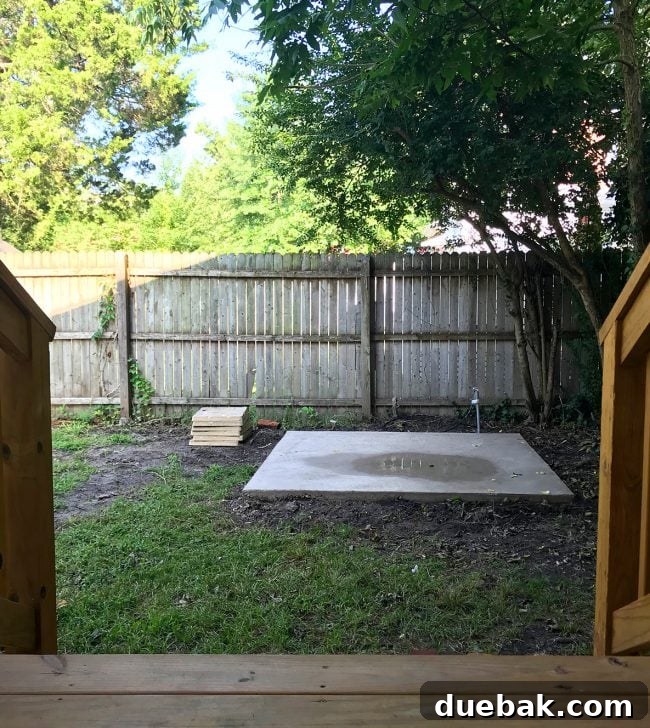
Above, you can see the view from our back door, showcasing the freshly poured concrete pad and the stack of pavers that our contractor, Sean, recently delivered. While the area is still a work in progress, we laid a temporary path to keep our feet clean from the inevitable mud, though we haven’t captured a photo of that temporary solution just yet. Our vision for the backyard is a carefully planned layout designed for both relaxation and functionality. While the drawing below isn’t perfectly to scale, it illustrates the general direction we’re headed. We strategically placed the hot tub closer to the back corner to ensure ample room between it and the future shed, allowing for a dedicated seating area perfect for unwinding after a dip.
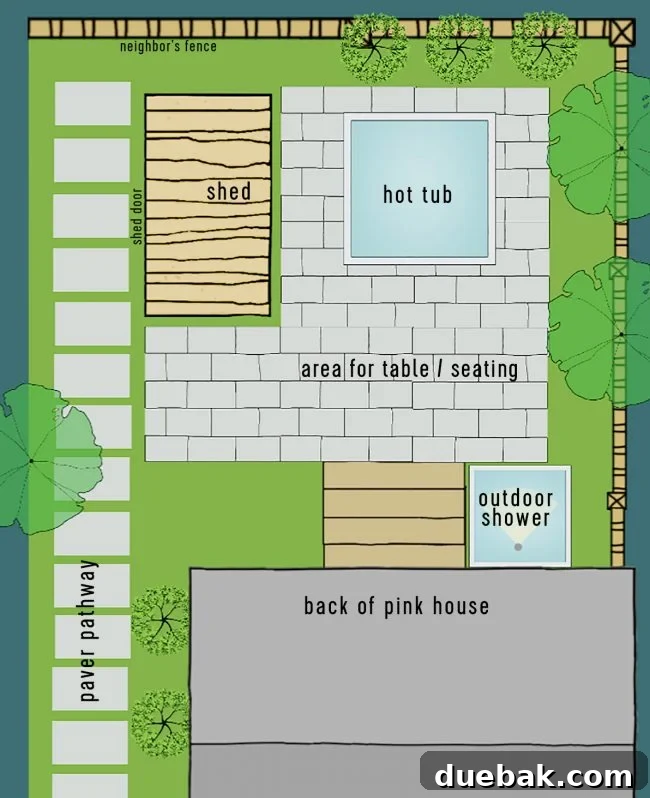
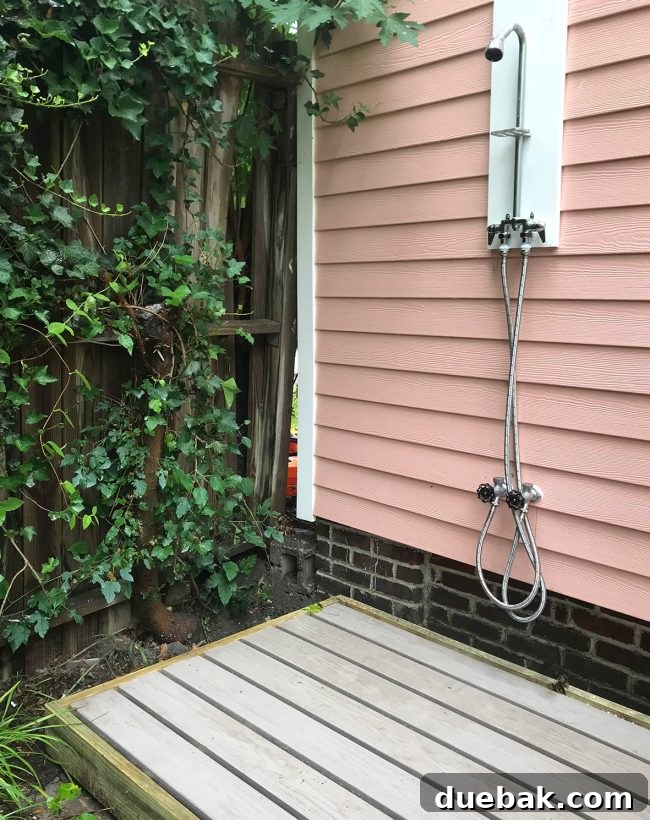
Another essential feature for any beach house is a convenient outdoor shower. As you can see in the layout above, our outdoor shower is positioned right next to the back steps, tucked into the corner. It’s currently a simple outdoor shower kit that Sean expertly installed for us. While it’s fully functional, we are patiently awaiting the construction of a privacy surround to complete its look and ensure a comfortable experience. The base of the shower turned out beautifully, meticulously crafted with treated lumber to form a sturdy container. Inside, layers of bricks and sand provide stability, topped with pea gravel for efficient drainage. For ultimate comfort underfoot, we chose Azek planks, a high-quality composite decking material renowned for its resistance to rot and weathering. We plan to stain the wooden surround to harmonize with our back steps and incorporate the same Azek color in other backyard elements, such as steps leading to the hot tub and a few planter boxes, ensuring a cohesive design throughout the space.
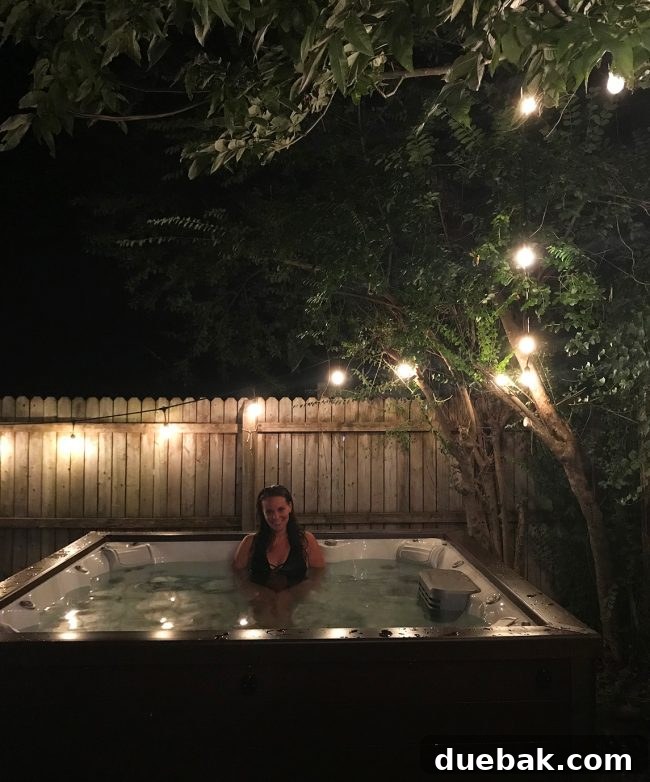
Speaking of the backyard’s early days, I recall a memorable (and somewhat painful) incident involving a bad case of poison ivy during the initial demo work after we purchased the property. If you’re curious to hear the full story, you can find it in Episode #27. To wrap up our backyard update on a charming note, here’s a “hot tub after dark” photo, where you can see the warm glow of our garden string lights. These are actually a spare set that we didn’t end up using in our own backyard at home. For now, they’re casually strung through the trees, creating a wonderfully ambient atmosphere. Our long-term plan is to drape them gracefully off the shed once it’s constructed, but even this temporary arrangement significantly elevates the charm factor back here, transforming the space into an inviting evening retreat.
Unlocking the Power of Your Tape Measure: 5 Essential Tips
Every DIY enthusiast and homeowner has a tape measure in their toolbox, but many of its clever features often go unnoticed. This humble tool is far more versatile than you might imagine. Let’s explore five things you might not know about your tape measure that can significantly improve the accuracy and efficiency of your projects. The tape measure we frequently rely on is a Stanley FatMax 25′ Tape Measure, known for its durability and ease of use.
While we couldn’t pinpoint the exact “self-centering” tape measure we once owned, this model appears to be its modern equivalent. This particular feature is a game-changer for finding the exact middle of any measurement, as it clearly lists the half measurement directly beneath each numerical mark on the tape. For instance, if you’re looking at the 2-inch mark, it will display 1 inch directly below it, streamlining the process of finding the center point without complex mental math, especially when your brain is tired after a long day of projects.
Beyond the self-centering feature, here are five crucial aspects of your tape measure you should know:
- The Sliding Hook: The metal hook at the end of your tape measure isn’t just for hooking onto edges. It’s designed to slide slightly. This isn’t a defect; it’s a feature! When you push the hook against an inside edge (like measuring inside a window frame), it compresses. When you hook it onto an outside edge (like measuring a board), it expands. This movement accounts for the thickness of the hook itself, ensuring precise internal and external measurements.
- The Stand-Out: Ever tried to extend your tape measure across a long span without it flopping? The “stand-out” refers to how far the tape can extend horizontally before it bends. Quality tape measures, like the FatMax, offer excellent stand-out, which is invaluable for single-person measuring tasks over longer distances.
- Red Marks at 16″ and 19.2″: Many tape measures feature red squares or diamonds at specific intervals. The red marks at every 16 inches are incredibly useful for finding studs in standard wall framing, as studs are typically spaced 16 inches on center. The less common red mark at 19.2 inches is for truss layouts, as 5 trusses at 19.2 inches equal 96 inches (8 feet), allowing plywood or drywall to be easily divided.
- The Self-Centering Design: As mentioned, some tape measures automatically display the half-measurement under each whole number. This ingenious design removes the mental gymnastics of dividing odd numbers, making it incredibly easy to find the midpoint for tasks like hanging a picture frame exactly in the center of a wall or dividing a piece of wood precisely.
- The Blade Lock: While seemingly obvious, the blade lock is a fundamental feature that often gets overlooked in its importance. This simple mechanism allows you to secure the tape at a specific length, freeing up your hands for marking or transferring measurements. It’s crucial for maintaining accuracy, especially when working solo or in awkward positions.
Combating Big Renovation Fatigue: Embracing Smaller Wins
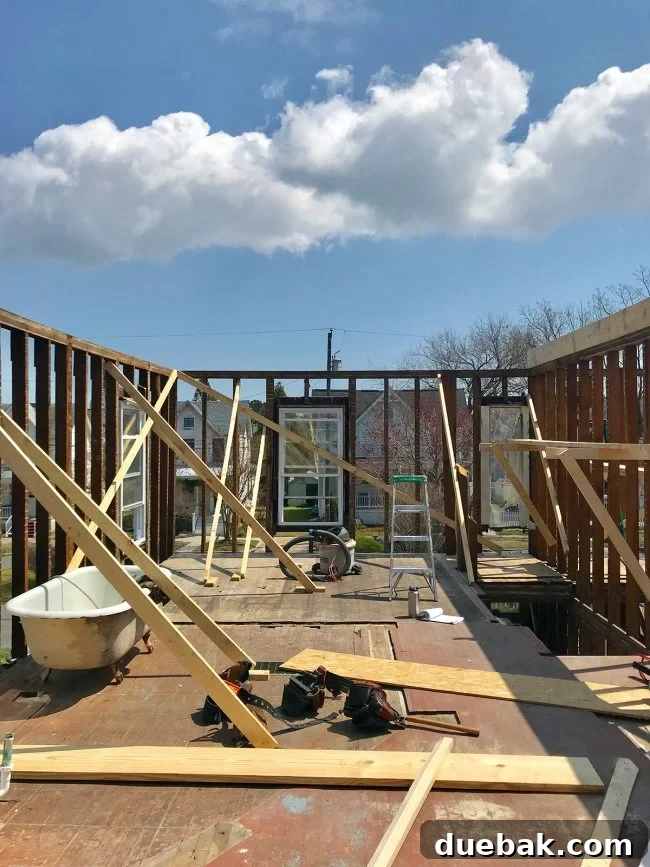
The concept of “Big Renovation Fatigue” isn’t just anecdotal; it’s a growing sentiment reflected in various design and lifestyle publications. We’ve certainly noticed an industry-wide shift away from attainable, small-scale DIY projects towards grand, often overwhelming, home transformations. This cultural shift is fueled by the aspirational content prevalent on platforms like HGTV and Instagram, showcasing complete home overhauls that can make everyday homeowners feel inadequate. Here are some insightful articles that resonated with our observations:
- Curbed’s thought-provoking piece: “We Need A New Kind Of HGTV”
- Apartment Therapy’s candid take: “America, You’ve Lost Your Freaking Mind Over Renovations”
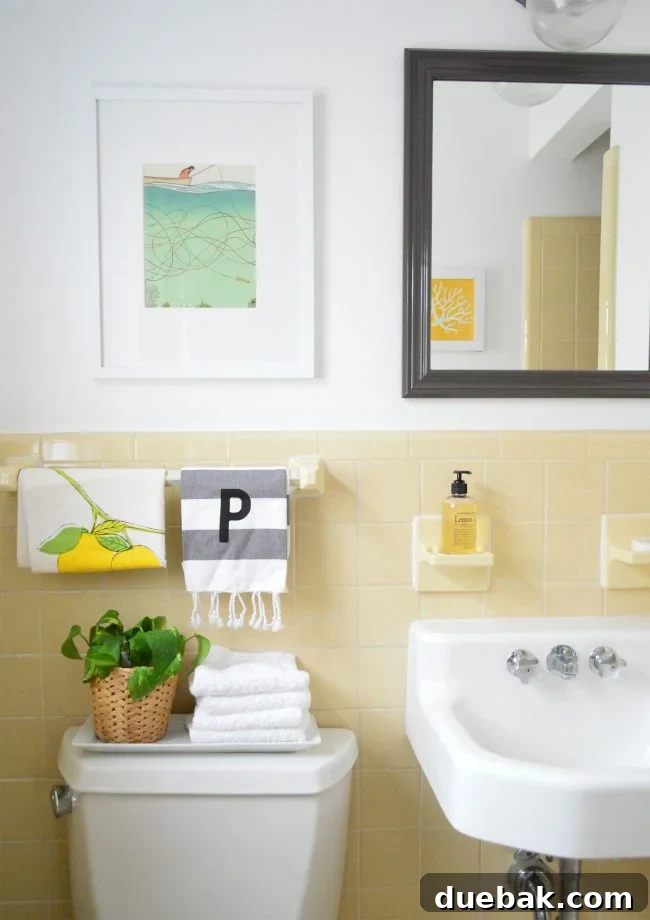
These articles highlight a collective yearning for more realistic and budget-conscious home improvement inspiration. We often reminisce about our own small-scale projects that yielded significant impact without breaking the bank or requiring months of work. For instance, in our last house, we completed a charming guest bathroom makeover that cost a mere $51 – far less than Sherry’s initial guess of $130! You can revisit that incredibly affordable transformation here: Our $51 Bathroom Makeover. This project stands as a testament to the power of thoughtful, minor updates.
In line with the philosophy of manageable renovations, we’ve often employed what we call the “Phase 1” approach. This strategy involves tackling a project in stages, focusing on the most impactful and necessary changes first, rather than attempting a complete overhaul all at once. It’s a pragmatic way to make progress, live with the changes, and decide on future phases as budget and time allow, without getting bogged down by the sheer scale of a full renovation. You can learn more about the “Phase 1” approach and its benefits on our blog.
The rise of design bloggers and interior designers sharing their large-scale projects, often involving second properties like vacation homes or rentals, further contributes to the aspirational, yet sometimes intimidating, renovation landscape. We admire the incredible talent and dedication of creators like:
- Elsie’s stunning Nashville Airbnb from A Beautiful Mess
- Chris & Julia’s unique A-Frame Cabin
- Emily Henderson’s inspiring Mountain House & Portland Fixer Upper
- Katie Bower’s comprehensive Monroe House
- And let’s not forget Yellow Brick Home’s captivating Tree House – a truly unique project!
Similarly, on Instagram, designers like Amber Interiors and Studio McGee regularly showcase breathtaking whole-house renovations, meticulously decorated down to every last detail. While these projects offer immense inspiration, they also highlight the vast resources often required for such undertakings, underscoring the gap between professional, large-scale projects and what the average homeowner can realistically achieve. Looking back, it’s amusing to recall simpler times, like our detailed blog posts from 2010 about ordering a duvet cover and another post about it arriving. Oh, 2010, you were truly a different era in home blogging!
Beyond Renovations: Our Latest Discoveries and Entertainment Picks
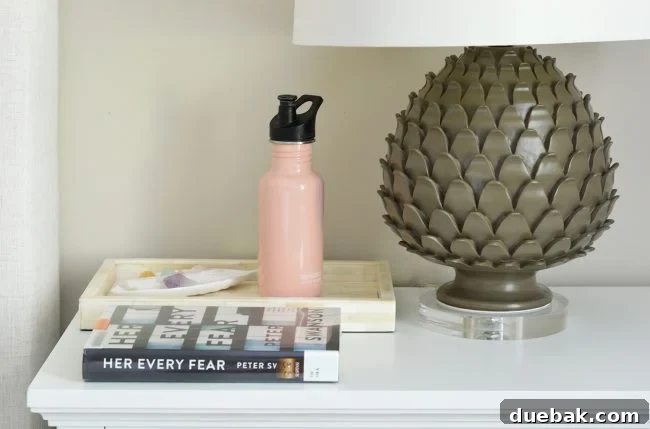
When the demands of home projects feel too intense, it’s always good to have some reliable sources of entertainment and inspiration. We’re excited to announce our new Book Club page, a curated collection of all the books we’ve recommended on the podcast over the past two years, spanning various genres, not just our usual thrillers!
This week, I’ve been completely engrossed in Her Every Fear by Peter Swanson. If that name sounds familiar, it’s because he’s also the brilliant mind behind another of our favorites, The Kind Worth Killing. I was utterly captivated by its suspenseful narrative, which cleverly weaves in elements of real estate – specifically, a “The Holiday”-esque house-swapping premise that ignites the central mystery. It’s the perfect escape for those who enjoy a good psychological thriller.
However, if you’re in need of something much lighter and guaranteed to bring a smile to your face, we highly recommend checking out Nailed It! on Netflix. This hilarious baking competition show will not only make you laugh out loud but also help you feel a lot better about any of your own culinary shortcomings. The contestants’ ambitious yet often disastrous attempts at recreating elaborate desserts are incredibly endearing and a welcome relief from the pressures of perfection. You can watch the trailer below for a sneak peek into the fun!
For those times when you remember a recommendation but can’t quite recall which episode it was in, we’ve compiled a comprehensive resource: a master list of everything we’ve been digging from all our past episodes. It’s your one-stop shop for all our favorite finds!
And finally, a huge thank you to Agility Bed for generously sponsoring this episode. Remember to take advantage of their special offer: get $150 off your hybrid mattress order by using the code YHL150 at AgilityBed.com. They offer free shipping, and for your complete peace of mind, if you’re not absolutely thrilled with your mattress, you can return it within the first 100 nights, no questions asked!
Thanks for listening and reading, everyone!
*This post contains affiliate links*