
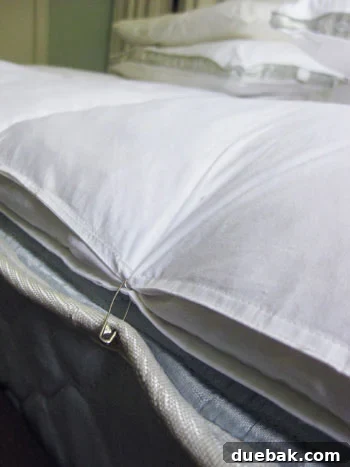
Taming the Shifting Sands: The Ultimate Guide to Securing Your Slippery Featherbed Mattress Topper
There’s a certain tranquility that comes with a perfectly made bed. While I might not be a stickler for hospital corners or an immediate bed-maker each morning – after all, some mornings call for a leisurely start – there’s one aspect of bedding that absolutely sends me into a frenzy: a rebellious featherbed mattress topper. That feeling of it slowly but surely slipping beneath you, or worse, waking up to find it a foot out of alignment with the mattress itself, is enough to disrupt the most peaceful sleep. It’s a subtle yet profound annoyance that undermines the comfort and serenity your bed is meant to provide.
For those who cherish the luxurious softness and added comfort a featherbed brings, the persistent problem of it shifting and bunching can be a significant source of frustration. It transforms a plush haven into a lumpy, uneven landscape, forcing constant re-adjustments throughout the night and a tedious re-making process each morning. This isn’t just about aesthetics; it profoundly impacts sleep quality, comfort, and even the lifespan of your expensive bedding. The quest for a truly stable and secure bed became a personal mission, one that many other homeowners undoubtedly share.
The Ubiquitous Problem: Why Featherbeds and Mattress Toppers Slide
Featherbeds and other mattress toppers, while designed to enhance comfort, often present a common challenge: their inherent tendency to slide. This movement can be attributed to several factors. The smooth surfaces of many mattress toppers, especially those encased in crisp cotton or synthetic fabrics, offer little friction against the typically smooth surface of a mattress cover. Add to this the dynamic movement of bodies in bed – tossing, turning, sitting up, or simply shifting weight – and you have a recipe for displacement. Gravity, combined with the lack of secure anchoring points, means these plush layers are constantly migrating.
The consequences of a constantly shifting featherbed extend beyond mere inconvenience. Imagine settling into bed, expecting uniform support and softness, only to find a noticeable dip or bulge where the topper has bunched up. This uneven surface can lead to poor spinal alignment, contribute to back and neck pain, and disrupt the deep sleep cycles necessary for true rest. Furthermore, the constant friction and pulling can accelerate wear and tear on both the featherbed and the mattress beneath it, potentially shortening the life of these valuable investments. It’s a problem that cries out for a simple, yet effective, solution.
Our Journey Through Failed Attempts to Anchor a Featherbed
Before stumbling upon our breakthrough solution, my husband and I embarked on a rather exasperating trial-and-error journey. We had already shared a few other ingenious ways that we whipped our bed into shape (and yes, we’re still loving those methods!), but when it came to our notoriously slippery featherbed mattress topper, we were utterly stumped for a considerable period. The market offers various products promising to keep toppers in place – elastic straps, gripper pads, and specialized clips. However, many of these are designed for thinner mattress pads or foam toppers, not the substantial, lofty bulk of a featherbed. Our experience with such devices proved incredibly frustrating.
In a desperate bid to secure the featherbed’s sides to the trim around our mattress, I experimented with a variety of clipping devices. My arsenal included everything from sturdy alligator clips, typically used for heavy-duty tasks, to traditional clothespins, and other clipping gadgets marketed for bedding. Each attempt was met with the same disheartening result: failure. The moment we climbed into bed, the slightest pressure from our weight would cause these devices to snap right off with an audible pop. They simply couldn’t withstand the tension and movement, proving themselves entirely inadequate for the task. We were back to square one, with a featherbed that continued its nightly dance across the mattress, leaving us both restless and irritable.
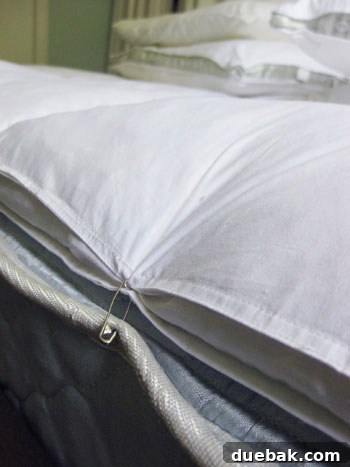
The “MacGyver” Moment: Unveiling the Simple Safety Pin Solution
Just when I was on the verge of surrendering to a life of perpetual featherbed adjustments, my darling husband, in a moment of brilliant simplicity, presented an idea so unassuming yet potentially revolutionary: safety pins. My initial reaction, I must confess, was one of skepticism mixed with a healthy dose of apprehension. The thought of piercing our beloved, fluffy featherbed and potentially tearing the mattress fabric filled me with dread. I envisioned a shredded mess, irreparable damage, and an even bigger problem than the one we started with. The delicate fill of a featherbed seemed incompatible with such a blunt solution. However, his quiet confidence and the logic behind his suggestion spurred us to give it a try.
Three months have passed since we implemented this surprisingly effective hack, and I’m thrilled to report that my fears were completely unfounded. Everything remains perfectly secure and, crucially, tear-free. The key, as it turns out, lies in the intelligent application of these everyday items. It’s not about brute force, but rather strategic placement and a careful understanding of how to distribute pressure. This humble household item, often overlooked for its versatility beyond mending clothes or securing diapers, proved to be the ultimate game-changer for our bedding woes. It was truly a “MacGyver” moment, transforming a persistent problem into a simple, elegant fix using items we already had lying around the house.
Step-by-Step Guide: How to Effectively Secure Your Featherbed with Safety Pins
Implementing this safety pin solution is remarkably straightforward, but precision and attention to detail are crucial for long-term success. It’s about creating secure anchor points that distribute tension evenly, preventing both slippage and damage. Here’s how you can replicate our success and finally tame your unruly featherbed:
What You’ll Need:
- A handful of sturdy safety pins. The size can vary, but generally, medium to large pins work best as they need to penetrate through two layers of fabric. Ensure they are robust enough not to bend or snap under slight pressure.
Preparation is Key:
First, ensure your featherbed is perfectly aligned with your mattress. Smooth out any bumps or shifts so that it lies flat and even across the entire bed surface. This initial alignment is vital because the pins will secure it in this position. Take your time to get it just right, as this will be the foundation for your secure sleep environment.
The Art of Pinning:
The magic of this method lies in how you attach the pins. The goal is to create multiple, evenly spaced anchor points around the perimeter of the bed. We found success by focusing on the head and foot of the bed, which are typically areas of significant movement and where slippage is most noticeable.
- Grab Enough Fabric: This is the most critical step to prevent tearing. Instead of just catching a tiny edge, gather a substantial “pinch” of fabric from both the featherbed and the mattress cover beneath it. Think of it like taking a deep stitch. You need to ensure the pin goes through a good amount of material from both layers to provide a strong, stable hold. This ample grab disperses the pressure over a larger area, significantly reducing the risk of rips or tears in the fabric.
- Distribute the Pressure: To avoid undue stress on any single point, spread your pins strategically. We used three pins evenly spaced across the head of the bed, and another three evenly spaced across the foot. For larger beds or particularly active sleepers, you might consider adding one or two pins along each side as well, midway down the mattress. The idea is to create a network of anchoring points that prevent the featherbed from migrating in any direction.
- Pinning Technique: Carefully push the safety pin through the gathered fabric of the featherbed, then through the gathered fabric of the mattress cover, and finally secure the pin. Ensure the pin lies flat and doesn’t create a sharp point that could poke through.
Ensuring Longevity and Preventing Tears:
The success of this simple hack hinges on careful execution. Using pins that are too small or gathering too little fabric will inevitably lead to frustration and potential damage. By ensuring each pin has a secure, substantial hold and that the pressure is distributed across multiple points, you create a robust, yet gentle, anchoring system. This method effectively transforms the featherbed from a free-floating entity into an integrated part of your mattress, allowing you to enjoy its luxurious comfort without the constant battle against slippage.
Three Months On: The Enduring Success of Our DIY Bedding Hack
We purposely waited three months before sharing this tip, wanting to ensure its long-term viability and confirm that our initial success wasn’t just a fluke. I can confidently say that this simple, zero-cost solution has stood the test of time. For a quarter of a year, our featherbed has remained perfectly in place, unyielding to the nightly movements and morning stretches. There have been no signs of tearing, fraying, or any damage to either the featherbed or the mattress beneath. The initial skepticism has been replaced by genuine relief and appreciation for such an unassuming yet powerful fix.
The impact on our sleep and daily routine has been profound. No more waking up to adjust a bunched-up topper, no more wrestling with it before making the bed. The consistent comfort provided by a stable featherbed has translated into more restful nights and a calmer start to our days. It’s truly the “best zero dollars we ever spent,” a testament to the fact that sometimes, the most effective solutions are the simplest and most readily available. This isn’t just a temporary workaround; it’s a durable, practical bedding hack that delivers lasting results and significantly enhances the quality of sleep and the ease of bed maintenance.
Beyond Featherbeds: Broader Applications for Bedding Security
While our specific struggle was with a featherbed, the underlying principle of this safety pin hack is incredibly versatile and can be applied to a variety of other bedding dilemmas. If you’ve ever wrestled with a constantly shifting foam mattress topper, a slippery mattress pad, or even a duvet insert that bunches up inside its cover, this method offers a universal solution. The concept of creating discreet, stable anchor points to prevent movement is universally applicable to any layered bedding system.
Imagine using smaller, more discreet safety pins to secure a duvet insert to the corner loops of a duvet cover, effectively eliminating the frustrating “empty corner” syndrome. Or perhaps using this technique to secure a thin mattress protector that insists on migrating to one side of the bed. The key is to assess the material, the amount of movement, and the desired level of security. By adapting the size and number of pins, and carefully choosing where to place them, you can apply this genius hack to almost any bedding item that refuses to stay put. It’s about empowering yourself with practical solutions using everyday items, transforming common household frustrations into simple fixes.
Why This Simple Solution is a Game-Changer for Sleep Comfort
The elegance of the safety pin solution lies in its simplicity and effectiveness. It works by creating multiple, small, yet robust points of attachment that distribute the tension across the entire perimeter of the featherbed. Unlike single straps or clips that often fail under concentrated pressure, a series of safety pins acts as a distributed anchoring system. This prevents the featherbed from shifting as a whole, while still allowing for the natural give and take of its plush filling. The result is a uniformly comfortable sleeping surface that remains consistently aligned with your mattress, night after night.
For sleepers, this translates directly into improved sleep quality. A stable sleeping surface eliminates the subconscious adjustments and discomfort caused by a migrating topper, allowing for deeper, uninterrupted rest. For homeowners, it means less time spent wrestling with bedding and more time enjoying a perfectly neat and comfortable bed. This simple, cost-effective hack truly reclaims the comfort and serenity of your sleep environment, proving that sometimes, the most profound improvements come from the simplest innovations.
Final Thoughts: Embrace a Stable, Serene Sleep Environment
The journey from frustration over a constantly shifting featherbed to the blissful relief of a secure, stable sleeping surface has been an enlightening one. It’s a reminder that not all problems require complex, expensive solutions. Sometimes, the most ingenious fixes are found in the simplest of household items, coupled with a bit of clever thinking. The safety pin hack, a suggestion born out of necessity and a touch of MacGyver-like resourcefulness, has not only saved our featherbed from being a source of constant annoyance but has also significantly enhanced our sleep quality and the overall comfort of our bed.
If you’ve been battling a slippery featherbed, a migrating foam topper, or any other rebellious bedding layer, I wholeheartedly encourage you to give this method a try. It costs virtually nothing, takes mere minutes to implement, and the payoff in terms of uninterrupted sleep and a consistently comfortable bed is immeasurable. Reclaim your sleep, embrace the tranquility of a perfectly secure bed, and enjoy the lasting comfort that this simple, yet incredibly effective, bedding hack provides. Say goodbye to the shifting sands and hello to serene slumber!