
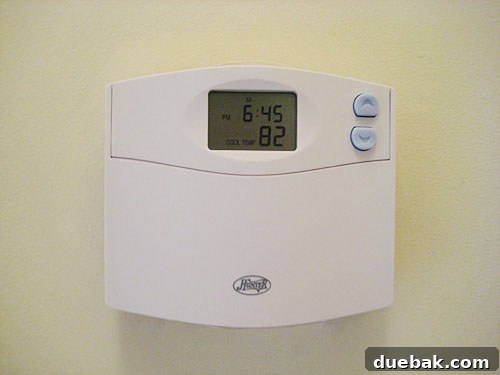
Have you ever found yourself wondering if your home’s heating or cooling system is truly working efficiently, or perhaps just running unnecessarily when no one is around? In today’s world, where both environmental consciousness and personal finances are top of mind, it’s a question many homeowners grapple with. The good news is, there’s a remarkably simple, affordable, and impactful solution that can put those worries to rest: installing a programmable thermostat. This small device represents a significant step towards creating a greener home while simultaneously making your wallet a little thicker.
The concept is beautifully straightforward yet incredibly powerful. A programmable thermostat automatically adjusts your home’s temperature based on a schedule you set, aligning with your daily routine. This means no more heating or cooling an empty house while you’re at work, or keeping the house excessively warm or cool overnight when you’re comfortably tucked in. Instead, it intelligently optimizes energy usage, ensuring comfort when you need it and conserving energy when you don’t. Industry estimates suggest that the average household can save approximately $180 annually by upgrading to a programmable thermostat. This isn’t just about saving money; it’s about reducing your carbon footprint, contributing to a healthier planet, and enjoying a perfectly comfortable home without constant manual adjustments. It truly is a win-win scenario for everyone.
For us, the decision to upgrade was an easy one, spurred by the need to replace the outdated, inefficient thermostat that came with our house. It was a relic, clearly past its prime, and a stark contrast to the modern efficiency we desired for our home. The prospect of enhanced comfort, substantial energy savings, and a touch of modern convenience made the upgrade an irresistible home improvement project.
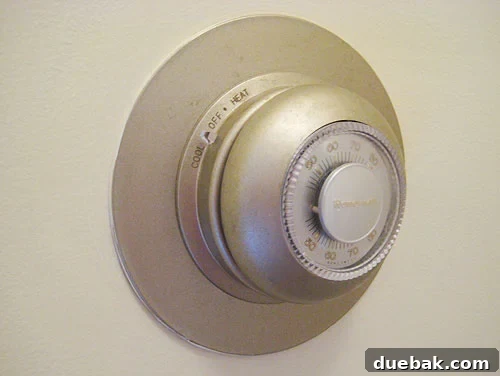
Embarking on the DIY Thermostat Installation Journey
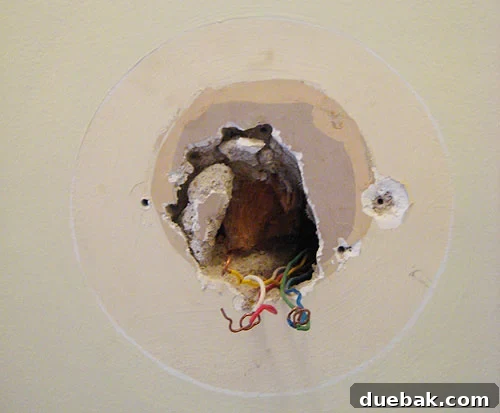
The installation process for a programmable thermostat is often surprisingly straightforward, making it an ideal DIY project for many homeowners. Our journey began with the crucial first step: ensuring safety. Before touching any wires, we headed to our circuit breaker panel and carefully switched off the electricity to our HVAC system. This step is non-negotiable and essential to prevent electrical shocks or damage to the system. With power safely disconnected, we proceeded to carefully detach the old thermostat from the wall. This involved unscrewing it from its mounting plate and gently disconnecting the various wires. A key tip here, one that can save a lot of headaches, is to take a photo of the existing wiring configuration before disconnecting anything. This visual reference proves invaluable when connecting the new unit. Additionally, we made sure to hold onto the wires firmly, preventing them from slipping back into the wall cavity, which would turn a simple task into a much more complicated fishing expedition.
With the old unit successfully removed and the wires secured, it was time to introduce our new energy-saving hero: the Hunter 5+2 Programmable Thermostat. We opted for this model because it offered a fantastic balance of features and affordability, allowing us to program unique settings for weekdays (5 days) and a separate schedule for weekends (2 days). This flexibility perfectly suited our lifestyle, ensuring optimal comfort and savings throughout the week. We found it on sale at Lowe’s for a mere $25, a significant discount from its original price, making the return on investment almost immediate. While our choice was the 5+2 model, the market offers a wide array of options, including 7-day programmable thermostats for those who desire day-by-day customization, or even more advanced smart thermostats with Wi-Fi connectivity and learning capabilities. Regardless of your preference, it is always crucial to ensure that your chosen thermostat is Energy Star certified and, critically, compatible with your existing HVAC system (e.g., single-stage, multi-stage, heat pump). Checking compatibility is paramount to a successful installation and proper functioning.
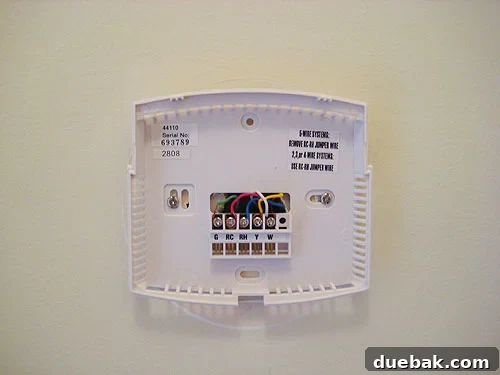
Connecting the Wires and First Power-Up
The wiring phase, while often perceived as daunting, is quite logical once you understand the basic principles. Each wire color typically corresponds to a specific function within your HVAC system. For instance, the Red (R) wire is usually the power source, Green (G) controls the fan, White (W) controls heating, Yellow (Y) controls cooling, and a Common (C) wire provides continuous power for features like backlighting or Wi-Fi. It’s essential to match the wires from your wall to the corresponding terminals on your new thermostat’s mounting plate. We carefully connected each wire, ensuring a secure and proper fit. The process might feel a bit like defusing a bomb with all the colored wires, but by following the instructions provided with your thermostat and referring to your pre-installation photo, it becomes a methodical task. Once all the connections were made, we simply snapped the thermostat’s cover into place, inserted a couple of fresh batteries (many programmable thermostats use them for memory backup or power), and then… nothing exploded, thankfully! Instead, a small, excited outburst from Sherry marked the successful power-up and our immediate realization that we had completed the installation correctly on the very first attempt. The new thermostat immediately came to life, illuminating its display and confirming our successful DIY upgrade. It truly is a functional beauty, isn’t it?
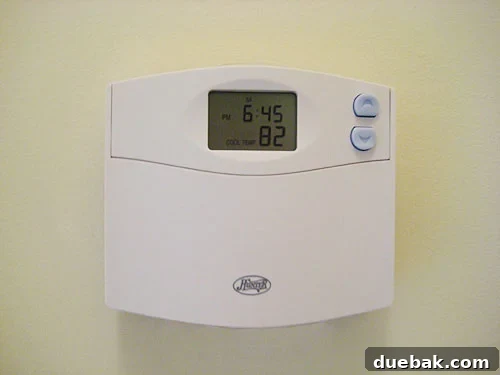
Maximizing Your Savings with Smart Programming
Beyond the simple act of installation, the real magic of a programmable thermostat lies in its ability to adapt to your lifestyle. To truly maximize both your comfort and your energy savings, effective programming is key. Consider your daily routine: when are you typically home, asleep, or away? Most programmable thermostats allow for at least four settings per day: “wake,” “away,” “home,” and “sleep.”
- Wake: Set a comfortable temperature about 30 minutes before you typically wake up. This ensures your home is cozy when you start your day.
- Away: Program a significant temperature setback for the hours you’re usually out of the house. For heating, aim for 7-10 degrees Fahrenheit lower; for cooling, 5-7 degrees Fahrenheit higher. This is where substantial savings occur.
- Home: Adjust the temperature back to your comfort level about 30 minutes before you return home. The house will be perfectly conditioned by the time you walk through the door.
- Sleep: Set a slightly cooler temperature in winter and a slightly warmer one in summer, as most people sleep better in slightly varied conditions and it saves energy.
Remember that setting back the temperature doesn’t mean your HVAC system has to work harder to recover. It actually saves energy because heat loss (or gain) is directly proportional to the temperature difference between inside and outside. A smaller difference means less energy lost over time. Additionally, most programmable thermostats include features like a “hold” function for irregular schedules or a “vacation” mode for extended periods away, allowing you to maintain minimal heating or cooling to protect your home without wasting energy.
Beyond Savings: Enhanced Home Value and Modern Appeal
This simple upgrade to a programmable thermostat offers a multitude of benefits that extend far beyond immediate energy savings. Not only does this new gadget help us “go green” by reducing energy consumption, but it also helps us “save green” in our bank accounts. Furthermore, it creates the distinct illusion that we’ve invested in a much more expensive, high-tech heating and air conditioning system. In reality, our total investment was a mere $25 for a brand-new, efficient thermostat. This subtle yet significant improvement elevates the modern appeal of our home.
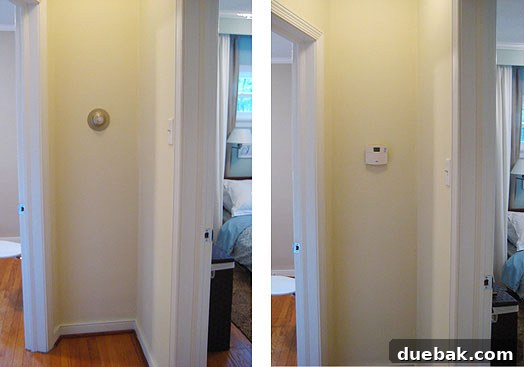
From a home improvement perspective, a programmable or smart thermostat is a powerful asset. If you’re considering selling your house in the future, this is a remarkably easy and cost-effective upgrade that can significantly enhance its marketability. Potential buyers are increasingly looking for homes that are energy-efficient, technologically updated, and offer modern conveniences. A sleek, programmable thermostat signals that a home has been thoughtfully maintained and updated, often acting as a desirable differentiator. It suggests a commitment to efficiency and comfort that resonates with contemporary homebuyers. While we certainly aren’t planning to sell our home anytime soon – perhaps ever – it’s comforting to know that such a small investment could be a crucial clincher in a competitive real estate market. Just consider the visual impact: which of the thermostat displays below would truly seal the deal for you, showcasing a home that is ready for the future?
In conclusion, upgrading to a programmable thermostat is one of the most accessible and impactful home improvements you can undertake. It’s a quick, affordable DIY project that immediately translates into tangible savings, enhanced comfort, and a reduced environmental footprint. It’s a testament to how small changes can lead to significant positive outcomes, making your home smarter, greener, and more enjoyable for years to come. Take the step, embrace the efficiency, and transform your home’s climate control today.