
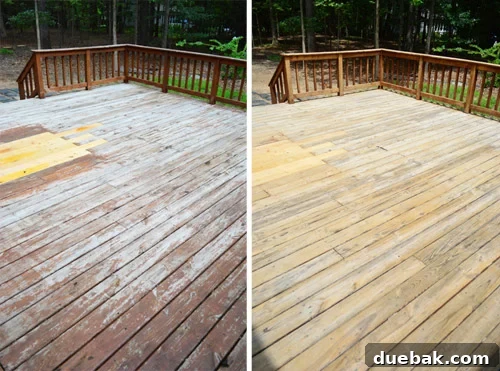
Transforming a weathered, neglected deck into a vibrant outdoor oasis often begins with one crucial step: stripping away the old finish. When we first acquired our home, the existing deck was far from inviting – it was in dire need of a complete overhaul. Faced with nearly 700 square feet of faded, peeling stain, we knew an extensive stripping process was essential before any new stain could be applied. While it demanded a significant investment of time and effort, this project proved to be entirely manageable over a weekend, even for someone tackling deck stripping for the first time. The satisfaction of revealing the beautiful wood beneath was immense, setting the stage for a truly remarkable deck transformation.
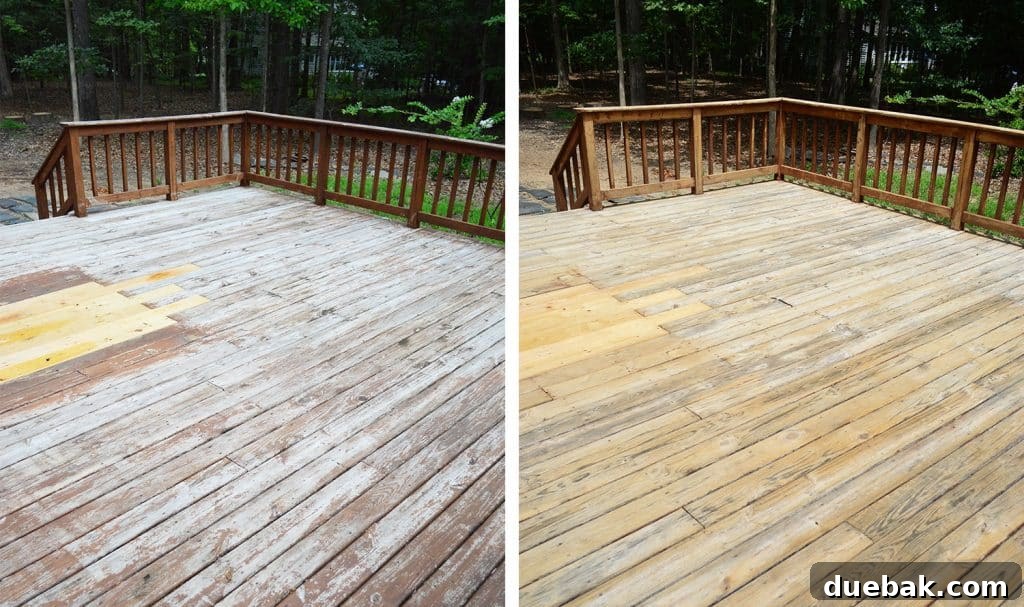
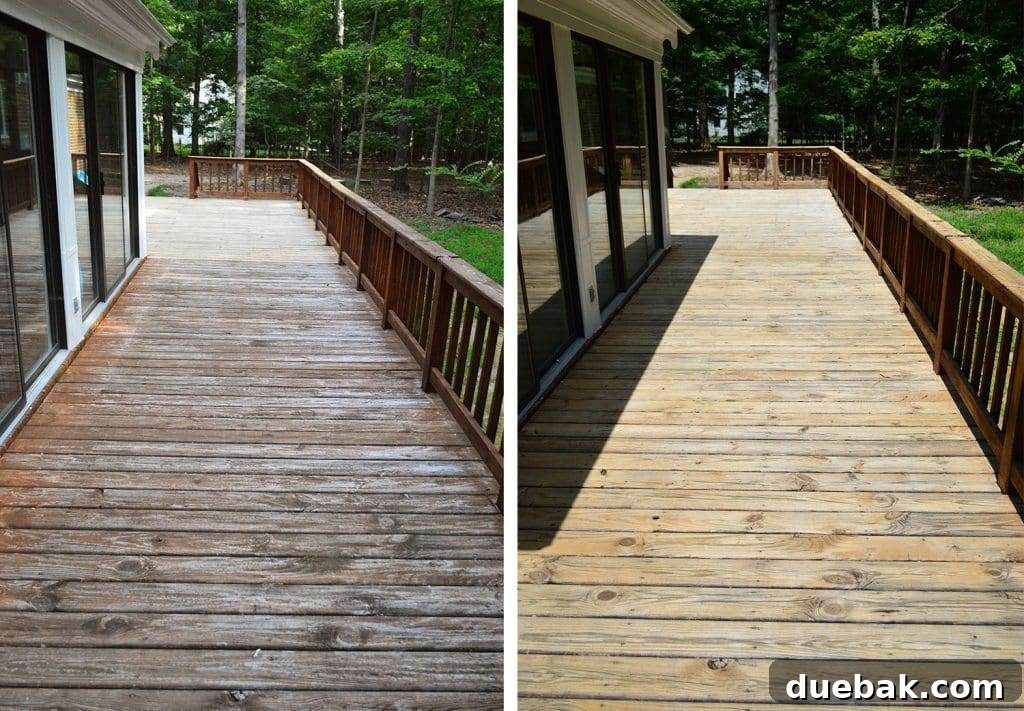
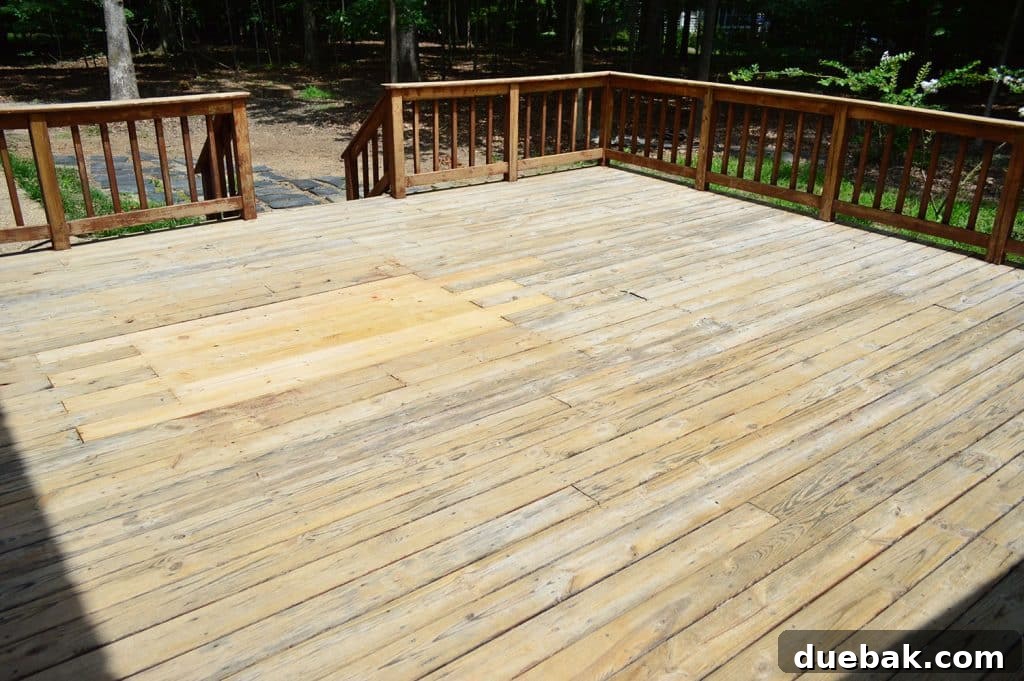
The image above showcases the dramatic before-and-after of our deck stripping journey. If you’re eager to see the full transformation with the new stain and sealer, you can dive into our comprehensive How To Stain & Seal A Deck tutorial. You’ll also notice a section of newer wood in some photos – this was a necessary repair where a tree had grown through the deck. For those needing similar repairs, we’ve also got a detailed guide on Patching a Wood Deck.
Why Is Deck Stripping So Important? Can I Skip This Step?
Many homeowners wonder if stripping is truly a necessary step when refinishing a wood deck. The answer, for the best and most durable results, is almost always yes. If you’re planning to apply a new stain or paint, removing the old finish provides a clean, bare surface for the new product to properly adhere. This creates a stronger, longer-lasting bond, ensuring your efforts lead to a finish that stands the test of time and weather. Skipping this crucial preparation can lead to uneven application, poor adhesion, and premature peeling or flaking of your new coat.
However, it’s worth noting that some specialized products are designed to be applied directly over an existing finish. Brands like Rust-Oleum Restore and Behr DeckOver are formulated to create a thick, protective layer over your deck, often resulting in an almost plastic-like finish. While these products offer a quick solution, they come with certain considerations. We personally found the texture of Restore to be quite rough, and while DeckOver offered a smoother finish, the cost for our nearly 700 sq. ft. deck would have been considerable. Ultimately, we desired a more traditional, natural stained wood appearance, which these thicker coating products wouldn’t achieve. This led us to the decision to proceed with the labor-intensive but rewarding process of chemically stripping our deck.
Pressure Washing Your Deck: A Stripping Solution?
Pressure washing can be an incredibly effective tool for cleaning and preparing outdoor surfaces, and in some cases, it can assist in removing old finishes. When combined with appropriate chemical cleaners, a power washer can significantly speed up the process of stripping old paint or stain. In fact, we utilized our pressure washer to revive the wooden outdoor shower at our current home, effectively blasting away layers of dirt, grime, and mildew. For this project, a chemical stripper wasn’t necessary as we weren’t removing stain, just deep-seated buildup.
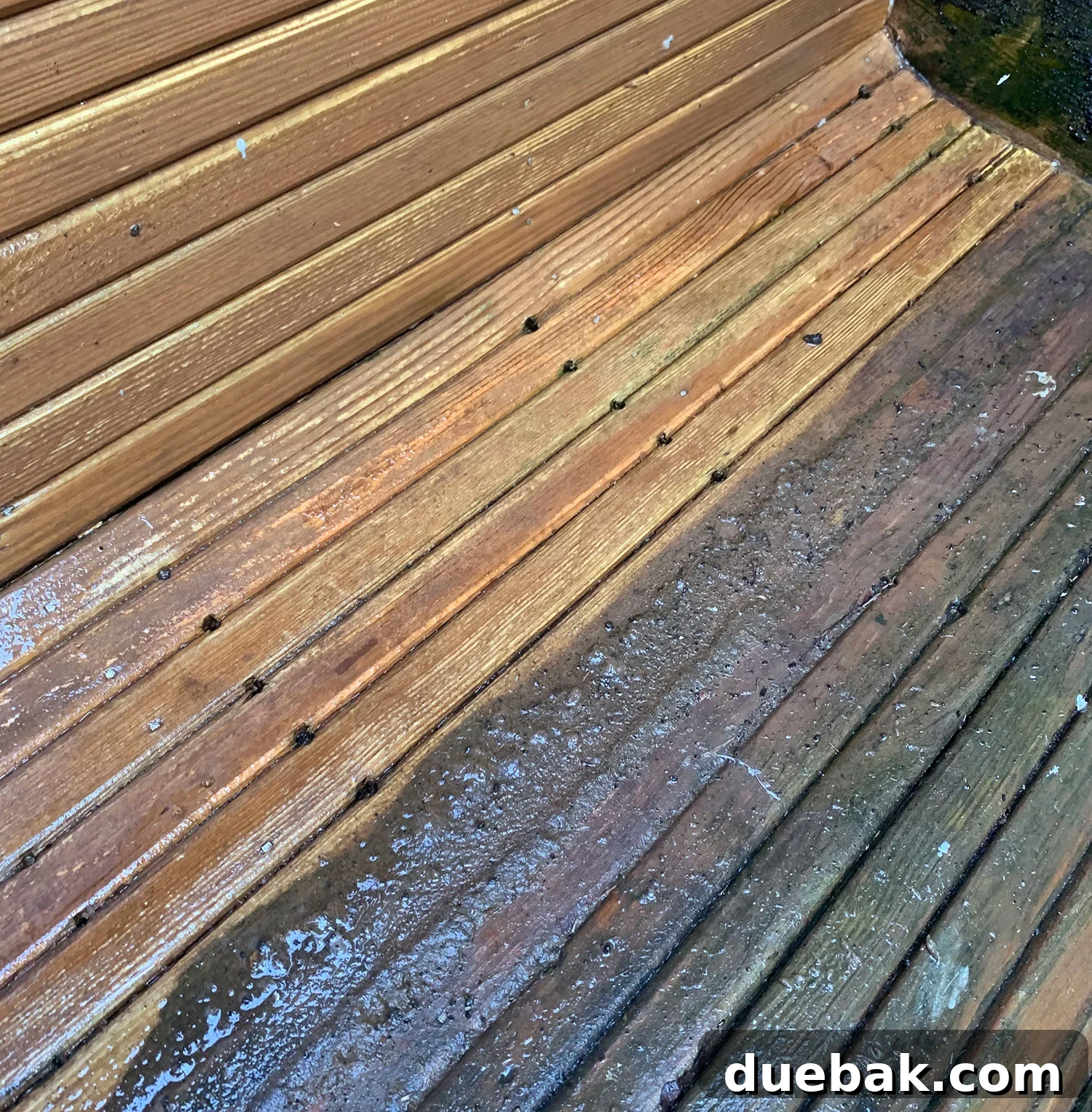
However, for the specific deck featured in this post, we made a conscious decision *not* to rely solely on a pressure washer for stain removal. The wood itself was in a very fragile state, with soft spots and areas of rot. Applying high-pressure water to such compromised wood posed a significant risk of further damage, potentially splintering the wood or driving water deep into deteriorating areas. Our goal for this older deck was to extend its lifespan by a few years before a full replacement became feasible, and gentle chemical stripping followed by careful scrubbing was the safer approach.
If your deck’s wood is in good condition and you’re considering using a power washer to aid in stripping, it can be a viable option. Just remember to always start with a low-pressure setting and work your way up carefully to avoid damaging the wood. For comprehensive guidance on safe and effective pressure washing techniques, refer to our Pressure Washing Guide. You can also snag our favorite power washer for an affordable price, making it an accessible tool for various outdoor cleaning tasks.
Your Step-By-Step Guide: How To Strip Your Deck Yourself
Stripping the old finish from your deck, porch, stairs, or railings might seem like a daunting task, but it’s a very achievable DIY project. With the right tools and a methodical approach, you can successfully reveal the clean wood underneath. Here’s a quick overview of the essential 6 steps involved in this transformative process. Depending on the size and condition of your deck, you can comfortably complete this in a single day or spread it out over a weekend for larger areas.
- Prepare Your Deck for Stripping
- Protect Your Surrounding Landscaping
- Apply Your Wood Stain Stripper Evenly
- Aggressively Scrub Off The Old Paint Or Stain
- Neutralize The Deck Stripper with a Wood Cleaner
- Admire Your Clean, Refreshed Deck!
Essential Tools & Supplies To Strip Your Deck
Before you begin your deck stripping project, gathering all the necessary materials will ensure a smooth and efficient process. Having everything on hand minimizes interruptions and helps you stay focused on the task. Here’s a detailed list of the tools and supplies we recommend for removing old finishes from your deck:
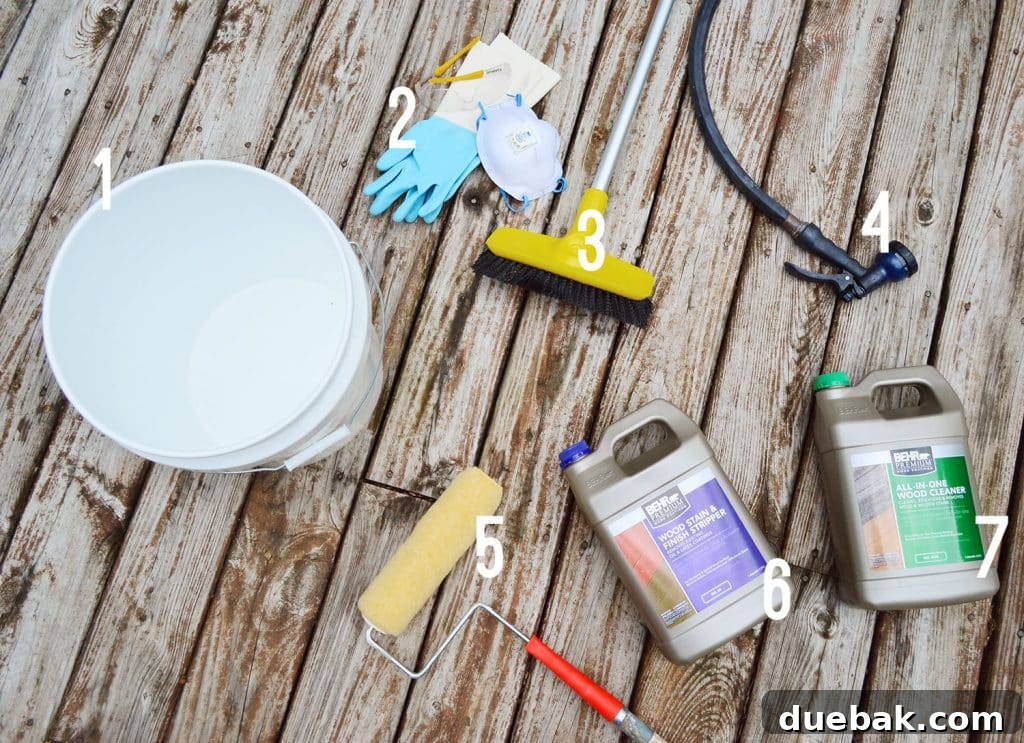
- Heavy-Duty Bucket: Ideal for pouring the deck stripper into, allowing for easy and even saturation of your roller. A deep paint tray can also work, but a bucket offers more volume and prevents spills.
- Comprehensive Protective Gear: This is non-negotiable. Always wear sturdy rubber gloves to protect your hands from harsh chemicals, safety goggles to shield your eyes from splashes, and a respirator mask to avoid inhaling strong fumes. Deck strippers often have a very pungent odor.
- Stiff Bristle Brush With Extension Pole: Essential for effectively scrubbing off the softened stain. The extension pole saves your back and allows for better leverage. Ensure bristles are stiff enough for aggressive scrubbing but not so harsh they damage the wood.
- Garden Hose with Spray Nozzle: Crucial for wetting down landscaping, rinsing off the stripper and loosened finish, and cleaning the deck after neutralization.
- 1/2″ Nap Paint Roller With Extension Pole: This roller nap is excellent for applying thick liquid strippers, ensuring good coverage and penetration into the old finish. The extension pole makes application faster and less strenuous.
- Wood Stain & Finish Stripper: The primary chemical agent for dissolving old stain. Always buy a little more than you think you’ll need to avoid running out mid-project. We purchased four bottles but only needed three for our large deck.
- All-In-One Wood Cleaner / Neutralizer: Used to brighten the wood after stripping and, more importantly, to neutralize any residual stripper chemicals, preparing the surface for the new finish.
- Pump Sprayer (not pictured): An indispensable tool for evenly applying the deck cleaner and neutralizer. A simple garden sprayer works perfectly.
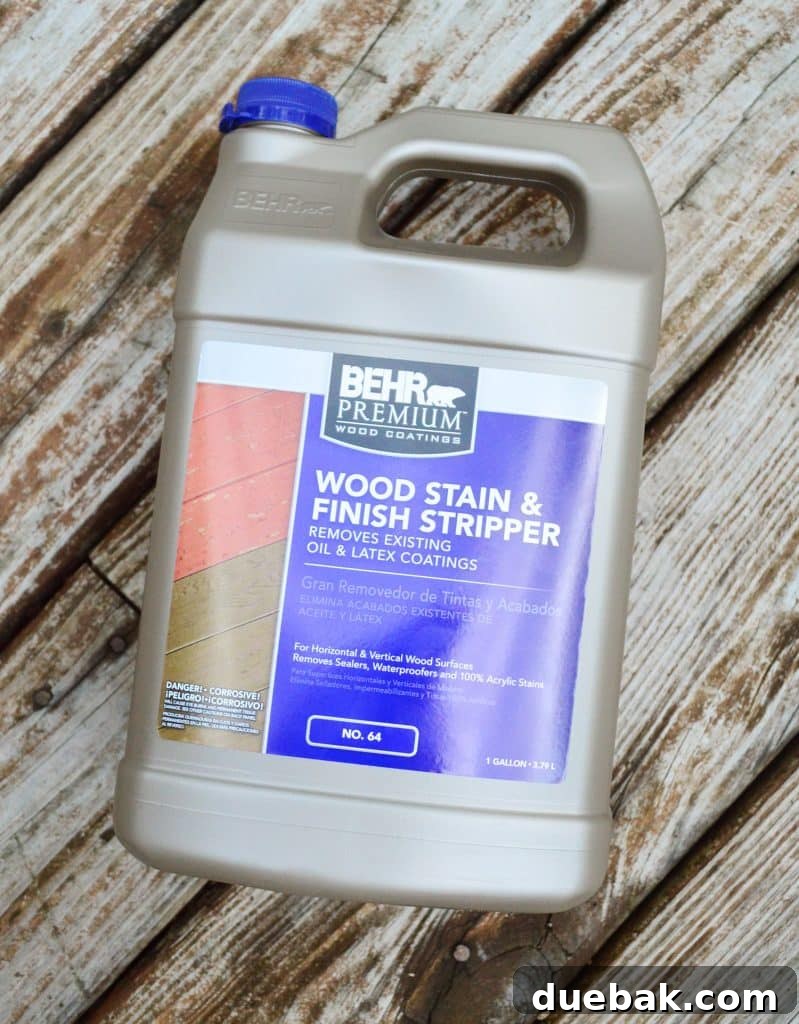
Step 1: Prepare Your Deck for Stripping
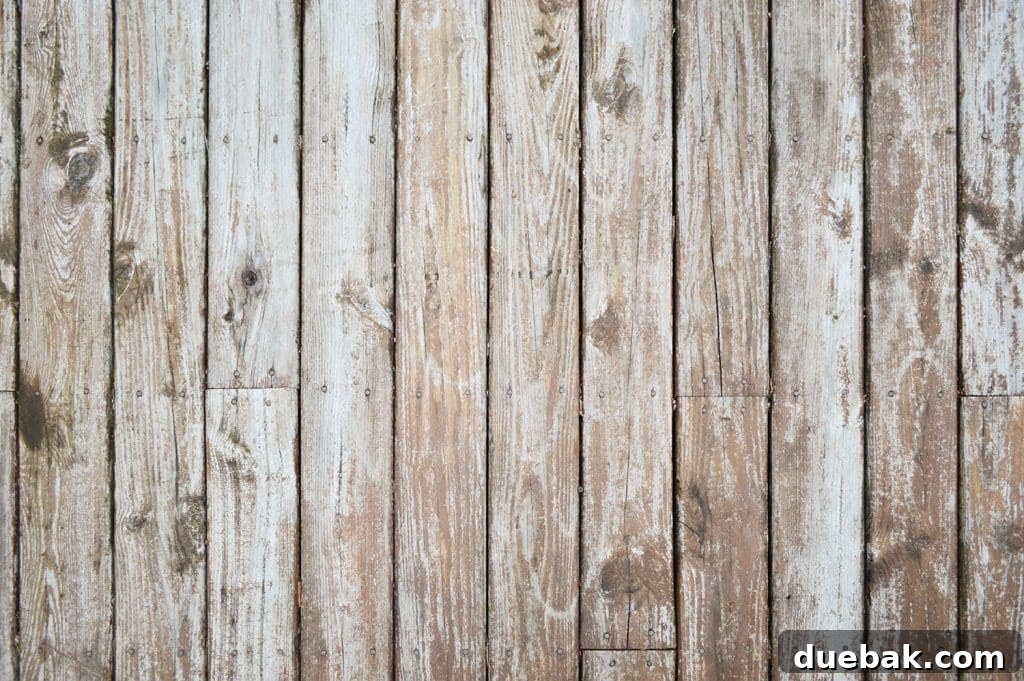
Thorough preparation is the bedrock of any successful DIY project, and stripping your deck is no exception. Begin by completely clearing the deck surface. Remove all furniture, planters, grills, and any other obstacles that could impede your access to the entire deck area. Sweep or use a leaf blower to get rid of any loose debris, leaves, or dirt. This ensures that the stripper can make direct contact with the old finish without being absorbed by surface grime.
Next, carefully consult the weather forecast. The ideal conditions for deck stripping involve a cloudy, cooler day with no rain predicted for at least 24-48 hours. Direct sunlight and high temperatures can cause the chemical stripper to dry too quickly, making it less effective and harder to work with. Conversely, rain will wash away the stripper prematurely, rendering it useless. Aim for a day when temperatures are mild and the sky is overcast, allowing the stripper to dwell on the surface for the recommended time without rapid evaporation.
Step 2: Protect Your Surrounding Landscaping
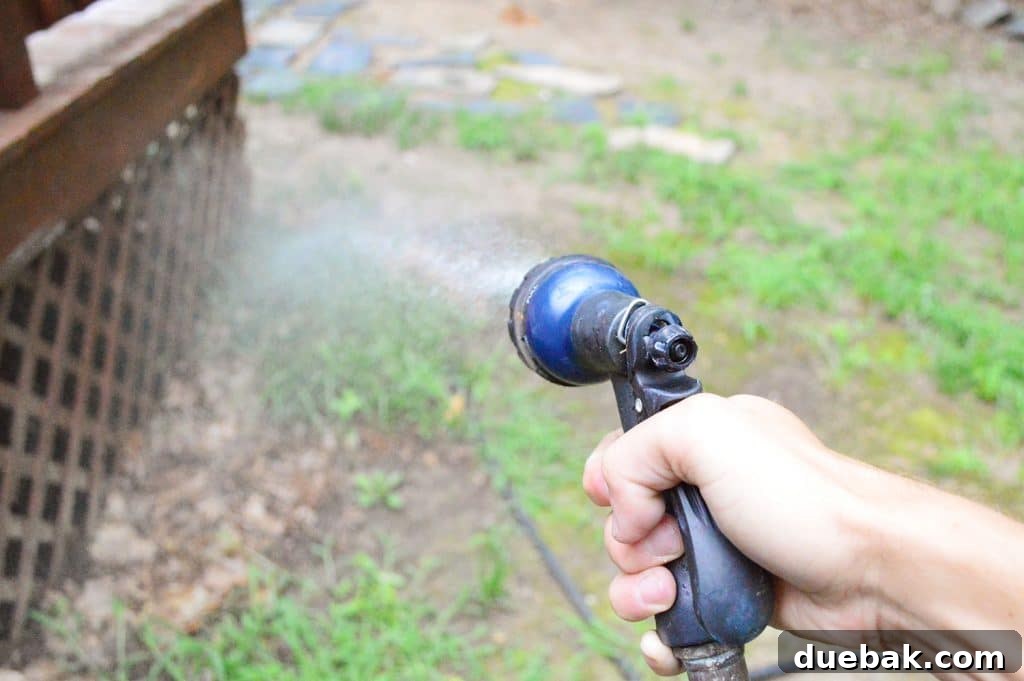
Deck stripping chemicals, while often formulated to be biodegradable, are still potent and can harm sensitive plants. Before you even open the stripper bottle, take a few minutes to protect any nearby vegetation. Use your garden hose to thoroughly wet down all surrounding plants, bushes, and grass. This creates a protective barrier, making the plant surfaces less absorbent to any chemical runoff. If any stripper does splash onto wet foliage, the water will help dilute it and minimize potential damage.
For particularly delicate or valuable plants, consider covering them with plastic sheeting or tarps secured with weights or rocks. This offers an extra layer of protection against direct contact. Although our deck didn’t have much greenery immediately surrounding it that we were overly concerned about, we still followed this crucial step. It’s always better to be safe than sorry when dealing with chemicals, ensuring that your beautiful garden remains unharmed throughout the deck refinishing process.
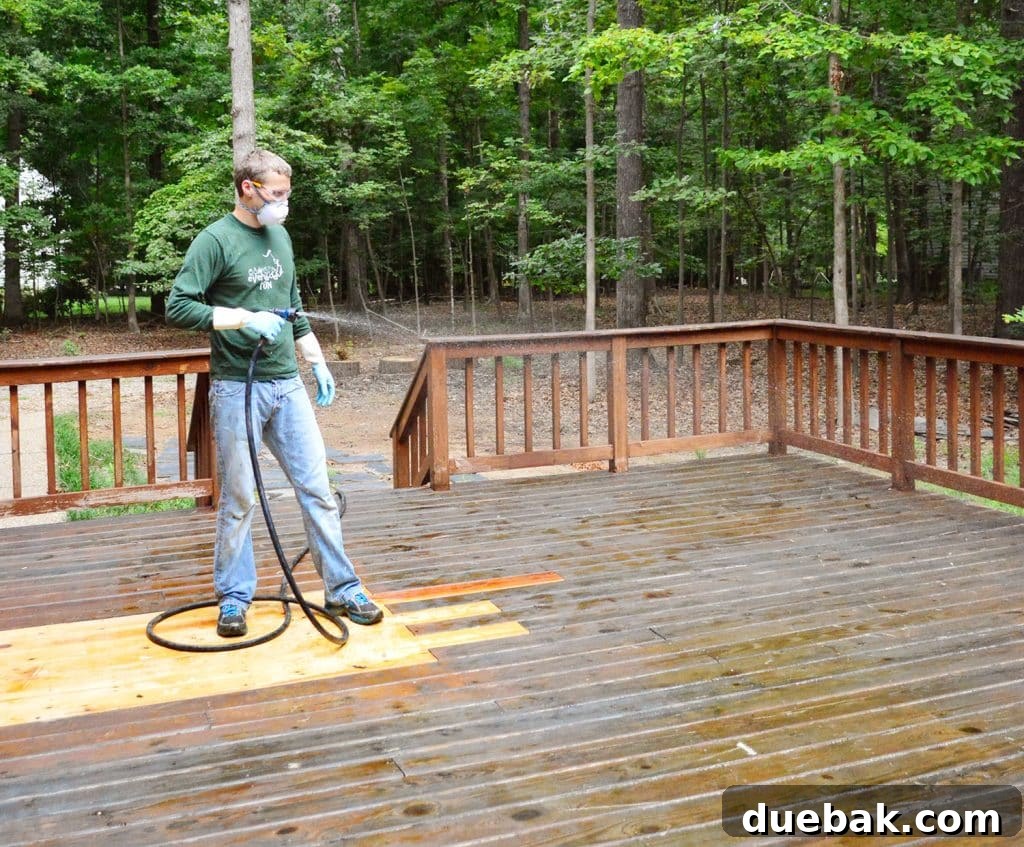
Step 3: Apply Your Deck Stripper With A Roller
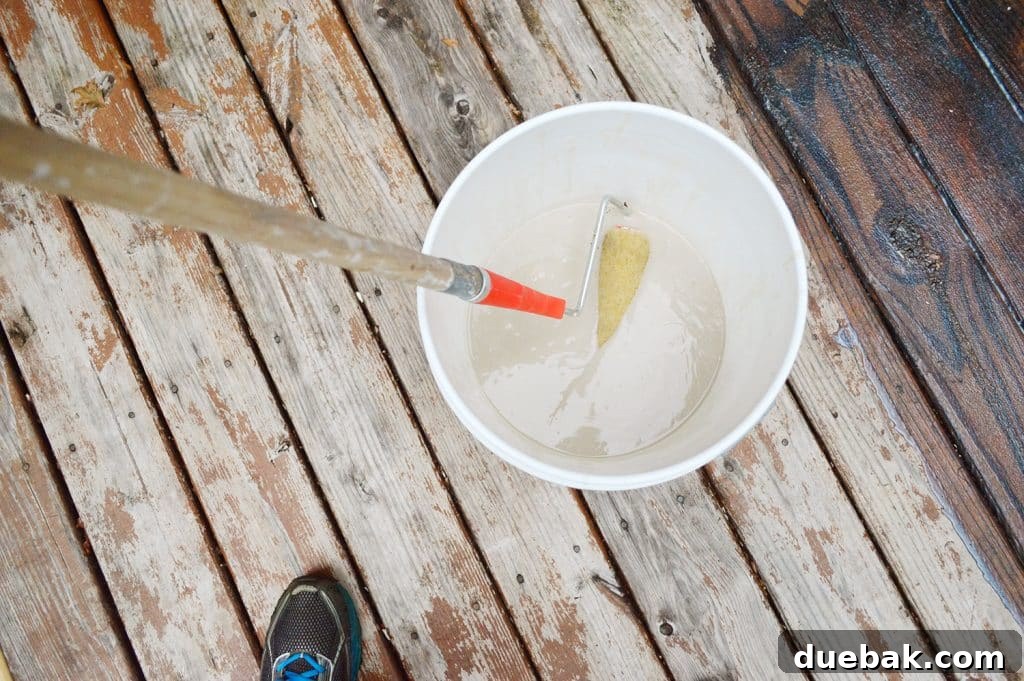
With your deck prepped and plants protected, it’s time for the main event: applying the deck stripper. Remember to don all your protective gear – rubber gloves, goggles, and a respirator mask – as these chemicals can be harsh on skin and lungs. Pour a generous amount of your chosen stain stripper into your bucket. We found that a deep bucket worked perfectly for saturating our roller evenly, much better than a shallow paint tray.
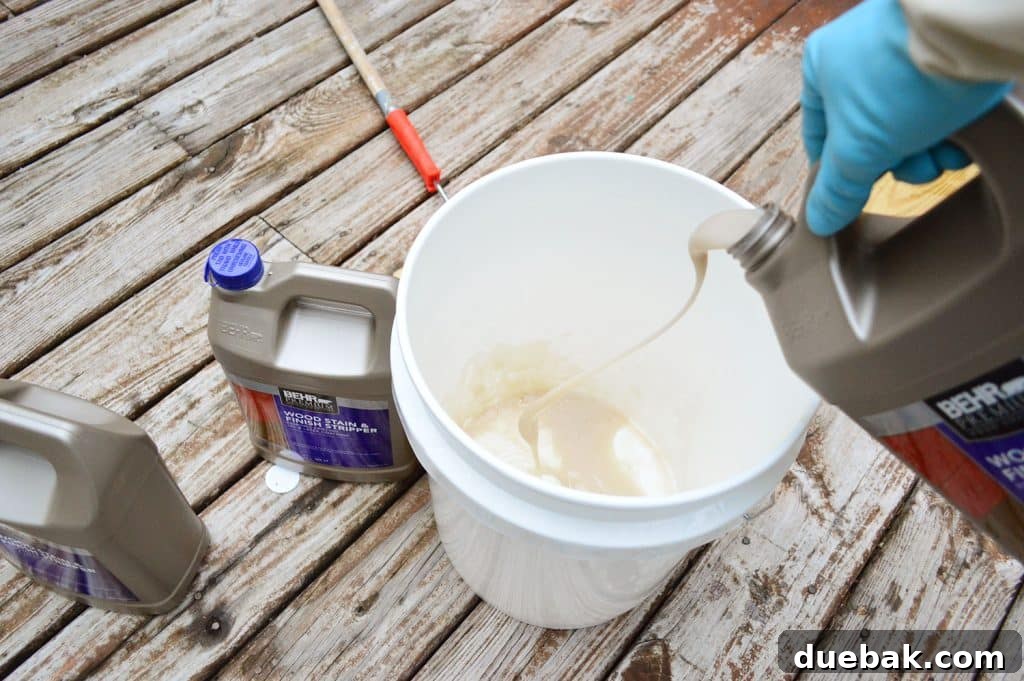
You’ll likely notice the deck stain stripper has a thick, almost “gloopy” consistency – similar to a thin pudding or porridge. This texture is actually quite advantageous for application, as it’s thick enough to adhere well to the deck surface without excessive dripping, yet thin enough to spread smoothly with a roller. Using your 1/2″ nap paint roller with an extension pole, apply the stripper liberally and systematically to every board. Work in manageable sections to ensure you can cover an area fully before it begins to dry.
The instructions on most strippers will advise you to spread it “liberally” and allow it to sit for a specific period, typically between 5 to 45 minutes, without letting it fully dry. This dwell time is crucial for the chemicals to penetrate and soften the old finish. As mentioned earlier, a cloudy, cooler day is ideal to prevent premature drying. However, if the sun makes an unexpected appearance or you’re working on a larger area, lightly misting any drying spots with water can help keep the stripper active. This ensures the chemical continues to work effectively across the entire section.
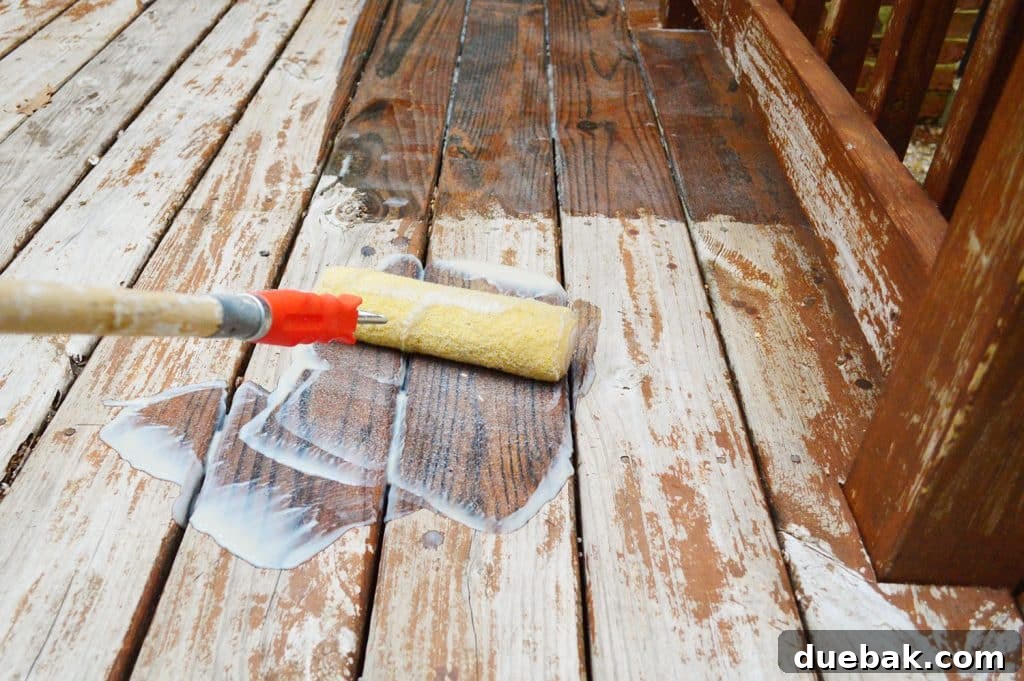
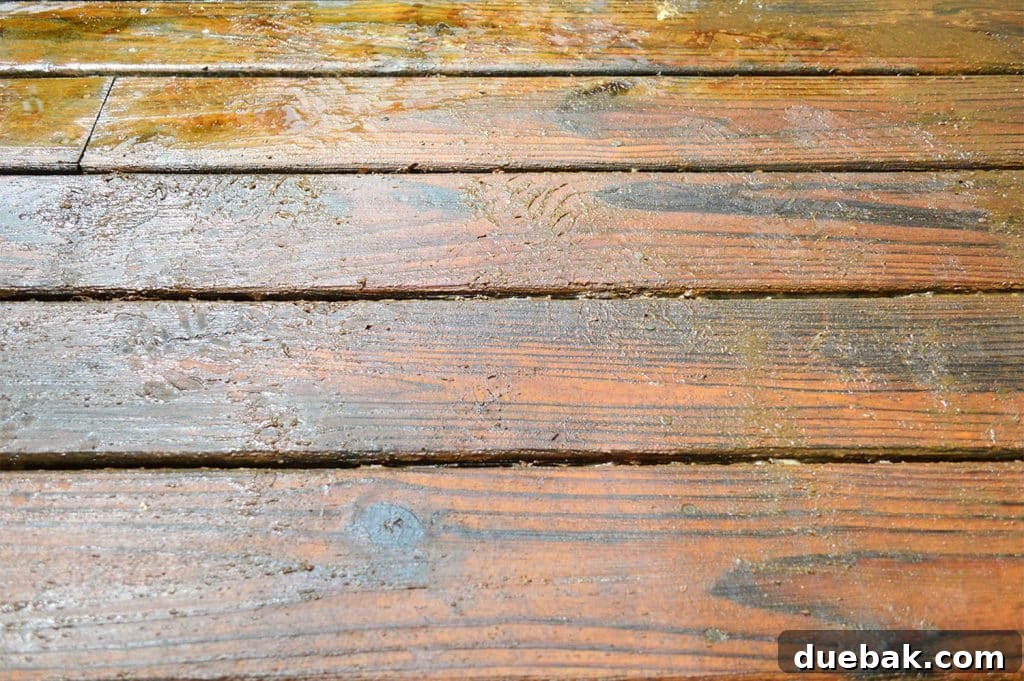
When applying the stripper, be cautious about walking on treated areas, as the surface will become incredibly slippery. The softened finish creates a loose, unstable layer underfoot, which is a good sign that the product is working. This slipperiness indicates that the old stain is literally lifting off the wood, ready to be removed. As we applied it, we started noticing the old finish visibly reacting, confirming the stripper’s efficacy and building our excitement for the next stage.
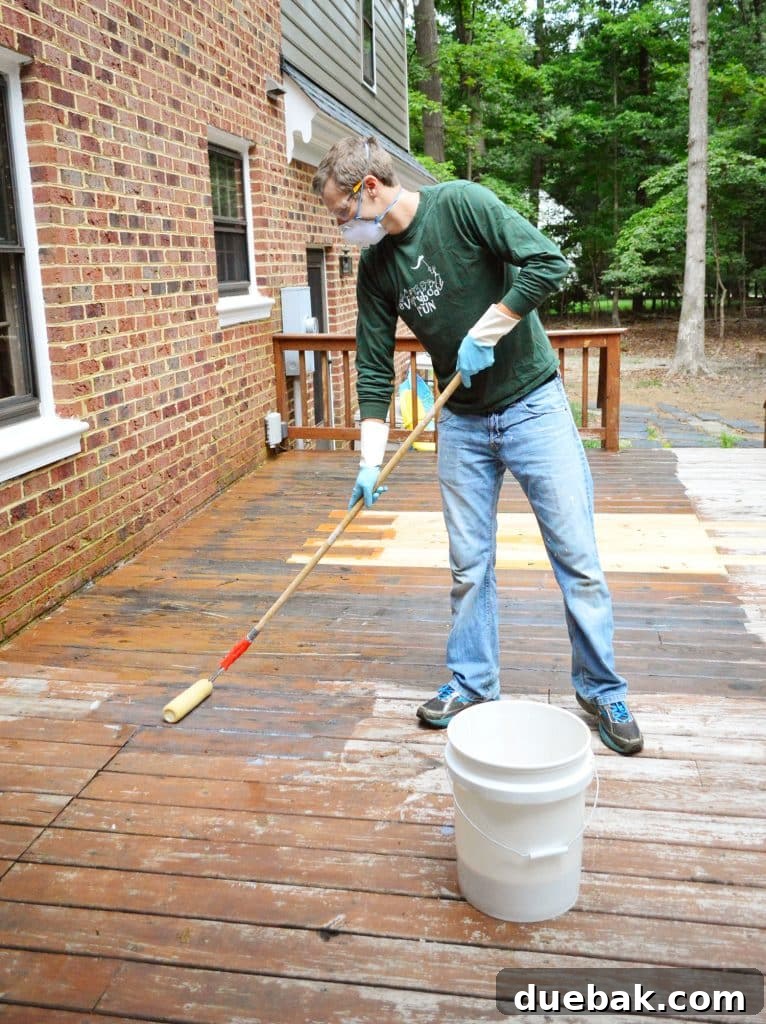
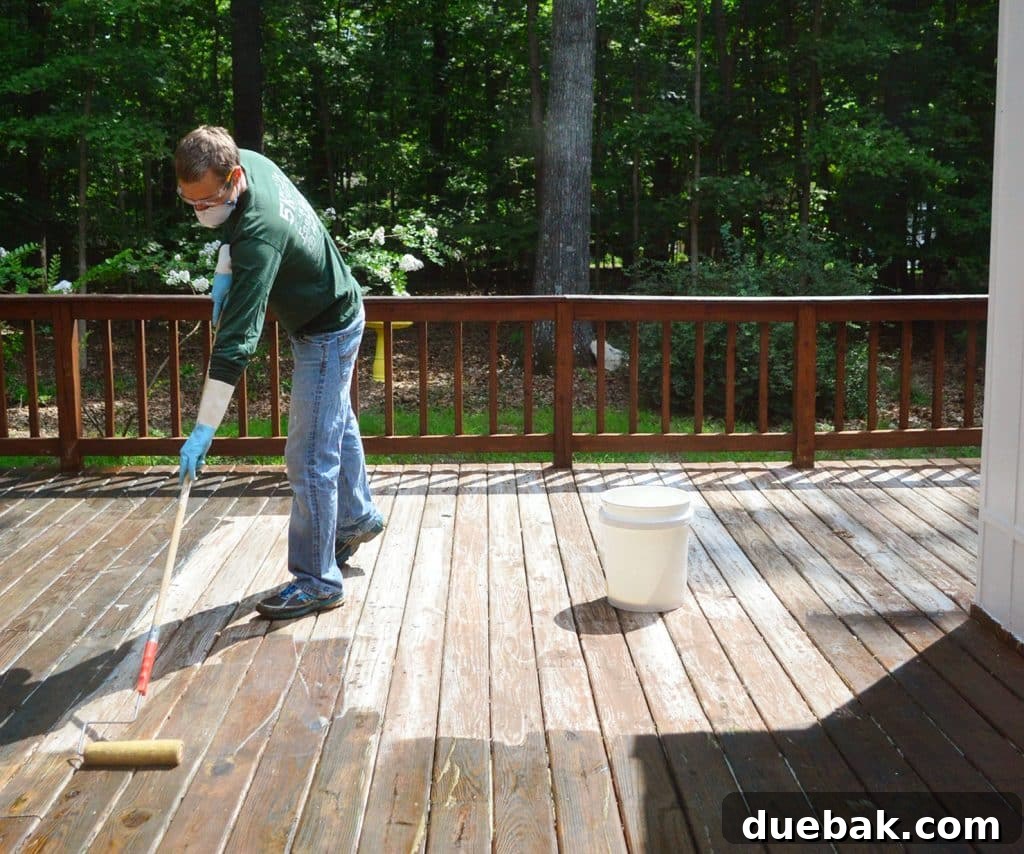
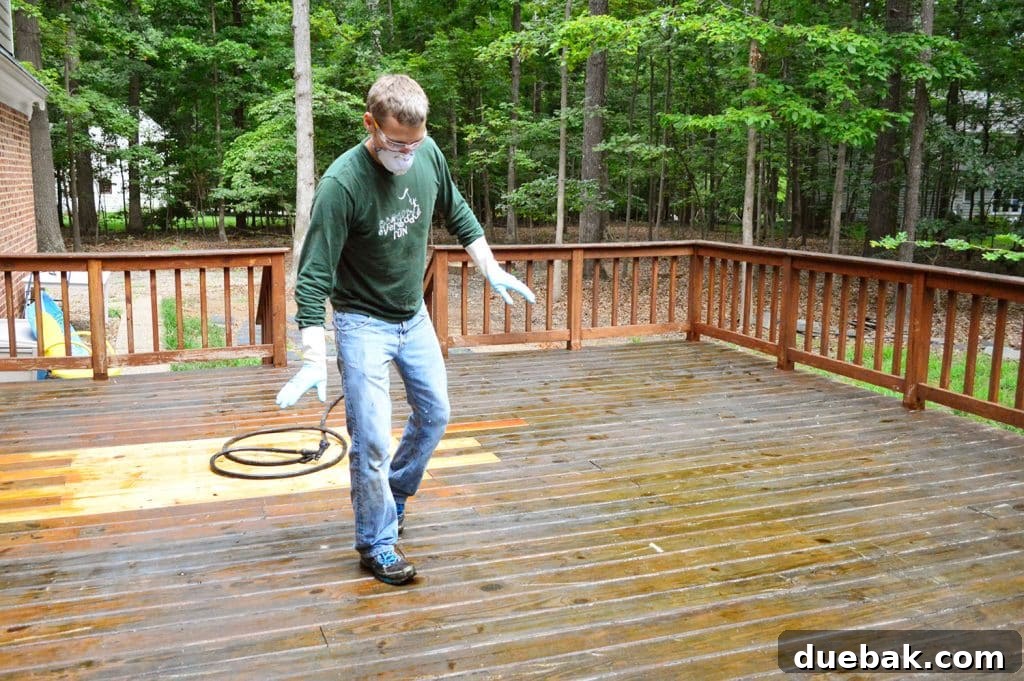
Step 4: Scrub Off The Old Paint Or Stain
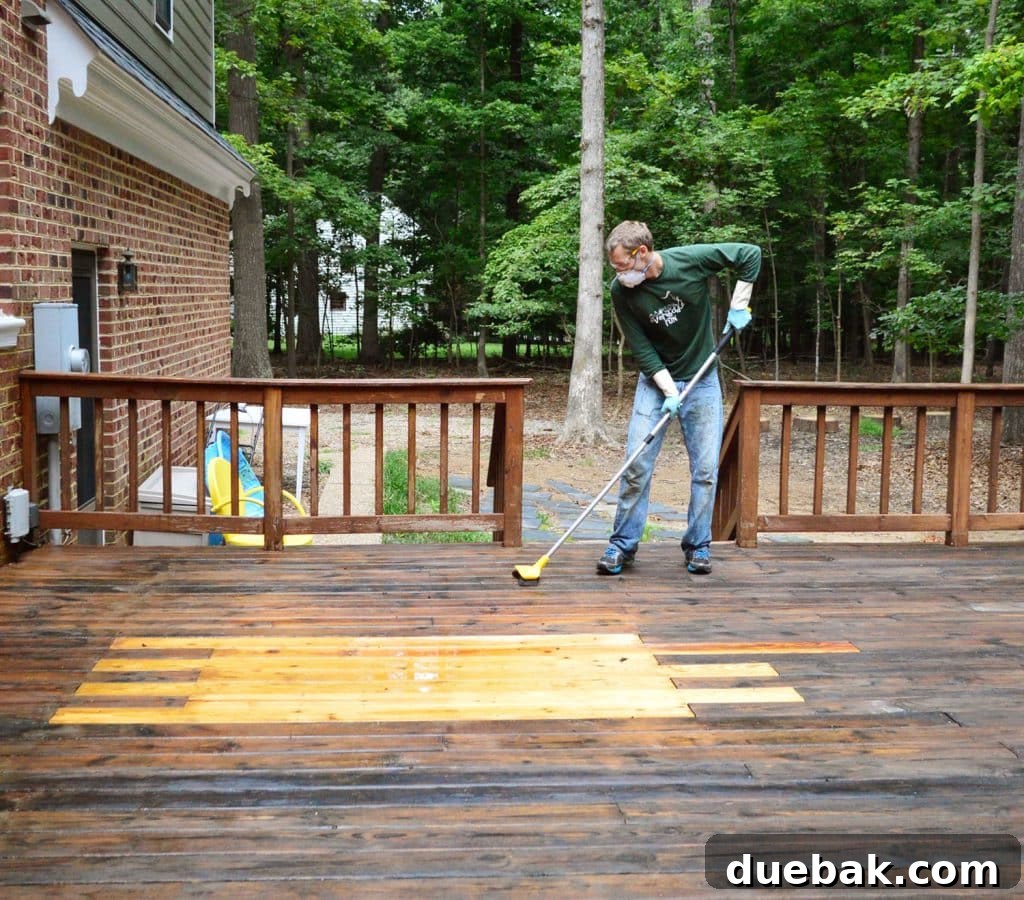
Once the deck stripper has had sufficient dwell time, you’ll observe the old finish visibly lifting and softening. This is your cue to begin the scrubbing phase, where the chemical action is combined with mechanical friction to fully remove the loosened stain. Typically, after about 20-30 minutes, or once you see the finish visibly separating from the wood, it’s time to scrub. Using a stiff-bristled brush with an extension pole, apply firm but controlled pressure to each deck board. You should find that the old stain comes off relatively easily, often turning into a brownish, sludgy residue.
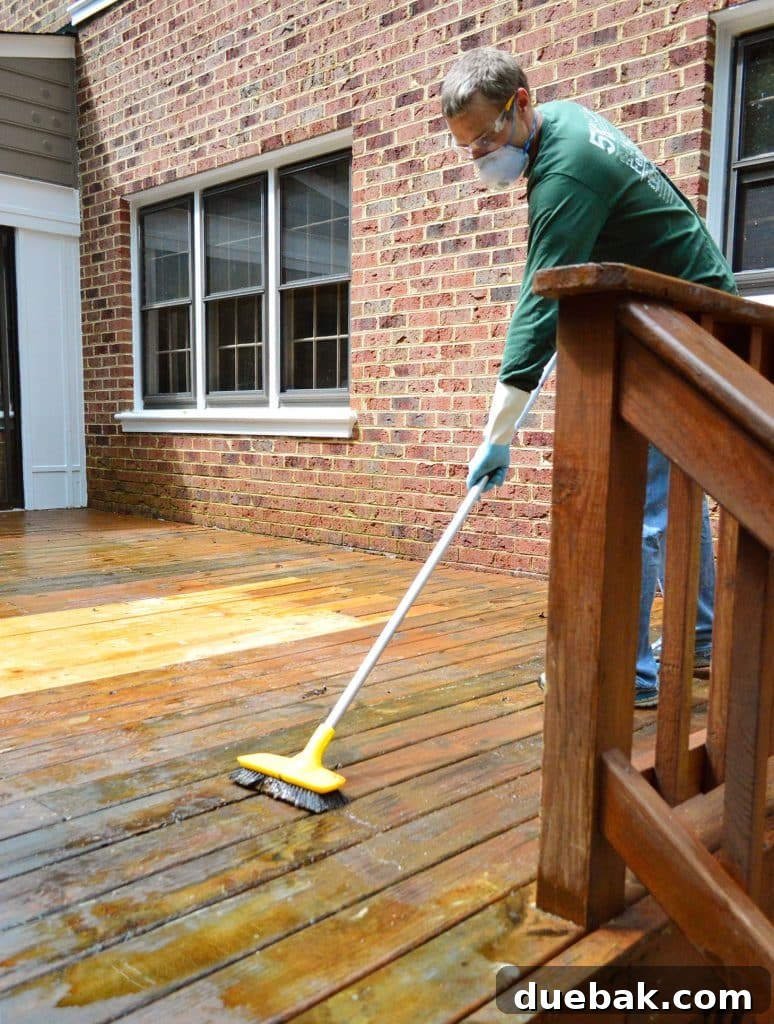
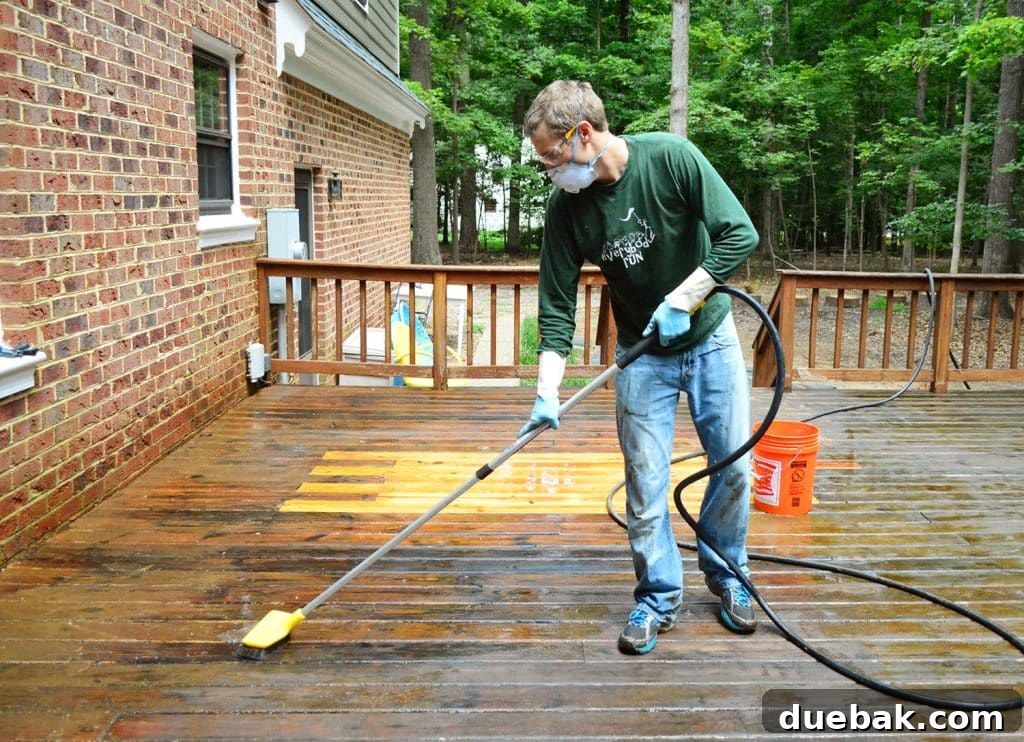
For most areas, a few swift, deliberate strokes with the broom were enough to dislodge the old finish. The satisfaction of seeing the true wood grain reappear beneath the grime is incredibly rewarding. To make the process even more efficient, we discovered a brilliant trick: attaching our garden hose directly to the back of the brush. This setup allowed for simultaneous scrubbing and rinsing, providing instant visual feedback on our progress and preventing the sludge from drying back onto the deck.
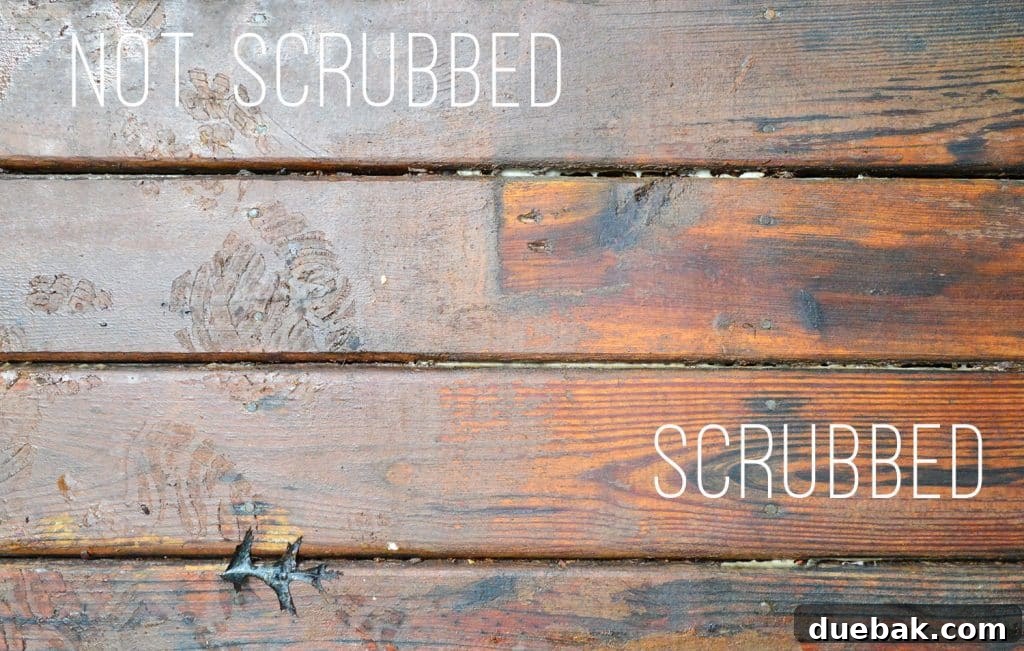
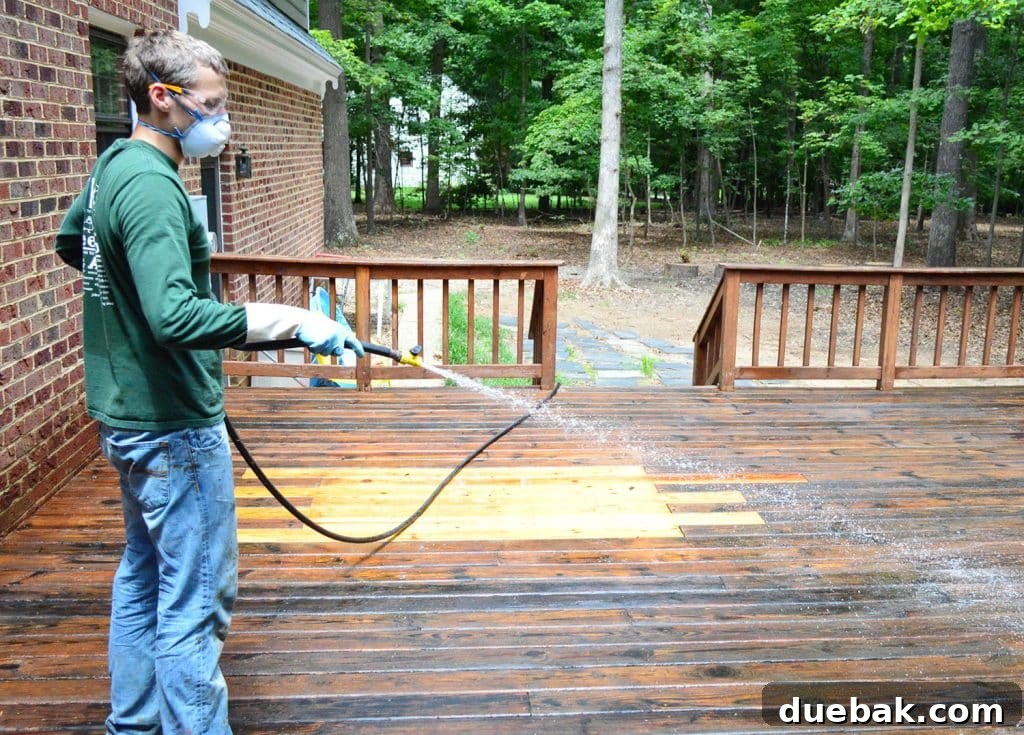
The scrubbing step is arguably the most labor-intensive and time-consuming part of the entire process. For our deck, the initial pass took approximately 45 minutes, followed by additional spot scrubbing for any missed areas or particularly stubborn patches. Don’t be afraid to put some “oomph” into it! After the scrubbing is complete, multiple thorough rinses with your garden hose are essential. Ensure all the brown sludge and chemical residue are completely flushed off the deck surface and away from any nearby plants. This meticulous rinsing prevents any remaining stripper from continuing to react with the wood or interfering with the subsequent finishing steps.
Step 5: Neutralize The Deck Stripper
After successfully stripping and thoroughly rinsing your deck, the final chemical step is to neutralize the stripper. This is a critical process that serves two main purposes: it stops the active chemical reaction of the stripper in the wood and helps to brighten the stripped wood, preparing it for the new finish. Skipping this step can lead to a discolored deck or a compromised new stain application.
For this, you’ll need an all-in-one wood cleaner and neutralizer. We typically mix this product in a basic pump sprayer, following the manufacturer’s recommended dilution ratio (ours was 1 part water to 1 part cleaner). Evenly apply a light coat of the neutralizer to all areas where the stripper was applied. You don’t need a thick, heavy application, just comprehensive coverage. Ensure every board receives attention to guarantee full neutralization.
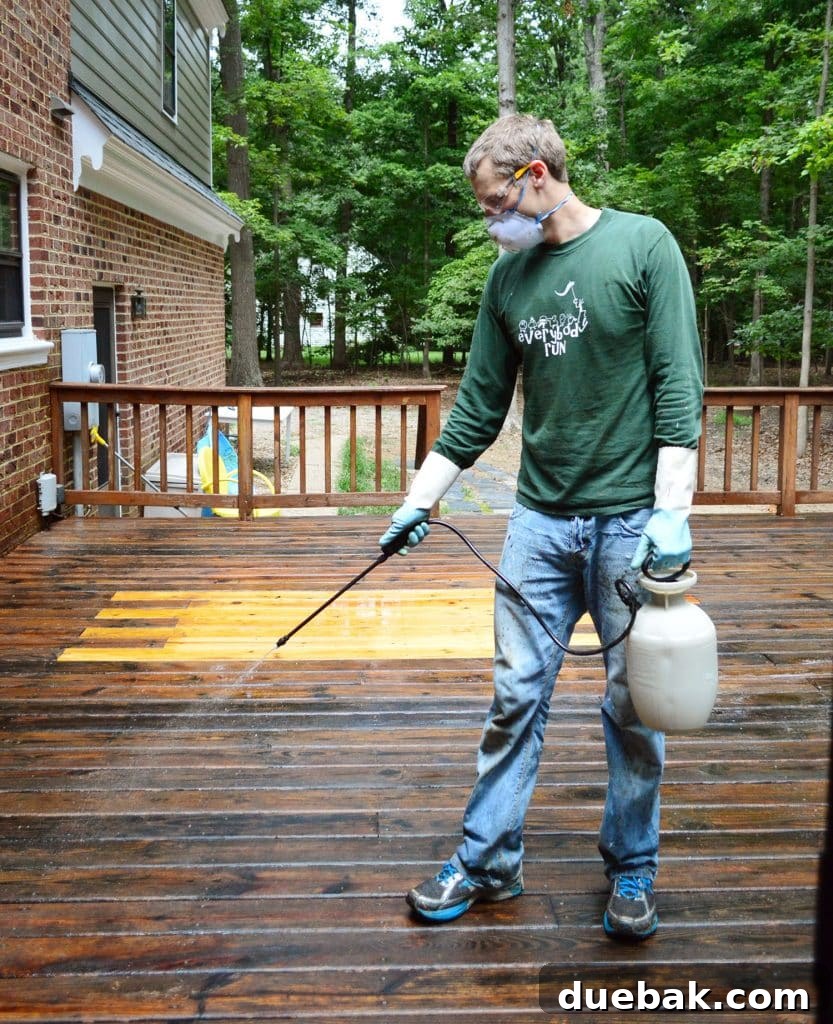
Many deck cleaner instructions suggest allowing the product to sit for a few minutes, then lightly scrubbing it into the wood. After thoroughly rinsing our scrubbing brush from the previous step, we spent another 20 minutes or so brushing the entire deck with the neutralizer. While the product promised a “foaming” action, we didn’t experience much of that, but the process of working it into the wood is still beneficial. This light scrubbing helps the neutralizer penetrate the wood fibers and ensures any lingering stripper residue is fully deactivated.
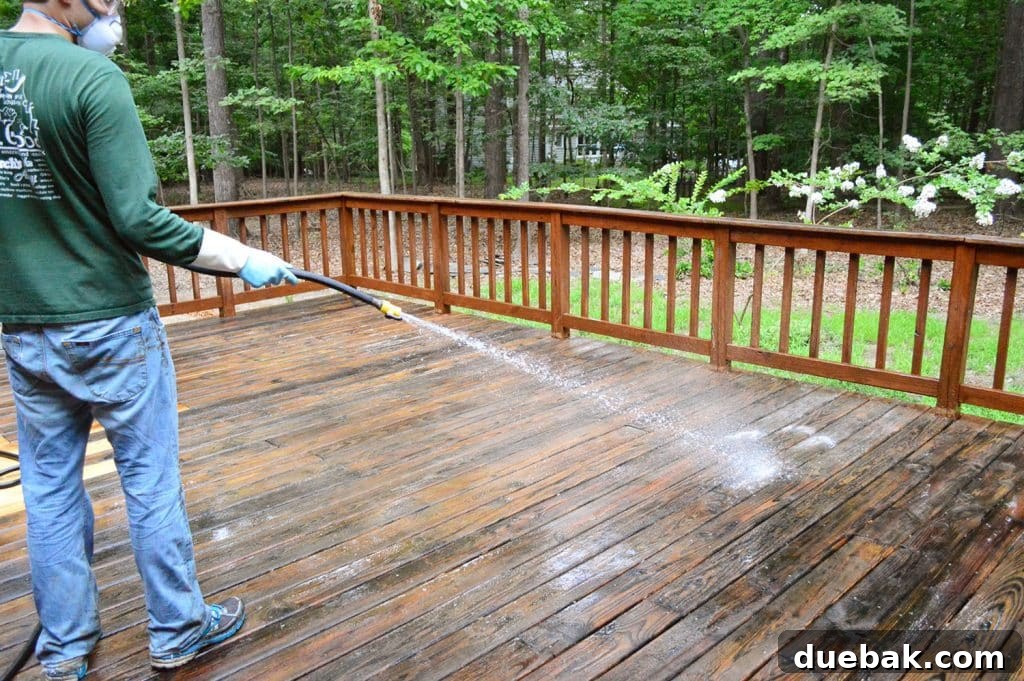
Finally, give the deck one last, extensive rinse with your garden hose. This final rinse is crucial to wash away all traces of the neutralizer and any remaining stripping chemicals, leaving you with a perfectly clean and balanced wood surface, ready for its new protective finish.
Step 6: Enjoy Your Results! The Clean Slate of a Stripped Deck
The transformation after completing all the stripping and neutralizing steps is truly remarkable. We were incredibly impressed with the outcome; not only had the peeling, old stain been completely removed, but much of the gray weathering and discoloration had also vanished. The deck almost looked like new, albeit a beautifully bleached, fresh wood surface. It seamlessly blended with the new wood we had added after removing a tree, creating a cohesive foundation for the next phase of refinishing.
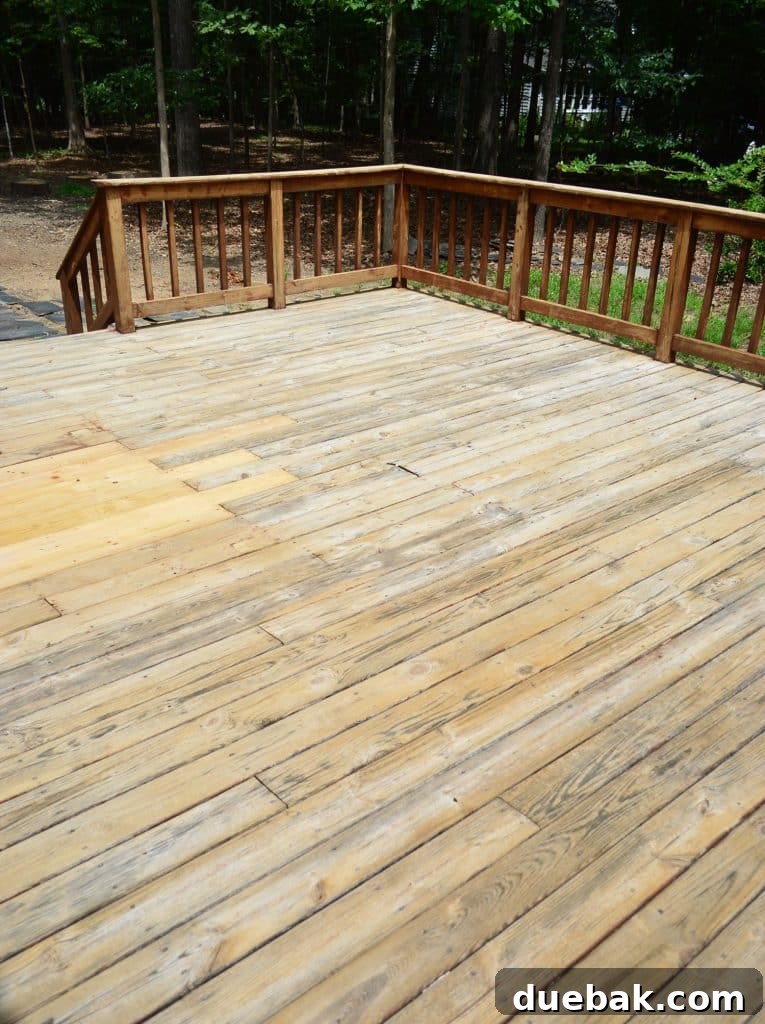
For a vivid reminder of the incredible change, take another look at the before and after comparison. Even without the fresh coat of stain, the difference is night and day, showcasing the power of proper deck preparation.
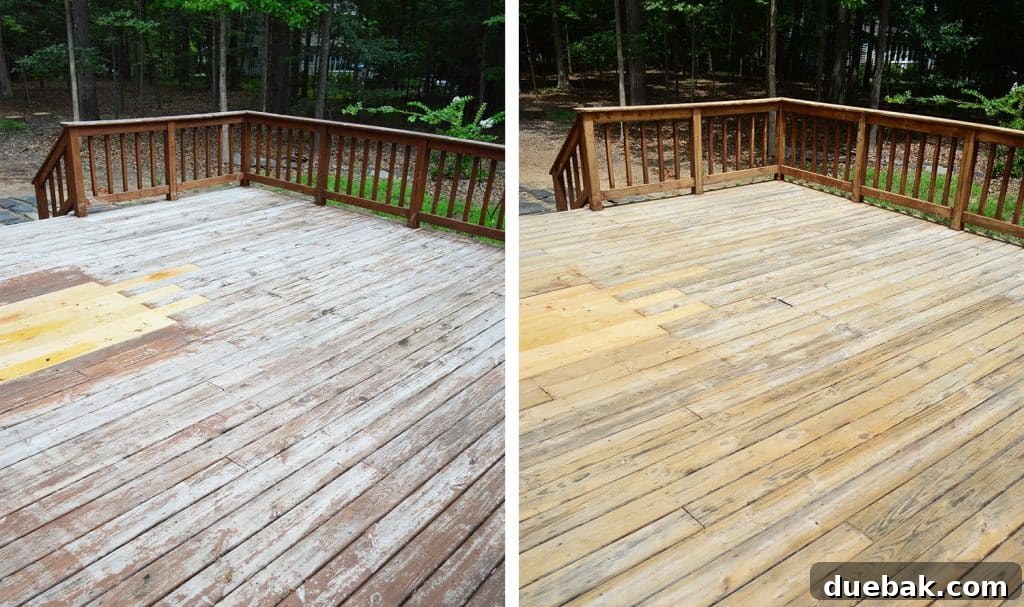
The entire stripping process for our substantial deck took approximately 3.5 hours for each section. Given the effort involved and the warm weather (wearing long pants and sleeves in 85°F heat can be exhausting!), we wisely opted to tackle the deck in two separate sections, completing the second half the following day. This staged approach made the project much more manageable and also visibly highlighted the dramatic impact of stripping. You can clearly see the defined line where the sunroom ends, marking the stark contrast between the stripped and unstripped sections.
Our ultimate plan for this newly stripped deck is to apply a semi-transparent stain, aiming for a color similar to its original rich brown hue. That original stain must have been truly magnificent in its prime, before years of weathering took their toll. Interestingly, we chose not to fully strip the small vertical railings, partly due to the immense time it would have taken, but also because their existing color was still in remarkably good condition. By selecting a new deck stain that closely matches their tone, we anticipate a seamless, beautifully unified appearance once the entire project is complete.
UPDATE: Eager to see the final result? You can see how the stained deck turned out here, revealing the complete transformation!
And so concludes our deck stripping adventure. The overarching lesson is clear: even the most worn-out deck can be brought back to life with a good dose of effort and the right approach. With countless hours of scrubbing and dedicated work, we’ve managed to save and revive this outdoor space. We are incredibly excited to be just one step away from breathing entirely new life into this deck. Fresh deck stain, here we come, ready to protect and beautify our rejuvenated outdoor haven!
BONUS: More Deck Posts & DIY Resources
Enhancing and maintaining your deck goes beyond just stripping and staining. We’ve compiled additional tutorials and guides to help you make the most of your outdoor deck space, sharing insights from our own experiences. Whether you’re building from scratch, adding functional elements, or considering a complete redesign, these resources are designed to help you along the way:
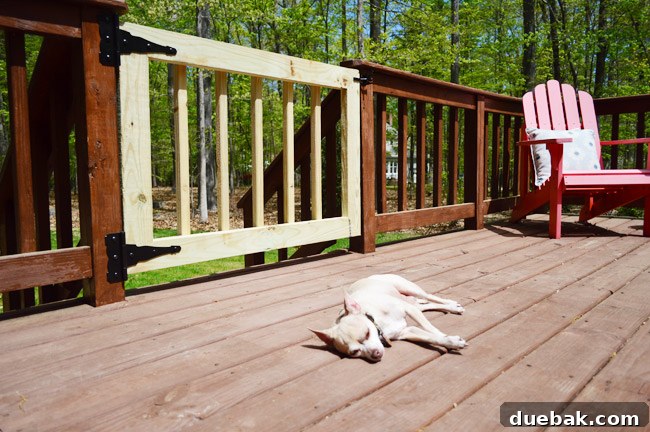
- How To Build A Gate For Your Deck
- How To Stain & Seal Your Deck
- How To Build A Deck From Scratch
- Why We Decided To Tear Our Deck Down & What We Did Instead
*This post contains affiliate links, meaning we may earn a small commission when you make a purchase through links on our site, at no additional cost to you. These commissions help support our content creation.