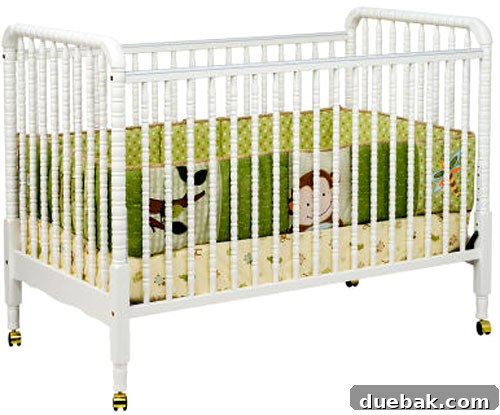
Crafting the Perfect Nursery: Our Journey to an Eco-Friendly Crib and Organic Mattress
The journey to parenthood is filled with countless decisions, and for us, creating a safe, healthy, and eco-conscious nursery for our little one was paramount. From the moment we started planning, one item stood out as a cornerstone for baby’s well-being: the crib mattress. We had previously invested in an organic mattress for ourselves, a Savvy Rest Organic Serenity Natural Dunlop Latex Mattress, after years of sleeping on a less-than-ideal hand-me-down. Our experience with its superior comfort and natural composition sparked a dream: a miniature, completely organic version for our future offspring. This pursuit of purity and peace of mind became a guiding principle for our entire nursery project, beginning with the very foundation of baby’s sleep.
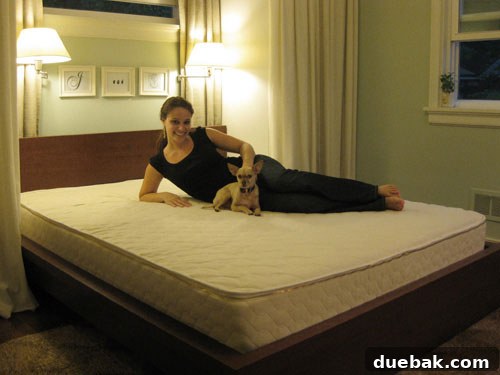
The Unrivaled Benefits of an Organic Crib Mattress: A Savvy Rest Delight
Our commitment to a non-toxic home extends to every facet of our lives, from composting to using eco-friendly cleaning products. When it came to our baby, the desire for a pure environment was amplified. We envisioned a sleep space free from harsh chemicals, synthetic materials, and anything that could compromise her delicate health. That’s why the thought of an organic crib mattress, made from 100% natural, planet-friendly materials, resonated so deeply with us. Imagine our absolute joy when, out of the blue, the incredibly thoughtful team at Savvy Rest contacted us! They offered to send us one of their highly acclaimed organic crib mattresses as a contribution to our nursery makeover. This generous offer was a true blessing, perfectly aligning with our vision for a pristine and healthy sleep haven.
Why Savvy Rest Stands Out: Features of Our Organic Baby Mattress
What makes the Savvy Rest organic crib mattress so exceptional and coveted by eco-conscious parents? It’s meticulously crafted to provide a safe, comfortable, and truly natural sleeping surface. The core of this premium mattress consists of five inches of firm, all-natural Dunlop latex. This material is inherently hypoallergenic, resistant to dust mites, and provides excellent support crucial for an infant’s developing spine. Crucially, it’s completely free of any chemical additives, offering genuine peace of mind.
The commitment to natural purity extends to every layer. Both the top and bottom surfaces of the Savvy Rest crib mattress are enveloped in flame-retardant quilting. This quilting is ingeniously made from organic wool fiber and organic cotton fabric. This innovative combination not only meets all stringent U.S. fire-proofing standards without the need for chemical sprays or dips but also offers inherent advantages for baby’s comfort. Wool, a marvel of nature, is naturally resistant to dust mites and helps regulate temperature. This means our little one, affectionately nicknamed “Baby P,” will enjoy cooler nights in the summer and a cozy warmth during the winter months, ensuring optimal sleep conditions year-round.
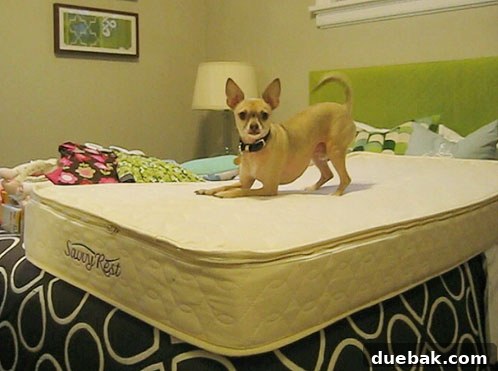
This dedication to natural materials and safety truly makes the Savvy Rest organic crib mattress the “Ferrari” of infant sleep solutions. We are incredibly grateful to the wonderful people at Savvy Rest for their outstanding gift. While we haven’t personally tested its comfort (it’s a tad short for us adults!), we can wholeheartedly attest to the durability and unparalleled comfort of our own Savvy Rest mattress, which has provided us with almost a year of blissful, chemical-free sleep. You can read an update on our long-term satisfaction right here. An added bonus is that Savvy Rest is a Virginia-based company, making it a “local” choice for us and reducing its carbon footprint in transit. Supporting a company that prioritizes both health and environmental responsibility, especially one close to home, is something we deeply value.
The Quest for the Perfect Crib: Balancing Green Ideals with Budget Realities
With the ultimate organic crib mattress secured, the next big challenge loomed: finding a crib to house it. This proved to be a far more intricate task than anticipated, requiring a delicate balance between our deeply held eco-conscious values and the practical constraints of a new-parent budget. We live a lifestyle committed to sustainability – we compost, utilize a rain barrel, and exclusively use non-toxic cleaning products. Naturally, we desired a crib that reflected this commitment, prioritizing non-toxic and environmentally friendly materials. However, the world of truly “eco-friendly” cribs often comes with a hefty price tag, typically ranging from $700 to $1500. With other essential big-ticket baby items like strollers, car seats, and cloth diapers still on our shopping list, we had to set a firm crib budget and adhere to it, which unfortunately ruled out many premium green brands like Oeuf, Cariboo, Pacific Rim, DucDuc, Spot on Square, Argington, and Q Collection Junior.
We quickly realized that our ideal crib might require a thoughtful compromise. Our goal was to find a crib that surpassed the average budget option in terms of non-toxic features and sustainable materials, without venturing into the unattainable price range of high-end eco-friendly options. After considerable research and honest self-reflection, we meticulously compiled a “must-have” list designed to help us navigate the overwhelming market and narrow down the contenders for Baby P’s future sanctuary. Our criteria were clear and non-negotiable:
Our Essential Crib Criteria: Prioritizing Safety and Sustainability
- Solid Wood Construction: We insisted on a crib made entirely from solid wood, explicitly avoiding pressed wood or MDF. These engineered woods often rely on glues containing off-gassing chemicals like formaldehyde, which can release harmful volatile organic compounds (VOCs) into the nursery environment.
- Non-Toxic Finish: Knowing that babies have an inexplicable tendency to gnaw on their crib rails, a non-toxic paint or stain was absolutely critical to prevent ingestion of harmful chemicals.
- Budget-Friendly Price: Our initial budget was around $200, but thanks to an incredible deal on a secondhand nursery glider (stay tuned for details on that eco-win!), we were able to allocate a bit more, setting our target price at under $400.
- Exceeding Safety Standards: The crib had to meet or surpass all established U.S. safety standards, ensuring the utmost protection for our baby.
- Modern Aesthetic with Clean Lines: We sought a modern, minimalist design with clean lines and a white finish. This aesthetic would seamlessly integrate with the rest of the nursery decor and offer a gender-neutral appeal, making it suitable for future bambinos.
- Stationary Sides: Given the numerous recent recalls associated with drop-side cribs, we prioritized a solid, well-rated stationary crib for enhanced safety and stability.
Desirable Bonus Features: Enhancing Functionality and Longevity
In addition to our core requirements, we also had a “nice-to-have” list of features that, while not essential, would significantly enhance the crib’s functionality and our overall satisfaction:
- Integrated Storage: A crib with a pull-out storage drawer underneath would be a huge advantage for maximizing space in a potentially small nursery.
- Convertibility: The ability to convert the crib into a toddler bed or daybed would extend its usefulness and provide excellent long-term value, allowing us to utilize it for as long as possible.
- Dual-Tone Design: A subtle splash of darker wood accents to complement the clean white finish was an aesthetic preference that would add depth and character to the crib.
- Free Shipping: For such a large item, free shipping is always a welcome bonus, saving on additional costs.
The Search Begins: Navigating a Minefield of Options
Armed with our comprehensive criteria, we plunged into the crib market, our minds swirling with possibilities. Our initial brainstorming sessions led us down several paths:
Idea #1: The DIY Crib Dream
Could we build our own crib to perfectly match every prerequisite? While appealing to our DIY sensibilities, we quickly realized the immense complexity involved. Cribs require incredibly strict safety features, rigorous testing, and adherence to numerous industry standards. Ultimately, we concluded that building a crib was best left to certified experts to ensure our baby’s absolute safety.
Idea #2: Unfinished Wood, Our Own Finish?
Another thought was to purchase an unfinished solid wood crib (perhaps birch, maple, or oak) and apply a no-VOC stain or paint ourselves. This seemed like a promising path to ensure a non-toxic finish. However, our search for genuinely unfinished solid wood options proved challenging; most were already stained or sealed, making alterations difficult. Furthermore, unfinished cribs typically fell into the $500-$1200 range, well beyond our budget, and often featured a rustic or country-style aesthetic, which conflicted with our preference for sleeker, clean-lined designs.
Idea #3: The Allure of a Used Crib
From an eco-friendly perspective, acquiring a used crib was the “greenest” option. However, further consideration brought to light the constantly evolving safety standards and a series of recent crib recalls. The potential risks associated with an older crib that might not meet current safety regulations, especially for fearful first-time parents like us, seemed too high. Fortunately, my mother generously offered to contribute to the purchase, encouraging us to get something new that could be safely used for many years and potentially multiple children (she, being one of seven, envisions us having a large family!). While a used crib wasn’t our final choice, we did achieve a significant green win by purchasing an amazing thrift store nursery chair, which we’ll share details about in a future post.
Our Exhaustive Crib Search: Hits, Misses, and Valuable Lessons Learned
With our pre-hunt brainstorming complete, we dove headfirst into active crib shopping. We felt a mixture of determination and trepidation, akin to a nervous chihuahua embarking on a daunting task. The sheer volume of options and the struggle to find one that ticked all our boxes was initially intimidating. Despite our worries, we managed to unearth some contenders, though each presented its own set of compromises.
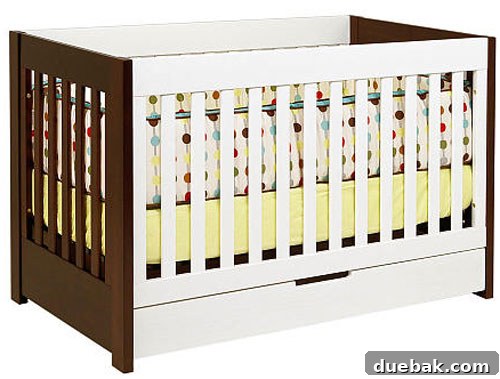
Our first promising find was this attractive crib from Overstock, featuring solid wood construction and non-toxic finishes. However, a crucial detail was missing: it didn’t explicitly state the absence of MDF or pressed wood, leading us to suspect its presence. At $379, it was also perilously close to the very top of our budget, meaning it would need to fulfill *all* our criteria, not just most. We continued our search.
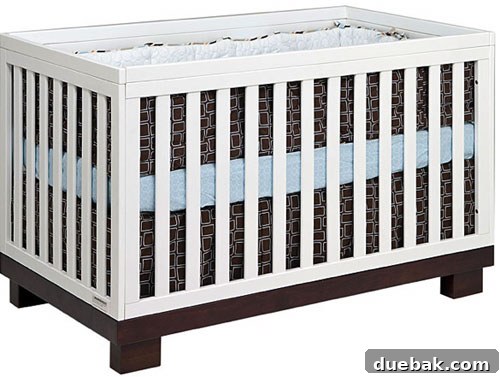
Next, we stumbled upon this chic-looking $419 crib at ToysRUs, also advertised with solid wood and non-toxic finishes. But once again, the absence of an explicit statement regarding MDF or pressed wood was a red flag – a feature that truly eco-conscious cribs proudly declare. It also slightly exceeded our maximum budget. While a step in the right direction, it wasn’t quite “the one.”
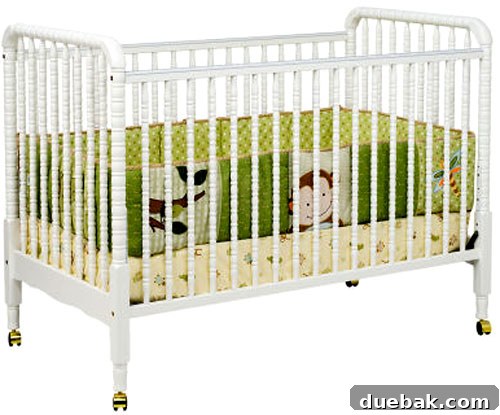
Our third attempt led us to this DaVinci crib. Online reviews suggested DaVinci cribs often used solid wood, non-toxic paints, and even BPA-free guards. However, information for this specific model was frustratingly vague, simply stating “made from Asian hardwood.” This description could still imply the presence of MDF, leaving us uncertain if it truly met our material standards. The styling, while classic, was also less clean-lined than we desired. Despite its attractive $267 price tag and availability in white, it simply didn’t encompass all our hopes for a future crib. The search continued.
At this point, we began to question if our expectations were too high. Were we demanding the impossible, like a celebrity’s famously outlandish rider? We allowed ourselves a fleeting moment of self-pity before refocusing on the task at hand.
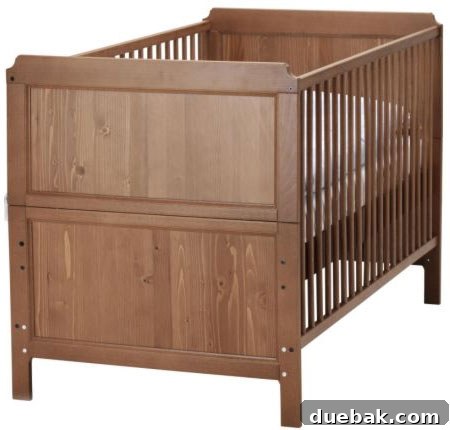
Our attention then shifted to IKEA, known for its affordable and stylish furniture. We found two potential cribs. The first, though seemingly made mostly from sustainable solid wood, wasn’t available in our preferred white color. More critically, its clear acrylic lacquer finish lacked keywords like “non-toxic” or “low-VOC.” Through our research, we’d learned that manufacturers who truly use such features proudly highlight them. We therefore assumed that if it wasn’t explicitly stated, it probably wasn’t. Despite a fantastic price of $159, this option didn’t fully satisfy our requirements.
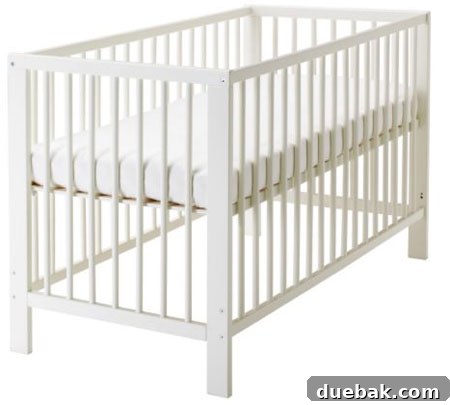
The second IKEA find, priced at an even more incredible $99, mentioned solid wood and plywood materials (again, no mention of pressed wood or MDF). Yet, its “tinted clear amino resin lacquer” finish similarly failed to boast any non-toxic or low-VOC credentials. While both IKEA cribs were amazingly priced and we know several happy babies sleeping in them, they didn’t quite check off *all* the boxes on our carefully constructed list. This reinforced a key learning: choosing a crib is a deeply personal and subjective decision. What’s perfect for one family might not be for another, highlighting the importance of defining your priorities.
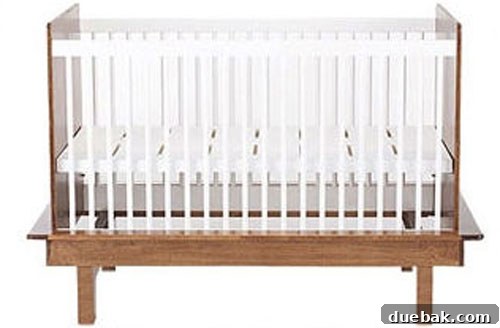
Our journey continued with a look at higher-end eco-friendly options. We found this Argington crib. At $490 for the maple finish, it was almost within reach, though still nearly $100 over budget. While the maple tone wasn’t our ideal deep chocolate, the white finish, our preference, was an unattainable $700. Argington is a leading green company, known for its entirely solid wood construction, eco-friendly materials, and 100% non-toxic glues, stains, and finishes. It was indeed the “cream of the eco crop,” but its cost remained prohibitive for our budget-conscious household. Another ideal, just out of reach.
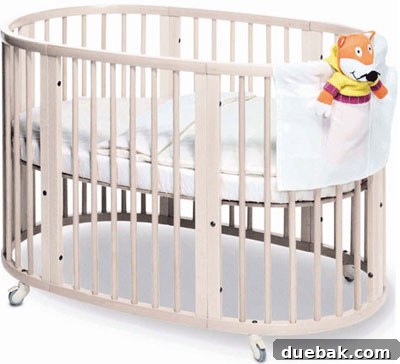
This Stokke Sleepi crib also had strong appeal due to its eco-advantages, boasting sustainably grown wood and non-toxic finishes. However, its $700 price tag was simply too steep. Furthermore, its distinctive rounded corners wouldn’t accommodate our standard rectangular organic mattress. After a final wistful glance, we closed the window, acknowledging another beautiful but incompatible option.
Victory at Last: Discovering Our Dream Crib
Just when we thought we might have to significantly compromise, we discovered an incredibly helpful online write-up (the original link is no longer active due to a site hack). This article confirmed our suspicions: affordable, eco-friendly cribs, especially with our desired white color and clean-lined styling, were indeed rare. However, it also highlighted a few budget-friendly options that were notably “greener” than average cribs in that price range.
A collective sigh of relief escaped us. The comprehensive roundup of reasonably green, affordable cribs was a godsend! And there it was: the final crib featured not only met every single one of our initial “must-have” criteria but also checked off *all* our “would be nice” bonus boxes. And at an astonishing $299, it was comfortably within our budget. It felt like a miracle!
Unpacking the Features of Our Chosen Eco-Friendly Crib
This remarkable crib was described as being “made from New Zealand pinewood with a non-toxic finish,” with its “solid wood and wood veneer construction” explicitly meaning “no toxic VOCs or formaldehyde associated with pressed wood.” This clarity was precisely what we had been searching for. It proudly met or exceeded all U.S. safety standards and boasted an exceptionally high user rating, earning nearly five full stars from over 85 satisfied customers.
Beyond its core eco-credentials and safety, this crib offered an impressive array of additional benefits:
- The $299 price tag included the rail necessary to convert it into a toddler bed or daybed, offering incredible long-term value.
- It came with convenient free shipping to the store.
- It was available in our preferred crisp white, tastefully accented with a splash of darker wood.
- Its design was clean-lined and sleek, perfectly matching our modern aesthetic.
- And, to our delight, it featured a handy little storage drawer underneath, fulfilling our desire for maximizing space.
This truly was one of those rare, triumphant moments. Perhaps it will even rival the joy of meeting our baby girl for the first time in May (okay, maybe that’s pushing it a bit!). But after literally four solid hours of tirelessly searching for something that consistently eluded us, clicking the “buy” button and exchanging a few nerdy high-fives felt like a major coup. We could barely contain our excitement to get it home, assemble it, add our awesome new mattress, and conduct a full test run with our special “helper.”
Nursery Unveiling: Assembling Our Crib and Meeting Burgette
About a week later, the big box arrived, and we wasted no time. The anticipation of setting up our baby’s sleep space was immense. We eagerly began assembly, transforming flat-packed pieces into a solid, beautiful crib. The process was straightforward, and we sped things up even further for your viewing pleasure in the video below:
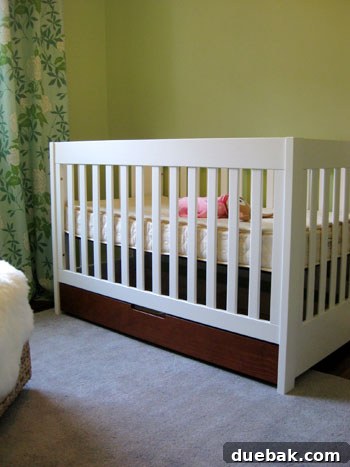
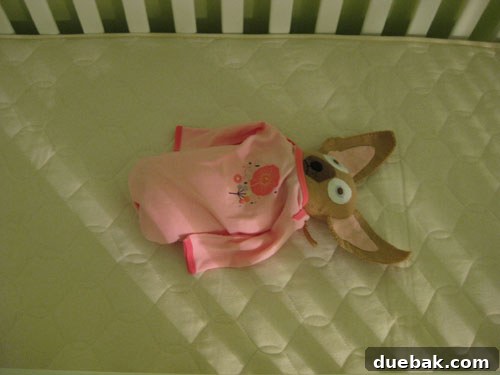
Oh, perhaps we should introduce our adorable assistant: Burgette! She’s a delightful hybrid between “Burger” (from this Burger zoonie, our long-standing “favorite child”) and “The Beanette” (our nickname for baby P). We whipped her up with the help of a recently gifted newborn sleeper, purely so someone could take our newest nursery addition for a proper test drive. And judging by her enthusiastic pose, she absolutely loves it!
Witness our crib assembly in action! Watch it below or over here on YouTube:
Balancing Ideals: The Heart of Eco-Conscious Parenting
And there you have it: the detailed, perhaps mind-numbingly exhaustive, account of how we found an amazing organic mattress and a solid, clean-lined white wood crib, free from pressed wood or MDF, and finished with non-toxic materials. We recognize the dichotomy – one item sourced from a small, Virginia-based organic company, the other from a major big-box retailer. And yes, we acknowledge that an even “greener” nursery could be achieved with twice or thrice our budget.
However, one of the most profound lessons we’ve already learned about impending parenthood is the art of balance. We aimed for an optimal blend of health, sustainability, and practicality. The fact that we were also able to incorporate a wonderful thrift store nursery chair into the mix further highlights this philosophy (more on that soon!). Balance, it seems, truly is the key. We understand we won’t be able to shield our little one from every imperfection (or, for instance, from eventually meeting boys!), nor will she exist on a completely organic diet until she’s 25. So, we did our very best, guided by a few simple, yet crucial, goals for her sleeping environment. We lived to tell the tale, and what a tale it was! Now, only 579,088,989 more dire decisions await us before she graduates college. This parenting adventure is just getting started, and it promises to be nothing short of interesting.
Psst- Curious to see our nursery progress from the very beginning? Dive into our painting post here, and explore all the exciting accessory-hunting details.