

Transforming Your Home: A Comprehensive Guide to Wall Opening Projects
The moment has finally arrived: our much-anticipated wall-opening week is here! This pivotal home renovation project promises to dramatically transform our living space, creating a more open and functional layout. As we embark on this exciting journey, we’re eager to share the essential insights we’ve gathered, particularly concerning three crucial aspects that homeowners frequently inquire about:
- How we meticulously selected the right contractor for this significant structural work.
- Our experience and strategies for navigating the often-complex world of building permits.
- The detailed planning process we undertook to determine the exact, optimal placement for our new wall opening, ensuring it perfectly complements our home’s design and flow.
Choosing the Right Contractor for Structural Wall Removal
Why Professional Help is Non-Negotiable for Structural Changes
While we wholeheartedly embrace the spirit of DIY for many home improvement tasks, certain projects unequivocally demand the expertise of seasoned professionals. When it comes to the structural integrity of our home, especially an undertaking as significant as creating an 8-foot opening in a central wall, entrusting the job to experts is paramount. We’re certainly no strangers to smaller demolition tasks, having successfully created a laundry nook by removing a non-load-bearing wall in our first house. However, an opening of this magnitude, requiring precise reinforcement with a heavy-duty header and potential floor support, is a different league entirely.
The stakes are simply too high to rely solely on four years of DIY blogging experience when pitted against decades of professional construction expertise. Our primary goal is to enhance our home, not inadvertently compromise its foundation. This understanding solidifies our belief that for critical structural modifications, professional contractors offer invaluable peace of mind and ensure the work is done safely, correctly, and to code. For more on how we decide what to tackle ourselves and what to hire out, you can check out our thoughts here.

Our Meticulous Contractor Search Strategy
Our journey to find the ideal contractor for this ambitious wall-opening project was systematic and thorough. We began by leveraging our personal network, reaching out to friends and family for trusted recommendations. We even extended our search to local online communities, posting inquiries on Facebook to gather suggestions for reputable contractors in our area who came highly recommended by other homeowners.
From the initial pool of candidates, we curated a shortlist of approximately ten prospects. We then delved into their online presence, visiting their websites to assess their portfolios, read testimonials, and gain a deeper understanding of their experience and specialization. This initial research phase allowed us to narrow our focus to our top four preferred contractors, based on their online profiles and the specific endorsements we received.
The next critical step involved scheduling in-person estimates with all four of our potential contractors. During these meetings, we openly communicated that we would be gathering multiple bids, ensuring transparency and encouraging each contractor to provide their most competitive and comprehensive price. We also detailed the full scope of the project, which included:
- The removal of an 8-foot section of the wall between our dining room and kitchen.
- The installation of a robust support beam (header) above the new doorway.
- Adding necessary supplementary support beneath the floor to accommodate the new structural changes.
- Reframing the new doorway and threshold for a seamless transition.
- Constructing a short knee-wall to define the new kitchen peninsula.
- Patching and adding drywall where needed.
- Installing a new door jamb and trim on both sides of the finished opening.

Decoding the Contractor Bids: A Wide Range of Estimates
Remarkably, within a few days, all four contractors provided us with their detailed estimates. The range of bids we received was quite astonishing, highlighting the importance of soliciting multiple quotes:
- Contractor #1: Nearly $4,000
- Contractor #2: Approximately $3,200
- Contractor #3: $650 – $1,000 (contingent on material costs)
- Contractor #4: $700 if we handled the drywall, jambs, and trim ourselves, or $950 if they completed these tasks.
The sheer disparity in pricing, especially between the higher and lower bids, was a significant talking point. It’s crucial to note that all four were licensed and insured Class A contractors, boasting decades of experience, suggesting that competence wasn’t the differentiating factor. We believe the higher bids from Contractor #1 and #2 might be attributed to their typical engagement in much larger-scale projects, such as home additions costing upwards of $100,000. Their project management often includes line items like port-o-potty rentals and dumpster fees, which for a project of our scope, we knew were unnecessary. Having opened walls in our previous home, we understood that debris could be managed with a truck and that our personal bathroom facilities would suffice for the crew, eliminating these extra costs.

Our Final Contractor Decision: Trust, Experience, and Flexibility
Even before the final bids were submitted, we felt a strong sense of comfort with Contractor #3, known for his work with Habitat For Humanity and operating as a commendable father-son team, and Contractor #4. Contractor #4, in particular, stood out not only for his 30+ years of invaluable experience but also because he was a friend of a friend (he had even been a groomsman with my husband, John, at a mutual friend’s wedding). The added bonus of Contractor #4 having a team member around my age was a delightful surprise, fostering a connection that went beyond mere professional acquaintance.
Ultimately, the opportunity to collaborate with someone we already knew and trusted, coupled with his unparalleled experience in the field, became the decisive factor. Contractor #4’s willingness to allow us to handle the non-structural, finishing touches like drywall, jambs, and trim also significantly appealed to our DIY spirit and offered substantial cost savings. The $700 quote, especially after seeing the initial bids, felt like the perfect balance of professional expertise and budget-friendliness. This decision underscored the value of personal connections and finding a contractor who aligns with your project philosophy and budget.
Navigating the Permit Process for Home Renovations
Understanding Local Building Permits: A Crucial First Step
From the outset, we were convinced that our wall-opening project would require a building permit. Generally, any alteration to a home’s structural elements, electrical systems, plumbing, or heating and air conditioning (HVAC) systems necessitates a permit. These permits are not merely bureaucratic hurdles; they are vital for ensuring that your renovation project complies with local building codes, safety standards, and zoning regulations. Ignoring the permit process can lead to significant issues down the line, including fines, legal complications, difficulty selling your home, and potential safety hazards. The typical cost of a permit for a project like ours, around $150, seemed a small price to pay for compliance and peace of mind.
We were fully prepared to submit our drawings and pay the fee, especially since our local municipality offers the convenience of same-day permits. However, before making the trip, a quick phone call seemed prudent, as all four contractors suggested that a conversation with a “plan reviewer” might reveal we didn’t actually need one.
Our Permit Experience: A Surprising and Educational Turn
My call led me to a helpful plan reviewer named Jay. After explaining the specifics of our project, Jay delivered a surprising verdict: we wouldn’t need a permit after all! While the details are extensive, several factors contributed to this outcome. Crucially, our home is a single-story ranch, meaning the wall in question carried only a partial load, not the full weight of a second story. Additionally, the fact that a doorway had existed in the same location roughly three decades prior, providing historical evidence of its partial reinforcement, also played a significant role. This experience served as a valuable lesson: always confirm permit requirements directly with your local municipality. Regulations vary widely by location, and a simple call can save both time and money. What might be required in one town could be exempt in another, making local verification an indispensable step in any renovation project.
Mastering Wall Opening Placement and Design for Open-Concept Living
Strategic Planning for Seamless Integration and Flow
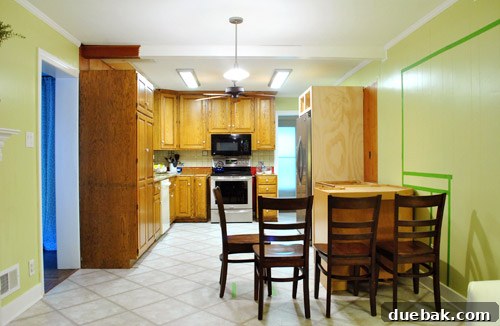
Determining the exact placement of our new 8-foot wall opening was a meticulous process driven by our overall kitchen and dining room design goals. Our vision centered on creating a cohesive open-concept space that maximized functionality, light, and flow. Key to this planning was the strategic placement of major kitchen elements. We knew we needed to build in our refrigerator and relocate an existing 36-inch cabinet (which previously occupied the space now designated for the stove). These foundational adjustments allowed us to begin finalizing the placement of our kitchen peninsula, which in turn would define the precise location of our wall opening.
A significant breakthrough came when we discovered a corner cabinet at the ReStore. This acquisition was pivotal, as it enabled us to accurately visualize how all the new elements would sit against that wall. With this piece in hand, we could finally make an informed decision on the exact spot for the opening. Even with some elements still missing—we’re currently searching for an 18-inch cabinet to complete the peninsula—we used painter’s tape to mark the floor, simulating the final dimensions. We even brought in four chairs to fully envision the seating area that will eventually accompany our new 3-foot by 5-foot counter, which will feature a 12-inch overhang on the two sides where seating will be.
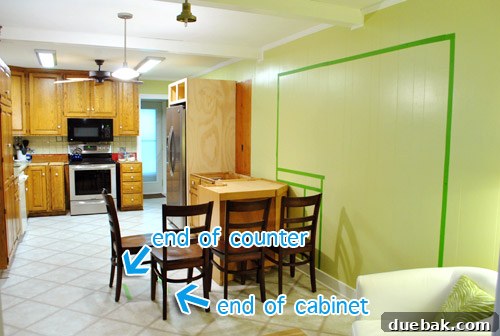
Beyond the peninsula, we ensured ample walking room—approximately 4 feet—beyond the stools to maintain comfortable circulation. A crucial design decision was to align one side of the opening perfectly with the beginning of the peninsula. This deliberate alignment creates an intentional and balanced aesthetic, making the design appear thoughtfully planned rather than an afterthought. Furthermore, this careful positioning allows the entire 8-foot opening to line up almost flawlessly with the large picture window in the dining room. This visual continuity is key to making the newly added doorway feel as though it has always been an integral part of the home’s architecture, reinforcing that harmonious design always looks intentional.
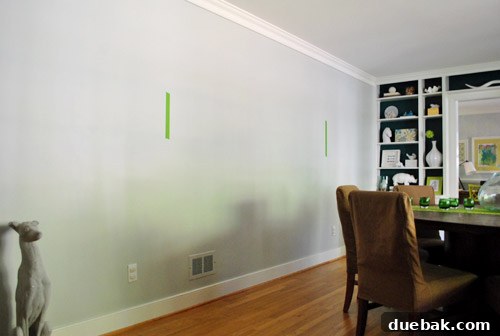
The Logic Behind Our Half-Wall Choice
Some have questioned our decision to opt for a half-wall instead of a full, expansive doorway with cabinetry accessible from the dining room side of the peninsula. We firmly believe the half-wall is the optimal choice for our specific needs and aesthetic preferences for several compelling reasons:
- **Intentional Design:** A half-wall prevents the peninsula from appearing like an unplanned addition, ensuring it feels integrated and purposeful within the space. Without it, the peninsula might look simply “placed” in the middle of a large opening.
- **Grounded and Supported Feel:** The half-wall visually grounds the peninsula, providing a sense of solidity and support. This helps to anchor the kitchen zone and prevents the peninsula from appearing as if it’s merely floating between two distinct rooms.
- **No Need for Additional Storage:** Our dining room already features ample built-in cabinetry. Adding more cabinetry or open shelving on the back side of the peninsula would introduce unnecessary visual clutter and storage redundancy, especially given the existing storage solutions.
- **Avoiding Visual Overload:** With substantial existing built-ins in the dining room, placing another form of built-in (like a bookcase or cabinet) less than three feet away from them would create an overwhelming and visually dense area. The half-wall provides a clean break.
- **Seamless Threshold Transition:** The half-wall significantly contributes to a more seamless flooring transition. Without it, there would be an awkward strip of cork flooring required between the peninsula cabinet and the dining room floor, disrupting the visual flow.

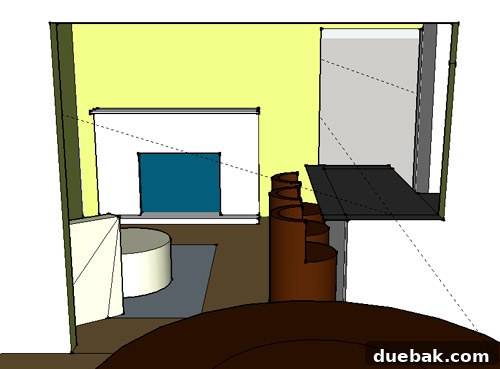
To further illustrate our vision, here’s a Google Sketch-up rendering of the view through our future doorway, incorporating our precise tape measurements:
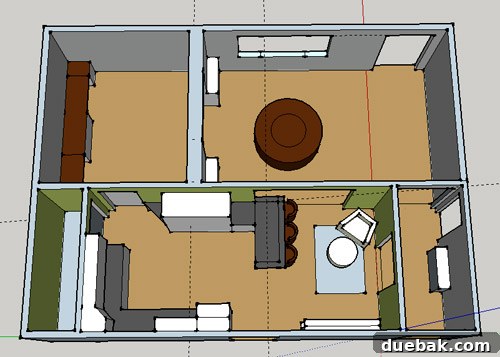
And to jog your memory, here’s the full floor plan sketch, providing a top-down perspective of the entire layout (you can find more details on this here):
Ready for Demolition!
And so, that brings you up to speed on our comprehensive planning phase. We’ve laid the groundwork, selected our trusted contractor, clarified our permit situation, and meticulously planned every detail of the opening. The stage is set for the transformation to begin. Stay tuned, as we anticipate sharing the thrilling demolition photos within the next 48 hours!
What significant projects are on your agenda this week? Did you tackle any exciting home improvements or enjoy a fun weekend activity? Share your experiences in the comments below!
Psst- The groomsman picture featured in this post was skillfully captured by David Abel.