
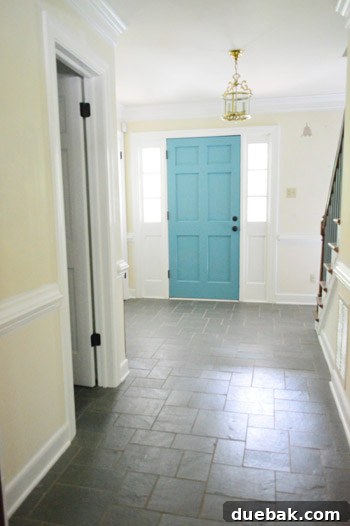
Transform Your Entryway: Painting Our Front Door Teal for a Vibrant Welcome
Every home has a story, and often, that narrative begins right at the front door. For us, the interior side of our front door, once a subtle and somewhat dusty blue, was practically whispering for a dramatic transformation. Much like a classic plea for artistic rendition, our entryway demanded a touch of vibrancy, a splash of personality that would greet us from the inside out. We envisioned more than just a fresh coat; we dreamed of a cohesive design statement, a welcoming embrace that began the moment we stepped through the threshold. It was time to infuse this critical transition space with a fresh energy.
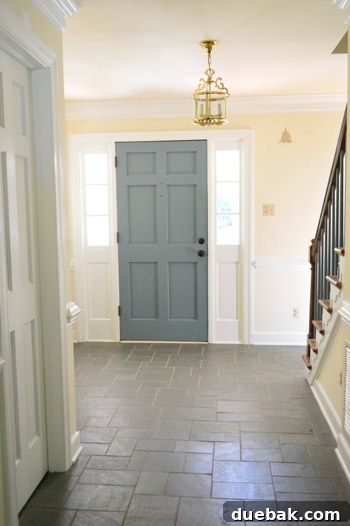
The chosen color for this ambitious makeover? None other than the same cheerful teal hue that already graced the exterior of our door. This wasn’t merely a coincidence; it was a deliberate design decision, a nod to continuity and a bold commitment to color that truly reflects our evolving home aesthetic. Choosing a consistent color ensures a seamless visual flow, creating a harmonious look that enhances both the curb appeal and the interior charm of our home.

The Impact of Color: Why a Bold Interior Door Elevates Your Entryway
While there’s no universal rule dictating that your interior door color must mirror its exterior counterpart (in fact, in our previous two homes, we opted for bright exteriors and classic white interiors), our current residence presented a unique opportunity. For the first time, our front door is flanked by elegant sidelights. This architectural feature begged for attention, a chance to be elevated beyond mere functionality. By extending the vibrant teal from the outside to the inside, we aimed to transform the entire door-and-window ensemble into a compelling focal point within our otherwise neutral and classic foyer. This bold choice brings a dynamic energy to the space, inviting the eye and setting a welcoming tone.
This approach isn’t just about painting a door; it’s about crafting an experience. A thoughtfully chosen interior door color can dramatically alter the perception of a space, injecting personality, warmth, and an immediate sense of style. In our case, the teal acts as a visual anchor, drawing the eye and making a statement without overpowering the room. It’s about creating moments of design delight, and a brightly painted door, especially when paired with pristine white sidelights, achieves just that. We drew inspiration from several striking examples that showcased the transformative power of a well-chosen door color:
- A classic Domino magazine feature: The timeless elegance and unexpected pop of color in this image truly captured our imagination, proving that bold choices can still feel sophisticated and effortlessly stylish.
- A study in contrast: The beautiful interplay of dark floors and light walls, accentuated by a vivid colored door, resonated deeply with our desire for impactful visual contrast and modern appeal.
- Subtle sophistication: While this door featured a more understated hue, it demonstrated the power of integrating color within an overall decorative scheme, illustrating how even softer tones can make a significant impact.
- Irresistible charm: This image, for us, was simply a testament to the sheer delight and character a well-chosen door color can bring to any home, making it feel more personal and inviting.
The message was clear: pristine white sidelights combined with a perfectly colored door creates a true design harmony and an undeniable interior appeal. This combination transforms a simple entryway into a statement piece. And, as you might have whimsically imagined, the painting process itself was an affair to remember, filled with focused determination and, dare I say, a touch of romance between painter and subject, as we meticulously brought our vision to life.

Mastering the Art of Door Painting: Essential DIY Tips for a Flawless Finish
Embarking on a door painting project can be incredibly rewarding, transforming a drab entryway into a vibrant statement piece. To ensure your endeavor is as smooth and successful as possible, here’s a comprehensive guide, packed with insights from our own experience. Whether you’re a seasoned DIYer or picking up a paintbrush for the first time, these tips will help you achieve a professional-looking finish that lasts for years to come.
For even more expert advice on enhancing your home’s exterior and interior, consider exploring resources like this website, dedicated to comprehensive painting tips and techniques.
1. Preparation is Paramount: Cleaning and Priming for Success
- Deglossing vs. Self-Priming: The initial condition of your door dictates the preparation required. If your door boasts a super shiny or glossy finish—whether it’s sealed wood or painted with semi-gloss/high gloss paint—a liquid deglosser is your best friend. This product chemically dulls the surface, creating a rough texture for new paint adhesion without the need for extensive sanding. Simply wipe it down thoroughly before priming and painting. However, if your door, like ours, starts with a chalky, matte finish, you might be able to skip the deglossing step entirely, especially if you’re using a high-quality, self-priming paint. We opted for a self-priming quart of Benjamin Moore’s MooreGlo paint in Blue Lake, which saved us a valuable step and ensured excellent coverage and durability. This particular paint offers a semi-gloss-like finish known as “Soft Gloss,” ideal for high-traffic areas like doors due to its enhanced resilience and ease of cleaning.
- Thorough Cleaning: Regardless of whether you degloss or not, always start with a meticulously clean surface. Wipe down the door thoroughly with a mild household cleaner to remove any dirt, dust, grease, or grime. A clean, smooth canvas is absolutely crucial for optimal paint adhesion and a flawless final appearance.
2. Optimize for Drying: Timing and Environmental Factors
- The Morning Start Advantage: Whenever painting the front or back of exterior doors, my preferred method is to begin the project in the morning. This strategic timing allows the door to remain open (even just slightly cracked) throughout the day, providing ample ventilation and crucial drying time. This is especially important for the paint to cure properly before you need to close and lock the door at night, preventing sticking, smudging, or damage to the fresh coat.
- Humidity Check is Key: Always pay close attention to the weather forecast. High humidity can significantly extend paint drying times, sometimes by several hours. While an hour might suffice between coats on a dry, temperate day, allow two hours or more if the air is heavy with moisture. Rushing the drying process can lead to uneven finishes or peeling paint down the line.
3. Choosing Your Tools: The Brush vs. Roller Debate
- Angled Brush Preference: I personally find that an angled brush offers the most control and precision for painting the entire door, especially around detailed panels, raised edges, and tight corners. It allows for crisp lines and smooth, even coverage in intricate areas.
- Foam Roller Alternative: My partner, John, on the other hand, is a big fan of foam rollers for their ability to provide a smooth, streak-free finish on large, flat surfaces. Ultimately, the choice between an angled brush and a foam roller often comes down to personal preference and the specific door style. You might even find that a combination works best – using a brush for intricate areas and a roller for larger flat sections to maximize efficiency and achieve a flawless result.
4. The Strategic Painting Order: For a Seamless and Flawless Finish
Achieving a professional-looking finish on a paneled door requires a specific order of operations to prevent drips, uneven coverage, and visible brush strokes. This systematic approach ensures every part of the door gets adequate attention and paint, leading to a smooth, factory-like appearance. Here’s the sequence I follow:
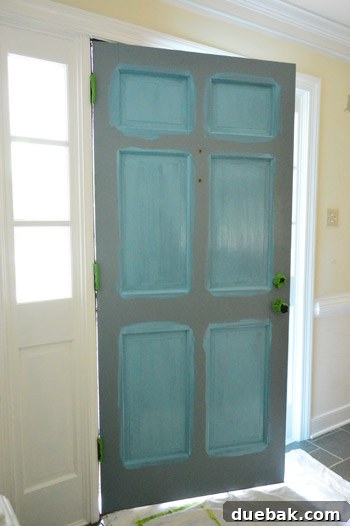
- Panels First (Frames): Begin by painting the frames of each raised rectangle (the recessed panels). This ensures you get paint into all the crevices and corners first, before moving to the flatter areas.
- Inside the Panels (Flat Areas): Once the frames are done, paint the inside flat areas of each panel. This systematic approach, as seen in the photo below, prevents accidental drips onto already painted flat surfaces and helps maintain a clean line.
- Flat Planks (Directional Strokes): Next, move to the flat planks around and between the panels. Always follow the grain or direction of that plank for the smoothest finish. For instance, pull your brush from top to bottom for vertical planks (like the one down the middle of the door).
- Horizontal Slats: Then, move from left to right to cover all the horizontal slats, ensuring even coverage across these sections.
- Vertical Sides (Last Touches): Finally, drag your brush from top to bottom to complete the vertical sections on each side of the door. This method ensures thorough coverage and a smooth, consistent appearance across the entire door.
5. Multiple Coats and the Virtue of Patience
- Layering for Durability and Depth: After applying the first coat, allow approximately an hour (or longer if the humidity is high) for it to dry completely to the touch. Then, repeat the entire painting process, following the same precise order for the second coat. This layering ensures full color saturation, provides a deeper, richer hue, and significantly enhances the durability and longevity of the paint finish.
- The Final Cure: After the second coat, it’s crucial to give the door the rest of the day to dry and fully cure. Avoid closing and locking it for the night until you are absolutely certain it is dry, as rushing this step can lead to smudges, sticking, or even peeling paint. Patience here ensures your hard work pays off with a beautiful, lasting result.
6. Hardware Dilemma: To Remove or To Tape?
- The Ideal Scenario: Removal: Ideally, I prefer to remove all hardware—doorknobs, hinges, strike plates, and any decorative elements—before painting. This eliminates the need for precise taping, significantly reduces the risk of paint getting on the hardware, and ensures a cleaner, more professional edge where the door meets the fixtures.
- When Practicality Wins: Taping: However, life often intervenes, and sometimes convenience takes precedence. On this particular day, with our little one, Clara, having an “off day,” I worried that the time spent meticulously removing and reinstalling hardware would exceed my available window (and her nap schedule!). Consequently, we opted to carefully tape off the hardware this time, a compromise we also made when painting the front of the door previously. While removal is always preferred for the absolute best results, careful and precise taping can still yield excellent results when time or other constraints are at play.
The Unveiling: A Bright New Welcome and Spatial Transformation
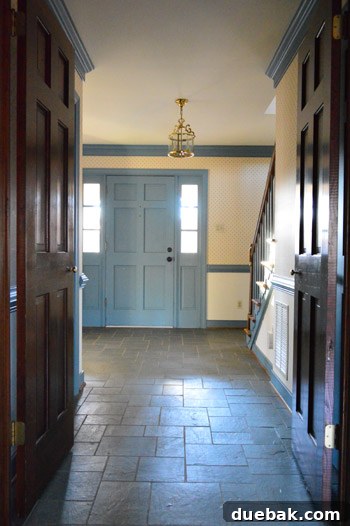
Once the paint had thoroughly dried and the vibrant teal had settled into its new home, the back of the door radiated an undeniable charm. The transformation was immediate and palpable. Admittedly, with our existing yellow walls and a brassy light fixture, the combination initially presented a playful clash of colors. However, this is merely the beginning of our entryway transformation. We are holding steadfast to our vision, confident that as we tackle the remaining elements on our extensive to-do list – from selecting the perfect wall colors to introducing new furnishings – everything will coalesce into a harmonious and intentional design. It’s a journey, as the old saying goes, where “the middle makes no sense,” but the end result is always worth the creative chaos and temporary incongruities.
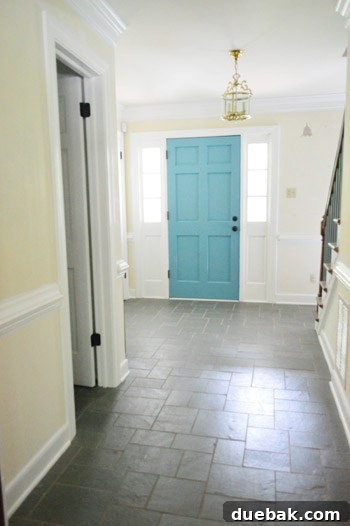
This vibrant change is undeniably a more welcome sight than its “before” picture. The transformation is immediate and palpable; we can almost breathe a collective sigh of relief as we step into this refreshed space. And, quite curiously, the ceilings in the foyer now seem to soar, appearing at least a foot taller than before. It’s a testament to the remarkable power of color and strategic design in altering spatial perception, making even small entryways feel more expansive and inviting. This visual trickery is one of the many joys of home renovation.
My favorite “after” shot captures not just the beauty of the newly painted door, but also the essence of our home life, with a beloved husband and child gracing the background. It’s a snapshot of joy and the lived-in beauty of our evolving space. The rich, dark doorknobs and hinges, a subtle yet significant detail, complement the teal beautifully, adding a touch of sophisticated contrast that ties the whole look together. These small details contribute immensely to the overall aesthetic and character of the entryway.

The Journey Continues: Our Ongoing Home Renovation Story
What’s next on our home improvement agenda? More painting, of course! The brushes are ready for their next mission. We are currently sifting through a myriad of paint swatches, meticulously selecting the perfect hue for our foyer walls to complement our newly vibrant door. The half-bathroom vanity still awaits its finishing touches of paint, and yes, you guessed it – the blue spindles on the stairs are next in line for their much-anticipated transformation. This is just a glimpse of the myriad of blue-trimmed and wallpapered rooms that populate our extensive to-do list, each awaiting its own moment of revitalization. Our fingers might just permanently adopt the curve of a paintbrush, but as they say, beauty often comes with a touch of delightful pain, especially when crafting a home filled with love and personal expression.
Curious about our final wall color selection for this space? Discover the chosen wall color: Benjamin Moore’s Edgecomb Gray, and see how it beautifully complements our vibrant teal door, bringing our entryway vision closer to completion.
It might sound peculiar, but the more effort, creativity, and yes, even sweat, we pour into transforming this house, the more it truly feels like home. It’s akin to forging a deeper connection through shared experiences, much like enduring a challenging journey with someone only to emerge closer than ever. All these painting projects, while sometimes demanding, are not just about aesthetics; they are about bonding with our space, imbuing it with our spirit, and building a foundation of love. This house is becoming a canvas for our dreams and our dedication, much like the enduring story of Jack and Rose, where commitment echoes through time: “I’ll never let go. I’ll never let go…”
Psst- Wondering where we sourced specific items in our home? Simply click the button below to explore our curated selections and discover the pieces that make our house a home: