
Revitalize Your Bathroom: A Comprehensive Guide to Caulk, Tile & Fixture Upgrades
Is your bathroom looking a little lackluster? Does old, dingy caulk detract from an otherwise charming space? You’re not alone. Many homeowners face the challenge of updating an aging bathroom without the hefty cost and disruption of a full demolition. This guide will walk you through a practical, mini-overhaul that focuses on impactful details like caulk, tile, and fixtures, ultimately changing the way you perceive your bathroom – or any area of your home plagued by worn-out caulk.
Our journey began with a mission: to salvage the unique character of our vintage basketweave tile. Instead of tearing everything out, we opted for a targeted approach, addressing the most noticeable signs of wear and tear. The results were not just aesthetically pleasing but also incredibly satisfying. Let’s dive into the process.
The Before Picture: A Glimpse into Our Bathroom’s Past
Every transformation story starts with a “before.” When we embarked on this project, our bathroom was a testament to years of use, with cracked grout, peeling caulk, and a general air of fatigue. The charm of the vintage basketweave tile was overshadowed by these imperfections, making the space feel dated and, frankly, a bit unhygienic. The following image captures the initial state – a visual reminder of the work ahead. It’s not pretty, but it’s an honest look at what we started with.
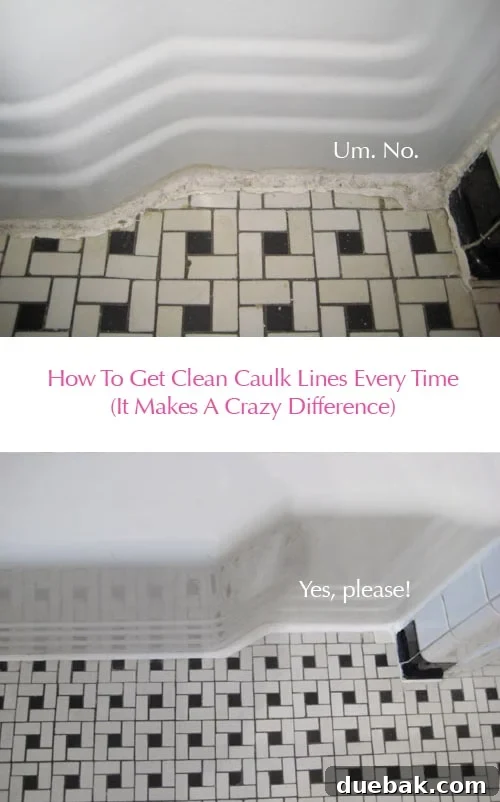
The decision to restore rather than replace was driven by our appreciation for the original features of our home. We believed that with a bit of elbow grease and strategic updates, we could bring our bathroom back to life, preserving its history while giving it a fresh, clean feel. This particular image below provides a broader view of the tile and grout issues we were up against.
Step 1: The Essential Task of Caulk Removal
The first and arguably most crucial step in achieving a truly refreshed bathroom is the proper removal of old caulk. This process might seem daunting, but with the right tools and a steady hand, it’s a manageable DIY task. Old caulk often harbors mold, mildew, and grime, making it an eyesore and a potential health hazard. Removing it completely ensures a clean slate for your new caulk, allowing it to adhere properly and provide a long-lasting, watertight seal.
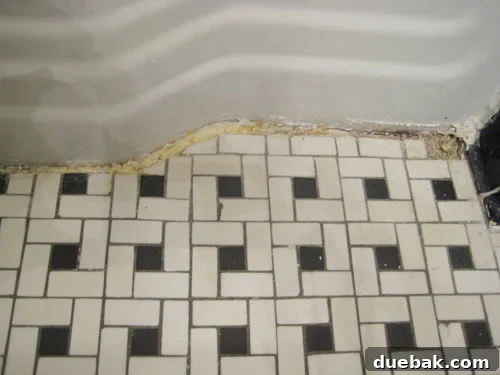
We began by carefully cutting out all the old caulk using a sharp utility knife or box cutter. Always use a fresh blade for the cleanest cuts and work slowly to avoid damaging the surrounding tiles or surfaces. Angle the blade to get underneath the caulk bead, making a cut along both edges where the caulk meets the tile or fixture. Once the edges are scored, you can usually peel away strips of caulk. For stubborn bits, a dedicated caulk removal tool or a stiff scraper can be incredibly helpful. Be thorough; any residual caulk can compromise the adhesion and appearance of your new application.
This image captures the process, showcasing the precision required for effective caulk removal:
After the bulk of the caulk is removed, scrape away any remaining residue. You might find a combination of dried caulk, soap scum, and mold. A wire brush or even a specialized caulk remover solvent can help with this. Finish by wiping the area clean with rubbing alcohol or an all-purpose cleaner to remove any grease or debris, ensuring the surface is perfectly dry and ready for the next step.
Step 2: Deep Cleaning Your Tiles
With the old caulk gone, the true condition of your tiles and grout becomes evident. Our vintage basketweave tiles, while charming, had accumulated years of grime. A deep clean was essential not only for aesthetics but also to prepare the surface for new caulk. For this crucial step, we employed a potent solution recommended by one of our insightful readers: 40% peroxide (purchased from a beauty supply store).
This strong peroxide solution is remarkably effective at lifting stains and brightening grout. However, it’s vital to use it with caution. Always wear gloves and eye protection, and ensure good ventilation in the bathroom. Apply the peroxide directly to the grout lines and tiles, allowing it to soak in overnight. This extended contact time allows the solution to penetrate and break down stubborn dirt and discoloration.
The next morning, armed with a stiff-bristled scrub brush, we vigorously scrubbed the tiles and grout. The effort paid off handsomely; the tiles looked significantly lighter and brighter, truly bringing out their original character. After scrubbing, thoroughly rinse the surfaces with clean water and allow them to dry completely before proceeding. A truly clean and dry surface is critical for the proper adhesion of new caulk.
Step 3: Mastering the Art of Taping for Perfect Caulk Lines
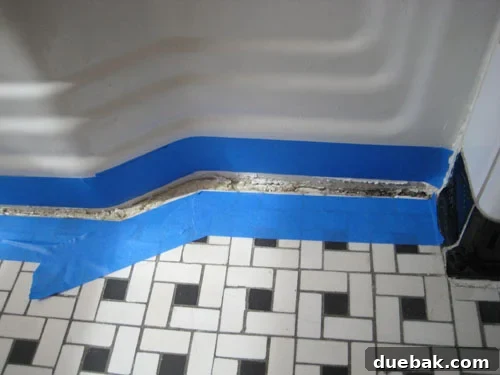
Achieving perfectly straight and uniform caulk lines can be challenging, especially for beginners. This is where painter’s tape becomes your best friend. Another fantastic tip from a helpful stranger (thank you, Mary!), taping off the areas to be re-caulked creates crisp, professional-looking edges. This technique not only makes the job easier but also drastically improves the final appearance, making your caulk lines look much more refined than freehand attempts.
To tape effectively, first, ensure your surfaces are completely clean and dry. Apply painter’s tape along both sides of the joint where you intend to apply caulk, creating a narrow gap for the caulk bead. Make sure the tape is pressed down firmly to prevent any caulk from seeping underneath. Use high-quality painter’s tape designed for clean removal, and ensure the width of the gap is consistent along the entire length of the joint for a uniform caulk bead.
Step 4: Applying the Perfect Caulk Bead
Now for the main event: applying the new caulk. Selecting the right type of caulk is crucial – for bathrooms, mildew-resistant silicone or acrylic latex with silicone is generally recommended for its flexibility and water resistance. Prepare your caulk gun by cutting the tip of the caulk tube at a 45-degree angle, making a small opening initially, which you can widen if needed. Puncture the inner seal with a long nail or wire.
Apply the caulk in a continuous, even bead along the taped gap. Maintain a consistent speed and pressure on the caulk gun, pulling it smoothly along the joint. Don’t apply too much, as excess can make smoothing difficult. Once the caulk is applied, it’s time to smooth it. A common and effective method is to use a wet finger, a caulk tool, or even an ice cube. Gently glide your chosen smoothing tool along the caulk bead to create a concave, uniform finish, removing any excess as you go. Work in manageable sections if the joint is long.
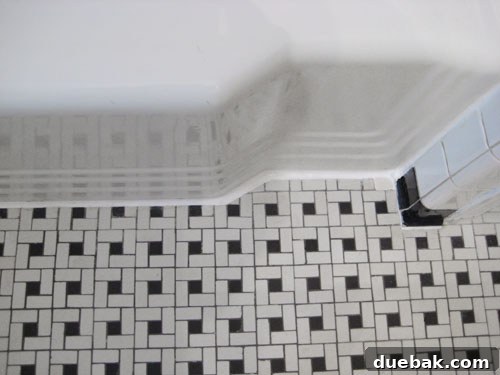
The most important tip for flawless caulk lines, especially when using painter’s tape, is to **remove the tape quickly before the caulk begins to set.** If you wait too long, the caulk will partially cure and can peel up with the tape, ruining your crisp line. Gently pull the tape at a 45-degree angle away from the freshly applied caulk. This “easy peasy” step is the secret to achieving those perfectly straight, professional-looking lines that make all the difference.
The Immediate Impact: A Transformed Space
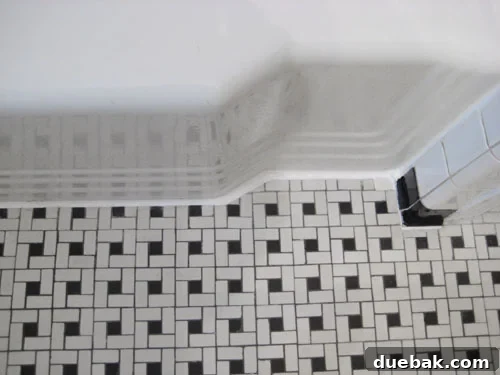
The difference made by cleaner tiles and a fresh, straight caulk line is truly astounding. The bathroom immediately feels brighter, cleaner, and more inviting. It’s remarkable how such seemingly small details can elevate the entire space. The dinginess that once pervaded the room was replaced by a sense of freshness and care. This transformation is not just superficial; it also contributes to a more hygienic environment by sealing out moisture and preventing mold growth.
During our mini-overhaul, we also tackled another specific issue: a missing tile in the top right-hand corner where the tub meets the wall. If you recall the initial image where we were cutting out the caulk, you might have spotted a gaping hole. Finding an exact match for vintage tiles can be a daunting task. While we couldn’t source an identical replacement, we found one that was “pretty close.” The beauty of strategic placement came into play here; the fabric shower curtain hangs down, completely obscuring this new caulk line and the slightly mismatched tile anyway. Yet, the peace of mind knowing that when a guest pulls back the curtain, they won’t be greeted by a “hairy surprise” (I’ll pause while you shudder. Go ahead, it’s ok.) is priceless. It’s these thoughtful touches that truly complete a renovation.
Beyond the Edges: Revitalizing Your Drain
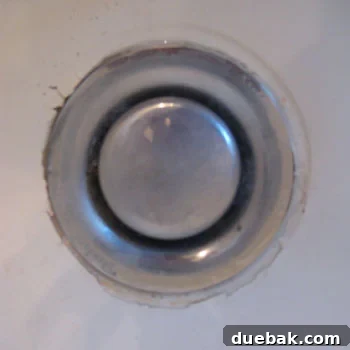
The impact of caulk isn’t limited to tile edges and corners. It’s also a magical solution for other neglected areas, such as a tired and unsightly drain. Our tub had been reglazed approximately eight years prior by the previous owner, and while the glaze held up beautifully everywhere else, the area around the drain had unfortunately degraded, showcasing a rather “gross-ish” appearance. Observe the “before” state of our drain:
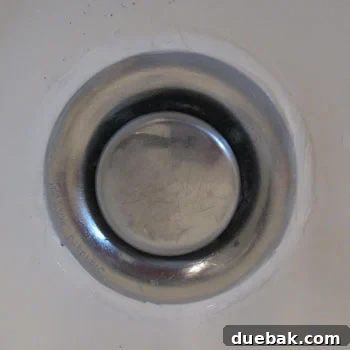
However, caulk truly is like magic in a tube. With careful cleaning and a fresh ring of caulk applied around the drain, the transformation was instant and dramatic. It sealed off the worn edges, created a clean boundary, and made the entire drain area look polished and new. This small detail often gets overlooked but contributes significantly to the overall cleanliness and appeal of the tub. Look at the remarkable difference a little application of this simple material can make:
Upgrading Fixtures: When to DIY and When to Call a Pro
While we were focused on improving the core aesthetics of our bathroom, we couldn’t ignore the old bath and shower fixtures, which had definitely seen better days. These were original to the house, making them over 51 years old. The corroded knobs, leaky faucet, and outdated design simply weren’t up to par anymore. Replacing fixtures is a significant upgrade that offers both functional and aesthetic benefits, improving water efficiency and giving the bathroom a more modern or desired style.
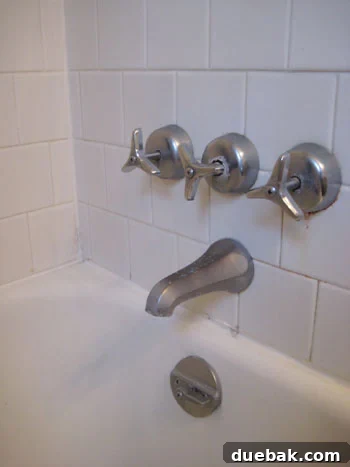
Initially, we considered tackling the fixture replacement ourselves. However, we quickly realized that this was a job best left to the experts. The “crazy old configuration of the pipes behind the wall” presented a formidable challenge. In older homes, plumbing can be intricate and unconventional, often requiring specialized tools and knowledge. We wisely decided to call in professionals, Mr. Rooter, for this task. It turned out to be an excellent decision, as they had to navigate unforeseen obstacles.
The team discovered a 2-inch cement wall that needed to be cut through with a diamond blade just to access the old, rusty pipes. This level of complexity is well beyond the scope of most DIY enthusiasts and highlights the importance of knowing when to say “uncle” and engage skilled tradespeople. It took two experts over four solid hours to complete the change, a testament to the unforeseen difficulties that can arise in older renovations. Luckily, they had provided us with a quote before uncovering the hidden cement wall, saving us from a potential budget shock.
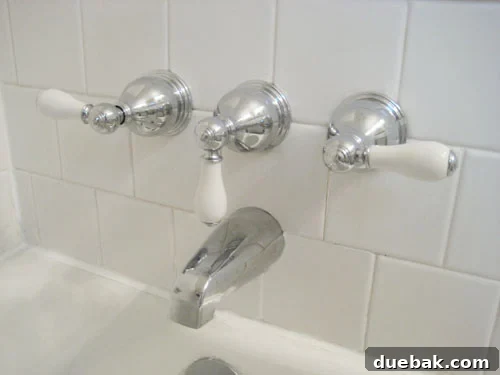
When it came to selecting new fixtures, our options were somewhat limited because we had to match the old three-across configuration of our prior faucets. However, with careful searching, we found a charming retro-ish set that perfectly complemented our black and white bathroom. Priced at a reasonable $136 from Home Depot, these new fixtures not only solved the corrosion and leakage issues but also enhanced the bathroom’s vintage appeal, proving that functional upgrades can also be stylish.
The Final Reveal and Lasting Impressions
The combination of meticulously clean tiles, crisp new caulk lines, and updated fixtures completely transformed our bathroom. What started as a tired, dingy space with peeling caulk and corroded hardware evolved into a bright, inviting, and hygienic sanctuary. Our beloved vintage basketweave tiles, once obscured by grime, now shine, celebrating the original character of our home. Mission Save-The-Basketweave was truly accomplished, thanks in large part to the collective wisdom shared by our community.
Even our furry family member, Burger, seemed to appreciate the mini-bathroom-overhaul. Just look at that happy gleam in his eyes! We are incredibly pleased with the results and the satisfaction of having tackled this project with a blend of DIY effort and professional expertise when needed. These types of targeted renovations prove that you don’t always need a complete tear-down to make a significant impact on your home’s comfort and appeal.

A Note on Longevity and Future Renovations
Update: While the cleaning and caulking tips detailed above provided a significant improvement and certainly tided us over for a considerable period, time, as it often does, eventually took its toll. A few years of continued use made it undeniably clear that our truly aged, cracked, and stained wall and floor tiles, despite our best efforts, ultimately couldn’t be saved indefinitely. Every renovation has its lifespan, and ours had reached its natural conclusion for some elements. So, in late 2009, we embraced the inevitable and embarked on a full, comprehensive bathroom overhaul. For those interested in the next chapter of our bathroom’s story and the details of a more extensive renovation, you can find those exciting details here. This journey demonstrates that sometimes, even the most effective mini-overhauls serve as excellent temporary solutions, preparing you for the larger projects down the line.