
Modern Bathroom Makeover: Replacing Dated Tile with Sleek Glass Subway Tiles
We love sharing our home improvement journeys with you, and sometimes that includes a quick note about staying connected! If you’ve noticed our updates or Instagram posts not appearing in your Facebook feed, Facebook made some changes. To ensure you don’t miss out on our latest DIY projects and inspiration, simply visit our Facebook page, hover over the “Liked” button, and make sure “Show in News Feed” is checked. This ensures all our future updates land directly in your feed!
Now, let’s dive into the exciting world of bathroom transformations!
Every home has those dated elements that just beg for a refresh. For us, it was the bathroom border tile – a “tree border” design that, while perhaps charming once, had definitely seen better days. It inspired more Lion King songs than spa-like serenity! If you’re tackling a similar dated tile removal project, you’re in the right place. We’re sharing our complete DIY guide on how we transformed our bathroom by replacing the old, busy border with a sleek, modern glass subway tile, bringing a much-needed breath of fresh air to the space.
The Before: A Tale of Dated Tiles and the Drive for a Modern Bathroom Aesthetic
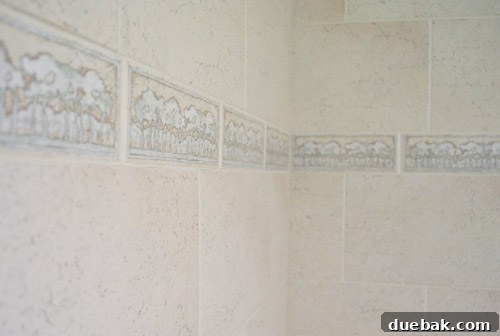
Our bathroom, like many older homes, came with its quirks. One prominent feature was a continuous tree-themed tile border that wrapped around all four walls of the room, creating an incessant pattern that dominated the space. This pervasive design made the room feel cluttered and visually heavy, directly conflicting with the modern, clean aesthetic we desired. It was more than just a style preference; the dated tree border was a visual distraction that prevented the bathroom from feeling like a tranquil retreat. This made it a prime candidate for a comprehensive bathroom tile renovation, moving towards a more contemporary and sophisticated look.
Demolition Day: Efficiently Removing the Old Tile Border
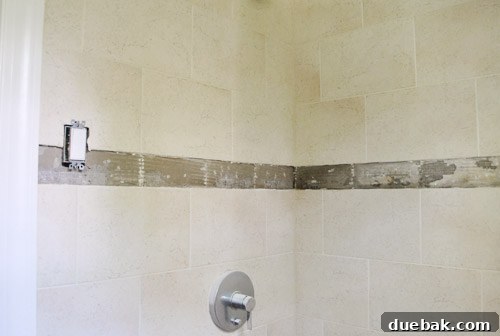
The crucial first step in any DIY home improvement project involving tile is often demolition. Removing the old tile border was more straightforward than some other tiling jobs we’ve tackled, thanks to the linear nature of the border. Armed with a Dremel tool, which is excellent for precise cuts and grout removal, and a trusty screwdriver for careful prying, we systematically began to remove the individual tree tiles. This process requires patience and a gentle touch to avoid damaging the underlying wall, especially since we planned to re-tile the exact same area. Gradually, the dated border gave way to a clean, prepared canvas, eagerly awaiting its modern upgrade. Clearing the old tile made an immediate visual impact, revealing the potential for a truly transformed space.
Choosing Our Modern Replacement: Sleek Glass Subway Tiles
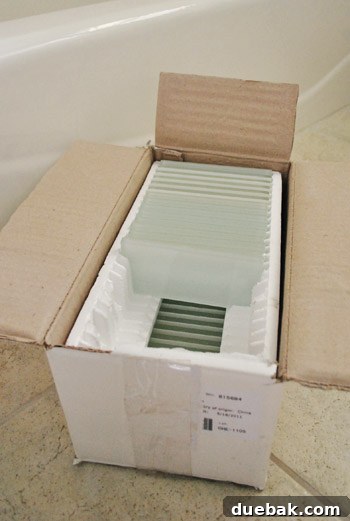
With the old tiles gone, the exciting part began: selecting the new border. We envisioned a truly modern bathroom aesthetic – clean, bright, and understated. Our choice fell upon clear glass subway tiles, specifically a product called “Glass Snow” from The Tile Shop. At around $50 for the entire box needed for the project, this was an incredibly affordable tile project that promised maximum visual impact. Glass subway tiles offer a sleek, contemporary look and have the added benefit of naturally reflecting light, which can make any bathroom, especially smaller ones, feel more spacious and airy. The transparency of the glass also allows it to subtly pick up surrounding colors, making it incredibly versatile. You can read more about our initial tile selection process and our adventures at the tile store, including our daughter Clara’s enthusiastic floor inspection, here.
Essential Tools & Materials for Your DIY Tile Installation
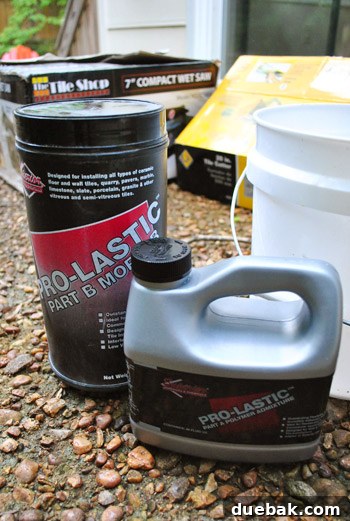
Having embarked on several tiling projects before, our tool collection was fairly comprehensive, saving us significant costs. For this particular subway tile update, our primary purchases were fresh thinset mortar and thinset admixture. Thinset is the adhesive that bonds the tiles securely to the wall, forming a strong, lasting connection. The admixture is a liquid additive that transforms the powdered thinset into a workable, paste-like consistency, ensuring optimal adhesion and flexibility. We sourced both from The Tile Shop for approximately $28, alongside our new tiles. Other crucial tools included a mixing bucket, a sturdy trowel for mixing, a specialized notched trowel for applying thinset, and precise tile spacers to ensure uniform grout lines. Later, we would rely on a manual tile cutter and a wet saw for specific cuts.
The Tiling Process: A Step-by-Step Guide for a Flawless Finish
1. Mixing the Thinset Mortar to Perfection
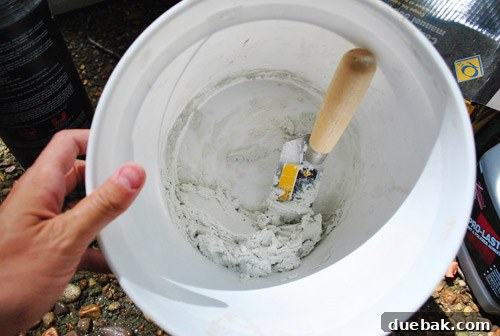
Achieving the correct consistency for your thinset mortar is absolutely critical for successful tile installation. It’s the foundation of a durable, well-adhered tile job. We mixed a small batch of thinset powder with the liquid admixture in a bucket, using a trowel. The goal is a smooth, lump-free mixture, similar to thick pancake batter or spackle. It should be firm enough to hold its shape when spread on the wall, but soft enough to allow the tiles to set properly with gentle pressure. While we captured a photo during the initial mixing, we continued to mix thoroughly until the perfect, uniform consistency was achieved – a vital step for preventing air pockets and ensuring a strong bond.
2. Applying Thinset Mortar to the Wall
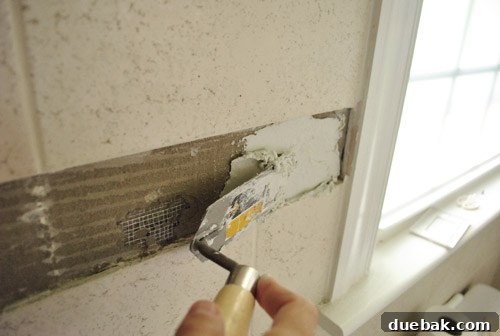
Given the narrowness of our tile border area, we found it efficient to initially spread a base layer of thinset onto the wall using the same trowel we used for mixing. This provides coverage. The key, however, is to then go back over this base layer with a small notched trowel. We picked up the smallest notched trowel available at Home Depot for about $3. The notched edge is designed to create uniform ridges in the thinset. These ridges are essential for proper adhesion, allowing air to escape when the tile is pressed into place, which prevents hollow spots and ensures a strong, even bond. This technique is fundamental to a lasting tile installation.
3. Precisely Placing the Glass Subway Tiles
With the thinset prepared, placing the glass tile border was surprisingly easy. Since we were replacing an existing border, the underlying surface was already level, which eliminated the need for complex leveling and made the job quite straightforward. We carefully pressed each tile into the thinset, using 1/8-inch rubber spacers to maintain perfectly consistent gaps for the grout lines. A crucial tip for working with glass tiles: some types are completely translucent, meaning thinset lines or imperfections can show right through. Fortunately, our chosen “Glass Snow” tiles feature an opaque film backing. This clever design hides the thinset completely while still providing that beautiful, clear glass appearance. This was a significant advantage, allowing us to focus on precise placement rather than worrying about perfectly smooth thinset application behind the tile.
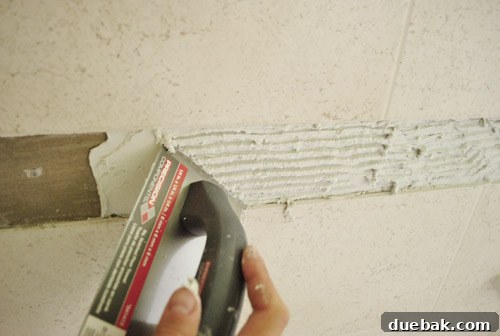
We systematically worked our way around all four walls of the bathroom, mixing additional batches of thinset as needed to ensure freshness and optimal working consistency. This methodical approach ensures a uniform and professional finish throughout the entire room, avoiding any dry or uneven spots.
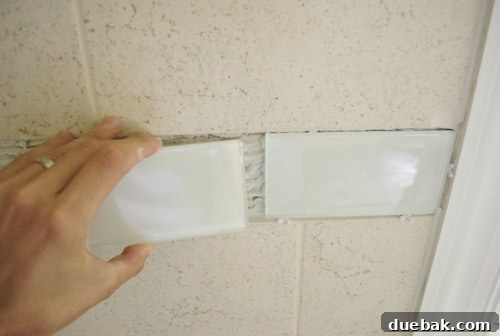
Here you can see the initial progress: one section of the wall beautifully tiled with the new glass border, and the adjacent area perfectly prepped with thinset, eagerly awaiting its new, sparkling glass tiles.
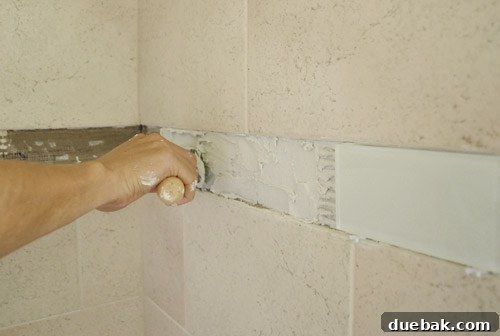
Tile Cutting Techniques: Achieving Precision for a Perfect Finish
While much of the tiling was straightforward, some areas, particularly corners and around fixtures like light switches, required precise cuts to ensure a seamless look. We relied on two main tile cutting tools for this project, each serving a distinct purpose.
The Manual Tile Cutter for Clean, Straight Lines
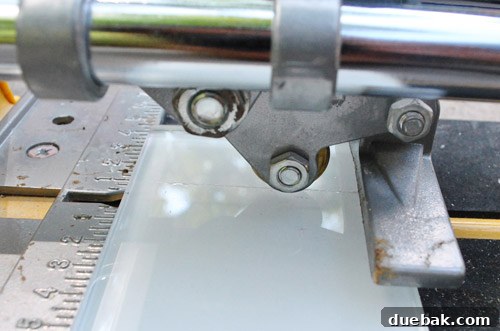
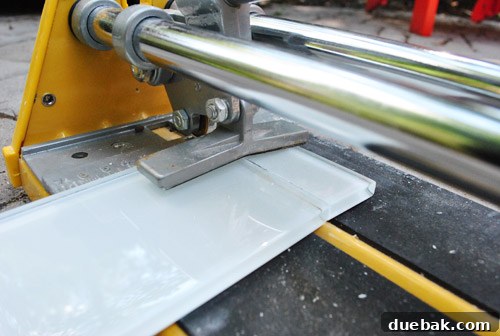
For most straight cuts, especially in the corners of the room where tiles needed to fit perfectly, we used our manual tile cutter. This tool proved invaluable, just as it did during our last bathroom’s subway tile installation. It’s fantastic for achieving fast, clean, and perfectly straight cuts on tiles like these glass subway pieces. The process is simple yet effective: you align the tile with a guide, score the surface with the integrated blade, and then apply pressure to snap the tile cleanly along the score line. It’s an incredibly efficient method for repetitive straight cuts and significantly speeds up the DIY tile installation process, making it a favorite for home renovators.
When a Wet Saw is Essential: Notching Around Fixtures
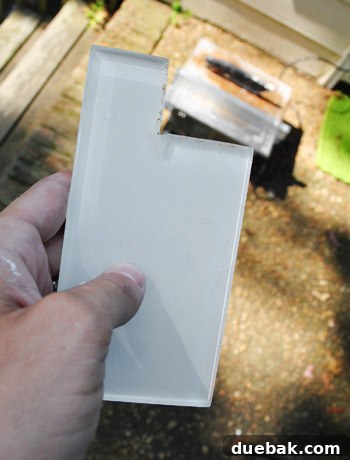
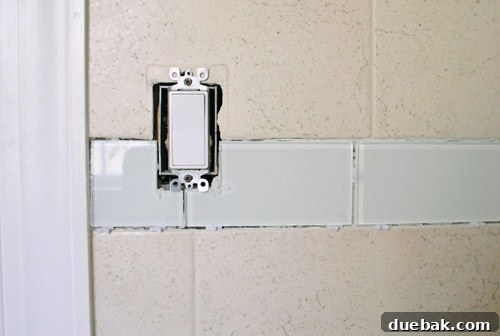
For more complex cuts, such as notching out just a corner of a tile to fit perfectly around a light switch, a wet saw became an absolute necessity. While setting up a wet saw for just a few small, intricate cuts might seem like overkill, it’s often the only reliable way to achieve precise, clean, and intricate shapes without cracking fragile glass tile. These specialized cuts are crucial for achieving a truly professional finish around obstacles and fixtures. Although our wet saw cuts weren’t 100% flawless in every single detail, the light switch cover would discreetly conceal any minor imperfections at the corners, a common and practical trick employed in many home improvement projects.
Project Timeline: Efficiency and the Importance of Curing Time
One of the most appealing aspects of this bathroom refresh was its surprisingly manageable timeline. The entire process of getting supplies ready, tiling all four walls, and then cleaning everything up took us just about two hours – precisely the duration of our daughter Clara’s nap! This efficient turnaround made it an ideal “naptime project” that could be easily tucked into our busy schedule. We completed the demolition in one nap, and the re-tiling in another. However, patience is key: after tiling, it’s absolutely crucial to allow the thinset to cure completely, typically for at least 24 to 48 hours, before moving on to grouting. Rushing this critical step can compromise the bond and stability of your newly installed tiles, leading to costly issues down the line.
The Finishing Touches: Grouting and Sealing for Longevity
Selecting and Mixing the Grout for a Cohesive Look
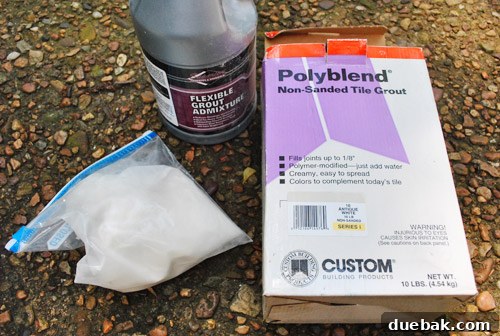
The next day, with the thinset fully cured and the tiles firmly in place, it was time for grouting. Initially, we debated the ideal grout color for our sleek glass tiles. Our first aesthetic choices would typically be a pure white or a soft gray to complement the modern look and emphasize the clarity of the glass. However, we discovered a fortunate find: the previous homeowners had left leftover “Antique White” grout from their basement project. While this wouldn’t have been our primary aesthetic choice for brand-new glass tiles, matching the existing grout in the rest of the bathroom took precedence for achieving a perfectly cohesive and integrated look. We mixed the leftover grout with some leftover grout admixture from a previous kitchen project, ensuring a consistent, toothpaste-like texture that was perfect for smooth, even application.
Grout Application and Efficient Cleaning
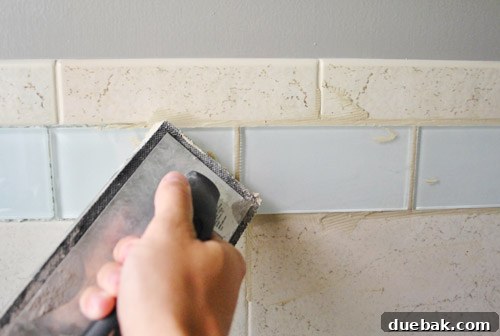
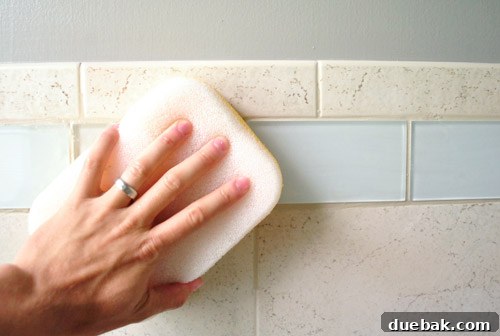
Using a grout float, we generously spread the mixed grout over the tile surface, working it firmly into all the gaps and grooves between the tiles. This step ensures that every space is fully packed, providing stability and a uniform appearance. Once all the spaces were thoroughly filled, we allowed the grout to set for a few crucial minutes. Then, with a damp sponge, we carefully wiped away all excess grout from the tile faces, revealing the clean lines and shiny glass beneath. This entire grout application process was surprisingly quick and efficient, taking only about 45 minutes – another “Clara nap” success! Quick action on cleanup prevents grout haze and makes the final finish sparkle.
Sealing the Grout Lines for Lasting Protection
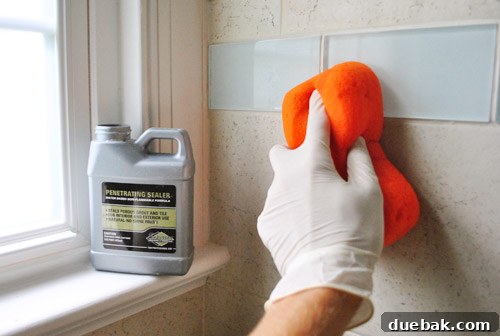
The final, crucial step in completing our bathroom tile renovation was grout sealing. This process applies a protective barrier to the grout lines, shielding them from moisture penetration, preventing unsightly stains, and inhibiting mildew buildup – all of which are especially important in a humid bathroom environment. We used leftover sealer from our kitchen project, applying it generously with a sponge according to the product instructions, then wiping off any excess a few moments later to avoid residue. This quick but vital step took so little time that it was easily done while Clara was awake and happily playing nearby in the other room. A little caulk in the corners of the shower area completed the watertight finish, ensuring durability and ease of maintenance for years to come.
The Stunning Transformation: A Modern Bathroom Reveal
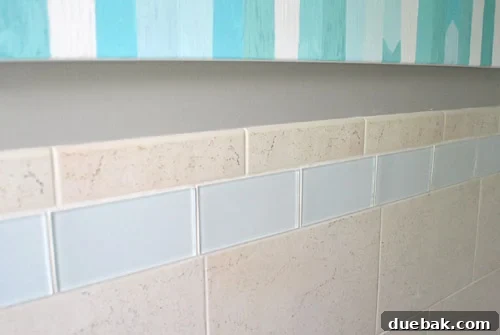
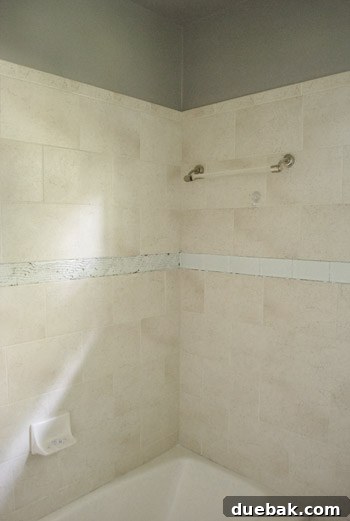
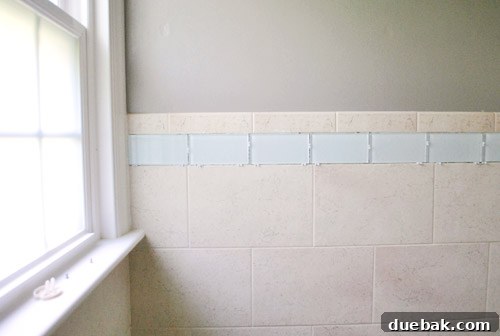
The entire project – from demolition of the old, dated tiles to the precise installation of new glass tiles, careful grouting, and final sealing – took approximately 2.5 Clara naps, which translates to about 6 hours of active work. Not bad at all for a complete bathroom tile update that delivers such a dramatic visual change! The transformation is truly remarkable. The clear glass tiles gleam, beautifully reflecting light around the room and instantly making the space feel fresher, brighter, and significantly more updated. Gone is the heavy, dated tree border, replaced by a sleek, minimalist design that enhances the entire room’s ambiance.
While we aren’t always enthusiastic about border tiles in general, this modern glass border is a vast and undeniable improvement over the previous design. For a total tile cost of just $50, this was an incredibly worthwhile update that delivered immense value for money. (A quick note: the light switch isn’t actually in the shower; it’s a tricky angle captured without the shower curtain in place. Rest assured, it’s safely located outside the splash zone, adhering to all safety standards!)

These photos, honestly, don’t quite capture the full, dazzling effect. The way the clear glass catches and plays with light truly elevates the entire room, adding depth and brilliance that’s hard to convey digitally. It’s truly one of those projects you need to see in person to fully appreciate its understated elegance!

The space now feels significantly simpler and far less busy compared to the old tree drawings that once encircled the room. It’s a powerful testament to how much a single, thoughtful design element, like a modern tile border, can positively impact the overall feel and perceived size of a space, creating a serene and uncluttered environment.
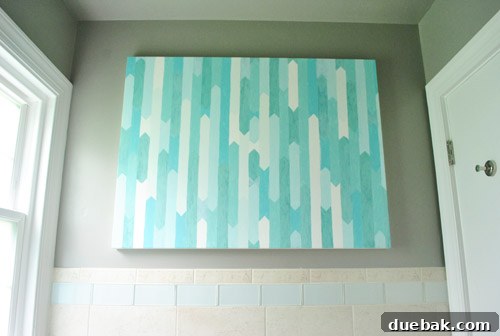
Looking back at the “before” shot of the room, captured before we started any updates, the transformation is truly remarkable and speaks volumes about the power of a strategic renovation. The new glass border, though completely clear and shiny, subtly picks up and integrates tones from the bathroom art and the blue glass pendant light. This introduces a cool, balancing tone to what was previously a very warm and beige-heavy room. The existing beige tiles, which wouldn’t have been our first choice, now feel harmonized and complemented by the sleek, modern border, creating a more balanced and appealing color scheme.
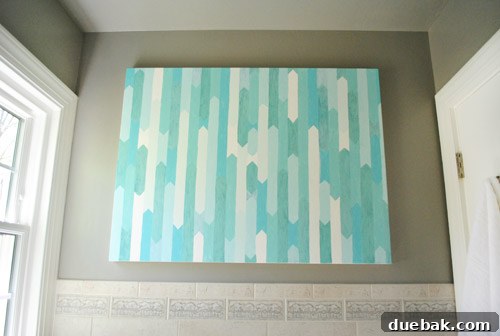
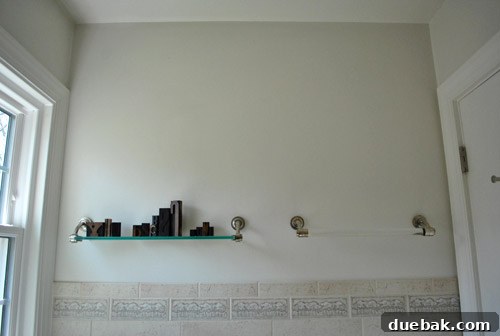
We’re particularly pleased that we were able to use the same “Antique White” grout the previous owners originally used. This small but significant detail creates a seamless integration with the existing bathroom finishes, making it look as though this elegant glass border has always been a thoughtful part of the bathroom’s design. This outcome is far superior to a mismatched “new border installed with old tiles” look, providing a cohesive and polished appearance. What a relief to achieve such a perfectly blended result!
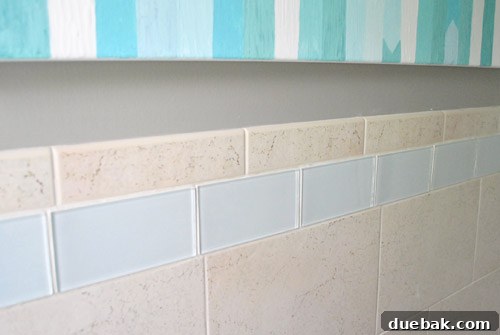
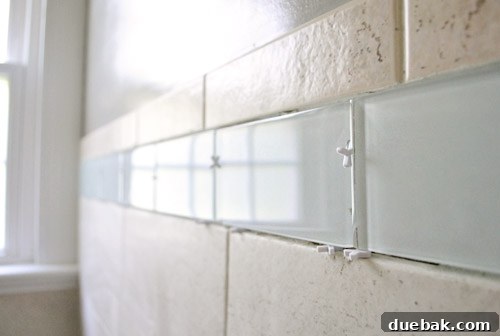
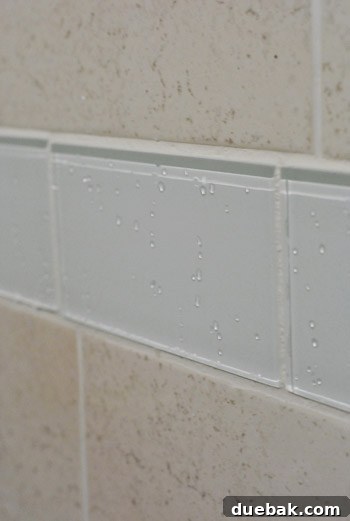
The glass tiles truly come alive and exhibit their full potential when wet. We adore how little drops of water bead on the surface, creating captivating reflections that elegantly play through the clear glass, enhancing its luxurious feel and adding an extra dimension of visual interest to the bathroom.
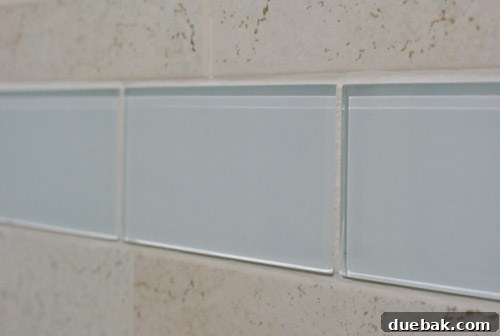
Even though they are clear, the glass tiles possess a subtle chameleon-like quality, picking up surrounding hues. In this shot, for instance, they take on a delicate blue-green tint, specifically reflecting the artwork positioned just above them. This demonstrates their versatile visual appeal and ability to adapt to and enhance the existing color palette of any room.
Budget Breakdown for Your DIY Tile Project
Transparency is key in DIY home improvement projects, so here’s a detailed look at the direct costs involved in our bathroom tile renovation:
- Clear glass subway tile (“Glass Snow”) from The Tile Shop: $50
- Thinset mortar and Thinset Admixture from The Tile Shop: $28
- Small trowel and tile spacers from Home Depot: $6
- Subtotal for direct materials: $84
Additionally, we invested in a Dremel Multimax, priced at $130 (including a special grout head) which was used for the initial tile removal. While this increased the overall project cost to $214, the Dremel has quickly become an indispensable multi-purpose tool in our arsenal, proving incredibly useful for numerous other projects around the house, including deck work and future bedroom renovations. It’s an investment that significantly pays off over time by facilitating various DIY tasks.
Conclusion: A Fresh Look, Achieved with Ease and Smart Planning
We often get asked why we tackle “semi-big” projects like this alongside larger, slower-moving endeavors such as our ongoing deck renovation. The answer is simple: flexibility and smart planning. While the deck demands significant blocks of time and specific weather conditions, our bathroom tile project was perfect for short bursts of activity, fitting neatly into “Clara-nap” intervals. This strategic approach allows us to keep multiple DIY home improvement projects moving forward simultaneously, giving us a continuous sense of accomplishment without feeling overwhelmed by lengthy commitments.
The transformation of our bathroom with these modern glass subway tiles has exceeded our expectations. It’s truly amazing how a relatively small change in scope, undertaken with careful planning and the right techniques, can have such a dramatic and positive impact on a room’s character and overall feel. We hope our detailed, step-by-step guide inspires you to take on your own bathroom refresh or tile update project, proving that a significant style upgrade can be both achievable and rewarding!
Are you currently working on any bathroom renovations or tiling projects in other rooms, like the kitchen? We’d love to hear about your experiences, your creative solutions, and see your amazing transformations in the comments below!
Psst – Eager to follow this bathroom sprucing project from its very beginning? Explore all our updates in order:
- Planning the Master Bathroom
- Bathroom Painting Update
- Swapping the Light Fixture
- Art and Trim Painting
- Toilet Updating
- Window Frosting & Shampoo Wrangling
- Toilet Selling/Buying & Door Cutting
- Pre-Tiling Prep