
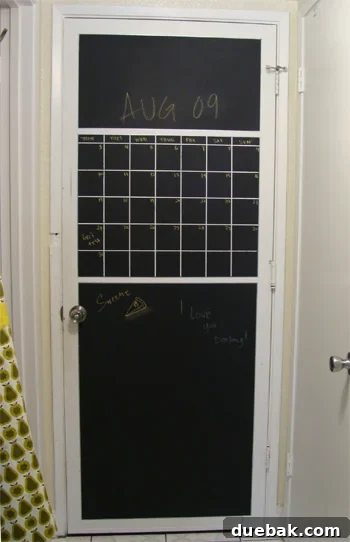
Transform Your Home with an Ingenious DIY Chalkboard Door Calendar
In the world of home decor and organization, few things combine utility with aesthetic appeal as brilliantly as a DIY project that truly solves a problem. We’re always on the lookout for innovative ideas that empower homeowners to create functional, beautiful spaces without breaking the bank. So, when Lyzz shared her truly remarkable DIY chalkboard door project with us, we knew instantly that this was a gem we had to showcase. Her inventive approach to a common household challenge resulted in a dynamic message board and calendar that is as practical as it is charming. This isn’t just another craft; it’s a smart solution for busy lives, proving that with a little creativity, an ordinary door can become an extraordinary focal point for family communication and organization.
Lyzz’s journey to this brilliant creation began, as many great DIY stories do, with a search for inspiration and a dash of frustration. She had been a dedicated reader of our blog for about six months, soaking in daily doses of creative ideas and practical advice. Like many enthusiasts, she envisioned transforming a wall with the rustic charm and endless possibilities of chalkboard paint. However, the reality of living in California, where most homes feature textured walls, presented a significant roadblock. Chalkboard paint, to truly shine and be functional, requires a smooth surface – something textured walls simply can’t offer without extensive and often costly preparation.
But Lyzz wasn’t deterred. Instead of abandoning her dream, she pivoted, seeking an alternative canvas within her own home. Her solution was both simple and profound: leverage an existing smooth surface – the door connecting her house to the garage. This often-overlooked utility door was about to be reimagined into a central hub for her family’s daily activities. The ingenuity of this choice not only bypassed the textured wall dilemma but also created a highly visible, easily accessible organizational tool right where it was needed most. Let’s dive deeper into how Lyzz turned a practical need into a stunning and incredibly functional DIY masterpiece, and how you can replicate her success to bring similar organization and flair to your own home.
Beyond Textured Walls: Lyzz’s Innovative Approach to Chalkboard Functionality
The allure of a chalkboard wall is undeniable. It offers a unique blend of vintage charm, modern functionality, and a constantly evolving artistic canvas. From kitchen walls displaying weekly menus to children’s playrooms encouraging creative expression, chalkboard paint has become a staple in contemporary home design. Yet, for many homeowners, particularly those in regions like California where stucco and textured finishes are prevalent, the dream of a seamless chalkboard surface remains just that – a dream. Applying chalkboard paint to an uneven, textured wall often results in a bumpy, inconsistent finish that is difficult to write on, challenging to erase cleanly, and ultimately detracts from the desired aesthetic. The uneven texture creates shadows and crevices where chalk dust can get trapped, making clean erasure nearly impossible and leaving behind ghosting that compromises future messages.
This was precisely the challenge Lyzz faced. Rather than conceding defeat to her home’s textured surfaces, she embarked on a quest for an alternative that would deliver the smooth, writable canvas she craved. Her stroke of genius came in identifying an often-underutilized, perfectly smooth surface: the interior side of the door that connects her main living space to the garage. This particular door is usually a utilitarian entry point, often overlooked in terms of decorative potential or treated as merely a functional divider. However, Lyzz saw it as a vast, untapped opportunity – a blank slate ideally suited for transformation into a dynamic communication center.
Opting for the door provided multiple advantages. Firstly, it offered the perfectly flat, non-porous surface essential for optimal chalkboard paint application and subsequent functionality. Unlike a wall that might require extensive sanding, patching, and priming to achieve a suitable texture for chalkboard paint, a standard interior door typically provides an inherently smooth foundation. Secondly, its strategic location – a high-traffic area between the garage and the main house – ensured that any messages, reminders, or calendar entries would be seen by everyone in the household daily. This made it an ideal candidate for a central family communication hub, maximizing its utility. Lastly, repurposing an existing door is an incredibly sustainable and budget-friendly approach, turning something mundane into a focal point of utility and style without needing to purchase new materials or embark on extensive renovations. Lyzz’s decision was not just practical; it was a testament to creative problem-solving in DIY, proving that limitations can often spark the most brilliant innovations and lead to unique, personalized solutions.
The DIY Process: Crafting a Personalized Chalkboard Calendar
Lyzz’s project didn’t just stop at creating a chalkboard surface; she elevated its functionality by incorporating a custom calendar grid. This thoughtful addition transformed a simple message board into a powerful organizational tool for her busy household, making it easy to track appointments, events, and daily tasks. The entire project was surprisingly quick, affordable, and yielded professional-looking results that look like they came straight from a designer catalog. Here’s a detailed look at the steps and clever tricks she employed:
Materials You’ll Need:
- Chalkboard Paint: A high-quality brand, a quart or smaller should suffice for a standard interior door.
- Painter’s Tape: For masking off door hardware, hinges, and the surrounding frame to ensure clean lines.
- Vehicle Pin Stripe Tape: Lyzz’s ingenious suggestion, specifically 1/8 inch width, for creating precise calendar grid lines.
- Paint Roller and Tray: A foam roller or one designed for smooth surfaces will provide the smoothest finish.
- Drop Cloth or Newspaper: Essential for protecting your floors and surrounding areas from paint splatters.
- Cleaning Supplies: Mild soap, water, and a clean rag for preparing the door surface.
- Measuring Tape and Pencil/Chalk: For accurately planning and marking out your calendar grid.
- Chalk and Eraser: For seasoning your new chalkboard and, of course, for writing!
Step-by-Step Guide:
- Thorough Surface Preparation: The success of any paint project hinges on proper preparation. Begin by thoroughly cleaning the door surface. Any dust, grime, grease, or oils can prevent the chalkboard paint from adhering properly, leading to an uneven finish and potential peeling. A simple wipe-down with a solution of mild soap and water, followed by a clean rinse with a damp cloth and then a complete dry, is usually sufficient. If your door has a particularly glossy finish, a light scuff sanding with fine-grit sandpaper (around 220-grit) can help the paint grip better, but often isn’t strictly necessary with modern chalkboard paints designed for various surfaces.
- Precision Masking: Carefully use high-quality painter’s tape to mask off any areas you don’t want painted. This includes door handles, hinges, and the edges of the door frame if you’re only painting the recessed panel or a specific section of the door. Take your time to press down the tape firmly along the edges to prevent any paint bleed-through, ensuring crisp, professional-looking lines.
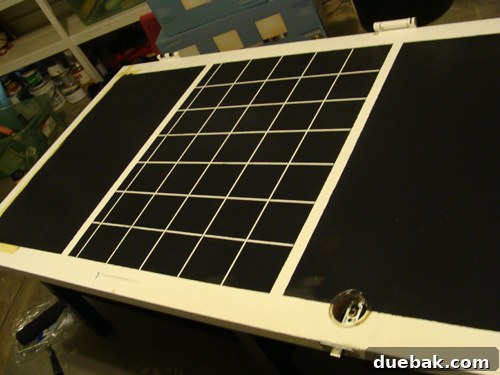
- Applying the Chalkboard Paint: Once the door is clean and meticulously masked, it’s time to apply the chalkboard paint. Pour a small amount into a paint tray and load your roller evenly. Using a high-quality foam roller or one specifically designed for smooth surfaces will help you achieve an even application without unsightly brush strokes or texture. Apply the first thin, even coat of paint, ensuring full coverage across your designated area. Avoid applying too thickly, as this can lead to drips and uneven drying. Allow ample drying time according to the manufacturer’s instructions, which is typically a few hours. Lyzz applied two coats, which is generally recommended for optimal durability, a consistent, deep black finish, and most importantly, true chalkboard functionality. For very light underlying colors or high-traffic areas, a third thin coat can sometimes be beneficial. Ensure each coat is fully dry before applying the next.
- The Ingenious Grid – Vehicle Pin Stripe Tape: This is where Lyzz’s project truly shines and deviates from typical chalkboard DIYs. Instead of using wide blue painter’s tape to create the calendar grid – which would have been impractical for creating thin, precise lines and could potentially lead to messy edges – her car enthusiast husband suggested using vehicle pin stripe tape. This type of tape is typically used for automotive detailing, comes in various widths (Lyzz used the 1/8 inch for a delicate look), and offers a remarkably clean, crisp line with a strong yet paint-friendly adhesive.
- Measuring and Applying the Grid: After the chalkboard paint has fully dried and cured (this is crucial – wait at least 24-48 hours, or even longer as per paint instructions, before applying tape to prevent lifting the paint), carefully measure out your desired calendar grid. Decide on the size of your daily squares based on the door’s dimensions and how much space you need for writing. Lightly mark your measurements with a piece of chalk or a very light pencil line that can be easily erased. Then, meticulously apply the vehicle pin stripe tape to form your horizontal and vertical lines, creating the days of the week and monthly sections. The narrow width of the pin stripe tape allows for incredibly precise, clean lines that truly mimic a professionally printed calendar grid. The adhesive is strong enough to stay put permanently but gentle enough to not damage the cured chalkboard paint, making it an elegant and lasting solution for the grid.
- Crucial Seasoning of the Chalkboard: This step is often overlooked but absolutely essential for a functional chalkboard surface that erases cleanly. Once the paint is fully dry and the tape grid is in place, take a piece of chalk and rub the side of it over the entire painted surface, covering it completely with a light layer of chalk dust. Then, wipe it clean with a dry cloth or a dedicated chalkboard eraser. This “seasons” the chalkboard, effectively filling in the microscopic pores of the paint. This process ensures that when you write on it later, your chalk marks will erase completely without leaving ghosting, permanent impressions, or faded lines, maintaining a fresh surface for every new message or schedule.

The Transformative Impact: Functional Beauty on a Budget
The immediate impact of Lyzz’s project is evident in its stunning visual transformation, turning an ordinary door into an eye-catching feature. However, its true genius lies in its profound functionality and incredible cost-effectiveness. For a mere investment of approximately $14, covering the cost of chalkboard paint and vehicle pin stripe tape, Lyzz created a custom organizational tool that rivals, if not surpasses, the utility and aesthetic appeal of much more expensive store-bought message boards or wall calendars.
An Organizational Powerhouse for Busy Lives:
For any bustling household, a central communication hub is invaluable. Lyzz’s chalkboard door calendar serves as precisely that, providing a dynamic space where everyone can stay informed. It’s perfectly positioned in a high-traffic area, ensuring that grocery lists, appointment reminders, school events, chore assignments, and even loving notes are seen by everyone entering or leaving the house. The large canvas of an entire door provides ample space, far more than most standard message boards, allowing for detailed planning for an entire month, week, or even just daily notes and doodles. This visual organization reduces forgotten tasks, missed appointments, and the general chaos that can accompany a busy family schedule, fostering a more harmonious and organized home environment.
Versatility Beyond the Calendar:
While the calendar grid is a brilliant and highly practical feature, the surrounding chalkboard space offers boundless possibilities for personalization and expanded utility. This extra real estate on the door can be used for a multitude of purposes, making it an incredibly adaptable tool:
- Meal Planning: Jot down the week’s dinner ideas, helping with grocery shopping and reducing last-minute meal decisions.
- Shopping Lists: A running tally of needed items for the grocery store, easily updated as things run out.
- Inspirational Quotes: A daily dose of positivity or a weekly mantra to uplift spirits.
- Creative Expression: A dedicated canvas for children’s drawings, artistic doodles, or holiday-themed artwork.
- Important Reminders: Quick, visible notes like “Don’t forget your lunch!” or “Call Grandma!” before leaving the house.
- Chore Charts: Assign tasks to family members and track completion, promoting responsibility.
- Brainstorming Pad: A space for quick thoughts, ideas, or even short problem-solving sketches.
The ability to easily erase and rewrite ensures that the board remains fresh, relevant, and endlessly adaptable to the household’s evolving needs, making it a truly sustainable organizational solution.
Aesthetic Appeal and Personal Touch:
Beyond its practicality, the chalkboard door adds a distinct touch of modern farmhouse charm, industrial chic, or minimalist functionality to any home. It’s a design element that is both understated and impactful, capable of blending seamlessly with existing decor while simultaneously adding a unique, personalized touch that reflects the family’s personality. The crisp, clean lines created by the pin stripe tape give it a professional, intentional look that elevates it beyond a simple painted surface, making it appear as a custom-designed fixture. Lyzz’s decision to utilize an often-plain utility door transformed it into a custom piece of functional art, demonstrating how mindful design can integrate seamlessly with daily life.
Lyzz’s project stands as a shining example of how thoughtful DIY can yield significant benefits in terms of organization, aesthetic enhancement, and financial savings. It’s a testament to the power of a good idea, executed simply and cleverly, and provides a template for anyone looking to make a meaningful, budget-friendly improvement to their home.
Unleash Your Inner DIYer: Get Inspired by Lyzz’s Vision
As you can see from the striking before-and-after images, Lyzz’s chalkboard door calendar is nothing short of amazing. We are absolutely captivated by every detail, from the brilliantly graphic and highly functional calendar boxes that simplify daily planning to the generous extra space above and below, perfect for everything from heartfelt love notes to practical grocery lists. This project epitomizes smart home improvement – marrying functionality with a distinct personal flair, all while being incredibly budget-friendly and satisfying to create.
Lyzz, you’ve done a truly outstanding job! Your creativity, resourcefulness, and clever use of materials have not only solved a common household problem but have also created a beautiful, dynamic focal point that genuinely enhances daily living. This project is a testament to the fact that you don’t need extensive renovations or a huge budget to make a significant and positive impact on your home’s organization and style.
We believe this DIY chalkboard door project is a fantastic inspiration for anyone looking to add a touch of order and charm to their living space. Whether you have a busy family, a home office, or simply love the idea of a customizable message board, this project offers a versatile and achievable solution. We encourage you to consider which overlooked door in your own home could be transformed into a similar canvas of possibilities, reflecting your unique needs and style.
To discover more about Lyzz’s incredible DIY journey and to explore her other creative endeavors, we wholeheartedly invite you to drop in on her blog. Meanwhile, we’ll be here, dreaming of which door in our own homes we can “chalkboard-ify” next, eager to bring this level of functional creativity into our daily lives. Happy DIYing!