
In the realm of modern living, where convenience reigns supreme, simple home automation solutions can dramatically enhance our daily comfort. From smart thermostats to voice-activated assistants, technology is constantly evolving to make our lives easier. This journey often starts with seemingly small changes, like a remote-controlled lamp, which can surprisingly transform the functionality and serenity of a space. Join us as we explore how a minor upgrade turned a nightly struggle into effortless bliss, proving that sometimes, the simplest solutions yield the biggest impact on our home environment.
Embracing Effortless Living: The Ultimate Guide to Smart Bedroom Lighting
There’s a famous line, “Number five is alive!” (a nod to the classic movie Short Circuit), and it perfectly captures the excitement we felt when a new, helpful “robot” entered our household. As ardent enthusiasts of gadgets and clever home solutions – you might remember our enthusiasm for the “Super Toilet” – we’re always on the lookout for innovations that promise to simplify our routines. Our latest venture into home automation has brought an unexpected level of ease to our bedroom, proving that even the most minor upgrades can significantly elevate daily comfort.
The Evolution of a Bedroom: From Battle of Wills to Blissful Automation
Our quest for ultimate bedroom comfort didn’t start with high-tech ambitions; it began with a fundamental principle: accessible lighting. It sounds incredibly obvious, doesn’t it? Yet, for far too long in our first master bedroom, the only light source was an overhead fixture, controlled by a wall switch located what felt like miles away when nestled under the covers. This setup led to a nightly “battle of wills.” Picture this: two adults, feigning sleep, each hoping the other would make the arduous trek across the room to extinguish the light. It was a silent, comedic standoff that highlighted a genuine need for a better solution. It wasn’t until we installed wall sconces a couple of years into living there that we finally broke the cycle of nightly negotiation, bringing light control within arm’s reach.

Fast forward to last September, when we rearranged our bedroom, and almost, just almost, reverted to our old inconvenient habits. My bedside lamp found its home tucked back into a cozy nook, perfectly positioned for reading but maddeningly out of reach for easy operation. Every evening required an exaggerated stretch, a veritable “monkey arm” maneuver, to twist the switch. When asked if it bothered me, I initially brushed it off. “What’s wrong with a little pre-bed stretching?” I’d quip, confidently stating it was still better than getting out of bed entirely. Little did I know, this seemingly minor inconvenience was slowly but surely chipping away at my nightly peace.

Over time, the cumulative effect of this nightly ritual became undeniable. What began as a tolerable stretch quickly morphed into a genuine annoyance. A week or two of the “pre-bed arm stretch” felt manageable. A month or two started to feel old. But after three to six months, I was well and truly “finished with the straining of the arm.” The feeling was akin to Ben Stiller’s exasperated declaration in “Meet the Parents” about being “finished with the checking of the bags.” While there are undeniably far more pressing issues in the world, the constant “light limbo” before bed had become a small, persistent irritant. I’m always eager for upgrades that enhance functionality and comfort, especially when they eliminate such repetitive, awkward movements that steal precious moments of relaxation.

Seeking a Smart Solution: From Sci-Fi Dreams to Affordable Reality
With the current bedroom layout otherwise perfect, the solution clearly lay in some form of remote control – a suggestion many of you had actually made months ago when we first shared our new arrangement. My initial thoughts drifted towards elaborate, “Jetson-esque” systems, imagining controlling everything from my phone, which is typically the last item to leave my hand each night. I also briefly indulged in nostalgia for The Clapper, a classic piece of tech I fondly remembered from my childhood. However, many modern smart home systems, like those from Belkin, started to feel like overkill for this specific, simple need. They were often expensive and complicated, introducing features we simply didn’t require for a basic on/off function.
Then, serendipity struck. I stumbled upon a remote control system that was originally priced at $50 but had been marked down to an incredible $19. It was exactly what I needed: simple, effective, and budget-friendly. This was not a sophisticated smart home hub, but rather a set of remote-controlled outlets. Each outlet acts as a receiver for a wireless signal from a handheld remote, allowing you to turn connected devices on or off with the press of a button. The appeal was instant: no complex wiring, no Wi-Fi setup, just plug and play. The decision was made. Sold!
Unforeseen Benefits: How a Flaw Led to a Functional Hub
About a week after ordering, my little automation system arrived, and I was genuinely excited to get it hooked up. However, this initial enthusiasm was quickly tempered by a discovery: a significant design flaw. The remote outlet itself was surprisingly bulky. No matter which socket I plugged it into – the top or the bottom – it completely blocked the other outlet from being used. It was a frustrating oversight, turning a double outlet into a single one, effectively negating some of its convenience. My initial thought was, “Well, that’s not very smart, little robot!”
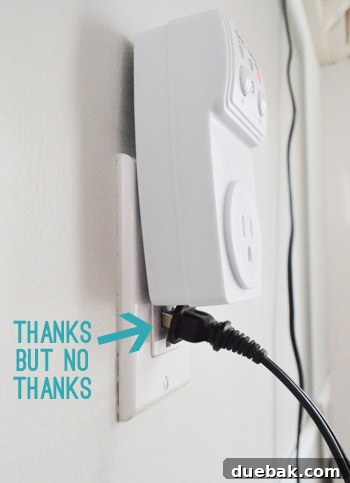
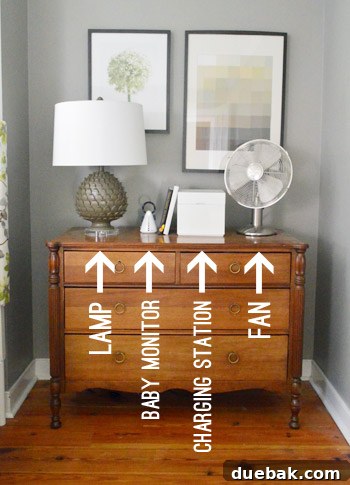
Given that the outlet behind my dresser needed to power more than just one device, this flaw was initially quite annoying. However, what seemed like a setback soon revealed itself as a blessing in disguise. It forced me to retrieve an old power strip from storage, which I could then use to plug in the bulky remote receiver. This ingenious workaround not only solved the immediate problem of the blocked outlet but also opened up a world of new possibilities. Suddenly, I had multiple available sockets. Previously, we had to rotate plugs – the fan would be in sometimes, the baby monitor at other times, depending on our immediate needs. Now, with the power strip in place, everything could be plugged in simultaneously. My dresser was no longer just a piece of furniture; it transformed into a bustling hub of electrical activity, powering multiple devices without compromise. This simple fix streamlined our bedside setup, making it far more organized and functional than before.
The Transformative Power of Remote Control: Everyday Magic
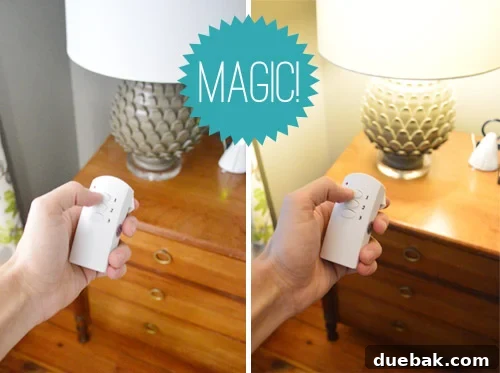
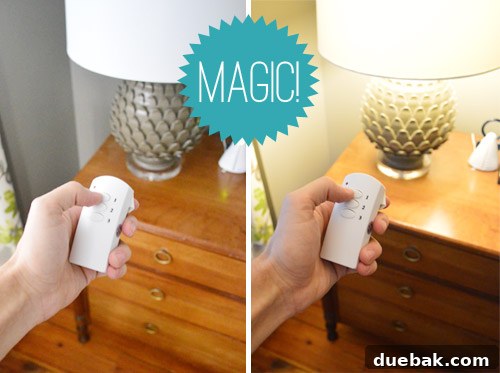
But let’s not lose sight of the true marvel: the mystical remote control that makes light appear and disappear right before our very eyes. Ooh. Ahh. No strained arm muscles, no awkward stretches, just pure, unadulterated convenience. The sheer simplicity of pressing a button to control the lighting in our bedroom has been nothing short of transformative. It’s the kind of small luxury that dramatically improves the end of each day, allowing for a seamless transition into relaxation and sleep. Imagine settling into bed, cozy and comfortable, and with a gentle click, plunging the room into darkness without disturbing your comfort. This isn’t just about turning a light on or off; it’s about reclaiming those precious moments of tranquility, enhancing the quality of sleep, and eliminating a persistent, albeit minor, source of irritation. It’s truly a testament to how modest tech upgrades can have a profound impact on daily well-being.
Integrated Design for Modern Living: Hiding the Tech
Of course, having the remote visible and within reach on the dresser wouldn’t be much of an improvement. The goal was truly effortless control, not just a different kind of reach. So, with a little ingenuity and some trusty 3M Velcro, I secured the remote to the side of our bed frame. It’s positioned perfectly for easy access, yet completely hidden from view beneath the bedspread once the bed is made. This subtle integration ensures that the technology blends seamlessly into our decor, preserving the clean aesthetic of our bedroom while providing unparalleled convenience. This thoughtful placement is crucial for any smart home device; technology should enhance our lives without becoming an unsightly addition to our living spaces. It’s about creating a harmonious environment where convenience is felt, not necessarily seen.
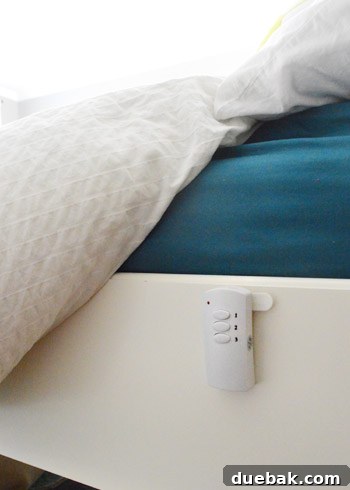
I tell ya folks, this is the life. No more fumbling, no more stretching – just instant control and pure relaxation.

Sharing the Convenience: A Gentleman’s Touch
And for those wondering about true partnership and shared comfort, I took it a step further. Since the set came with three remote outlets, I installed one for Sherry’s bedside lamp as well. While her lamp wasn’t as deeply recessed and didn’t require the same “monkey arm” gymnastics as mine, the gesture was one of pure consideration. What can I say? I’m a gentleman! This is a far cry from the old days of negotiating who would have to brave the cold floor to hit the wall switch. Now, it’s all “Oh, you must be tired, honey. Let me get that light for you. You just rest.” This isn’t just about turning off a light; it’s about fostering a more harmonious and comfortable shared living space. It’s about earning those #madhusbandpoints through simple, thoughtful acts of technological kindness.
Your Turn: Embracing Smart Home Simplicity
I’m certain I’m not alone in discovering that a simple, affordable techno-fix can make life significantly easier and more enjoyable. These aren’t always grand smart home overhauls, but often small, incremental changes that address specific pain points in our daily routines. Have you implemented any quick and handy tech updates in your house that have made a noticeable difference? Perhaps a smart plug for your coffee maker, or motion-sensing lights in a dark closet? Share your clever solutions! And speaking of simple, catchy tech – do you have The Clapper song stuck in your head now? I certainly do. Clap on. (Clap clap). Clap off. (Clap clap). It just goes to show that some ideas, even the simplest ones, endure because they resonate with our universal desire for convenience.