

Transforming a dated kitchen doesn’t always require a complete overhaul or a hefty budget. Sometimes, the most impactful changes come from small, strategic updates. One such renovation that can dramatically modernize your space is replacing old, visible hinges with sleek, hidden alternatives. This simple upgrade not only cleans up the aesthetic of your kitchen but also contributes to a more contemporary feel. We recently embarked on this very project when we decided to painted our kitchen cabinets a beautiful mauve hue. It presented the perfect opportunity to bid farewell to our old surface-mount hinges and embrace the elegance of hidden hardware. This seemingly minor tweak, costing us a mere $40, went an incredibly long way in bringing our kitchen into the present decade, all while we patiently await a much larger, full-scale renovation down the line. What’s more, we achieved this transformation without the typical headache of drilling large, intricate holes into the back of our cabinet doors, a common requirement for many concealed hinge systems.
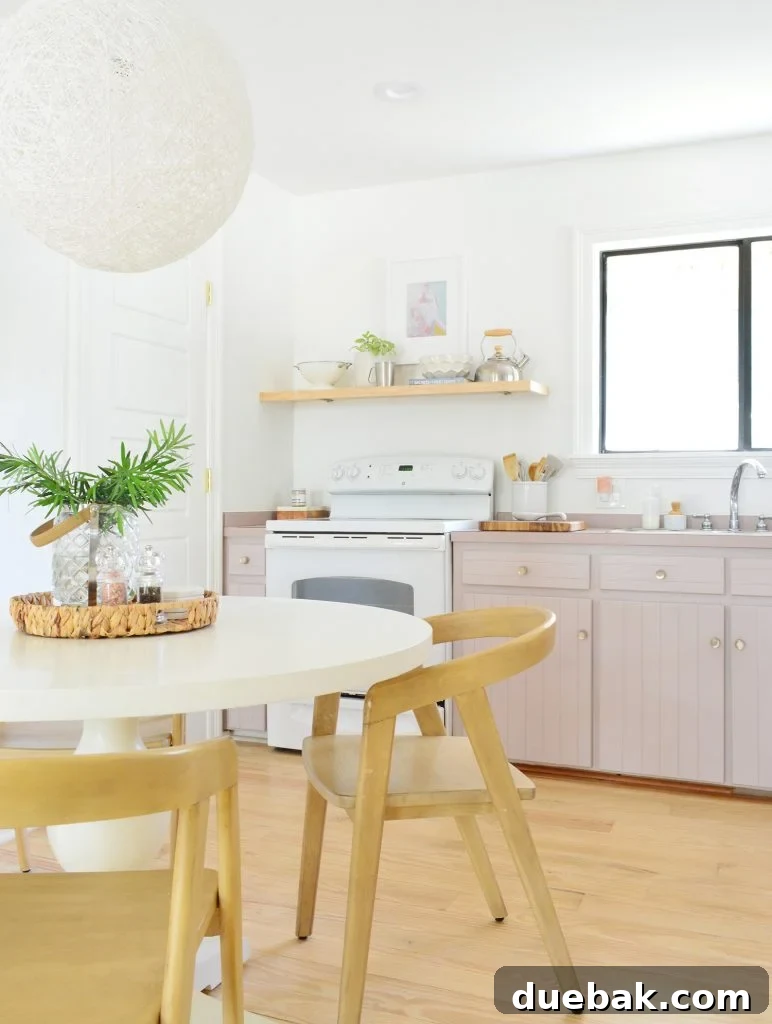
The Dramatic Transformation: Before & After with Hidden Hinges
To truly appreciate the impact of this seemingly small change, let’s take a step back and look at where we started. In a photo from our initial kitchen post, you can clearly see the original state of our cabinetry. They were fitted with those ubiquitous surface-mount hinges – the kind that are fully exposed on the front of the cabinet frame. These hinges were not just visible; they were practically shouting their age. Having been painted over at least twice in the past, they had developed an unpleasant creak and felt perpetually gummed up, operating far past their prime functionality and aesthetic appeal. They contributed significantly to the kitchen’s outdated appearance, creating visual clutter that detracted from any potential charm.

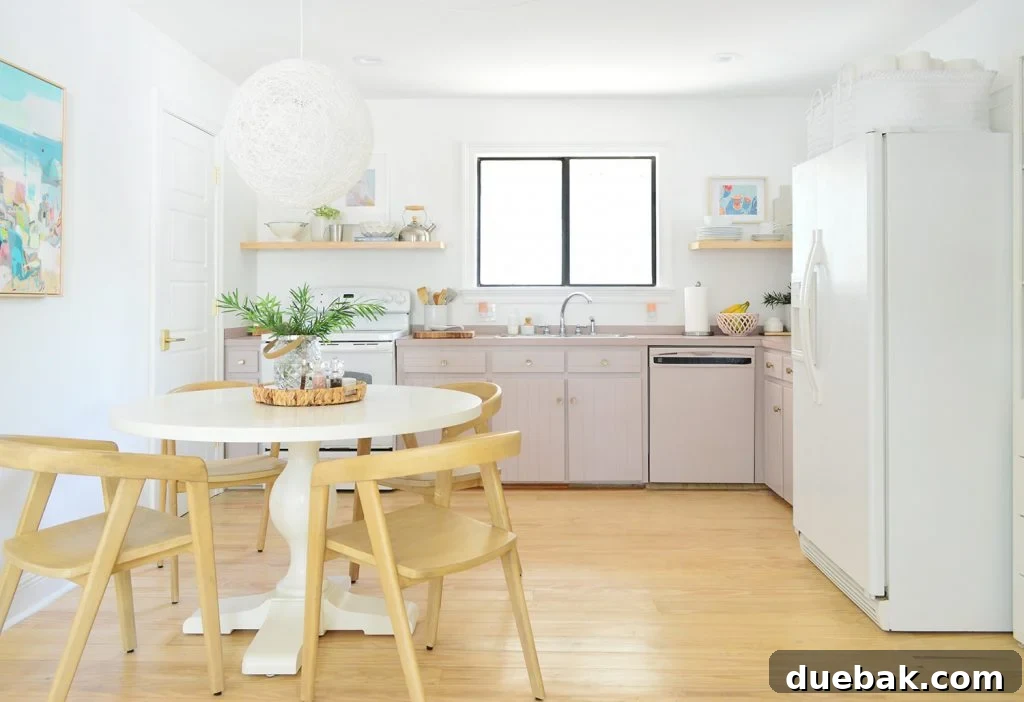
We realized that applying a darker, more sophisticated paint color to the cabinets would only serve to accentuate these unsightly hinges, making them stand out even more. This presented a clear dilemma: to achieve the fresh, modern look we envisioned, new hinges were not just an option, but a necessity. Therefore, we made the strategic decision to upgrade to a hidden-style hinge system. The results, after applying the beautiful Sherwin Williams Artsy Pink paint and updating the knobs to elegant brass pulls, speak for themselves. The absence of visible hardware creates a clean, streamlined look that instantly elevates the entire kitchen, making it feel less like a temporary fix and more like a thoughtfully designed space. This transformation truly highlights how crucial the details, even hidden ones, are in home design.
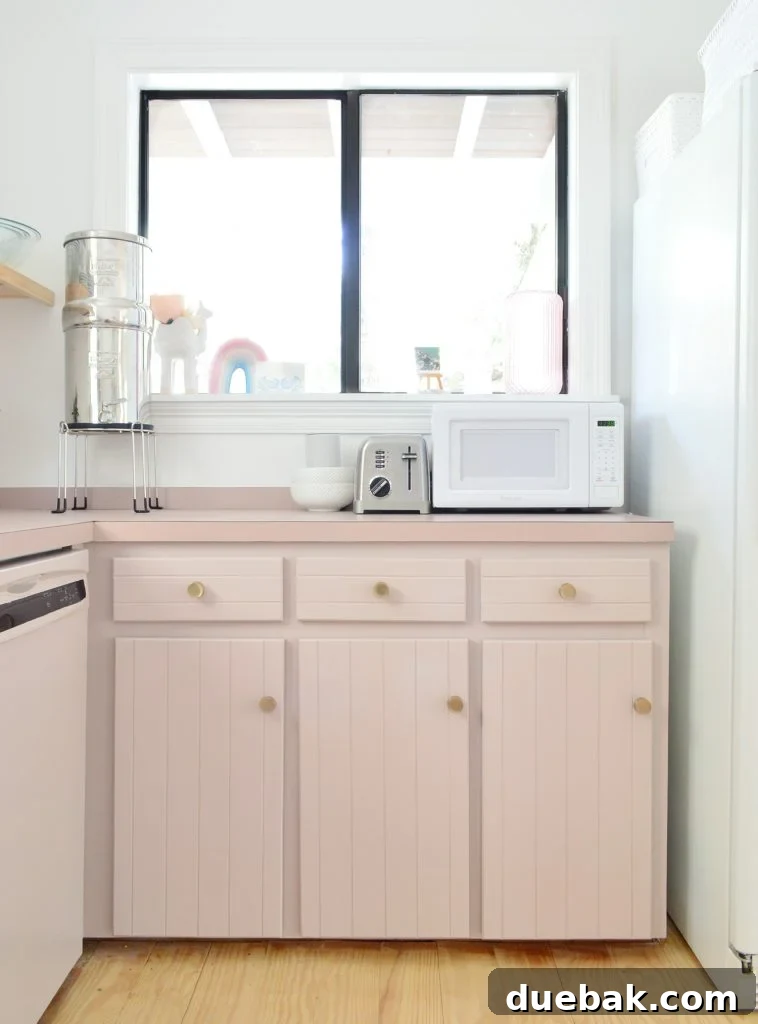
Choosing the Right Hidden Hinges for Your Kitchen Cabinets
When it comes to concealed hinges, the market offers a variety of options, each with its own installation requirements. Most modern kitchens typically feature what are known as European-style or cup hinges, similar to these (pictured below left) or these. These hinges require a perfectly round, recessed hole to be bored into the backside of your cabinet door for the hinge cup to sit flush. If your existing doors don’t already have these, you can purchase specialized jigs and tools to make drilling these holes significantly easier and more accurate. However, this method wasn’t ideal for our specific situation. Our cabinet doors, being older, were not particularly thick. We harbored concerns that the extensive drilling required for cup hinges might compromise their structural integrity, potentially leading to cracks or damage. It felt like an unnecessary risk given the age and condition of our existing cabinetry.

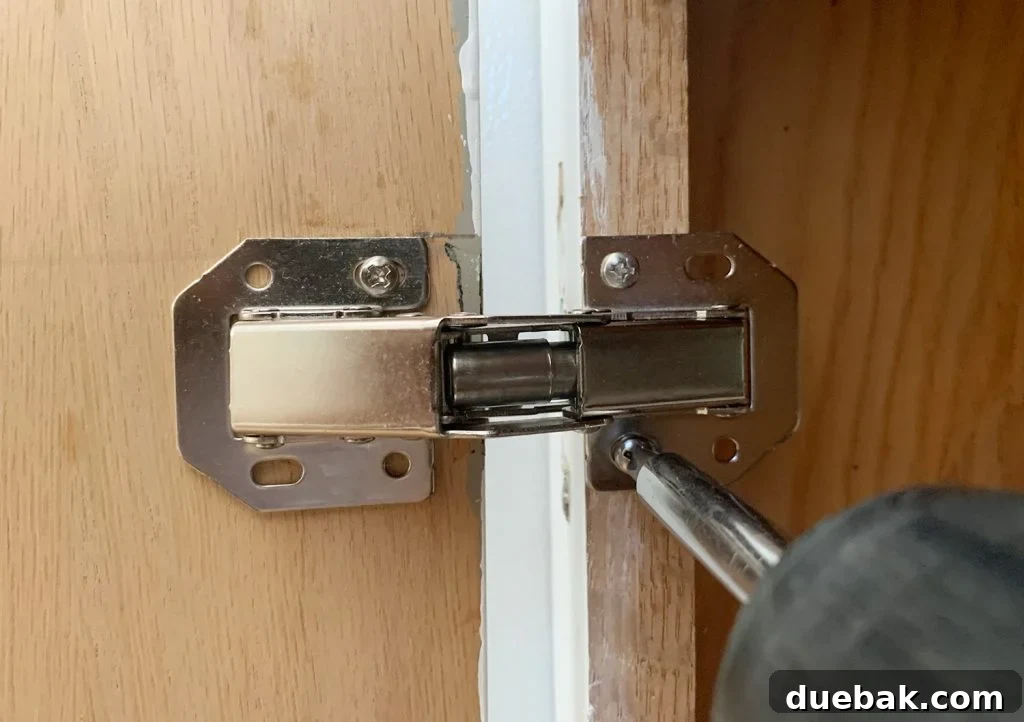
Fortunately, we discovered an excellent alternative: self-closing concealed hinges that mount directly to the existing surface of the cabinet doors (shown above right). This ingenious design completely eliminated the need for any complex hole boring into the door itself. This was a game-changer for our project, saving us time, effort, and the potential headache of damaging our beloved, albeit older, cabinet doors. When selecting hinges for your own kitchen upgrade, it’s crucial to assess the thickness and material of your cabinet doors, as well as your comfort level with specialized drilling tools, to ensure you choose the best and safest option for your unique cabinets. The right hinge selection can make all the difference in the ease and success of your renovation.
Simplifying Hidden Hinge Installation: A Time-Saving Trick
While installing the new concealed hinges was undeniably a bit tedious, as many DIY projects can be, we stumbled upon a brilliant trick that dramatically sped up the entire process. In fact, our method proved to be significantly faster and more efficient than diligently following the manufacturer’s provided instructions. We quickly realized that the standard instruction manual seemed to be geared more towards individuals installing hinges on brand-new, unadorned cabinets that had never hosted hardware before. This approach simply wasn’t practical or efficient for someone like us, who was replacing existing hinges and working with pre-drilled holes and established cabinet frames. Our discovery transformed a potentially frustrating task into a much more manageable and rewarding experience, demonstrating that sometimes, a little ingenuity can go a long way in home improvement.
To provide a clear, visual guide to our innovative installation method, we actually created a detailed video tutorial. This video walks you through our “cheat” for fast-tracking the process. We highly recommend watching it, as it vividly demonstrates how our technique leverages existing screw holes for perfect placement every single time. This approach is particularly effective for cabinets that have previously had hinges installed, making your renovation project smoother and more accurate. You can watch the full video tutorial here on YouTube.
Marking and Drilling Your Hidden Hinge Holes with Precision
If you’re unable to watch our video tutorial right now, here’s a concise breakdown of the ingenious method we employed. Instead of wrestling with the cumbersome paper templates often supplied in hinge packaging—which typically involves a lot of cutting, taping, meticulous leveling, precise pencil-marking, and measuring—we adopted a much simpler, more direct approach. Our secret was to temporarily install the new hidden hinge directly over the footprint of the old hinge. We achieved this by aligning one of the new hinge’s screw holes with an existing screw hole from the old hinge and securing it with a single screw. This temporary attachment served a crucial purpose: it held the new hinge perfectly in place, eliminating the need for any manual measurements or awkward positioning. It ensured that the hinge was aligned precisely where it needed to be, ready for the next critical step.

With the new hinge securely (albeit temporarily) positioned, we could then proceed to drill pilot holes for the screws that would attach to the cabinet frame side. A minor challenge arose because our cabinet frames were slightly thinner than the hinge itself, causing some of the back holes to overhang the frame. However, we easily overcame this by using a longer screw driven in at a slight angle, ensuring it firmly engaged with the cabinet frame. This clever solution, demonstrated more fully in our video, ensured a secure attachment despite the dimensional mismatch. Drilling these pilot holes accurately is essential for preventing wood splitting and ensuring a strong, lasting installation. The ease of marking and drilling with the hinge already in place drastically reduces errors and speeds up the entire process.
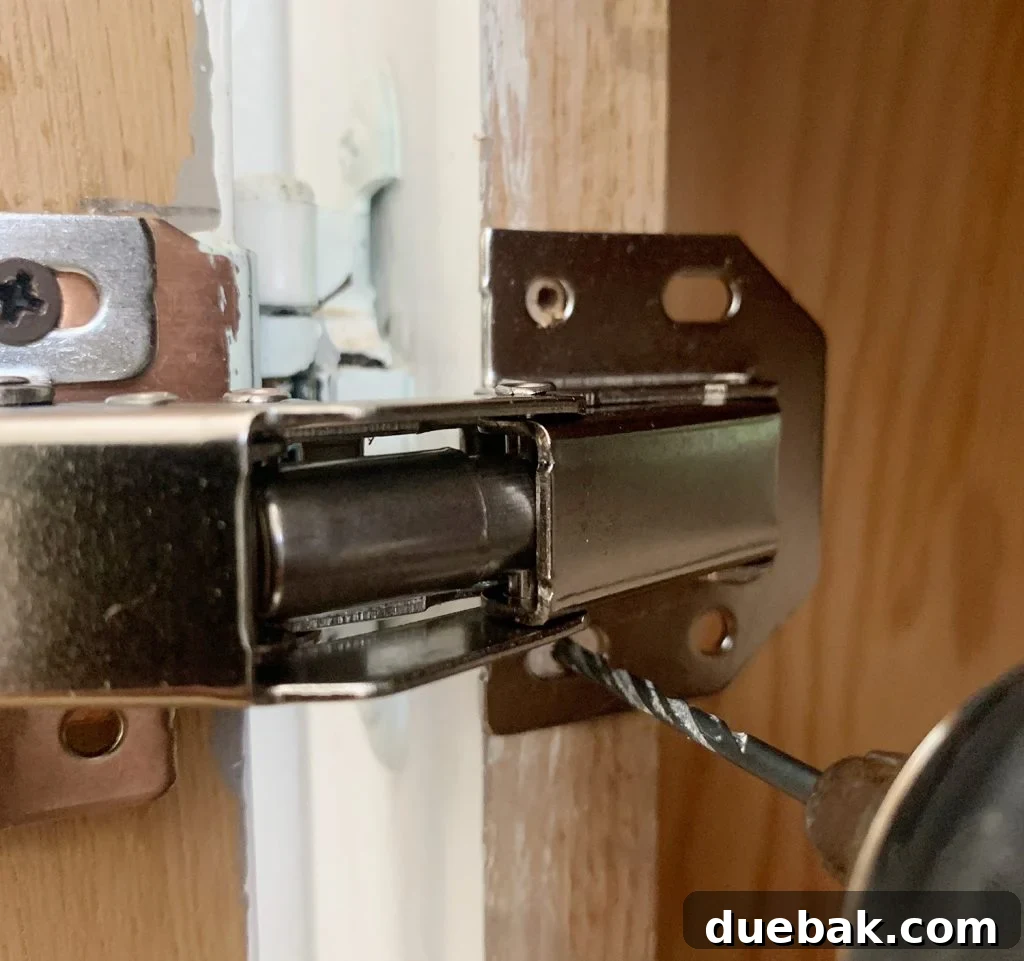
Once our pilot holes on the cabinet frame were drilled, the process became even smoother. We removed both the new and old hinges, then reattached the new hinge using the two newly created pilot holes on the frame and the existing screw hole on the door. This semi-permanent mounting allowed us to easily align the hinge perfectly. From this point, it was straightforward to drill pilot holes for the remaining screws on the door side of the hinge and then secure all screws. This method completely bypassed the need for fiddly paper templates, messy pencil marks, and tedious measurements. It streamlined the process, ensuring consistent and accurate hinge placement across all cabinet doors, even for a large kitchen.

A crucial tip we can’t stress enough: WE PERFORMED THIS ENTIRE HINGE INSTALLATION PROCESS BEFORE WE EVEN STARTED PAINTING THE CABINET DOORS AND FRAMES! This forward-thinking approach is invaluable for several reasons. Primarily, it allowed us to identify and correct any potential issues—like misaligned holes or minor damage—using wood putty without the fear of needing to re-paint anything. If we had painted first, any necessary repairs would have resulted in unsightly touch-ups or, worse, a complete repaint of sections. By installing the hinges, verifying their fit, and then removing them again, we ensured that our painting process could proceed smoothly and yield a flawless finish, free from any hinge-related imperfections. This sequential planning is key to a professional-looking DIY outcome.
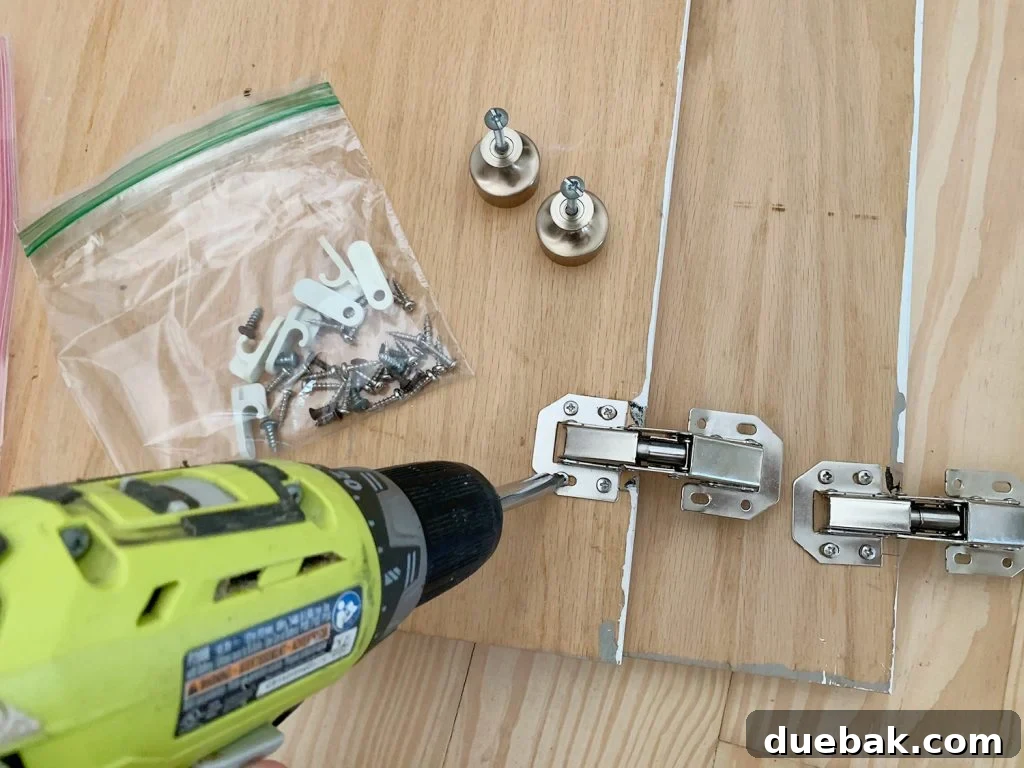
Meanwhile, back in the kitchen, while the cabinet doors were being prepped off-site, we focused on the cabinet frames. This involved meticulously sanding and patching any lingering holes left behind by the old surface-mount hinges. We used a high-quality wood filler for this task, ensuring every imperfection was addressed. Filling these holes is not just about aesthetics; it creates a perfectly smooth and even surface that is essential for achieving a seamless paint finish. This attention to detail is what separates a good DIY job from a truly professional-looking one, guaranteeing that the final result is pristine and devoid of any ghosting from the old hardware.
Achieving a Flawless Finish: Filling and Sanding Old Hinge Holes
Before you even think about picking up a paintbrush, it is absolutely imperative to meticulously sand and fill any leftover holes from your old hinges. This step is especially critical on the exposed surfaces of your cabinet frames, as these areas will be highly visible and directly impact the overall quality of your finish. Applying wood filler requires a careful hand; spread it evenly and slightly proud of the surface to allow for sanding. Don’t rush this part; take your time to ensure all depressions and blemishes are adequately covered. The goal is to create a perfectly smooth canvas, erasing all traces of the previous hardware and setting the stage for a pristine paint job.

Once the wood filler had completely dried and cured, which is often overnight or as per manufacturer instructions, we proceeded with sanding off the excess. Using a fine-grit sandpaper, we carefully smoothed the patched areas until they were perfectly flush with the surrounding cabinet frame. The result was a cabinet frame that felt impeccably smooth to the touch and visually ready for paint. At this point, the last vestiges of our old, dated surface-mount hinges were officially gone, leaving behind no evidence of their existence. This meticulous preparation is foundational to achieving a truly modern and clean aesthetic, ensuring that the hidden hinges remain just that – hidden – and the paint finish is flawless.

With all the cabinet components finally painted and meticulously reinstalled, the difference was striking. When the cabinet doors were open, you could see the sleek, new hidden hinges, cleanly integrated into the design. They represent a functional upgrade that promises smooth operation for years to come. This inside view is often overlooked but contributes to the overall premium feel of updated cabinetry, even when the doors are ajar. The cohesive look extends beyond the exterior, offering a subtle yet satisfying detail that enhances the perception of quality and careful craftsmanship in the entire kitchen.

But of course, the true magic and the ultimate payoff of this project become fully apparent when the cabinet doors are closed. With the unsightly surface-mount hinges completely out of sight, the kitchen achieves an uninterrupted, clean, and contemporary aesthetic. There’s no longer any visual distraction or clutter; just smooth, beautiful cabinet fronts in their inviting mauve hue. It’s in this “after” state that you’d never know this kitchen once sported those dated, visible hinges that screamed for an update. This transformation underscores the power of hidden hardware to elevate a kitchen’s style, making it feel intentionally designed and thoroughly modern, rather than merely updated.

Refinement and Functionality: Two Essential Tips for Your Hinge Upgrade
Beyond the core installation method, there are a couple of additional tips that can significantly enhance the success and functionality of your hidden hinge project. One crucial detail I discovered during the process (and regrettably forgot to highlight in our video) pertains to how you install the door-side screws. It helps immensely to execute this in two distinct steps, especially if your hinges feature both oblong and round screw holes, which is common for adjustability.
- First, begin by installing the screws only in the OBLONG holes. These elongated holes are specifically designed to allow for minor adjustments. Once these screws are lightly tightened, close the cabinet door and carefully inspect its alignment. Does it look crooked or askew? If so, you can easily fine-tune the door’s placement by slightly loosening the screw and gently shifting the hinge forward or backward along the oblong hole. This step is vital for achieving perfectly aligned cabinet doors that close seamlessly and look professional.
- Once you are completely satisfied with the door’s alignment when closed, and you’ve achieved that perfect, gap-free look, then you can proceed to drill your pilot holes and add the screws in the remaining ROUND holes. These round holes serve to “lock in” your precise placement, preventing any future shifting and ensuring that your cabinet doors remain perfectly hung for years to come. This two-step process provides an unparalleled level of precision and ease in achieving a truly professional finish.
Additionally, for those looking to add an extra layer of luxury and functionality to their updated cabinets, consider installing soft-close cabinet door attachments. These clever devices can be easily installed in the corners of your cabinet frames and provide that sought-after “extra credit” in a kitchen renovation. Soft-close mechanisms prevent doors from slamming shut, reducing noise, protecting your cabinet frames, and extending the life of your doors. It’s a small but significant upgrade that instantly makes old cabinets feel much more modern and high-end, adding a touch of sophistication that truly elevates the user experience. This simple addition can drastically improve the daily enjoyment of your kitchen, proving that subtle enhancements can make a monumental difference in the overall perception and feel of your space.
*This post contains affiliate links, so we may earn a small commission when you make a purchase through links on our site at no additional cost to you.