
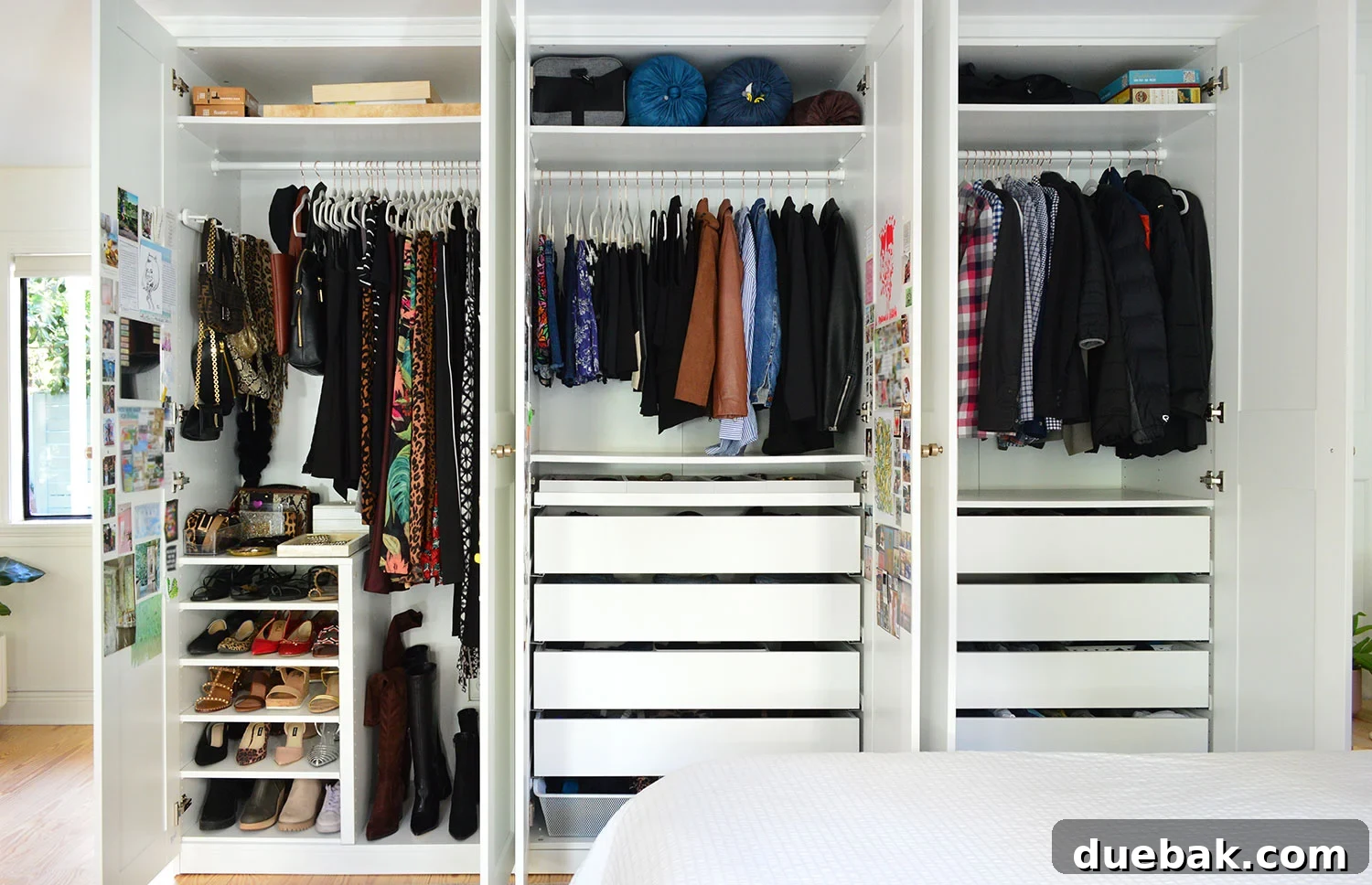
We went from zero closet space in our bedroom to having the same amount of storage as our previous house’s large walk-in closet. We installed Ikea Pax wardrobes and made them look built-in, and now we’re opening every door and drawer to show how we organized everything. If you want practical tips to maximize storage and specific product ideas that make the space feel custom, this walkthrough will help.

Full disclosure: neither of us owns an immense wardrobe. I do have a soft spot for shoes and jewelry, but overall our clothing collection is fairly modest. Over the past three years we’ve added a lot of storage to the bedroom, which has allowed me to expand my wardrobe a bit. Since we’re spending less on renovations right now, I’ve enjoyed hunting secondhand for clothes, bags, shoes and jewelry—so you’ll spot a few thrifted finds in the tour (there’s also a video walkthrough).
Why We Love Ikea Pax Wardrobes
The Ikea Pax system is popular because it’s extremely customizable. It offers many interior fittings and organizers and is easy to personalize with paint, hardware and small hacks. This is the third home we’ve used Pax in, so it was an obvious choice when we wanted to add a wall of built-in closets to our room.

Along the wall we fit three 39″ wardrobe frames (double doors) and one 19″ frame (single door). The three larger wardrobes are our everyday closets; the smaller end cabinet holds holiday decor and is accessed infrequently—John’s nightstand slides away easily when we need it.

We used many of Ikea’s interior fittings and supplemented them with other organizers and things we already owned, tailoring each section to work hard for our needs. Below we walk through each closet and highlight the solutions that made the biggest difference.
Closet Organization Video Tour
There’s a video tour where we open every door and drawer so you can see how it all functions in real time. It’s useful if you want visual context for the organization ideas discussed here.
Note: You can also watch this video on YouTube.
The Left Closet: Shoes, Everyday Accessories, & Long Hanging Storage
The left wardrobe, which we added earlier this year, transformed our storage for longer items—boots, full-length dresses, and similar pieces. Instead of drawers, we installed a divider to split the lower area into two 19″ sections. That configuration let us fit 25 pairs of shoes and boots by pairing them toe-to-heel so each pair is visible from the front.

The divider top provides a landing spot for everyday accessories—belts, sunglasses, purses, and frequently worn jewelry. We use a mix of older storage pieces and a recent acrylic divider for small clutches, which keeps them upright and easy to grab. For larger purses and scarves there’s a pull-out multi-use hanger above the smaller accessories, and some bags are simply hung over hangers.

The top shelf in every large wardrobe holds infrequently used items that are harder to reach. In this left cabinet I store a few unused art frames and canvases. We also hang a lightweight mirror on the inside of the door, which is handy for quick checks when putting on jewelry or sunglasses.

The Middle Closet: Shorter Hanging Clothes, Folded Items & A Pullout Tray
The middle wardrobe stores shorter hanging items and folded clothes. It has a hanging bar at the top and six drawers below. The top drawer is a shallow pullout tray outfitted with felt organizers that hold small toiletries, makeup, lesser-used sunglasses, and jewelry. Below that are drawers for socks, underwear, pajamas, denim, tops, sweaters and swimwear (we use a pullout wire basket at the bottom where a normal drawer wouldn’t fit).

We prefer slim velvet hangers because they save space and are non-slip. Velvet clips let us use the same hangers for skirts. Drawer organizers and soft fabric bins help keep folded items neat and prevent accidental mix-ups between similar pieces. The shallow tray is great for jewelry and small getting-ready items so everything is within easy reach.

The Right Closet: John’s Clothes, Hats, And A Few Quirks
The right wardrobe is John’s. He keeps dress shirts, everyday clothes, and reserves some hanging space for winter coats when needed. Most of the year his hanging area is used for shirts and lighter pieces; in winter we use space-saving vacuum bags to compress bulky coats and store them inside suitcases under our son’s bed. That simple change frees up seasonal storage while keeping coats accessible when needed.

John added a cube organizer shelf to one side of his wardrobe to create cubby storage for sweatshirts and winter accessories, and he uses fabric bins to keep items contained. Drawers are organized with fabric boxes and miscellaneous containers. His top drawer holds everyday essentials and a secret stash of discounted candy; lower drawers hold pants, exercise gear, medals, and a drawer for messy clothes and occasional formal items. He stores everyday shoes in the outdoor shoe cabinet on our kitchen porch.

Both of us keep some toiletries and a lightweight mirror inside our closets to avoid monopolizing the bathroom for quick touch-ups—an efficient habit when a household shares one bath.

The Bonus Closet: Seasonal Decor
The narrow 19″ wardrobe in the corner stores all our seasonal decorations. It holds ornaments and lights on the top, miscellaneous decor in the middle, and our full 6’5″ Christmas tree (in sections) on the bottom. The cabinet is blocked by a nightstand most of the year, but we move the nightstand twice annually to access it—this makes use of otherwise wasted space and keeps seasonal items neatly stored.

Our Closet Organizing Essentials
Here are the products and organizers we mention that help keep the closets tidy and functional:
- Slim no-slip hangers
- Velvet hanger clips
- Stacking jewelry box
- Acrylic purse divider
- Gold jewelry dishes and small trays
- Boot shaper inserts
- Charcoal odor bags
- Velvet ring display organizer or a Pax jewelry insert
- Pull-out multi-use hanger
- Cube organizer shelf and fabric storage bins
- Lightweight mirrors for doors
- Shrinking vacuum storage bags
- Felt drawer organizers and expandable dividers

Small decisions—where to hang skirts, adding a cheap mirror, or designating a tray for jewelry—can dramatically improve daily routines. Organize based on how you look for items so it feels intuitive: group shorter hanging items together if that’s how you think, or keep frequently used accessories at eye level. And yes, if you need a top-drawer candy stash, that’s fine too—no judgment.
Other Closet & Organization Posts

If you want more closet inspiration and organizing ideas, check out our other posts for additional tours and tips.
*This post contains affiliate links, and we may earn a small commission when you make a purchase through links on our site at no additional cost to you.