
DIY Paver Patio Installation: Transforming Your Backyard with Cobblestone Pavers
Embarking on a significant home improvement project like building a new patio can feel like a monumental task, but the satisfaction of creating a beautiful and functional outdoor living space yourself is truly rewarding. Over the past four days, we’ve been deep into the process of constructing our dream patio, and while it’s approximately 90% complete, we’re excited to share the journey so far. This guide details the crucial steps we’ve undertaken, from initial material delivery to laying the first pavers, offering insights and tips for anyone considering a similar DIY adventure.
Phase 1: The Essential Groundwork and Material Selection
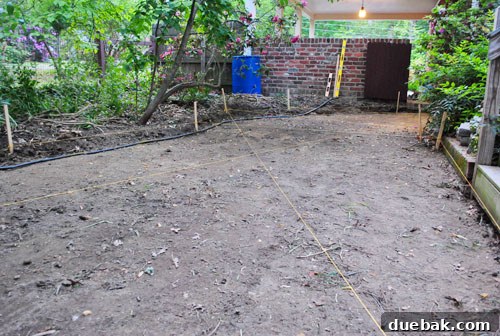
Our patio transformation began last Monday with the essential groundwork. The area was meticulously marked, leveled, and prepared, laying the foundation for what would become our expansive 300-square-foot outdoor oasis. This preparatory stage, often underestimated, is vital for ensuring proper drainage and a stable base for your pavers. A well-prepared sub-base prevents future issues like uneven settling or water accumulation.
Material Arrival: A 10-Ton Delivery!
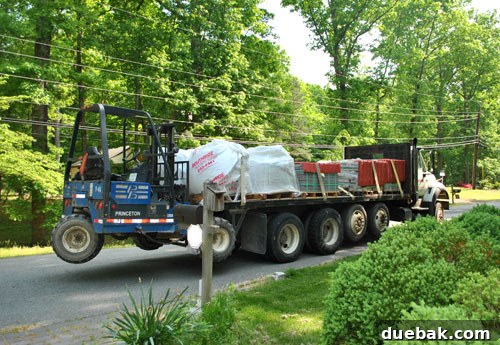
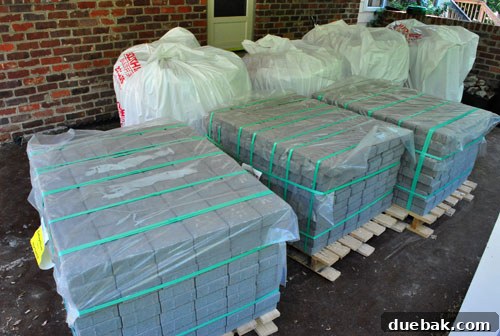
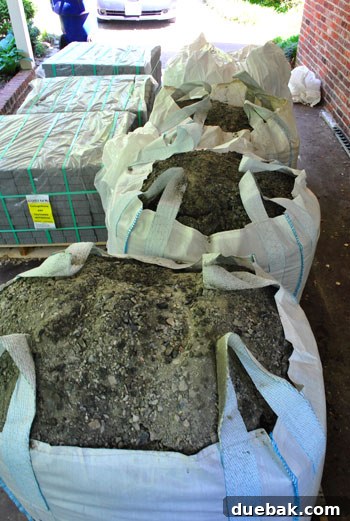
Tuesday brought an exciting, albeit slightly challenging, development: the arrival of nearly 10 tons of materials via flatbed truck. To put that into perspective, a 300-square-foot patio requires an immense amount of bulk materials, weighing more than two adult elephants combined! The delivery included three large bags of fill gravel, one giant bag of sand, and three pallets loaded with cobblestone pavers—two pallets of rectangular pavers and one of square ones. We encountered a minor hiccup when the forklift suffered a flat tire, causing a brief delay, but eventually, all the materials were safely transferred to our carport, ready for the next stages of construction.
Organizing these materials efficiently in the carport was crucial for easy access throughout the project. We made sure to separate the gravel, sand, and different paver types to streamline the workflow.
Choosing the Perfect Pavers: Style Meets Affordability
Selecting the right pavers is a pivotal design decision that impacts both the aesthetics and durability of your patio. We opted for CottageStone pavers from Eagle Bay, a local Richmond-based company. Our choice was guided by a desire for affordability without compromising on quality or style. By sourcing from a local stoneyard, Southside Builders Supply, we discovered these pavers at an impressive price point of around $2 per square foot, significantly beating prices at larger chain stores like Lowe’s and Home Depot by about 75 cents per square foot. This saving really adds up when you’re covering 300 square feet.
The “Jefferson” gray tone of these pavers perfectly complemented the existing gray cobblestone pavers in our driveway, ensuring a cohesive look for our outdoor space. Eagle Bay offers a range of Virginia-inspired color names, including “Blue Ridge,” “Chesapeake,” and “Richmond,” but “Jefferson” provided the ideal match. This careful selection not only met our aesthetic preferences but also demonstrated the value of exploring local suppliers for cost-effective, high-quality materials. For more details on the project’s overall cost, you can find information here.
Phase 2: Building a Solid Foundation – Weed Barrier, Gravel, and Sand
After a rain-induced break on Wednesday, Thursday marked the beginning of serious physical labor. My wife, Sherry, kept the blog running, cared for our baby, and regularly supplied me with much-needed granola bars and water. Following expert advice from a Lowe’s instructional video and the saleswoman at the stoneyard, the first step was to install the weed blocker.
Installing the Weed Barrier Fabric
A crucial step for any paver patio is the installation of a high-quality weed barrier. From past experience, we know how persistent weeds and grass can be, finding their way through the smallest gaps between pavers. To mitigate this, we purchased a 300-square-foot roll of Weed Block and ground staples (humorously named “Crampons”) from Home Depot. The weed barrier serves a dual purpose: it suppresses weed growth and helps stabilize the base layers, preventing erosion of the gravel and sand.
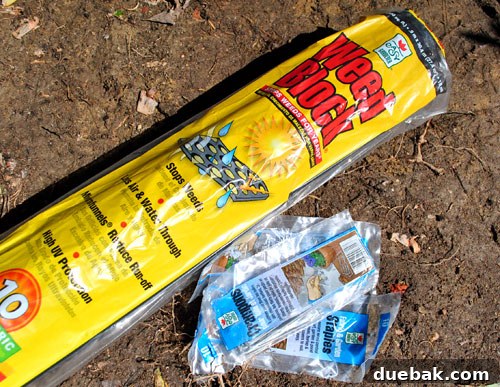
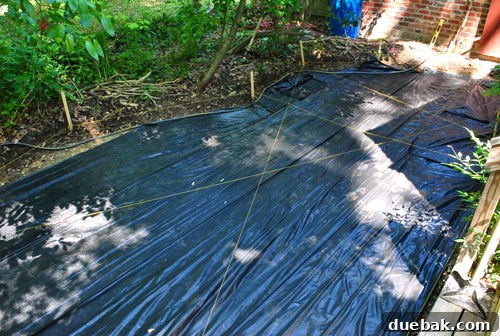
The installation was relatively straightforward. I cut the Weed Block sheets to size using ordinary scissors and secured each section with the “crampons,” ensuring a snug fit across the entire prepared area. This step took approximately forty-five minutes, providing an essential layer of protection against future botanical invasions.
Spreading and Compacting the Base Gravel
Next up was the gravel, a staggering three tons of it! This layer forms the structural base of the patio, providing essential drainage and stability. Proper compaction of the gravel base is paramount for a long-lasting patio that won’t shift or settle over time. It’s often recommended to use a specific type of angular aggregate, sometimes referred to as “crusher run” or “paver base,” which locks together tightly when compacted.
Hauling and spreading this enormous quantity of gravel consumed my entire Thursday. Since my wheelbarrow couldn’t fit through the gate between the carport and the patio, I resorted to an old-fashioned method: carrying the gravel bucket by bucket using a spare 5-gallon paint bucket. This was incredibly strenuous but had an unexpected benefit: it allowed me to meticulously maintain the nylon strings I had set up earlier. These strings were invaluable for ensuring a perfectly level surface with the correct slight slope away from the house, crucial for effective drainage. This manual labor, though exhausting, guaranteed the precision needed for a durable patio base.
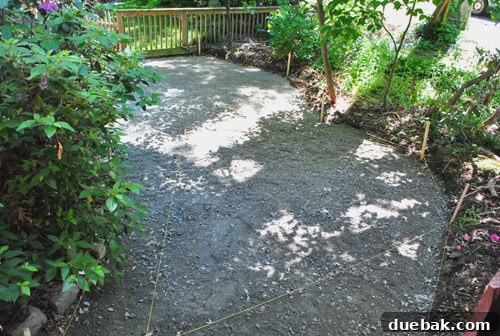
Once spread, the gravel required thorough tamping. Before compacting, I lightly misted the entire area. This moisture helped the loose gravel bind together, creating a cement-like consistency essential for proper compaction. The Lowe’s video emphasized the importance of adequate moisture—enough to clump but not so much that it becomes saturated. The key is finding that perfect balance where the aggregate begins to adhere, signaling it’s ready for the tamper.
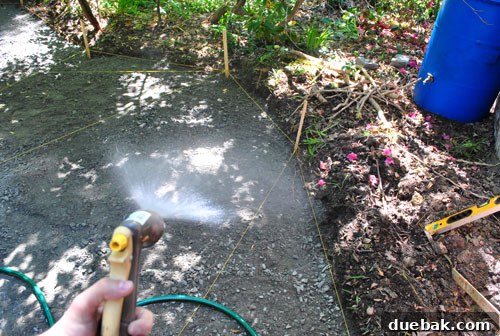
We opted for a manual $30 hand tamper instead of renting a plate compactor, primarily due to the small size of our car and our budget-conscious approach. While certainly a workout, the manual tamping proved to be highly effective and surprisingly gratifying. The process transformed the loose gravel into a flat, semi-solid surface, almost resembling asphalt, ready for the sand layer. This intensive tamping ensures the gravel base remains stable and provides robust support for the pavers. After over seven hours dedicated to the patio project, and with the sun beginning to set, the gravel base was complete, and the sand would have to wait for Friday.
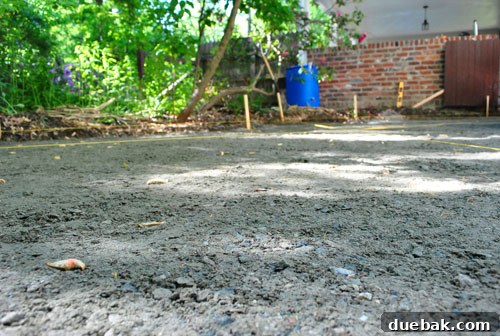
Precision Sand Leveling with a Clever Trick
Friday morning began with a family tradition – taking Clara’s 51-week photo – before I resumed my patio duties. The next crucial step was laying a precise 1-inch layer of sand, which acts as a bedding course for the pavers. This sand layer cushions the pavers, helps distribute weight evenly, and allows for minor adjustments during placement. This stage was made significantly easier by a brilliant tip from the Lowe’s video, involving two pieces of 1-inch PVC pipe.
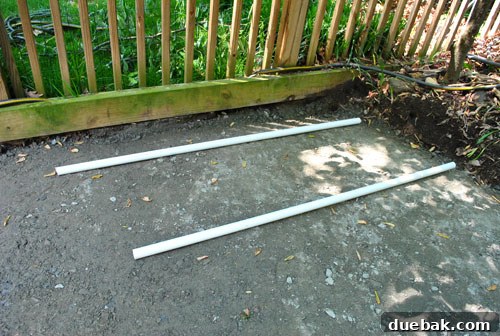
The method is remarkably simple yet effective: you position the two 1-inch PVC pipes parallel to each other on the prepared gravel base, spaced apart to cover the width of your working area. Then, you liberally dump sand over them.
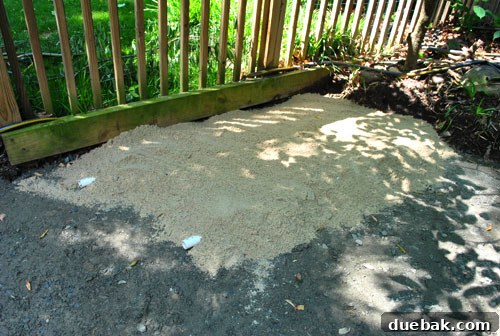
Using a straight edge, such as a spare 2×4 (or in my case, some extra trim molding), you scrape off the excess sand. The PVC pipes act as perfect guides, ensuring that the remaining sand layer is precisely one inch deep and perfectly level. This creates an incredibly smooth, consistent bedding course, ready for paver placement.
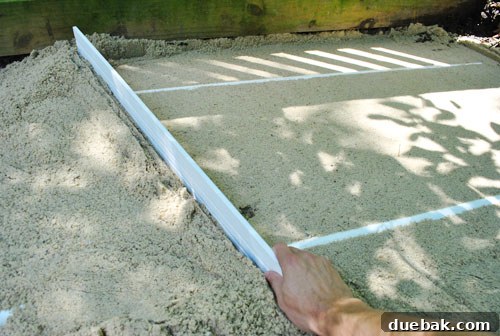
Once the sand is screeded, you carefully remove the PVC pipes and fill the resulting “pipe lines” by hand with a little extra sand, gently smoothing it out for a completely flush and seamless surface. This process was significantly faster than the gravel stage, as the sand layer only needed to be one inch deep compared to three inches of gravel, making it much quicker to spread and level. Here’s what it looked like halfway through:
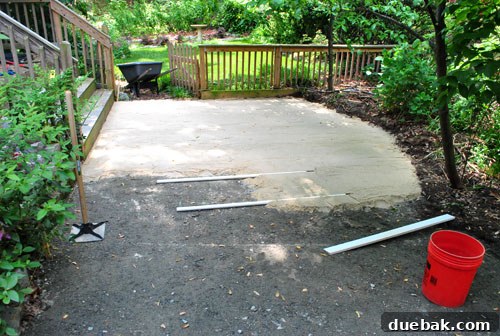
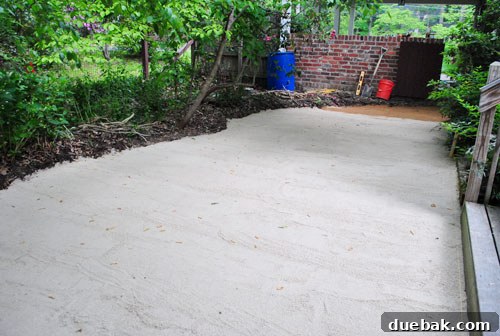
I would have finished even sooner had I not run out of sand towards the very end. Fortunately, a quick trip to Lowe’s for a few additional bags resolved the issue, allowing me to complete the entire sand bedding layer. Notice the slight color variation at the far end of the area, indicating the new bags of sand.
Phase 3: Edging and the First Pavers
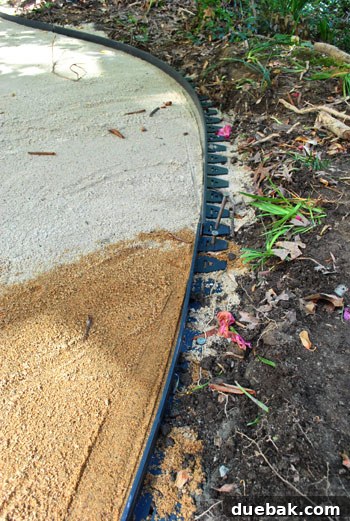
With the sand bedding perfectly level, the final preparatory step before laying the actual pavers was to install the plastic edging. This edging is critical for holding all the pavers securely in place, preventing them from shifting or spreading over time. Its design ensures it will be virtually invisible once the project is complete, buried by backfill dirt or mulch on one side and the pavers themselves on the other. There are varying schools of thought on whether to install edging before or after laying the stone, with both methods having their proponents. However, we found it much easier to plan and execute curves with the flexible edging in place first, rather than trying to maneuver heavy stones into a desired curved pattern. Our experience confirms that installing the edging first, especially when incorporating curves, provides an excellent guide and simplifies the paver laying process significantly.
The Thrill of Laying the First Stones
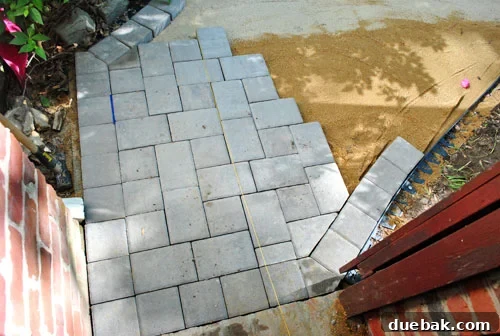
By 4 PM on Friday, exhaustion was setting in, but Sherry and I were determined to lay at least some of the pavers. We eagerly wanted to see our vision start to come to life. I initially focused on the entrance area, promising myself it would just be a small section. A couple of hours later, after what felt like a slow but steady start, this was the satisfying result:
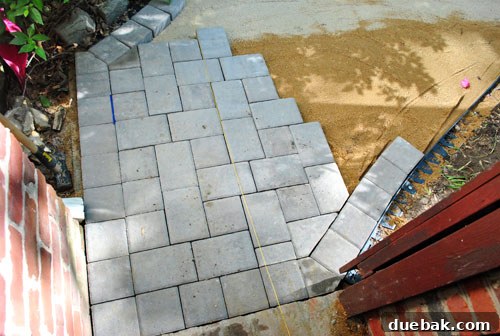
While the intricate details of cutting and pattern laying will be covered in a subsequent post, you can see the initial progress here. Sherry captured this image after putting Clara to sleep for the night, her 7:15 PM bedtime granting us precious daylight hours to work together. This teamwork allowed us to move twice as fast during that narrow evening window. Thankfully, Clara remained sound asleep, a testament to her likely understanding that we were busy crafting a beautiful patio, perhaps even for her upcoming birthday celebration. What a smart kid!
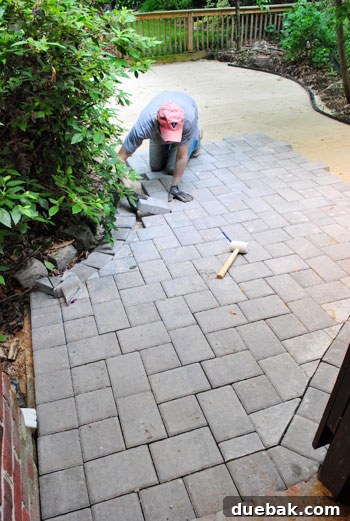
We collectively decided to postpone all paver cuts for the night. Our primary goal was to fill the central patio area with as many whole pavers as our tired arms could manage, avoiding the complexities and hazards of operating a wet saw in fading light as the sun dipped below the horizon.
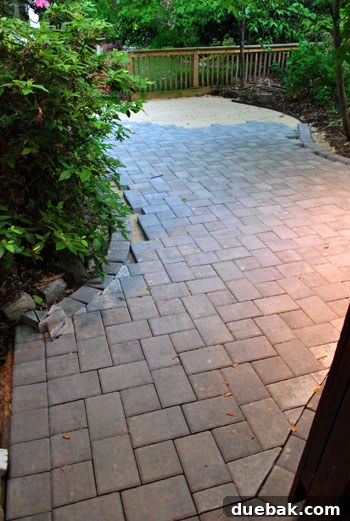
By some miracle, our energy levels sustained us until about 9:30 PM, when we finally laid the last full paver at the far end of the patio. Despite the encroaching darkness and the numerous missing stones around the borders that still required cutting, the overall shape and structure of the patio were beginning to coalesce beautifully. It was an incredibly satisfying moment to see the bulk of the main area covered.
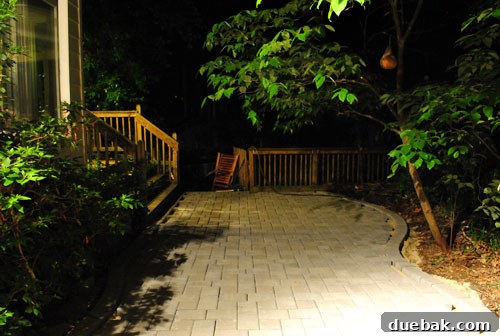
Our camera batteries, mirroring our own dwindling energy, barely lasted long enough to capture a few celebratory shots of us “conquering” this immense task. We managed to snag a few blurry, yet triumphant, images like this one before the camera finally shut down, symbolizing the close of an incredibly productive and exhausting day.
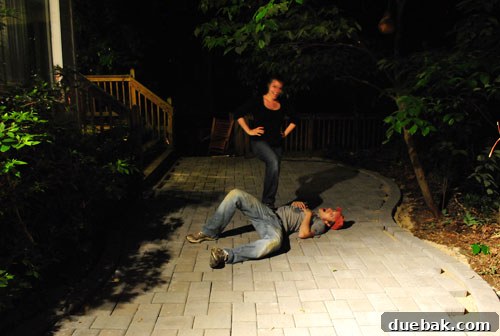
In this final shot, you can see me embracing the role of the utterly exhausted, yet content, patio builder. That “so-tired-you-feel-drunk” phenomenon, where everything becomes hilariously absurd after a long day of physical labor, certainly set in. It’s a unique state of mind where exhaustion gives way to irrational fits of laughter and a momentary lapse of sanity.
A Well-Deserved Break and What’s Next
So, that’s how we spent a memorable Friday night! Naturally, we capped it all off with a much-needed shower and a relaxing Netflix movie. We watched “Love & Other Drugs” and found it to be as candid as the critics described, but enjoyable. Just a word of caution: perhaps not ideal viewing material if you have extended family visiting for the holidays!
We are incredibly excited about the progress we’ve made on our DIY paver patio. The journey, while demanding, has been immensely rewarding. We’ve laid a strong foundation, learned valuable lessons, and are now on the cusp of completing our dream outdoor space. Stay tuned for the next installment, where we’ll delve into the details of cutting pavers, filling in the borders, and adding the final touches that will truly bring this patio to life. Until then, we hope our experience inspires you to tackle your own home improvement projects!