
Welcome back to our home improvement journey! We’ve been bustling with various projects, from party preparations to dollhouse renovations and bedroom makeovers. Amidst this whirlwind, our much-anticipated deck project found itself temporarily on the back burner. However, this period of reflection wasn’t without its progress. We’ve finally made a pivotal decision: much like our parents before us, who opted for this material in our childhood homes, we are moving forward with pressure-treated wood for our new deck.
The path to this decision was far from straightforward. Building a new deck or renovating an existing one involves a myriad of choices, each with its own set of pros and cons. We meticulously weighed numerous options, gathered quotes from several suppliers, and, crucially, took the time to “sleep on it.” Even then, we found ourselves second-guessing our initial thoughts multiple times. This process highlighted just how personal and complex the choice of decking materials can be. There are countless directions one can take, making it truly a decision that is “different for everyone.” Ultimately, our choice came down to a blend of personal factors including aesthetics, budget, the effort required for installation and maintenance, and how well the material would integrate with the character of our home and neighborhood. This intensive evaluation process clarified why people often arrive at such diverse conclusions – and, as evidenced by numerous online forums, develop some incredibly strong opinions!
Navigating the Decking Dilemma: Our Decision-Making Process
For those of you contemplating a similar project, we thought it would be beneficial to share our comprehensive thought process. Our initial research quickly narrowed down the field to two primary contenders: pressure-treated wood and composite decking. We systematically eliminated other options early on, which significantly streamlined our focus. Cedar, while beautiful, wasn’t quite the color or look we envisioned for our space. Exotic hardwoods, though stunning, came with a prohibitive price tag. Vinyl decking, despite its durability, simply looked too artificial for our taste, lacking the natural charm we desired. With these options out of the picture, our internal debate truly began, oscillating between the traditional appeal of pressure-treated wood and the modern promises of composite materials more times than we can count.
The Allure of Composite Decking: Low Maintenance, High Cost?
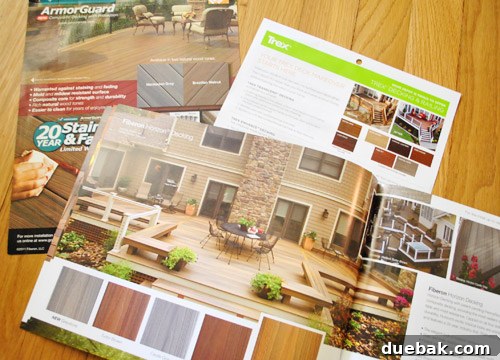
At first glance, composite decking appeared to be the obvious frontrunner. Many of our friends had enthusiastically shared how “really nice” they heard it was, and several of you, our readers, even commented on your positive experiences with it. We even seriously considered buying a house primarily because of its impressive composite deck during our house-hunting days, as highlighted in this earlier post. The consistent advantages we heard touted for composite materials were their low maintenance requirements—no need for regular resealing or staining—and their often “upscale” aesthetic. However, our personal feelings about its appearance were quite mixed. While some composite decks struck us as truly elegant and modern, others had a distinctly “plastic-y” look and feel that we found less appealing. We also learned that composite materials can fade over time when exposed to constant sunlight, a concern that we heard could be quite frustrating for homeowners.
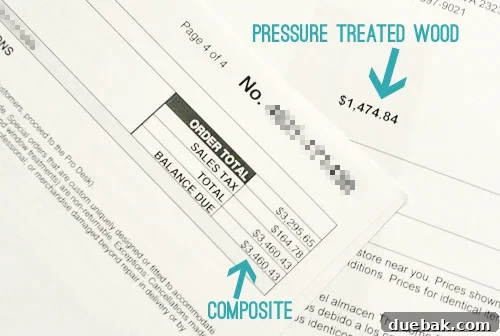
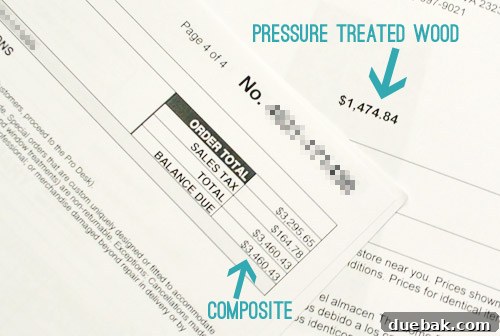
Ultimately, the deciding factor that firmly cemented composite decking’s exclusion from our project was its substantial cost. The various estimates we obtained consistently placed composite options between $2,000 and $3,000 more expensive than pressure-treated wood for a deck of the exact same size and construction method. This meant that opting for composite would more than double the total cost of using pressure-treated wood. It’s crucial to note that this comparison was between lower-end composite materials and premium pressure-treated wood, making the cost difference even more striking. The financial outlay was simply too significant for our project, especially when considering the subtle aesthetic reservations we had.
The Practicality of Pressure-Treated Wood: Affordability Meets Authenticity
Given the significant cost disparity, it’s an understatement to say that budget was a major driving force behind our selection of pressure-treated wood. While we’re still finalizing the precise figures, our current estimates suggest that utilizing premium pressure-treated wood—which is inherently less prone to warping compared to basic grades—will likely cost us around $1,000 for the materials. We diligently sourced quotes from multiple providers, including a large chain like Home Depot and a smaller, specialized lumber yard located about a half-hour away called 84 Lumber. Intriguingly, 84 Lumber quoted us approximately $400 less for the identical quantity of pressure-treated wood, making them our preferred supplier. It’s worth mentioning that both Home Depot and 84 Lumber similarly quoted composite materials at roughly $3,000 more, reinforcing the substantial cost savings offered by wood.
The pressure-treated wood we plan to use is typically pine, sustainably harvested from southern regions. Modern pressure-treatment processes ensure that the wood is safe for human contact, alleviating any concerns about outdated, less safe chemicals like arsenic that were historically used years ago. This commitment to safety and responsible sourcing was an important consideration for us.
Beyond the Numbers: The Value Proposition of Wood
An estimated cost of $1,000 for our “little deck project” felt much more manageable and digestible compared to the $3,000-$4,000 range for composite. We are fully aware that some of our initial savings will need to be reinvested into future maintenance, as it’s generally recommended that wood decks be sealed every one to two years. However, this was a trade-off we were more than willing to embrace. As dedicated DIYers through and through, we are no strangers to the tasks of sealing, staining, and general home upkeep. Furthermore, wood is a material we are inherently comfortable with, both in terms of construction and ongoing maintenance. In a way, having predictable staining or sealing projects in our future felt more reassuring than the unknowns associated with composite decking.
Our deliberations included several “what if” scenarios concerning composite: What if we chose a color that is trendy now but looks dated in a few years? What if we decide to convert a window in our bedroom into a door leading to the deck, inadvertently damaging a few composite boards? Repairing, replacing, or perfectly matching composite boards can often be more challenging than with traditional wood. Moreover, we considered the potential for “over-improving” our house for the specific area we live in, a concern mitigated by choosing a more traditional and cost-effective material.
Aesthetics and Neighborhood Harmony: The Unifying Factor
Ultimately, the deciding factor that secured victory for pressure-treated wood was its inherent look and feel. We are genuinely drawn to the more natural appearance of wood. Beyond personal preference, we firmly believe that wood is a far better match for the architectural character of our house and the overall aesthetic of our neighborhood. Our home is a charming, modest brick ranch, and the idea of adding a sleek, somewhat “swanky” composite deck felt incongruous— akin to wearing designer loafers with a casual t-shirt. If we resided in a newer construction home or a community where such contemporary upgrades were commonplace, our decision might have been different. However, our surroundings are characterized by homes featuring traditional wood fences, decks, and porches. There isn’t a composite deck in sight, reinforcing our belief that wood is the most harmonious and authentic choice for our property.
Long-Term Perspective and Personal Connection to Wood
Both of us grew up with wood decks, and we distinctly remember our parents diligently sealing them every few years, often enlisting our help. These memories instilled in us a familiarity and comfort with wood maintenance. We also consulted close friends who purchased a home with a sizable wood deck several years ago. They unequivocally expressed their love for it, even immediately after spending a weekend resealing it. They recounted how their deck, at least 15 years old and neglected for years before they moved in, was completely revitalized and looked brand new after a thorough sealing. This firsthand account further solidified our confidence in the longevity and maintainability of wood decking.
Bringing the Vision to Life: Deck Design and Construction
With the material decision firmly in place, our attention now turns to the exciting design and construction phases. Once our plans are finalized and our building permit is secured—hopefully next week if all goes smoothly!—we’ll be ready to place our lumber order and officially kick off this exciting project. We promise to share every detail of the delivery and building process as it unfolds, offering insights and lessons learned along the way.
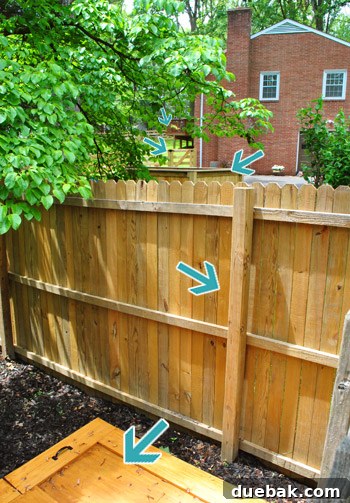
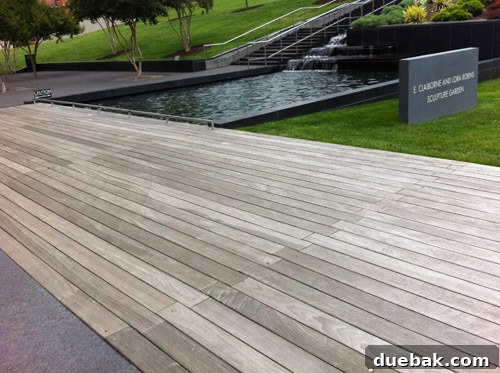
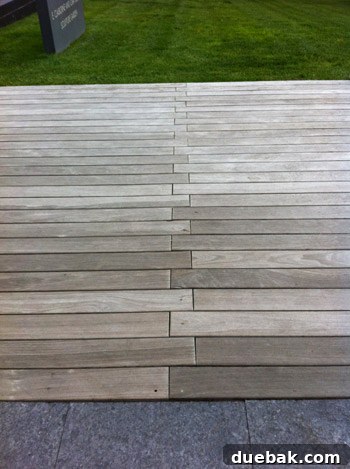
Beyond the fundamental material, we’ve also been exploring some creative design elements for the actual wood slat pattern. We’re debating something truly unique, like mitering the corners of all the border pieces. This technique would create a beautifully framed-out look, similar to the elegant right edge of this deck. Furthermore, we’re considering a more modern arrangement for the deck boards themselves, drawing inspiration from contemporary architectural designs. A particular shot we captured at the Virginia Museum Of Fine Art, showcasing a distinctive board layout, has really captured our imagination:
Notice those incredibly cool zipper-looking seams? This kind of innovative arrangement can add a truly unique and sophisticated touch to an otherwise traditional material.
We’ll certainly delve into more specifics regarding our final design plans as we progress, permitting all goes according to schedule, of course! For those of you eager for more in-depth information about various decking materials, we found several resources invaluable during our research. In addition to direct consultations with our local Home Depot and lumber yard, these online guides provided comprehensive comparisons: The Family Handyman, This Old House, TreeHugger (for an environmental perspective), and the insights from Better Homes & Gardens (though a word of caution: the presenter in their video is exceptionally cheerful!). We are excited to see this project come to life and share all the details with you. Are any of you currently embarking on a new wood deck, fence, or porch project? Or perhaps you’re in the midst of sealing or refreshing an existing wooden structure? We’d love to hear about your experiences!