
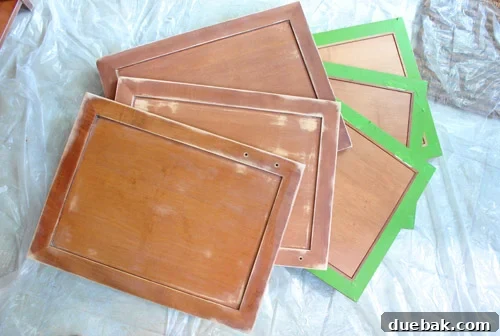
Transforming outdated cabinets can breathe new life into any room, from a bustling kitchen to a dedicated home office. Our journey recently took us to a set of six cabinets, earmarked for an ambitious built-in desk project. What began as a straightforward plan for priming and painting with a sleek, glossy white finish quickly encountered an unexpected detour: a hurricane-induced power outage. This unforeseen interruption momentarily halted our progress, preventing John from using essential electric tools for the structural modifications needed before the final painting and reassembly in the office. Thankfully, the power has since been restored, reminding us just how much we appreciate the modern conveniences of electricity!
Despite the temporary setback, we managed to complete all the crucial prepping and priming stages before the lights went out. Documenting every step with countless photos, we’re excited to share a detailed, wordy explanation of our process. This guide is perfect for anyone looking to refinish wood cabinets, whether you’re creating a custom wall-to-wall built-in desk like ours, or simply refreshing your kitchen cabinets. (We actually tackled our kitchen cabinets years ago, and you can read about that here.) It’s important to note right from the start: this specific method is designed for solid wood cabinets and, unfortunately, won’t work on laminate surfaces.
Essential First Steps: Disassembly and Meticulous Organization
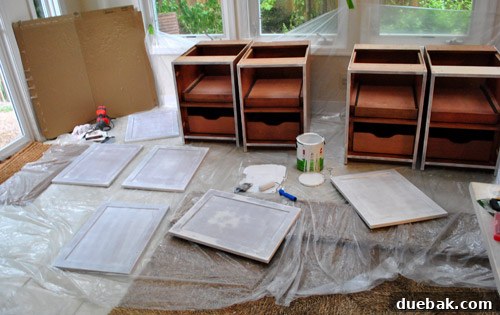
Our cabinet transformation began with careful disassembly. First, we meticulously removed all hardware, including the door handles, accompanying screws, and the doors themselves, along with their hinges. To safeguard our sunroom, which served as our workspace, from primer drips, paint splatter, and sanding dust, we employed two large plastic drop cloths. This created a protective “Dexter-ish” setup, allowing us to focus on the task without constant worry about keeping the area pristine.
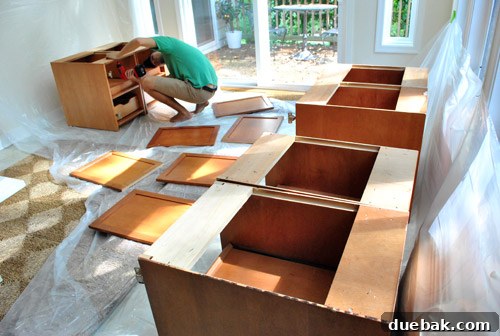
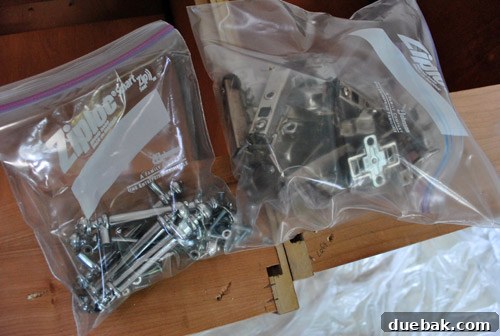
Organization is paramount in any DIY project, especially when dealing with numerous small parts. We placed all door handles and their screws into one plastic bag. All the hinge components from each of the six cabinets went into a separate bag. This two-bag system is absolutely critical to avoid mixing up handle screws with hinge screws, ensuring a smooth reassembly process later on. There’s nothing more frustrating than having a mysterious extra screw or missing part at the end, a common predicament we often face with IKEA furniture – do they intentionally throw in extra pieces to confuse us?
The Art of Sanding: Preparing Surfaces for Optimal Adhesion
With everything disassembled and organized, the next crucial step was sanding each door. Initially, I began sanding by hand, starting with a low-grit sandpaper (50-grit) to effectively cut through the existing glossy finish. This coarse grit creates a “tooth” on the surface, which is essential for the primer and subsequent paint layers to properly adhere and hold for the long term. Following the low-grit pass, I switched to a higher-grit sandpaper (200-grit) to smooth out the surface without removing the crucial texture for adhesion. This two-step sanding process ensures both robust adhesion and a smooth final finish.
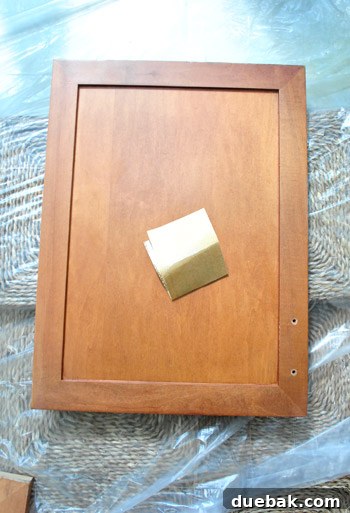
My initial foray into hand-sanding quickly turned into quite the workout! After just one round with the low-grit paper, I transformed from a relatively tidy gal into a sweaty, heavy-breathing mess. It was far more physically demanding than I anticipated. Speaking of intense experiences, isn’t everyone incredibly excited about Beyoncé being pregnant again? Just a thought!
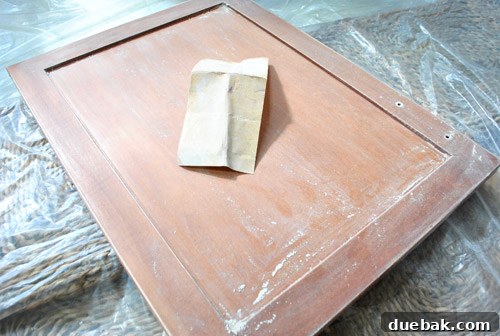
Realizing the sheer effort required for hand-sanding six cabinet doors, I wisely decided to bring out the big guns: our trusty little Black & Decker electric sander. Thank goodness this decision was made and executed before the hurricane knocked out our power! This small but mighty tool significantly expedited the process, saving my arms and back from further strain.
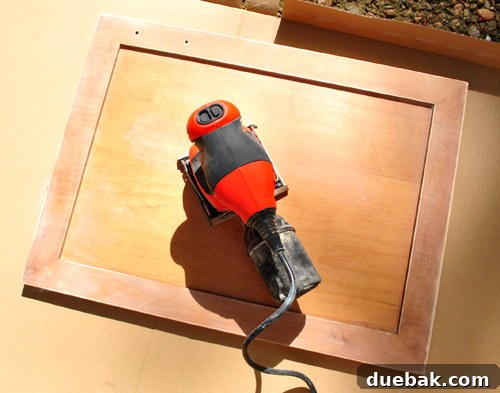
Even with the electric sander, each door still required considerable time to sand down with both low and then higher grit paper. The vibrations left my right hand feeling strangely numb, but the relief of having mechanical assistance outweighed the temporary discomfort. Compared to the purely manual, “grassroots” method I started with, the electric sander was a lifesaver. This entire door-sanding phase, covering all six doors twice (once with low grit and once with high grit), likely took a good hour per door, demonstrating the importance of patience and proper technique for a quality finish.
A Deliberate Design Choice: White Exteriors, Natural Wood Interiors
From the outset of this project, we had a clear vision for our wall-to-wall built-ins: a sleek, clean, glossy white front combined with the original natural wood tone for the backs of the doors and the cabinet interiors. This choice often raises eyebrows, and we understand that not everyone would opt for this aesthetic. However, our experience with the new KraftMaid drawers installed during our first house’s kitchen renovation heavily influenced this decision. Those drawers featured wood interiors that held up exceptionally well against natural wear and tear, far better than any painted surface would have. As “weirdos” who might stash hammers and screwdrivers almost anywhere, durability was a key factor for us. You can even catch a glimpse of them here, filled with tools:
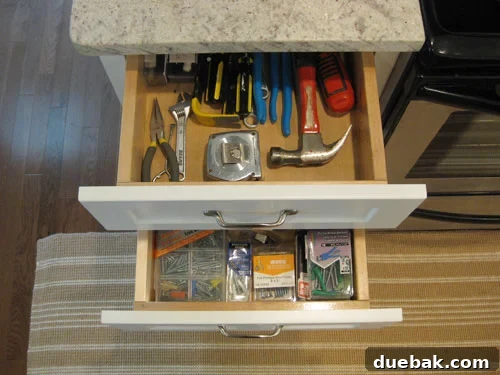
We genuinely appreciate the wood-plus-white aesthetic, reminiscent of the dresser we refinished for Clara. In this current project, the cabinets will present an entirely crisp, bright white exterior, with the warm wood tone only revealed when the doors are opened. This creates a delightful visual surprise and a practical benefit.
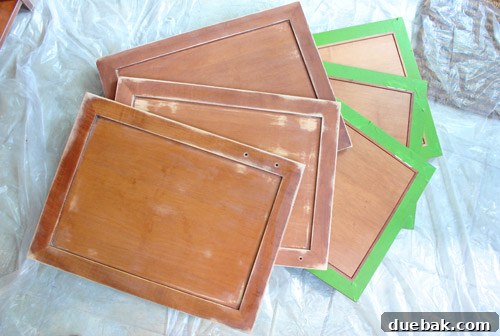
To achieve this distinct look, we carefully applied Frog Tape around the edges of the door backs. This ensured a perfectly clean line between the freshly painted fronts and sides and the preserved natural wood finish on the back. We considered painting both sides of the doors white and only leaving the cabinet interiors wood, but ultimately decided that durable, unpainted backs-of-doors would be more beneficial for our needs. Of course, personal preference plays a huge role; some may choose to paint both sides of the doors and leave only the interior cabinet boxes unpainted, and that works just as well.
Prepping the Cabinet Frames: A Crucial Step for Cohesion
Returning to the overall prep process, my next task involved taking Señor Sander (my electric sander) to the fronts and sides of the cabinet frames. These areas, like the doors, would also receive a coat of primer followed by glossy white paint, ensuring the entire exterior of the cabinets appeared seamless and uniformly white. Unlike the door-sanding stage, this was a step I couldn’t perform outdoors. While theoretically I could have carried all six cabinet frames outside, it was far more practical to rely on our “Dexter-tastic” drop cloth setup indoors, coupled with the sander’s built-in suction bag. To my pleasant surprise, it wasn’t overly dusty; there was no dense “smoke cloud” as I half-expected.
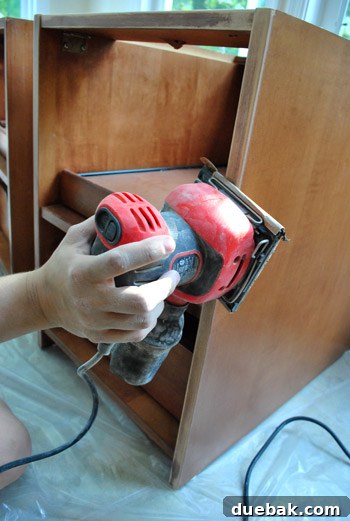
It was particularly important for me to achieve a nicely roughed-up edge around the cabinet frames, especially where the doors would constantly meet them. This meticulous sanding ensures maximum paint adhesion, critical for a long-lasting, durable finish. Our positive experience painting the original cabinets in our first house’s kitchen, which remained pristine for two years before a full renovation, instilled significant confidence in this preparation method. This past success fuels our belief that these office cabinets will also maintain a mint condition for years to come.
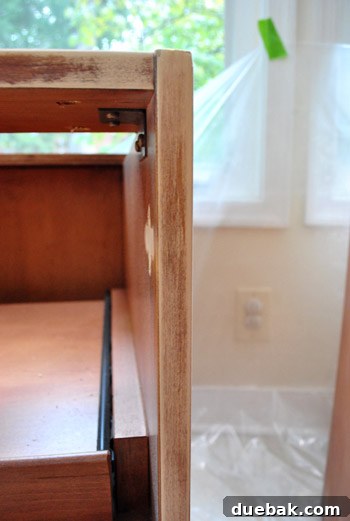
Priming for Perfection: Building a Solid Foundation
With sanding complete and all surfaces thoroughly cleaned, it was finally primer time. We opted for Kilz Clean Start, the same No-VOC primer we successfully used on our kitchen paneling after less-than-stellar results with two other low/no VOC options. This choice was based on its proven performance and our desire to minimize harsh fumes. I applied the primer with a small foam roller, aiming for a consistent, paper-thin coat. Foam rollers are excellent for achieving a smooth finish without the worry of brushstrokes, which can be particularly noticeable on flat cabinet surfaces.
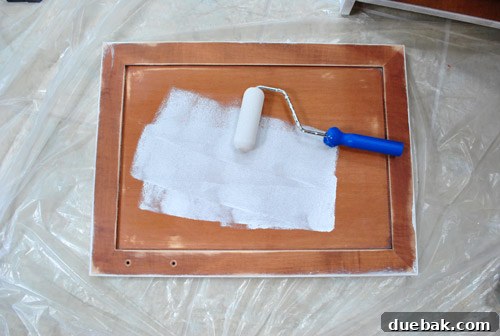
It’s crucial to understand that primer, by its very nature, often looks a bit rough and uneven when first applied. Its purpose isn’t to provide a perfectly smooth finish but rather to create a strong, textured base for the subsequent paint layers to grip firmly. Many DIYers worry that they’ve made a mistake if their primed surface appears imperfect, but chances are, you’ve done it perfectly! This slightly roughed-up appearance is exactly what allows the paint to bond tightly, ensuring a durable and long-lasting finish.
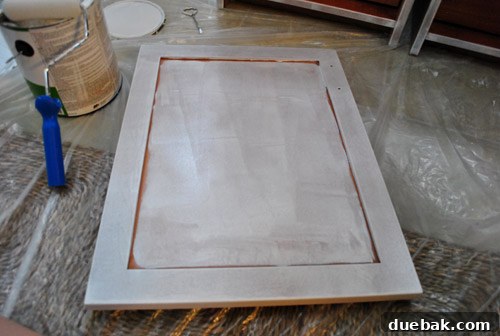
While the foam roller handled the broad, flat surfaces beautifully, I still needed a brush to reach the intricate corners and edges of the cabinet frames that the roller couldn’t quite access. A key tip here is to ensure your brush isn’t dripping with paint. I firmly wiped both sides of the brush along the edge of the paint can, removing any excess primer. This prevents gunky drips and ensures only a thin, even coat is applied to the detailed areas. Immediately after brushing these edges, I picked up my foam roller again and lightly rolled over the front of the frame one last time. This final pass helps to smooth out any potential rogue brush strokes, ensuring a seamless transition and a consistently smooth finish across the entire surface.
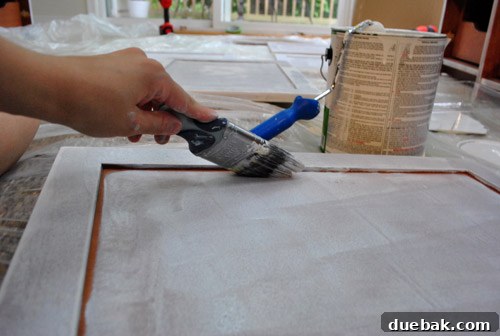
A vital piece of advice for this stage: tackle each door individually. This means rolling the sides, then the front, brushing the intricate cracks, and finally re-rolling the front for one last smooth pass. If you attempt to roll all your doors first, then go back and brush the frames, and *then* try to reroll everything, too much time will have elapsed between these steps. This can cause the primer to partially dry, leading to uneven results or even the roller pulling up semi-dry paint. Working on one door at a time keeps the primer wet enough to be “worked with” effectively, ensuring a truly smooth and consistent application.
Next, I moved on to priming the sides and frames of the cabinet boxes that I had sanded earlier. John initially planned to tape off the entire interior frame of the cabinets to create a crisp line between the white paint and the natural wood finish, just as we did with the doors. However, ever confident (some might say cocky!) in my rolling ability, I knew I could achieve an equally clean line by lightly rolling the frames without excessive paint on the roller – this detail is absolutely crucial! This approach saved us both time and valuable Frog Tape, which, in our household, is practically currency.
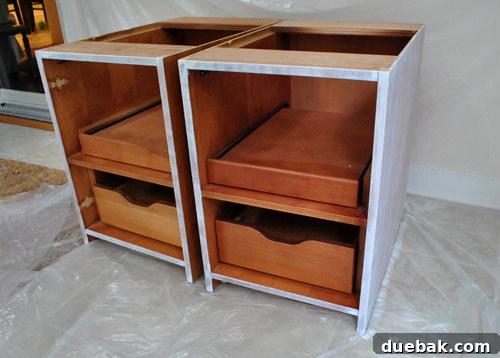
Thankfully, my confidence paid off. The result was wonderfully smooth and clean. Well, as smooth as a single coat of primer can look, that is. Remember, primer is inherently designed to appear a bit uneven or even “disastrous” because its primary function is to create a grippy surface, not a finished one. So, if your priming step doesn’t look perfectly even and smooth, fret not! A few thin, even layers of paint on top will undoubtedly achieve that flawless, professional finish you’re aiming for.
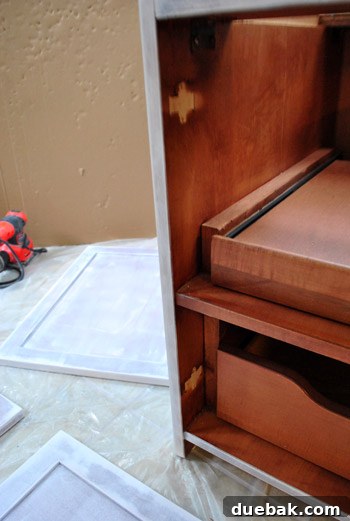
After all the hardware and hinge removal, thorough sanding of both doors and frames, and the painstaking priming process, here’s the current state of our workspace. You might notice some areas on the doors appearing whiter than others. This is because certain spots had minor scratches or imperfections, requiring slightly longer sanding in those specific areas. Consequently, the primer adheres more distinctly to these spots because the darker wood finish was more thoroughly removed before priming. The excellent news is that this minor variation won’t matter in the long run. Once we apply a few thin and even coats of paint, everything will blend seamlessly into a bright, cohesive white. At least, that has always been our experience! Though, perhaps I shouldn’t count my chickens just yet…
Looking Ahead: Assembly, Painting, and the Final Touches
Our next phase involves firing up the saw to build up the cabinet bases by approximately three inches. Following this modification, we plan to assemble them directly in the office. These triple-cabinet bases will be too heavy and awkward to carry once screwed together, so on-site assembly is essential. Once they are in place, I will apply the final 2-3 thin and even coats of paint. This approach minimizes the risk of scratches and dings that could occur if we painted them before moving and assembling. By “assemble them,” I mean screwing the cabinet bases together to create three robust double cabinet units. The doors and hardware will, as always, be reattached *after* the final painting is complete.
Beyond the cabinets, our attention will turn to the countertop. We are still completely undecided on the material – whether assembled planks of wood, a single giant slab, or even an IKEA countertop solution. We’ll be doing extensive research to quickly move forward with this step, eager to begin working at our new built-in desk. Rest assured, we’ll keep you thoroughly updated every step of the way. If there’s one thing we enjoy, it’s over-sharing our DIY adventures!
Psst- Speaking of over-sharing, we’re currently spilling all the names we considered for Clara (including the boy names we debated and all the other girl names we eventually discarded) over on BabyCenter. We’d absolutely love to hear about your favorite names or even your stories of epic naming disagreements – those are always entertaining!