

The Ultimate Guide to the 12 Most Universally Loved White Paint Colors for Your Home
Searching for the perfect white paint color can feel overwhelming. With hundreds of shades available, how do you choose the one that will transform your space into a bright, inviting haven? We’ve done the heavy lifting for you! We meticulously analyzed over 100 white paint colors featured on more than a dozen “best white” lists compiled by top interior designers, architects, builders, and bloggers. The result? A definitive list of the 12 white paint colors that consistently rise to the top, trusted by experts and homeowners alike. In this comprehensive guide, we’ll dive deep into why these specific shades are so beloved, explore essential concepts like LRV and undertones, and equip you with practical tips to confidently select the ideal white paint for any room in your home.

Why White Paint Reigns Supreme in Interior Design

While white is an undisputed classic for trim, ceilings, and cabinetry, painting your walls white sometimes sparks a debate. Critics might label white walls as ‘basic’ or ‘boring,’ but seasoned designers understand their profound impact. White walls are anything but mundane; they offer a sophisticated, timeless, and incredibly versatile backdrop that is consistently on-trend. We are personally big advocates for their transformative power. Here’s why white walls are a design staple:
- White Walls are Supportive and Enhance Features: Rather than competing for attention, white walls graciously recede, allowing other elements in your space to truly shine. They act as a gallery backdrop, highlighting artwork, statement furniture, decorative accents, bold accent walls, or even the breathtaking view outside your window. This creates a curated and intentional look, making your cherished pieces the focal point.
- White Walls are Brightening and Expansive: This is one of the most immediate and appreciated benefits. Light paint colors, especially crisp whites, are renowned for their ability to reflect light, making spaces feel significantly brighter, larger, and more open. This is particularly beneficial in smaller rooms, areas with limited natural light, or homes aiming for an airy, expansive feel.
- White Walls are Incredibly Versatile: No matter your interior design aesthetic, white walls seamlessly integrate. From the rustic charm of farmhouse style to the clean lines of modern minimalism, the cozy appeal of cottage decor, or the elegance of traditional settings, white serves as a perfect canvas. It adapts effortlessly, making it a universal choice for any design vision.
- White Walls Offer Unmatched Flexibility for Evolving Styles: For those who love to refresh their interiors periodically, white walls are a game-changer. They provide an unchanging neutral base that allows you to introduce new colors, patterns, and textures through furniture, textiles, and accessories without the daunting task of repainting the entire room. This flexibility makes redecorating simple and cost-effective.
- White Walls are Dynamic and Engaging: Far from being static, white paint colors possess a unique ability to shift their appearance throughout the day. As natural light changes from morning to evening, or as artificial lighting comes into play, the nuances of white can be surprisingly captivating. This dynamic quality makes choosing the right white challenging but also incredibly rewarding to live with, as your walls present a subtly different mood with every passing hour.
Discovering the Most Popular White Paint Colors
After extensive research, analyzing recommendations from renowned home decor magazines, popular DIY websites, and individual design authorities like Martha Stewart and Shea McGee, we’ve compiled the 12 white paint colors that were most frequently cited. These aren’t just arbitrary picks; they are the go-to shades for professionals and enthusiasts alike. We’ll delve into the specifics of each one later in this post, but for those eager to see the full list right away, here it is:

Note: The paint swatches displayed in this article are digital approximations directly sourced from each manufacturer’s website. While these offer the best “apples-to-apples” comparison online, digital representations are imperfect. For the most accurate assessment, we strongly advise viewing physical paint swatches in your home’s unique lighting conditions before making any final decisions.
The Top 12 White Paint Colors Experts Swear By
These 12 exceptional white paints are presented in descending order of how frequently they appeared across the multitude of “best white paint” lists we reviewed. Notably, the first three shades were almost universally recommended, appearing on nearly every list we cataloged.
- Benjamin Moore White Dove (OC-17)
- Benjamin Moore Simply White (OC-117)
- Benjamin Moore Chantilly Lace (OC-65)
- Benjamin Moore Decorator’s White (OC-149)
- Benjamin Moore Super White (OC-152)
- Sherwin-Williams Pure White (SW 7005)
- Benjamin Moore Swiss Coffee (OC-45)
- Farrow & Ball All White (No. 2005)
- Sherwin-Williams Extra White (SW 7006)
- Sherwin-Williams Alabaster (SW 7008)
- Farrow & Ball Pointing (No. 2003)
- Sherwin-Williams Snowbound (SW 7004)
While having this curated list is an excellent starting point, truly narrowing down the perfect white for your specific needs requires a deeper understanding of how white paints behave. It’s all about deciphering their subtle characteristics.
Mastering the Art of Choosing the Perfect White Paint

Selecting the ideal white paint for your home transcends simply picking a “nice” shade. The most effective way to pinpoint the perfect white is to grasp the subtle, yet significant, differences between them. Specifically, understanding two key factors—brightness and undertones—is paramount. While these concepts are valuable for choosing any paint color, they become absolutely critical when navigating the nuanced world of white hues, as they dictate how a white will truly appear in your unique space.
Understanding Light Reflectance Value (LRV)
LRV, or Light Reflectance Value, is a standardized and quantitative metric used to measure how much light a paint color reflects. It’s expressed as a percentage, ranging from 0 (representing absolute black, absorbing all light) to 100 (representing pure white, reflecting all light). In essence, the higher the LRV number, the brighter and more reflective the paint color will appear. This objective measurement is incredibly helpful for comparing paints, especially whites, where visual differences can be very subtle to the untrained eye. Below, you can see a general illustration of how various paint colors fall on the LRV spectrum.

Most popular white paints typically fall within the 80-95 LRV range. An LRV higher than 95 would often be too stark and blinding in an interior setting, while anything much lower than 80 starts to veer into the territory of gray, beige, or even a light greige. To help you visualize the brightness of our top picks, we’ve charted the 12 best white paints below, indicating where each stands on the LRV scale.

Key Takeaway on LRV: It might surprise you, but many of the most highly recommended white paints, despite names like “Super White” or “Extra White,” are not the absolute brightest available. In fact, some could even be classified as very, very light greiges. This illustrates a crucial point: when selecting a white paint for your home, brighter doesn’t always translate to better. Many homeowners regret choosing a white that is excessively bright, as it can inadvertently make softer white furniture, curtains, or existing decor appear yellow or dull by comparison. Opting for a white with a slightly lower, yet still high, LRV often creates a more harmonious and comfortable living environment.
Practical Application: Using LRV to Select Your White Paint
Comparing the brightness of various white paint colors by eye can be deceptively challenging. Unlike other color families, where shades are often arranged by lightness in paint decks, white tones are frequently grouped by undertone, making direct brightness comparisons difficult. This is precisely where LRV becomes an invaluable tool. It offers an objective way to compare whites, allowing you to fine-tune your selection:
- If a white swatch appears too dark or muted in your space, look for another white with a higher LRV.
- Conversely, if a white seems overwhelmingly bright or stark, consider one with a slightly lower LRV to soften the effect.

Knowledge of LRVs is also incredibly beneficial when you plan to use two different white tones within a single room, perhaps for walls and trim. Take the example pictured above: we aimed for a subtle, yet noticeable, contrast between the walls and the trim. Both paints have “white” in their names – Sherwin-Williams Spare White for the walls and Sherwin-Williams Extra White for the trim. Visually, this might seem confusing. However, knowing that Spare White has an LRV of 77, nearly 10 points lower than Extra White’s LRV of 86, gave us the confidence that this pairing would deliver the desired subtle contrast without clashing, and it did beautifully.
Decoding Paint Undertones: Warm vs. Cool Whites
Undertones are the subtle, secondary hues that lurk beneath a paint color’s primary shade. They are typically categorized as either “warm” (leaning towards yellow, red, orange, or brown) or “cool” (leaning towards blue, green, or purple), as illustrated below. While undertones exist in every color, understanding them is especially critical when dealing with whites and grays, as these subtle nuances become far more apparent and influential. Warm whites can, under certain conditions, take on creamy or even beige appearances, while cool whites might reveal hints of gray or blue, significantly altering the perceived color of your walls.

Identifying undertones can be notoriously difficult. They are often incredibly subjective, as your perception of them is heavily influenced by surrounding factors such as the room’s natural and artificial lighting, adjacent colors, and even the colors of outdoor greenery visible through windows. A white that appears perfectly neutral in one setting might suddenly reveal a green or yellow tint in another, highlighting the importance of thorough testing.
One of the most effective techniques for discerning a white paint’s undertone is to compare it directly with other whites. When viewed in isolation, many white paint swatches can appear deceptively “neutral” or devoid of any color bias. However, placing them side-by-side in a group quickly reveals their inherent characteristics—which ones lean yellower, greener, redder, or bluer. We’ve compiled our best assessment of where each of the 12 best white paints falls on a warm-to-cool undertone spectrum to aid your understanding.

Key Takeaway on Undertones: A striking observation from our research is that most experts tend to favor warmer whites, those with subtle yellow, red, or tan undertones. This preference is largely due to the fact that cool whites, when applied to walls, can sometimes appear stark, sterile, or even take on a grayish cast. While this isn’t a rigid rule for all situations, it’s fascinating to note how consistently the top-recommended whites exhibit these slightly warmer undertones, suggesting a collective inclination towards creating inviting and comfortable spaces.
Strategic Selection: Leveraging Undertones for Your Home
Choosing between a warm, cool, or truly neutral white often boils down to personal preference and the specific mood you wish to evoke. You might be drawn to the inherent coziness and inviting feel of a creamy warm white, or perhaps you prefer the crisp, airy, and more contemporary vibe of a cool white. However, personal taste isn’t the only factor. It’s crucial to also consider the existing elements within your room, such as permanent fixtures, furniture, and especially the quality of light. Both natural and artificial lighting sources can have their own warm or cool biases, significantly influencing how your chosen white appears throughout the day.

Generally, the goal is for your white paint to complement any existing undertones in your decor or lighting. However, a well-chosen white can also be used strategically to counterbalance unwanted undertones. Just exercise caution, as clashing undertones can create an unharmonious or jarring effect. This is precisely why diligent testing of paint swatches directly in your room is non-negotiable. It’s also worth noting the dynamic nature of white paint: our personal favorite white paint color, Sherwin-Williams Pure White (shown above in our family room), leans towards a cooler undertone on our aggregated chart. Yet, during certain times of the day, particularly as the sun sets, it beautifully transforms, appearing much warmer. Imagine how much richer and cozier a white with inherently warm undertones would appear in that very same light!
Essential Tips for Testing White Paint Colors
Before committing to painting an entire room, or even an entire house, with a new color, it is absolutely paramount to test it first. No amount of expert recommendations or online reviews can guarantee that a specific white paint color will look perfect in YOUR unique space, with YOUR specific lighting conditions, and according to YOUR personal tastes. Here’s our recommended, foolproof method for testing any paint color:
- Collect a Wide Range of Physical Swatches from the Paint Store. Don’t limit yourself to just the 12 colors on this list. Bring home a variety of alternatives—some slightly darker, some lighter, some grayer, and some yellower than you initially think you want. Having a broader selection allows you to compare and contrast effectively, helping you definitively identify your favorite and understand why other shades don’t quite hit the mark.
- Order Removable Sticker Samples for a Mess-Free Experience. Once you’ve narrowed down your initial choices to a handful of strong contenders, leverage convenient services like Samplize to order large, pre-painted peel-and-stick swatches. The cost is comparable to purchasing multiple sample-sized paint cans, but these adhesive samples save you from the mess, time, and multiple coats required for traditional paint swatching. We’ve linked each of the top 12 colors directly below for easy ordering. You can also efficiently test several popular options by ordering their curated Warm White bundle or Cool White bundles, which include many of these standout shades.
- BM White Dove sample sticker
- BM Simply White sample sticker
- BM Chantilly Lace sample sticker
- BM Decorator’s White sample sticker
- BM Super White sample sticker
- SW Pure White sample sticker
- BM Swiss Coffee sample sticker
- FB All White sample sticker
- SW Extra White sample sticker
- SW Alabaster sample sticker
- FB Pointing sample sticker
- SW Snowbound sample sticker
- View Samples on Various Walls, in Diverse Lighting Scenarios. Patience is key during this stage. Affix your removable samples (or painted swatches) to different walls within the room, ensuring you observe them throughout various times of the day—morning, afternoon, evening—and under both natural and artificial light. Pay close attention to how brightness and undertones subtly shift. Also, consider placing them next to existing elements you won’t be painting, such as cabinets, trim, flooring, or furniture, to ensure harmonious coordination.
While painting a large swatch directly onto your wall remains an option if you’re still undecided, our experience suggests that following these steps with large, removable samples typically provides sufficient confidence to make your final color choice.
In-Depth Look at the Top 12 White Paint Colors
Now that you possess a foundational understanding of how to critically evaluate white paints—considering both their Light Reflectance Value (LRV) and subtle undertones—let’s delve into the specifics of the white paints that continually garner praise and are consistently chosen by design professionals. These are the shades that experts rely on to create beautiful, timeless spaces. They are presented here in order of their frequency of appearance on expert lists at the time of our comprehensive research:
Benjamin Moore White Dove (OC-17)

BM White Dove consistently tops “best white paint” lists, and for excellent reason. It’s a universally beloved interior white that performs beautifully on virtually any surface: walls, trim, ceilings, cabinetry, and even exterior applications. With an LRV of 85.38, White Dove strikes a perfect balance, offering a clean, pure white appearance without feeling stark or overly bright. Its subtle warm, creamy undertone is just enough to prevent it from leaning cold or sterile, making it incredibly inviting. It shares a striking resemblance to Sherwin-Williams Pure White (another top contender on this list and a personal favorite of ours, used as our whole-house white), making both excellent choices for a soft, approachable white.
Benjamin Moore Simply White (OC-117)

BM Simply White, with its impressive LRV of 91.72, is a bright and luminous white that we’ve used with great success as a whole-house trim color. We’ve also applied it to walls and built-ins, as seen in our former living room below, to effectively brighten and infuse warmth into naturally darker spaces. For many years, Simply White held the title of our absolute favorite white paint. It has a discernible yellow undertone, which is a significant draw for some, offering a soft, sunny disposition. However, for others, this yellow cast can be a drawback, leading to a creamier look than desired. We explore this in greater detail in our honest review of Simply White. Ultimately, this characteristic prompted our shift in preference to Sherwin-Williams Pure White for our current home, which provides a slightly less yellow-leaning white.

Benjamin Moore Chantilly Lace (OC-65)

BM Chantilly Lace, boasting an impressive LRV of 92.2, is often described as Simply White’s cooler, cleaner cousin, distinguished by its near-absence of warm undertones. Benjamin Moore proudly categorizes Chantilly Lace as one of its “whitest whites,” alongside Super White (also featured on this list). This crisp, pure white is an exceptional choice for trim, ceilings, and moldings, where it provides a clean, bright contrast against a vast spectrum of darker whites, grays, greiges, and even bold color walls. Its neutrality ensures it won’t clash, making it a reliable and sophisticated option for defining architectural details.
Benjamin Moore Decorator’s White (OC-149)

BM Decorator’s White offers a refreshing, cool-toned alternative to the popular warmth of BM White Dove, while still residing in that ideal 82-84 LRV range (82.72 specifically). This makes it bright enough to open up a space without being blindingly stark on walls. Its subtle gray undertone gives it a crisp, sophisticated edge that pairs beautifully with contemporary decor, cool color palettes, or in rooms that receive an abundance of warm natural sunlight, which can help temper its cool leanings. Consider Decorator’s White if you’re seeking a clean, sharp white that exudes modern elegance.
Benjamin Moore Super White (OC-152)

BM Super White, with an LRV of 87.36, is slightly darker than Benjamin Moore’s other acclaimed “whitest white,” Chantilly Lace, yet it shares the same coveted characteristic of having nearly invisible undertones. This makes it another fantastic option for those seeking a truly neutral, bright white. Super White and Chantilly Lace could even be combined—perhaps one on walls and the other on trim—to create a very subtle, sophisticated contrast. Beyond walls, Super White excels as a trim color, on moldings, or built-ins, delivering that classic, clean white look that defines and sharpens architectural details in any room. Its versatility and pureness make it a designer favorite for a reason.
Sherwin-Williams Pure White (SW 7005)

SW Pure White is the first Sherwin-Williams entry on our esteemed list, and it’s a shade we consider a remarkably close match to the top-ranking Benjamin Moore White Dove, especially if you prefer a white with a slightly less pronounced warm undertone. Boasting an LRV of 84, Pure White is bright and clean without being sterile, possessing just enough softness to feel inviting. We currently use Pure White as our signature “whole-house white,” gracing our walls, trim, ceilings, and doors throughout our home, and we couldn’t be happier with its consistent beauty.

You can discover more captivating images of our home and its beautiful transformation in our in-depth review of SW Pure White. We’ve found it to be an incredibly versatile white, performing flawlessly in a wide array of lighting conditions—our rooms face every cardinal direction (North, South, East, and West), and Pure White consistently maintains its elegant charm, adapting beautifully to each scenario.
Benjamin Moore Swiss Coffee (OC-45)

BM Swiss Coffee, with an LRV of 83.93, marks the introduction of an unmistakably warm off-white paint color to our list. While undeniably beautiful, it’s important to recognize that under most circumstances, Swiss Coffee will not read as a clean, crisp white. Despite having one of the lower LRVs on this list, it remains an excellent choice for infusing a space with brightness while simultaneously cultivating a warm, cozy, and inviting atmosphere. It can also be applied to trim and doors, but to ensure harmony and prevent clashing, it necessitates pairing with complementary warm wall colors or decor elements. Swiss Coffee is perfect for creating a soft, enveloping backdrop.
Farrow & Ball All White (No. 2005)

Farrow & Ball All White (No. 2005) stands out as the whitest and brightest paint color on our entire list, boasting an impressive LRV of 94. It is uniquely formulated with no added pigments, meaning it truly has no discernible undertones—a claim few other whites can genuinely make. This absolute purity makes it an exceptional choice for trim, ceilings, and any surface where a brilliant, unadulterated white tone is desired. However, its intense brightness can be a consideration; for some individuals and in certain highly illuminated rooms, All White might prove to be too dazzling or stark for expansive wall applications, making a slightly softer white a more comfortable option.
Sherwin-Williams Extra White (SW 7006)

SW Extra White (SW 7006) is another highly versatile white paint that subtly leans cool. Its undertones are frequently described with a wide range of characteristics—from hints of blue and gray to even elusive touches of yellow and green by different observers. This diversity in perception speaks to its extreme subtlety, making it a remarkably adaptable white that pairs well with a multitude of other colors and in diverse lighting environments. With an LRV of 86, it sits squarely in the mid-brightness range for whites, rendering it equally suitable for both walls that crave a crisp, clean look and for trim that provides a sharp, defining contrast.

You can explore more examples of how we’ve effectively utilized this paint color, both on walls and trim, in our dedicated Extra White color review post, showcasing its ability to adapt and enhance various design schemes.
Sherwin-Williams Alabaster (SW 7008)

SW Alabaster (SW 7008), with an LRV of 82, shares a similar warm, off-white character with Benjamin Moore’s Swiss Coffee. In most applications, Alabaster reads as a creamy, inviting off-white, though it tends to have a slightly redder undertone compared to Swiss Coffee. It is arguably the warmest white on this list, offering a sophisticated and subtle beige-like quality that brings undeniable coziness to a space. Due to its pronounced warmth, Alabaster is best paired with other warm tones in your decor to ensure a harmonious overall aesthetic and avoid any potential clashes. This popular shade was even named Sherwin-Williams’ 2016 Color of the Year (incidentally, the same year Benjamin Moore selected another white on this list, Simply White). You can explore more Color of the Year picks from various brands for additional inspiration.
Farrow & Ball Pointing (No. 2003)

Farrow & Ball Pointing (No. 2003), with an LRV of 79, is another distinctly warm white, much like Swiss Coffee and Alabaster. What sets Pointing apart, however, is its noticeably higher brightness compared to these two, making it a superior option for a warm white trim or ceiling tone that still offers a sense of freshness. Its name, derived from the term for applying mortar between bricks, offers a subtle nod to the underlying red undertones present in this paint. These red nuances contribute to its inviting warmth, creating a soft and traditional feel that beautifully complements classic interiors or spaces with other warm-toned elements.
Sherwin-Williams Snowbound (SW 7004)

SW Snowbound (SW 7004), closing out our list, is another distinctly warm white with an LRV of 83. Its undertones lean more red or slightly pinkish than yellow, distinguishing it from many other warm whites. This unique characteristic made it an ideal choice for the exterior trim of our red brick house, where it flawlessly provided the appearance of a bright, clean white. This is especially crucial for exteriors, where direct sunlight can intensify colors, causing whites with too high an LRV to appear blindingly bright.
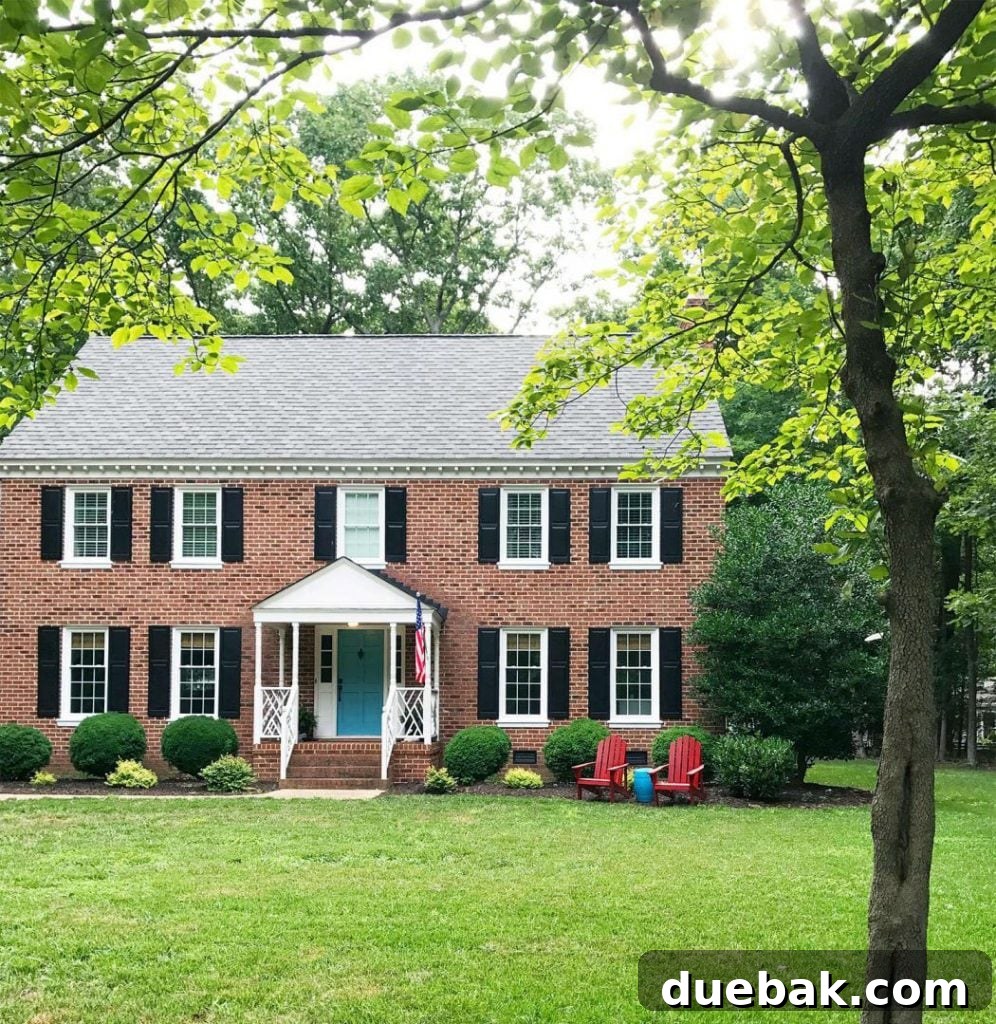
Our application of Snowbound on our brick house perfectly illustrates the importance of selecting a white with undertones that harmonize with surrounding colors or existing decor elements. Had we chosen a cool white for this home, it would likely have clashed with the brick’s inherent warmth or appeared gray and lifeless against it. Because Snowbound possesses a complementary red undertone, this nuance practically disappears in context, leaving a perception of a perfectly neutral, bright white that elevates the entire exterior. This subtle art of balancing undertones is key to achieving a cohesive and polished look.
Important Considerations When Choosing White Paint
Beyond LRV and undertones, several other factors can significantly impact how a white paint color appears in your home. Keep these crucial points in mind during your selection process to ensure lasting satisfaction:
- Never Solely Trust Online Pictures or Digital Swatches. It’s imperative to remember that every screen, monitor, and device renders colors and brightness differently. What appears as a perfectly crisp white on your phone might look creamy or even gray in person. Therefore, relying solely on online images for paint selection is a common pitfall. Always, always, view physical paint swatches in your actual spaces to gauge their true appearance and interaction with light.
- White Walls Can Reflect Other Colors in the Space. The higher a paint’s LRV, the more reflective it becomes. This heightened reflectivity means that strong colors from nearby objects—be it a vibrant rug, a bold accent wall, lush greenery outside your windows, or colorful furniture—can literally “cast” their hues onto your white walls. This phenomenon can add an intriguing, dynamic quality to white walls, making them subtly shift throughout the day. However, if this prospect concerns you, or if you prefer a less reactive surface, consider opting for a white paint with a slightly lower LRV to minimize this reflective effect.

- Factor in the Direction Your Windows Face. The direction of your windows plays a profound role in how natural light enters a room, thereby influencing paint color perception. North-facing rooms typically receive cooler, indirect light, which can enhance blue or gray undertones in a white. South-facing spaces are bathed in warmer, direct sunlight, which might pull out yellow or creamy undertones. East- and West-facing rooms experience a dynamic mix, with cooler light in the mornings or afternoons, respectively. Keep these natural light biases in mind: warmer whites can help “balance” a naturally cool room, while cooler whites might prevent a naturally warm room from appearing too yellow.
- Remember Your Light Bulbs (Artificial Lighting). Don’t overlook the impact of your artificial lighting. Light bulbs themselves emit either warm or cool light, measured in Kelvin (K). “Daylight” or fluorescent bulbs typically cast cool, bluer light, whereas “soft white” or “warm white” bulbs emit a warmer, yellowish glow. Our deep dive into the best LED light bulbs provides more detailed information. Artificial light can drastically alter the appearance of your white walls, so it’s essential to view your paint swatches at night with the lights on to get a realistic sense of the color’s true evening character.
- White Paint Colors Can Become Too White for Exterior Use. The intense, unfiltered direct sunlight outdoors significantly amplifies any paint color, making it appear much brighter than it would indoors. For this reason, design experts almost universally recommend selecting white paints with lower LRVs for exterior applications. For instance, we chose SW Moderne White (LRV 74), a softer warm white, for the exterior of our current home, and we absolutely love its inviting and understated look. A higher LRV white might have been blindingly bright in direct sun.

- Exercise Caution When Pairing Different White Paint Colors Together. While combining various whites can create sophisticated depth, it’s a nuanced art. White paints can easily clash, especially if they possess opposing undertones. For example, a subtle yellow undertone on your walls will become far more conspicuous and potentially jarring when placed directly alongside a cool white trim. To avoid undesirable conflicts, it is absolutely essential to test both (or all) white swatches together in your space before committing to a final scheme.
White Paint FAQs: Your Questions Answered
To round out this comprehensive guide, let’s address some of the most frequently asked questions about white paints with quick, actionable answers.

What is the most popular white paint color?
Based on our extensive research, the overall most popular and universally acclaimed white paint color is Benjamin Moore White Dove (OC-17). For Sherwin-Williams, the most frequently recommended white paint color is Pure White (SW 7005).
What white paint color is best for trim?
Sherwin-Williams Extra White (SW 7006) and Benjamin Moore Chantilly Lace (OC-65) are exceptionally popular and highly recommended choices for trim colors. Both possess bright, largely neutral undertones that pair harmoniously with a wide array of wall colors. However, virtually any white paint on this list can be effectively used on trim, especially if it’s the same color you’ve chosen for your walls. To create subtle yet impactful contrast when using the same white on walls and trim, simply vary the sheen—for instance, eggshell for walls and semi-gloss for trim and doors.
What white paint color is best for ceilings?
Benjamin Moore Super White (OC-152) and Benjamin Moore Decorator’s White (OC-149) are excellent choices for ceiling paint colors, offering clean and bright finishes. However, a common and often preferred practice, especially when painting walls white, is to extend that very same white color onto the ceiling. This creates a seamless, expansive look, particularly effective in modern or minimalist designs. For ceilings, it is generally recommended to use a flat or matte paint finish to minimize imperfections and reduce glare.
Can I color match white paint across brands?
Generally, attempting to color match paints across different brands is not recommended by experts. Paint manufacturers utilize distinct bases, pigments, and proprietary formulations to mix their colors. Consequently, you will likely not be able to perfectly recreate a Benjamin Moore color at a Sherwin-Williams store, or vice versa. We’ve heard estimates suggesting that color-matched paints can be anywhere from 10-17% inaccurate compared to the original, which represents a significant deviation. This makes color matching a considerable gamble that could potentially result in an unsatisfactory outcome.
What are other popular white paint colors?
Beyond our top 12, other frequently mentioned white paint colors that consistently appeared on expert lists we reviewed include:
- Benjamin Moore Oxford White (CC-30)
- Benjamin Moore Paper White (OC-55)
- Farrow & Ball Wimborne White (No. 239)
- Farrow & Ball Strong White (No. 2001)
- Benjamin Moore Cloud White (OC-130)
What is the brightest white paint?
Among the brightest white paints commercially available, often with LRVs in the mid-90s, are Farrow & Ball All White (LRV 94), Behr Ultra Pure White (LRV 95), and Sherwin-Williams High Reflective White (LRV 93). While exceptionally bright, remember to consider if such high reflectivity suits your specific space.
What are the best cool white colors?
For those seeking white paints with subtle cool undertones, the top expert picks include Benjamin Moore Decorator’s White (OC-149), Benjamin Moore Super White (OC-152), and Sherwin-Williams Extra White (SW 7006). These whites offer a crisp, clean aesthetic that can enhance contemporary designs or balance warmer light sources.
What are the best warm white paint colors?
The leading choices from design experts for warm white paints are Benjamin Moore Simply White (OC-117), Benjamin Moore Swiss Coffee (OC-45), Sherwin-Williams Alabaster (SW 7008), and Farrow & Ball Pointing (No. 2003). Additionally, Benjamin Moore Cloud White (OC-130) and Sherwin-Williams Shoji White (SW 7042) are frequently cited as excellent options for creating cozy, inviting spaces.
Explore More of Our Favorite Paint Colors
If you’re eager to discover even more of our preferred paint colors and see how they come to life in real-world settings, we invite you to tour our homes through the menu at the top of our blog. Additionally, we’ve published a series of detailed deep-dive posts dedicated to some of our most beloved paint choices and popular color trends:
- Benjamin Moore Edgecomb Gray: A versatile greige that blends warmth and coolness.
- Benjamin Moore Simply White: A bright, inviting white with a touch of warmth.
- Sherwin-Williams Pure White: Our current whole-house white, known for its balanced appeal.
- Sherwin-Williams Extra White: A crisp, slightly cool white perfect for modern spaces and trim.
- The 12 Best “Haint Blue” Paint Colors: Explore the enchanting tradition of Southern porch ceilings.
- The 9 Best Greige Paint Colors: The perfect blend of gray and beige for sophisticated neutrals.
- Every 2024 Color of the Year: Stay updated with the latest trends.
- Every 2025 Color of the Year: A sneak peek into upcoming color predictions.
- Every 2026 Color of the Year: Prepare for future design palettes.
*This post contains affiliate links, so we may earn a small commission when you make a purchase through links on our site at no additional cost to you.