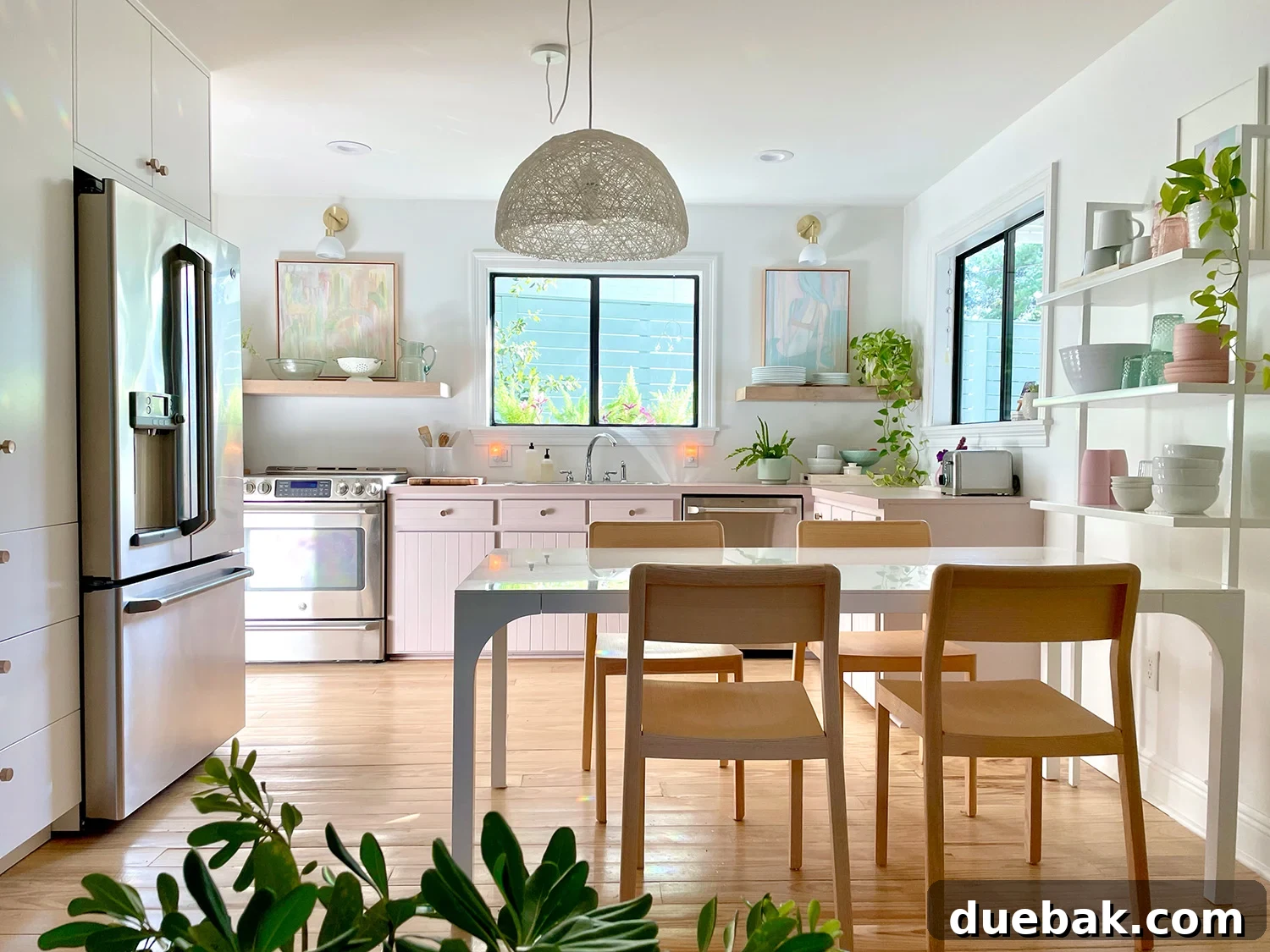
“We just couldn’t figure out why you weren’t tearing out the kitchen.”
That’s what one of our contractor’s crew said when we moved in last year. I get the reaction. We were redoing floors, moving doors, vaulting ceilings and more, yet we left the small, dated kitchen largely intact—including the mauve laminate countertops. You can see what I mean in the original renovation post.
Our approach is to live with an expensive-to-remodel room for a while so we don’t rush into costly, permanent changes we might regret. Over the past 16 months we weighed several major ideas for this kitchen while making smaller, inexpensive updates to test how they’d affect the space. These slow tweaks helped us visualize longer-term plans while stretching our budget for larger changes.
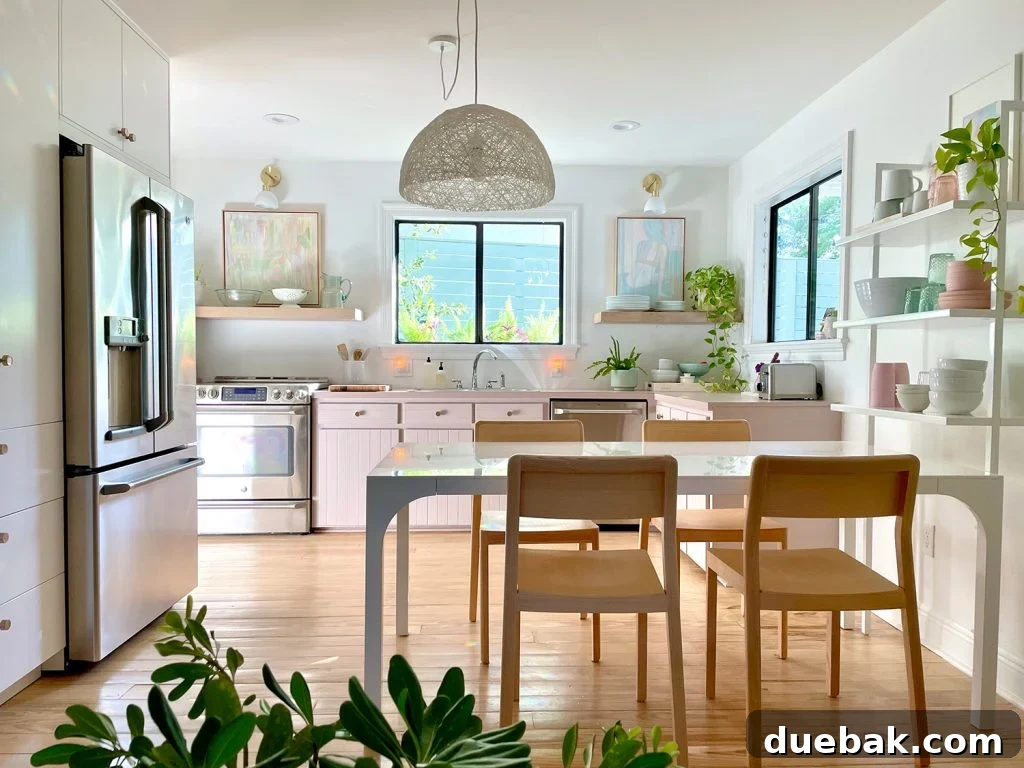
We considered adding extra cabinetry in different locations, then realized we could build a tall pantry with a built-in fridge along the stair wall. We also debated shrinking a window to tuck a bathroom off the bedroom—but eventually found a much better spot for that ensuite, which changed the kitchen plan too. That better placement of the bathroom and new thinking about the side window and porch helped shape our final direction.
In short: 16 months of small updates—painting cabinets, installing new hardware, hanging shelves and art, and rearranging furniture—gave us time to test ideas, improve functionality, and save for larger renovations. Below I’ll outline the bigger plan and walk through the recent changes that made the most difference in this modest kitchen.
A Quick Video Tour
We recorded a short walk-through video so you can get a better feel for the whole room. Watching the space move around you is far more informative than a thousand photos. (You can also watch it on YouTube.)
Adding A Built-In Pantry
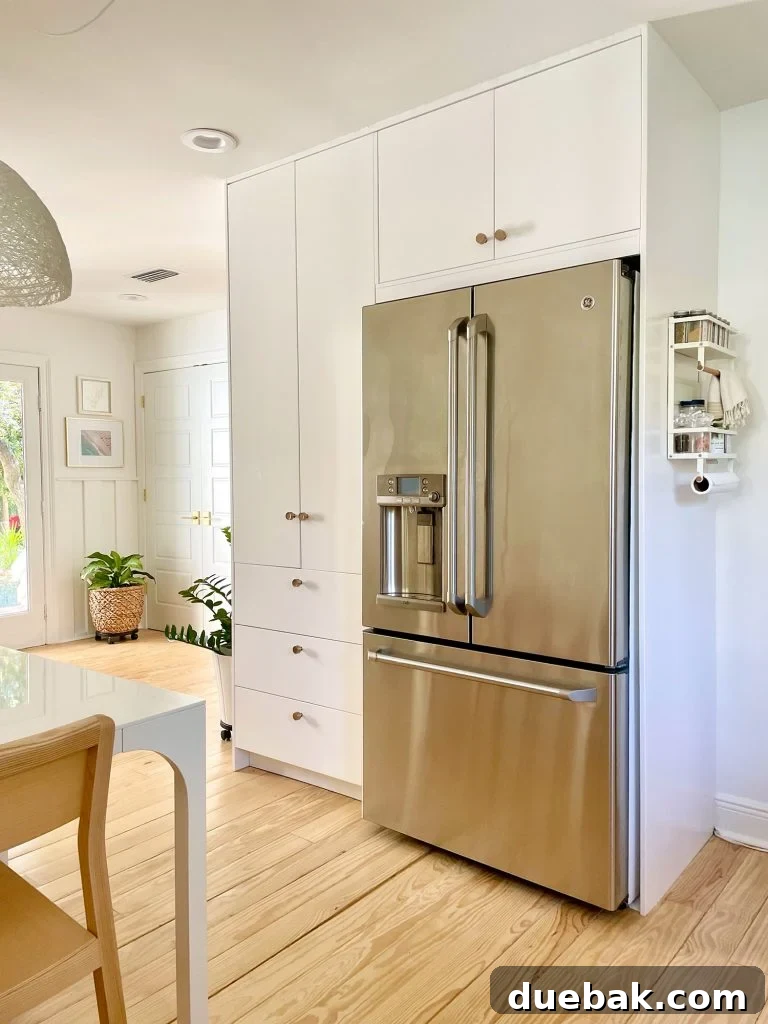
The biggest recent upgrade was installing a floor-to-ceiling built-in pantry cabinet that added a huge amount of storage. Before this, the kitchen had just seven cabinets, so we relied on freestanding shelving for food, serving ware and tools. That solution worked short-term but we wanted deeper, more functional storage for the long run.
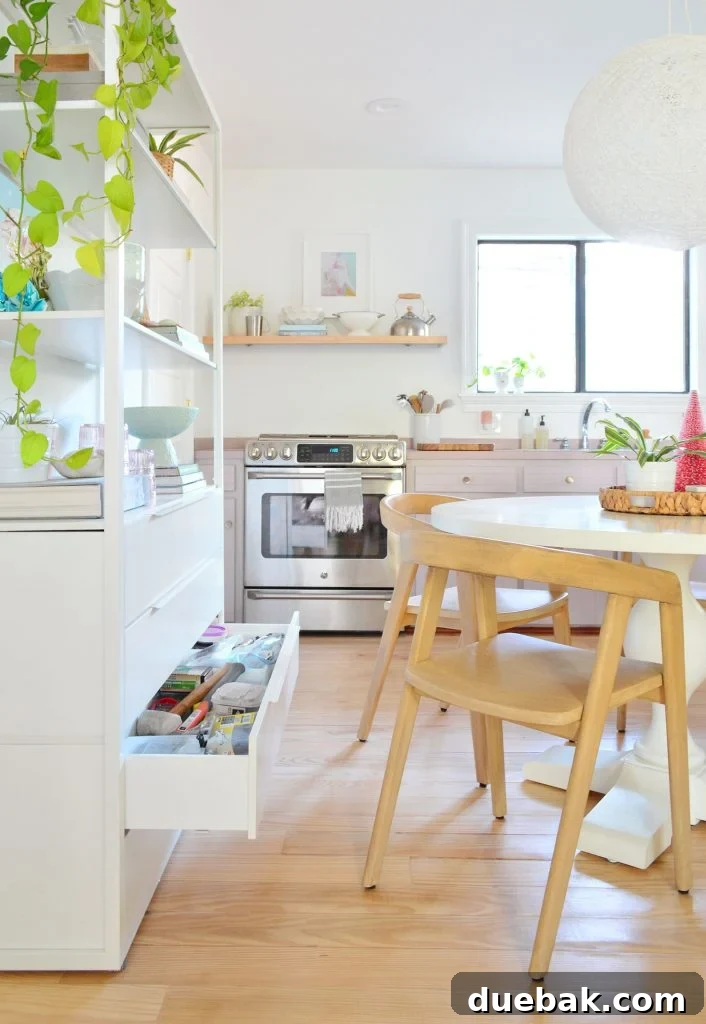
Over the summer we ordered two large cabinets—one tall pantry and one over-the-fridge cabinet—along with side panels to frame them in. Once installed, the built-in look feels crisp and polished. We kept these new cabinets simple and white to avoid making that wall feel heavy, but added matching knobs to tie them to the existing mauve cabinets.
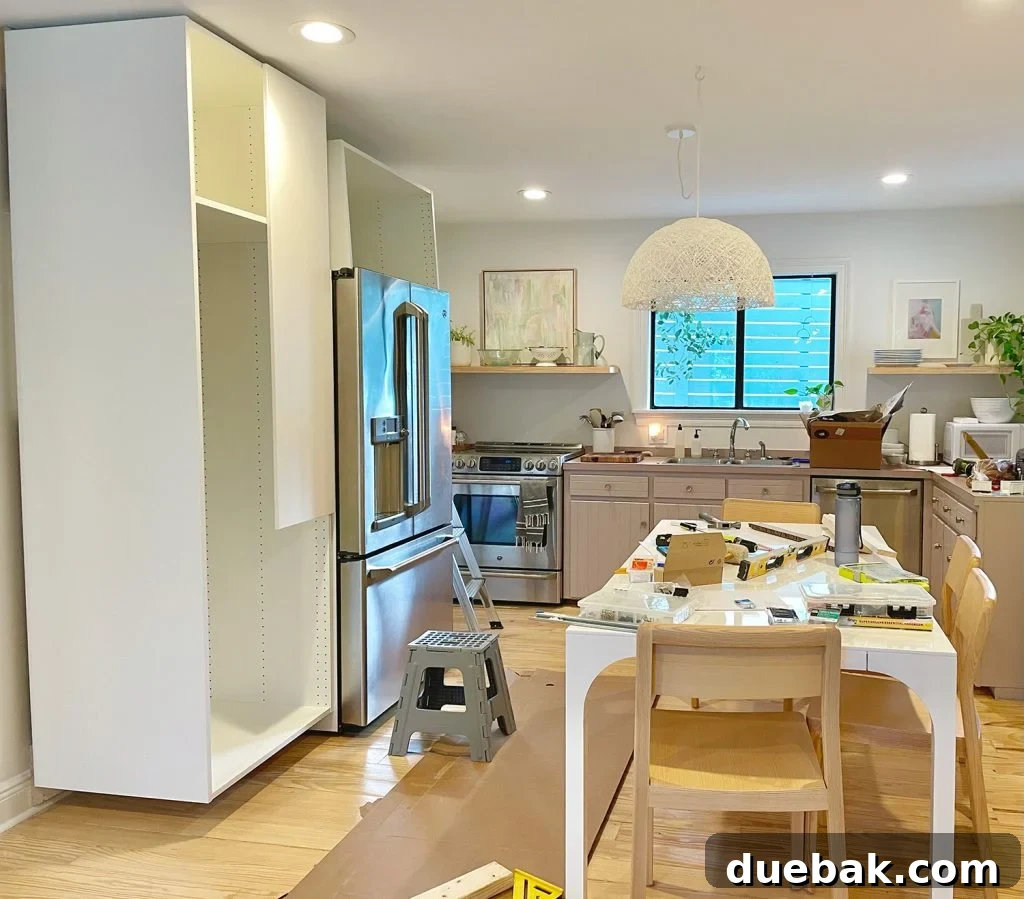
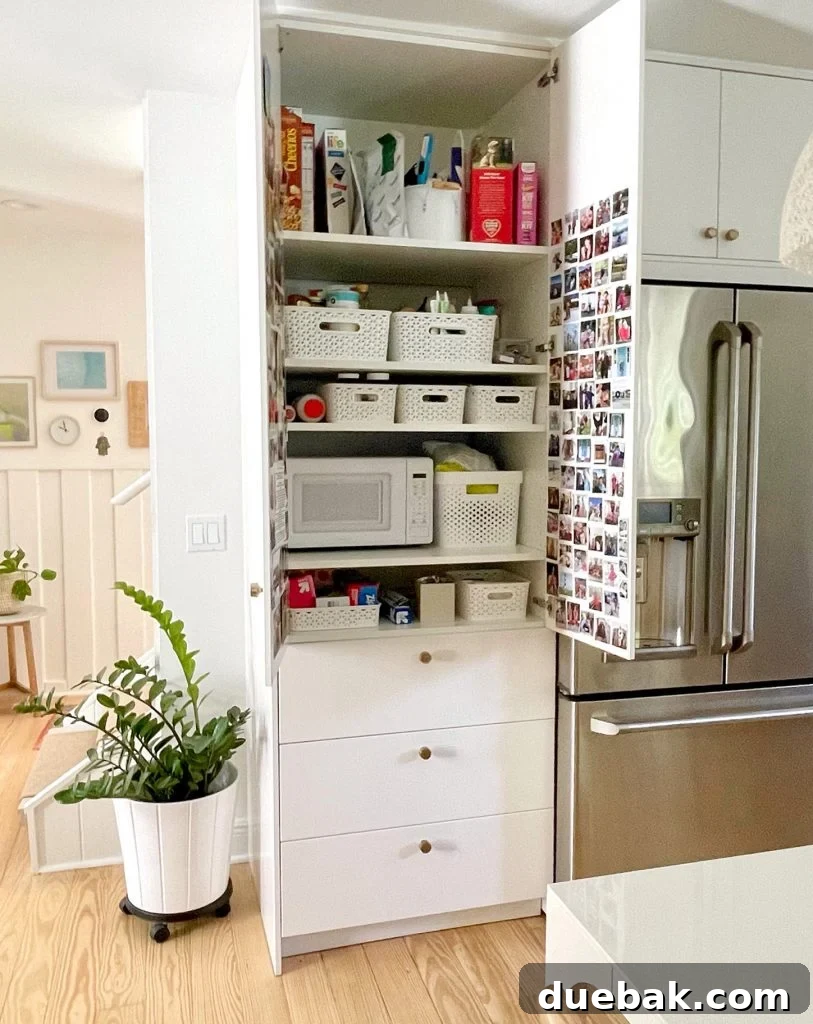
Having the fridge built into the cabinetry is both an aesthetic and functional win. We gained so much storage—more than we expected—including a deep bottom drawer configuration we love. We even ran power to the pantry so the microwave could live inside, freeing up counter space. (If you store an appliance in a closed cabinet, remember to leave the door open for ventilation when it’s in use.)
Organization is simple: storage baskets corral categories like baking supplies, snacks and vitamins. The top shelves hold infrequently used items and backstock. We also decorated the inside of the pantry doors with family photos to keep things personal and fun.
Wall-Mounting A Spice Rack
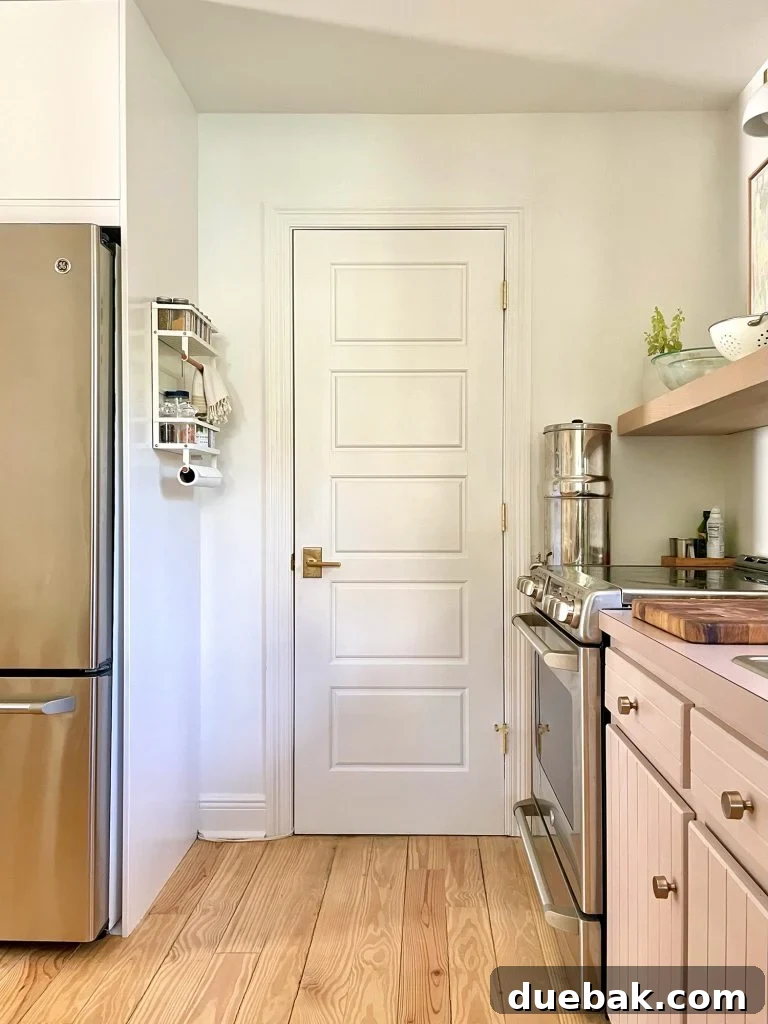
Our spices used to live on a freestanding shelf several steps from the stove. To get spices within easy reach, we mounted a slim spice rack to the side of the pantry. It holds jars and a roll of paper towels, clearing more counter space and eliminating the need to fish through drawers while cooking.
Beefing Up The Floating Shelves
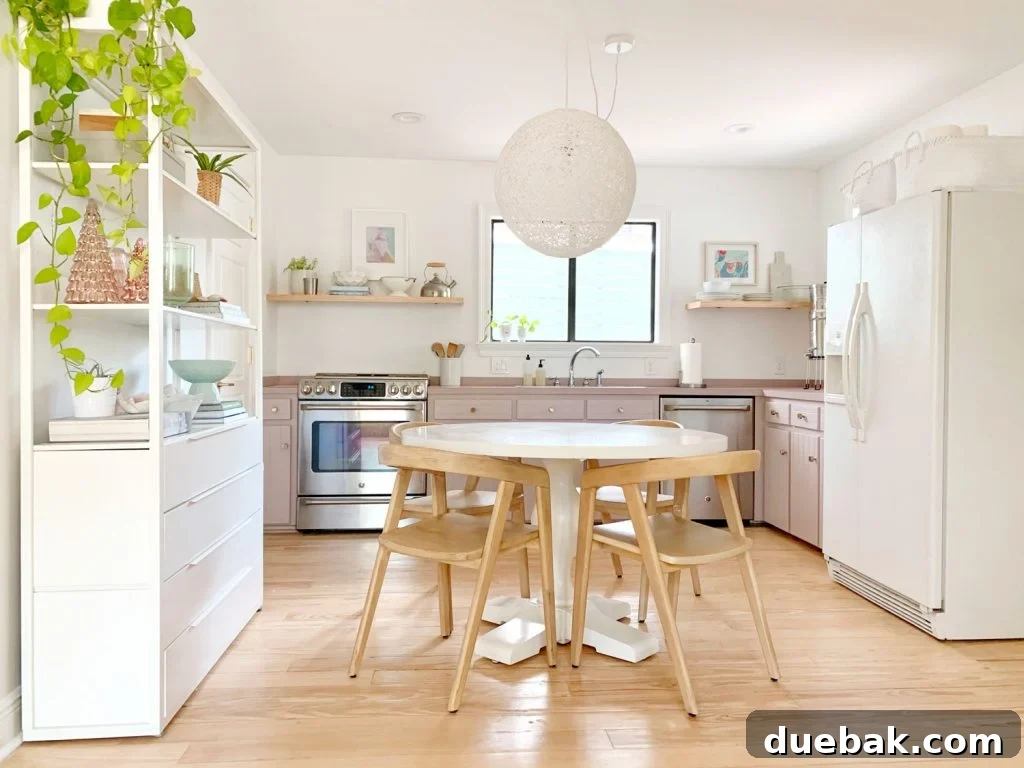
We replaced the original quick DIY shelves with sturdier, deeper floating shelves that better accommodate plates and display items. The new shelves are premade in sizes that fit the wall around the offset window, and they instantly elevated the room’s visual weight and function.
Hanging Wall-Mounted Sconces
We wanted sconces above the shelves but didn’t want to commit to rewiring yet. So we mounted decorative, non-wired sconces to test placement and appearance. They’re screwed into drywall for now and can be hardwired later when we add a backsplash. To make them functional without wiring, we used rechargeable battery bulbs that light as soon as you screw them in.
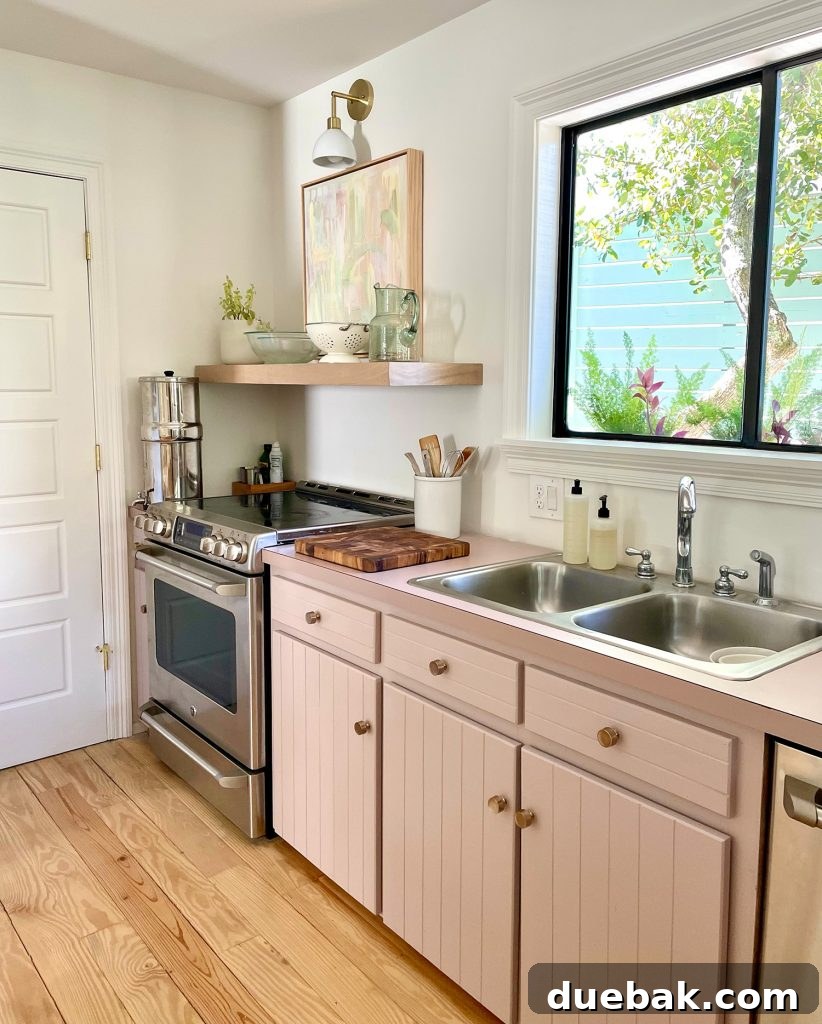
Hiding Ugly Stuff Outside With A Window Box
The view out the sink window faced our fence and utility equipment, which became more visible during the pool installation. To soften that sightline we installed a window box filled with foxtail ferns and trailing plants to block the bottom of the window and add greenery to the view.
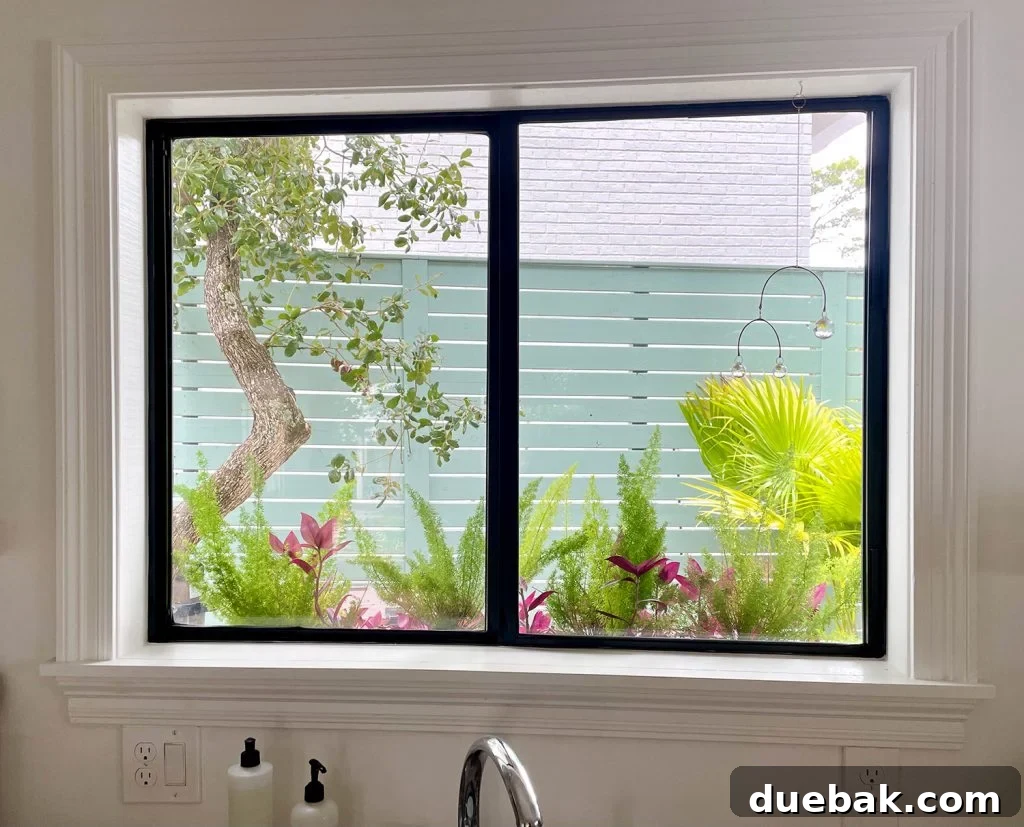
Removing The Backsplash
We removed the short 4″ laminate backsplash that matched the counters. Taking it off and smoothing the drywall made the back wall feel cleaner and more modern. Our plan is eventually to tile that entire wall to the ceiling, so removing the old trim was a helpful step toward that future upgrade.
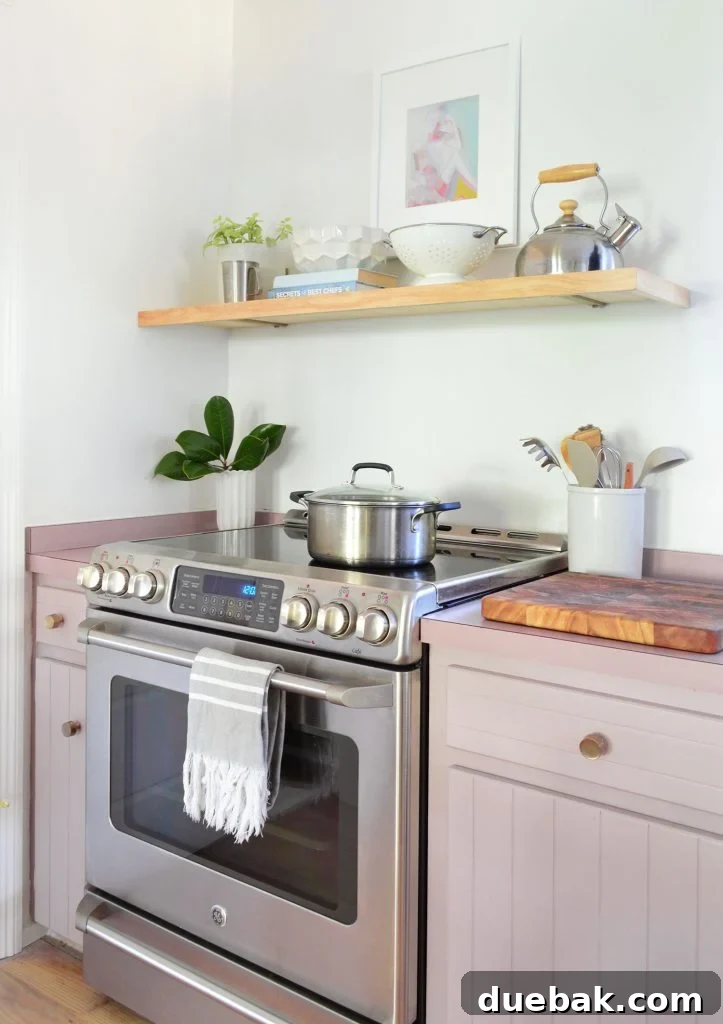
Removing the backsplash left a narrow gap at the countertop back edge; we’ll install a small painted trim piece as a temporary fix until the full tile and new counters are in place.
Making Plans For A Door
One of the major changes we’re considering is replacing the side window with a door to access the covered side porch. This idea only emerged after living in the house for a while, when we realized how useful direct porch access would be. Benefits include easier grocery unloading from our preferred parking spot, a convenient spot for a grill, more natural light, and direct fenced access for our dog and fire pit area—without routing guests through our bedroom.
- Direct kitchen access for groceries and daily flow.
- A convenient grill spot on the side porch.
- Increased natural light for the kitchen.
- Fenced access for the dog and easier routes to the fire pit for guests.
We’d lose about 18″ of cabinet space overall after accounting for cabinet reconfiguration, but the trade-offs seem worth it. Since the pantry added so much storage recently, we’ve been testing life without that run of cabinets and it’s been fine so far—another reason we prefer to live with the layout before committing.
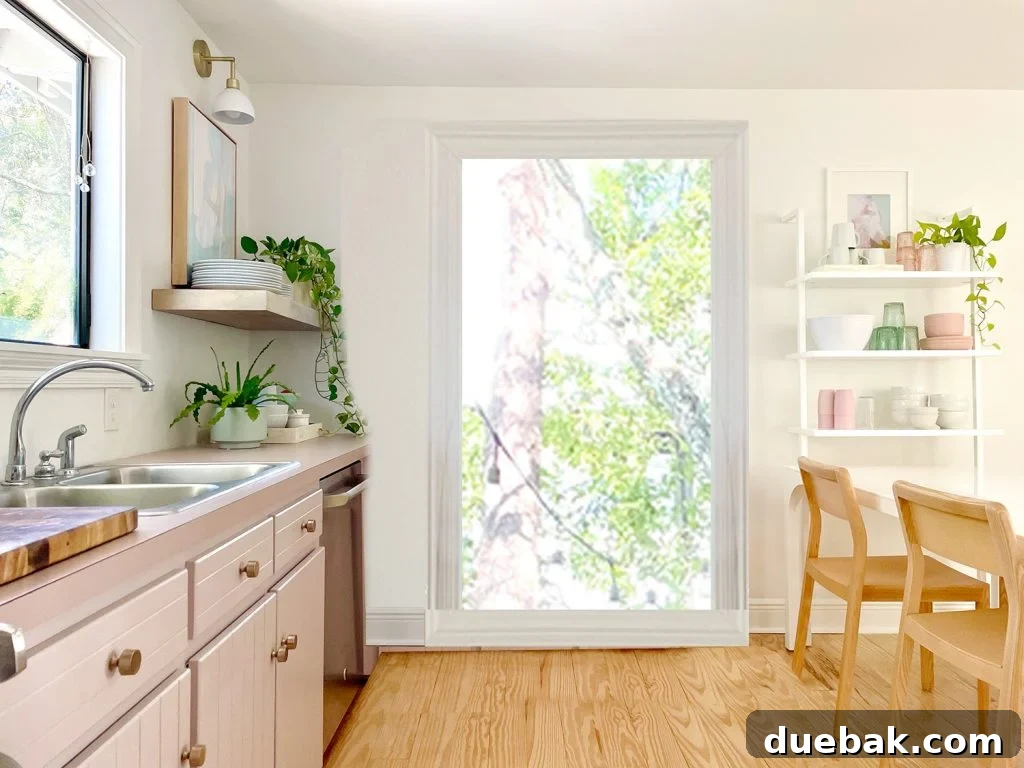
Keeping More Shelf Storage
We still wanted open storage near the dining area, so we moved in a ladder-style shelf that fits the space and displays bowls, cups and glasses. Shopping the house and trying new furniture arrangements helped us land on a layout that balances function with display.
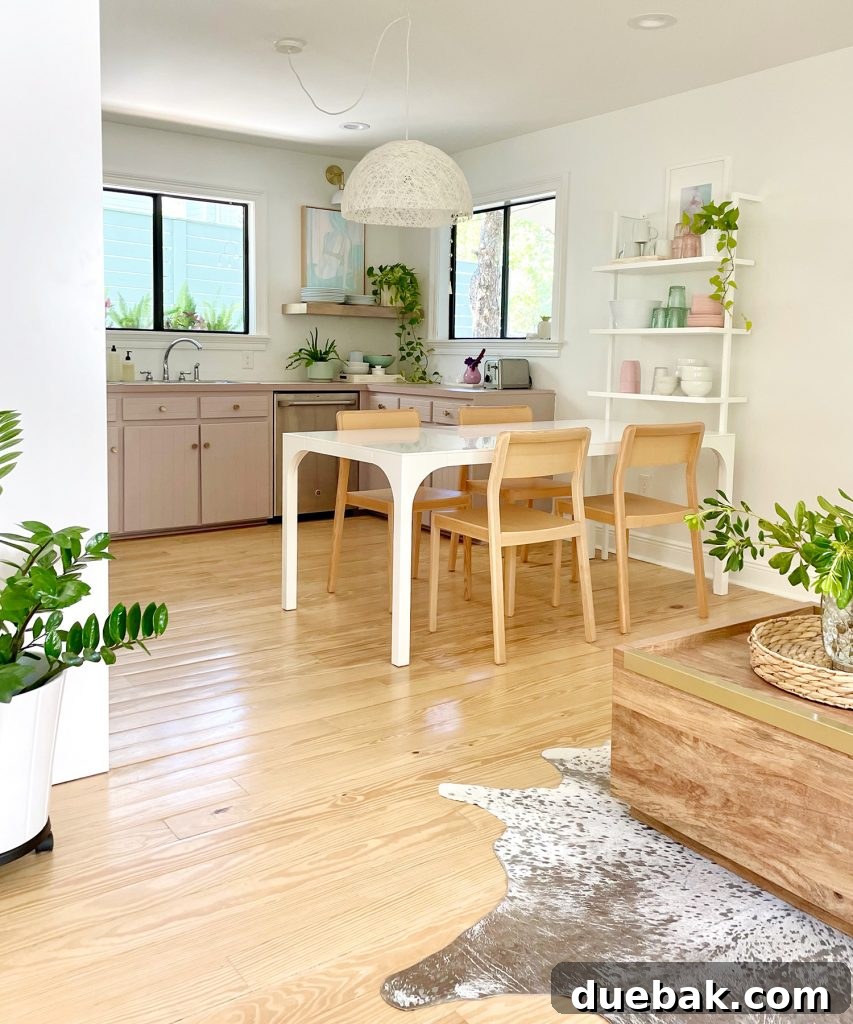
Fine-Tuning The Sitting Area
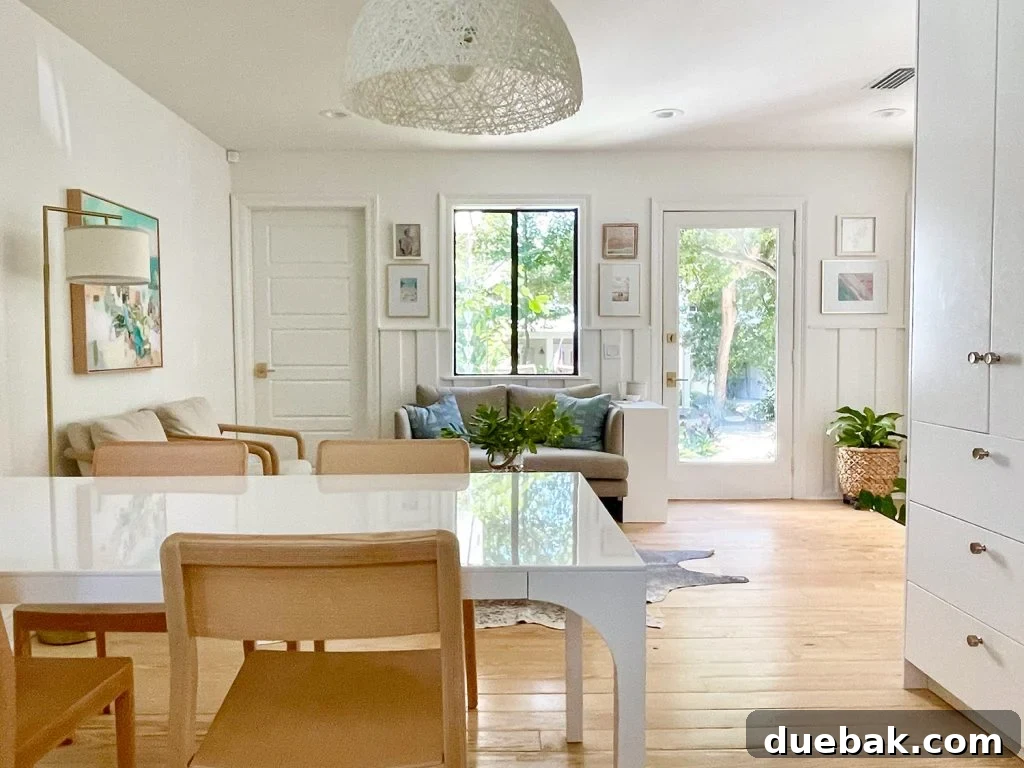
The sitting area next to the kitchen had to do a lot in a small footprint. Over many layout tests we settled on a loveseat, two chairs and a storage coffee table that make the space cozy and functional. I also built a custom four-cube cubby by the door that stores everyday shoes and items we grab on the way out, turning this corner into a practical mini-foyer.
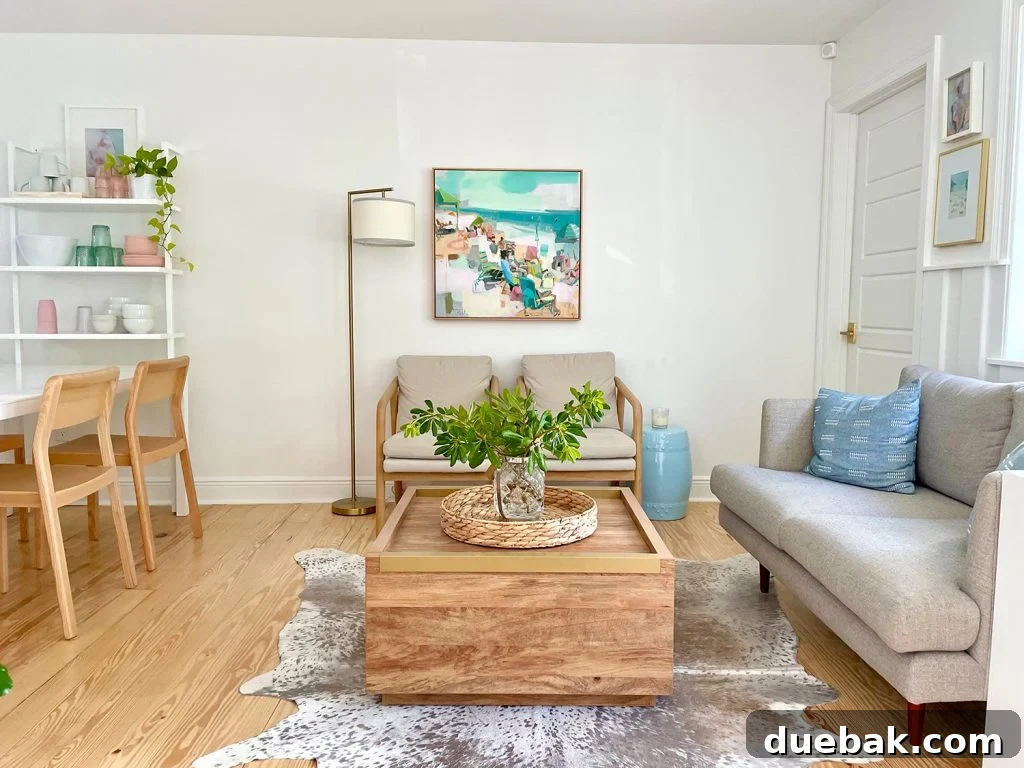
What felt tight in photos reads cozy in person—the room works well for mornings with the kids, casual hangouts, and visiting friends. It took many iterations, but the result gets a lot of use and feels right for our family.
A Few Quick Before & Afters
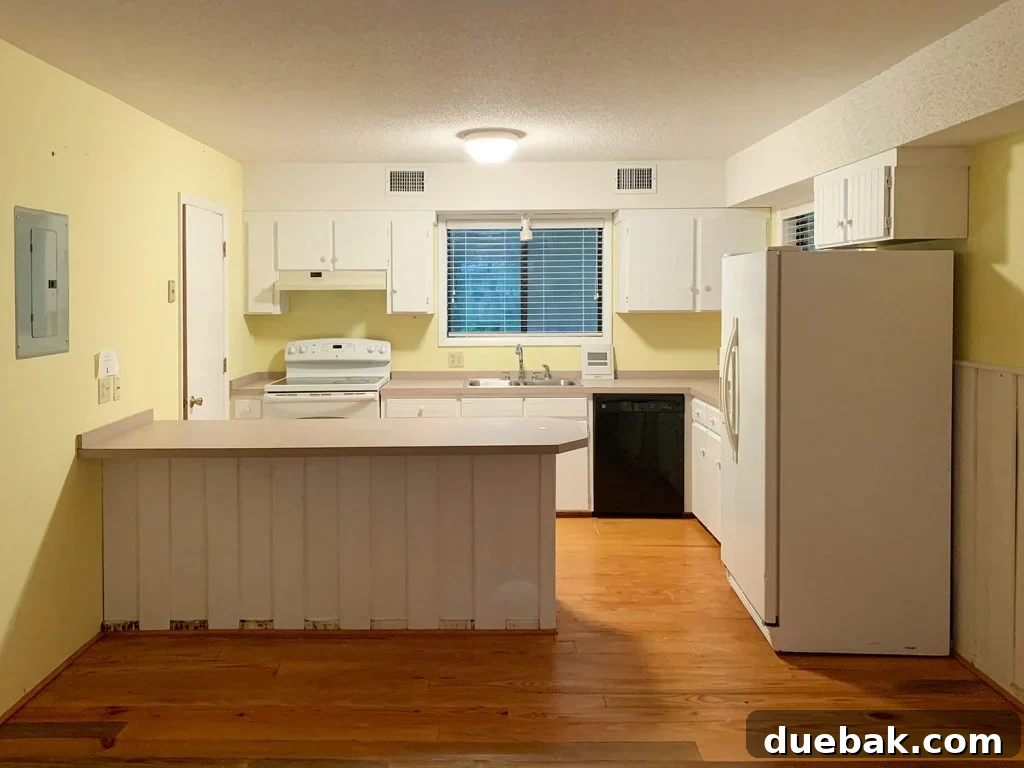
Here’s how the kitchen looked when we bought the house:
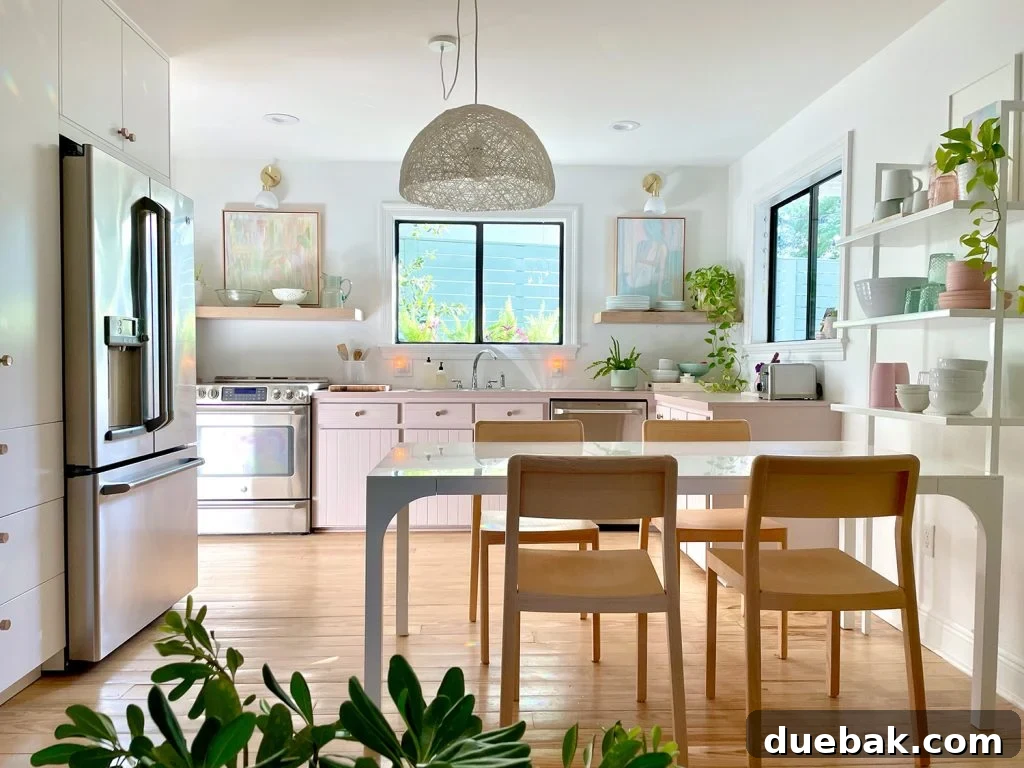
And here’s the kitchen now after the gradual updates:
Facing the other way—before:
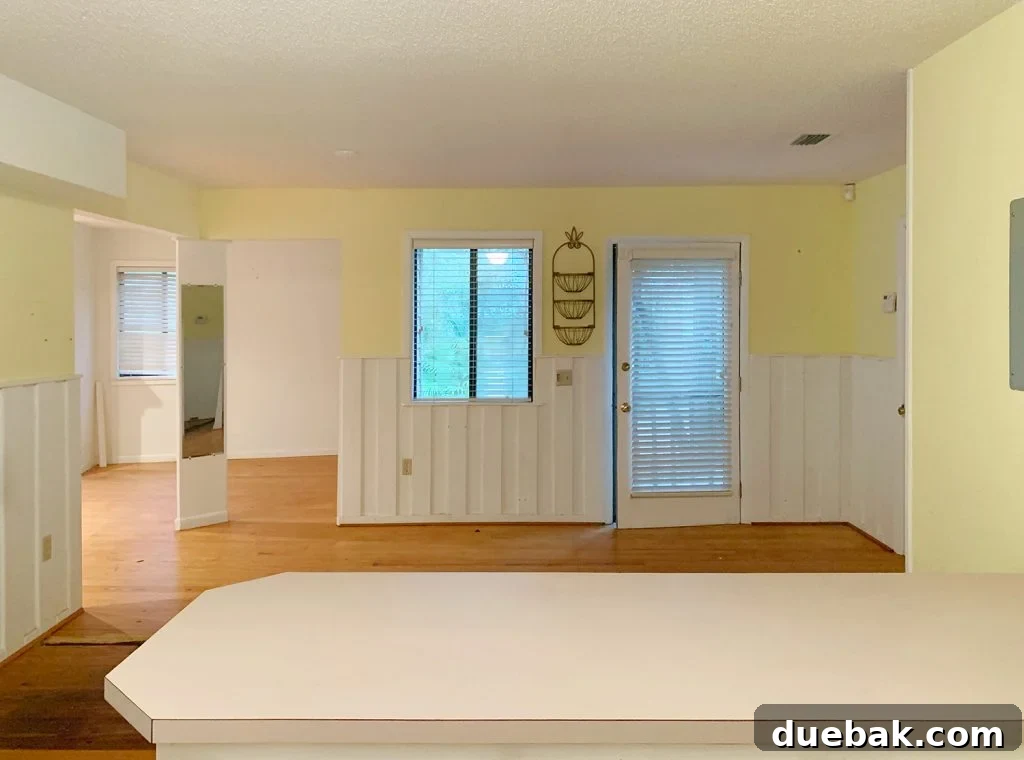
And now:
Functionally the kitchen suits us now, and the layout finally feels like it’s coming together. That’s why we’re ready to move forward with more permanent changes: adding the new door, upgrading the back wall of cabinets, installing new counters, fitting a deep stainless single-bowl sink, and tiling the backsplash to the ceiling. We’ve ordered some tile samples and worked out cabinet choices; the full renovation should be manageable and focused thanks to the gradual evolution we took.
*This post contains affiliate links, so we may earn a small commission when you make a purchase through links on our site at no additional cost to you.