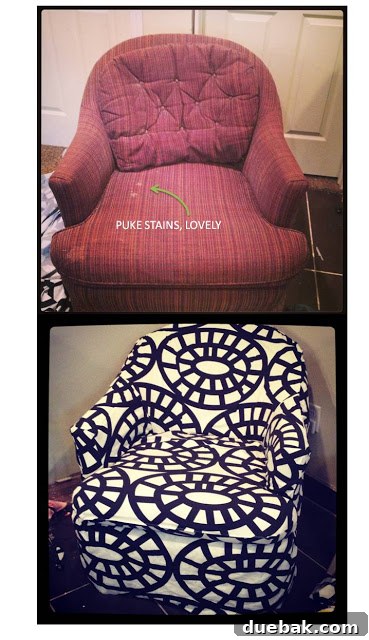
Mastering the Art of DIY Chair Slipcovering: Tips, Tricks, and Shortcuts for a Perfect Fit
There’s immense satisfaction in breathing new life into a beloved piece of furniture. While professional reupholstery can be a costly endeavor, the world of DIY slipcovering offers an incredibly rewarding and budget-friendly alternative. This guide will walk you through the process of creating a custom slipcover, sharing invaluable tips and a few unconventional shortcuts that will help you achieve a polished, professional look without breaking the bank or your patience.
My own journey into slipcovering began with a pair of cherished chairs, inherited from my mom’s basement. These Ethan Allen classics, acquired during my grade school years, had witnessed countless family moments and even survived the legendary high school hot tub parties. Despite their robust build, years of life (and a few baby-related mishaps) had left their original, once-trendy purple floral upholstery stained and desperately dated. Rather than discard these sturdy sentimental pieces, I embarked on a mission to give them a modern, fresh identity through a DIY slipcover makeover.

Sourcing Affordable and Suitable Fabric for Your Slipcover Project
One of the initial hurdles in any DIY upholstery project is finding the right fabric without emptying your wallet. For these two identical chairs, which had been patiently waiting in my basement for three years, the quest for cost-effective material was paramount. About two years into their basement residency, I discovered IKEA’s hidden gems: certain fabric lines were surprisingly robust and thick, akin to dedicated upholstery or home decor fabrics found in specialty stores, but at a fraction of the price. This discovery was a game-changer, offering the perfect opportunity to experiment without the fear of expensive mistakes.
When selecting fabric for slipcovers, consider not just the price but also durability, washability, and how well it will conform to your chair’s curves. Look for fabrics with a tight weave, good weight, and perhaps a slight stretch for easier fitting. Cotton duck, twill, denim, or even heavy linen blends are excellent choices, offering both resilience and a pleasing aesthetic. Beyond IKEA, explore options like:
- Fabric Store Sales & Remnant Bins: Often, you can find high-quality decorator fabrics at significant discounts. These bins are treasure troves for smaller projects or for combining different fabrics.
- Online Fabric Retailers: Websites frequently offer competitive pricing and a wider selection than brick-and-mortar stores. Always order swatches first to check color, texture, and weight in person before committing to a larger purchase.
- Thrift Stores & Secondhand Shops: Keep an eye out for large, sturdy curtains, duvet covers, or even tablecloths made from durable materials. These can be pre-washed and repurposed into unique slipcover fabric.
- Wholesale Fabric Suppliers: If you need a larger quantity or are doing multiple projects, buying fabric in bulk can save a significant amount of money per yard.
I decided to plunge into the project, initially tackling what I now realize was one of the most challenging chair shapes imaginable due to its complex, sloped back and arms. My first attempt, starting with an inside arm, quickly led to frustration and a temporary halt. It was a valuable lesson learned early on, highlighting the importance of strategic planning and starting simple.
For more home decor fabric options, consider exploring reputable online stores like Joann’s home decor fabric section, or for specialized upholstery fabric, they also have a great selection.
Tip #1: Choose Your Chair Wisely – The Simpler, The Better for Beginners
If you’re new to slipcovering, take my advice: start with a chair that has a relatively straightforward, square shape and, ideally, no sloped or rolled arms. My initial choice, with its dramatically curved back and complex armrests, was certainly not the easiest starting point – a fact I can now laugh about! (Hahaha.)

Understanding the anatomy of your chair is crucial for a successful slipcover project. Square chairs offer cleaner lines and fewer complex curves to navigate, making pattern drafting and fabric fitting significantly simpler. Chairs with rolled arms, intricate carvings, or deeply sloped backs introduce unique challenges such as:
- Complex Pattern Pieces: Each curve, angle, and contour requires precise measurements and custom-shaped fabric panels. This can be time-consuming and daunting for a beginner.
- Fitting Difficulties: Fabric needs to stretch, drape, and conform just right to avoid puckering, wrinkles, or excess bulk. Rolled arms, in particular, demand careful darting and gathering to achieve a smooth finish.
- Seam Placement: Deciding where to place seams to minimize visibility and maximize a tailored look becomes more complicated on chairs with non-linear designs. Strategic seam placement is key to a professional appearance.
For my challenging chair, I began with the back piece, which indeed proved to be the most difficult due to its unique contour. My saving grace was meticulously observing the existing seams on the original upholstery. These seams served as invaluable guides, essentially providing a deconstructed pattern that I could replicate with my new fabric. By studying how the original fabric pieces were joined, I gained critical insight into the chair’s underlying structure. After tackling the back, I moved on to the arms, working methodically to define each section and replicate the original lines.
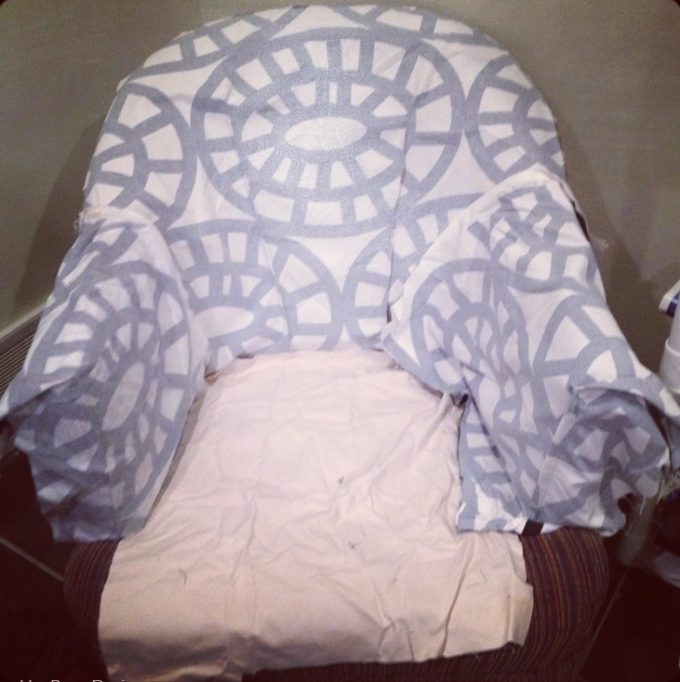
For the seat base, I opted to use a scrap piece of white twill fabric. This strategic choice allowed me to conserve my more expensive IKEA fabric for the visible areas of the slipcover. Since I knew a separate, upholstered seat cushion would eventually cover this base, its appearance was less critical. Maximizing my primary, patterned fabric for the main body of the chair was a smart, economical move that every DIYer should consider for their projects.
Revolutionary Slipcovering Shortcuts: The Household Stapler & Washable Marker
Creating a custom-fit slipcover often involves a delicate dance of pinning, draping, and endless adjustments. Traditional methods rely heavily on pins to hold fabric in place while transferring patterns or preparing for sewing. However, my journey led me to discover a truly revolutionary shortcut that streamlined this entire process and drastically reduced frustration:
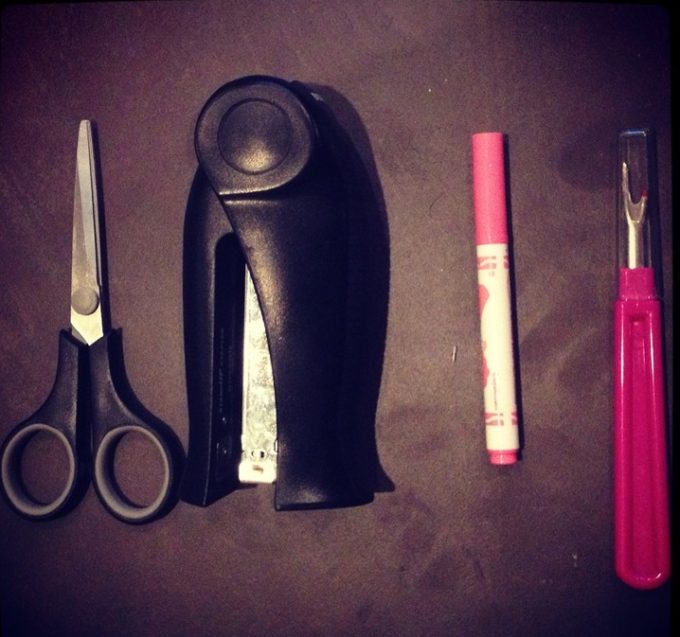
The Secret Weapon: Why a Regular Household Stapler Works Wonders
Forget the heavy-duty staple gun often associated with upholstery; my secret weapon was none other than a regular, plain-jane household stapler. This unassuming office supply proved to be far superior to traditional sewing pins for several critical reasons, making the slipcover fitting process faster, more accurate, and less stressful:
- Unmatched Security: Pins, especially when working with slippery fabrics or complex curves, have a frustrating tendency to slip out, causing fabric to shift and patterns to distort. The household stapler, however, holds fabric pieces firmly and securely together, preventing any movement during the crucial fitting process. This ensures your pattern remains stable.
- Precision and Tight Fit: Achieving a truly snug and tailored slipcover requires holding fabric extremely close to the chair’s contours. Pins often prevent you from getting the fabric as tight as necessary, leading to a looser, less custom fit. Staples allow for a much tighter, more precise hold, enabling you to sculpt the fabric perfectly to the chair’s form, resulting in a professional, custom-made appearance.
- Durability During Transfer: Once the fabric pieces were stapled in place around the chair, effectively creating a custom pattern, I could easily remove the entire assembly (my “slipcover shell”) and transfer it to my sewing machine without fear of pins falling out or fabric shifting. This was a massive time-saver and stress-reducer, allowing for continuous workflow.
- Child Safety (and Sanity!): Working on DIY projects with young children around often means contending with curious hands and the potential for accidents. Pins scattered on the floor are a major safety hazard. Staples, being much more secure, mitigated this concern entirely, allowing me to focus on the task at hand without constant worry about little fingers getting poked.
- Easy Removal: After sewing the seams along the marked lines, the staples are remarkably quick and easy to remove with a standard staple remover, leaving no damage to the fabric. They truly are temporary fasteners designed for precision.
I had often fantasized about a sewing machine that worked like a clamp, allowing me to pinch fabric exactly where I wanted it and sew simultaneously. The stapler, in essence, became my temporary, manual clamping system, enabling me to secure the fabric exactly as needed before stitching. This method drastically improved my efficiency and accuracy. By stapling the fabric pieces directly onto the chair, I could sculpt the slipcover to its exact shape, ensuring a truly custom fit. Once everything was stapled securely, I used a washable marker to draw the precise seam lines directly onto the fabric, guided by the chair’s existing contours and the tightly held fabric.
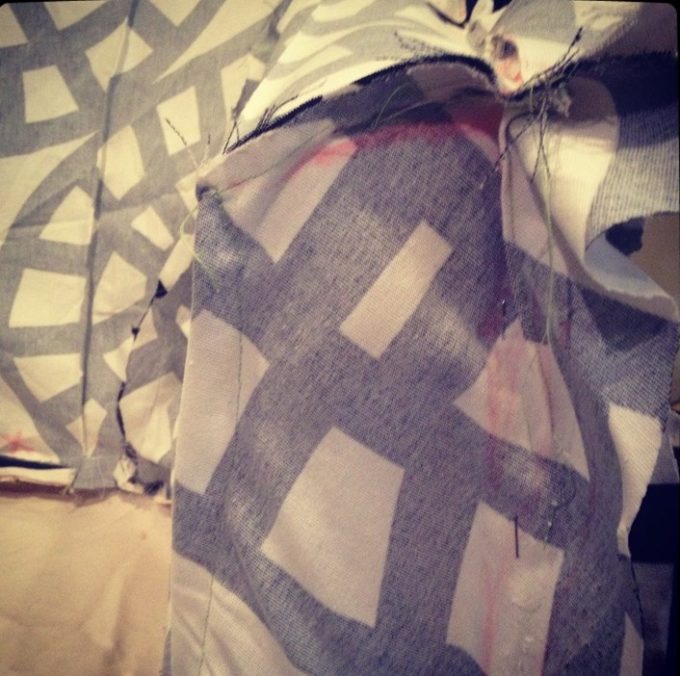
The Washable Marker Trick: Precision without Permanent Marks
Complementing the stapler was my other simple yet profoundly effective trick: the washable marker. When struggling to define the precise angle or curve of an arm seam, where pins simply wouldn’t hold the fabric exactly right or provide a clear line, the marker became indispensable. I could clearly draw the intended seam line directly onto the fabric after it was securely stapled, creating an accurate guide for sewing.
While I initially used a standard kids’ washable marker, if I were to repeat the project, I would definitely opt for a vanishing ink fabric marker. This clever tool’s marks disappear with air or water, eliminating the need to wash the slipcover immediately after construction just to remove the guide lines. It’s a small detail that saves significant time and effort, embodying the “lazy” (or rather, efficient) spirit of a clever DIYer! Always test any marker on a fabric scrap first to ensure it truly disappears without leaving any residue.
Overcoming Fitting Challenges: Trusting the Process
As I progressed with the slipcover, a moment of profound doubt arose when I was fitting the back piece. The original chair design featured a back that was significantly wider at the top and tapered sharply towards the bottom. I worried intensely that the bottom portion of my slipcover pattern, once sewn, would be too narrow to fit over the chair’s arms, creating an irreversible error and potentially ruining hours of work and precious fabric.
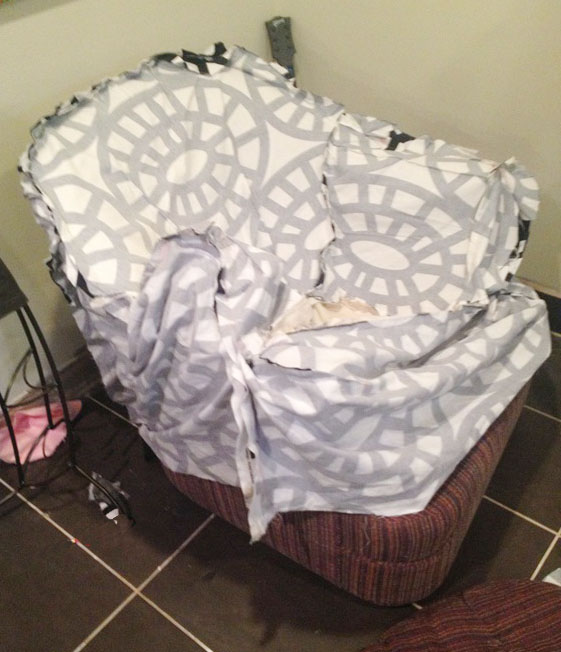
This fear is a common experience in slipcovering: envisioning how flat fabric pieces will ultimately translate into a perfect three-dimensional form can be daunting, especially when dealing with unique furniture shapes. However, by carefully following the lines of the original upholstery, trusting the precision of my stapler and marker method, and adding appropriate seam allowances, I pushed through. When the moment came to test the fit, carefully easing the newly sewn back panel over the chair’s frame:
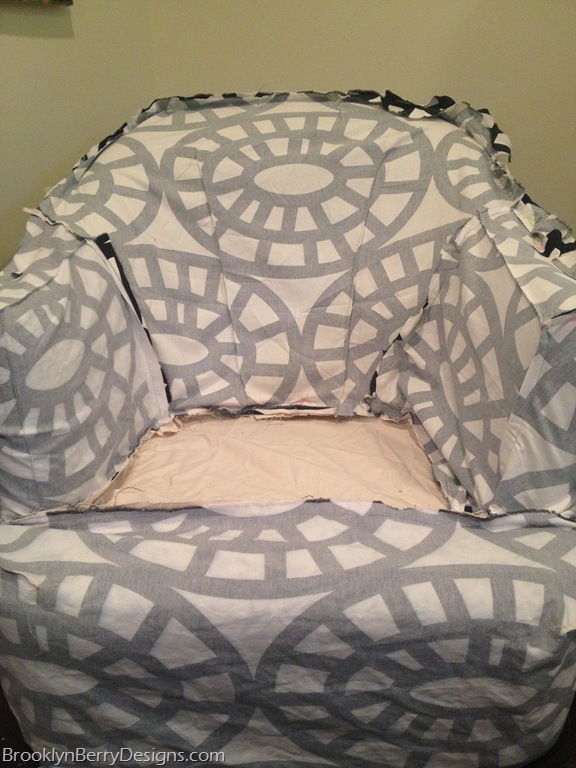
The relief was immense! The slipcover, despite its complex shape and my initial anxieties, hugged the chair perfectly. This experience underscores the critical importance of careful pattern creation, meticulous fitting, and, crucially, trusting your measurements and process, even when faced with seemingly impossible angles or proportions. Don’t be afraid to test your pattern pieces before final sewing, and always leave a generous seam allowance that can be trimmed later if needed.
Tackling the Seat Cushion and Adding Final Flourishes
With the main body of the slipcover successfully fitted and sewn, it was time to address the seat cushion. I debated whether to remove the original cushion cover or simply slipcover over it. For now, I opted to leave the original cover on, as it provided a good, firm base and saved an extra step. This decision can always be revisited later if a more streamlined or completely new aesthetic is desired for the cushion.
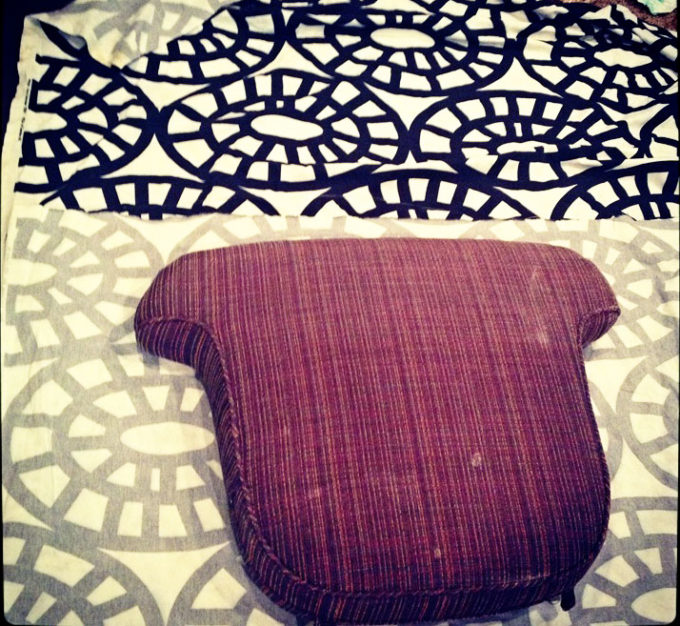
Crafting a cushion cover involves careful measurement, ensuring a snug fit without being too tight to allow for easy removal for cleaning. You’ll need to decide on a closure method – a zipper offers a professional, tailored finish, while an envelope style is simpler and often suitable for cushions that don’t need frequent removal. Adding piping around the edges of the cushion cover can elevate its appearance, giving it a truly custom, upholstered look, though I skipped it for this initial project to maintain simplicity and speed.

The moment I saw the nearly finished chair, I literally started jumping up and down with excitement. It looked more than “half decent” – it was a true transformation! The once-dated, stained chair now sported a fresh, modern aesthetic, proving that a little ingenuity, patience, and DIY spirit can yield incredible results. This feeling of accomplishment is what makes all the effort worthwhile.
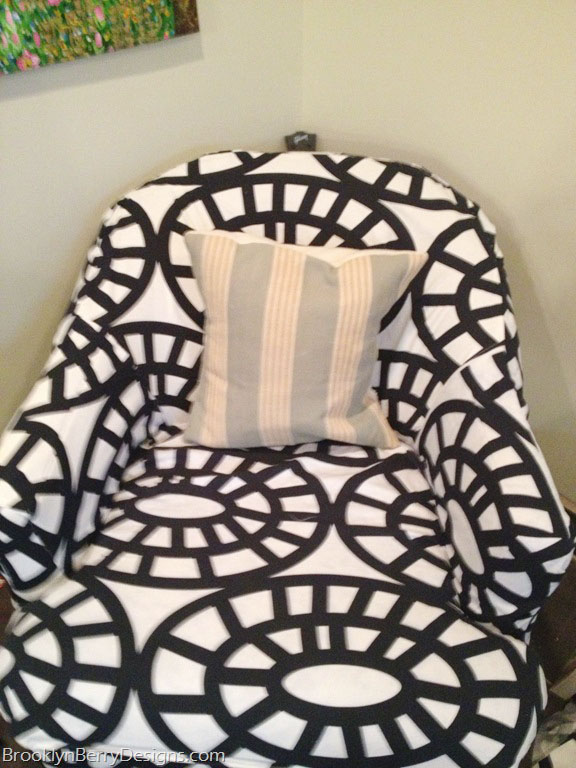
While the chair itself was nearly complete, the styling possibilities were just beginning. The temporary pillow shown here isn’t a permanent fixture; I envision something much more vibrant and substantial. This new fabric practically screams for a funky, large-sized throw pillow to complement its fresh look and add a pop of personality. I still have the original back pillow, which could easily be recovered to match or contrast, but the modern aesthetic of the slipcover encourages a bolder design choice. This image was simply a test for size and proportion, guiding future styling decisions.
The Journey Continues: From “Before and During” to a Full Transformation
This project, as documented, is less of a strict “before and after” and more of a “before and during” chronicle of my first slipcovering adventure. It highlights the real-world process, including initial struggles and the eventual triumph of discovery. With one chair gloriously transformed and the learning curve behind me, the second identical chair patiently awaits its turn. Armed with newfound knowledge, the confidence gained from this successful endeavor, and those clever stapler and marker tricks, I’m optimistic that the second chair will be completed much faster than the two years it took to even start this one! (Haha, fingers crossed!)
DIY slipcovering is an incredibly empowering skill, offering a sustainable and economical way to refresh your living space, protect existing furniture, and express your unique personal style. It’s an investment of time and effort that pays off in unique, custom pieces tailored exactly to your taste, contributing to a more personalized and comfortable home environment.
What kind of cool, funky pillows do you think would perfectly complete this chair’s new look? Share your ideas in the comments below! I’ll be starting on the other chair soon… maybe.
Explore More DIY Upholstery Projects and Home Makeovers
If you’re inspired to tackle more furniture makeovers or home decor projects, be sure to check out some of my other upholstery adventures and DIY transformations:
*Discover how I built and upholstered this custom dining room banquette bench, adding built-in seating and style!
**For other inspiring upholstery projects, take a look at the vintage chair I rescued from the dumpster and gave a new life, showcasing how to turn trash into treasure. Also, explore the detailed process of reupholstering a button-tufted couch, a challenging but rewarding project that completely transformed an old sofa.