
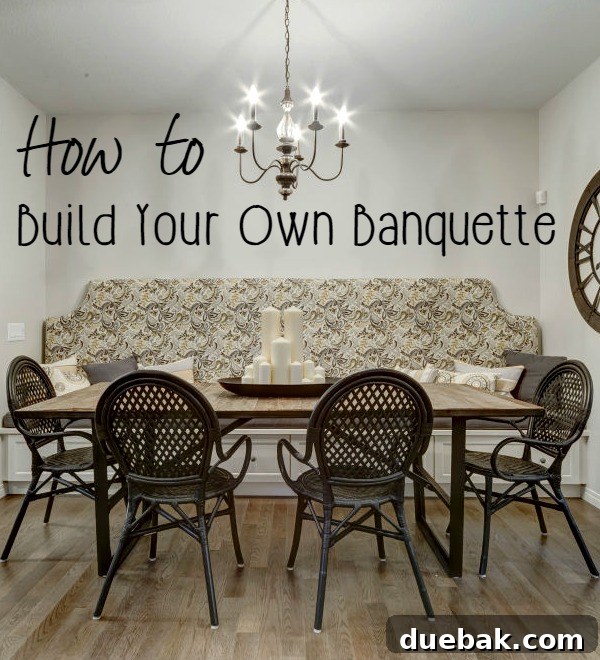
There’s an undeniable charm that a dining room banquette bench brings to any home. It’s more than just a piece of furniture; it’s a statement of style, a beacon of comfort, and a clever solution for maximizing space. Especially in newly built homes that sometimes lack inherent architectural character, a custom banquette can infuse a unique personality and a sense of permanence that truly elevates the interior design. However, discovering a floor plan that perfectly accommodates such a built-in seating solution can be a rare and exciting find. Recently, I had the pleasure of working on a project where the layout was absolutely ideal for creating a stunning banquette. I’m thrilled to share the detailed journey of how this beautiful and functional piece was brought to life, offering insights and tips for anyone dreaming of their own custom banquette.
The Allure of Banquette Seating: Style Meets Functionality
Banquettes are much more than just aesthetically pleasing; they are incredibly functional, offering a myriad of benefits that make them a popular choice for modern living. They are champions of space-saving design, allowing for more seating in tighter dining areas by eliminating the need for chairs to pull out into walkways. This is particularly advantageous in open-concept layouts or smaller kitchens where every inch counts. Beyond efficiency, banquettes foster a cozy and intimate dining experience, inviting longer conversations and creating a warm, communal atmosphere. The built-in aspect often comes with incredible storage solutions, from deep drawers to lift-top benches, providing invaluable space for linens, seldom-used kitchen gadgets, or even kids’ craft supplies. Moreover, the design versatility of a banquette means it can be tailored to complement any interior style, from sleek modern to rustic farmhouse, adding significant value and character to your home.
Planning Your Dream Banquette: Key Considerations
Before diving into construction, meticulous planning is paramount for a successful banquette project. Begin with precise measurements of your designated space, considering wall dimensions, window placements, and traffic flow. Next, think about the overall design. Do you envision a straight bench, an L-shaped corner unit, or a U-shaped wrap-around? The choice will influence both aesthetics and seating capacity. Material selection is another crucial step; while plywood forms a sturdy base for the structure, the choice of upholstery fabric is vital for comfort, durability, and visual appeal. Opt for performance fabrics in high-traffic dining areas, known for their stain resistance and easy cleanability. Finally, consider your budget and whether you’ll engage professionals for certain aspects, such as cabinetry or upholstery, or tackle it all as a DIY endeavor.
Crafting the Foundation: The Banquette Bench Base
For this particular project, the robust and functional bench base was expertly built by a skilled cabinet supplier. This decision was key to ensuring a high-quality, perfectly fitted, and durable foundation for the entire banquette. Custom cabinetry offers unparalleled advantages, including seamless integration with existing kitchen or dining millwork, precise measurements, and a professional finish. One of the standout features of this custom bench was the incorporation of three generously sized drawers, providing an abundance of extra storage. These deep, easily accessible drawers are a game-changer for organizing dining essentials, seasonal decor, or anything else you need to keep tucked away yet close at hand. While a professional cabinet maker ensures top-tier quality and a custom fit, for those on a tighter budget or with strong DIY skills, a sturdy bench base can also be constructed from high-grade plywood or even by adapting existing modular cabinetry units.
The Art of Comfort: Custom Upholstery
No banquette is complete without a comfortable and stylish cushion. For this project, the custom-made bench cushion was meticulously sewn by a professional upholsterer. Engaging an upholsterer ensures a perfect fit, a crisp finish, and the longevity of the cushion. They possess the expertise to select the appropriate foam density for optimal comfort and support, wrap it with batting for a smooth profile, and meticulously cut and sew the fabric to prevent wrinkles and sagging. The choice of fabric for your cushion is crucial, impacting both the aesthetic and the practicality of your banquette. Considerations should include durability, ease of cleaning (especially important in a dining setting), and how well the pattern or texture complements your overall interior design scheme. While the bench and cushion received professional attention, the custom upholstered back of the banquette was a delightful DIY collaboration between myself and my husband, Mick.
The DIY Back Panel: A Step-by-Step Guide
Gathering Your Materials and Preparing the Plywood
Our journey to create the banquette’s upholstered back began with selecting high-quality sheets of plywood. Plywood offers excellent stability and is a reliable base for upholstery. After careful measurement of the banquette’s intended dimensions, we cut the plywood to the preferred height and width, ensuring it would align perfectly with the custom bench base. This initial step is critical for the overall proportion and symmetry of the finished piece. With the base pieces cut, I then meticulously drew the desired shape onto the wood. This curved design was chosen to add a softer, more elegant touch to the dining area, moving away from harsh straight lines and contributing to the overall character of the banquette.
Precision Cutting and Assembly
Once the design was drawn, it was time for the cutting. We used a jigsaw, a versatile tool perfect for making intricate cuts and curves in wood. To ensure perfect symmetry and a consistent design, we employed a clever trick: we carefully cut out the first corner curve, making sure it matched our drawn line. This cut-out piece then served as a precise template for tracing and cutting the second corner, guaranteeing identical curves on both sides of the back panel. This simple technique saved time and eliminated potential inconsistencies. After all the individual plywood pieces were cut, we meticulously attached them together to form the complete back structure. Depending on the design (e.g., an L-shape), this might involve screwing the pieces together with corner brackets or wood glue for added stability, ensuring a robust frame for the upholstery.
The Upholstery Process: Foam, Batting, and Fabric
With the plywood structure complete, the next exciting phase was transforming it into a soft, inviting backrest. This involved three key layers: foam, batting, and the final fabric. First, we carefully cut the foam to match the exact dimensions of the plywood back. The foam provides the essential cushioning for comfort. Following the foam, we wrapped the entire piece in batting. Batting serves multiple purposes: it smooths out any imperfections, adds a layer of softness, and helps the fabric glide smoothly, creating a professional finish. Finally, we meticulously wrapped the chosen upholstery fabric around the entire structure, pulling it taut to avoid any wrinkles or looseness. Using a heavy-duty staple gun, we secured the fabric firmly to the back edges of the plywood, ensuring consistent tension for a polished look. Special attention was given to the corners to ensure they were neat and evenly folded, creating sharp, tailored edges.
Installation: Securing the Back to the Wall
With the upholstery complete, the banquette back was ready for installation. We opted to hang it to the wall using a cleat system. Cleats are a popular method for hanging heavy items, offering strong, hidden support. Essentially, one piece of wood with a 45-degree bevel is attached to the back of the banquette, and a corresponding piece with an opposing 45-degree bevel is attached to the wall. The banquette then simply hooks onto the wall cleat, providing robust support. The beauty of cleats is their strength and the clean, hardware-free appearance they offer from the front. With the banquette back securely in place, the final touch was to add coordinating decorative pillows. Not only do these pillows enhance comfort, but they also offer an opportunity to introduce color, texture, and pattern, tying the banquette into the broader aesthetic of the dining room. And just like that, with careful planning and a bit of DIY effort, our custom banquette was done, transforming the dining space into a truly unique and inviting area!
Lessons Learned: Enhancing Future Banquette Projects
Every DIY project offers valuable learning opportunities, and this banquette was no exception. Reflecting on the process, there are a few key adjustments I would make for future builds to achieve an even more polished and refined result. These insights are incredibly useful for anyone embarking on their own banquette journey:
- Optimize Foam Adhesion: For subsequent projects, I would definitely incorporate spray adhesive to attach the foam directly to the plywood. This crucial step prevents any shifting of the foam during the upholstery process, ensuring a perfectly smooth and stable surface under the fabric, which contributes significantly to a professional finish and prevents lumps or bumps over time.
- Master Batting Application: I would also cut the batting flat to fit the surface of the plywood and foam, rather than attempting to wrap it around the corners. Wrapping the batting adds unnecessary bulk, making it much harder to achieve clean, crisp corners when wrapping the final fabric. By cutting the batting flat and securing it neatly, the fabric can be pulled taut and stapled with greater ease, resulting in a sharper, more tailored edge.
- Refine Installation for Stability and Aesthetics: While the cleat system provided solid support, I found it caused the banquette back to stand out from the wall a bit more than I would have liked, creating a slight gap. For future projects, I would carefully debate alternative installation methods to ensure both supreme stability and a flush finish against the wall. This might involve directly gluing the banquette to the wall for immovable security, or using a discreet wire mounting system that would be thin enough to allow the banquette to sit closer to the wall while still preventing any accidental tipping. The primary goal is always safety, especially for heavy furniture pieces, followed closely by achieving the desired aesthetic integration into the space.
Styling Your Banquette: The Final Flourishes
Once your banquette is built and installed, the real fun begins: styling! Cushions and pillows are your best friends here. As mentioned, decorative pillows add a layer of comfort and are fantastic for introducing pops of color, interesting textures, or complementary patterns to your dining area. Consider different sizes and shapes for visual interest. Pair your banquette with a dining table that is proportionate to the seating and allows for comfortable legroom. Complementary chairs on the opposite side will complete the dining arrangement. Don’t forget ambient lighting, such as a stylish pendant light centered over the table, to enhance the dining experience. Lastly, accessorize with a beautiful centerpiece, a stylish runner, or artwork on the adjacent walls to create a cohesive and inviting dining space that truly feels custom and complete.
Transform Your Dining Space
Creating a dining room banquette is a truly rewarding project that marries bespoke design with practical functionality. From the custom-built base with its invaluable storage to the carefully upholstered back panel, every element contributes to a unique and inviting dining experience. Whether you enlist professional help or embrace the challenge as a DIY endeavor, the result is a personalized seating solution that adds character, maximizes space, and transforms your dining area into a cozy haven for family meals and entertaining. I hope this detailed guide inspires you to consider a banquette for your own home. It’s an investment that truly pays off in style, comfort, and intelligent design.
Model home: Triumph model, Sabal Homes for Mahoganny
Image 1, 5 Photography: Don Molyneaux, used with permission.