
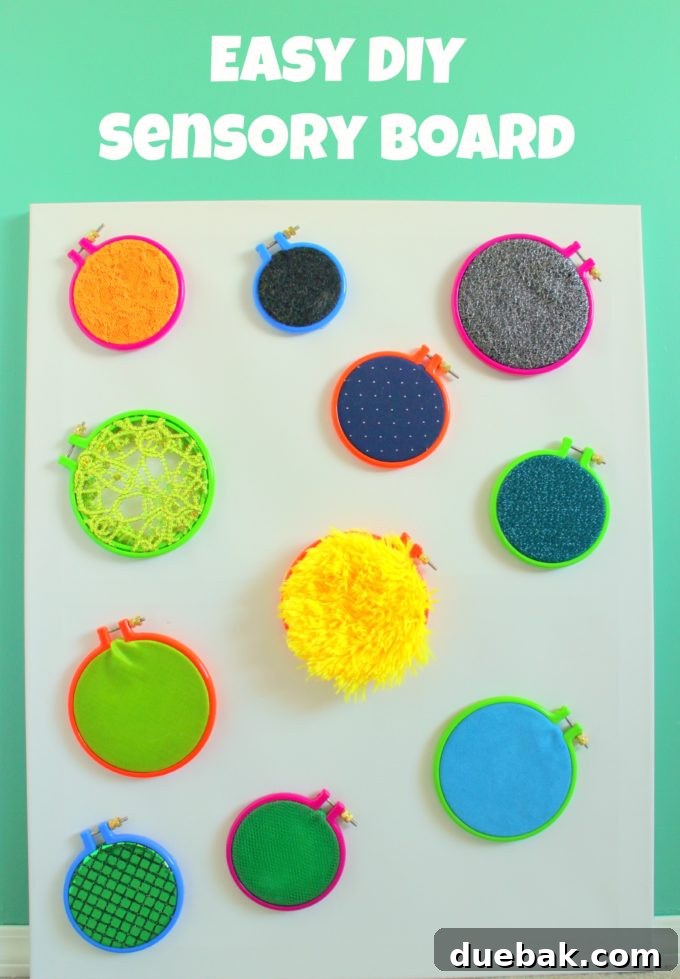
Crafting Joy: Your Ultimate DIY Sensory Board for Babies & Toddlers
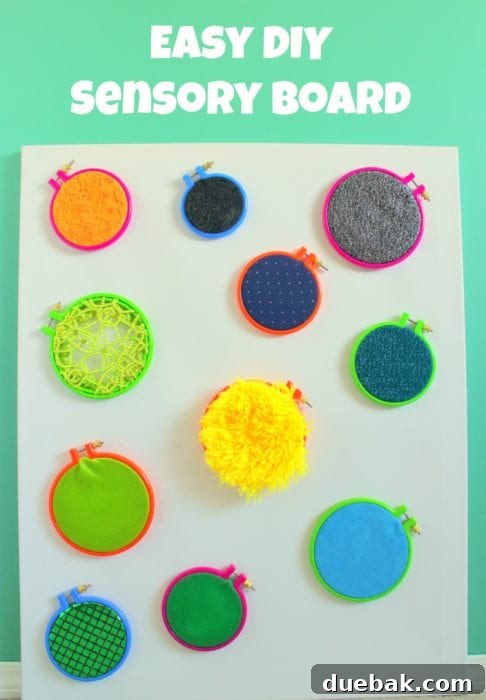
In the vibrant world of early childhood development, few activities rival the magic of sensory play. For curious babies and energetic toddlers, exploring textures, shapes, and colors isn’t just fun – it’s a fundamental pathway to learning about the world around them. If you’re searching for a heartwarming, engaging, and utterly unique gift or a new project for your little one, look no further than this beautiful DIY sensory board. Inspired by a popular concept seen on platforms like Pinterest, our version elevates the design by securely mounting various textured fabrics within embroidery hoops onto a sturdy canvas, creating an interactive “sensory wall” that’s both safe and stimulating.
This project is more than just a craft; it’s an investment in your child’s developmental journey. Imagine their delight as tiny fingers explore soft faux fur, smooth satin, bumpy corduroy, and crinkly fabrics. Each touch, each feel, builds neural connections, enhances fine motor skills, and fosters cognitive growth. While the assembly is straightforward, it does require a dedicated afternoon or evening – approximately 3 to 4 hours, with much of that time devoted to the satisfying (and sometimes sticky!) process of hot-gluing. The result, however, is a cherished keepsake and a boundless source of exploration for your child.
Why Sensory Play is Essential for Early Development
Before diving into the “how-to,” let’s briefly touch upon the immense benefits of sensory play, particularly with a tactile board like this one. Sensory experiences are the building blocks of a child’s understanding of their environment. When a baby touches different textures, they are not just feeling; they are learning about properties like soft vs. hard, smooth vs. rough, warm vs. cool. This is crucial for:
- Fine Motor Skill Development: Grasping, poking, and pulling at different fabrics within the hoops strengthens tiny hand muscles and improves dexterity.
- Tactile Discrimination: Learning to differentiate between various textures refines their sense of touch and enhances their ability to interpret sensory input.
- Cognitive Growth: Exploring cause and effect (e.g., pulling a fabric and hearing a crinkle) and problem-solving (how to get a better grip on a slippery fabric) supports brain development.
- Language Development: As you interact with your child, describing the textures (“soft,” “bumpy,” “silky”), you enrich their vocabulary and understanding of descriptive words.
- Self-Regulation and Calm: For some children, sensory exploration can be a calming and focusing activity, helping them to regulate emotions and energy levels.
- Visual Tracking and Engagement: The vibrant colors and patterns of the fabrics also engage visual senses, encouraging tracking and focus.
This DIY sensory board provides a concentrated and accessible way for children to engage in these vital developmental activities right in their own home.
Gathering Your Creative Arsenal: Materials for Your Sensory Board
Part of the fun of any DIY project is selecting your materials. For this sensory board, quality and variety are key. You’ll want to ensure you have a good selection of textures and colors to keep your little one captivated. We’ve sourced many of our materials from craft stores, often taking advantage of coupons for significant savings – a smart tip for any crafter!

Here’s a detailed list of what you’ll need:
- Embroidery Hoops: You’ll need a variety of sizes to create visual interest and accommodate different fabric pieces. Aim for at least 8-12 hoops, depending on the size of your canvas. Keep an eye out for craft store sales or bulk discounts, as these can add up. Wooden hoops tend to be more aesthetically pleasing and durable than plastic ones.
- Fabric (Lots of Different Textures!): This is where the sensory magic truly happens. Gather a diverse collection of fabrics. Think beyond just cotton!
- Soft & Fluffy: Faux fur, fleece, velvet, minky dot.
- Smooth & Silky: Satin, silk, smooth polyester.
- Rough & Bumpy: Burlap, corduroy, ribbed knits, textured tweed.
- Unique Textures: Felt, mesh, denim, lace, sequined fabric (ensure sequins are securely attached and not prone to shedding), crinkly fabric (like those used in baby toys, but securely sewn or glued).
- Patterns & Colors: Don’t forget visual stimulation! Include fabrics with interesting patterns, bright colors, and contrasting hues.
Thrift stores, fabric scraps from previous projects, or even old clothing items (cleaned thoroughly) can be excellent, cost-effective sources for unique textures. Just ensure all fabrics are clean, non-toxic, and free from loose threads or small parts that could pose a choking hazard.
- Canvas: A stretched canvas or a canvas panel will serve as the sturdy base for your sensory board. The size will depend on how large you want your board to be. A 16×20 or 20×24 inch canvas works well for a good array of hoops. Canvas panels are often more affordable, especially in multi-packs, and provide a rigid surface ideal for mounting.
- Sharp Scissors: For cleanly cutting your fabric pieces.
- LOTS of Hot Glue Sticks & a Hot Glue Gun: This is the workhorse of this project! High-temperature glue guns provide a stronger, more durable bond, which is essential for securely attaching fabrics and hoops. Make sure you have plenty of glue sticks on hand; you’ll use more than you think. Consider investing in finger protectors or a silicone mat for safe crafting.
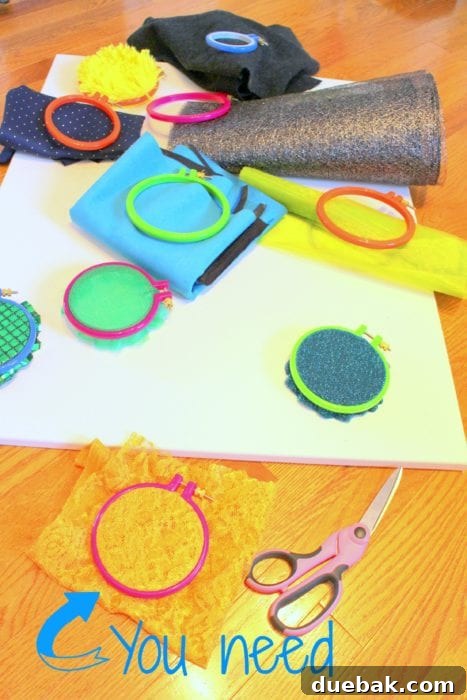
When purchasing your materials, especially hoops and canvas, always be on the lookout for coupons or sales. Craft stores frequently offer 20-40% off single items or even your entire purchase, which can significantly reduce the overall cost of this project. A trip to a well-stocked fabric store is also highly recommended to ensure you have an exciting and diverse selection of colors and textures.
Step-by-Step Guide: Crafting Your Sensory Masterpiece
While the process is simple, taking your time and being mindful of each step will ensure a beautiful and durable sensory board for your child.
Preparation & Planning
Before you even plug in your hot glue gun, it’s wise to do a little prep work. Lay out your canvas and arrange your empty embroidery hoops on it. Play around with different configurations, mixing sizes and ensuring a pleasing aesthetic. This planning stage helps you visualize the final product and estimate how many fabric pieces you’ll need.
Next, cut your fabric pieces. You’ll want them to be large enough to extend well beyond the edges of the inner embroidery hoop when stretched. A good rule of thumb is to cut squares or circles that are at least 2-3 inches larger in diameter than the outer hoop.
STEP 1: Fabricating Your Sensory Hoops
This is where your chosen fabrics come to life inside the hoops. It requires a bit of patience and a steady hand with the hot glue.
- Disassemble the Hoop: Loosen the screw on each embroidery hoop and separate the inner and outer rings.
- Position the Fabric: Place one of your chosen fabric pieces over the inner hoop, centering it as best you can.
- Place the Outer Hoop: Carefully place the outer hoop over the fabric and the inner hoop, pushing it down firmly to secure the fabric. Tighten the screw on the outer hoop until the fabric is taut and wrinkle-free. Ensure the fabric is stretched evenly, creating a smooth surface without distortions.
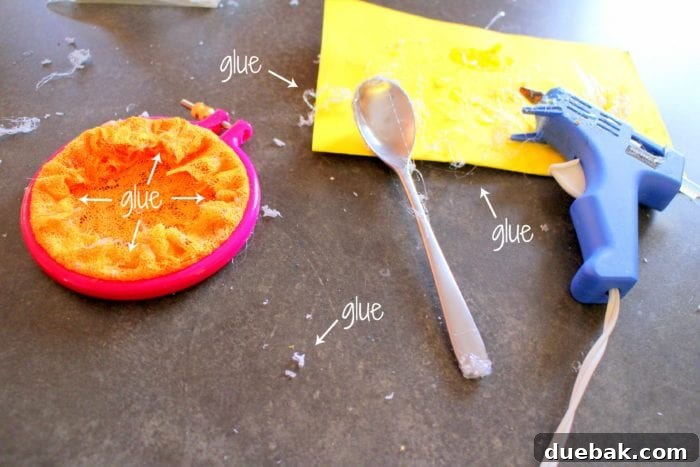
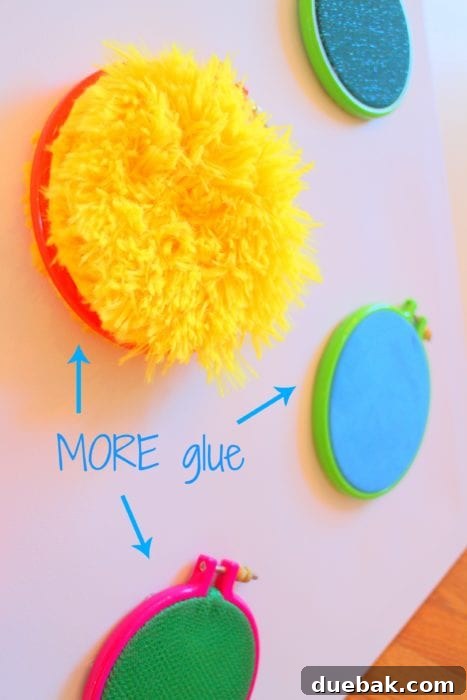
- Secure with Hot Glue (Crucial Step!): This is the most important part for durability. Flip the hoop over so the back is facing up. Apply a generous bead of hot glue to the inner edge of the wooden hoop, pressing the excess fabric down onto it. Work in small sections, pressing firmly with a non-flammable tool (like a silicone spatula or the back of a metal spoon – NOT your fingers!) to flatten the fabric onto the glue.
A Word of Caution: Do NOT cut the excess fabric too short before gluing, as tempting as it might be! This was a mistake I made initially, and it makes the gluing process much more difficult and less secure. Leaving a good margin allows you to pull the fabric taut and gives the glue a larger surface area to adhere to. You can trim the excess fabric closer to the glue *after* it has fully dried and cooled, ensuring a neat finish, but only once the glue is completely set and secure. Be prepared for this step to be a bit messy and potentially frustrating – but the secure attachment is worth it!
STEP 2: Assembling Your Sensory Board on Canvas
Once all your fabric-filled hoops are ready and the glue is completely cool and dry, it’s time to attach them to your canvas base.
- Arrange Your Hoops: Lay out your completed hoops on the canvas. Experiment with different arrangements, considering the sizes, colors, and textures of each hoop. Overlap some for a dynamic look, or space them out evenly. Take a picture of your favorite arrangement so you can replicate it.
- Apply Hot Glue to Hoops: Working one hoop at a time, apply a generous amount of hot glue to the back edge of the embroidery hoop that will be in contact with the canvas. Make sure to cover the entire circumference for maximum adhesion.
- Attach to Canvas: Carefully place the glued hoop onto the canvas in your desired position. Press down firmly for at least 30 seconds to ensure a strong bond. Hold it steadily until the glue begins to set.
- Repeat for All Hoops: Continue this process for all your hoops until your canvas is covered to your liking. Allow ample time for all the glue to fully dry and cure before handling or letting a child play with the board. This can take several hours.
Pro Tip for Hot Glue Safety: This step, like the previous one, involves a lot of hot glue. It’s often best done when your kids are asleep or otherwise occupied, as it allows you to focus and minimize distractions. Hot glue can cause burns, so always be cautious. Use finger protectors if you have them, and have a bowl of ice water nearby in case of accidental contact. Patience and careful handling will prevent any unpleasant incidents.
Beyond the Build: Maximizing Playtime & Learning
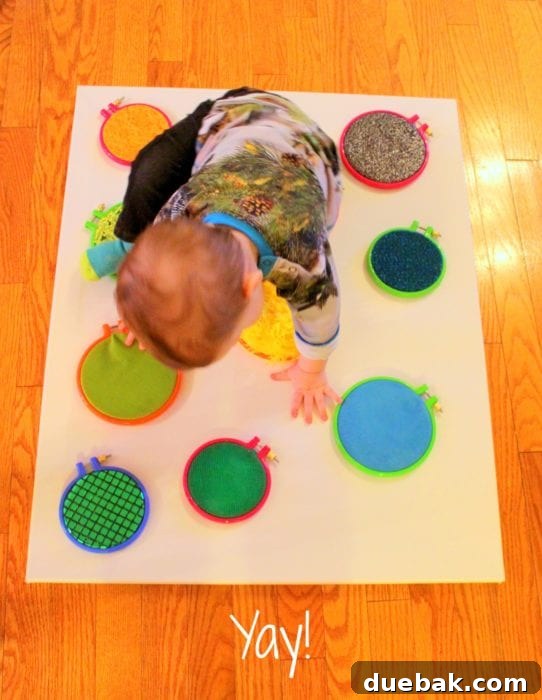
And just like that, your unique, handcrafted sensory board is complete! Imagine the sheer joy and wonder on your child’s face when they wake up or come home to discover this new, exciting world of textures. This sensory board isn’t just a toy; it’s a tool for discovery and development.
Display and Usage
Your sensory board can be displayed in several ways. If you’ve used a stretched canvas, you can hang it directly on a wall using appropriate hardware (ensure it’s securely fastened and at an accessible height for your child, but away from potential hazards). For canvas panels, it can be leaned against a wall, placed on an easel, or even laid flat on the floor during supervised play. Always ensure the board is stable and cannot easily tip over, especially when young children are interacting with it.
Safety First: Important Considerations
Since this project is for young children, safety is paramount:
- Secure Attachment: Double-check that all fabrics are very securely hot-glued into their hoops, and that all hoops are firmly attached to the canvas. Tug gently on each piece to ensure it won’t come loose during enthusiastic play.
- Material Choice: Ensure all fabrics are non-toxic and free of small, loose embellishments (like buttons or tiny beads) that could become choking hazards. If using sequined fabric, confirm the sequins are tightly woven and not easily shed.
- Regular Inspection: Periodically inspect the sensory board for any signs of wear and tear, loose fabric, or weakening glue bonds. Repair or remove any questionable parts immediately.
- Supervised Play: While designed to be safe, always supervise young children during playtime with any sensory item, especially those involving small components or adhesives.
Customization and Longevity
The beauty of a DIY project is its potential for personalization. Feel free to add other safe, securely attached elements if you wish, such as a small, unbreakable mirror, a few tightly braided ribbons, or even a soft, securely sewn crinkly toy inside one of the hoops. As your child grows, you can even update or replace fabrics to introduce new textures and maintain interest.
Conclusion: A Gift of Discovery and Learning
Creating this DIY sensory board is a labor of love, but the immense developmental benefits and the sheer joy it brings to a child make every moment worthwhile. It’s a testament to the power of hands-on exploration and a beautiful way to support your little one’s journey of discovery. So, gather your materials, set aside some dedicated crafting time, and prepare to bring a world of tactile wonder into your home.
We hope this detailed guide empowers you to create a fantastic sensory board that your baby or toddler will adore for years to come. Happy crafting!
Crafting and photography inspiration from Katie Edwards.
Katie is a talented writer, librarian, researcher, and mother known for her impressive DIY skills. You can explore more of her creative ideas on her birthday party blog and delve into her insightful book reviews at Brass Knuckle Books.