
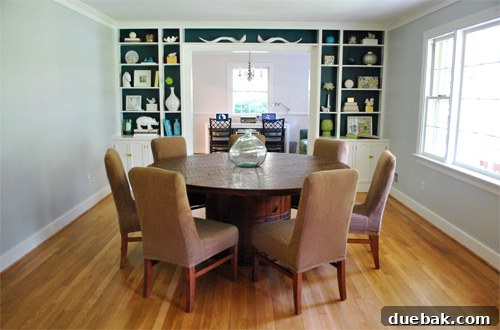
Welcome back to our home renovation journey! Today, we’re diving deep into a project that truly tested our design vision and proved that sometimes, the best plans evolve with experience. Remember our initial dream of pairing a rustic, chunky wood dining table with an array of modern, cheerful green leather parsons chairs? We loved the concept, a fresh pop of color against natural wood. However, our budget-friendly approach led us to a different path: acquiring affordable parsons chairs for just $25 each and finding equally inexpensive slipcovers for $23. The idea was simple – dye these slipcovers a vibrant green, and we’d achieve our desired look without breaking the bank. But as many DIY enthusiasts know, vision doesn’t always translate perfectly into reality, especially when fabric dye is involved. We quickly discovered that our dyed-green slipcovers, despite our best efforts, just weren’t “it.” The initial excitement faded as soon as we saw the results, realizing this shade of green, no matter how much we tweaked it, was not the right direction for our dining space.
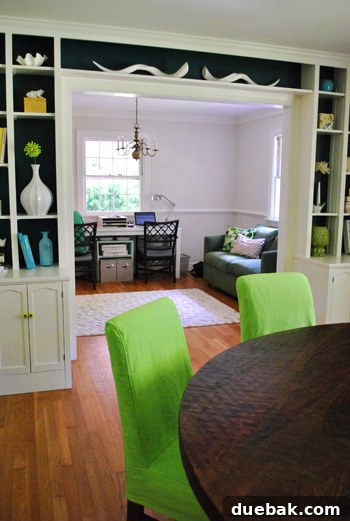
Our dining room is destined to be a dynamic space, featuring bold built-in shelving, chic patterned curtains, a grand opening leading to the kitchen, and a show-stopping chandelier above the table. With seven or eight chairs surrounding the table at all times, it dawned on us that the chairs shouldn’t be the focal point. Instead, we wanted them to seamlessly blend into the background, acting as elegant supporting elements to allow other standout pieces—like the built-ins, the vibrant curtains, and the magnificent chandelier—to truly shine. The green, we realized, was too assertive, demanding attention rather than complementing the room’s stars. This shift in perspective was crucial, guiding us towards a more harmonious and understated choice for our dining chairs.
Before our ill-fated venture into green dye, we explored a couple of other color possibilities. When we first acquired the slipcovers, their off-white hue immediately struck us as dingy, especially when contrasted with the crisp, glossy white trim and the newly installed built-in shelves. There was a noticeable clash, making the room feel less polished. Despite this, we decided to live with them for a while, hoping the initial impression would soften or that we might grow to appreciate their understated tone. It’s often wise to avoid rash decisions in design, giving a space time to settle and reveal its true needs.
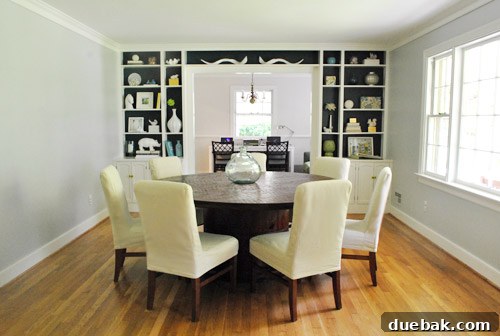
However, as the weeks turned into a month, our initial feelings solidified. The clashy off-white tone wasn’t just “not ideal”; it actively detracted from the room’s aesthetic. It was clear: a change was imperative. Our next thought was to bleach the slipcovers pure white. This seemed like a logical step, as brilliant white would undoubtedly tie into the existing white trim and built-in shelving, eliminating the dingy appearance. The practicality of bleaching was also appealing – keeping white fabrics pristine is generally straightforward.
Yet, as we pondered this option, one of our overarching goals for this house came to the forefront: creating a truly kid-proof home where we could host without constantly worrying about spills and messes. While white slipcovers *can* be bleached, they are also notorious for showing dirt and stains more readily on a daily basis. A quick online search even revealed that dark denim could potentially leave a faint blue tint, a detail we had never considered but was an important factor. Our desire for function to lead the way meant that if a slightly darker color could better mask everyday grime, requiring less frequent washing and reducing kid-related stress, we would absolutely opt for it. Furthermore, we felt that stark white covers would visually “stop the eye” and draw undue attention to the chairs, directly contradicting our newly formed goal of having them blend in rather than stand out. The contrast with our robust wood dining table would be too stark, creating a visual barrier instead of a seamless flow.
This led us full circle back to the green chair idea, an initial vision that both John and I believed was “just the ticket.” Little did we know, it wouldn’t quite hit the mark. Interestingly, I’m quite the novice when it comes to fabric dyeing. My only significant prior experience (aside from various hair color experiments in my younger years!) was dyeing my very own wedding dress. Yes, you read that right – my wedding dress! The bold decision was driven by a desire to make it wearable again for other special occasions, like attending friends’ weddings.
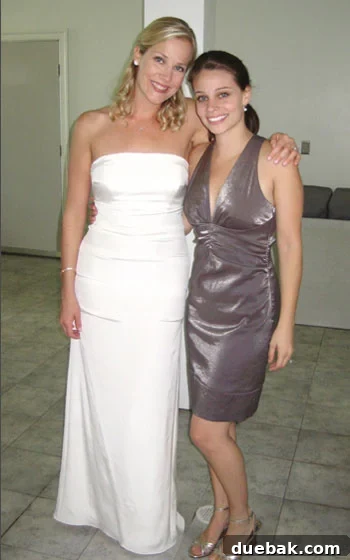
Looking back, I can hardly believe I had the courage to undertake such a project, but it truly worked out beautifully. This success instilled in me a soft spot for the transformative power of fabric dye. It’s an incredibly accessible, easy, and affordable method to breathe new life into items that might otherwise sit unused. Over the years, I’ve successfully dyed various items, from everyday shirts and cozy sweaters to even jeans, and the process has rarely disappointed me. This consistent positive experience fueled my confidence as we embarked on the slipcover dyeing adventure.
For those contemplating their own fabric dyeing plunge, I’m sharing the exact method I used for those initial two green slipcovers. The process was surprisingly straightforward, largely thanks to the dye product we selected. After receiving numerous recommendations from readers and even a few relatives, we decided to try iDye, readily available at JoAnn stores. At under $3 per pack, and with each pack capable of dyeing two slipcovers simultaneously, it presented an incredibly cost-effective solution. A major selling point was its suitability for natural fibers like linen, cotton, and silk – a perfect match for our slipcovers, which were a blend of linen and cotton. The color selection was also a significant advantage; iDye offers a wide array of tones, far surpassing brands with limited palettes. Specifically, there were at least five distinct green options (including green, olive, kelly green, emerald, and chartreuse), allowing us to truly refine our choice. We narrowed it down to two contenders:
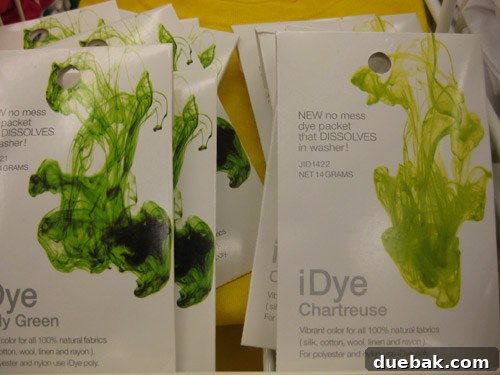
The chartreuse shade offered a modern, playful vibe, but we harbored concerns that it might appear too neon or “highlighter-ish” in the large quantity needed for eight chairs. Kelly green, on the other hand, promised a truer green, with less yellow undertone, aligning more closely with the vibrant apple green aesthetic I had envisioned from the very beginning. Ultimately, Kelly green was our choice.
While the dye pack provided basic instructions, my neurotic tendencies meant I needed far more detailed guidance. I headed straight to the iDye website for comprehensive, step-by-step instructions – essentially, hand-holding through the entire process. A huge perk that significantly simplified the project was the dye’s compatibility with front-loading washing machines. This made the entire operation incredibly simple; even our dog, Burger, could have managed it if he could reach the dryer buttons! Here’s how the dyeing process unfolded:
First, I measured two cups of the hottest water available from the tap into a large bowl. Into this, I carefully dropped the dissolving dye envelope from the iDye kit. The dye quickly began to dissolve, and I stirred the mixture thoroughly to ensure an even consistency.
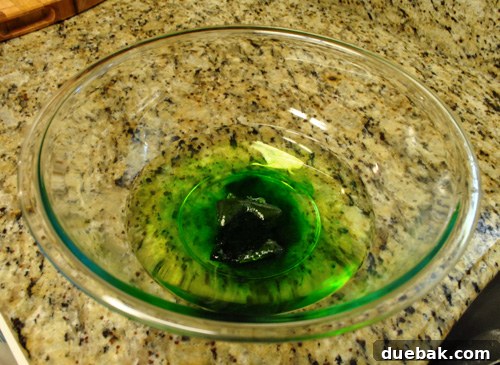
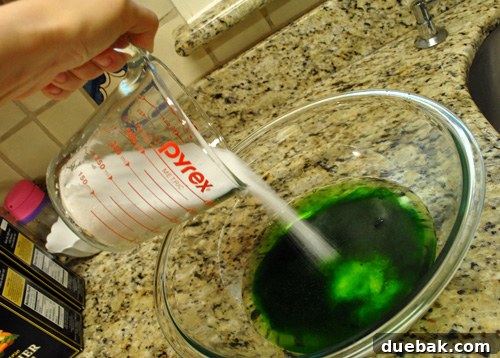
Next, I incorporated one cup of salt into the dye mixture. The iDye website specifically recommended adding salt for cotton and linen fabrics, which perfectly matched the composition of our slipcovers, to help the dye absorb more effectively and achieve richer, more even color.
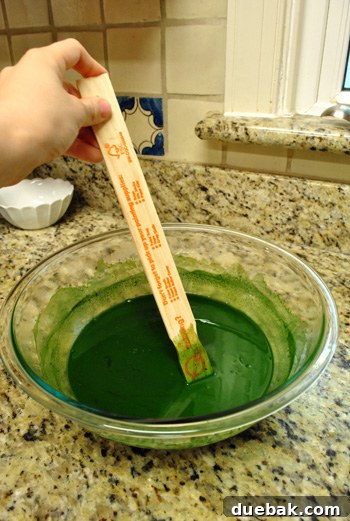
I then stirred the mixture once again, ensuring the salt was fully integrated. For this, a simple paint stick proved to be the ideal tool, allowing for thorough mixing without staining any kitchen utensils.
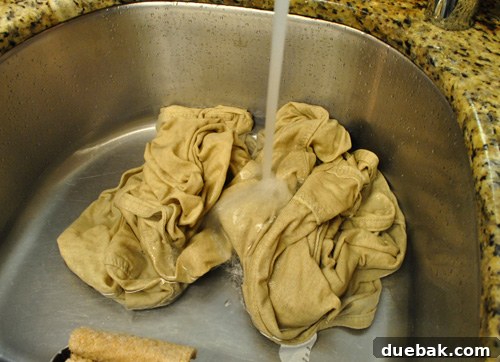
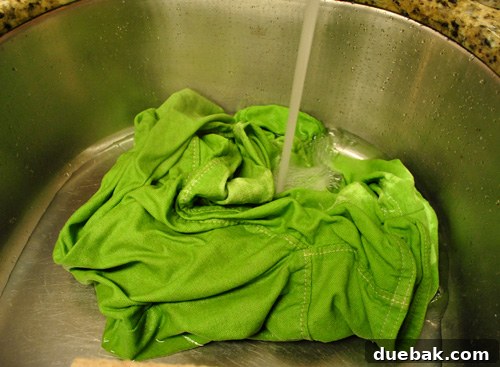
A crucial preparatory step was to pre-wet the two slipcovers. Before introducing anything to our front-loading washer, I ensured the slipcovers were thoroughly damp. This step helps the fabric absorb the dye more evenly and prevents splotches or uneven color distribution. This particular shot also serves as a good reminder of just how far from white the original slipcovers truly were – they had a distinct oatmeal-like tone in person, underscoring our need for a color transformation.
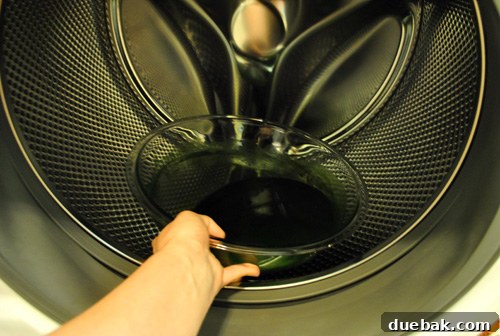
Then came what felt like the most nerve-wracking part of the process: carefully pouring the bowl of hot water, dye, and salt mixture directly into the bottom of our front-loading washing machine. It’s strange how such a simple action can feel so daunting, but the thought of potentially staining our appliance made me a little queasy!
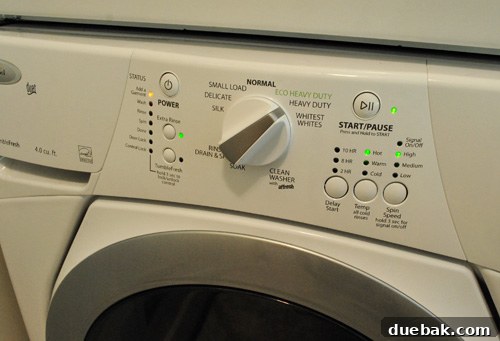
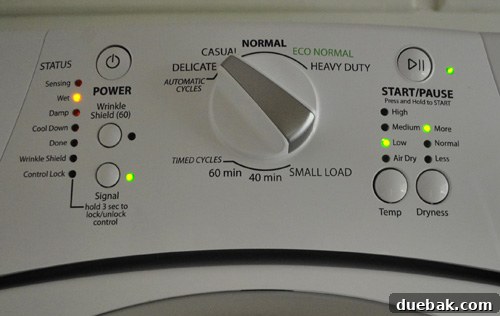
Immediately after adding the dye, I tossed in the pre-wet slipcovers and started the wash cycle without delay. The iDye instructions online explicitly recommended washing in hot water and emphasized that an extra rinse cycle would significantly aid in color development and evenness. Following this advice, I set our washer to the “heavy duty” cycle, which utilized hot water, and activated the “extra rinse” option before pressing start. This ensured the fabric had ample time to absorb the dye and that the color would properly set.
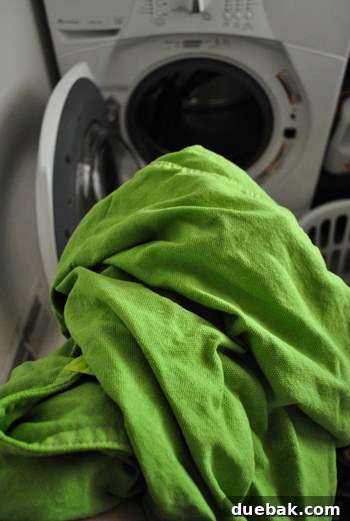
About an hour later, the moment of truth arrived, and the slipcovers emerged looking beautifully green! To my immense relief, the color was incredibly even, with not a single streak or dark spot to be found – my biggest worry throughout the process. They looked as if they had been purchased directly from a store as green slipcovers. (On a whimsical side note, imagine a store entirely dedicated to slipcovers, a vibrant haven of every imaginable color and shape, much like the extensive flip-flop wall at Old Navy – what a delightful concept!)
Before taking them out to dry, there was one final, crucial step: a cold water wash with a touch of mild detergent, as recommended by the dye manufacturer. This involved setting the washer to a “normal” cycle with cold water and adding a small amount of Seventh Generation detergent. This second wash effectively locked in the newly absorbed color and rinsed out any excess dye that hadn’t bonded with the fabric, preventing future bleeding. Afterward, I dried the covers on a delicate, low-heat setting. Since the slipcovers were originally dry-clean-only, I wanted to be extra gentle and avoid pressing my luck with harsh drying methods, as I had regrettably done in a previous shrinking incident with these very slipcovers.
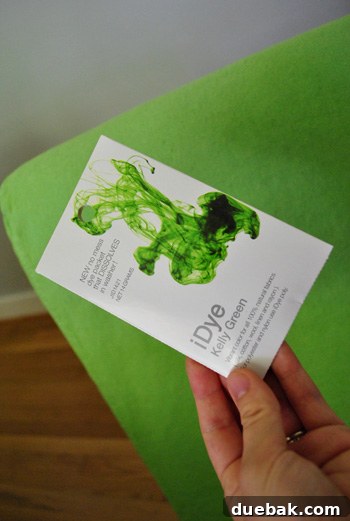
Comparing the final shade to the color swatch on the iDye pack, I found it to be a remarkably accurate representation. While our overall design vision for green chairs proved flawed, the Kelly green dye truly produced a lovely, consistent Kelly green-ish (or apple green-ish) color. The product performed exactly as promised, delivering on its promise of a vibrant and even hue.
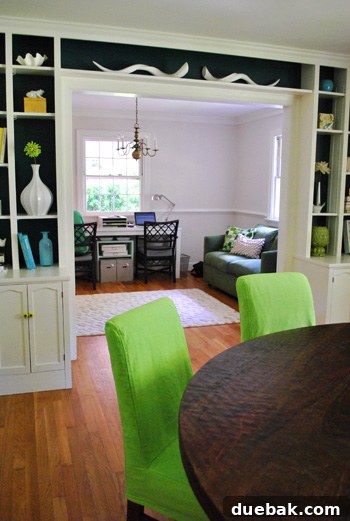
Sadly, despite the beautiful color, it just wasn’t “the one” for our dining room. The green, though well-executed, simply didn’t align with our evolving design philosophy of having the chairs play a supportive role. So, it was time to move onward in our quest for the perfect shade!
Our fourth and final color consideration was good old-fashioned mocha, or as the dye pack labeled it, simply “brown.” Back at JoAnn, staring at a wall of twenty different color options, brown emerged as the most sensible and aesthetically pleasing choice. This color promised practicality: it would be highly resilient to everyday stains and would gracefully recede into the background, allowing other cherished elements of the room to claim the spotlight. We also appreciated the inherent charm of combining a chunky wood table with plush, upholstered chairs, which created a relaxed, inviting atmosphere. We had worried that a full set of eight matching wooden chairs around our wooden table might lend an overly formal feel to the room. By opting for brown slipcovers, which shared a similar tone with the table, the chairs would seamlessly integrate, avoiding the “hiya-we’re-a-whole-bunch-of-chairs-so-look-at-us!” vibe that green, off-white, or even stark white would have inevitably created. This carefully considered choice aimed for harmony, functionality, and understated elegance.
When it came to the actual dyeing process for the brown slipcovers, the methodology was precisely the same as with the green batch. The only difference was swapping out the Kelly green dye pack for a brown one, continuing to dye two slipcovers at a time. This consistency in the process made the second round even smoother and more predictable, building on the experience gained from the first attempt.
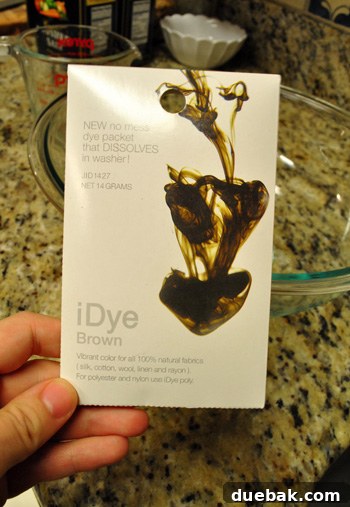
Once again, the dissolving dye pack was carefully added into two cups of piping hot water, ensuring a thorough and even mixture before proceeding to the next step. This initial dissolution is key to preventing dye streaks and achieving a consistent color across the fabric.
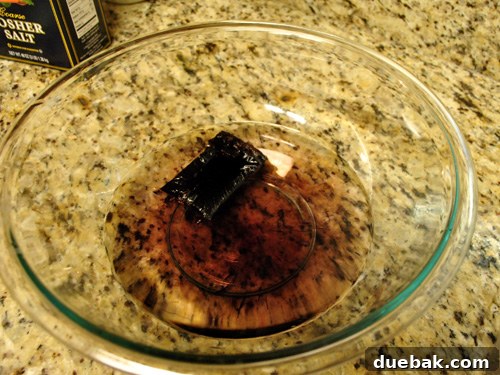
Following the dye, a full cup of salt was added to the mixture. As with the green dye, this step was crucial for cotton and linen fabrics, enhancing the dye’s absorption and ensuring a rich, deep, and uniform mocha brown color on the slipcovers.
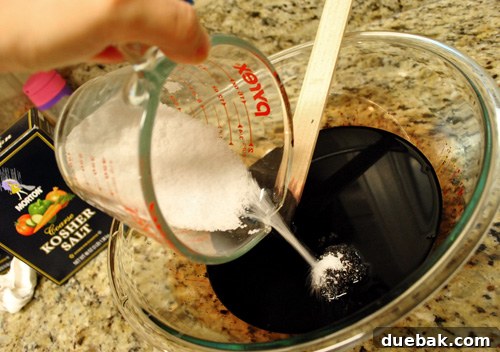
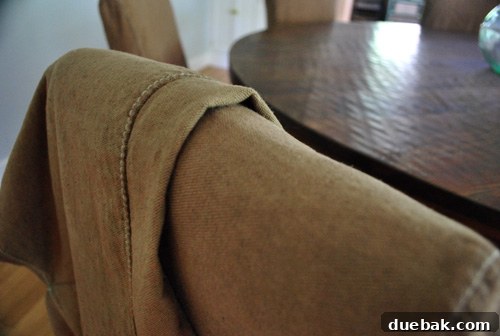
The mixture was then thoroughly stirred and poured into the washing machine, along with two pre-wet slipcovers. After one hot wash cycle and a subsequent cold one, we were delighted to discover perfectly dyed, rich mocha slipcovers. An important detail to note for any dyeing project is that most fabrics readily take to dye, but synthetic stitching often retains its original color. Luckily, the white stitching against the new mocha brown created a subtle, appealing contrast that perfectly suited our aesthetic. It was a delightful result!
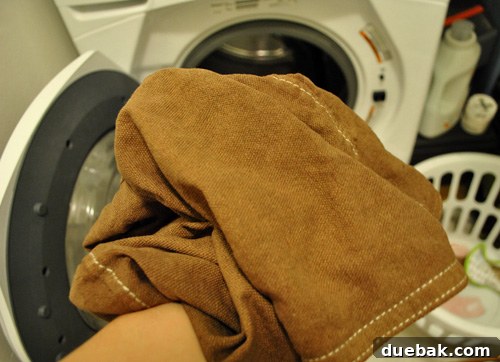
Once more, our slipcovers emerged from the washer looking flawlessly even, completely devoid of any dark spots, light patches, or streaking. The combination of the warm and cold wash cycles effectively set the color, ensuring its permanence. We’ve found that the color doesn’t rub off at all, even if you sit on the chairs while wet. A quick tip regarding washer cleanup after dyeing: my machine was sparkling clean after just one extra rinse cycle, as advised by the iDye team. The only spot that needed attention was the rubber ring seal near the door. A few passes with paper towels were all it took to remove the slight brown tint, leaving the washer pristine for its next use.
And here they are! Ta-da! (Please overlook the wrinkles; I allowed them to sit in the dryer for far too long before quickly snapping these pictures this morning). We couldn’t be happier with the final result.
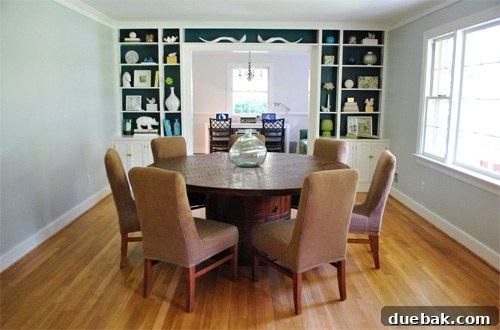
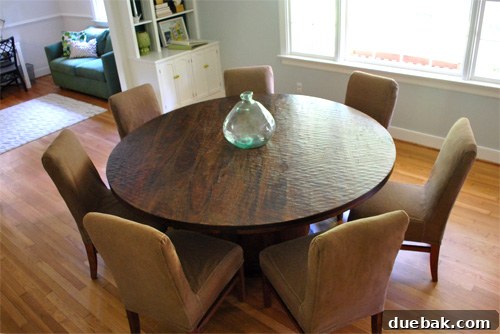
We absolutely adore how these chairs now subtly integrate into the room, fulfilling our vision of avoiding a “look-at-all-the-chairs” focal point. They don’t blend in *too* much, thanks to the nuanced variation in color from the chunky wood table and, of course, the delightful contrast of hard wood versus soft fabric. This subtle interplay of textures and tones creates an inviting and sophisticated aesthetic.
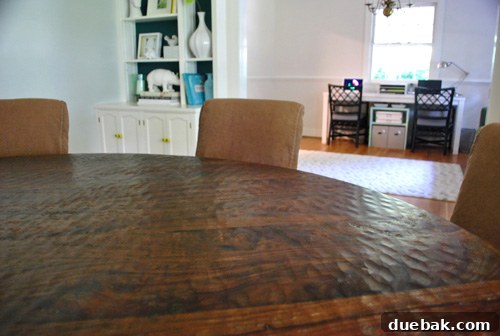
Beyond aesthetics, a major win for us is the practical benefit: these darker slipcovers will undoubtedly be far more forgiving of everyday dirt and spills compared to their lighter predecessors. This functionality perfectly aligns with our goal of a kid-friendly, stress-free home.
But what became of those two “extra” slipcovers we initially dyed green? Remember, we cleverly acquired ten slipcovers for our eight chairs, thanks to John’s foresight about potential dyeing mishaps. We figured we had nothing to lose by attempting to overdye them with brown, fully expecting them to turn out a muddy olive tone, but it was worth a shot. In a sweet turn of dye-related events, the brown dye completely dominated the existing green, producing a color absolutely identical to our other brown covers! Even with the green dye as an underlying layer, the result was a perfect match. This means we now have two extra brown slipcovers on hand, ready to swap in should any catastrophic accidents occur – be it from sharpies, scissors, or any other unexpected mishaps that life with kids (and adults!) can throw our way. Oh, happy dye day indeed!
Ultimately, our dining room design came down to some basic math: bold built-ins + future patterned curtains + a large view into the office + a grand future chandelier/pendant + a large future punched-out view into the kitchen + bright, attention-grabbing chairs = too much visual chaos. The brown chairs provided the necessary visual calm. We’re now thrilled to let the room’s true stars – like the impressive built-ins, the vibrant curtains we plan to make, and the stunning light fixture – command attention. Speaking of which, feast your eyes on this designer fabric we managed to snag at a deep discount, thanks to a slight imperfection that we can easily work around. We simply couldn’t pass it up!
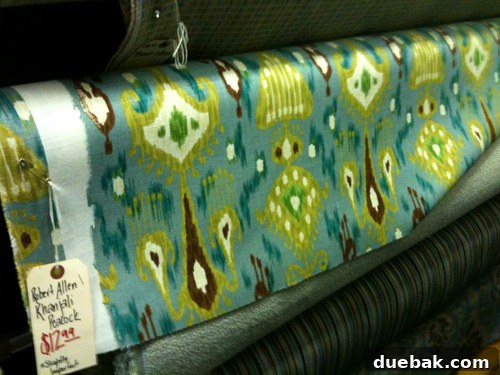
We absolutely adore this fabric because it perfectly weaves together the various elements of our dining room. It features rich brown tones that effortlessly tie into our newly dyed chairs and the dining table. The pristine white tones echo the room’s trim and the built-in shelving, creating a cohesive backdrop. Deep teal accents beautifully relate to the color found on the back of our built-ins, adding depth and a touch of sophistication. And, for a cheerful pop of color, there are hints of apple green – so even though green wasn’t the right fit for the chairs, I’ll still get to enjoy that vibrant hue in our curtains! It’s safe to say we’re incredibly excited to embark on the curtain-making process very soon. But more than anything, we are profoundly thankful that our dining chairs no longer look like this:
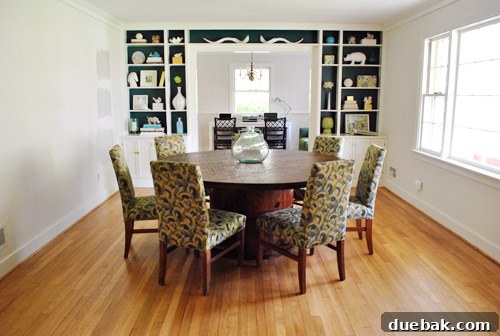
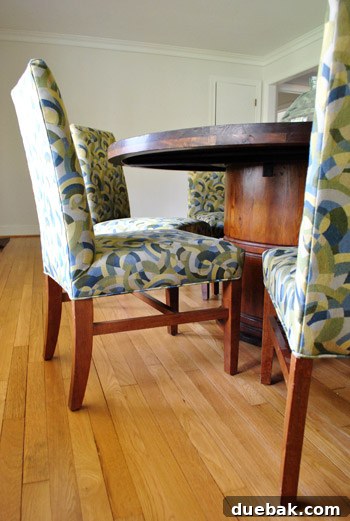
Hallelujah! This transformation truly feels like a triumph. For those curious about the financial aspect of this chair makeover, here’s a transparent breakdown of our budget:
- Each parsons chair: $25 (totaling $200 for eight chairs)
- Failed painting supplies (from a previous attempt, since scrapped): $10
- Each slipcover: $23 (totaling $230 for ten slipcovers, including two spares)
- Six iDye packets from JoAnn (one green for the initial attempt, five brown for the final solution and over-dyeing spares): $18
- Total cost per chair (including two spare slipcovers): $57.50
Have you embarked on any dyeing projects around your house? Perhaps curtains, pillow covers, or cloth napkins? Or are you a “dye virgin” who’s been dreaming of giving it a shot? I’d love to hear about what you’ve been up to, or what you’ve been “dyeing” to do – har har! Share your experiences and aspirations in the comments below.
Psst – Our journey with these $25 chairs has been quite an adventure! You can delve into the very beginning with the post where we first found them, read about my attempt to paint one in this post, and discover the story of finding and shrinking the slipcovers here.
Update: Want to see how our dining room is finally coming together, especially with those beautiful curtains we eventually made? Check out the progress here. Woot!