
Elevate Your Kitchen: A Comprehensive Guide to Installing Stylish Open Shelves with Brackets
Revitalizing a kitchen space often involves a blend of aesthetics and practicality. After completing our custom range hood cover, the logical next step was to integrate functional yet beautiful open shelving around it. This project promised not only increased storage but also an opportunity to showcase our favorite dishes and add significant character to the heart of our home. What initially seemed like a simple task evolved into a thoughtful process, demonstrating how even seemingly small details can make a substantial impact on the overall design and functionality of your kitchen.
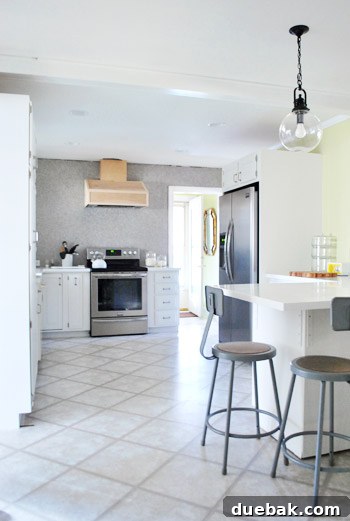
Our journey began with a decision point: classic floating shelves or a more robust bracketed system? While the sleek, seamless look of true floating shelves, perhaps even following detailed guides like Ana White’s instructions, was initially appealing, a closer look at our inspiration photos led us to consider an alternative. The idea of using sturdy brackets began to gain traction, offering both a unique visual element and a practical solution to potential installation concerns. This shift in design philosophy proved to be a pivotal moment, influencing our material choices and installation strategy.
For those contemplating open shelving and concerned about the inevitable dust and grease accumulation, extensive research put our minds at ease. According to numerous sources, the consensus is clear: with an efficient range hood (which we proudly had!) and by frequently rotating and using the dishes stored on the shelves, these issues are largely mitigated. Even items stored within closed cabinets accumulate dust, so the key takeaway is active use and a good ventilation system. We committed to monitoring our experience and sharing our honest findings with you. The allure of easily accessible, beautifully displayed dinnerware far outweighed any initial reservations.
Choosing the Right Support: Why Brackets Made Sense for Our Kitchen
Beyond their appealing aesthetic, brackets offered a significant advantage, particularly given our kitchen’s tiled walls. The thought of shelves potentially pulling away from our painstakingly installed wall of tile was a source of stress we were keen to avoid. Brackets provided a more secure anchoring method, distributing weight effectively and ensuring long-term stability. Moreover, we had heard whispers of Home Depot offering a variety of affordable yet stylish bracket options, prompting a scouting mission. During this trip, a quick text to Sherry, who was managing a photoshoot at home with Clara, helped us narrow down the choices. This collaborative approach ensured our selection was not only structurally sound but also aesthetically aligned with our overall kitchen vision.
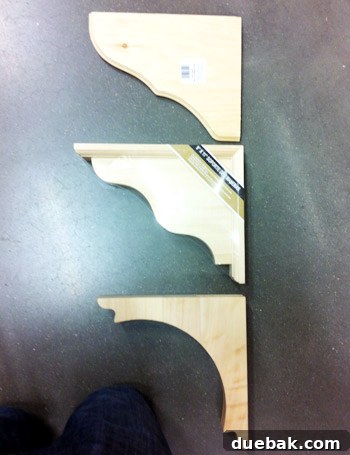
The decision was unanimous: the sleek, minimalist design of the last bracket option was our definitive favorite. We purchased a dozen of these elegant supports, alongside 12-inch framing lumber intended to serve as our shelves. This combination of framing lumber and brackets had received positive feedback from other DIY enthusiasts for kitchen shelving and had even proven successful in our own home, notably when crafting our office desk. With a proven track record and community endorsement, it seemed like a sensible and cost-effective approach to achieving our desired open shelving look.
Solving the Plate Predicament: Enhancing Shelf Depth with Trim
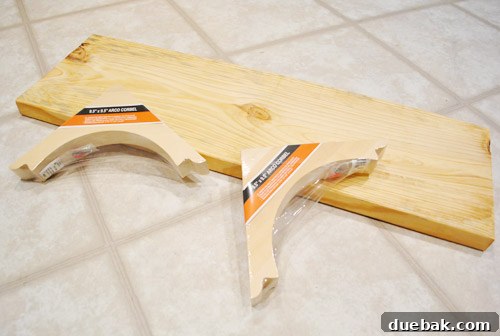
However, an unforeseen challenge quickly arose. Our 12-inch dinner plates, when placed on the 12-inch framing lumber, revealed a critical oversight. In lumber terminology, a “12-inch” board is typically closer to 11.25 inches in actual width. This meant our plates would awkwardly overhang the shelves, creating an unbalanced and less-than-ideal aesthetic. This minor discrepancy threatened to undermine the entire project, highlighting the importance of meticulous planning and understanding material specifications in DIY endeavors.
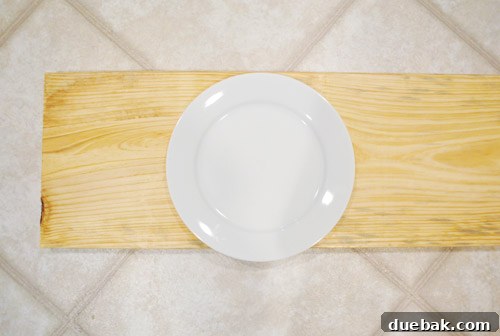
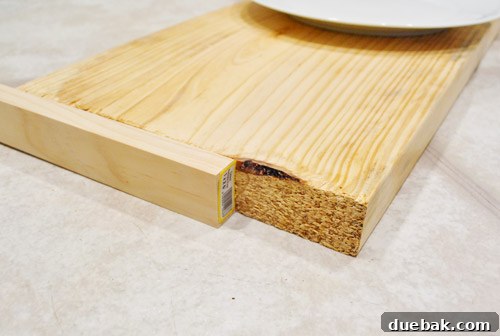
After a fleeting consideration of acquiring smaller plates – an idea quickly dismissed – we devised an ingenious solution: incorporating 1×2-inch trim around the shelf edges. This method wasn’t new to us; we had successfully employed it to finish the top of our homemade console table in the living room. The trim would effectively extend the shelf depth, eliminating the plate overhang, and simultaneously provide a refined, smooth edge, concealing the rough-cut ends of the lumber. This dual benefit of enhanced functionality and improved aesthetics made the trim a perfect, elegant solution.
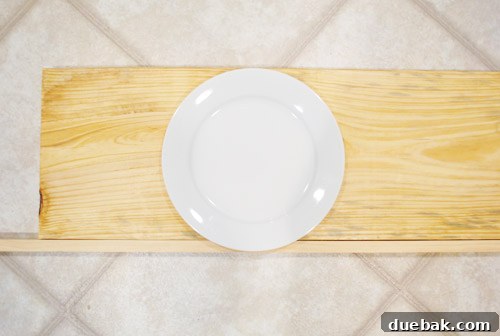
This trim strategy offered a clear win-win. Not only would it resolve our shelf depth concerns, but it would also elevate the overall finish of each shelf, transforming a simple piece of framing lumber into a more polished and custom-looking component. The addition of the trim was a testament to how creative problem-solving can often lead to a superior final product, exceeding initial expectations.
Budgeting for Style: Understanding the Cost of Open Shelving
With all materials acquired, our total expenditure for these custom open shelves amounted to approximately $141. This included $116 for the 12 sturdy brackets, $15 for the primary shelf boards, and an additional $10 for the smaller trim boards used to frame out the larger shelves. While not a negligible sum, we recognized the value proposition. This investment would yield four practical shelves – two substantial and two smaller ones – providing storage equivalent to roughly three upper cabinets, which typically cost upwards of $300 or more. Our decision was further justified by significant savings elsewhere in our kitchen renovation, such as reusing original cabinets, constructing our own fridge cabinet, the self-installation of our tile wall, and sourcing a budget-friendly range hood from Craigslist. This allowed us the flexibility for a “semi-splurge” on shelving, especially since we already possessed the necessary paint and primer.
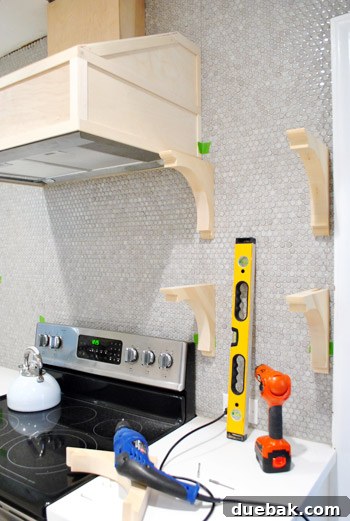
Next, the meticulous process of marking and measuring began. We utilized our trusted weighted-thread method, suspended from ceiling marks, to precisely locate our wall studs – a technique previously employed when hanging our range hood. Fortuitously, the stud placement aligned remarkably well for evenly spaced brackets, with the exception of two on the longer side, where a stud was already occupied by the hood. For these instances, we planned to use heavy-duty anchors, confident in their secure hold when drilled into the tile.
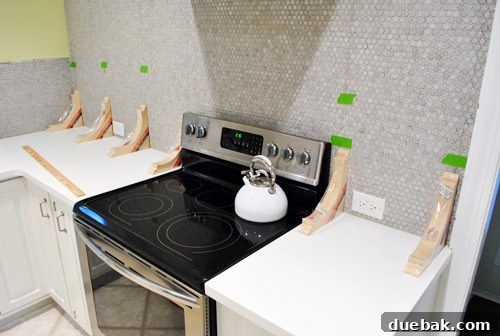
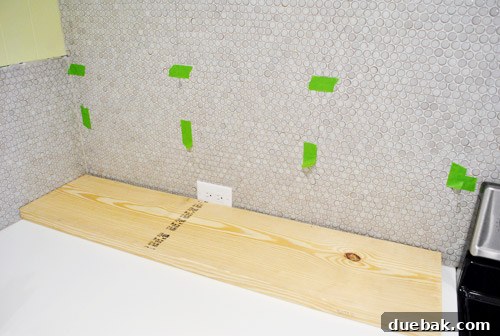
During this phase, we also carefully measured and cut our shelf boards. The seemingly short length of one end was entirely intentional, designed to accommodate the 1×2-inch trim board. The subtle gray lines visible in the photos above and below are our weighted threads, clearly marking the stud locations, ensuring no one mistakes them for marks on our pristine tile. Precision at this stage is paramount, as it dictates the final alignment and stability of the shelves.
Customizing the Finish: Strategic Trim Placement for a Polished Look
Our trimming approach was highly customized, focusing only on the exposed sides of each shelf. This resulted in slightly different configurations for each piece. The long top shelf, nestled between the wall and the hood, required trim only along its front edge. In contrast, the shorter bottom shelf, exposed on three sides, needed trim on its front, right (where it met the hood), and left (where it met the wall) edges. While this varied approach might appear unconventional, our experience with building our console table taught us that once assembled, primed, and painted, these subtle differences would seamlessly blend, creating a cohesive and beautifully finished look. Crucially, we adjusted the raw lumber cuts to account for the trim thickness, ensuring all shelves would achieve the same consistent finished length and depth.
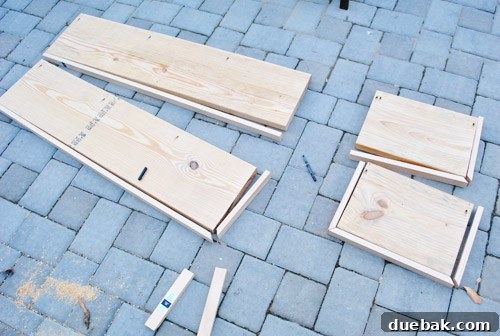
The trim was secured to the main shelf boards using a combination of strong wood glue and finish nails, creating a durable bond. You’ll notice the inclusion of pre-drilled pocket holes on the top surface of the shelves. This thoughtful addition offered the potential for screwing the shelves directly into the wall studs, providing an extra layer of stability and security in addition to their attachment to the brackets. This double-anchoring method was designed to withstand heavy loads and ensure peace of mind.
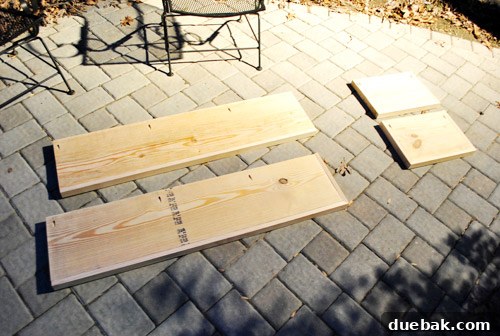
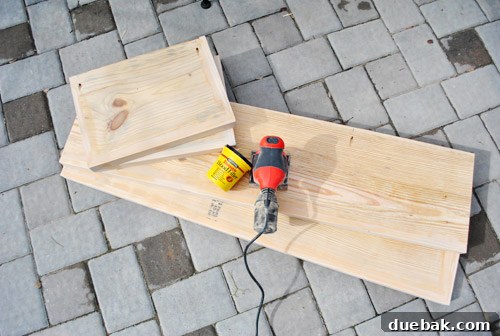
That evening, I meticulously applied wood filler to the thin seams where the trim met the 12-inch boards. This small but significant detail was crucial for achieving a truly seamless, integrated look. We envisioned that after priming and painting, the shelves would appear as if crafted from a single, solid piece of wood. The effectiveness of this technique was already evident even before paint; in the photo below, it’s virtually impossible to distinguish which shelves are trimmed on one side versus two. The improved, finished appearance brought about by the trim ultimately made us grateful that our original plates didn’t fit – a happy accident that led to a far superior outcome.
Precision Installation: Hanging Brackets on Tiled Walls
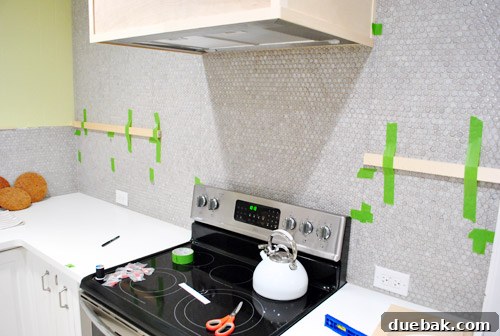
Simultaneously, preparations for attaching the brackets to the wall were underway. We carefully leveled and taped 1×2-inch scrap pieces of wood to the wall, positioned precisely where the bottom of our shelves would sit. These temporary placeholders served as invaluable guides, ensuring that the top edge of each bracket would be perfectly aligned for level shelves. This meticulous pre-installation step is critical for a professional-looking finish.
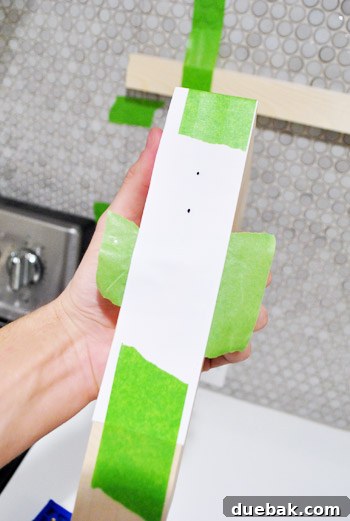
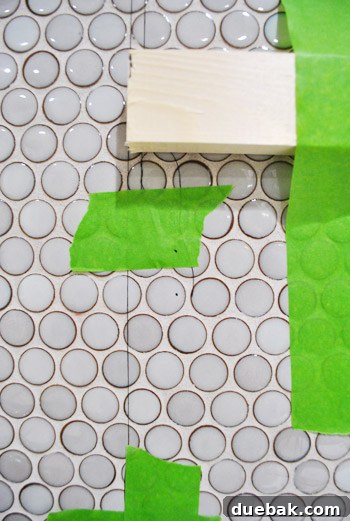
Our chosen brackets featured two metal hooks on their back, necessitating precise hole drilling into the tile. To achieve this, I employed my trusted paper template method. A strip of paper was taped securely to the top and bottom of each bracket, with the side tape strips facing outwards. I then carefully punctured the paper exactly where the bracket’s notches were, creating an accurate template of the mounting points. This technique eliminates guesswork and ensures perfect alignment for each bracket.
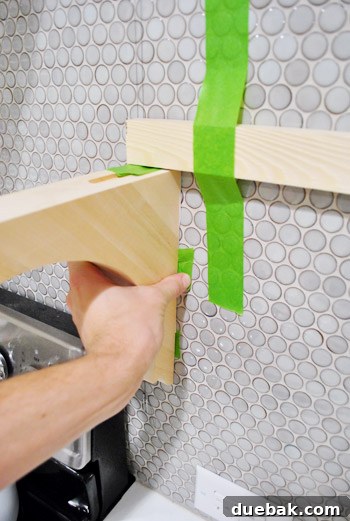
Next, I carefully positioned the paper-backed bracket against the tiled wall, ensuring it was perfectly aligned with our level guides. I then pressed the outward-facing side pieces of tape firmly onto the tile, adhering the paper template to the wall. With the template securely in place, I gently peeled the bracket away, leaving the paper template precisely positioned on the tile.
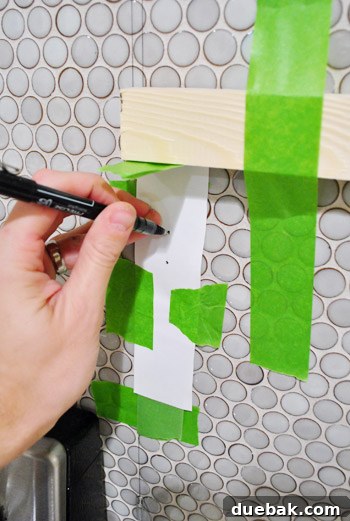
This left the paper template adhering to the wall, with the punctured holes perfectly indicating where the mounting screws needed to be drilled. This simple yet highly effective method ensured each hole was marked with absolute precision, crucial for a project involving multiple brackets and a tiled surface.
The process, while straightforward in concept, proved to be quite tedious when repeated for all eleven remaining brackets. However, the meticulous effort was undoubtedly worth it for the promise of perfectly aligned shelves. Drilling into our beloved tile, especially 24 times, remained a slightly cringe-worthy task. Thus, I spared you the sight of multiple drill bits meeting tile, but suffice it to say, the work progressed. The image below reveals the final result of this effort: a dozen pairs of securely installed screws, patiently awaiting their brackets. Though subtle, this represented significant progress in our kitchen transformation journey.
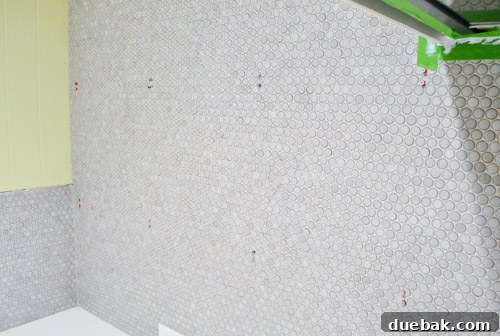
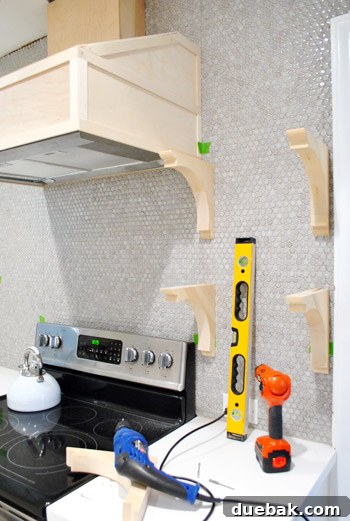
To ensure everything was structurally sound and visually pleasing, we conducted a test run, hanging one side of a shelf. This allowed us to verify that the screws were optimally positioned – not too far in or out – and, more importantly, that the connection felt robust and secure. The test was a success, confirming our installation method was sound! Sherry, ever the enthusiast, could barely contain her excitement to finally load these shelves with our collection of dishes and plates, eager to see the vision come to life.
The Final Touch: Priming and Painting for a Flawless Finish
As tempting as it was to immediately hang the finished shelves, we recognized the wisdom of completing all priming and painting beforehand. This strategic decision would prevent the tedious task of taping off the freshly tiled walls or risking paint splatters on our grout lines. Therefore, our shelf-hanging narrative pauses here, as we await the primer to thoroughly dry before applying two coats of paint – the very same elegant color we used for our existing cabinets. Once fully cured, the installation will proceed swiftly. Moreover, our range hood is also slated for priming and painting, promising a crisp, integrated look upon its next appearance. This careful approach ensures a professional and durable finish for both the shelves and the surrounding kitchen elements.
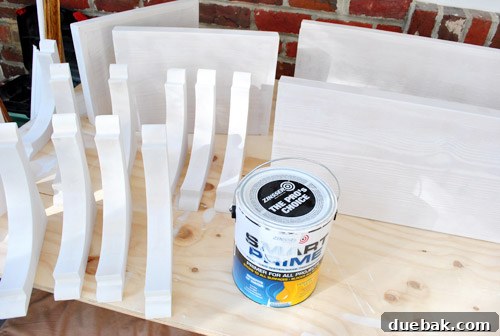
Once dried and cured, the final installation of the shelves should be a rapid process, and we eagerly anticipate sharing the “after” pictures by Wednesday. Of course, this timeline is contingent on avoiding any unforeseen household craziness – a constant possibility, especially during week two of three for our in-home book shoots in what feels like “Crazyville.” However, short of a stampede of wild boars through the house, nothing will deter us from completing these shelves! What DIY projects occupied your weekend? Perhaps some lumber work, meticulous priming, or brave drilling through tile? Or maybe you were preparing dozens of secret projects for a book shoot, all while your daughter created delightful chaos and your chihuahua scavenged crumbs from a week of visitors? We’d love to hear about your adventures!