
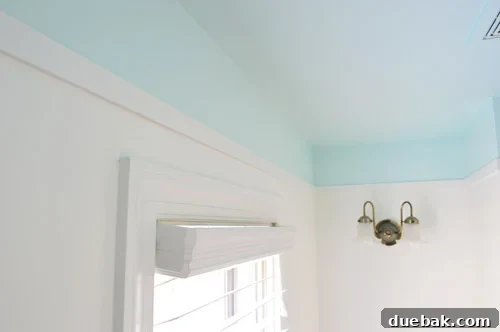
A Refreshing Makeover: Our DIY Bathroom Transformation with Blue Ceiling & Elegant Trim
Happy Martin Luther King Jr. Day, everyone! We are absolutely thrilled to share the grand reveal of our fully finished bathroom paint and trim project. We’ve been hinting at this transformation for a while now – we first outlined our ambitious plans in a post last week, and eagle-eyed readers might have even caught a half-done sneak peek in our latest house tour video. Today, the wait is over! Prepare to be inspired by the remarkable before-and-after:
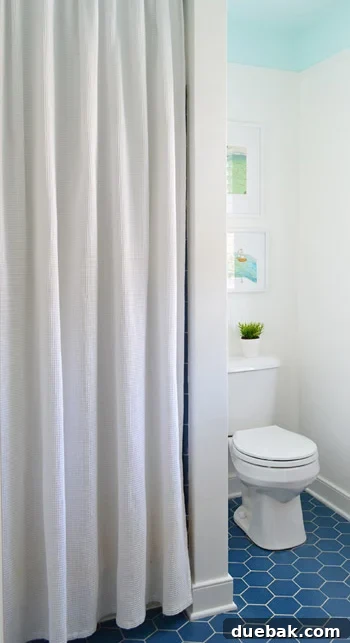
This fresh, airy look is a stark and welcome contrast to where we began. Many of you might recall our initial steps in this bathroom saga, which included the early removal of the glass shower doors to open up the space. However, after that initial burst of activity, the room lay dormant for quite some time, until recently, when we courageously decided to wage war on the stubborn wallpaper that had long defined its character. That battle truly set the stage for this dramatic transformation.
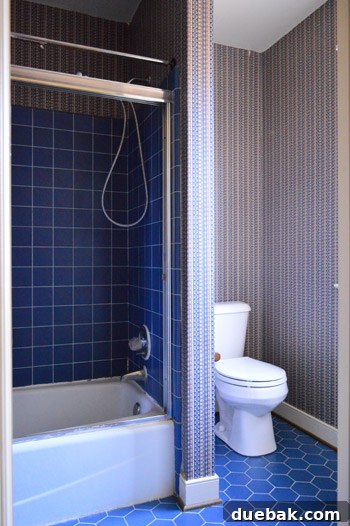
Capturing the essence of this particular bathroom through photography proved to be quite a challenge. Its unique layout, complete with multiple doorways and various nooks and crannies, made it notoriously difficult to get a comprehensive shot, especially when trying to encompass both the ceiling and the floor in a single frame. We apologize for the super vertical crops and somewhat choppy images, but we sincerely hope they still manage to convey the refreshing new look and feel of the room. Our goal is to provide you with a true sense of its updated charm and functionality, despite the photographic hurdles.
Designing with Intent: The Vision Behind Our Blue Ceiling
As we delved into the design process, our primary inspiration for the striking blue ceiling was to create a harmonious balance with the existing blue hexagonal floor tiles. We’ve always been rather fond of these charming floor tiles, but we felt the room needed a corresponding element of interest higher up to truly tie the space together. The idea was to draw the eye upwards, creating a sense of height and sophistication that complemented the floor’s vibrant character without overpowering it. This design philosophy was heavily influenced by Heather’s beautifully renovated bathroom, which skillfully demonstrated the impact of a colored ceiling. Additionally, a similarly blue-floored inspiration image from Houzz further solidified our vision, particularly the ingenious concept of incorporating simple architectural trim to create a smooth, purposeful transition between different paint colors on the wall and ceiling.
Step-by-Step: Preparing for the Blue Ceiling Accent
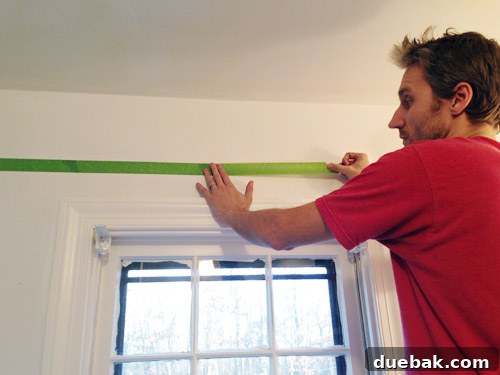
The very first step in bringing our vision to life involved meticulous preparation: establishing a crisp horizontal border around the perimeter of the room. This border would define precisely where our vibrant blue ceiling color would begin. After careful consideration and several mock-ups, we settled on positioning this border approximately 8 inches down from the ceiling. This specific measurement was chosen for a couple of key reasons: firstly, it ensured that the border would remain uninterrupted by any existing door or window trim, creating a continuous and elegant line. Secondly, an 8-inch band provided enough visual weight to look intentional and substantial, rather than an afterthought. I began by using a level to draw a faint pencil line along the walls, which then served as my precise guide for applying painter’s tape. While I aimed for accuracy, I wasn’t overly obsessive about making the tape lines absolutely perfect. This pragmatic approach stemmed from the knowledge that the final paint edge would ultimately be hidden beneath the decorative trim we planned to install. Therefore, as long as the line wasn’t drastically crooked, any minor imperfections, small wavers, or slight dips would be neatly concealed by the trim, ensuring a professional and polished finish.
Choosing the Perfect Shade: A Deep Dive into Blue Paint Selection
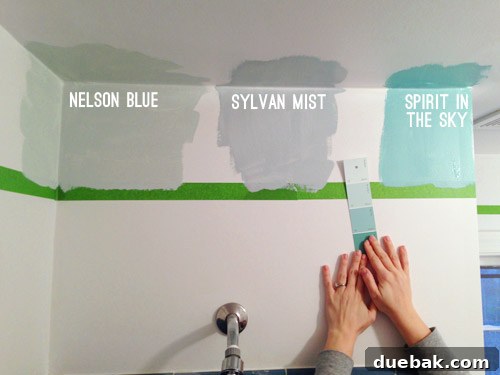
With the prep work complete, the next exciting yet challenging phase was selecting the ideal paint color. This is often the trickiest part of any painting project, and our bathroom was no exception. We initiated the process by swatching several blue hues we already had on hand. These included Nelson Blue, a color we’d successfully used in our kitchen; Sylvan Mist, a leftover from various book projects; and Spirit In The Sky, which had been a test pot from when we were choosing a front door color. Typically, for wall colors, we gravitate towards more subdued blues with a significant gray undertone, much like the two samples on the left of the image. These shades often evoke a calming “haint blue” aesthetic, a traditional Southern color believed to ward off evil spirits, which adds a subtle, historic charm to a space. However, the unique challenge of our bathroom’s low natural lighting and the vivid, primary blue hex tiles on the floor meant that these grayed-out tones, while beautiful elsewhere, appeared more gray than truly blue in this specific environment. They simply didn’t offer the vibrant contrast we were aiming for.
Spirit In The Sky initially caught our eye in a small swatch because it was undeniably bold and a very clear blue. It offered that immediate pop of color we were looking for. Yet, a crucial consideration with paint is its tendency to magnify its intensity when applied to an entire surface. What looks vibrant in a small swatch can become overwhelmingly bold when it covers an entire ceiling or all four walls. We worried that once Spirit In The Sky enveloped the entire ceiling and the upper wall border, it would be far too intense for our taste, creating an almost oppressive atmosphere rather than the serene, balancing effect we desired. This brings us to the pivotal moment captured in the photograph, where Sherry is holding up another swatch:
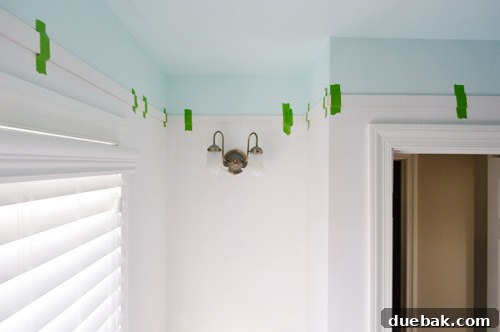
That perfect shade turned out to be “Spring Mint” (in an eggshell finish), a new contender we decided to invest in after realizing our existing options weren’t quite hitting the mark. Since nothing we had on hand truly worked, we opted to purchase a quart of this fresh color. Spring Mint stepped away from the blue-gray category and moved decisively into the “pure blue” arena. It offered the clear, unmistakable blue we desired, similar to Spirit In The Sky, but with a slightly lighter, more subdued intensity that we felt would be just right for a larger application. After applying two coats, we achieved the exact blue border and ceiling we had envisioned. As we carefully peeled off the painter’s tape, a fleeting thought crossed both our minds: should we simply leave it as is? For many DIYers, especially those with limited time, budget, or tools, leaving the clean paint line as is would be a perfectly viable and beautiful option. However, for us, and perhaps fueled by our slight obsession with our trusty nail gun, we were eager to take our project a step further by adding decorative molding. Lattice strips are wonderfully inexpensive and add a layer of custom detail that truly elevates the space.
Adding Architectural Interest: Installing Lattice Trim
Speaking of lattice, we repurposed the very same pre-primed strips that we had previously used for the board and batten project in our last hallway. These particular strips are an absolute dream to work with: they’re incredibly thin, lightweight, and incredibly budget-friendly, costing just 77¢ per foot from Home Depot. Sherry, with her keen eye for detail, took charge of measuring and cutting each strip to size using our miter saw. As she handed them to me, we temporarily taped them into place along the freshly painted blue border. This provisional step allowed us to step back, assess the look as we progressed, and keep track of which walls still needed trim. Despite the myriad of nooks and crannies that characterize this bathroom, we were pleasantly surprised by how quickly this stage progressed, completing all the cutting and temporary taping in under an hour. It was a true test of our quadriceps, however, involving about two dozen trips up and down the stairs between the two of us! What a workout for our legs!
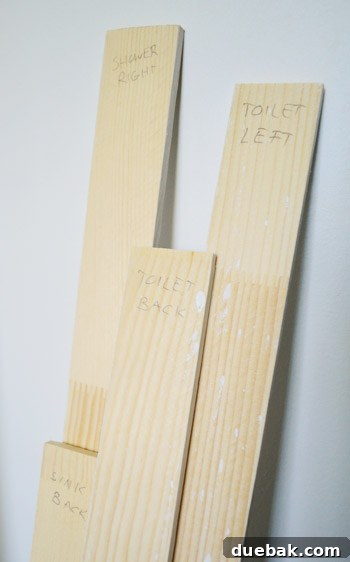
Before permanently attaching them, we carefully removed each strip and labeled its back. This simple organizational step was crucial, especially given that many of the wall sections were similar in size. We knew this foresight would save us a significant amount of frustration later on, preventing us from having to solve a jig-saw puzzle by trial and error when it was time for permanent installation. This attention to detail ensures a smoother, more efficient DIY process.
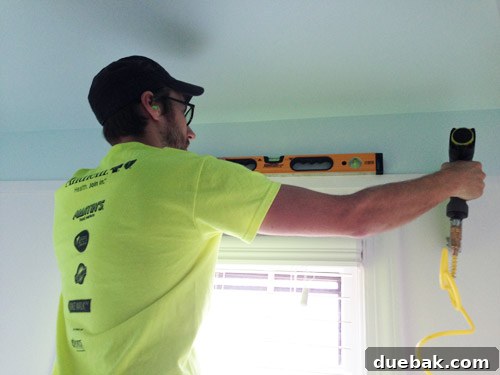
In addition to applying a fresh coat of crisp white paint (specifically Simply White by Benjamin Moore) to the pre-primed lattice slats, we also painted the main walls of the bathroom in the exact same shade. This monochromatic approach for the walls and trim creates a cohesive and clean backdrop, allowing the blue ceiling to truly pop. Once all the paint had thoroughly dried, the moment arrived to finally attach the trim. This particular task is undeniably made much easier with two sets of hands. Sherry was my invaluable assistant, expertly holding various tools and components – from the nail gun and the opposite end of the lattice strip to the level – which significantly streamlined the installation process. We began by securing one end of our first trim strip with the nail gun, loaded with 1.25-inch brad nails. A quick but important note: in such a confined space, the sound of the nail gun can be incredibly loud. Earplugs are highly recommended for safety and comfort!
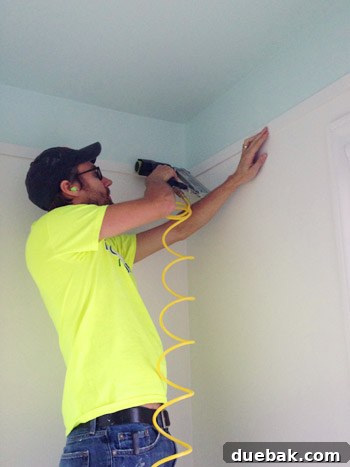
After nailing the first end, I meticulously held my level across the strip to ensure it was perfectly straight before passing the nail gun to Sherry, who then secured the other end. The photo you see here is a bit rigged, as Sherry had to briefly step down to snap the picture. In reality, the process was much smoother: she would simply hold her end of the lattice strip firmly in place while I checked the level, gave the “good!” signal, and she would fire a nail into her end. This coordinated effort allowed us to efficiently work our way around the entire room, ensuring each piece of trim seamlessly aligned with the one preceding it, creating a continuous and polished look throughout the bathroom.
The Finishing Touches: Caulking and Final Paint Application
Once all the lattice trim was securely hung, the final, crucial step in achieving a truly professional finish was to address any imperfections. I went around the entire bottom edge of the trim with a fine bead of caulk. This was essential because, despite our best efforts, our walls weren’t perfectly flat, and the caulk helped to bridge any tiny gaps, creating a seamless and integrated appearance between the trim and the wall. Additionally, I used caulk to neatly fill the small nail holes created by the brad nails at each end of the lattice strips as we hung them. After the caulk had thoroughly dried and cured, Sherry meticulously applied one more coat of paint over the trim. This final touch, focusing only on the front and the underside of the bottom edge, ensured that the trim looked as crisp and pristine as the freshly painted walls, creating a truly unified and polished aesthetic for our newly renovated bathroom.
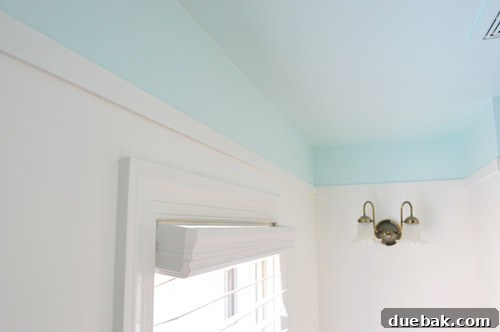
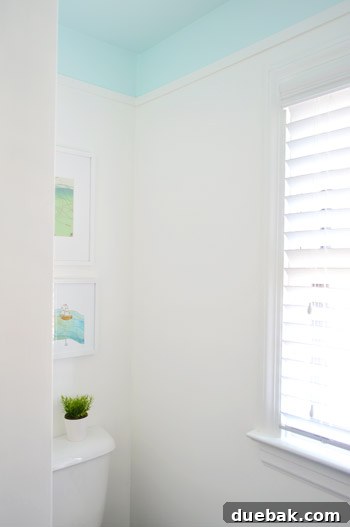
While there are still a few minor, inexpensive tweaks we envision for “Phase 1” of this bathroom’s evolution (for instance, that light fixture above needs some love!), we are incredibly pleased with the significant dose of personality and charm we’ve managed to infuse back into this space. It’s truly rewarding to see it reclaim its character, especially after the arduous task of ridding it of its former, wild wallpapered persona. This transformation is a testament to the power of thoughtful design and a little DIY elbow grease.
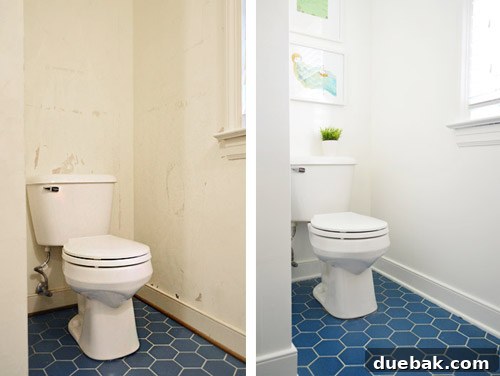
We certainly don’t want to overlook the immense power of the fresh white paint in this entire transformation. It plays a crucial, unsung role in amplifying the crispness and brightness of the space. To truly appreciate the dramatic difference, here’s a side-by-side comparison: on one side, you have the “gas station bathroom” look we were left with immediately after wallpaper removal, a rather stark and unfinished canvas. On the other, you see the post-paint after, revealing the incredible brightness and clean aesthetic we now have. It’s truly astonishing what a few coats of paint, especially a clean white, can achieve in redefining a room’s entire atmosphere and perception.
Personalizing with Art: A Touch of Character
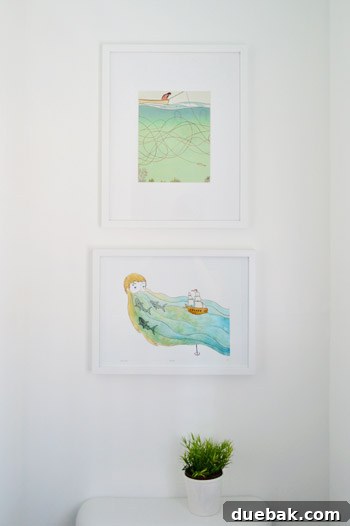
To further personalize the space and add another layer of character, we carefully selected some art pieces to hang on the wall behind the toilet. These prints aren’t new purchases; they are cherished pieces we’ve brought with us from our previous home, showcasing how existing decor can be beautifully integrated into a new design. The top print is actually a page torn from a Real Simple magazine, which previously adorned our guest bathroom in our old house. Below it hangs a beautiful print by Sally from sadlyharmless.com, a thoughtful gift we received during one of our book tour stops last year, which used to add charm to our sunroom. Reusing these beloved pieces not only keeps our budget in check but also imbues the room with a sense of history and personal style.
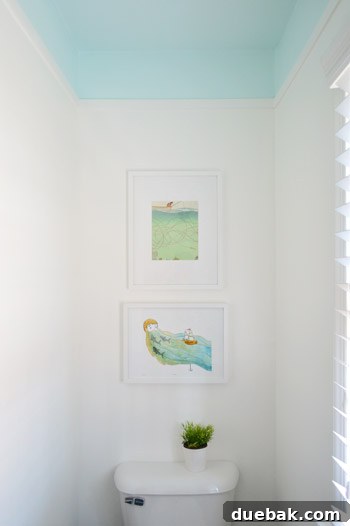
Initially, when we held these two prints up together, we had a slight concern that they might be too similar in style and color to be placed so closely. However, we decided to work with what we had available for the moment, and we’re so glad we did. Upon closer inspection, the subtle gradient of blues within the artwork – with the top print being a slightly lighter shade – actually serves a wonderful purpose. It beautifully connects the lighter blue of the ceiling to the deeper blue of the floor in a subtle yet effective way, creating a visual flow that ties the entire room’s color scheme together. This unexpected harmony makes the art feel perfectly integrated, adding depth and thoughtfulness to the space without any extra cost.
Budget-Friendly Bathroom Renovation: The Final Cost Breakdown
At the end of the day, one of the most remarkable aspects of our bathroom update is its incredible affordability. Our entire transformation so far has come in at just over 50 bucks! This truly demonstrates that a significant impact can be made without breaking the bank. Here’s a transparent breakdown of our costs, highlighting how we managed to keep this project so budget-friendly:
- Removing the cumbersome glass shower doors (you can find more details on that here): $0
- The arduous but free process of peeling off the old wallpaper (further insights available here): $0
- All the essential lattice trim from Home Depot, a truly cost-effective choice: $25
- A single quart of premium blue paint for the ceiling in “Spring Mint,” proving a little goes a long way: $30
- Shower curtain, white paint for the walls and trim, and all the decorative art: $0 (these were items we already owned and repurposed, a key strategy for budget DIY)
- TOTAL PROJECT COST: $55*
*A quick note for those looking to replicate this project: If you don’t happen to have a shower curtain, wall and trim paint, and art readily available, you might anticipate spending an additional $100 or so to acquire these items. Even with these extra purchases, the total cost for a full bathroom refresh remains incredibly reasonable, proving that impactful home improvement doesn’t always require a hefty investment.
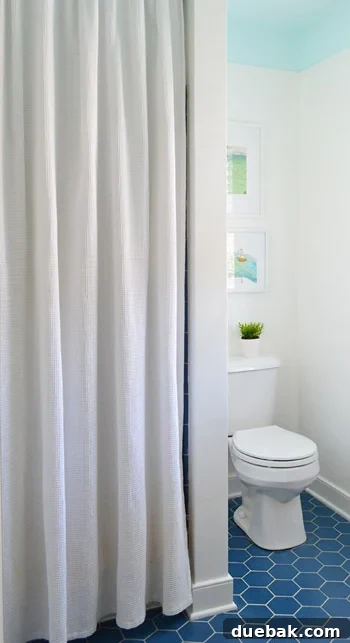
We’re already brainstorming a few more inexpensive updates for this room, but even in its current state, it’s a vastly more pleasant and inviting space to enter than the dark, blue-wallpapered room we started with. This transformation truly underscores the power of paint and thoughtful design, even on a shoestring budget. What exciting projects did you tackle this past weekend? Are there any bathroom or trim renovations currently in the works at your place? We’d love to hear about your DIY adventures!
Psst- Last week brought a delightful surprise snow day, and Clara absolutely reveled in the winter wonderland! If you missed it, check out her adorable snow-day antics.