
Transforming a cluttered, underutilized basement into a highly functional and aesthetically pleasing workspace is a dream for many homeowners. Often perceived as mere storage areas, basements hold immense potential to become organized hubs for DIY projects, home maintenance, and creative pursuits. If you’re looking to bring order, efficiency, and even a touch of “sexy” back to your basement, you’ve come to the right place. This guide will walk you through a comprehensive basement organization overhaul, focusing on smart tool storage with pegboards and efficient hardware management using simple, cost-effective methods.
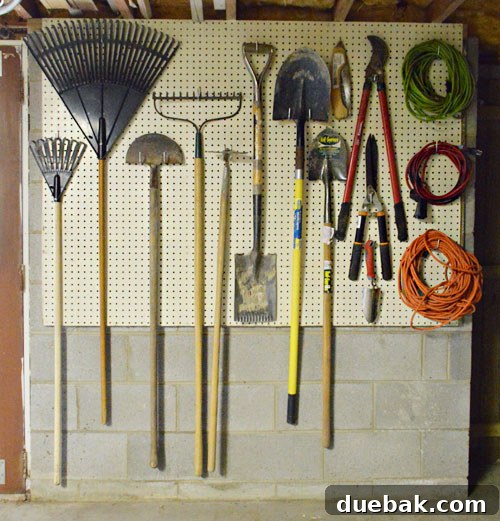
Our journey to a more organized home began with a major decluttering effort, including a successful yard sale, a much-needed Bagster pickup, and strategic organization of our yard tools. These initial steps created a blank slate, paving the way for the ultimate basement transformation. The next crucial phase involved tackling our extensive collection of regular tools, which, for years, had been surprisingly (and somewhat comically) stored in our kitchen drawers.
The decision to relocate the majority of our tools to a dedicated basement workshop marked a significant shift in our approach to home organization. While we still keep duplicates of essential, frequently used items—like hammers, various nails, and caulk—easily accessible in our sunroom, consolidating the rest of our arsenal in a single, well-organized location in the basement has dramatically improved efficiency. The slight inconvenience of walking downstairs to retrieve a tool is far outweighed by the benefits of a neatly arranged, comprehensive workshop. This systematic approach ensures that every tool has its designated spot, making projects smoother and less frustrating.
The Initial Sorting Process: Confronting the Chaos
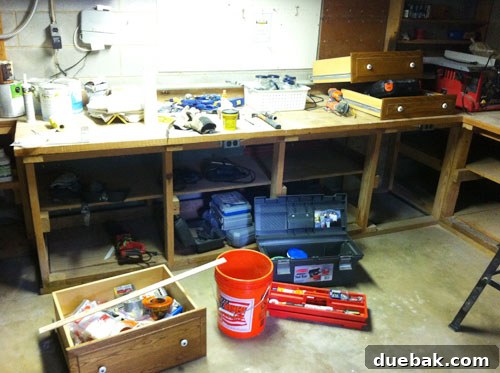
Our basement organization project truly kicked off by bringing down every single tool from various corners of the house, including overflowing drawers and a sprawling toolbox. The goal was to consolidate everything into the basement, ready for a thorough sorting. This initial stage, though visually chaotic as depicted in early photos, was essential for understanding the sheer volume and variety of items we possessed. Forgive the quality of some of the early pictures; they were taken with a phone while our main camera was occupied with another project, but they perfectly capture the “before” state.
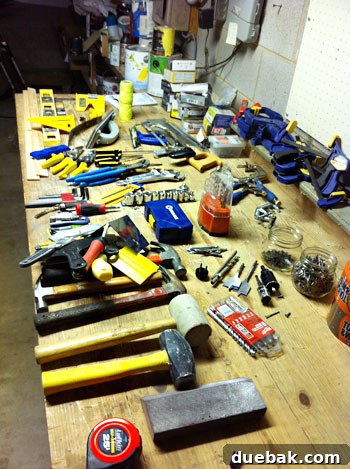
The first critical step was to spread everything out on a large work table. This visual inventory allowed us to see exactly what we had and begin the process of categorization. From screwdrivers and wrenches to less common specialty tools, laying them all out provided a clear overview and facilitated grouping similar items together. This stage is vital for any organization project, as it allows you to truly assess your inventory before deciding on storage solutions.
A Sentimental Journey Through Tools and Treasures
Sorting through this vast collection wasn’t just about organizing; it became a fascinating, sometimes sentimental, walk down memory lane. It was amusing to rediscover items linked to past projects, like the distinctive old kitchen knobs that once adorned our cabinets and components from the quirky clothespin chandelier we crafted years ago. Each item held a story, a small fragment of our home’s history and our DIY journey.
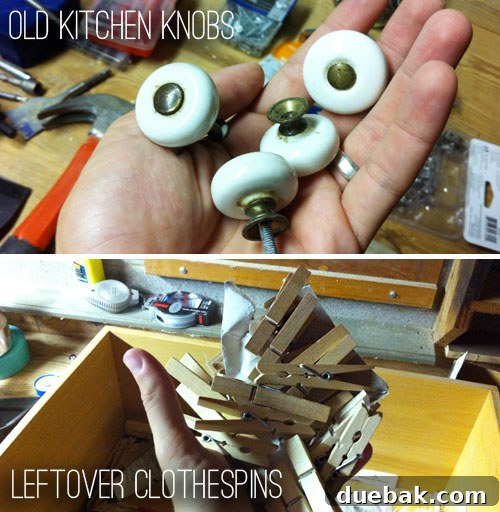
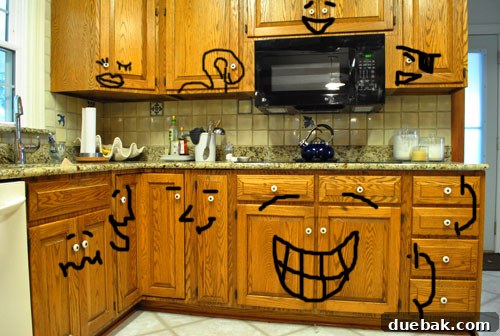
Those eyeball-ish kitchen knobs, in particular, sparked a chuckle and reminded us of our evolving design tastes!
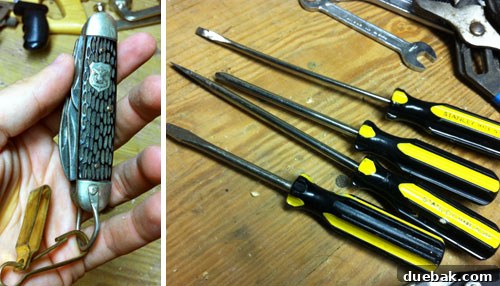
Beyond project remnants, I found tools with deeply personal connections. There was the Boy Scout pocket knife, a cherished heirloom from my Papa, a reminder of family traditions and my brief stint in Cub Scouts (a #blacksheep moment for not reaching Eagle Scout!). I also unearthed the first set of screwdrivers my dad gave me in high school, tools I probably accepted with a typical teenage eye-roll, wondering, “When will I ever use these stupid things?” Little did I know how invaluable they would become.
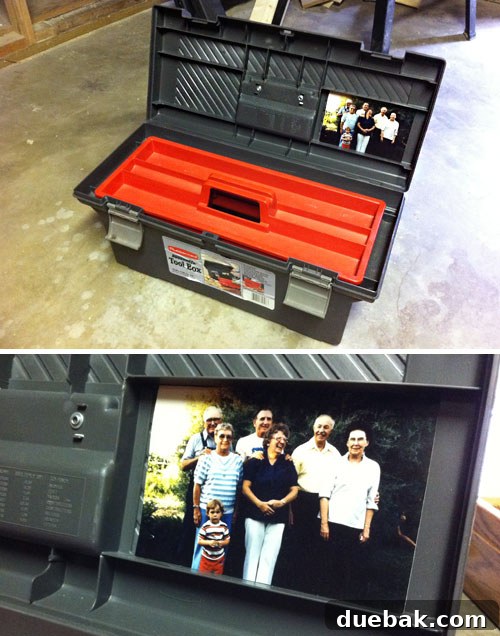
My dad’s gift also included the toolbox below, a faithful companion through college and even my time in New York. Though it often held only a handful of tools, its true value lay within. Taped inside was a precious family photograph—my grandfather Emanuel and his second wife Helen. My dad’s first mother, Clara (the namesake for our daughter), passed away when he was young. This toolbox wasn’t just for tools; it was a mobile repository of family history, a quiet reminder of those who came before.
Embracing the Power of Pegboards: The Ultimate Tool Organizer
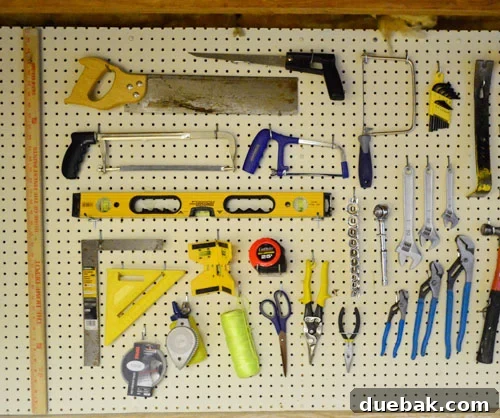
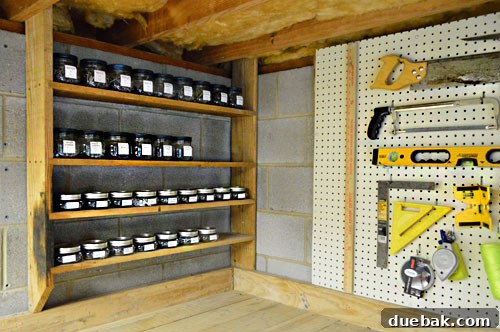
With the sentimental journey complete and all tools sorted, it was time to move on to the star of our workshop organization: the pegboard. After a quick trip to Home Depot for a versatile set of pegboard hooks, the transformation began. In just a couple of hours, our tools, once scattered and chaotic, were neatly hung, orderly, and, most importantly, ready for action. Pegboards are incredibly versatile, allowing for endless configurations and easy access to every tool. Their ability to utilize vertical space efficiently makes them an indispensable asset in any workshop or garage.
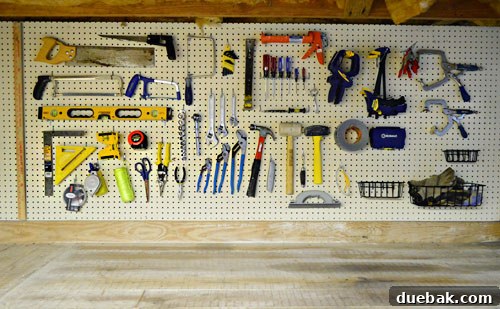
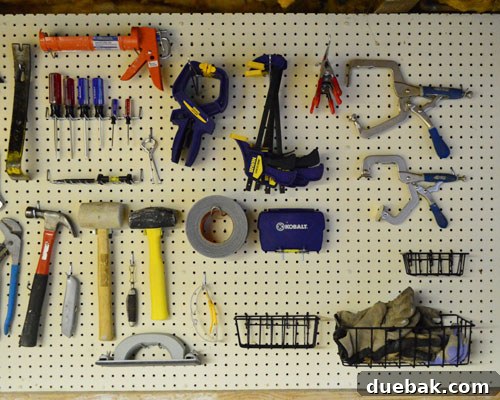
For those who, like me, appreciate the beauty of a well-organized workspace, here are a couple of closer shots of our newly arranged pegboards. The visual clarity and easy accessibility of each tool are incredibly satisfying. No more rummaging through cluttered drawers or forgotten corners—everything is right where it should be, making project setup and cleanup a breeze.
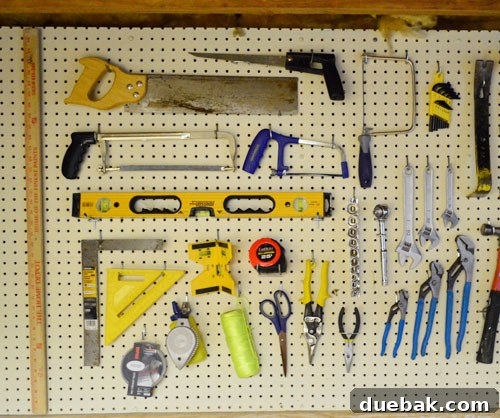
It’s important to note that this pegboard display doesn’t represent our entire tool collection. We strategically decided to keep certain items upstairs in the sunroom, where they are more frequently used for in-house projects. This includes paint and craft supplies like our glue gun and staple gun, along with essentials such as picture nails, wall anchors, a hammer, and caulk. For project-specific tools, especially those related to plumbing or electrical work, they now reside in the once-underused toolbox, ensuring they are contained and easily locatable when a specialized task arises. This dual-location strategy maximizes efficiency for both everyday household tasks and dedicated workshop endeavors.
Taming the Tiny Terrors: Hardware Organization with Mason Jars
While the pegboards were a triumph, another formidable challenge loomed: a chaotic drawer overflowing with screws, nails, washers, and other miscellaneous hardware. This jumbled mess was a constant source of frustration, making it nearly impossible to find the right fastener when needed. It cried out for a systematic solution.
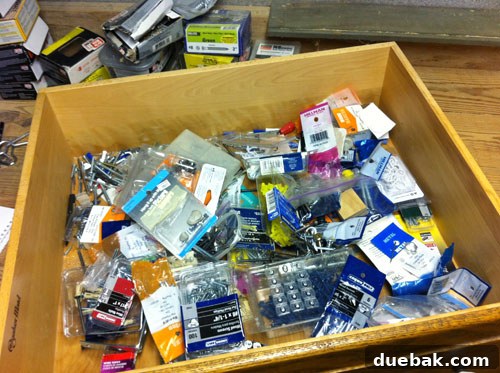
The process for organizing hardware mirrored that of the larger tools: first, spread everything out on the table to assess and group similar items. This hands-on approach allows for a thorough inventory and helps prevent duplicate purchases. Once categorized, these small yet vital components found their new homes in clear mason jars. Mason jars are an ideal solution for hardware storage due to their transparency, durability, and classic aesthetic.
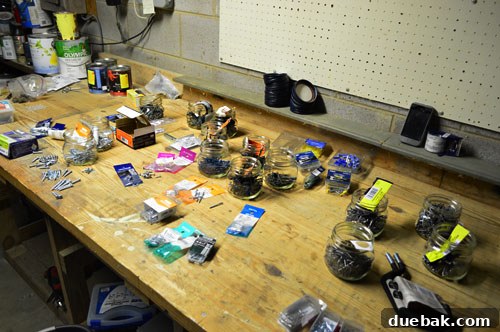
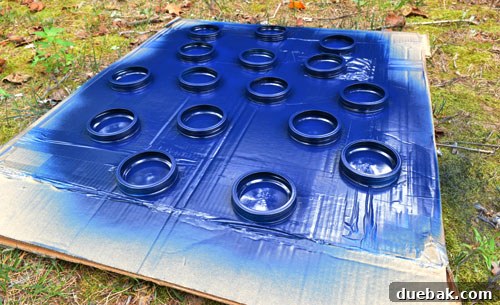
Conveniently, we had a collection of pint-sized mason jars left over from a “failed” project Sherry attempted—repackaging our vacation time capsules into smaller containers. She quickly discovered that the shorter jars obscured the contents too much, rendering them unsuitable for her original purpose. Luckily for me, these jars, with their chic midnight blue spray-painted lids, were perfectly suited for my hardware. This serendipitous hand-me-down was a win-win: Sherry decluttered, and I gained stylish storage!
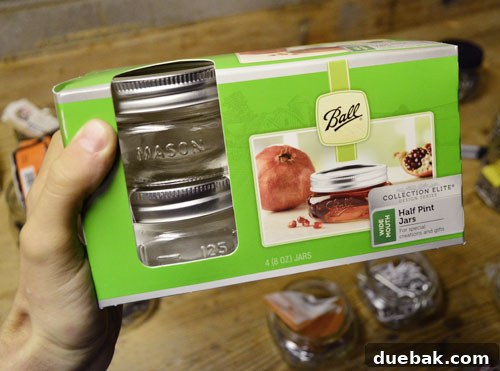
However, Sherry’s pint-sized jars weren’t quite enough to contain my sprawling assortment of fasteners. I needed even smaller containers for the tiniest screws and most specific hardware. A trip to JoAnn, armed with a 50% off coupon, yielded a batch of half-pint jars, completing my hardware storage collection. Investing in varied sizes ensures that every piece of hardware, no matter how small, has a suitable and visible home.
Labeling and Shelving: The Finishing Touches for Hardware
Once everything was sorted and “canned,” the next crucial step was labeling. For a temporary solution, I initially kept the original hardware packaging labels sticking out of the jars, ensuring I could remember “what was what.” The plan was always to create more permanent, legible labels. This interim step highlights the importance of immediate, even if temporary, identification during an organization project.
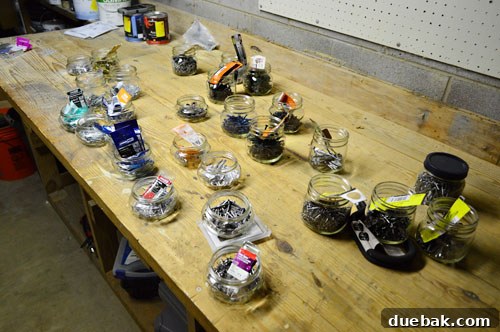
With all the hardware neatly contained and identified, they were placed on an existing shelf that the previous owner had thoughtfully built above the workbench. While the shelf spacing is a bit generous for these tiny jars, it’s not worth the effort of rebuilding. The primary goal was effective storage, and this shelf perfectly served that purpose. The slightly charred edge of the shelf is a charming imperfection for now, soon to be remedied with a fresh coat of stain, unifying the workshop’s aesthetic.
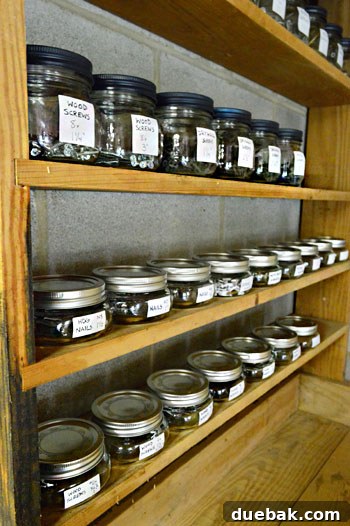
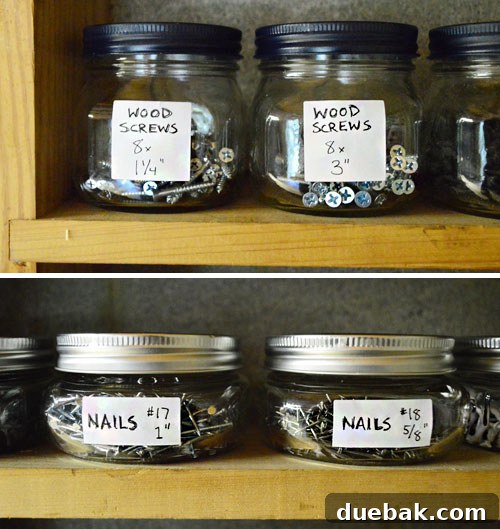
For the permanent labels, I opted for simplicity and practicality. A pack of 1.5 x 1.5-inch square Avery labels from Staples, combined with hand-written descriptions, proved to be the most sustainable solution. While printing fancier labels was considered, I quickly realized that a system requiring digital updates and printing would likely not be maintained over time. Hand-written labels, while not perfectly uniform, are quick, easy to update, and perfectly functional for a busy workshop.
Future Plans and Maintaining the Workshop Aesthetic
This organization project is just the beginning of our basement workshop’s transformation. Our next steps involve elevating the aesthetic by painting the pegboards and staining the existing shelf, along with other built-in elements like the workbench. These cosmetic improvements will create a more cohesive and “workshop-swanky” feel, moving away from the neglected basement vibe. However, realism guides our decisions; we prioritize what’s worth our time and what’s easiest to maintain long-term.
For example, we’ve decided against outlining tools directly on the pegboard. While visually appealing, this system often leads to frustration when tools are added, removed, or changed, requiring tedious repainting. Sherry suggested chalk outlines for their easy adjustability, but the concern of chalk dust contaminating our tools quickly led us to dismiss that idea. Practicality and longevity are key in a working space.
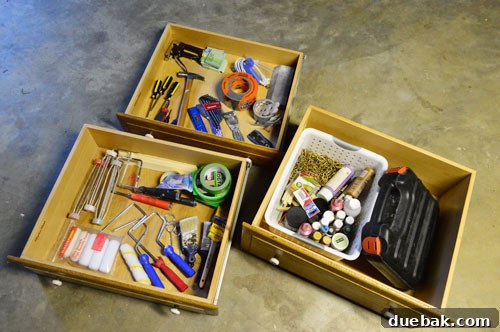
The immediate gratification of seeing the drawers, once overflowing with tools and hardware, now return upstairs to the sunroom clutter-free was immense. This reinforces our strategy of segregating tools: frequently used household essentials remain accessible upstairs, while the bulk of the workshop-specific tools are consolidated downstairs. This thoughtful distribution minimizes unnecessary trips and maximizes efficiency for all types of projects.
Looking Ahead: The Next Frontier of Organization
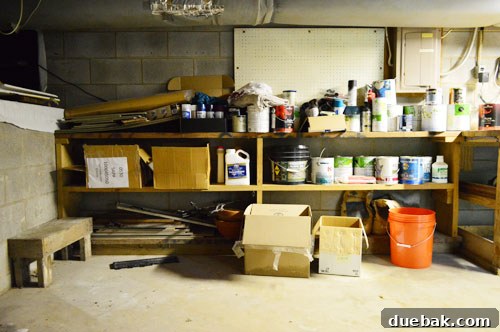
While the newly organized tools and hardware have brought a tremendous sense of accomplishment and renewed confidence in our basement’s potential, the journey isn’t over. A formidable “wall o’ paint, spray paint, and other buckets” still awaits its turn. But that, as they say, is a project for another day. Every major organization effort is a series of smaller, manageable steps, and tackling one section at a time prevents overwhelm and ensures thoroughness.
Are you also captivated by the transformative power of pegboards? Have you embarked on a similar journey to paint and stain elements in your basement for a more finished, functional look? A common dilemma for many homeowners is deciding which tools belong in the garage, basement, or attic, and which should be kept conveniently inside. We’ve found that simply taking a few minutes to consider usage frequency—what’s used daily upstairs versus what’s reserved for the dedicated workshop—makes these decisions remarkably straightforward. Share your tips and triumphs in creating your own organized oasis!