Embarking on a home renovation project is an exciting journey, often filled with anticipation for the transformed spaces that lie ahead. However, it’s also a process synonymous with disruption, dust, and a certain level of controlled chaos. As we geared up for a significant phase of our own renovation – the arrival of the specialized ‘wall guys’ – we knew that proactive measures were not just a suggestion, but an absolute necessity. Their task, involving extensive wall cutting, demolition, and the installation of new drywall, promised to generate an astronomical amount of dust and debris. This isn’t just a minor inconvenience; it’s a pervasive threat that can infiltrate every corner of your home, settling on surfaces, jamming electronics, and making daily life incredibly uncomfortable. Our mission became clear: to create a fortress of protection for our belongings and carve out a habitable sanctuary amidst the impending storm.
The foresight to prepare for this onslaught of dust proved to be one of the most valuable decisions of our entire renovation journey. Without adequate precautions, fine particles of drywall, brick, wood, and concrete dust have an uncanny ability to travel far and wide. They don’t just land on exposed surfaces; they penetrate fabrics, clog air filters, and can even pose health risks when inhaled over extended periods. Our strategy was two-fold: meticulously cover everything we valued and construct a personal ‘living bubble’ – a temporary, dust-free haven where we could escape the grime and maintain some semblance of normal life for the duration of the work. This wasn’t about being overly cautious; it was about preserving our sanity, protecting our investments, and minimizing the monumental cleanup effort that would inevitably follow.
The process began with a thorough assessment of our home. Every piece of furniture, every electronic device, every treasured decorative item that couldn’t be moved out of the renovation zone needed to be encased. We started by gathering our essential supplies: rolls of inexpensive yet durable plastic sheeting, readily available at any home improvement store like Lowe’s, and an ample supply of painter’s tape. The choice of painter’s tape was deliberate; unlike stronger adhesive tapes, it provides a firm seal without leaving sticky residue or peeling off paint when removed. We opted for various thicknesses of plastic – thinner drop cloths for quick covering and thicker, more robust sheeting for creating our main protective barriers and the ‘living bubble’ itself. The key was to ensure complete coverage, with no gaps or exposed areas where dust could potentially settle. Sofas were draped, bookshelves were wrapped, and delicate electronics like computers and televisions were sealed in their own protective cocoons. Each seam, each edge where plastic met plastic or plastic met a wall, was meticulously taped down. This attention to detail is paramount; a small oversight can render the entire protective effort less effective.
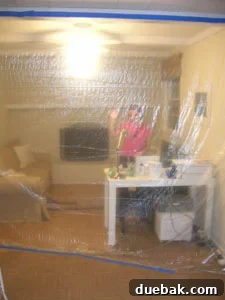
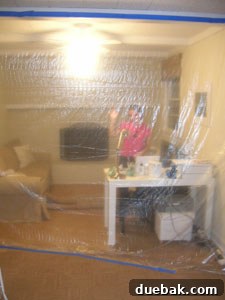
Once our belongings were safely tucked away, the next critical step was constructing our “living bubble.” This was more than just covering furniture; it was about creating an isolated, relatively dust-free zone where we could continue to function during the 3 to 4 days of intense wall work. We identified a room furthest from the primary work area as our designated sanctuary. This space was then sealed off from the rest of the house with a combination of plastic sheeting and painter’s tape, transforming it into a self-contained environment. We treated the doorway not as an entry point, but as a wall to be covered, creating an airtight seal. If needed, a makeshift “door” could be created by cutting a slit in the plastic and taping it back down with fresh strips of tape whenever we entered or exited, though minimizing transitions was always the goal to maintain the integrity of the seal.
Within this carefully constructed bubble, we brought in the essentials that would allow us to work, relax, and generally survive the renovation. Our computer setup, a small television, comfortable seating, and a mini-fridge stocked with snacks and drinks were all arranged to create a functional and surprisingly cozy temporary living space. It was a conscious effort to inject a sense of normalcy and comfort into an otherwise chaotic period. The psychological benefit of having this refuge cannot be overstated. After spending hours navigating dusty work zones, the ability to retreat to a clean, quiet space for a meal, to watch a movie, or simply to decompress was invaluable. It was our small island of calm amidst the storm of construction, proving that even in the midst of major home improvements, a little planning can go a long way in preserving peace of mind and daily routines.
The “wall guys” and their specialized equipment were certainly efficient, but their work generated precisely the kind of fine, pervasive dust we had anticipated. The sounds of cutting, grinding, and hammering were constant, but knowing that our cherished possessions were protected and that we had a clean space to retreat to made the disruption significantly more manageable. The initial investment of time and a relatively small amount of money in plastic sheeting and painter’s tape paid dividends many times over. Not only did it save us countless hours of post-renovation cleaning, but it also safeguarded our electronics and furniture from potential damage that fine construction dust can inflict, such as scratching surfaces or impeding the function of sensitive components. This budget-friendly approach to dust control is a cornerstone of smart home renovation planning, demonstrating that effective protection doesn’t always require expensive, high-tech solutions.
Beyond the immediate benefits of dust control, this meticulous preparation significantly eased the overall renovation experience. Imagine the alternative: waking up each morning to a fine layer of grit on every surface, the constant worry about inhaling airborne particles, and the sheer frustration of having to clean personal items before use. By creating our ‘living bubble,’ we effectively mitigated these stressors. It allowed us to focus on other aspects of the renovation, communicate more effectively with the contractors, and simply live more comfortably through a challenging period. Furthermore, the limited footprint of our clean zone meant that when the wall work was finally complete, the initial cleanup could focus primarily on the main work areas, with our protected sanctuary requiring only a light wipe-down, rather than a full deep clean.
For anyone embarking on a similar home improvement journey, our experience underscores several key tips. Firstly, always overestimate the amount of dust. It’s truly incredible how far it travels. Secondly, invest in quality painter’s tape; cheaper alternatives may peel prematurely or leave residue. Thirdly, don’t rush the sealing process – every gap, no matter how small, is a potential entry point for dust. Finally, consider adding an air purifier with a HEPA filter inside your living bubble. While the plastic sheeting provides a physical barrier, a good air purifier can catch any microscopic particles that might still find their way in, ensuring the air you breathe in your sanctuary remains as clean as possible. This extra layer of defense contributes significantly to both comfort and health during what can be a very dusty process.
As the final cuts were made and the new drywall began to take shape, the temporary inconvenience of living within our plastic confines felt entirely justified. The chaos outside our bubble was real, a testament to the transformative work being done. But inside, we had preserved a pocket of order and cleanliness. When the time came to finally dismantle our protective barriers, the relief was immense, and the minimal cleanup required in our living zone was a sweet reward for our preparatory efforts. This simple, effective, and budget-friendly strategy for dust protection and temporary living proved to be a cornerstone of our renovation success, ensuring that the journey, though messy, remained manageable and ultimately led to a cleaner, happier outcome.
Here’s Sherry, our chief architect of comfort and dust control, proudly showing off our meticulously crafted temporary safety zone, a beacon of order amidst the construction whirlwind.