
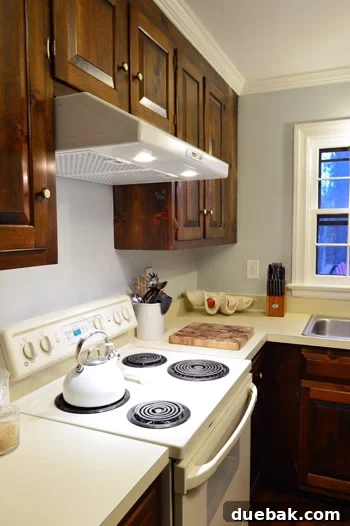
The culinary heart of our home, the kitchen, has recently undergone a significant transformation, proving that sometimes the most impactful changes come from rethinking existing layouts and embracing smart, budget-friendly solutions. For a couple of weeks, our kitchen presented a bit of a conundrum: the space above our range, previously occupied by an over-the-range microwave, felt noticeably empty. This wasn’t a problem, but rather an intentional step towards a more functional and aesthetically pleasing cooking environment.
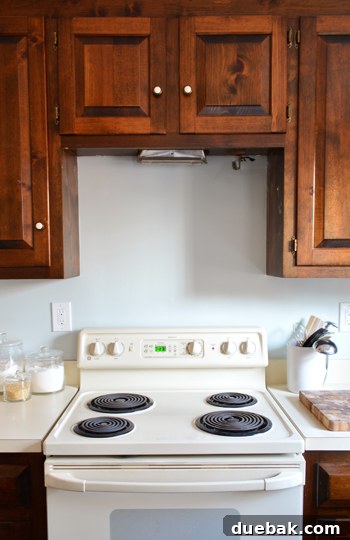
You might recall our decision to remove the bulky over-the-range microwave as part of our Phase 1 kitchen makeover. This removal was a deliberate choice made before painting the kitchen, driven by several key factors. Firstly, the microwave was a dominant fixture, occupying a prime, eye-level spot in the room. Its sheer size often made the cooking area feel cramped and visually heavy. More importantly, when it comes to performance, we consistently prefer dedicated range hoods over microwave-vent combinations. Range hoods simply offer superior ventilation, effectively capturing smoke, steam, and grease, which is crucial for maintaining indoor air quality and keeping the kitchen cleaner.
Our solution for microwave functionality was to replace it with a sleek, stainless steel countertop model. While currently on the counter, the plan is to eventually “install” it into our pantry during Phase 2 of our renovation, requiring only the addition of an electrical outlet. This strategic move frees up valuable over-the-stove real estate and allows for a dedicated ventilation system – an essential component we were still missing.
Choosing the Right (Temporary) Range Hood: A Smart Budget Approach
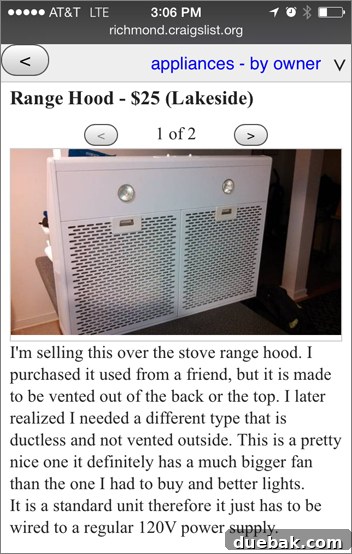
We knew that any range hood we purchased at this stage would serve as a temporary solution. Our long-term vision for Phase 2 includes a more exposed, perhaps custom, hood design that will be a permanent fixture in our dream kitchen. Therefore, spending a substantial amount of money on an interim piece wasn’t practical. This led us to explore more economical avenues, specifically local online marketplaces like Craigslist, where we had observed numerous options appear over the past few months, often priced under $30. This price range was perfect for our needs, as we reasoned we could likely resell it for a similar amount once Phase 2 commences, provided we kept it in good condition.
When a $25 option surfaced that ticked all our boxes, we were ready to act. The appeal of this particular hood wasn’t just its price; it boasted a crisp white color that would blend seamlessly with our existing kitchen aesthetic, was the precise 30-inch width required for our stove, and, crucially, featured the correct top-ventilation setup we needed to align with our existing ductwork.
However, the prospect of installing another Craigslist find brought back vivid memories of our previous hood installation experience. That project involved a considerable amount of improvisation and effort, largely because the hood lacked mounting hardware and was designed for a different installation type. We had to engineer a custom solution, which, while ultimately successful, was far from straightforward.
DIY Range Hood Installation: Easier Than Expected
To our immense relief and excitement, this installation proved to be a significantly simpler affair! The stars, or rather, the practical elements of ductwork and electrical wiring, aligned perfectly this time. This newfound ease is something we’re eager to share, especially with anyone who might feel intimidated by the idea of undertaking their own range hood swap. The hood we acquired offered versatile venting options – it could be vented either out the top or the back. Fortuitously, the existing rectangular opening on the top of the hood lined up flawlessly with the rectangular vent already present within our cabinet. This immediate compatibility eliminated a major potential headache.
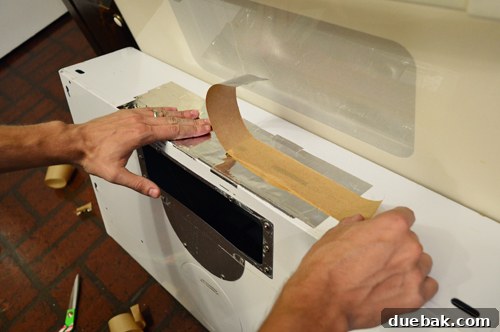
Once the primary top vent was confirmed, my task was to simply seal the alternative back-venting opening. For this, I used genuine silver duct tape, specifically designed for ductwork applications (it’s important to note the distinction from general-purpose “Duck Brand” tape, which isn’t suitable for sealing HVAC systems). Proper sealing ensures that all exhaust air is directed outside, maximizing the hood’s efficiency and preventing unwanted air recirculation within the cabinet space.
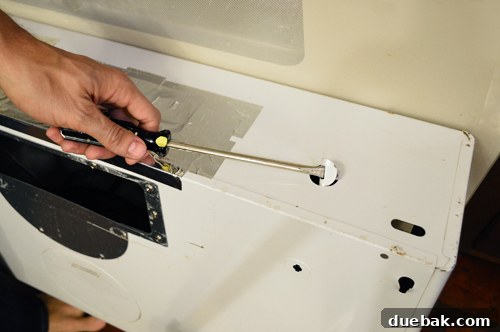
The electrical aspect was equally cooperative. Pre-existing wiring was already in place within our wall, perfectly positioned to snake through and connect directly into the hood itself. This meant we didn’t need to involve an electrician, saving both time and money. The only minor step required was to pop out a designated metal tab on the hood’s electrical box using a screwdriver, creating an access point for the wires to be pulled in and securely connected. Always remember to turn off the power at the breaker before working with electrical components to ensure safety.
Overcoming Minor Hurdles: The Cabinet Lip and a Clever Installation Hack
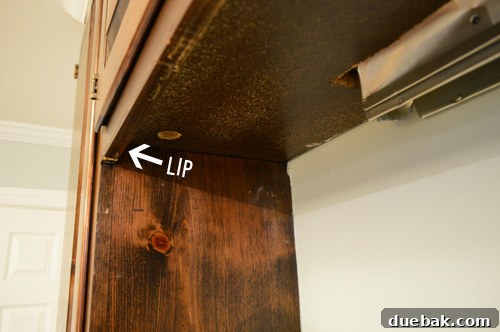
While much of the installation went smoothly, a slight complication arose due to a small lip under the cabinet. This lip prevented the hood from being screwed directly and flush into the bottom of the cabinet, potentially leaving an unsightly gap or an unstable mount.
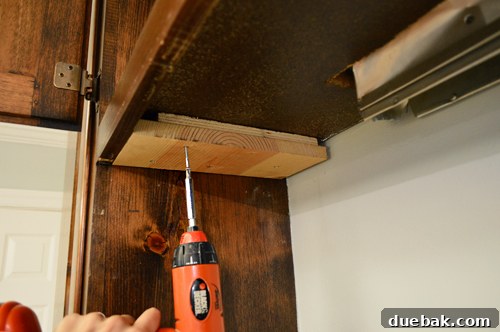
Our solution was a simple yet effective “scrap wood sandwich.” By cutting a couple of small wood blocks from leftover material, I was able to screw these blocks into either side of the cabinet, effectively creating a flush mounting surface. The hood could then be securely attached to these blocks, ensuring a firm installation that looked perfectly flush from the front, completely masking the workaround.
Perhaps the most dreaded part of any under-cabinet appliance installation is the act of holding the heavy unit in place while simultaneously trying to screw it in and connect wiring. I had visions of a comical, acrobatic struggle, with one of us hoisting the hood and the other fumbling with tools – a scenario likely involving a lot of sweat and a fair share of frustration. However, a brilliant discovery saved us from this potential disaster: this incredibly helpful how-to video revealed an ingenious trick. While seemingly obvious in retrospect, for a DIY enthusiast, it felt like discovering gold.
The trick involves temporarily clamping a thin 1×2-inch scrap board across the cabinet opening. This board acts as a temporary support, bearing the weight of the hood while you work, freeing up your hands for crucial tasks like screwing and wiring. It required temporarily removing one cabinet door, but the ease and safety it provided were immeasurable. This simple brace transformed a potentially awkward and strenuous task into a manageable solo effort.
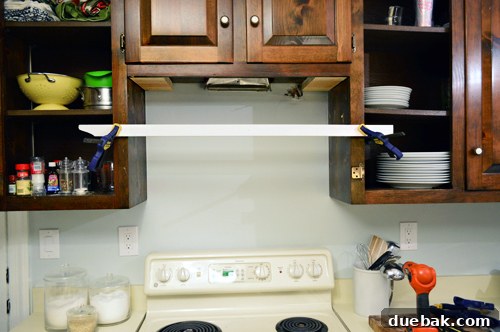
The video also suggested temporarily screwing a brace into the back wall for additional support, but in our case, the hood seemed to rest securely enough without it. This saved us from making unnecessary screw holes in the wall, another small win in the DIY process.
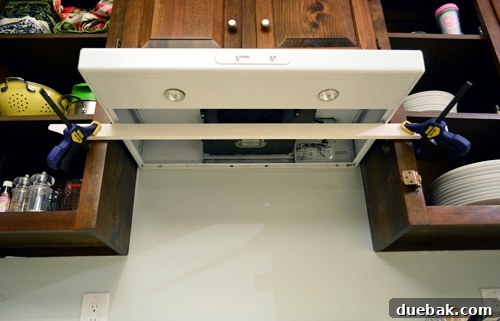
Thanks to this clever method, not only did Sherry and I avoid my imagined “sweaty-tangled-curse-fest,” but I also didn’t have to pull her away from her own project: working on Clara’s room, which we’ve affectionately dubbed “The Wall O’ Fun” – a creative endeavor she was excited to share with everyone soon.
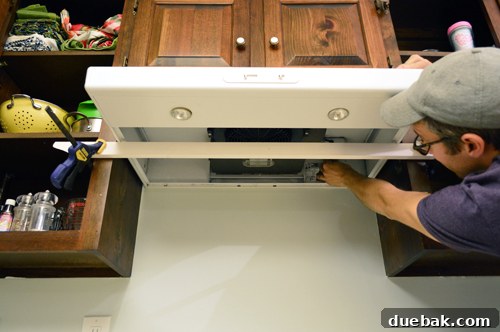
With the hood resting securely on its temporary supports, I could precisely adjust the clamps until the top of the hood sat perfectly flush against the newly installed wood blocks. A quick check within the upper cabinet confirmed that the existing duct settled nicely into the hood’s exhaust hole. To ensure an airtight seal and optimal performance, I then reinforced this connection with more specialized duct tape. Accessing the mounting points was simple: by removing the two filter screens from the underside of the hood, I could easily reach the keyhole openings. Through these, I inserted screws with washers, tightening them to firmly secure the hood to the cabinet blocks.
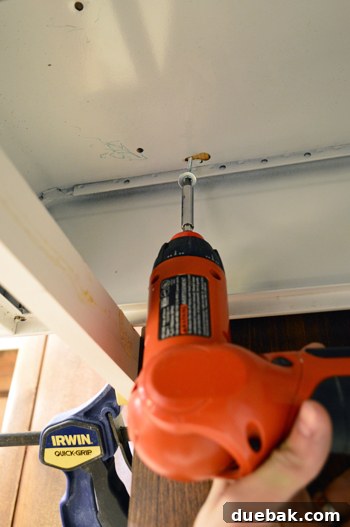
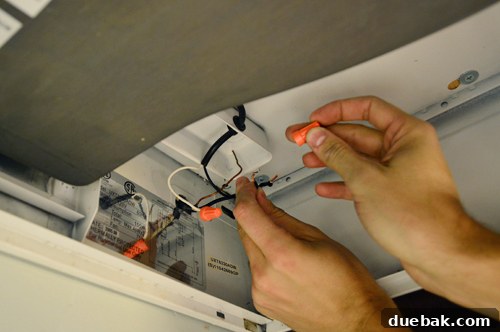
With all four screws securely in place – two on the front and two on the back of each side – the next step was to connect the household wiring into the electrical box located inside the hood. Following standard electrical safety practices (and ensuring the power was still off), I stripped the wires, twisted the corresponding colors together (black to black, white to white, and ground to ground), and secured them with wire nuts. After all connections were made and the wires neatly tucked away, the electrical box cover was replaced, and the filters reinserted, completing the installation.
A Budget-Friendly Upgrade with Visible Results
The entire installation process, excluding the time spent taking photos, likely took no more than 45 minutes. A significant portion of that time was dedicated to finding and cutting the scrap wood for my custom mounting blocks – a small effort for a perfectly flush and stable result. While our “scrap wood sandwich” might not win any awards for aesthetic perfection on Pinterest, for a mere $25 and less than an hour of work, we are absolutely thrilled to have effective ventilation back above our stove. The kitchen immediately feels less cramped now that the hulking microwave has been replaced by this sleeker unit. Furthermore, our plan is to list the old microwave on Craigslist, hoping to recoup at least the cost of this new hood, ensuring this Phase 1 upgrade remains well within budget.
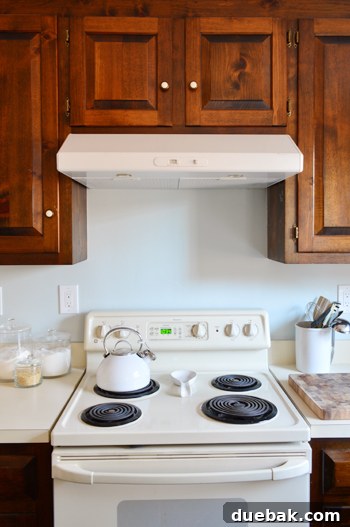
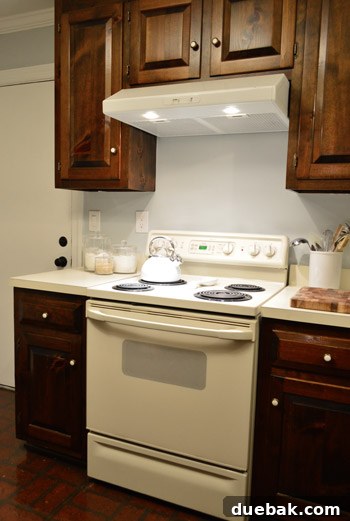
Both Sherry and I agree that the cool little halogen lights integrated into the hood are our favorite feature. Until we eventually install proper under-cabinet lighting in a later phase, these provide a wonderfully bright and shiny glow over our cooking surface, making meal preparation more enjoyable and the kitchen feel more inviting.
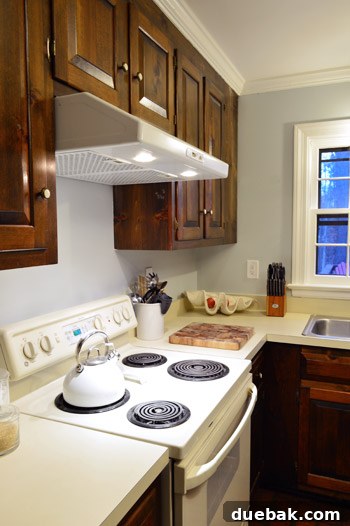
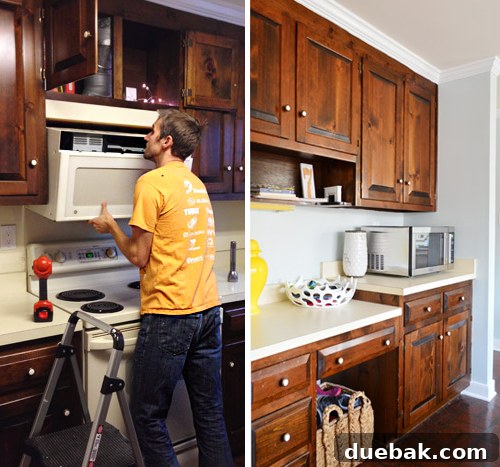
In summary, this small segment of our kitchen has experienced a most welcome transformation. It’s incredibly satisfying to see the space evolve from its previous state…
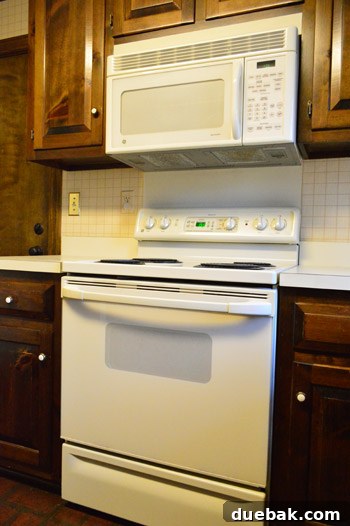
…to its current, vastly improved look and functionality.
What’s Next for Our Kitchen?
With the range hood project successfully completed, our to-do list for this area of the kitchen continues! Next up, we’re excited to hang our floating shelves along the sink wall, which will add both storage and decorative appeal. Following that, we’ll be diving into the much-anticipated cabinet painting project. We’re hoping this will be a good endeavor to tackle over the upcoming holiday break, perhaps allowing us to ring in the new year with a fresh, updated set of kitchen cabinets!
We’d love to hear from you! Has anyone else made the switch from a vented microwave to a dedicated range hood? Was your experience filled with unexpected challenges, or was it, like ours, blissfully straightforward? There’s a unique satisfaction in tackling a project you anticipate being complex, only for it to unfold with surprising ease. It certainly beats those “this should be easy” projects that somehow spiral into a mid-way implosion, leaving you scratching your head!