
Quick Update: If you missed the important addition to last week’s post, published a few days after its initial release, you can
catch up on that here.
When we first moved into our new home, one of the subcontractors expressed surprise, wondering why we hadn’t opted to gut the kitchen entirely. They pointed out the old, mismatched cabinets, the dated appliances, and the unmistakably pink laminate counters, assuming we’d undertake a full renovation before settling in. However, for those who have followed our home improvement journey, the answer is clear: we believe in the power of observation.
Our philosophy dictates living in a space, especially a high-traffic area like the kitchen, for a significant period before committing to major overhauls such as changing the layout or replacing fundamental elements like cabinets and countertops. In our previous home, for instance, we patiently waited three years before embarking on our major kitchen renovation. This approach isn’t born of procrastination; rather, it’s a strategic move to genuinely understand how we interact with the space, what truly functions well for our family, and what needs improvement. Guessing how we *think* we’ll use a new kitchen often leads to costly mistakes and regrets. Living in it provides invaluable, real-world data, transforming renovation decisions from a shot in the dark to informed choices.
Beyond the practical benefits of discovering true functionality, this waiting period offers significant financial advantages. It allows us to save money diligently for the larger, more comprehensive renovation down the line. In the interim, we implement what we affectionately call “Phase 1” updates: quick, affordable changes that dramatically improve the space’s aesthetics and utility without breaking the bank. These smaller, often DIY-friendly projects serve multiple purposes. They make the kitchen far more enjoyable and efficient in the present moment, bridging the gap until the grander renovation. Crucially, they also act as low-pressure test runs for ideas we’re contemplating for the future.
Consider a simple yet common dilemma: “Will open shelving truly suit our lifestyle in this area, or would upper cabinets be more practical in the long run?” Instead of making a permanent, expensive decision, our Phase 1 approach suggests, “Let’s install some budget-friendly open shelves now, live with them for a while, and see how they integrate into our daily routine.” This hands-on experimentation clarifies preferences, helping to prevent missteps in the eventual, more costly renovation.
Another excellent example involves lighting and furniture placement. We might ask ourselves, “Does the dining table feel right in this specific spot with a pendant light overhead? Or will we want to relocate it, or perhaps invest in a larger table later that accommodates more guests?” Our temporary solution involves positioning the existing table and swagging a pendant light over it. This avoids the commitment of installing a permanent fixture box in an exact location until we’re absolutely certain of the optimal arrangement during the big renovation. It’s a pragmatic way to test the waters without significant investment or structural alterations.
This “Phase 1” strategy functions as a much lower-risk trial period, providing invaluable insights into what we truly desire and what we can live without in our future, larger renovation. It’s a smart way to allocate resources, ensuring that when the time comes for substantial investment, every decision is well-researched and aligns perfectly with our lifestyle. For a more in-depth discussion on this approach, including how these initial changes can paradoxically save money despite their upfront cost, you can explore our post on why we champion Phase 1 projects.
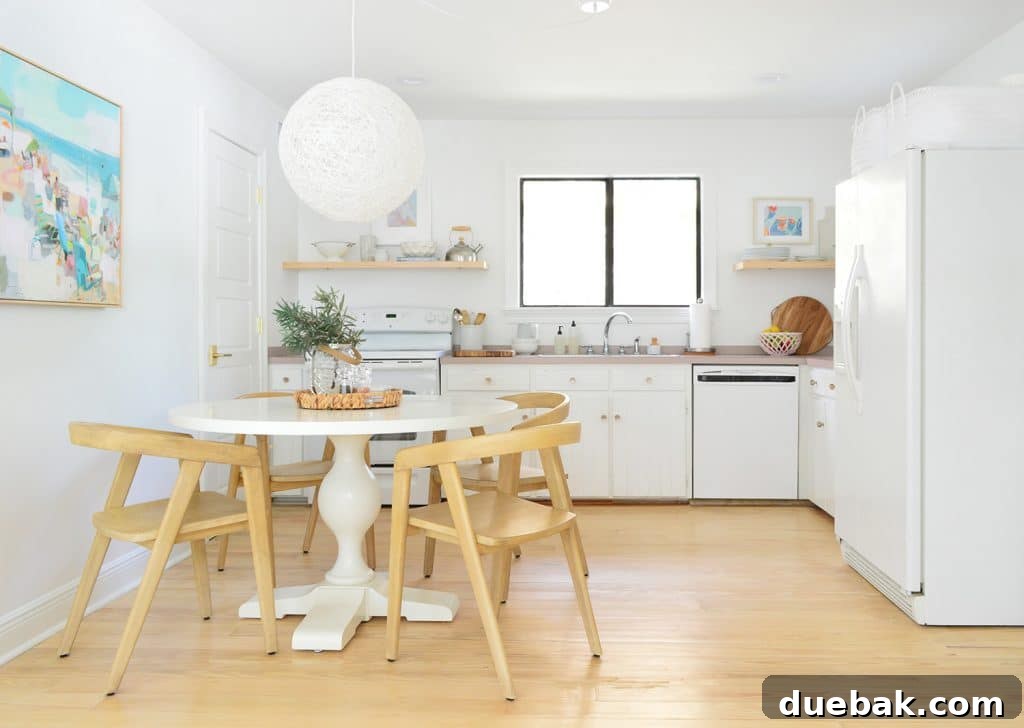
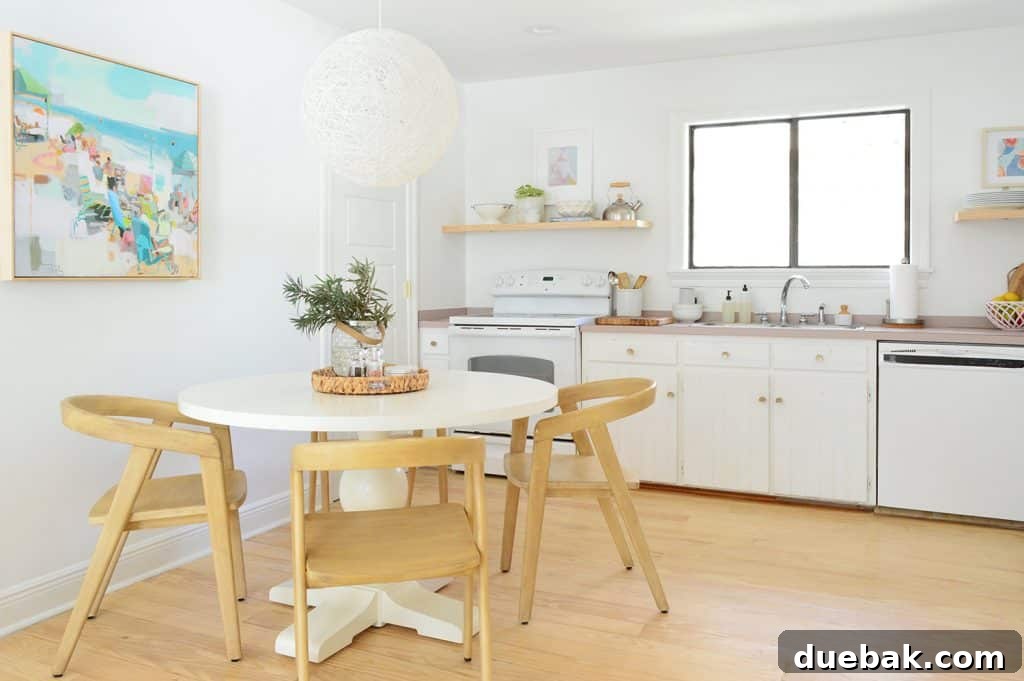
Now, let’s dive into the five recent updates that have transformed our kitchen into a much more inviting and functional space. For all the “spot the difference” enthusiasts, let’s zoom out for a broader perspective. Here’s a photo captured about a week ago, showcasing all five of these thoughtful improvements:
And for comparison, here’s a snapshot from two months prior, illustrating how the room appeared after our first three weeks of living here:
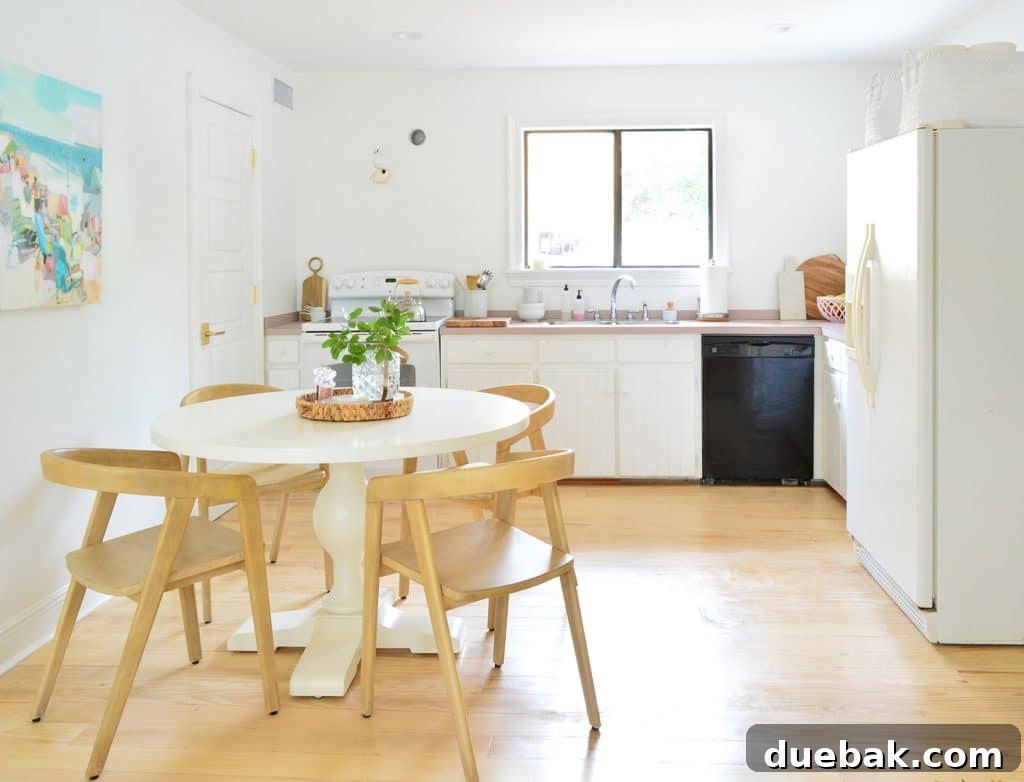
Did you manage to spot all five? Let’s reveal them!
1. A Dazzling New Pendant Light
Our kitchen once featured a rather lonely, off-centered “boob light” fixture that did little to enhance the room’s ambiance or style.
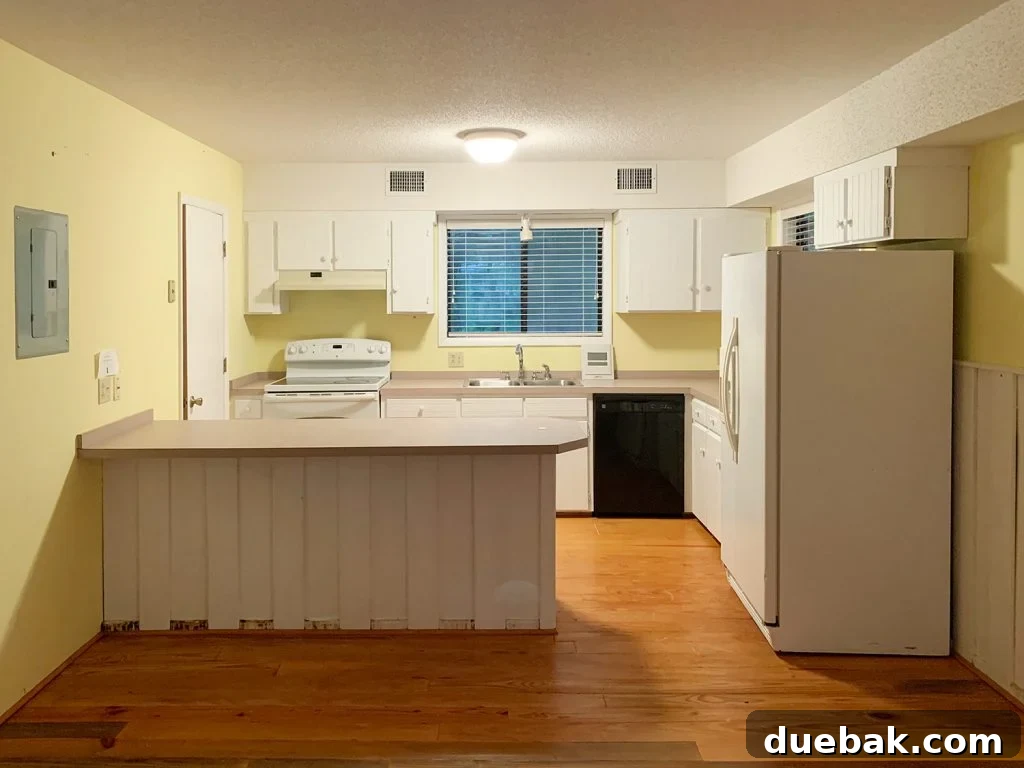
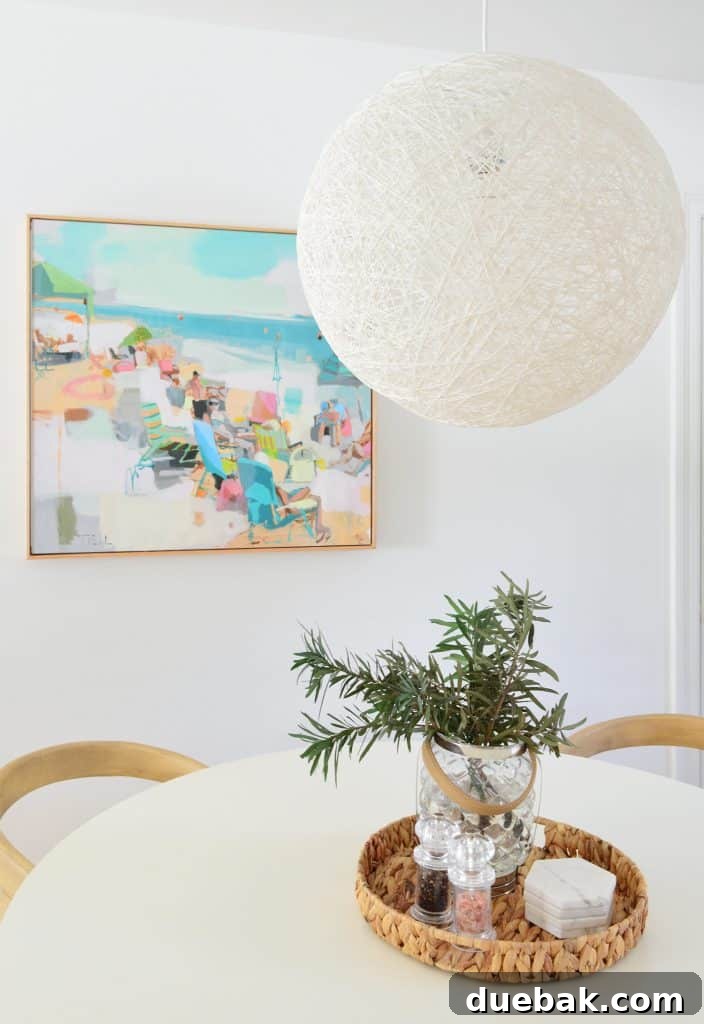
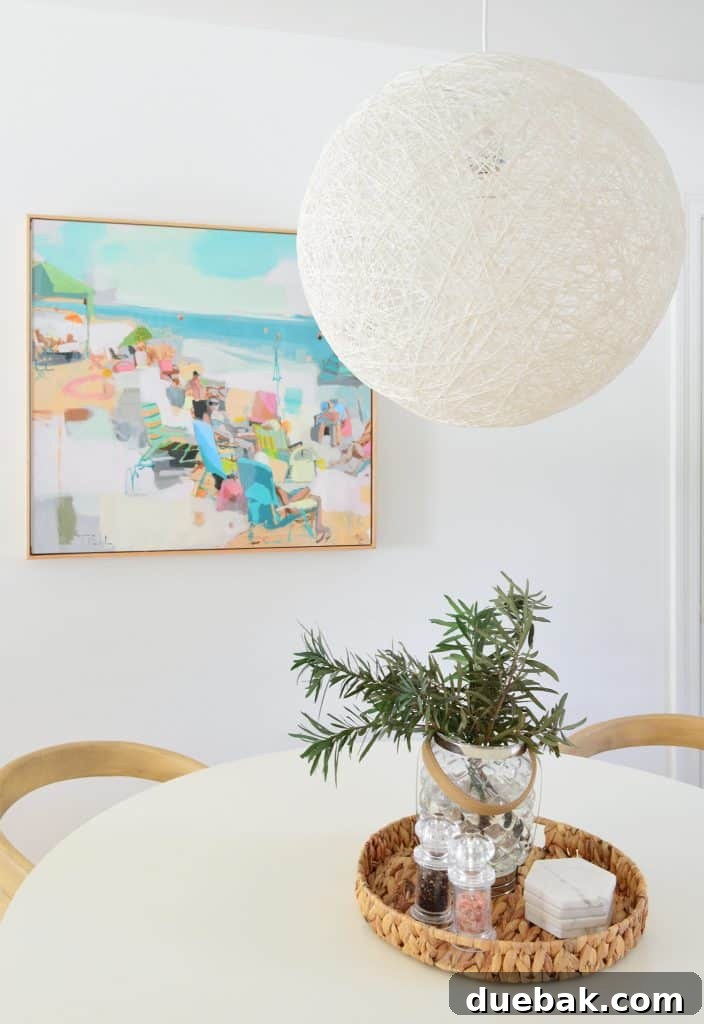
During the early stages of renovation, when all the drywall had to be replaced, allowing for open ceilings (you can read more about that here), we seized the opportunity to add several recessed lights. Crucially, we also decided to relocate the original fixture box to the center of the room instead of simply capping it off. Our reasoning was simple: it might prove useful for an accent light down the road. If not, we could easily convert it to another recessed light. So, we had a perfectly centered, capped fixture box awaiting its purpose. A few weeks ago, we decided to leverage it, choosing to swag a beautiful pendant light directly over our eat-in dining table. The result? Instant gratification and a dramatically improved focal point.
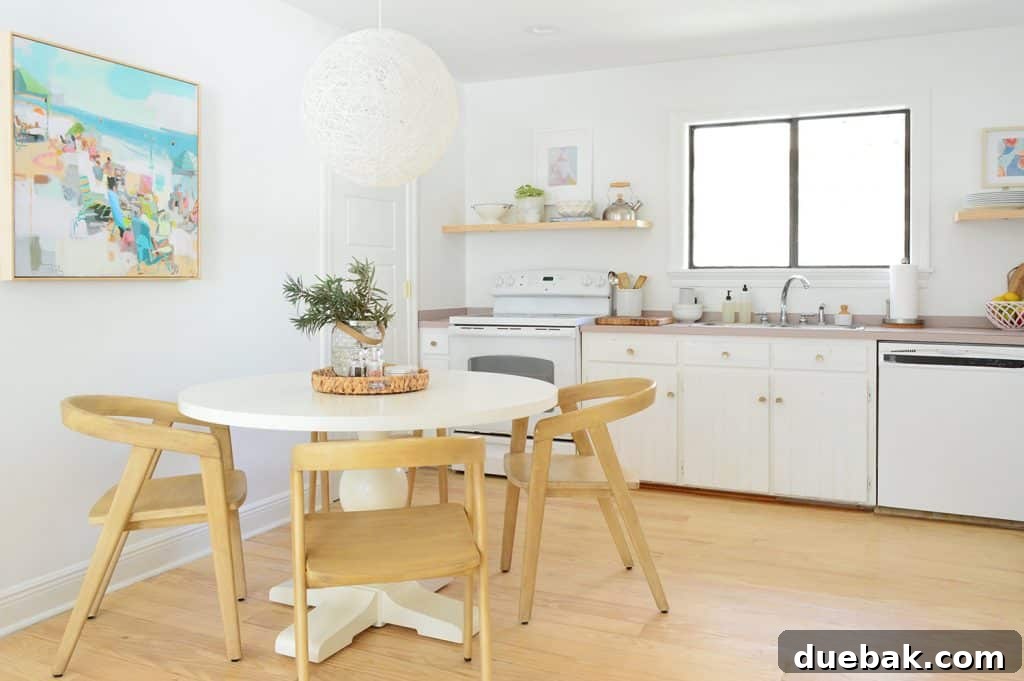
The pendant’s white nylon cord is quite subtle, almost disappearing against the ceiling, but you can faintly discern it towards the top of the frame, along with the crisp white canopy from which it gracefully descends.
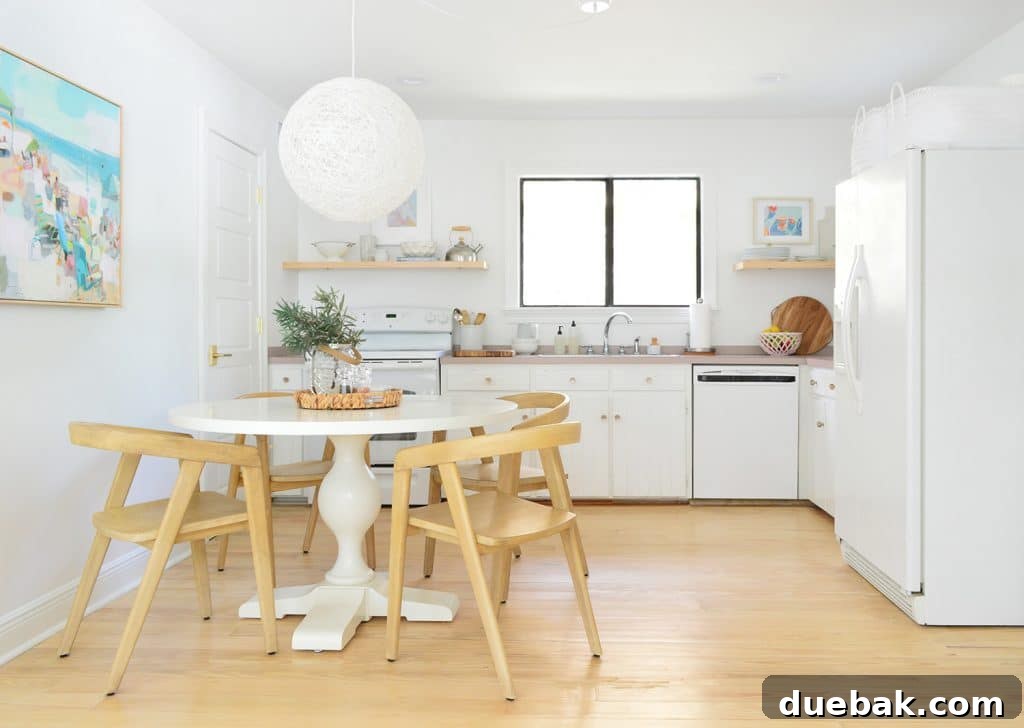
Knowing this fixture would hang above a table, we had the freedom to select a light that descends lower than a semi-flush or flush-mounted option, as foot traffic underneath wouldn’t be an issue in our standard 8-foot ceiling kitchen. We were so enamored with this particular white string globe light from our son’s room that it was an easy decision to order another one for this new spot.
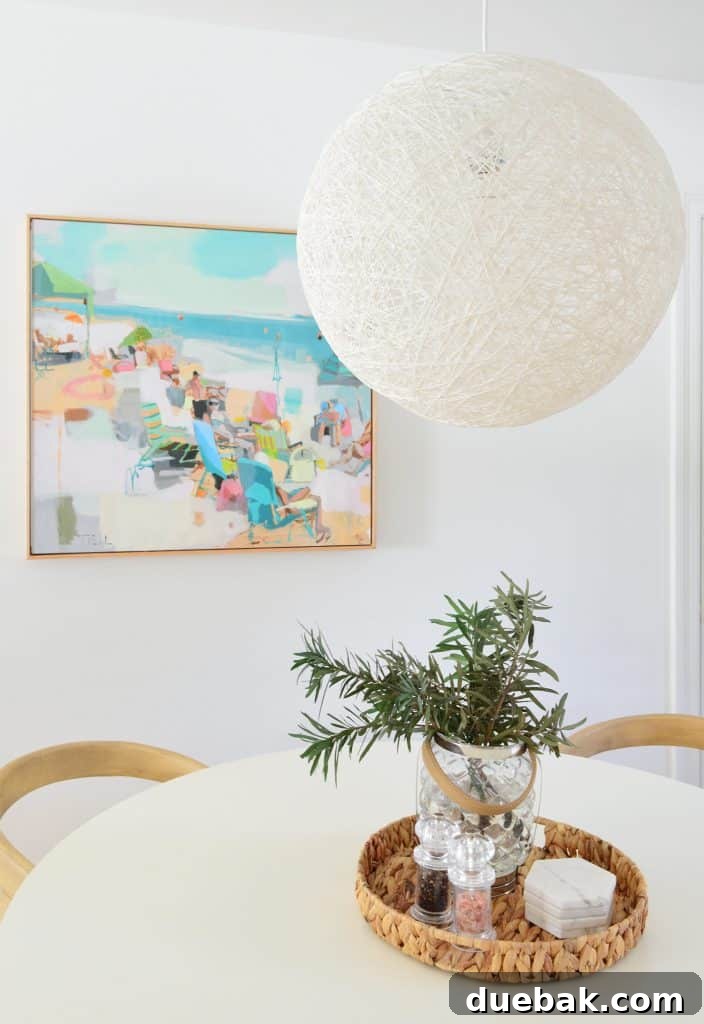
Initially, we harbored slight reservations about placing such a prominent light fixture in the middle of our relatively small kitchen. However, the outcome has been nothing short of fantastic. Its generous size effectively anchors the dining area, creating a defined zone within the open space. Yet, its airy white string construction masterfully prevents it from feeling visually heavy or overwhelming. An added bonus is the soft, inviting glow it casts, perfect for meals, offering a much more comfortable alternative to the full blast of the recessed lights. This single change has not only enhanced the aesthetics but also improved the functionality and mood of our kitchen.
2. A Seamless Dishwasher Transformation
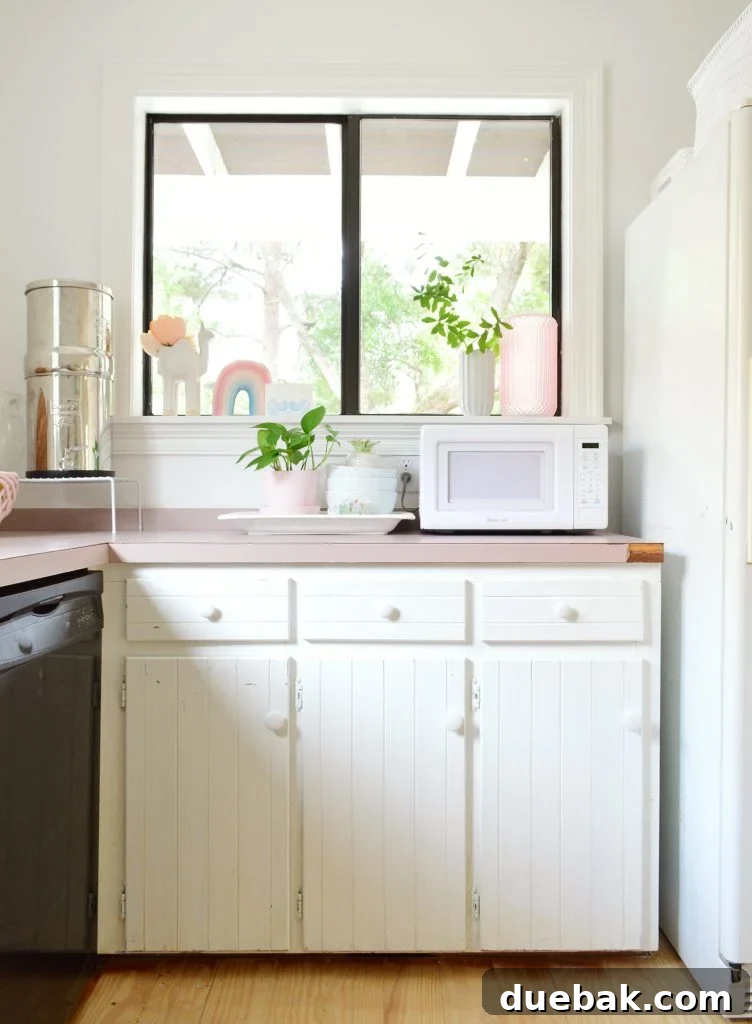
One of our core “Phase 1” tenets is to postpone major appliance purchases until the layout and design of the eventual full renovation are finalized. This prevents wasteful spending on items that might not fit our long-term vision – imagine investing in stainless steel only to later prefer white, or a slide-in range when a wall oven becomes the ideal choice. We’re incredibly grateful that despite their age, all our existing appliances are fully functional and in decent condition. The only immediate visual discord was the black dishwasher amidst an otherwise white stove and refrigerator. However, this was a challenge we knew we could tackle in under an hour.
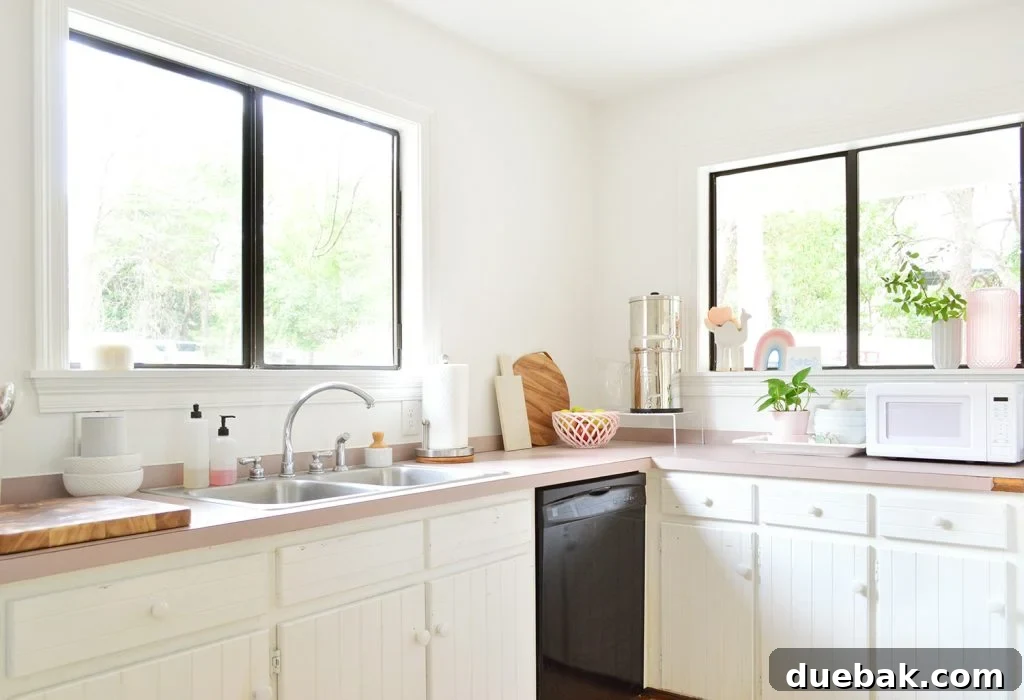
Our first hope was to simply flip over the dishwasher cover panel, a clever trick we successfully employed in our last kitchen (a quick tip: always check your panels, as this can be an incredibly easy and effective hack!). Unfortunately, this particular dishwasher wasn’t designed with a reversible or interchangeable panel, as its cover curved around the sides. Undeterred, we turned to another tried-and-true Phase 1 kitchen solution: appliance paint.
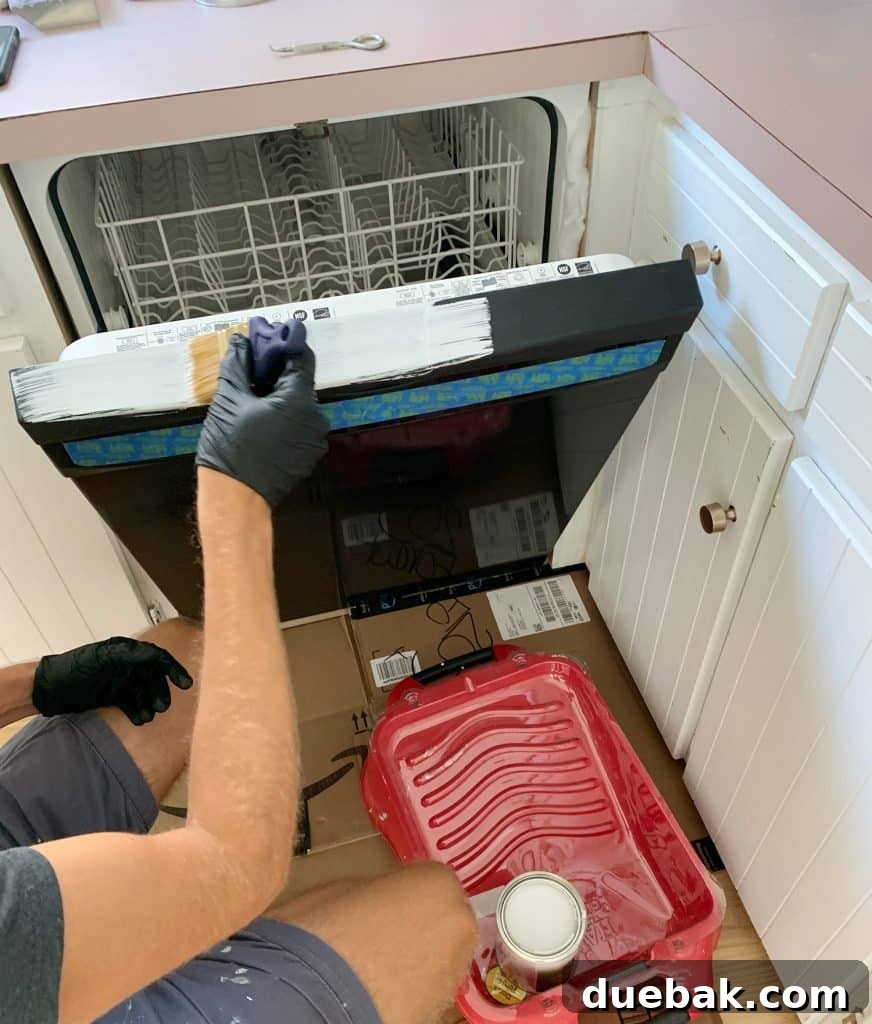
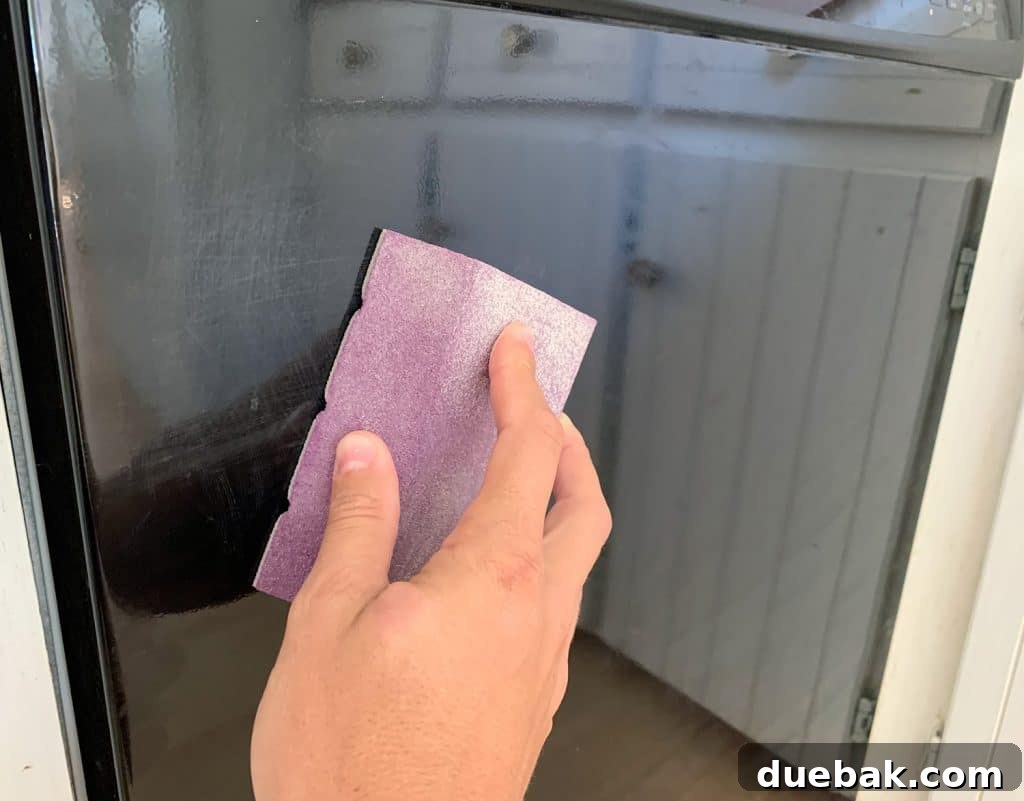
Indeed, specialized enamel appliance paint exists precisely for these kinds of projects, allowing for a surprisingly durable and professional-looking finish. We’ve detailed the process extensively in our post about painting an almond fridge white in our previous home, but the key steps are remarkably straightforward. The most crucial preparation involves lightly roughing up the surface with some sandpaper to ensure proper adhesion. After that, simply follow the instructions meticulously printed on the paint can.
We applied the paint using a combination of a paintbrush for those intricate, hard-to-reach areas and a small foam roller for the larger, smoother surfaces. Each coat took a mere 10 minutes to apply. Given we were transforming a black appliance to white, patience was key; it required approximately four coats to achieve full, opaque coverage. To preserve functionality and readability, we carefully taped off the dishwasher controls, ensuring all buttons remained clear and legible post-painting.
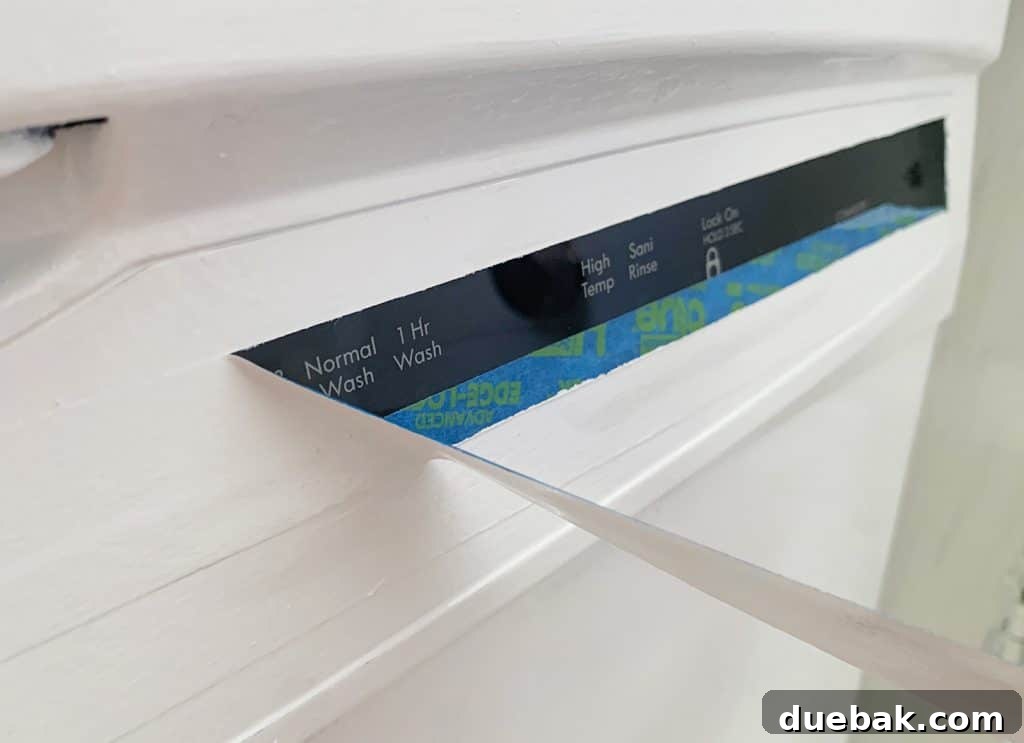
While the new white finish on the dishwasher leans towards a cooler tone compared to our existing cabinets, it is unequivocally WORLDS better than the stark black hole that previously dominated that side of the kitchen. A quart of appliance paint typically costs around $15, making this an incredibly low-cost yet high-impact improvement. This versatile paint is also available in various other colors and even in a convenient spray can format, depending on your project’s specific needs.
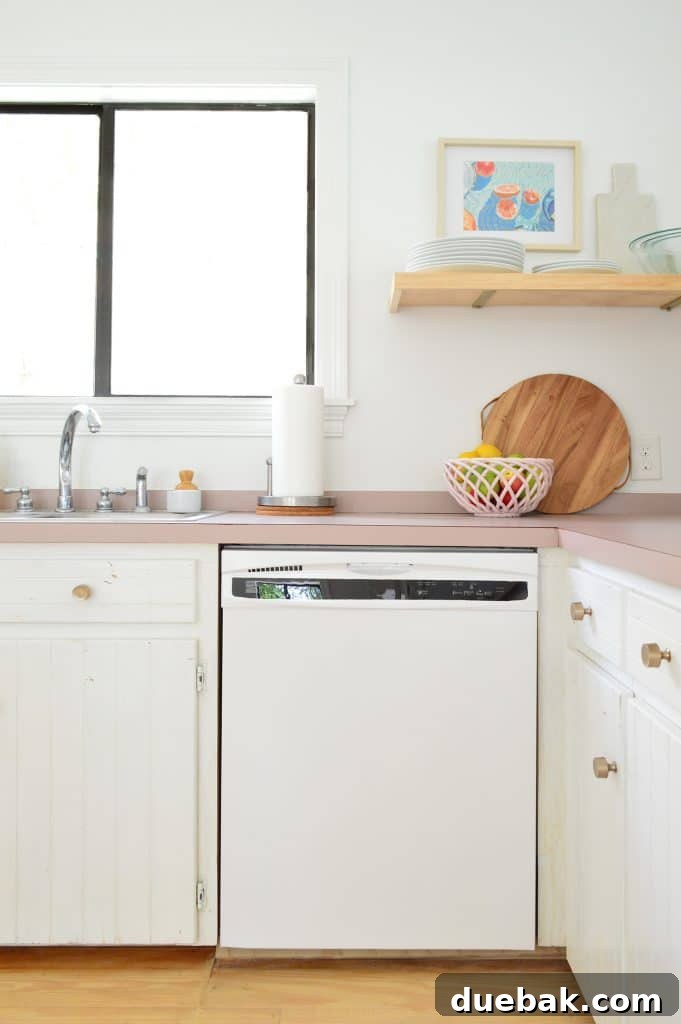
Interestingly, our long-term plan doesn’t involve keeping the cabinets white (yes, a shocker, we know!). This leads to a new debate: should we repaint the dishwasher again to perfectly match the upcoming cabinet color? Rust-Oleum suggests that after their appliance paint is applied, you can sand it lightly and then spray any of their enamel spray paints over it. Their general guidelines seem to imply it can act as a primer for other paint types. Since our chosen cabinet color is quite specific and unlikely to be found in a spray paint, we’re contemplating rolling/brushing the new cabinet paint directly onto the dishwasher when that time comes. If it turns out to be a disaster, we have a backup plan: adding a thin panel to the dishwasher front that can be painted to match, perhaps using beadboard or luan. This kind of calculated risk and experimentation is precisely what makes Phase 1 projects so appealing – they’re not permanent, allowing for flexibility and creative problem-solving. Oh, and while we had the appliance paint out, Sherry took the opportunity to paint the refrigerator handles a brighter white, a subtle yet noticeable enhancement you might have spotted in the before & after photos.
3. A Touch of Modernity: Upgraded Cabinet Knobs
Our kitchen’s original cabinetry featured traditional wooden knobs, painted to blend seamlessly with the doors. While functional, they felt somewhat oversized and contributed to a distinct “country” aesthetic that didn’t quite align with our evolving design vision.
Serendipitously, we had purchased a set of these elegant brass knobs with the intention of updating a dresser elsewhere in the house. Before installing them on the dresser, a thought struck us: why not try them on the kitchen cabinets first, just to gauge their impact? The moment we saw them, we were instantly smitten. We loved them so much that we decided to keep them right there in the kitchen and ordered a separate set for the dresser. The introduction of these weightier, metallic knobs immediately infused the kitchen with a more contemporary feel. It’s a truly tactile upgrade; the smooth, shiny brass beneath our fingertips instantly makes the kitchen feel more refined and upscale, even amidst the existing cabinet paint dings.
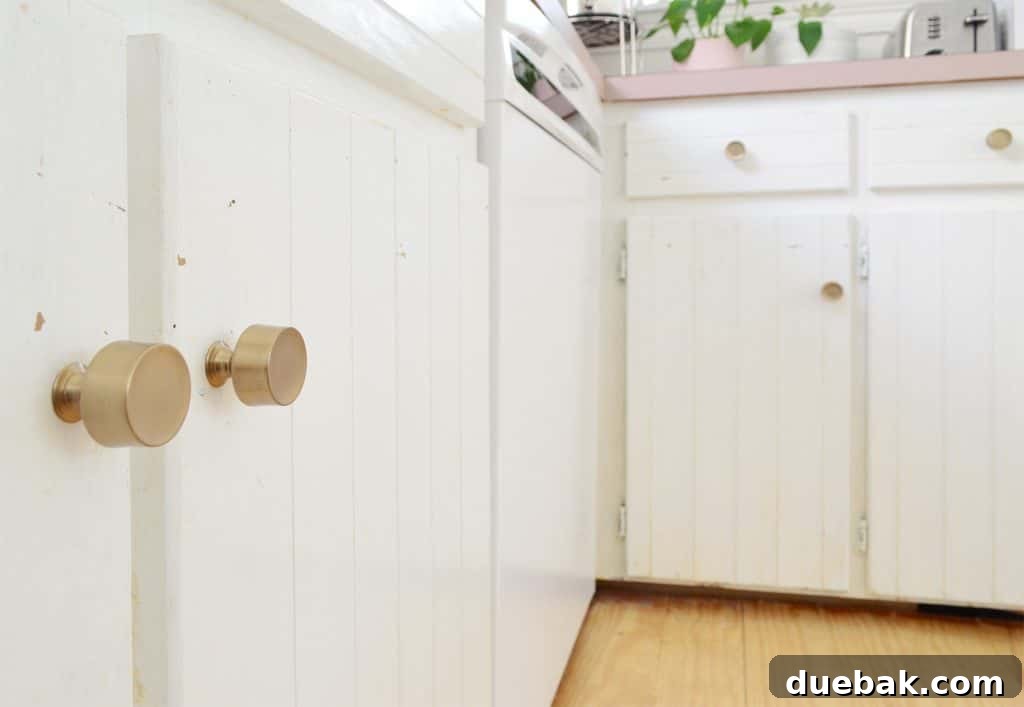
While the brass currently provides a slightly higher contrast against the white cabinets than the previous wooden knobs, we anticipate that once our new, carefully selected color is applied to all the cabinet doors, this contrast will achieve a truly harmonious and sophisticated look – a perfect “chef’s kiss” moment for the kitchen’s new aesthetic. This simple hardware swap profoundly illustrates how even minor details can significantly elevate the perceived quality and style of a space.
4. Functional Elegance: The Addition of Floating Shelves
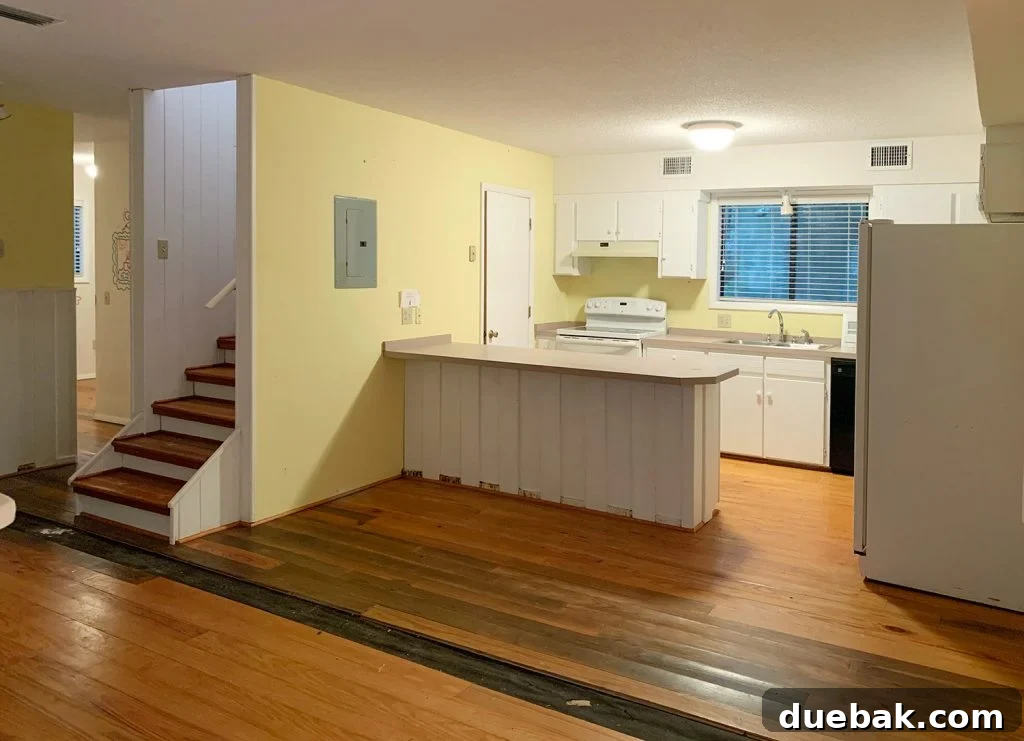
Our initial renovation phase involved the removal of the soffit along the back wall of the original kitchen, a necessary step to open up the space. A consequence of this structural change was the loss of the upper cabinets. We were well aware that this would mean sacrificing some valuable storage. However, having significantly downsized our belongings before moving here, we’ve discovered that our seven-cabinet kitchen is actually proving far more functional than we had anticipated. For a glimpse into our current storage solutions, you can refer to this earlier post.
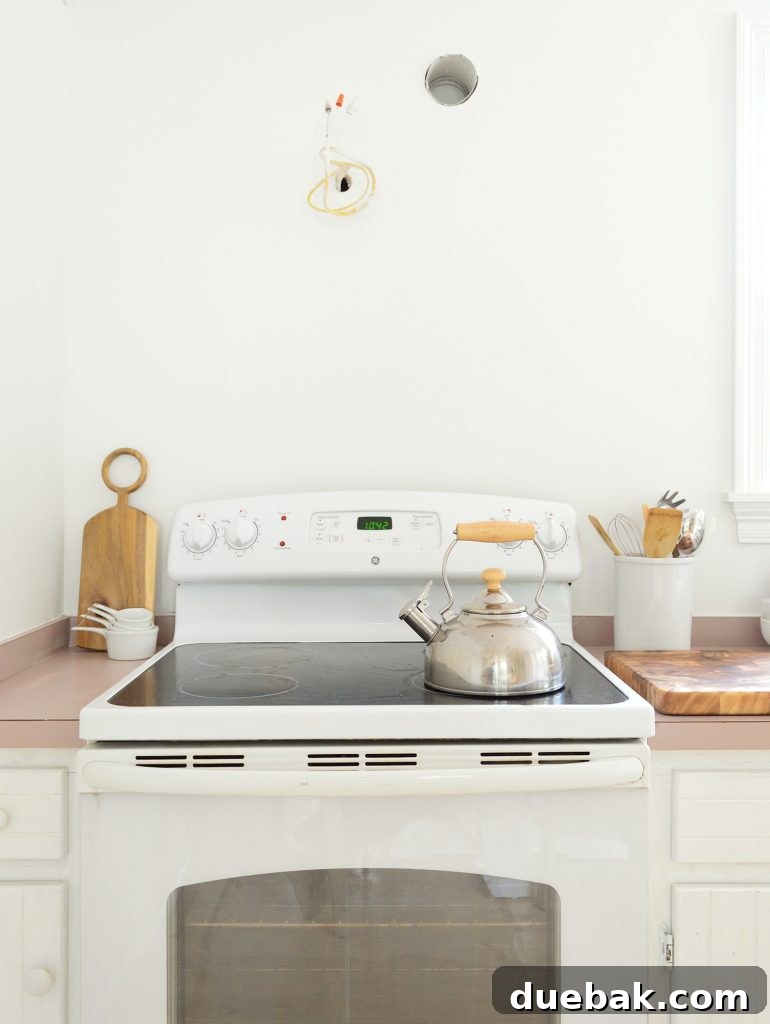
Frankly, the most bothersome aspect of not having upper cabinets was the unsightly exposed vent and wires left behind from an old exhaust fan. Staring at these while cooking was less than appealing. (Rest assured, the breaker is off, and a vent hood isn’t currently required by code here, though we do intend to add one back eventually, which is why we haven’t terminated these elements and patched the drywall just yet).
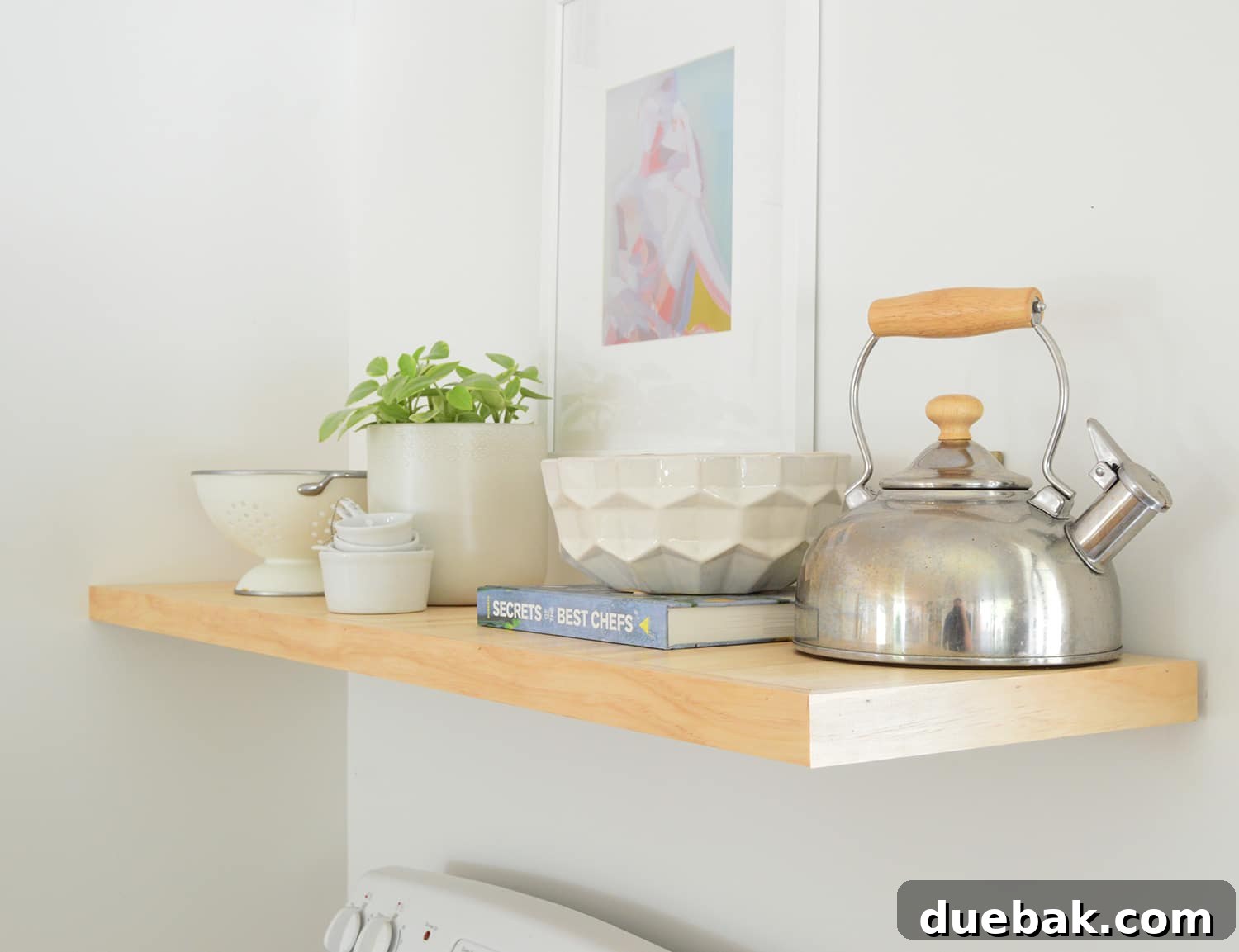
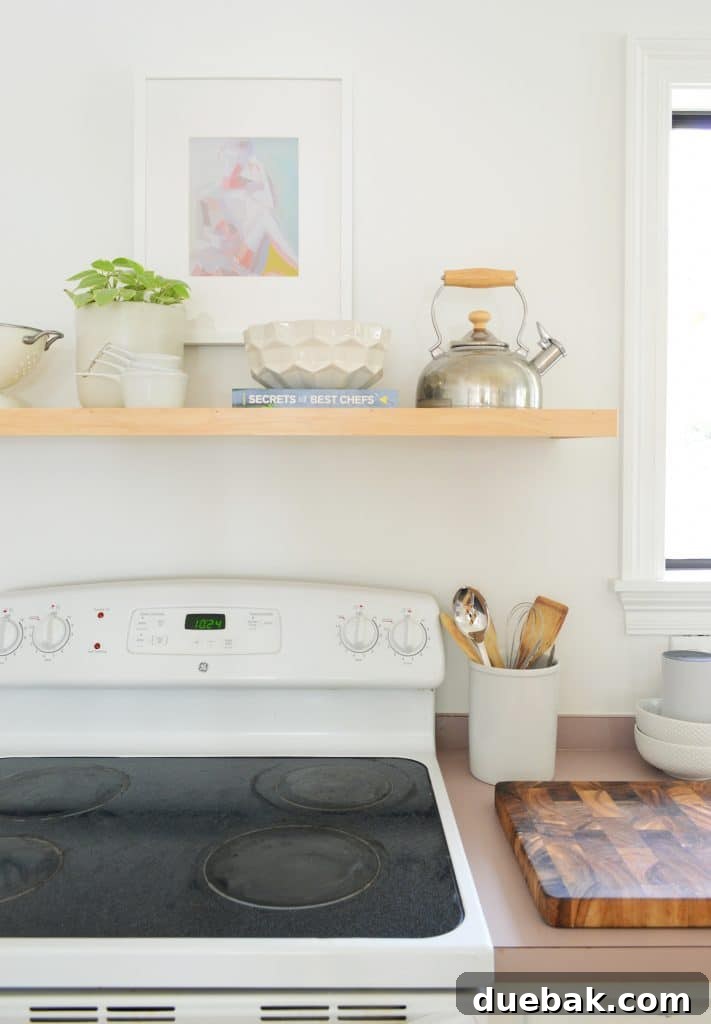
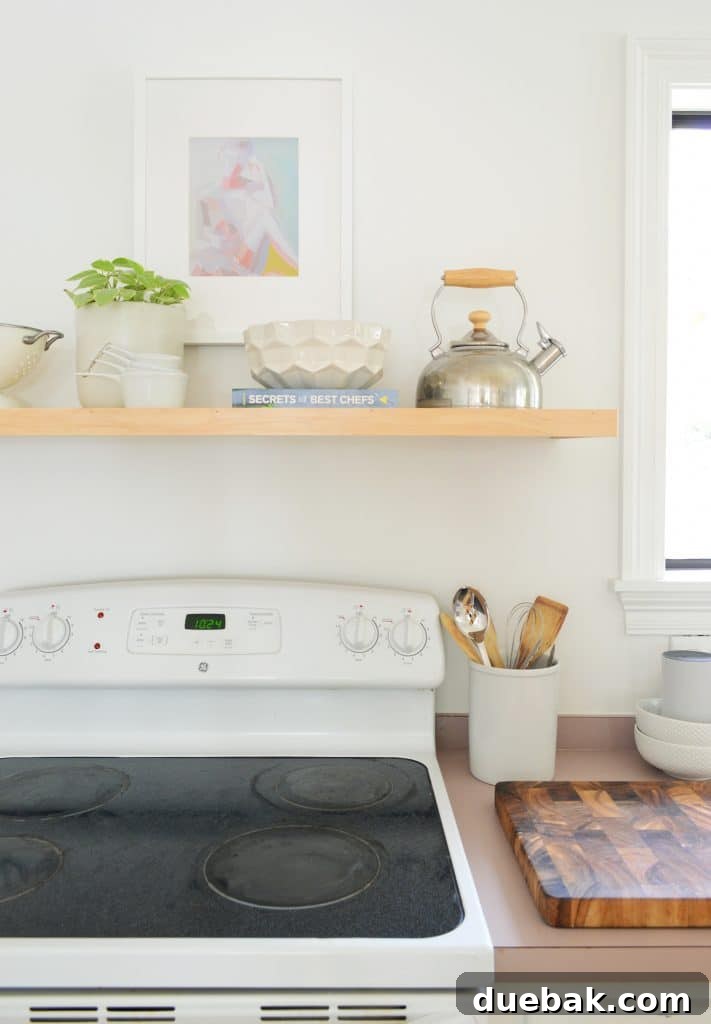
In many ways, the primary motivation behind adding these quick floating shelves was to artfully disguise that aesthetically challenging area of the wall. The fact that these shelves would also introduce much-needed storage was merely the delicious icing on our “cover-all-the-ugly-things” cake. Although, it must be said, the framed art positioned between the shelves is arguably doing the lion’s share of the work in camouflaging the imperfections. The shelves merely provide a visual anchor, giving the artwork something to relate to so it doesn’t appear haphazardly floating on the wall.
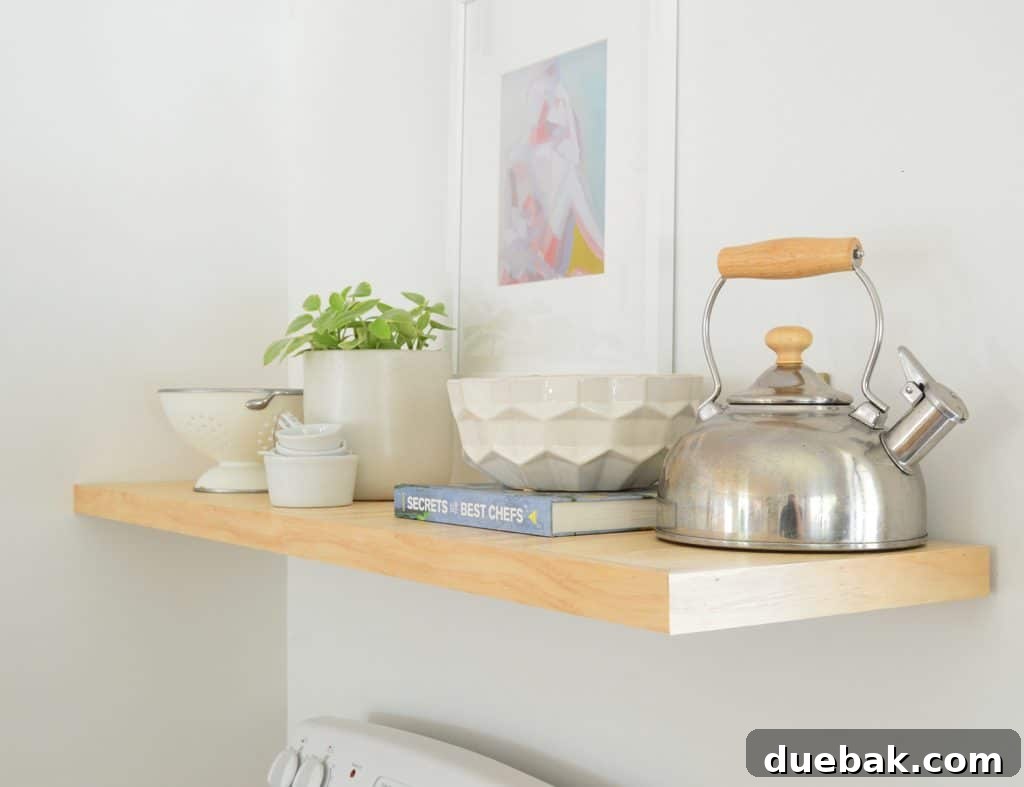
As for the items gracing our new shelves, practicality largely dictated our choices. Functional essentials like our tea kettle and strainer found a convenient home right by the stove. The other shelf became the perfect spot for larger mixing bowls and everyday dinner plates. After these core functional items were placed, we then added a few decorative touches, such as a small plant and a favorite cookbook, to enhance the visual appeal.
The actual construction process for these shelves was, shall we say, a bit improvised, making it less than “tutorial-worthy.” (For more structured DIY shelf tutorials, we’d recommend exploring this technique or this one). Our initial thought was to replicate something similar to the shelves in our beach house laundry room or office nook, so we even ordered the same Etsy brackets we’d used before, this time in a brass finish (Tiffany also utilized them on her office shelves).
However, upon holding up mock-ups, we quickly realized our original plan wasn’t ideal – a valuable lesson reiterated in our Phase 1 approach. It became evident that two fully loaded shelves on each side would visually overwhelm the back wall. Furthermore, the existing window was not centered on the wall, making it challenging to achieve evenly spaced brackets, especially while trying to hit at least one stud for maximum structural integrity.
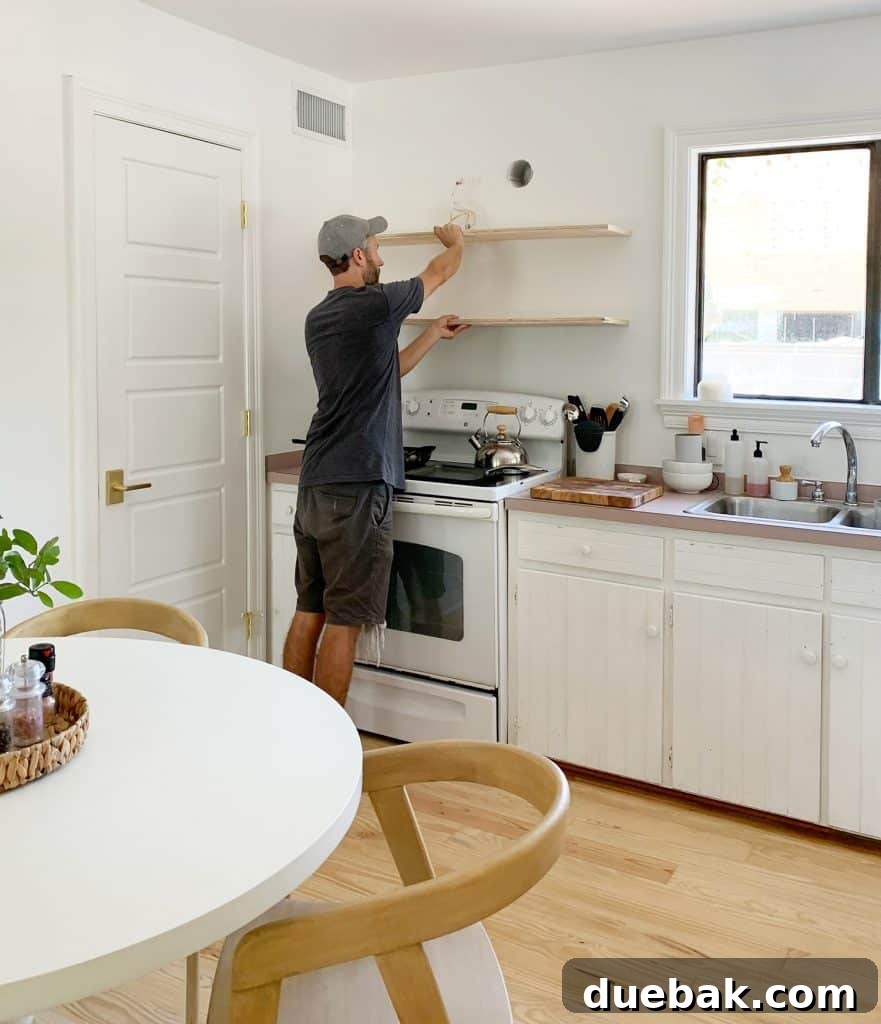
Thus, our strategy pivoted to “let’s try to conceal the brackets as much as possible.” This involved mounting them where they could securely anchor into studs, while strategically spacing them so they would be largely hidden behind objects placed on the shelf, rather than being exposed at the ends. We also added a mitered face frame to trim out the bottom, further minimizing the visible support structure beneath the shelf. For a clearer understanding of this technique, referencing this tutorial would be beneficial.
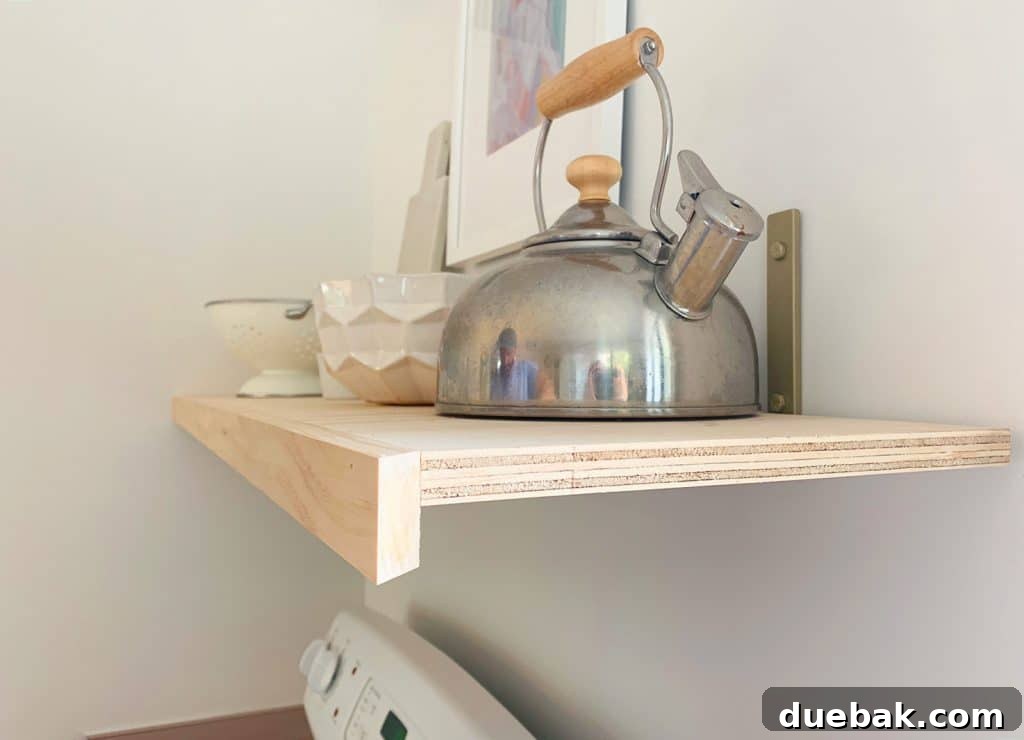
These project “gymnastics” were further complicated by our conscious effort to minimize trips to the hardware store and maximize the use of leftover materials. In fact, the plywood for these very shelves was cleverly repurposed scrap from our laundry room shelves!
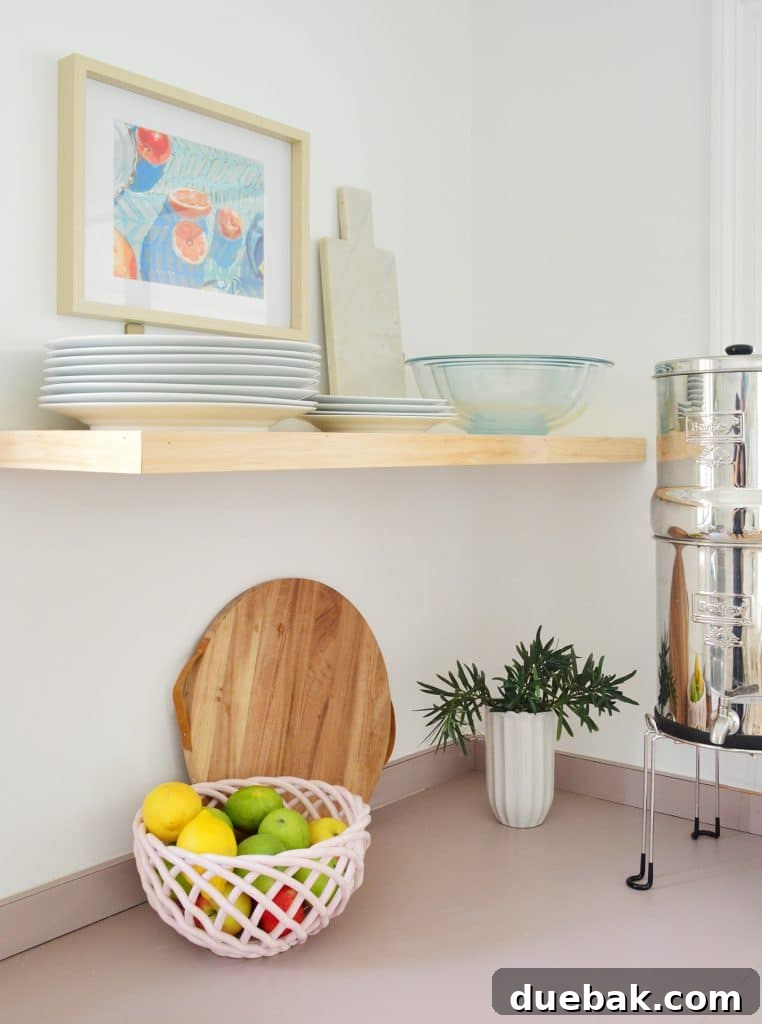
In the end, while the path to creating these shelves was somewhat circuitous, they serve their purpose remarkably well. We particularly love how the natural wood tone harmonizes with the floors and our dining chairs. Sherry sealed them with this water-based sealer, which we favor because it maintains the wood’s natural hue without the yellowing that can occur with oil-based polyurethanes.
In the “lessons learned” column, it was incredibly beneficial to encounter these design quirks during this process, such as having to adapt to the off-center window. These challenges actively shift our thought process as we envision our eventual, larger remodel. We’ll likely need to explore an asymmetrical solution that gracefully embraces the uncentered window, or perhaps a clever design that creates an illusion of perfect centering. All these considerations are still “To Be Determined,” and we’re in no rush to finalize them. The critical takeaway is the value of discovering these eccentricities early, allowing us ample time to brainstorm and consider various creative solutions.
5. Elevated Artistry: Framing Our Teil Duncan Painting
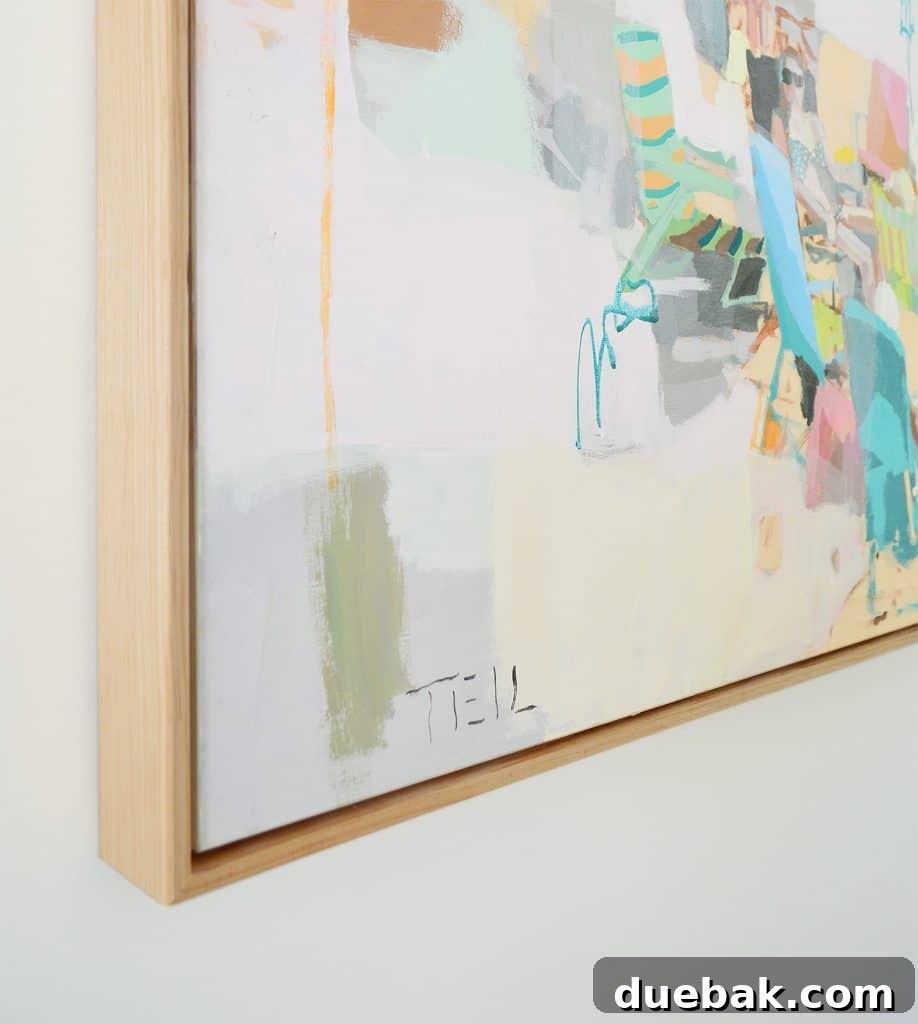
The final transformation isn’t strictly a “kitchen renovation” but rather a significant aesthetic enhancement to the room that you might have noticed among the other changes when scrutinizing those “spot the difference” photos. Six years ago, we acquired this beautiful Teil Duncan painting as a special anniversary gift to ourselves. For the majority of those six years, we intended to either frame it ourselves or have it professionally framed. And yet, for all that time, it remained unframed, awaiting its moment to shine.
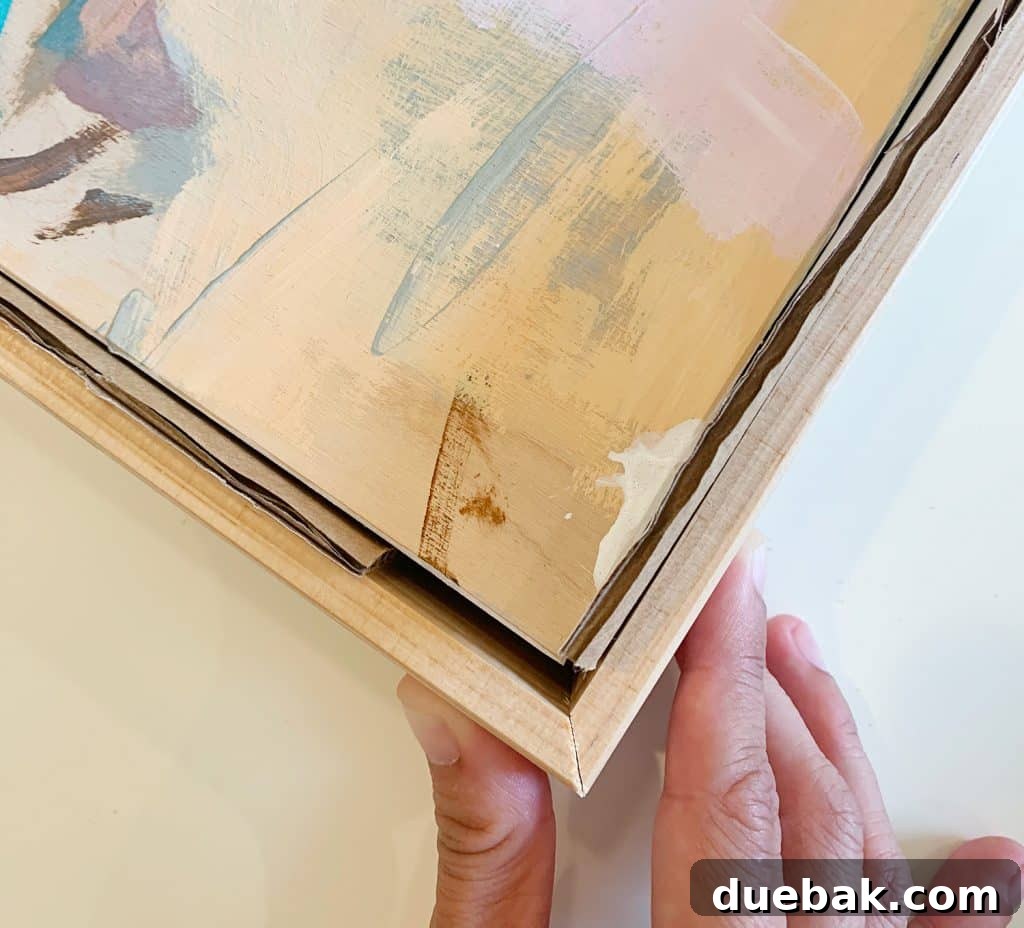
This is another instance where I wish I had a more polished, step-by-step process to showcase. However, we simply winged it, utilizing some readily available trim pieces from our local hardware store and some cardboard strips as temporary spacers. (The cardboard doesn’t remain; it’s merely used to create a thin, consistent gap around the canvas, giving the illusion that the art is elegantly floating within the frame.) The good news is that if you’re looking to create a float frame for your own canvas prints, Jenna Sue offers an excellent, comprehensive tutorial.
We are truly kicking ourselves for waiting this long to tackle this project, as the frame has profoundly enhanced the artwork, making it feel far more substantial and complete. Moreover, the warm blonde wood of the frame beautifully ties into the natural tones of the floor and chairs, creating a cohesive and harmonious aesthetic throughout the room. Perhaps, in a twist of fate, it was actually fortunate that we waited. Had we framed it earlier, we might have instinctively chosen a darker wood frame to complement the mid-toned wood floors of our previous house, a choice that wouldn’t have suited our current space. So, let’s call this a case of procrastination that, by some happy accident, worked out for the absolute best!
Now that you’ve seen all five of these impactful changes, I have a little secret to spill: there’s actually a sixth, even more transformative change underway that isn’t quite finished yet. This upcoming update promises to alter the entire room in a far more significant way than all these previous improvements combined.
As I hinted earlier, our plan is to paint the cabinets. We made a rather bold decision to fully embrace the existing (and often maligned) mauve counters, opting for a chic tone-on-tone look for this Phase One update. Why not?! When else do you get the opportunity to creatively work with mauve counters? We meticulously tested two paint colors and were immediately drawn to the deeper shade on the right, which almost perfectly matches the counters.
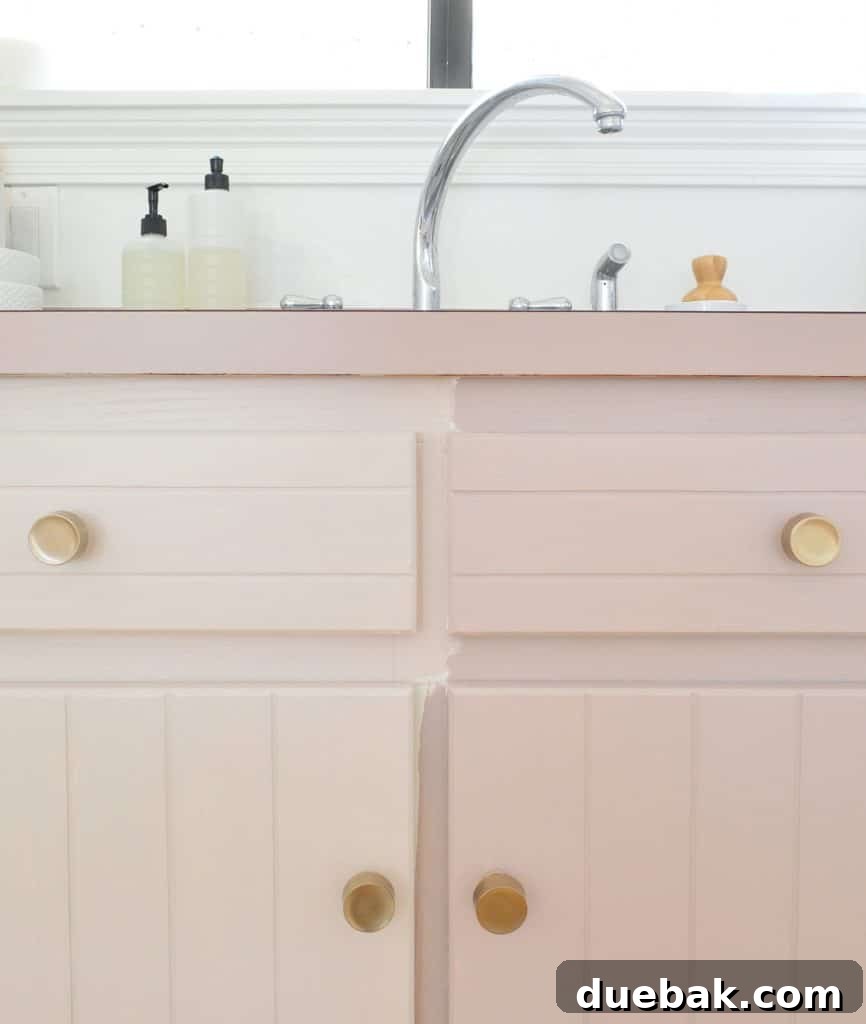
So yes, we are diving headfirst into a full-on mauve kitchen aesthetic! With only seven cabinets, it’s proving to be a surprisingly quick job, and the results are already looking incredibly promising. We absolutely cannot wait to share the finished transformation with you all. Wish us luck with that final dishwasher touch-up!
P.S. To follow every single update and development in our ongoing house renovation journey, you can find our complete collection of posts in this dedicated FL House archive.
*This post contains affiliate links, so we may earn a small commission when you make a purchase through links on our site at no additional cost to you.