
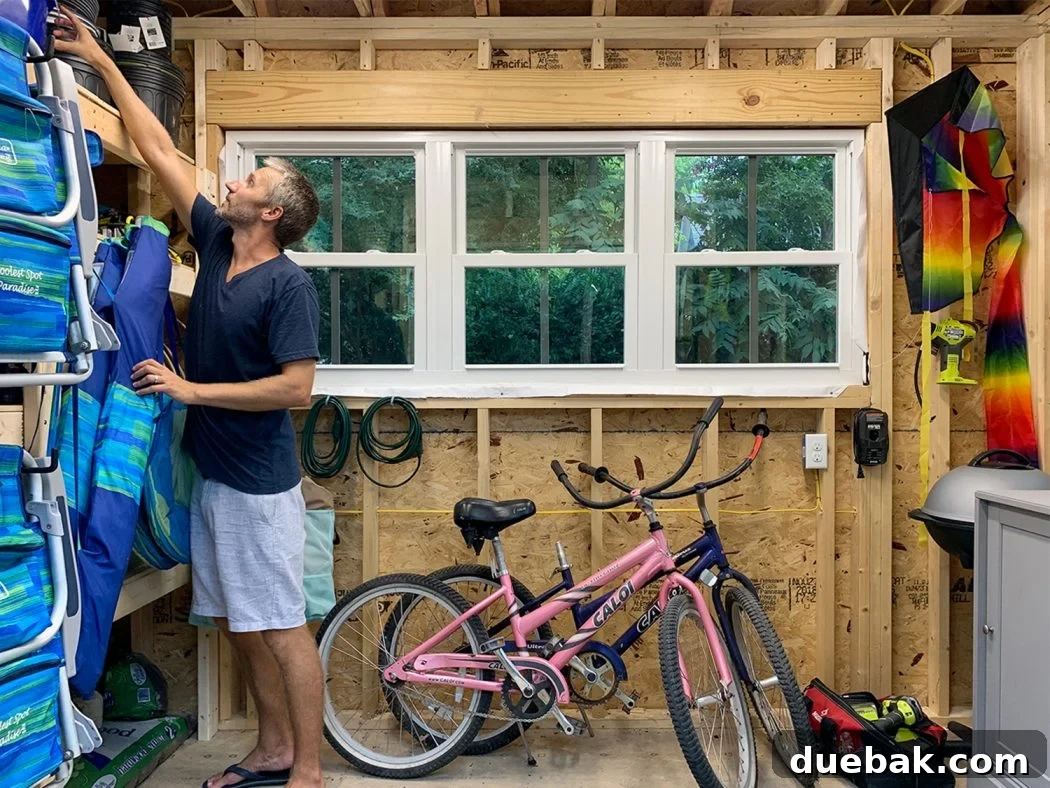
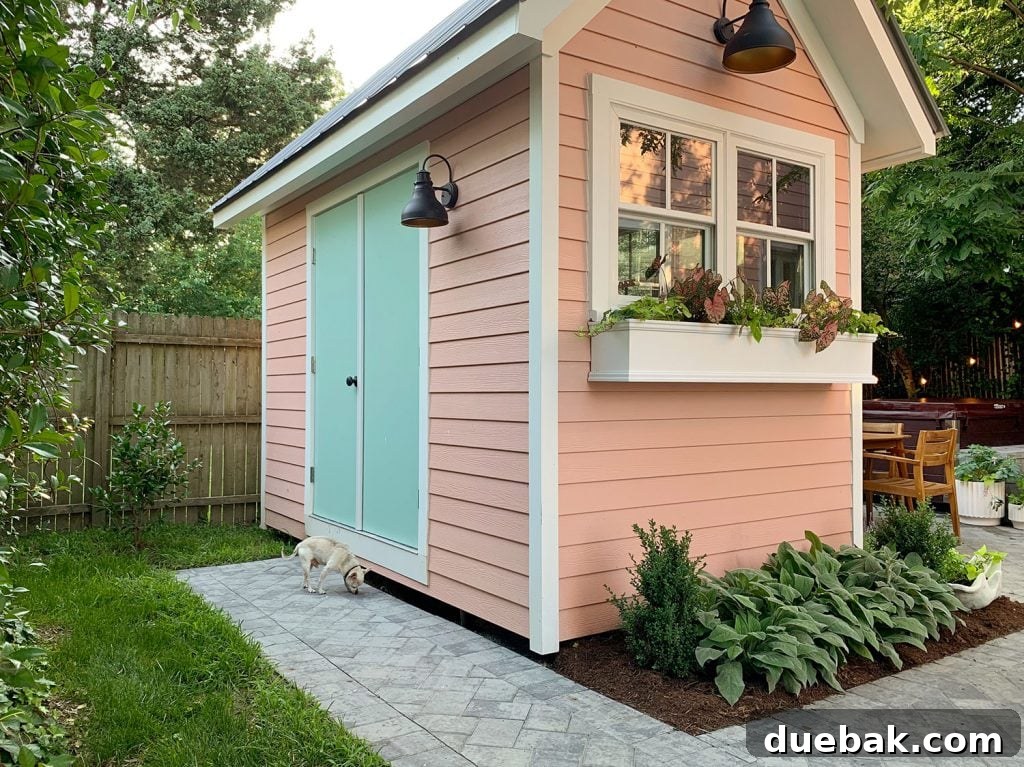
Earlier this summer, we unveiled the dramatic transformation of our beach house backyard. What was once a wild, unruly jungle over a year-long process became a compact yet incredibly relaxing outdoor oasis. Given the limited footprint of this space, we poured significant effort into maximizing its functionality – a feat we delve into further here. Following that grand reveal, many of you expressed curiosity about the inner workings of our charming pink shed, eager to see what secrets it held and how we managed its storage. Today, those shed-poking-around dreams are about to become a reality, as we open its doors and share every detail of its organized interior.
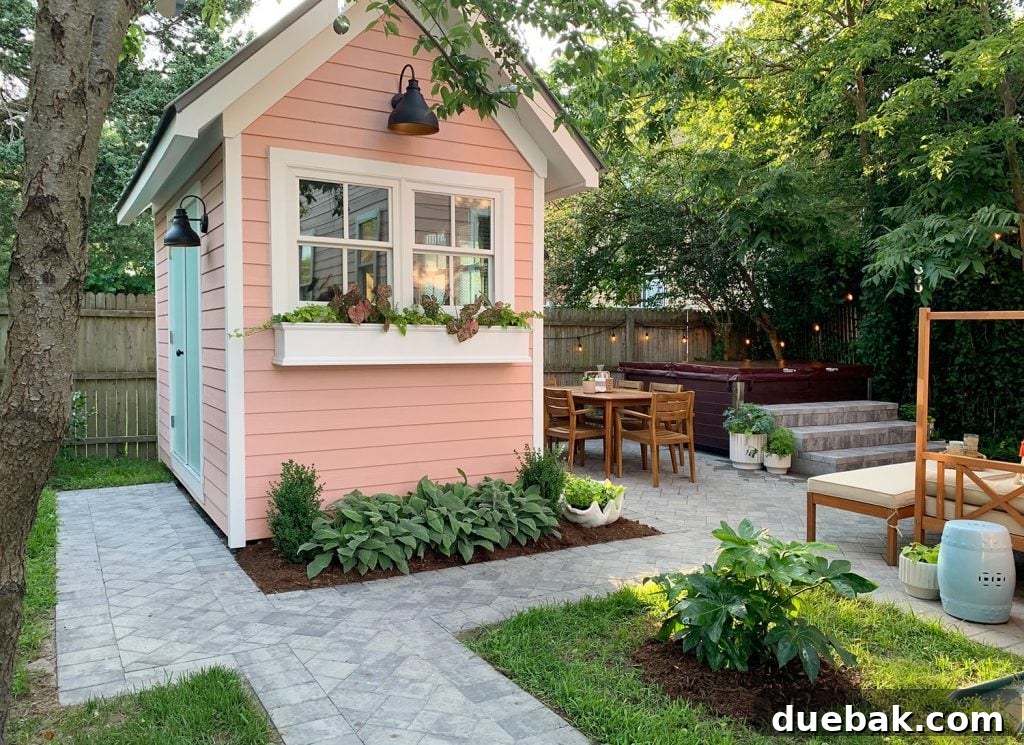
When we first shared the backyard before & after fest, I candidly admitted that the inside of the shed was, at best, a “disaster pile.” However, with a focused effort, we managed to conquer that chaos in under five hours, a week later. The best part? We achieved this remarkable transformation without purchasing anything beyond some basic lumber and a handful of hooks. While I won’t claim it’s the most impeccably organized shed in existence, I implemented two key strategies that made a monumental difference in how much we could store and, more importantly, how easily we could access everything. This project served as a powerful reminder that effective shed organization doesn’t require an elaborate plan or a hefty budget; functionality can be achieved with simplicity and smart design.
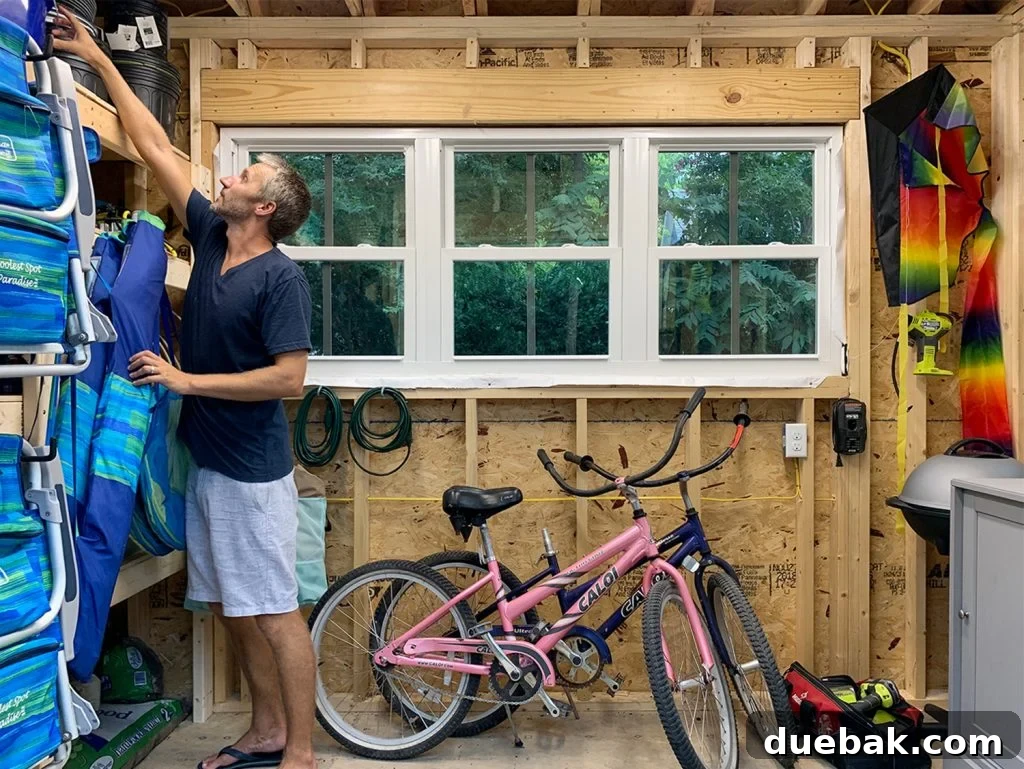
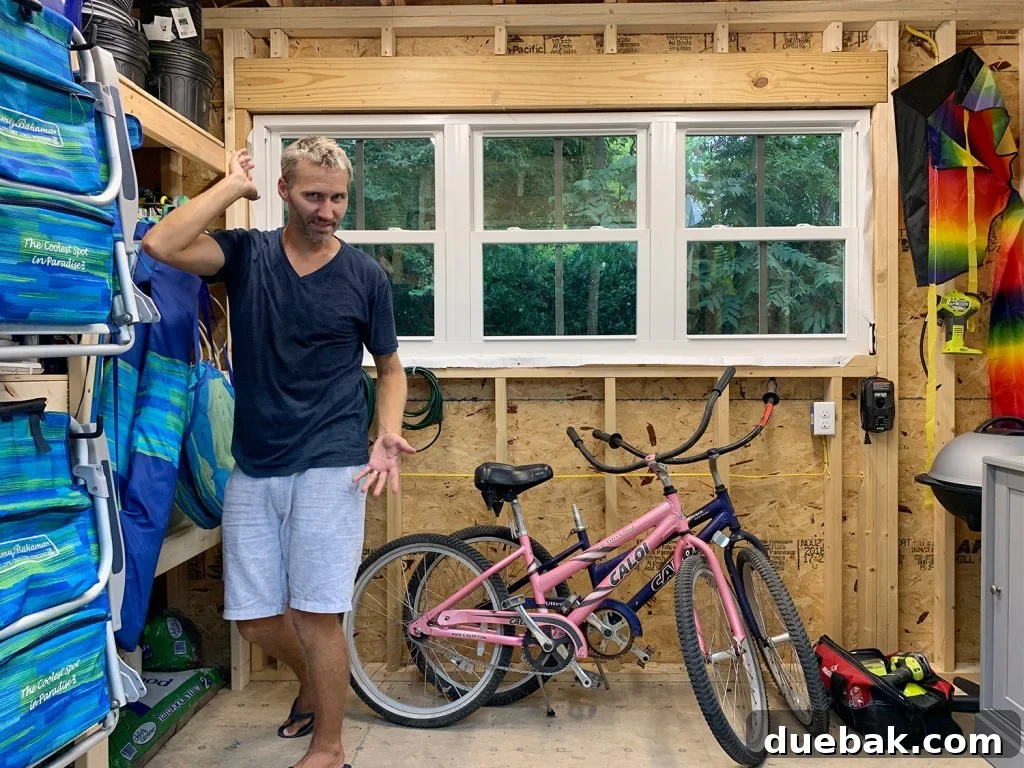
It also, quite unexpectedly, revealed my hidden talent as a stunning and versatile model. Is that a smize I detect? #WatchOutChad
From Chaos to Cohesion: Tackling the “Disaster Pile”
While the exterior of our pink shed serves as an important visual anchor point in the backyard – not to mention a fantastic privacy provider that contributes to that coveted nestled and cozy feeling – its primary purpose was to solve our persistent storage dilemma. With no garage, no basement, and no other outdoor storage options at our beach house, we faced a significant challenge. For over a year, lawn equipment, beach gear, various tools, and countless renovation leftovers had found their temporary (and highly inconvenient) home in the beach house foyer and mudroom. As you can imagine, this arrangement was far from ideal; sand and grass clippings had practically become permanent residents. The completion of the shed was met with immense anticipation, and as soon as it was ready, we eagerly transferred everything that belonged there, resulting in the birth of our notorious “disaster pile.”
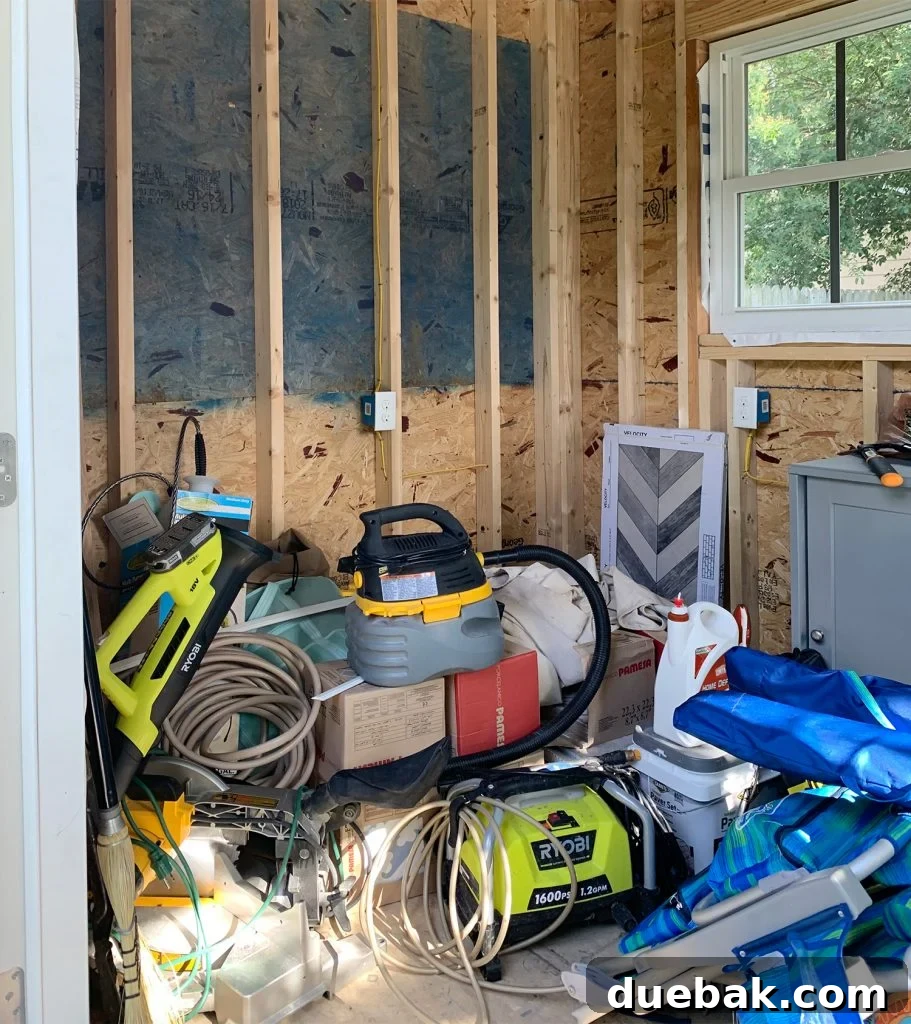
That chaotic heap festered for a while, as disaster piles are wont to do, until we finally dedicated a weekend to whip this beach house shed into shape. The core strategy for this ambitious shed organization project was simple: effectively utilize every inch of wall space to reclaim the precious floor area. This approach, focusing on vertical storage, is a game-changer for any small shed or compact storage space, maximizing capacity and improving accessibility. By getting items off the floor, we not only created more room but also made it easier to clean and navigate the shed’s interior.
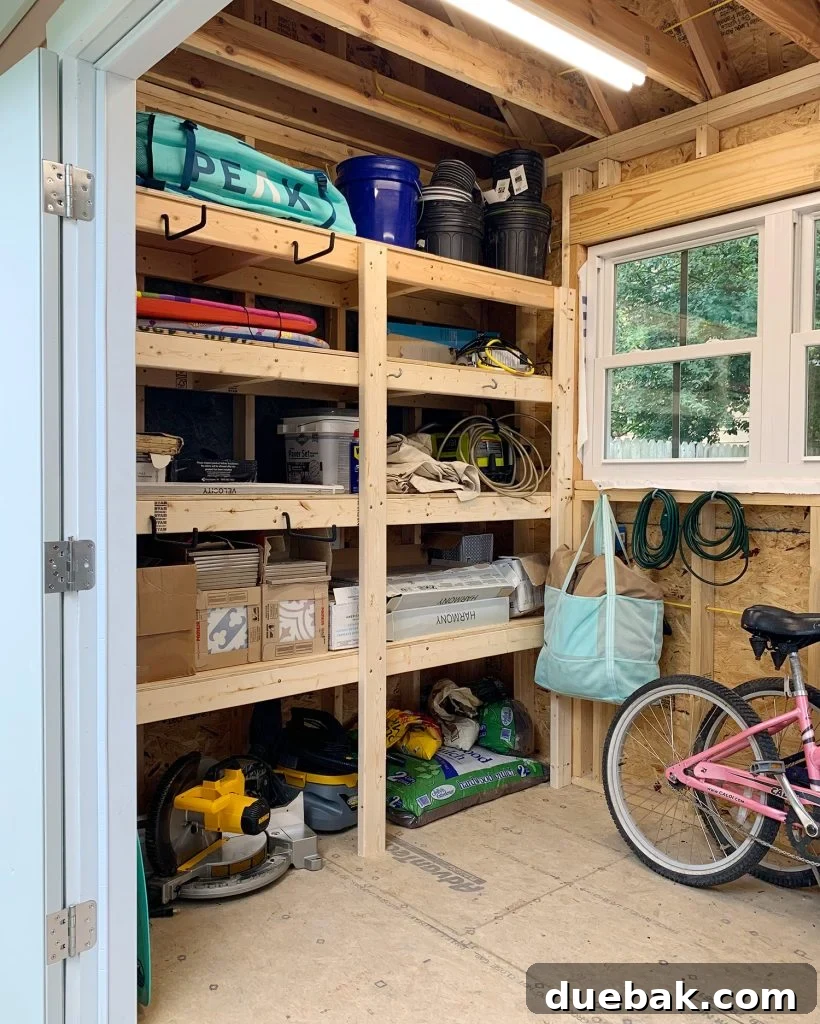
The inherent challenge was the limited amount of continuous wall space. The wall you see in the image above is the only one free of doors or windows. The other three walls are dominated by either three windows, two windows, or two doors, severely restricting conventional shelving options. This made the full wall the obvious and prime location for building some much-needed heavy-duty shelves – the cornerstone of our efficient shed storage system.
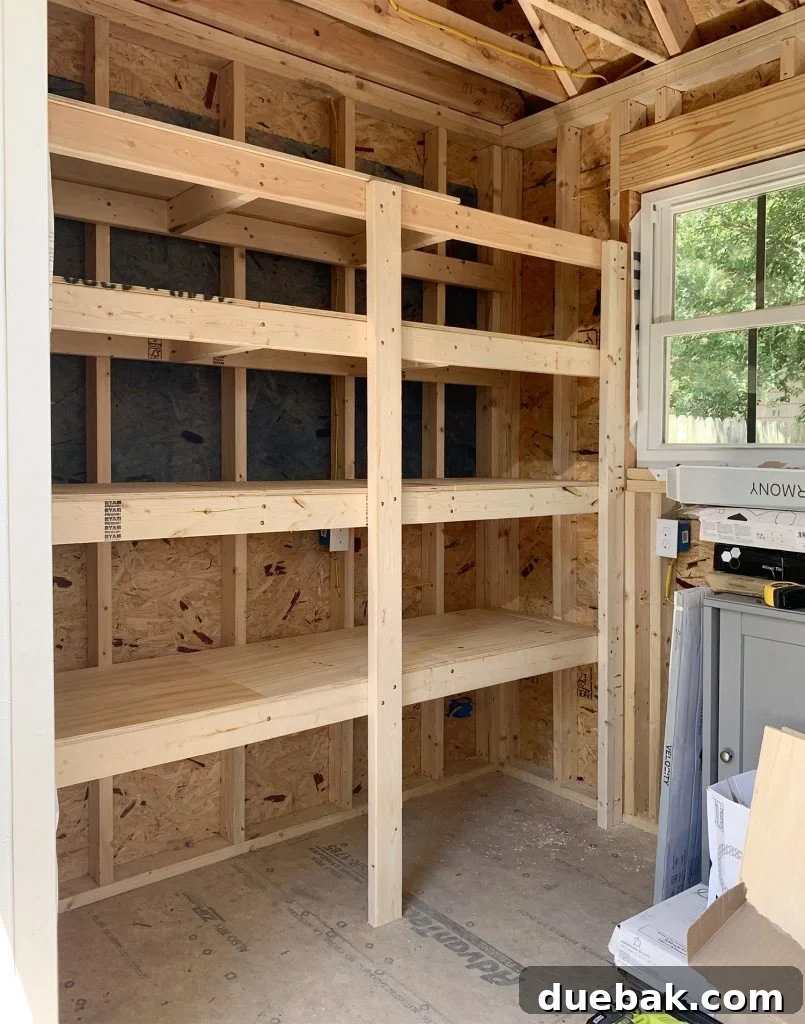
The Foundation of Order: Building Custom Shed Shelves
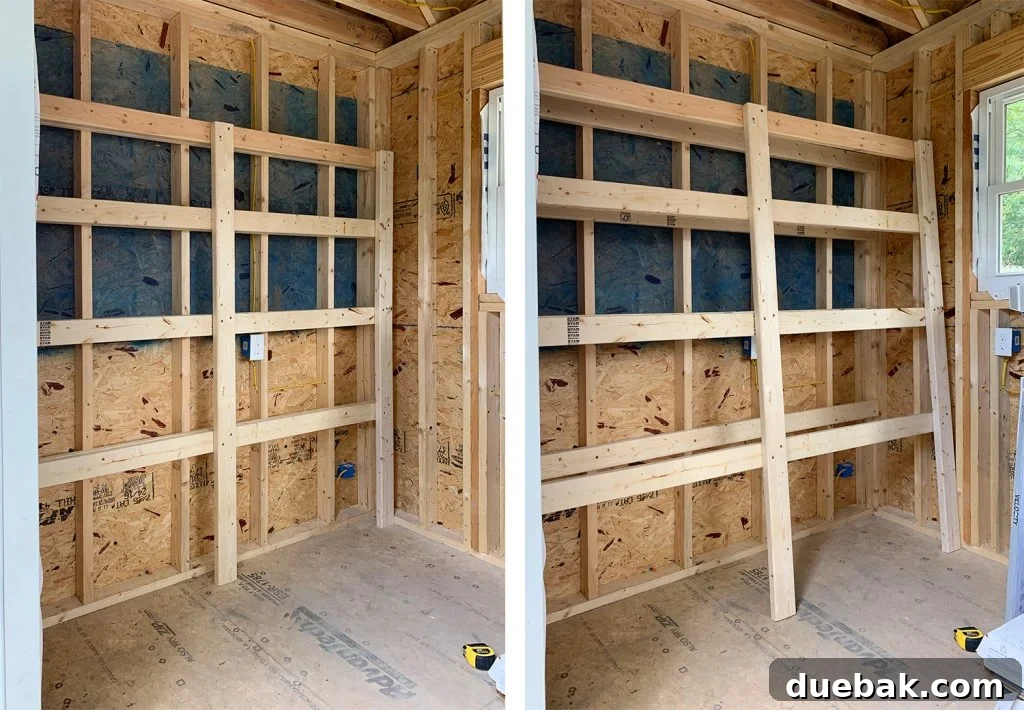
I constructed these robust shelves in just a few hours, employing the same proven technique I utilized in our Richmond shed, which itself was inspired by this fantastic Ana White tutorial. The beauty of this method lies in its simplicity, primarily using 2x4s and plywood, along with a clever trick that significantly reduces the need for extensive measuring and leveling. For those interested in the detailed instructions, you can find them in this post, but the core idea is incredibly efficient.
The gist of the technique is to build your outer shelf supports directly against the wall. You literally screw them (temporarily) into the inner shelf supports while they’re stacked. When you then separate them, you’re guaranteed that the front and back frames of your shelves will align perfectly because they were built as one unit. This ingenious method not only ensures precision but also makes the entire process remarkably fast, allowing for quick and sturdy DIY shed storage solutions.
The spacing of the shelves is entirely customizable, allowing you to tailor them precisely to the items you intend to store. For reference, I’ve included our specific measurements below. You’ll notice we opted for larger shelves at the bottom, ideal for bulky items, power tools, and larger storage bins. Above these, we installed smaller shelves perfect for less frequently used items or smaller supplies. This design offers a tremendous amount of flexibility, which is crucial for shed organization. The contents of a shed often evolve over time, so having versatile storage that can adapt to changing needs is a key advantage. This modular approach to shelving ensures that whether you’re storing garden tools, beach equipment, or renovation supplies, your shed can accommodate it all efficiently.
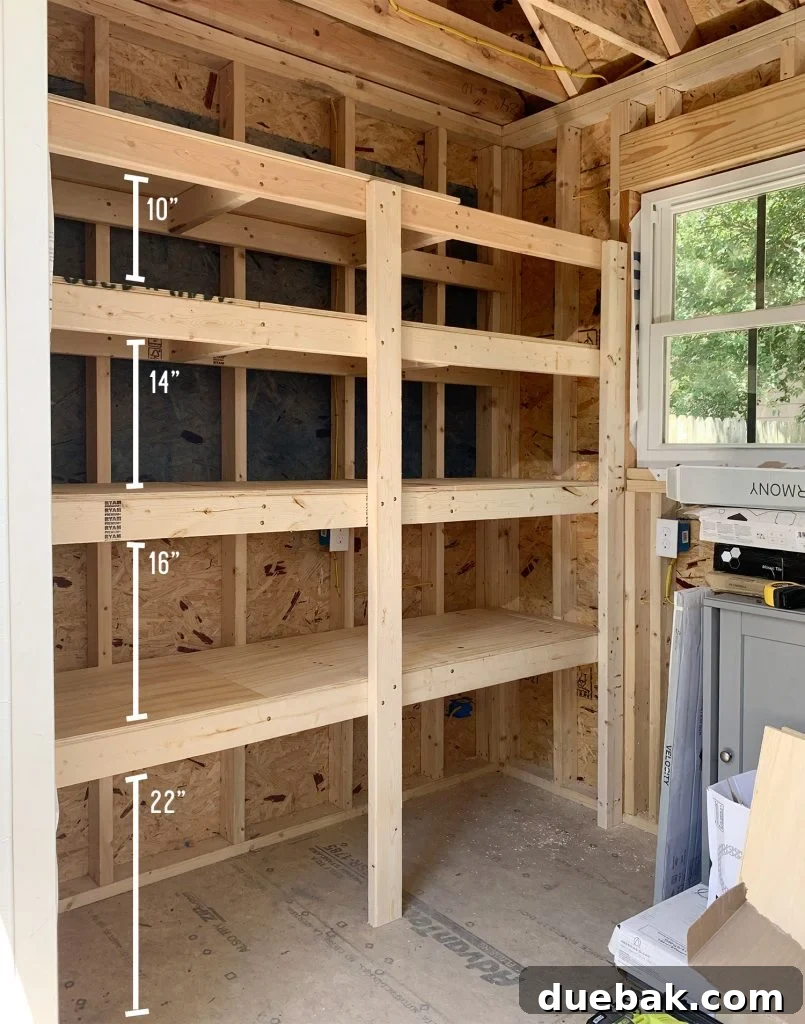
One certainty for these freshly built shelves was the considerable collection of spare tiles from both our beach house and duplex renovations. We religiously keep at least one box of extra tile for every project, a prudent measure in case of cracks, plumbing issues, or future replacements. The accumulated tile from three kitchens, seven bathrooms, and three mudrooms quickly adds up! (Yes, we tiled thirteen distinct spaces in just two years across the beach house and the duplex – you can witness the results here & here). Fortunately, all of this tile fit comfortably on just one and a half shelves, leaving ample room for about 70% of what comprised our original disaster pile.
This remaining space now efficiently houses essential items like our pressure washer, our inflatable paddle board, the kids’ boogie boards, potting soil and mulch, our trusty miter saw, and our indispensable shop vac. These carefully organized items demonstrate the incredible storage capacity created by these custom shelves. I’ll reveal where the other 30% of the disaster pile found its home in just a moment, showcasing even more clever small shed storage solutions.
Ingenious Layering: Maximizing Shelf Fronts for Accessibility
Now, let me introduce you to my favorite aspect of this particular shed organization project. I initially found myself somewhat disappointed that our only full wall was predominantly used to store items we would need infrequently, or perhaps never, in the case of the extra tile. This realization sparked an idea: why not treat the front of these shelves as a wall in its own right, adding another layer of organization on top? It’s a concept similar to how one might hang a picture frame on the face of a bookcase, but adapted for a more “shed-appropriate” function. This innovative approach transformed a static storage unit into a dynamic, multi-purpose organizational hub, proving that even in small spaces, creative solutions abound.
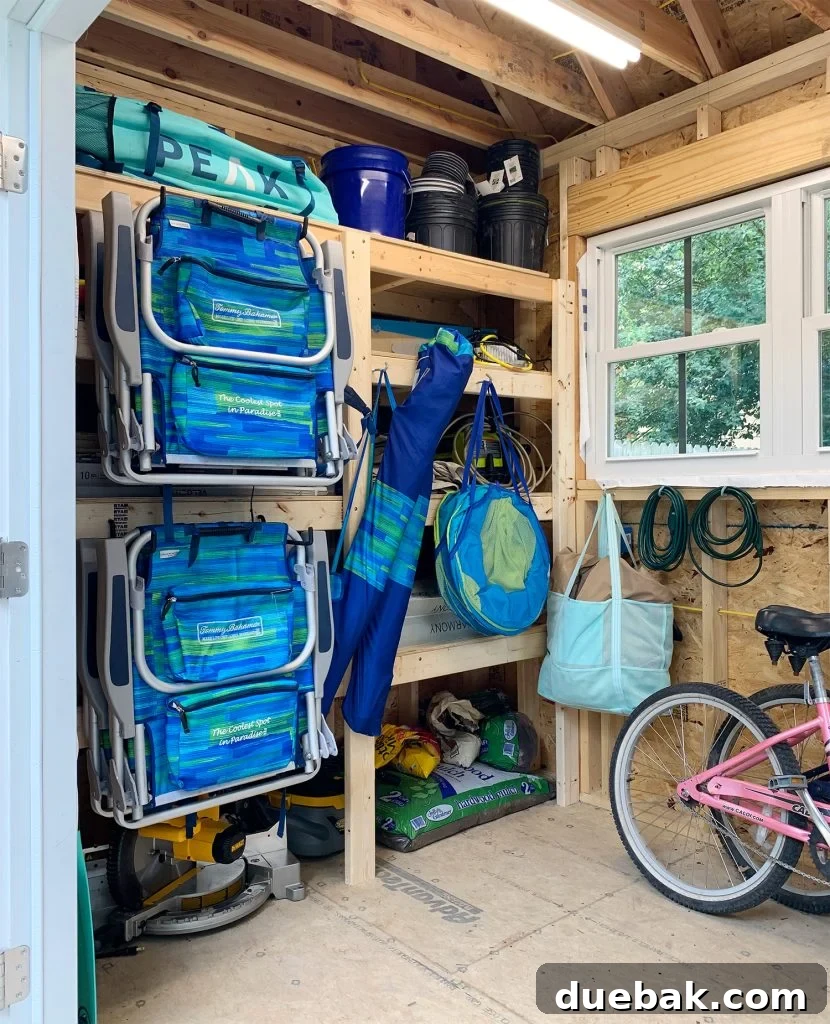
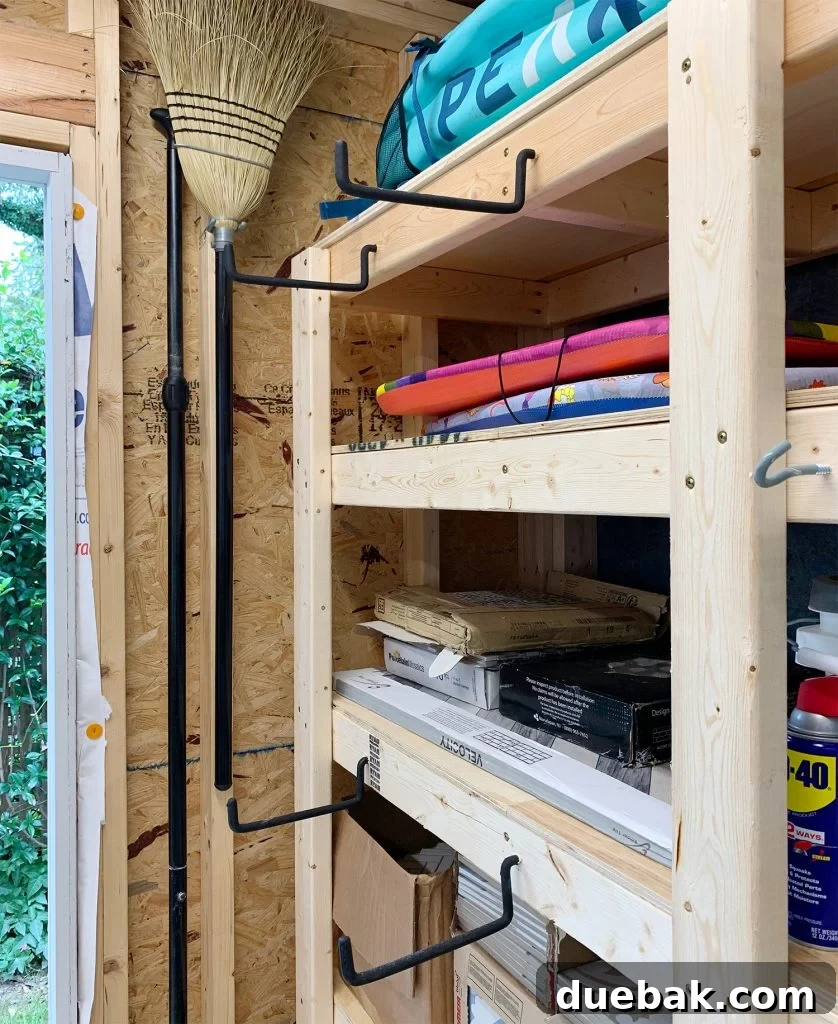
The solution was deceptively simple: strategically placed hooks. By installing sturdy hooks, like these ladder-hooks that we repurposed into beach-chair-hooks, we created a super convenient spot right next to the shed door to hang our most frequently accessed items – primarily our beach gear. I cannot overstate how incredibly useful this “shed layering” system has proven to be over the past few months. The ease of grabbing a beach chair or a bag of towels on the way out the door has been a true luxury. Plus, let’s be honest, we don’t exactly yearn to gaze upon boxes of random tiles every day. So, a hearty cheer for strategic shed layering, a clever way to blend aesthetics with functionality and keep the less attractive but necessary items out of sight, while ensuring essentials are always within reach for our beach house adventures.
Note: If you’re looking for more projects centered around adding shelving, this post offers sixteen easy shelving ideas to inspire your next organization endeavor.
Navigating Windowed Walls: Smart Storage Solutions
Now, let’s pivot and explore the other side of the shed – an area predominantly characterized by windows. While these windows contribute significantly to the shed’s charming exterior aesthetic, providing ample natural light and breaking up the wall space, they inevitably limit our interior storage options. Despite this constraint, I managed to ingeniously utilize some of the narrow wall spaces and corners for items like our beach kite and our compact electric grill. The area directly beneath the largest window is largely occupied by a couple of leaning bikes. These are cherished hand-me-downs from a thoughtful neighbor (explaining why one is missing a seat) that we’re patiently holding onto until our children grow a bit bigger. Having designated space for them, even if it’s leaning, is incredibly valuable in our compact shed.
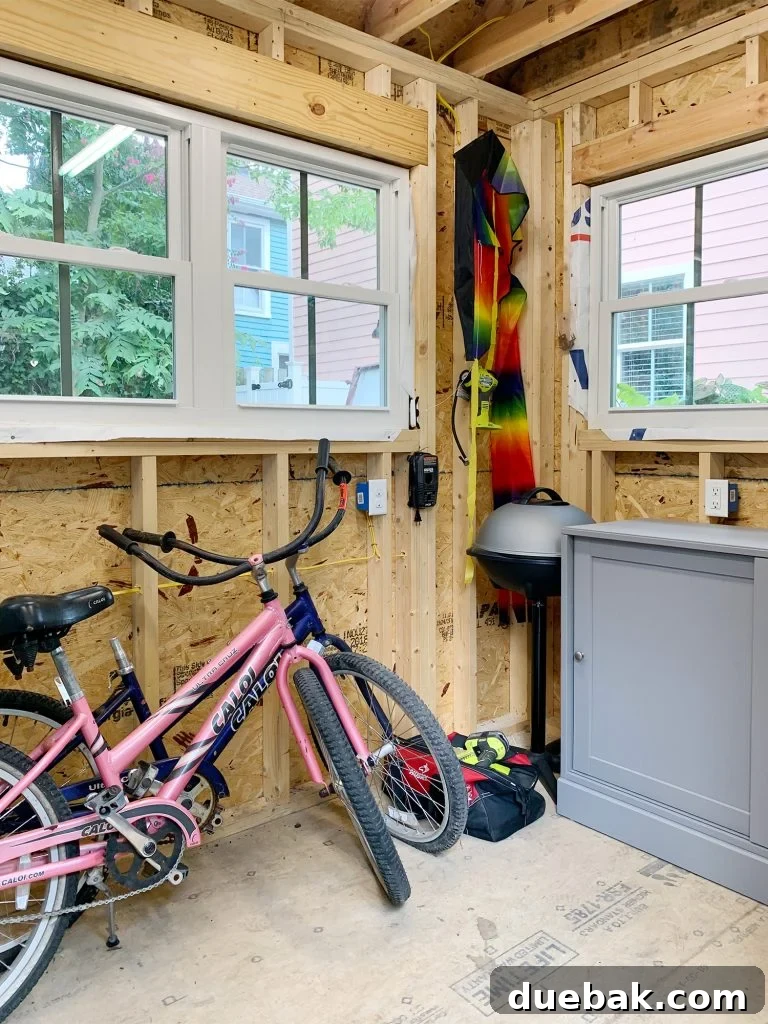
The gray storage piece situated under the other window is actually an Ikea item that we initially purchased with the intention of using it as a media cabinet in our duplex. However, upon assembly, we quickly realized it was far too bulky for that specific purpose (we ultimately opted for these sleeker alternatives instead). Rather than let it go to waste, we repurposed it for shed storage. This decision highlights the value of flexibility and adapting existing pieces to new needs, especially when space is at a premium.
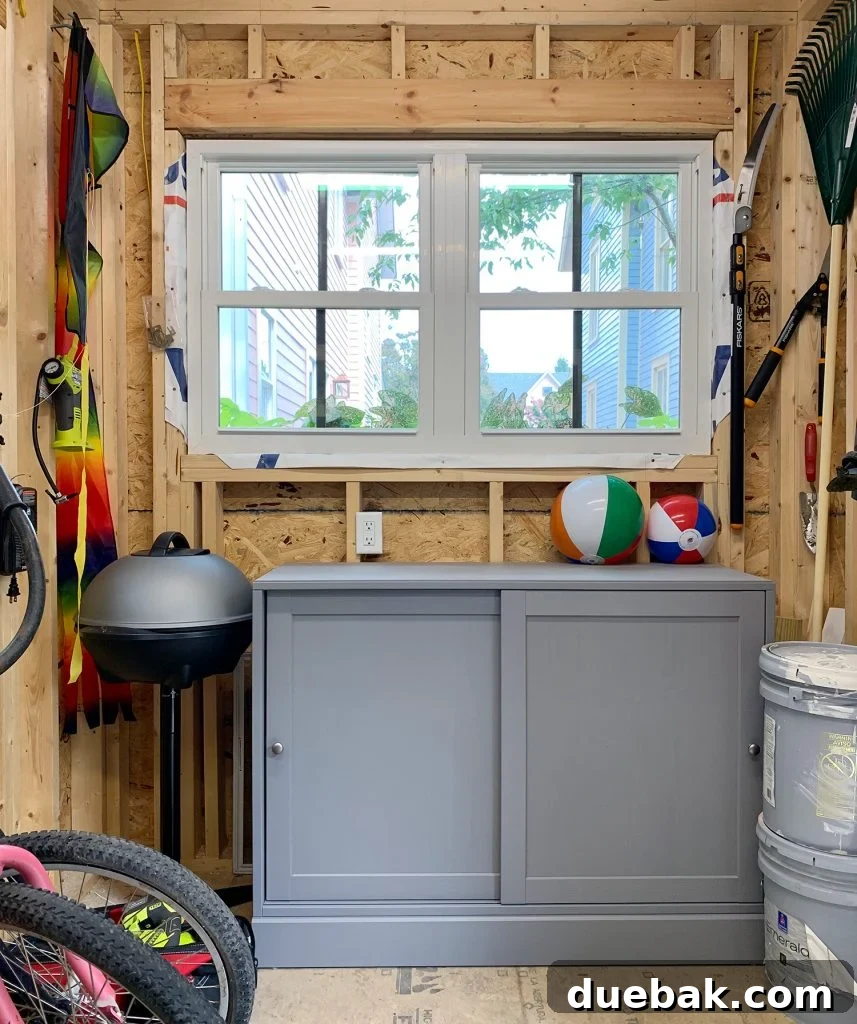
While this particular Ikea cabinet might not have been my first choice if I were buying new storage specifically for the shed, it has proven to be quite a decent solution. Its sliding doors are a notable advantage in this tight space, as they don’t require clear floor area to open, making access much easier. It effectively corrals smaller items like children’s toys and buckets, keeping them neatly out of sight. Behind the closed doors, it also provides a convenient spot for various garden essentials such as hoses and gloves, preventing clutter and maintaining a tidy appearance. This pragmatic approach to repurposing furniture underscores that effective shed organization often involves making the most of what you already have, rather than constantly acquiring new items.
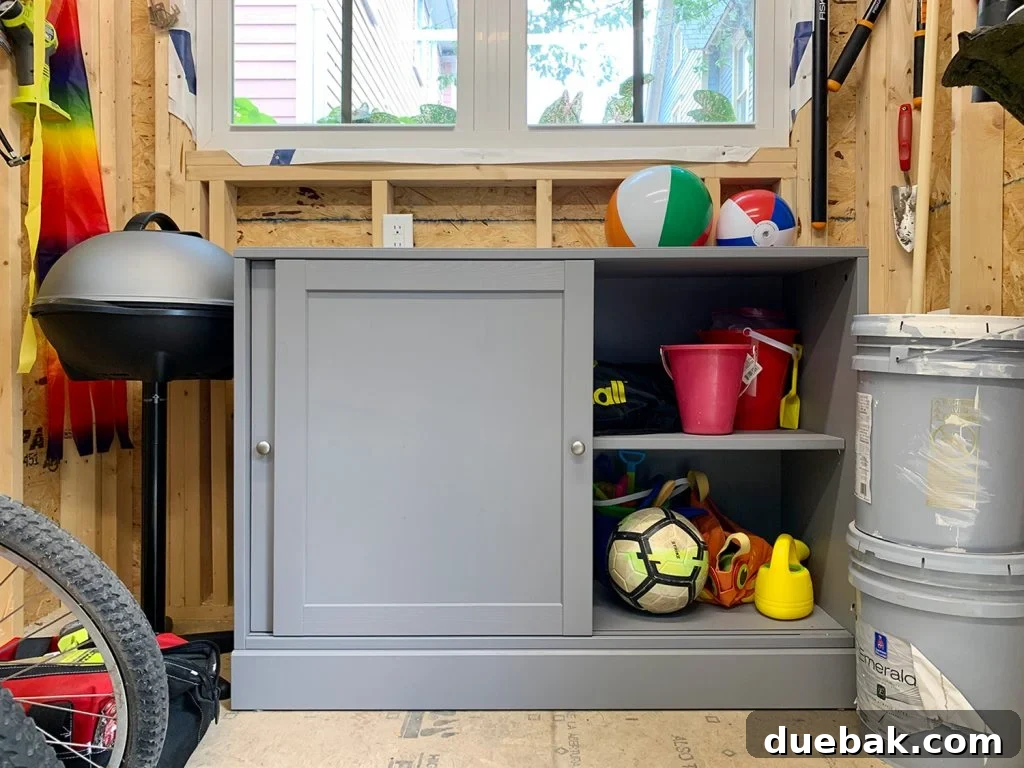
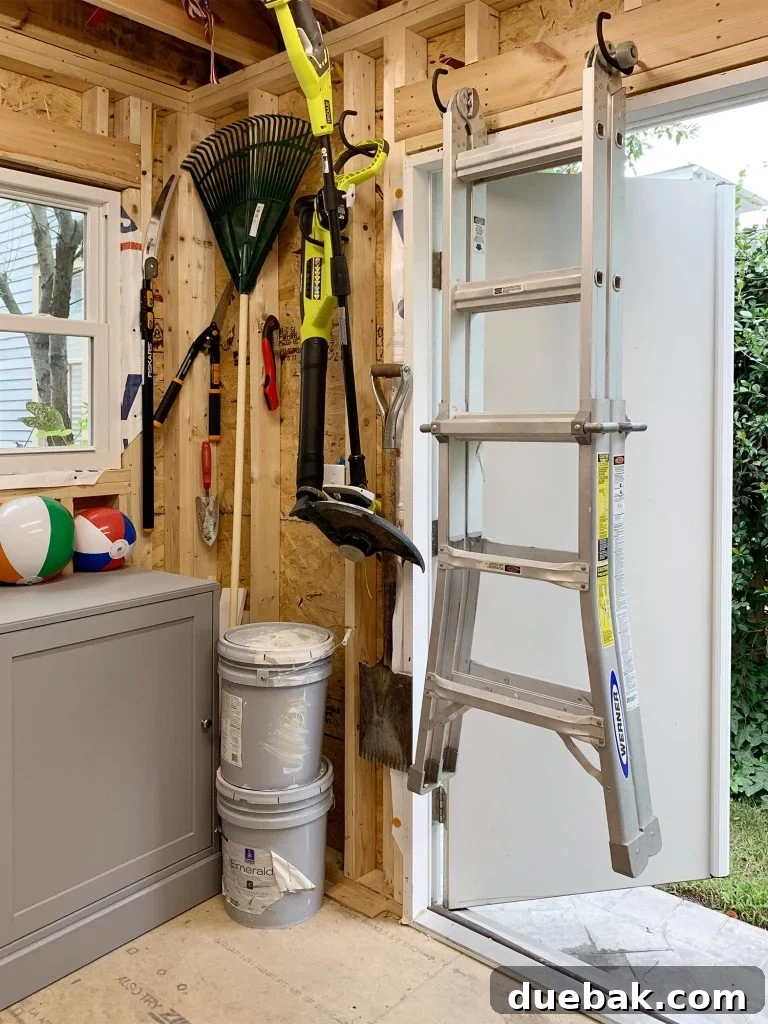
The wall immediately to the right of this cabinet has been transformed into a versatile “smorgasbord” of random screws, nails, and hooks. We strategically attached these simple fixtures to wrangle our various outdoor tools, including clippers, a rake, several shovels, and more. In the past, I’ve experimented with some of those “fancy” outdoor tool racks, but I can honestly say that none of them have provided the same level of utility and satisfaction as this straightforward, DIY system. The key to its success lies in its adaptability and cost-effectiveness. A crucial tip for anyone purchasing outdoor tools is to ensure they come with a built-in hanging mechanism, such as a hole or loop, for this very purpose. This simple consideration can make a world of difference in keeping your shed organized and your tools easily accessible.
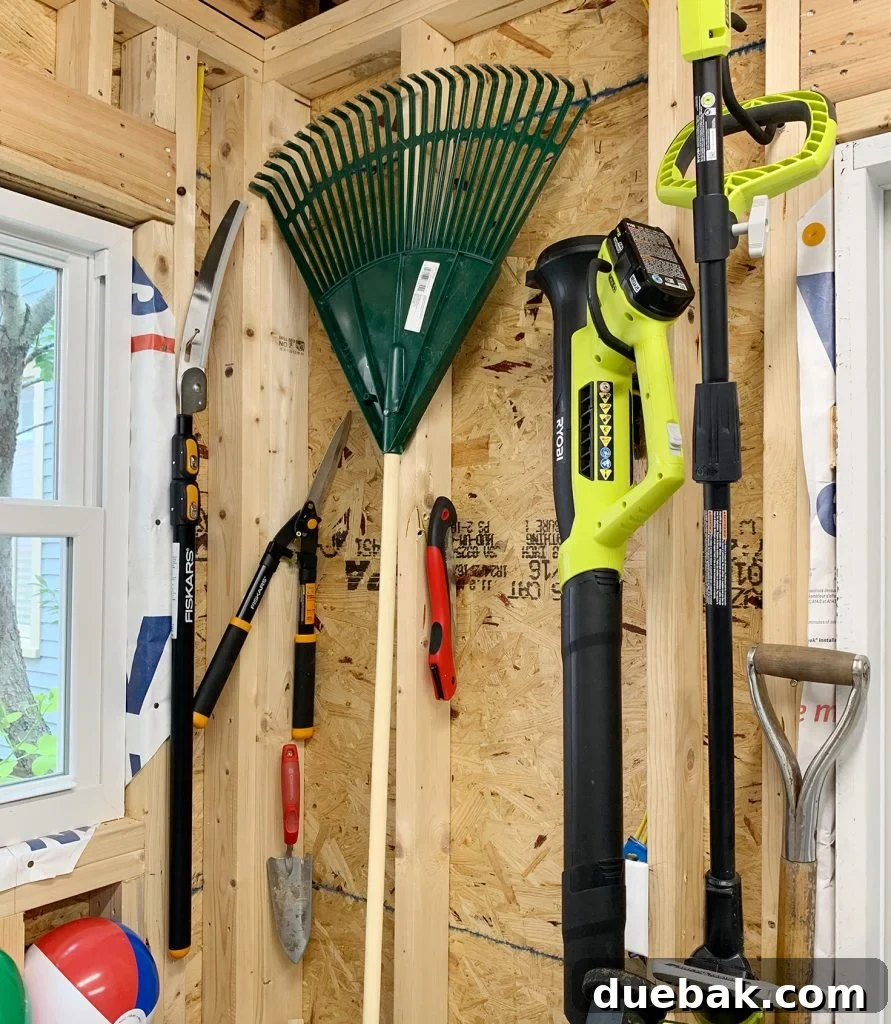
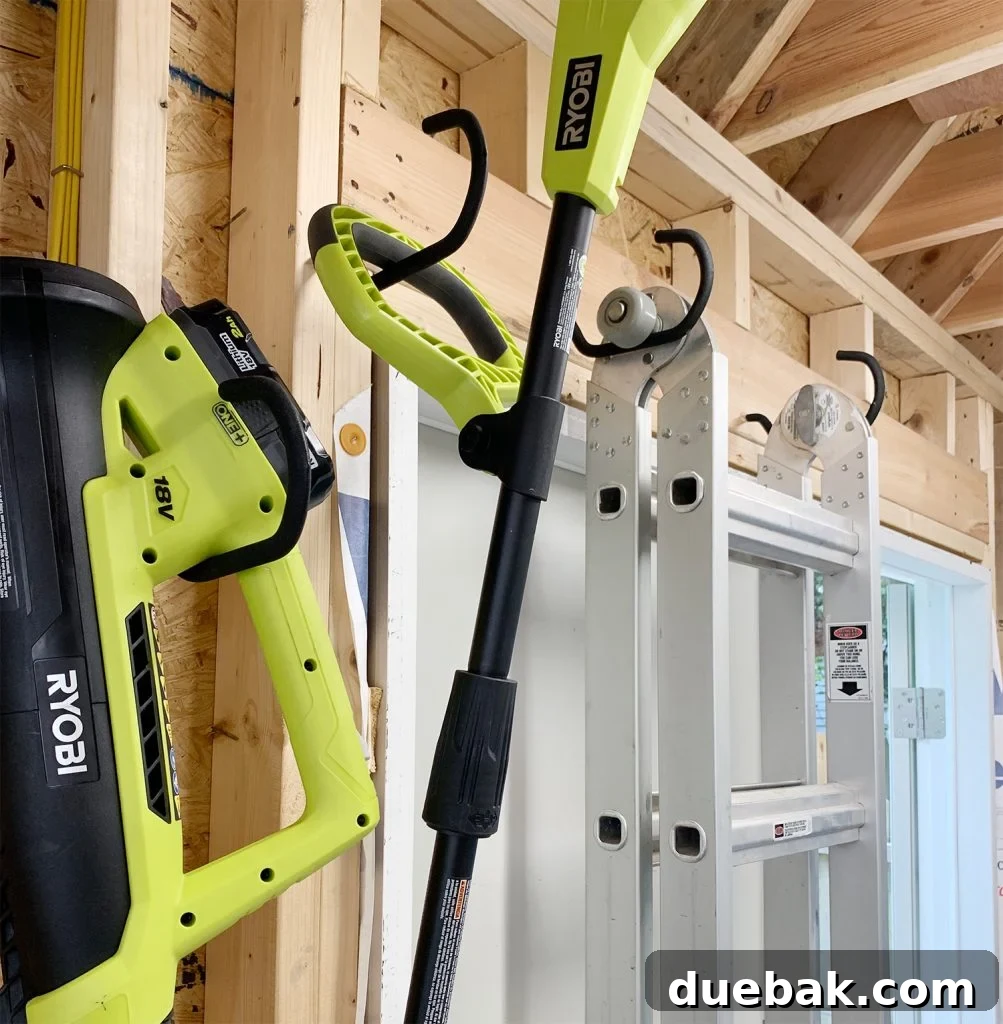
For tools that didn’t come with a ready-made loop or hanging feature, we employed some heavier-duty bike hooks. These robust hooks are perfect for securely hanging bulkier or oddly shaped items such as our blower, our weed trimmer, and, perhaps most notably, our ladder. These powerful hooks provide a strong, stable anchor, preventing tools from falling or cluttering the floor space. This thoughtful use of vertical space is paramount for efficient small shed organization, ensuring every tool has its designated home and is easily retrieved when needed.
Unlocking Hidden Potential: The Active Door Storage Trick
And speaking of the ladder, this brings us to the second instance where I ingeniously “created my own wall space.” How did I achieve this? By hanging the ladder directly in front of one of the double doors. We intentionally installed double doors on the shed to facilitate easier loading and unloading of larger or longer items, such as our outdoor furniture, on the rare occasions it’s needed. However, in practice, we very seldom open both doors simultaneously. Since the door with the ladder in front of it remains securely fixed in place unless unlatched at both the top and bottom, I reasoned that this “most-of-the-time” wall space presented a valuable opportunity for vertical storage.
This clever shed organization hack means that the ladder is always securely hung and out of the way, rather than leaning precariously and taking up floor space. Should we ever require wider access by opening both doors, removing the ladder is a simple and quick task. But for 99% of the time, this arrangement is infinitely more useful and efficient. It exemplifies how observing the actual use patterns of a space can lead to incredibly effective and often overlooked storage solutions, transforming seemingly unusable areas into functional assets within a compact shed.
That concludes my guided tour of the newly organized beach house shed. Hopefully, it has thoroughly satisfied your curiosity about what truly lurks behind those inviting blue-green doors. From the initial “disaster pile” to a meticulously organized and highly functional storage space, this shed makeover proves that thoughtful planning, a few smart DIY solutions, and a bit of creative thinking can transform even the smallest and most challenging areas into efficient storage hubs. We’ve managed to create a dedicated home for everything from bulky power tools and renovation leftovers to essential beach gear and gardening supplies, all while maintaining easy accessibility. This project is a testament to the power of maximizing vertical space and finding innovative ways to store items, ensuring our beach house remains a sanctuary, free from clutter.
And if you appreciate organization posts (or SHEDS!) as much as I do, be sure to explore these other inspiring projects:
- Four Ways We Organized Our Richmond Shed
- Maximizing Our Mini-Mudroom
- How We Organized Our Kitchen Cabinets (full video tour!)
- Turning A Coat Closet Into Extra Toy Storage
*This post contains affiliate links, which means we may earn a small commission at no extra cost to you if you make a purchase through our links. Your support helps us continue creating valuable content.*