
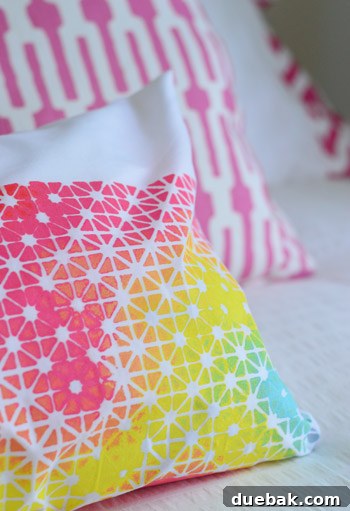
Transform Your Space: DIY Stenciled Pillowcase Art with a Metal Grate
Are you looking for an inspiring and budget-friendly way to add a unique touch to your home decor? This heartwarming story invites you to unleash your inner artist by getting crafty with a simple pillowcase, some vibrant fabric paint, and an unexpected tool – a metal grate. Prepare to be amazed as we transform ordinary items into extraordinary home accents, demonstrating that creativity truly knows no bounds. Get ready to dive into a project that’s not only incredibly fun but also results in a truly one-of-a-kind piece, all while appreciating the pun-tastic charm of our chosen stencil!
The Unseen Potential of Extra Pillowcases
I don’t know about you, but I always seem to have a mysterious surplus of pillowcases lurking in my linen closet. Despite owning just one set of sheets per bed, my penchant for buying extra pillows, and consequently, extra pillowcases, often leads to an over-abundance. Perhaps I’m swayed by a good sale, or maybe it’s a subconscious fear of running short – a trauma from a past life where a missing pillowcase ruined my day! Whatever the reason, this peculiar hoarding habit, unusual for someone who meticulously checks inventory before buying necessities like tomato sauce or toothpaste, has actually paved the way for exciting creative endeavors.
Instead of letting these extra pillowcases gather dust, they present a fantastic opportunity for upcycling and crafting. Why buy new fabric when you have perfectly good material readily available? This realization sparked the idea for our project: transforming a forgotten pillowcase into a stylish, custom-made home decor item. It’s a brilliant way to give new life to textiles you already own, proving that sometimes, the best crafting supplies are hidden in plain sight within your own home. Let’s turn that mystery surplus into a canvas for your next masterpiece!
Crafting Your Canvas: Pillowcase Preparation
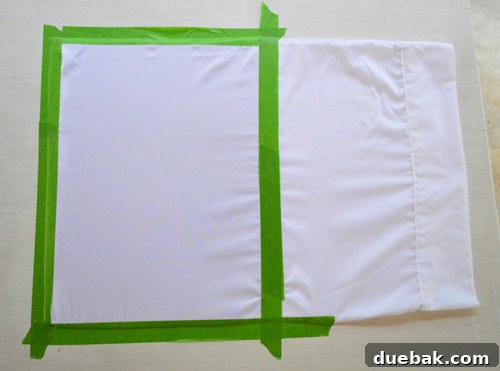
With an extra pillowcase ready for its transformation, the first step is to prepare our fabric canvas. For this project, a plain white or light-colored pillowcase works best, as it allows the fabric paint colors to truly pop. Begin by laying your pillowcase flat on a clean, protected surface. To ensure stability and prevent any unwanted movement during the stenciling process, I recommend securing the pillowcase. I used painter’s tape to tape off a rectangular shape, firmly affixing the fabric to my work surface. This not only keeps the pillowcase taut but also defines the area where your design will be applied, creating a neat border for your finished piece.
An essential tip for any fabric painting project is to prevent paint bleed-through or the fabric sticking together. To achieve this, simply slip a piece of sturdy cardboard inside the pillowcase before taping it down. This acts as a protective barrier, absorbing any excess paint and ensuring that your design remains crisp and contained to one side of the fabric. Choosing a piece of cardboard slightly larger than your stenciling area will provide ample protection. With your pillowcase securely taped and protected, your canvas is now perfectly primed and ready for the artistic magic to begin.
Unleashing Creativity: Your Metal Grate Stencil
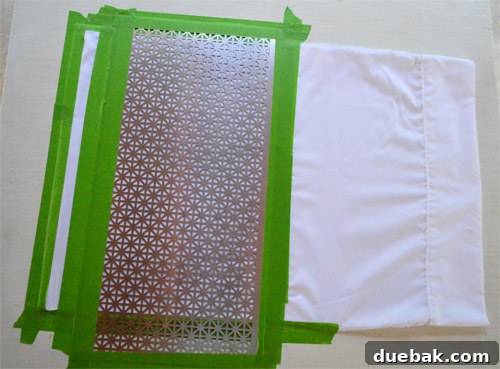
Now for the star of our show, the unexpected stencil: a metal grate! While browsing the aisles of my local Home Depot, I stumbled upon this cute metal grate for just $9. Immediately, my brain screamed, “Um – STENCIL!” The intricate pattern and sturdy construction made it an ideal candidate for creating unique designs. These types of grates, often found in the heating and cooling sections, come in a variety of patterns and sizes, offering endless possibilities for geometric or abstract designs. Don’t limit yourself to new purchases; you might even find interesting grates at salvage yards, antique shops, or perhaps even repurposed from old household fixtures.
Before committing to fabric, I initially considered using the grate on paper to create some frameable art, a fantastic route for those looking for a different kind of DIY project. The beauty of this versatile tool is that it can be used on various mediums. However, for this particular endeavor, I envisioned a cozy and stylish addition to my home. Using fabric paint on the pillowcase and then stitching it up to make an easy little bolster pillow sounded like a wonderfully fun and practical idea. And so, at the metaphorical fork in the road that is “Craft Street,” I veered towards creating this unique fabric art. Place your chosen metal grate precisely over the taped-off area on your pillowcase, ensuring it lies flat and stable. You’re now ready to transform this functional object into an artistic tool.
Assembling Your Artistic Arsenal
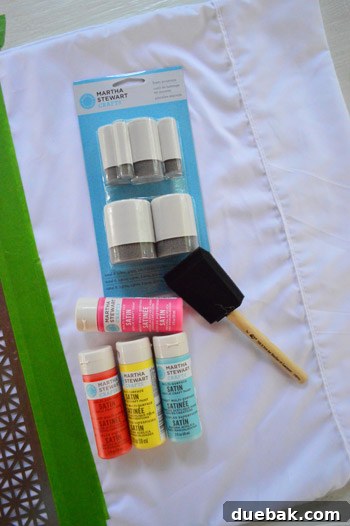
With our canvas and stencil in place, it’s time to gather the essential tools for bringing our design to life. I raided my craft supply drawer and pulled out an assortment of Martha Stewart craft paints. These paints are fantastic for fabric projects because they explicitly state “works on fabric” right on the label. They are also incredibly affordable, typically just a few dollars a pop, making it easy to stock up on a variety of colors whenever they’re on sale. Choosing a range of colors that complement your existing decor or create a vibrant contrast will enhance the final aesthetic of your stenciled pillowcase.
In addition to the paints, good quality stencil brushes are crucial for achieving a clean application and preventing paint from seeping under the stencil. I was fortunate to have a set of stencil brushes (the ones in the blue package) already in my craft basket, acquired almost free thanks to a coupon from Michaels some time ago. Finally putting them to good use brought a sense of satisfaction. All told, the only item I specifically purchased for this project was the $9 metal grate. However, even if you needed to buy the paints and brushes from scratch, the total investment would likely still be around $20, assuming you already have a pillowcase or similar fabric on hand.
The best part about this project is the reusability of the metal grate. This single investment opens up a world of creative possibilities. Imagine making a set of matching pillows, a unique table runner, or coordinated fabric napkins. Beyond fabric, the grate can be used to create stunning art prints, custom stationery, or personalized gift tags. The potential for holiday gifts alone makes this an incredibly worthwhile and versatile crafting tool. So, gather your supplies, embrace the excitement, and prepare to unlock endless design opportunities!
The Art of Stenciling: Techniques for Fabric
Now comes the fun part: stamping! The key to successful fabric stenciling, especially with intricate patterns like a metal grate, is a controlled paint application. I consciously tried not to overload my brush, as I worried from the start that thick paint applications could lead to bleeding under the grate and also result in a stiff, “crunchy” fabric texture once dry. To avoid this, after dipping my stencil brush into the paint, I dabbed off any excess on a paper towel a few times. This ensures your brush is only lightly coated with paint, providing better control and a cleaner impression.
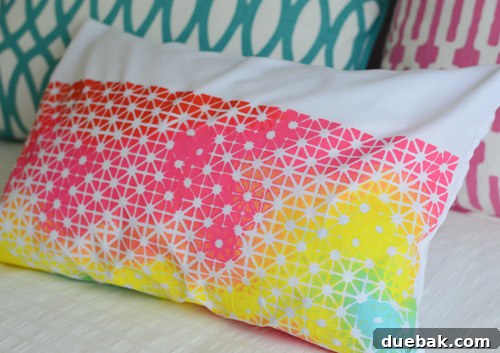
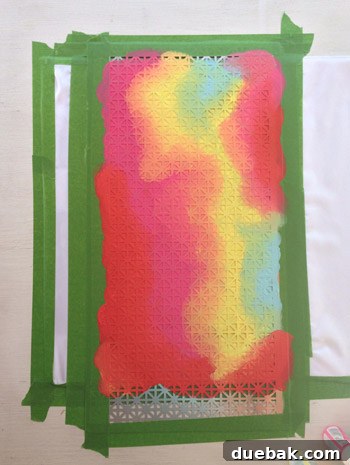
With a lightly loaded brush, begin tap-tap-tapping your way around the grate. Apply the paint in a gentle, upright dabbing motion rather than a brushing stroke, which can push paint underneath the stencil. For this particular design, I aimed for an organic, artistic look rather than rigid lines. I chose to apply sections of colors in an irregular wave shape, avoiding obvious stripes and dots. This approach gave the design more of a fluid, “sand-art” feeling – a nostalgic nod to those colorful layered sand bottles many of us remember from childhood.
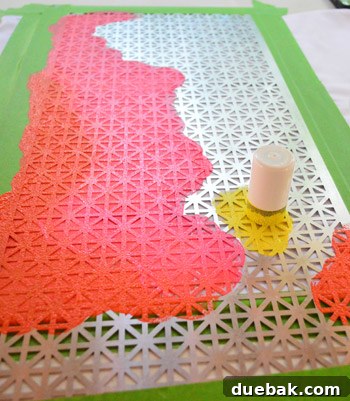
Experimentation with color blending can add another layer of depth and visual interest to your stenciled fabric. Occasionally, I blended colors by adding extra dabs of a second color on top of a freshly applied one. For instance, in one area, I applied blue paint over yellow with some extra pats, creating a beautiful gradient that transitioned from yellow to green and then to blue. This blending technique results in soft, nuanced color shifts that mimic watercolor effects, adding an artistic touch to your design.
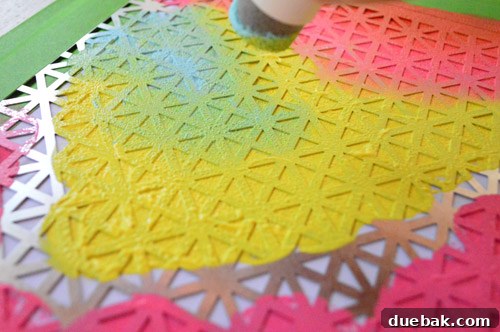
In other sections, I opted for less blending, allowing colors to meet with more defined borders. This contrast between blended and distinct edges adds dynamism to the overall pattern. The entire process was wonderfully fun and “loosey-goosey,” encouraging spontaneity and creativity. Surprisingly, this intricate-looking project probably took me around twenty minutes from start to finish, proving that you don’t need hours to create something beautiful and custom for your home.
Embracing Imperfection: The Reveal
After the paint application, patience is key. I waited a little while before removing the metal grate and the painter’s tape – perhaps an hour or so. My main concern was inadvertently shifting the grate while peeling off the tape, which could smear the still-wet paint and ruin the entire design. Once the paint felt dry to the touch, I carefully began the removal process. And then… the moment of truth. To my initial disappointment, there was some bleeding in a few areas beneath the grate.
At first glance, seeing those slightly imperfect edges might feel disheartening, especially if you were aiming for a perfectly crisp, clean-lined look. However, the more I looked at the finished pattern, the more I began to appreciate its unique charm. The varied and imperfect lines started to resemble something organic and artistic, almost like a scattering of constellations across a night sky. It’s a beautiful reminder that sometimes, the most captivating art emerges from unexpected deviations and happy accidents.
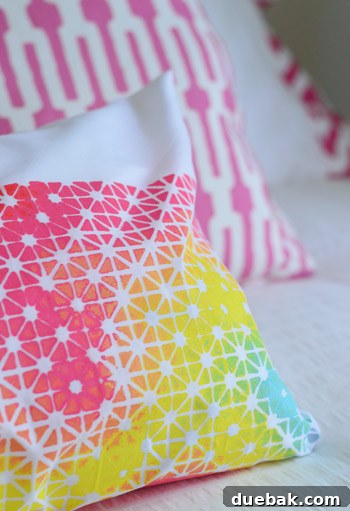
For those who prefer a perfectly clean-lined aesthetic, a few adjustments can help minimize bleeding. Using a temporary stencil adhesive spray to secure the grate to the fabric more firmly can create a crisper edge. Additionally, using even less paint on your brush and dabbing it in a super-light, almost dry-brush fashion would likely further reduce the chance of paint seeping underneath the stencil. Practice on a scrap piece of fabric first if precision is your ultimate goal.
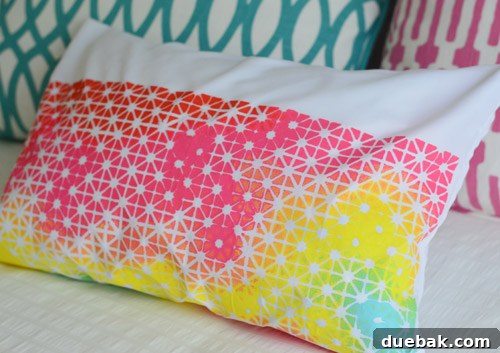
Ultimately, I’m choosing to celebrate these imperfections as “happy accidents.” Think of it this way: often, we pay top dollar for artisan-crafted, hand-stamped block-printed fabrics specifically because of their cool, slightly irregular nature. That’s precisely where their charm lies! These slight blurs and variations give the piece a handmade, authentic feel that mass-produced items simply can’t replicate. At least, that’s what I’m telling myself, and I truly believe it adds character to this DIY pillowcase art.
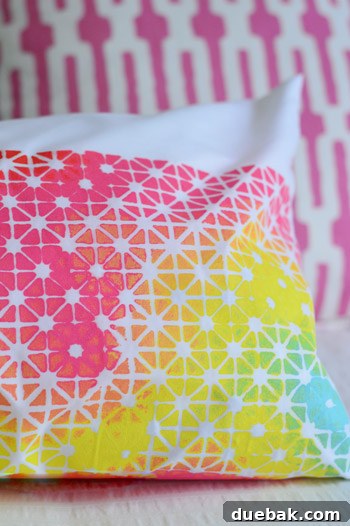
Caring for Your Grate Creation
A common and important question for any fabric project is its washability. For those wondering if this stenciled pillowcase is washable, I have an update! Someone thoughtfully commented that they had great success washing fabric painted with the same Martha Stewart product by diligently following the care instructions provided on the container. This suggests that with proper care, your beautiful grate creation can indeed be cleaned.
It is always crucial to read the label of your specific fabric paint product before washing any item. Different brands and types of fabric paints may have varying instructions regarding heat-setting, washing temperature, and detergent types. If you plan for your item to be washed often, such as cloth napkins or a frequently used pillow, understanding these care guidelines is paramount to ensuring the longevity of your design. Always err on the side of caution, and when in doubt, hand-washing or a gentle cycle with cold water is often a safe bet for preserving your handmade fabric art.
Beyond the Bolster: Endless Grate Art Possibilities
While transforming a pillowcase into a stylish bolster pillow is a fantastic project, the versatility of the metal grate as an artistic tool extends far beyond this single idea. In fact, I believe the grate itself possesses inherent artistic beauty. You could simply paint the grate in colors that complement your decor, perhaps even creating a gradient or geometric design directly on its surface. Once painted and dry, you wouldn’t have to worry about any bleeding underneath it. Then, with a metal snip, you could cut the grate to fit a frame, creating a truly unique piece of wall art that boasts an industrial-chic aesthetic.
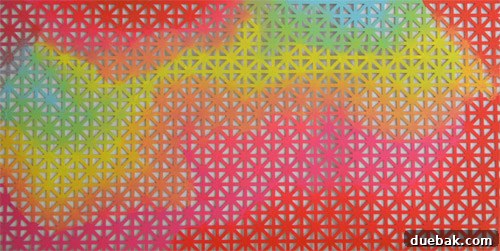
The potential for reusing this $9 grate truly excites me. Beyond the pillowcase, imagine the sophisticated touch a homemade table runner with a repeating stenciled pattern could bring to your dining room. Or a matching set of napkins, elevating everyday meals into special occasions. You could even use it to stencil designs on plain tote bags, creating personalized gifts, or on cardstock for unique stationery. The possibilities are genuinely endless, limited only by your imagination.
So, now that I’ve explored the multifaceted potential of this humble metal grate, I’m eager to see what other “grate creations” you might envision. Are you planning to try your hand at some fabric art, or perhaps explore its use in mixed media? Will this inspire you to look at everyday objects with fresh, creative eyes? Share your ideas, and let’s keep the crafting inspiration flowing!
Psst- Wanna know where we got something in our house or what paint color we used? Just click on this button: