
Embarking on a fireplace refacing project is an exciting way to breathe new life into your living space. With our detailed plan finalized and all supplies at the ready, it was time to dive into the transformative first step: tiling! This comprehensive guide will walk you through every essential detail, from meticulous preparation and precise tile installation to the satisfying final touches of grouting and sealing, ensuring your DIY fireplace tile makeover is a resounding success.
Crafting Your Fireplace Tile Vision: Planning and Design
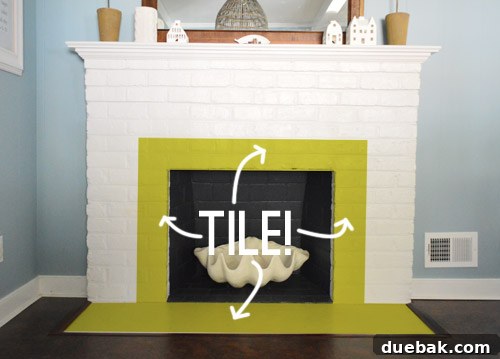
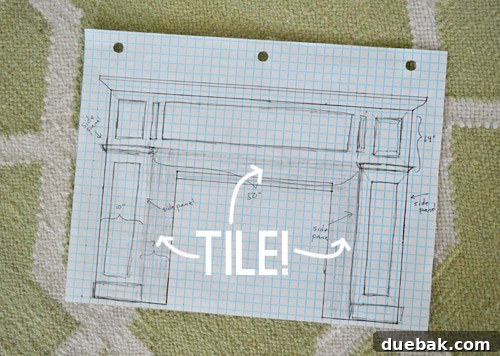
The journey begins with a clear vision. Our initial design called for a tile border around the firebox, approximately seven inches wide. The remaining brick would later be framed out with wood and MDF, which necessitates installing the tile first so that the wood can layer seamlessly on top. This sequential approach ensures a professional and integrated finish for your fireplace surround.
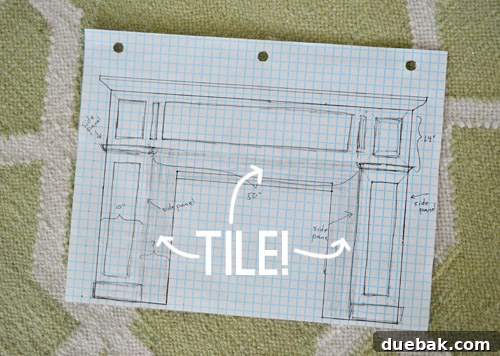
Before any demolition or installation, always check your local building codes regarding fireplace clearances. It’s crucial to ensure your planned wood surround maintains a safe distance from the firebox. In our case, the code stipulated a minimum of six inches of tile before any wood elements could begin. This isn’t just a regulatory detail; it’s a critical safety measure to prevent fire hazards. And rest assured, the tile isn’t destined to be a “grellow” shade – that was just an early, playful thought!
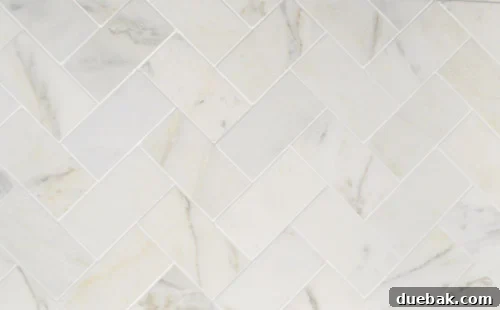
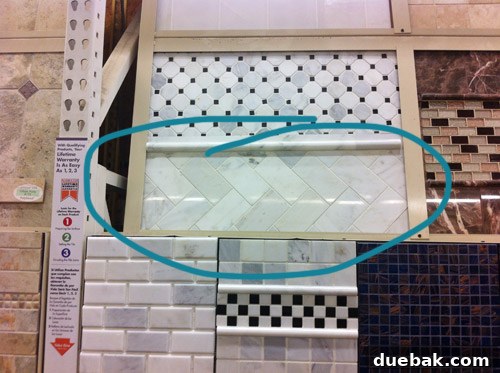
For our tile selection, we opted for elegant marble subway tiles, readily available at Home Depot for just over $5 per square foot. Marble brings a timeless sophistication and natural beauty that can elevate any space, making it a popular choice for DIY fireplace projects seeking a luxurious touch without breaking the bank. The inherent veining and subtle variations in marble promise a unique and captivating finish.
Essential Preparations: Laying the Groundwork for Your Tiling Project
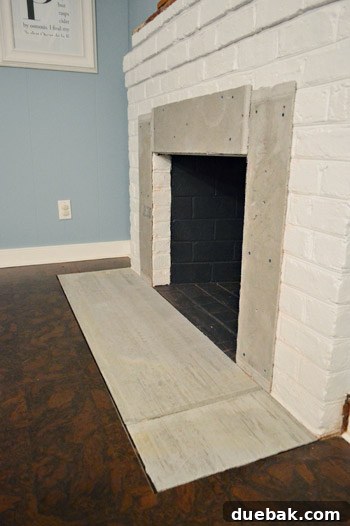
Before you can begin adhering tiles, establishing a perfectly smooth and stable surface is paramount. This crucial preparatory step ensures longevity and a professional appearance for your new fireplace tile. We started by installing 1/4-inch cement board, a durable and moisture-resistant substrate ideal for tiling.
Installing Cement Board: The Foundation of Durability
Cutting cement board can be achieved efficiently using the score and snap method. Simply score a deep line with a utility knife, then snap the board along the score. Once cut into strips, we attached the cement board to the fireplace structure using heavy-duty masonry screws and a specialized masonry drill bit. This process can be quite dusty, so ensure adequate ventilation and wear appropriate safety gear. Having an extra set of hands, as Sherry and I discovered, makes the drilling and holding process much smoother and safer.
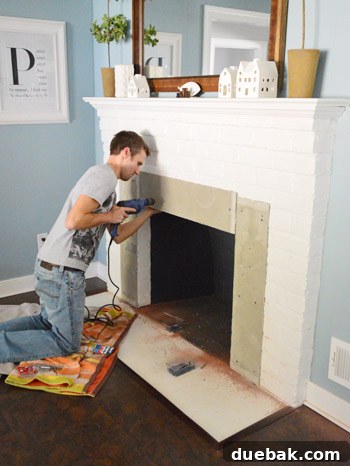
A word of caution: always clear your mantel and surrounding areas before drilling or any work that might dislodge items. We quickly realized the potential for accidents and removed all decorative items. Let’s just say, a ceramic house crashing to the floor would not have been well-received! (I have a bit of a track record with such incidents, so prudence was key.)
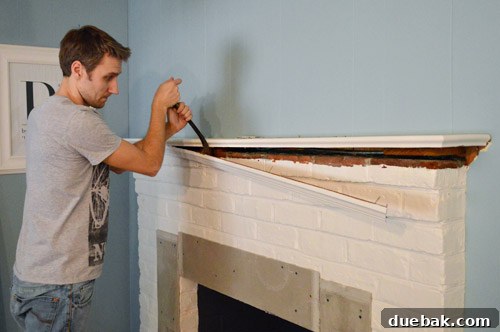
After clearing the mantel and removing the old wood top – a smart move to fully demo before tiling – we focused on the bottom hearth. For this section, instead of extensive demolition, we applied a generous amount of heavy-duty construction adhesive directly over the old hearth. We then laid down the cement board pieces and stacked heavy storage ottomans overnight to hold them securely in place. A few screws at the corners were added later for extra reinforcement.
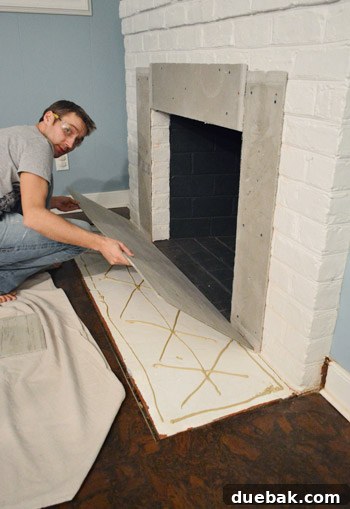
An unexpected benefit of adhering the cement board directly over the old hearth was its ability to correct floor alignment. Since we had previously installed cork flooring over old linoleum (to avoid disturbing an underlying asbestos liner), adding the cement board and tile actually brought the hearth back to a perfectly aligned level with the new floor, preventing any awkward raised sections. With the cement board firmly in place, our fireplace was finally prepped and ready for the actual tiling process.
Protecting Your Space: The Rosin Paper Shield
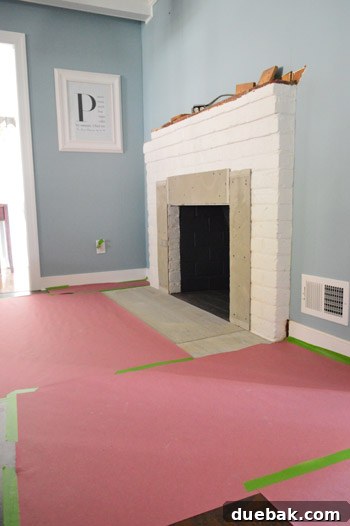
Before diving into the messy world of thinset and grout, we took a moment to protect our beautiful cork floors. Taping down some leftover rosin paper from our previous kitchen tile project provided an excellent barrier against spills and debris, making cleanup significantly easier. This simple step can save you hours of post-project scrubbing.
Selecting and Laying Out Tiles: Precision and Pattern
A crucial step often overlooked is pre-laying your tiles. Following a suggestion, we purchased a few extra boxes of tile beyond our estimated needs. This allowed us to account for any breakage during cuts, and more importantly, to pick out any oddly chipped or discolored pieces. Thankfully, our batch had very few imperfections, allowing us to use about 90% of the purchased tile and return the remaining 10% as overage – a common and accepted practice at most home improvement stores like Home Depot.
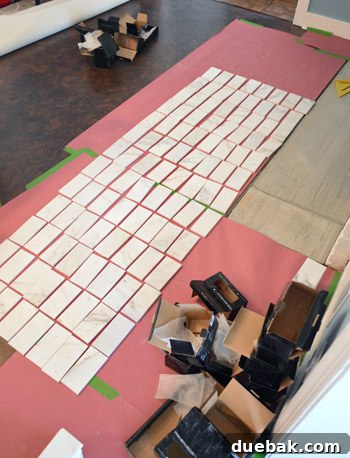
While a bit tedious, laying out all the tiles beforehand was incredibly beneficial. It provided a visual preview of the final look and allowed us to strategically space out the natural veining of the marble, ensuring a balanced mix of dark and light patterns across the hearth rather than clumps of similar tones. We also created a pile of slightly imperfect tiles, reserving them for smaller cuts where the flawed sections could be easily removed, maximizing tile usage and minimizing waste.
Choosing Your Pattern: Herringbone vs. Traditional
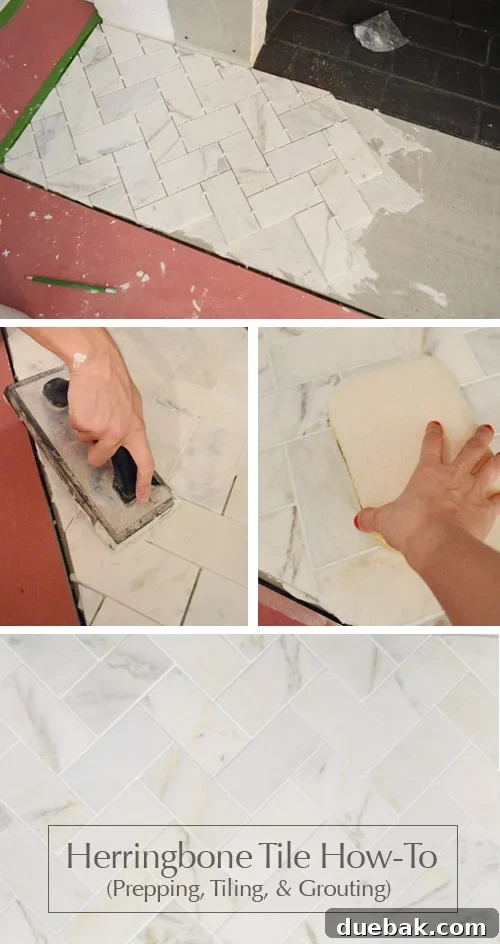
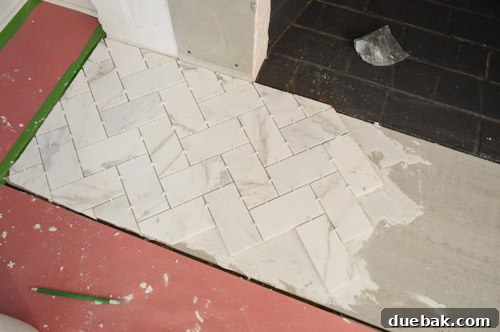
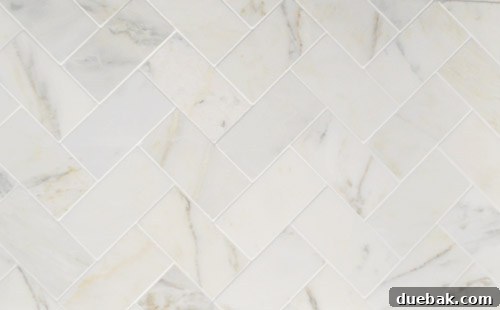
For our fireplace, we decided on a dynamic combination: a herringbone pattern for the hearth, paired with a more traditional brick-layer pattern for the fireplace surround. We experimented with several configurations and found this blend to be the most aesthetically pleasing. Update: Many have inquired about this specific pattern choice. With the limited surface area around the firebox (only 7 inches showing), a full herringbone pattern might have appeared too busy or random, resembling half-zigs and half-zags without enough space to establish the intricate chevron look. The simpler brick-layer pattern for this smaller area felt less chaotic and more cohesive, creating a balanced visual harmony with the striking herringbone hearth.
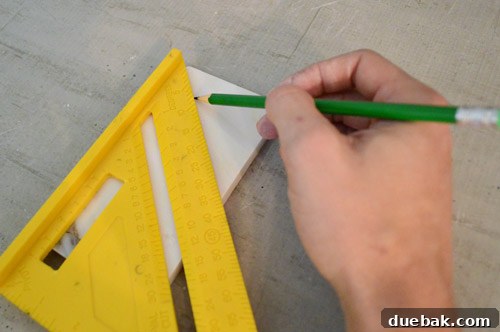
And thank goodness we own this handy triangle square! It became an indispensable tool for our project.
Precision Cutting: Mastering the Wet Saw for Intricate Patterns
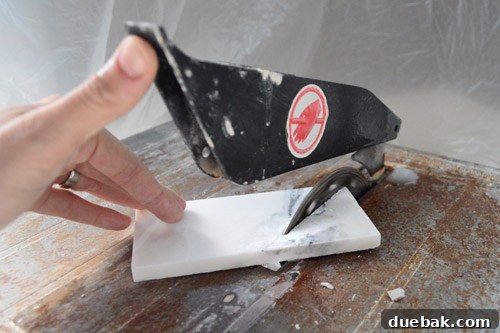
Our trusty wet saw, one of my favorite tools, was essential for executing the numerous cuts required for the herringbone pattern. Nearly every single tile piece for the hearth demanded a precise 45-degree angle cut. Despite the seemingly complex angles, the process was surprisingly manageable compared to other intricate cutting tasks we’ve tackled, like crown molding. Anyone, even those hesitant about tiling, can master this! It’s genuinely not as intimidating as it sounds.
Working with marble does present a slight challenge; its inherent brittleness means corners can sometimes chip off towards the end of a cut. However, with careful handling, we didn’t lose many tiles. In fact, we found it much easier to work with than previous experiences with penny tile, which had a significantly higher learning curve for cutting.
The Tiling Process: Adhering Your Vision with Thinset
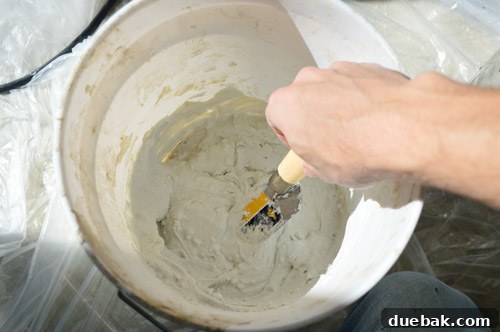
Once our initial pieces were cut, it was time to mix up some thinset – conveniently, we had some leftover from our penny tiling project! Then, we started adhering the tiles to the prepared cement board. While “slapping down some tile” might be a casual description, the actual technique involves careful application of thinset with a notched trowel to ensure even coverage and strong adhesion.
While I’m summarizing the core tiling process here, we’ve covered the specifics extensively in previous posts, complete with videos. For detailed guidance on various tiling techniques, we recommend consulting these resources:
- Learn how to hang cement board correctly.
- Discover the nuances of installing penny tile, including helpful video tutorials.
- Master the art of grouting penny tile with our video guide.
- Essential steps for de-hazing and sealing tile for a polished look.
- A comprehensive guide to installing a subway tile shower and marble floor, including a detailed supply list.
Once the herringbone pattern for the hearth was established, the process became quite methodical. Despite the small space requiring numerous cuts, it was a straightforward “just-keep-going” task that required minimal problem-solving once we got into the rhythm. We estimate the bottom portion took a solid four hours, contributing significantly to our first day’s work.
Tackling the Surround: Faster and Smarter
On the second day, during Clara’s nap, we efficiently tackled the top portion of the fireplace surround. This section progressed significantly faster, largely due to the simpler straight cuts required for the traditional brick-layer pattern.
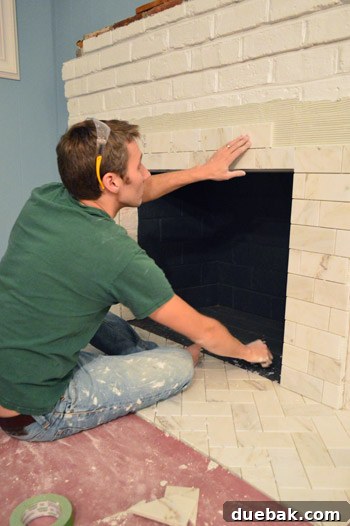
Since the outer edge of the tile would eventually be covered by the MDF frame of our wood surround, we didn’t have to obsess over perfectly clean edges. In fact, we developed a clever technique to stagger the tiles, allowing us to reuse both halves of a single cut. For instance, if the bottom row featured a cut tile on the left, the other half of that same tile would be used in the row above it, on the right. This staggered approach minimized waste and significantly streamlined the process, preventing the creation of numerous unusable tile fragments.
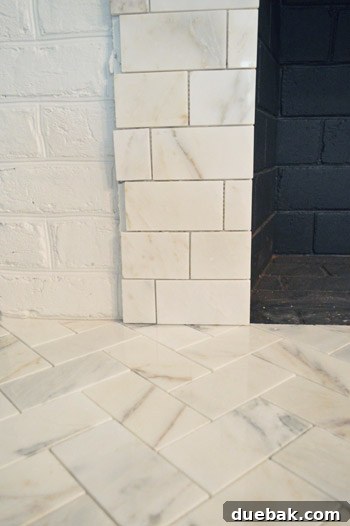
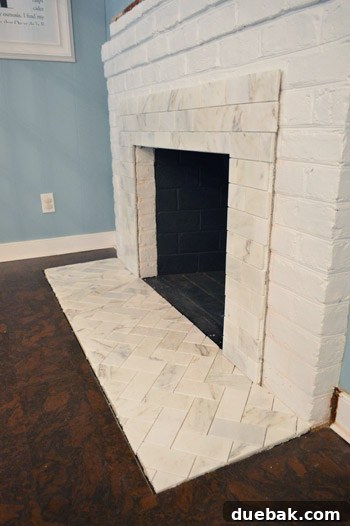
By the end of day two, all our tile installation was complete – a truly rewarding milestone! (A quick note: the white strip of brick inside the firebox will eventually be painted the same dark charcoal as the rest of the firebox, so disregard its current appearance. Additionally, trim pieces will be added around the hearth for a seamless and polished transition to the floor.)
The Grand Finale: Grouting and Sealing for a Pristine Finish
The following evening, after the thinset had properly cured, we moved on to grouting. We used a non-sanded grout from Home Depot in their “Snow White” color, which actually presents as a very soft, subtle gray – a perfect complement to the marble.
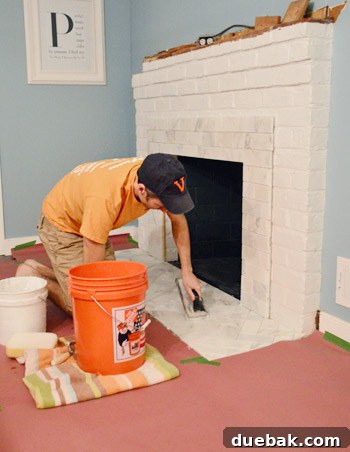
For many DIYers, the transformation that occurs when un-grouted tile meets grout is incredibly satisfying. It instantly pulls the entire project together, creating a unified and finished appearance. The geometric patterns truly pop, and the entire surface is smoothed. I could grout all day, if only I had a bionic wrist!
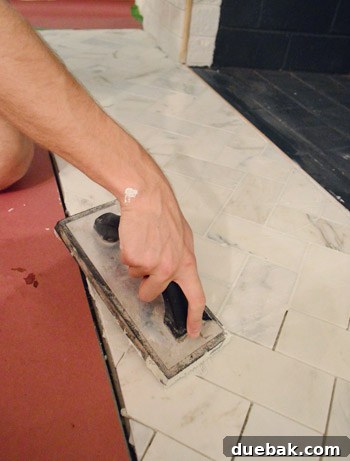
As I worked to push grout into every joint, Sherry periodically followed with a slightly damp sponge, smoothing the grout lines and wiping away any excess from the tile surface. Her meticulous approach ensured a clean finish and, I must admit, she managed to stay remarkably cleaner than I did throughout the process!
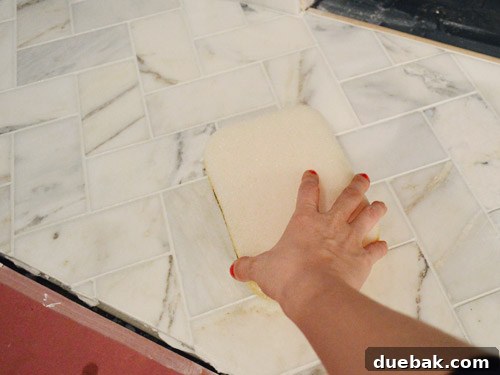
The grouting itself took a mere 45 minutes, resulting in this beautiful, newly tiled fireplace. Admittedly, it still looks a bit incomplete without its surrounding mantel and trim, but that’s the exciting next phase of our project.
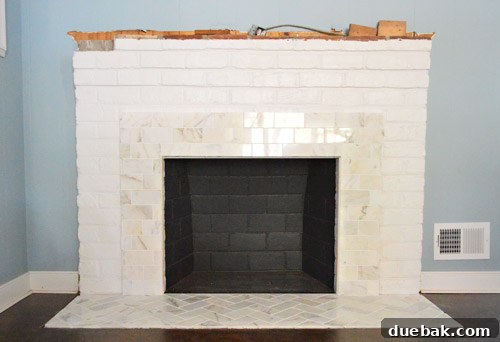
We’re eagerly looking forward to building the custom wood surround, reconstructing the mantel, adding decorative trim and molding, followed by priming and painting. And, of course, celebrating this significant milestone with a well-deserved cookie (or twenty) once it’s all complete!
After allowing the grout the recommended drying period, we sealed all the tile and grout using leftover sealer from a previous backsplash project. This quick ten-minute step is vital for protecting natural stone like marble and maintaining the cleanliness of your grout lines. Finishing with a completely re-tiled hearth and fireplace surround in elegant white marble feels like an incredible upgrade, achieved with only about seven hours of total work. Best of all, the “marble tile” budget wasn’t nearly as daunting as it sounds!
Project Cost Breakdown: Achieving Luxury on a DIY Budget
Here’s a detailed look at the costs for our DIY fireplace tile makeover:
- Cement board (2 sheets): $16
- Masonry screws: Already owned
- Liquid Nails Heavy Duty: $2
- Subway tile: $5.50/sq ft, totaling $70
- Thinset: Already owned
- Tiling tools (wet saw, trowel, float, etc): Already owned
- Grout: $11
- Tile sealer: Already owned
- TOTAL: $99 (*Thanks to some holiday gift cards from family, we actually only spent $49 out-of-pocket. Without gift cards or already owned supplies, this upgrade might typically range closer to $150.)
Reflections and Encouragement: The Power of DIY
We’re currently riding a “herringbone high”! Seriously, we are so incredibly pleased with our decision to incorporate that specific pattern. For some reason, it instills a sense of sophistication and luxury, making our home feel distinctly more upscale. Perhaps we should consider renaming our house “Downton Ranchy”!
Perhaps we should even record a sequel to that famous SNL skit, “Marble Subway Tile.”
Do you have any inspiring experiences with subway tile, a striking herringbone pattern, or general tips for tiling a fireplace that you’d like to share? Have you recently purchased a marble column for your home? Or are you, like some, thinking, “What is this, The White House?!” We’d love to hear your thoughts and experiences in the comments below!
*This post contains affiliate links, meaning we may earn a small commission on purchases made through these links at no extra cost to you.