There’s an undeniable thrill that comes with completing a major home improvement project, especially when it results in a beautiful, functional space like a freshly tiled laundry room. The satisfaction of seeing a brand new floor, perfectly installed, is truly exhilarating – enough to warrant a celebratory dance, perhaps even “jazz hands” for those of us who appreciate a well-executed DIY transformation. This detailed guide will walk you through our recent laundry room porcelain tile installation, covering everything from meticulous subfloor preparation to the final touches of grouting and sealing, ensuring you have all the insights needed for your own successful tiling endeavor.
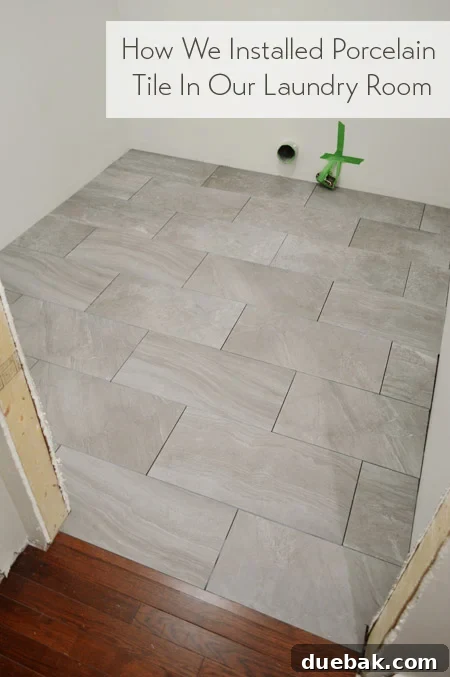
We are absolutely delighted with how this floor turned out. The elegant porcelain tiles, with their subtle movement and rich texture, have elevated the entire room. What began as a mere functional space has been transformed into a stylish and durable area, ready to withstand the daily demands of laundry. Our journey involved careful planning, precise execution, and a bit of a “romance” with a new wet saw that made the process surprisingly enjoyable. Let’s dive into the specifics of this comprehensive laundry room tile installation project, ensuring every step, from initial prep to the final grout, is covered for your DIY success.
Essential Subfloor Preparation: The Foundation of Flawless Tile
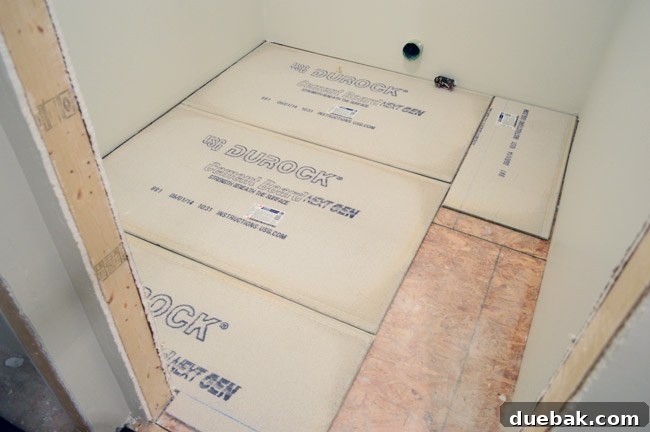
Before any tile can be laid, proper subfloor preparation is paramount. This crucial first step ensures the longevity and stability of your new tiled floor, preventing common issues like cracking or shifting. For our laundry room, the wooden subfloor needed to be fortified with cement board, which is widely recognized as the preferred surface for tile installations. Cement board provides a rigid, stable, and water-resistant base that greatly minimizes the risk of tile failure over time. It effectively isolates the tile from any movement in the wooden subfloor, creating an ideal substrate for thinset adhesion.
The cement board sheets typically come in convenient 3ft x 5ft dimensions, making them manageable for DIY projects. For our laundry room, I was able to fit two full pieces along with several custom-cut strips to cover the entire floor area. Cutting cement board is surprisingly straightforward. Using a sturdy utility knife, I scored the board deeply along the cut line multiple times. Once a sufficient groove was created, I simply snapped the board along the scored line. This method creates clean, precise cuts without the need for specialized power tools, though safety glasses and gloves are always recommended to protect against dust and sharp edges.
Adhering Cement Board with Thinset for Lasting Stability
After all the cement board pieces were dry-fitted and perfectly aligned, ensuring they covered the entire subfloor with appropriate gaps around the perimeter, it was time to permanently adhere them. The chosen method involves using a layer of thinset mortar between the cement board and the wooden subfloor. This thinset layer serves a critical purpose: it securely bonds the cement board to the subfloor, preventing any future shifting, grinding, or flexing that could compromise the integrity of the tiled surface above. This foundational layer is vital for creating a truly stable and durable floor.
For this step, I utilized the exact same thinset mortar that would later be used for setting the porcelain tiles themselves. This ensures material consistency throughout the installation. Mixing the thinset is a straightforward process, but achieving the correct consistency is key. I followed the manufacturer’s directions on the bag precisely, combining the powdered thinset with water using a mixing paddle attachment on my drill. The goal is a smooth, lump-free consistency, often compared to thick pancake batter or peanut butter – firm enough to hold its shape but pliable enough to spread easily. Over-mixing or incorrect water ratios can compromise the bond, so careful attention here is crucial.
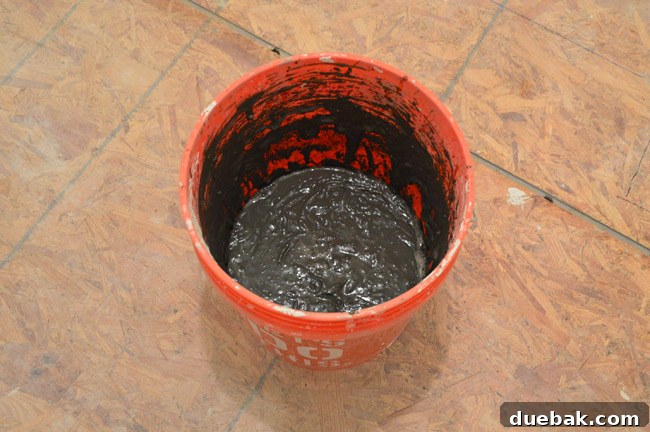
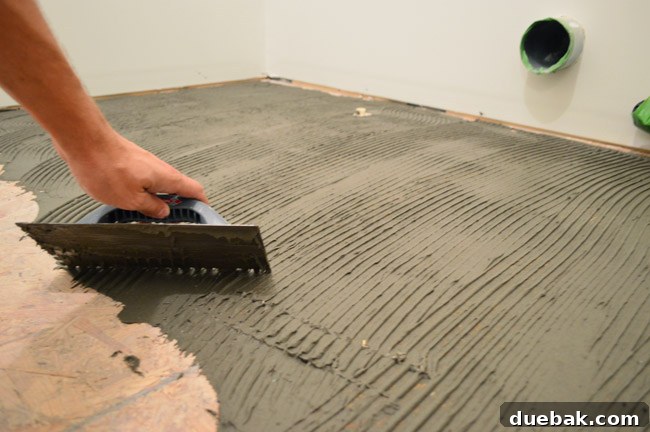
To spread the thinset, I used a 1/4-inch notched trowel, covering one cement board area at a time. The technique is a two-part process: first, coat the entire surface evenly with the flat side of the trowel, ensuring full coverage. Then, holding the trowel at a consistent angle (typically 45 degrees), scrape grooves into the thinset using the notched side. These grooves are essential as they allow air to escape when the board is pressed down, ensuring full thinset coverage and a strong mechanical bond. This is precisely the same technique you’ll employ when installing the tiles themselves, creating a consistent method throughout the project.
With the thinset spread, I carefully lowered each cement board piece into place, pressing it down firmly to ensure good contact and squeeze out any air pockets. Once all the sheets were down, I ensured there was approximately an 1/8-inch gap between them and the walls. This perimeter gap is critical for accommodating any slight expansion or contraction of the subfloor and cement board, preventing stress on the tiled surface. It’s a small detail that contributes significantly to the overall stability of the floor.
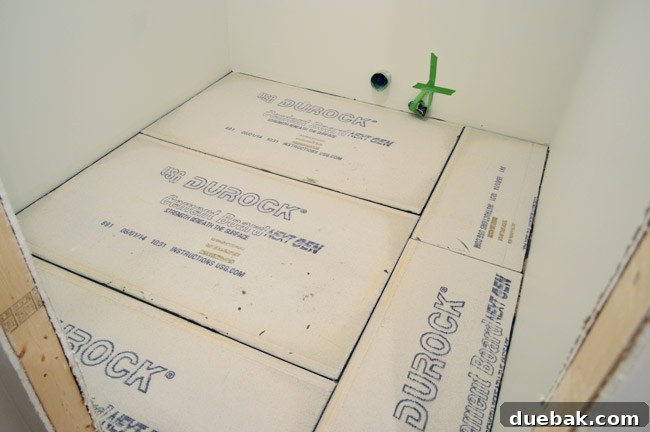
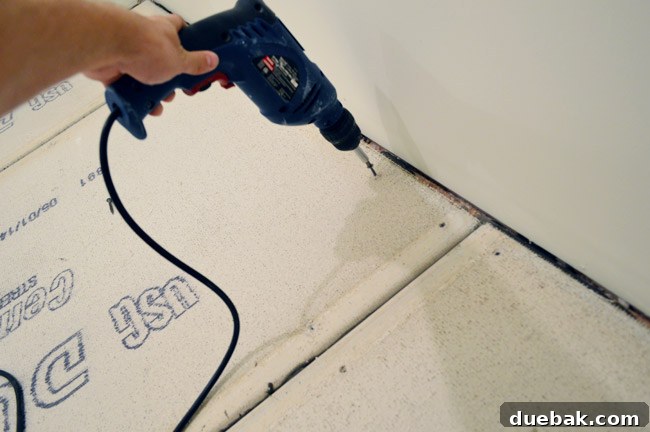
To further secure the cement board and ensure its long-term stability, I screwed down the edges and interior areas. Special cement board screws are designed for this purpose, providing excellent holding power without stripping or damaging the board. I spaced the screws approximately every 6-10 inches along the perimeter and added a few in the middle, roughly every 12-16 inches. This comprehensive screwing pattern helps to pull the board tightly against the subfloor while the thinset cures, preventing any potential movement or lifting.
Sealing the Seams: Preparing for Tile Installation
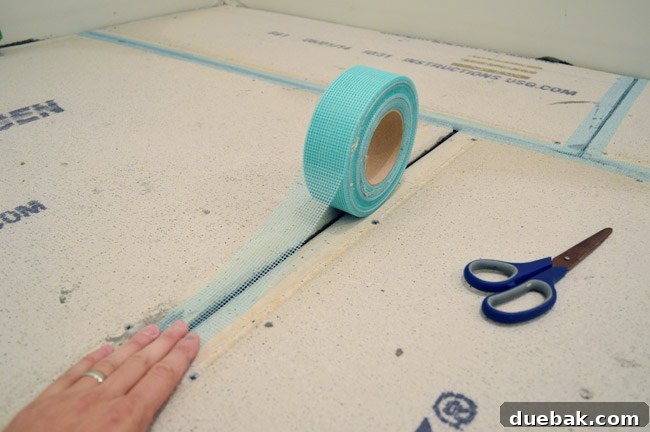
Many tiling tutorials recommend taping and “mudding” (applying a thin layer of thinset) over all seams and screw holes on the cement board, similar to drywall finishing. While this method creates a perfectly smooth surface, I’ve found a simpler and equally effective approach. My preferred technique is to apply mesh tape only to the seams at this stage and then incorporate the thinset application over these seams during the actual tile installation process. This strategy effectively prevents the accidental creation of high ridges or bumps at the seams and screw holes that an extra, dedicated layer of thinset might produce. By integrating the thinset application with the tile setting, I maintain a flatter, more consistent surface, which is crucial for achieving a perfectly level tile installation.
Once all the seams were meticulously covered with mesh tape, the subfloor was officially prepped and ready for the next exciting phase: dry fitting the tiles. This step is where design meets practicality, and careful planning truly pays off.
Strategic Tile Layout: The Art of Dry Fitting
With the subfloor perfectly prepared, the next critical step was dry fitting our porcelain tiles. This process involves laying out the tiles without thinset to determine the most aesthetically pleasing and practical pattern. For our laundry room, we opted for a classic brick pattern, which adds a sense of timeless elegance and visual interest. Dry fitting allows us to visualize the final look, identify any potential issues, and make adjustments before committing to the permanent installation. It’s an essential step that saves time and prevents costly mistakes.
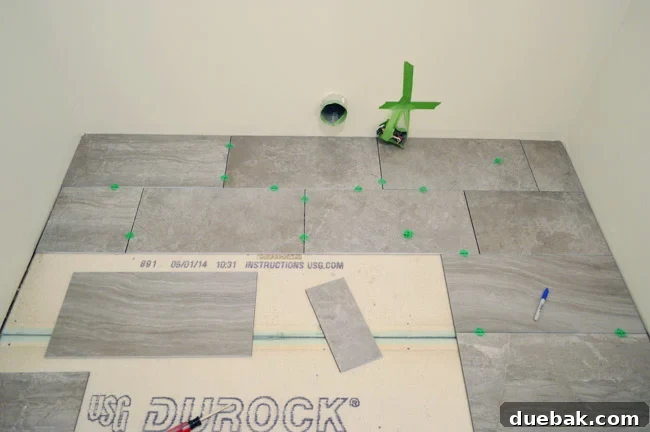
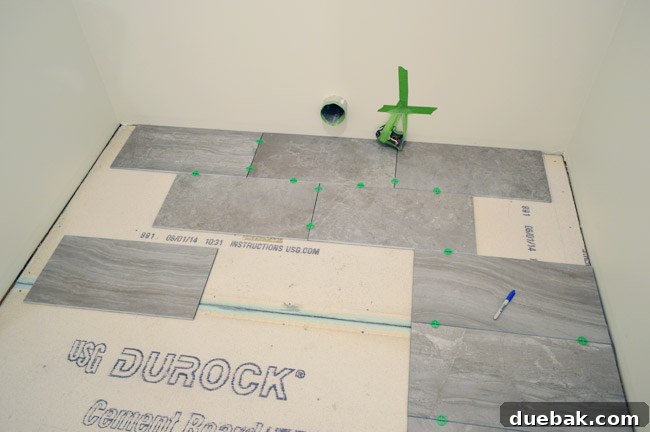
Initially, we started by centering the brick pattern within the room. While centering often seems like the logical choice, we quickly realized it would result in very thin slivers of tile along both side walls. These small cuts can be visually jarring and are more prone to chipping, making them less ideal for a durable, high-traffic area like a laundry room. The dry fit allowed us to identify this aesthetic and practical drawback early on, prompting us to rethink our strategy. *Note: In the image above, only the back two rows are in their intended dry-fit positions; the closer tiles are simply placed randomly for visual reference.*
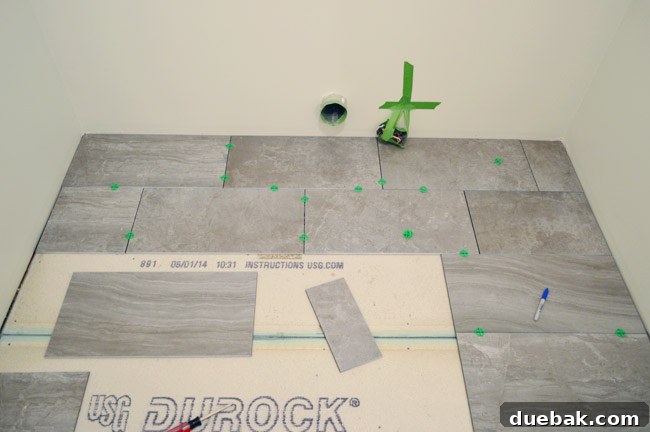
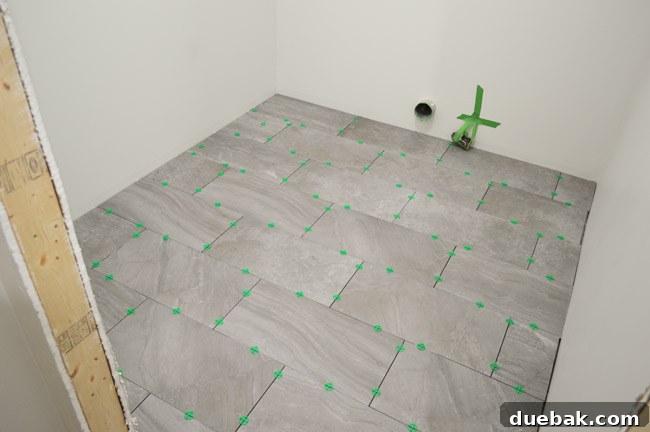
After a good amount of experimenting with different layouts, we opted to slightly shift the entire pattern towards the left wall. This strategic adjustment allowed us to begin with a full tile on the left side, creating a clean and professional edge. More importantly, it left sufficient space on the right side for a larger, more substantial piece of tile, eliminating those undesirable tiny slivers. This decision was also influenced by the room’s functionality: the washer and dryer will be offset to the left side, effectively concealing the slightly smaller cuts on the right. Furthermore, a base cabinet in that back corner and the inward-swinging door will mostly hide those right-side cuts, ensuring the most visible areas feature full or larger tiles. This meticulous planning during the dry-fit phase is invaluable for achieving a superior finished result. *Once again, only the two back rows of tile are positioned according to our final plan in the photo.*
The Game Changer: Investing in a Quality Wet Saw
Cutting the tiles for this project was remarkably easy, thanks to a significant upgrade in our tiling arsenal: we finally invested in a full-size wet saw. For nearly five years, we relied on an old $99 hand-me-down tabletop wet saw, which served us through various projects—our first house’s bathroom, our second house’s patio, and even the sunroom floor in our current home. While it got the job done, the experience was often cumbersome and slow. This time, I decided it was time for an upgrade, dropping $277 on a new model at Home Depot, sweetened by a $20-off coupon (not an affiliate link, just a happy customer!). The difference was, frankly, incredible. This machine has completely revolutionized our tiling experience; I love it so much, I’d take it out to dinner if I could!
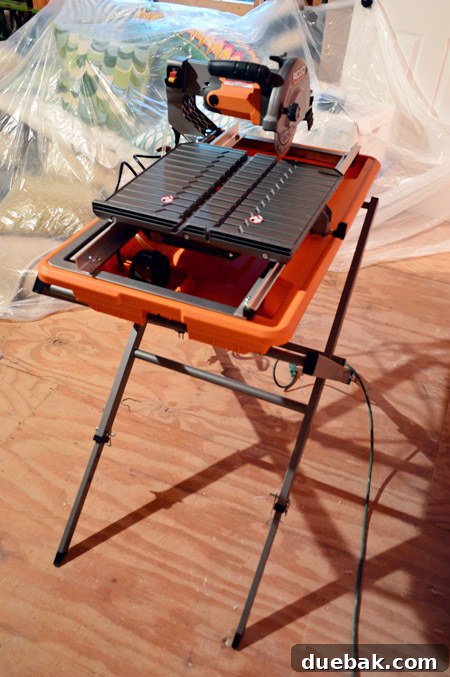
It’s hard to pick my favorite feature of this new wet saw. Is it the integrated stand that allows you to work at a comfortable, regular height, eliminating the back-breaking crouching on the floor? Or perhaps the generous water tray, which means significantly fewer interruptions to refill or de-sludge the water, allowing for longer, more efficient work sessions? The integrated laser guide is another strong contender, proving invaluable for keeping cuts perfectly straight and precise, reducing material waste. However, the standout feature, in my opinion, is the smooth-gliding rolling tray. I can simply place the tile on it and effortlessly slide it through the blade. This not only makes the cutting process significantly faster but also played a crucial role in maintaining consistently straight and accurate cuts across all tiles. This investment truly paid off in terms of efficiency, precision, and overall ease of use, turning a once tedious task into a much more enjoyable part of the tiling process.
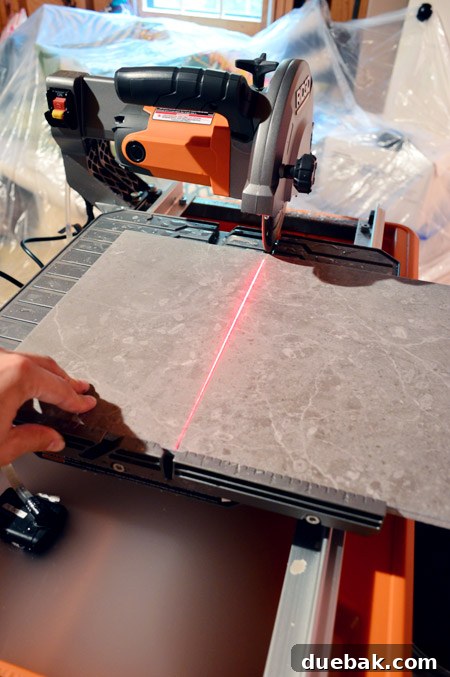
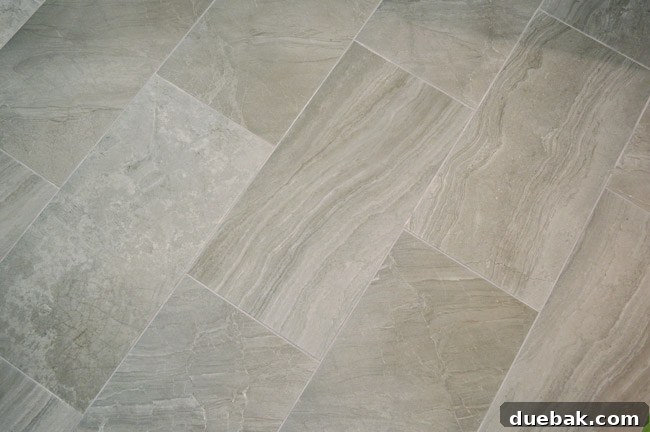
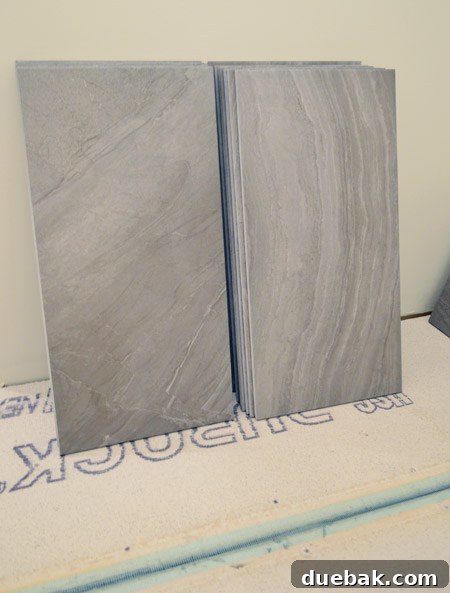
Before getting too carried away singing the praises of my new wet saw (I promise I’m not trying to sell you a “Super Shammy”), let’s return to the core tiling process. After completing the initial cuts required for our dry fit, Sherry and I dedicated time to carefully unbox and inspect all of our porcelain tiles. These tiles feature beautiful movement and subtle veining, and we wanted to ensure the most appealing ones were placed in highly visible areas of the room. There’s no point in having stunning tiles hidden away!
We systematically sorted the tiles into three distinct piles. Our “favorites” were those with the most pronounced and attractive veining; these were reserved for the central, most prominent sections of the room. The “regulars” comprised tiles that were good, but not exceptionally striking – these were designated for areas closer to the door or along the walls where they would still look great. Finally, we had a pile we affectionately dubbed “the not-as-nicers.” These tiles were generally more spotty than veiny and less visually dynamic. We strategically reserved most of these for areas that would be primarily covered by appliances, such as beneath the washer and dryer, ensuring that every tile served its purpose optimally without compromising the overall aesthetic of the floor.
Essential Supplies for Laying Tile Like a Pro
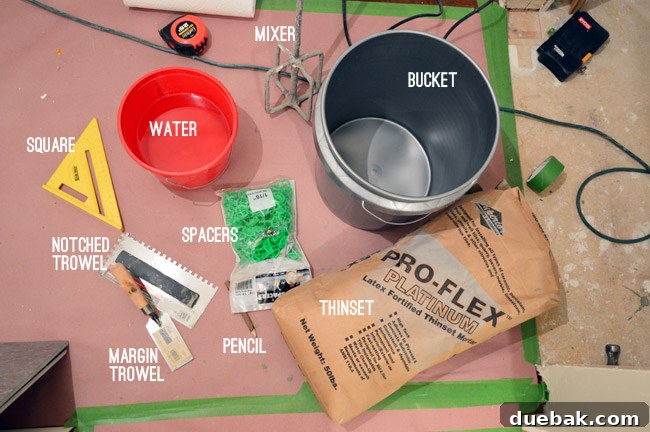
Having the right tools and materials makes all the difference in achieving a professional-looking tile installation. Beyond the invaluable wet saw, here’s a breakdown of the core supplies I used for actually laying the tile:
- Large Bucket: Essential for mixing thinset.
- Thinset Mortar: The adhesive that bonds the tiles to the subfloor.
- Water: For mixing the thinset to the correct consistency.
- Drill with Mixing Paddle Attachment: Ensures thorough and consistent thinset mixing.
- Margin Trowel: A versatile tool for scooping thinset from the bucket and applying it to the floor or tile.
- Notched Trowel: Crucial for spreading thinset evenly and creating the necessary ridges for a strong bond. (I used a 1/4″ notched trowel for both cement board and tile).
- Square and Pencil: For accurately marking cuts on tiles.
- Tile Spacers: Small, cross-shaped pieces used to maintain consistent grout lines between tiles. We used 1/16th-inch spacers for a tight, modern look.
- Level: A long level (2-foot or 4-foot) is indispensable for ensuring tiles are laid flat and without “lippage” (uneven edges).
Mixing Thinset: Achieving the Perfect Consistency
One of the most common pitfalls in DIY tiling is improperly mixed thinset. I confess to having a tendency to mix my thinset too thick in past projects, leading to challenges with spreading and achieving a good bond. This time, I made a conscious effort to adjust my mixing technique. While the general advice is that thinset should resemble “pancake batter,” I’ve realized that my personal preference for thick pancakes might have skewed my interpretation! The ideal consistency for thinset is more like a thick, creamy peanut butter – it should hold its shape when a trowel is pulled through it but still be easily spreadable and pliable enough to allow the tiles to settle without excessive force. Adding water gradually and mixing thoroughly with the drill paddle until all lumps are gone is key. It’s better to start with slightly less water and add more incrementally until the perfect consistency is achieved, rather than starting with too much and needing to add more dry mix, which can be messier and less precise.
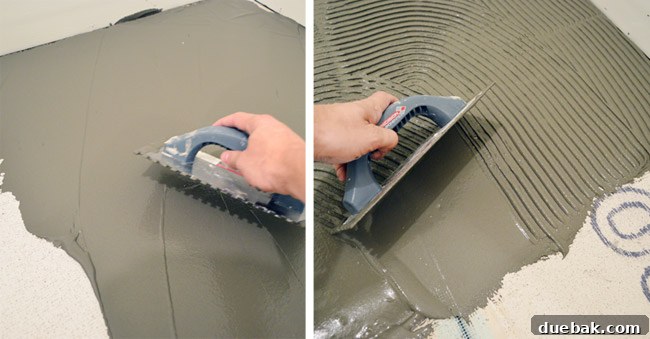
With the thinset mixed to perfection, the tiling process began. I tackled the room by working in manageable sections, typically laying about two rows of tiles at a time. This approach allows for ample working time before the thinset begins to skin over and ensures that I can maintain consistent quality. As I progressed, I made cuts as needed, often placing a full tile on one side and marking the required cut for the tile on the opposite side of the row. It is incredibly helpful to have a nice, long level on hand throughout this process. Regularly checking that none of your freshly laid tiles are sticking up or creating “lippage” is crucial for a smooth, level, and professional-looking result. A quick check with the level after every few tiles can save significant rework later.
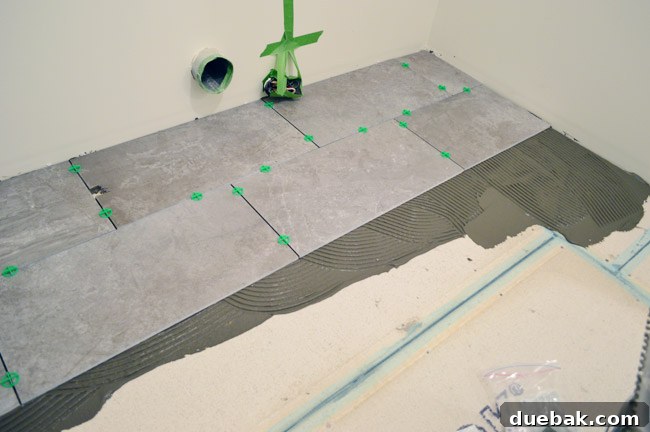
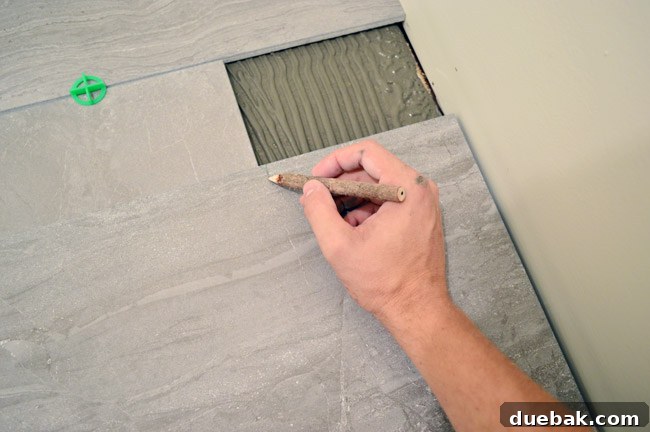
The cuts required for our brick pattern were generally very straightforward, especially with the efficiency of our new wet saw. My strategy involved starting each row with either a full tile or a pre-cut 12-inch half tile (to achieve the staggered brick effect). Once I reached the opposite side of the row, I would simply hold a full tile in place, mark where it needed to be sliced, and then take it to the wet saw for a quick, precise cut. This method streamlines the cutting process and minimizes errors. I still can’t quite explain how I ended up with this rather unique wooden tree-shaped pencil, but it certainly did the job!
Surprisingly, once I started actually placing tiles, the entire process took less than two hours to complete. This made it one of my faster tile jobs to date, a testament to the efficient planning, the quality tools, and perhaps a growing confidence in my tiling skills. The satisfaction of seeing the entire floor quickly transform from a blank canvas to a beautifully tiled surface was immensely rewarding.
Curing and Seamless Transition: The Details Matter
After all the tiles were meticulously laid, it was crucial to allow the thinset ample time to cure properly. I let everything dry for approximately a day and a half before carefully pulling out all the tile spacers. The longer curing time ensures maximum bond strength and stability. I also opted to keep my painters’ tape contraption around the dryer plug in place throughout the grouting process, protecting it from any potential grout splatter.
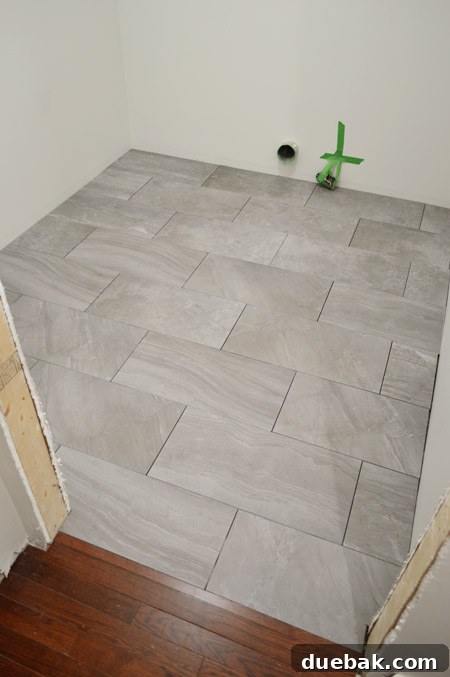
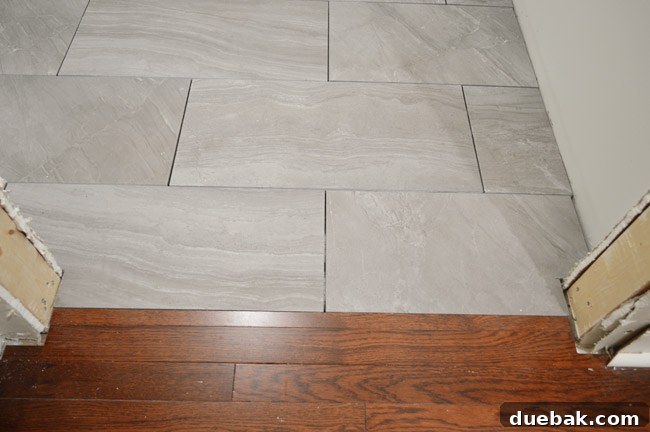
One of the aspects of this project I’m particularly proud of is the transition from the new porcelain tile to the existing hardwood flooring at the doorway. Sherry and I decided to attempt a “transition-less” approach, aiming for a perfectly flush, seamless meeting of the two flooring types. Initially, I had planned to use a standard transition piece – those sloping strips that bridge different floor heights. However, we’ve always admired the perfectly flush tile-to-wood doorways downstairs (where the tiled foyer meets the wood-floored office and dining room) and wanted to replicate that clean aesthetic here.
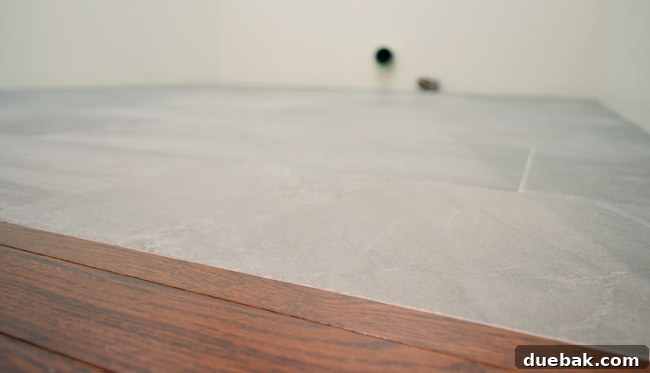
Achieving this required a bit of careful woodworking: I first added back two pieces of hardwood into the doorway, extending the existing hardwoods about halfway into the middle of the threshold. Thankfully, my meticulous planning regarding the subfloor height paid off handsomely. To my absolute delight and surprise, the newly tiled floor and the extended hardwoods ended up being the EXACT same height! It’s a rare and incredibly satisfying outcome that speaks to the importance of precise measurements and foresight in DIY projects. Here’s a look at the completed, grouted transition, so you can see precisely what I mean:
Grouting the Porcelain Tiles: The Finishing Touch
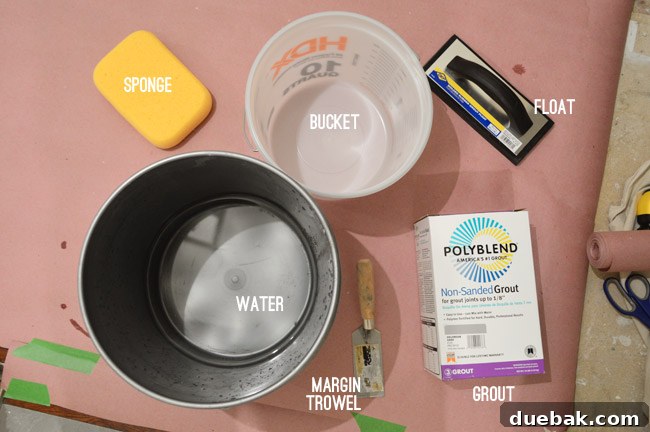
Speaking of grouting, after allowing the thinset to cure for a full 48 hours to ensure maximum strength and stability, it was finally time to tackle this transformative step. Grouting fills the spaces between the tiles, providing structural integrity, preventing dirt and moisture ingress, and completing the finished look of the floor. The material list for grouting is somewhat similar to tiling, but with a few key differences:
- Small Bucket: For mixing the grout powder with water.
- Margin Trowel: Useful for scooping grout and mixing.
- Non-Sanded Grout: Crucial for our project since our grout joints were smaller than 1/8 inch. Sanded grout is used for wider joints and can scratch delicate tile surfaces with fine joints. We chose “Dolorean Gray” from Home Depot, a neutral shade that complements the porcelain tiles beautifully.
- Water: For mixing with the grout powder and for cleaning up excess.
- Rubber Grout Float: The primary tool for applying grout evenly into the joints.
- Large Sponge: Essential for wiping off excess grout and cleaning the tile surface.
Mixing and Applying Grout Effectively
When mixing grout, the standard procedure is to add the specified amount of water to the bucket first, then gradually incorporate the grout powder. For some reason, I started with an unusually generous amount of water, which led to mixing a ridiculously large batch of grout for what is a relatively small room with narrow joints. This created more work than necessary, highlighting the importance of following manufacturer instructions precisely and starting with conservative amounts of water.
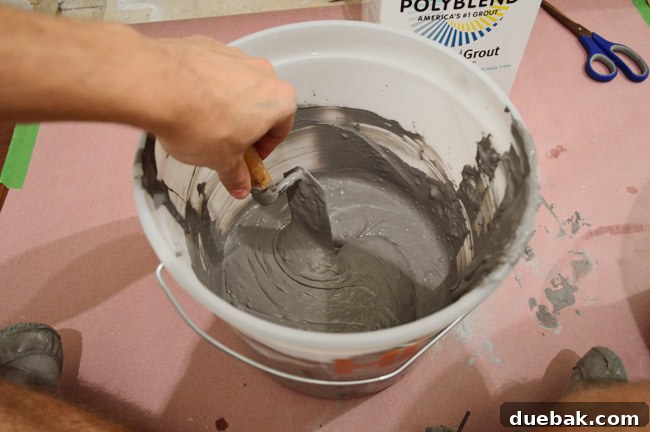
The actual application of grout is relatively straightforward, especially when working with larger tiles like ours, as there are fewer joints to cover. Using the rubber grout float, you firmly press the grout diagonally across the tile surface, forcing it deep into all the joints. Once the joints are thoroughly filled, you then hold the float at a steep angle (almost perpendicular to the tiles) and wipe off the excess grout, moving diagonally across the tiles. This technique ensures the joints are packed tight while removing the bulk of the material from the tile faces.
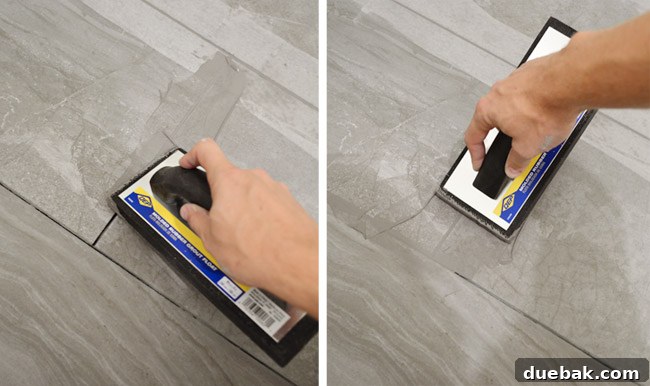
I was able to grout the entire laundry room in a brisk 20 minutes, demonstrating how quickly this stage can progress with large format tiles. As the grout begins to dry, you’ll notice it lightens in color – this visual cue indicates that it’s time to begin the crucial cleaning process.
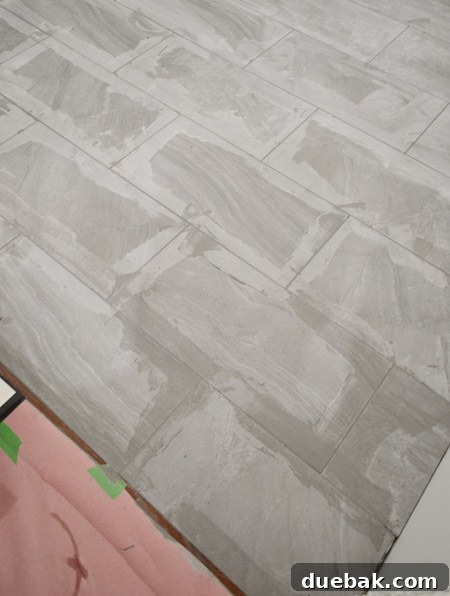
Cleaning Grout Haze: A Multi-Step Process
Properly cleaning off the excess grout is just as important as applying it correctly. In a previous project (our sunroom), I made the mistake of using too much water during the initial wipe-down, which we believe caused the grout to dry lighter than its intended color and left a stubborn haze. Learning from that experience, I was extremely careful this time, ensuring my sponge was only *slightly* damp when wiping off the initial layer of excess grout. The goal is to gently clean the tile surface and shape the grout lines without reintroducing too much moisture into the fresh grout.
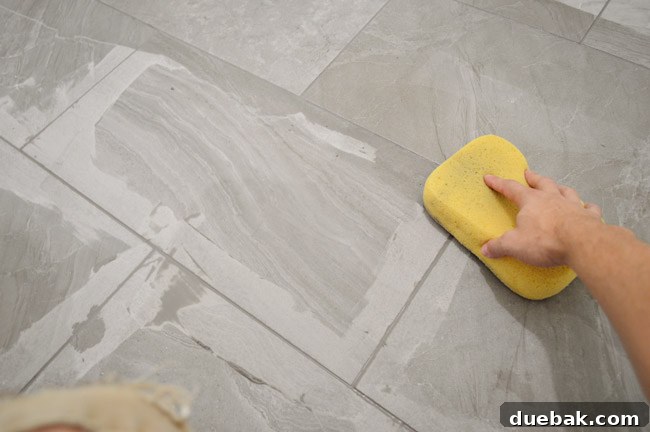
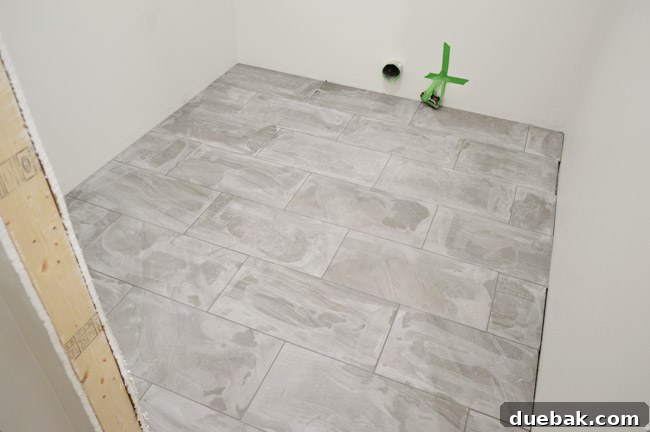
Even after a couple of passes with my barely-wet sponge, the floor still looked undeniably hazy. This “grout haze” is a thin film of dried grout residue that can obscure the true color and vibrancy of your tiles. This hazy stage is precisely where I recall panicking during the sunroom project, leading me to use excessive water in an attempt to “clean” it, which only exacerbated the problem. However, this time, armed with experience, I knew better.
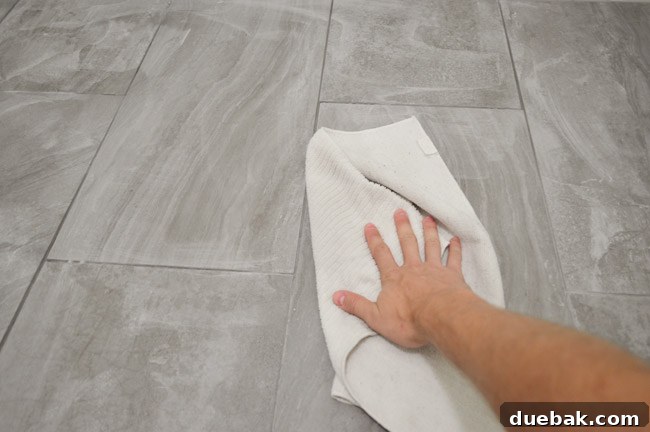
Instead of reaching for more water, I let the floor dry for another 90 minutes. After this waiting period, I returned with a completely dry microfiber cloth (while cheesecloth is often recommended, I found a microfiber cloth worked just as effectively and was readily available). With light, circular scrubbing motions, the dry microfiber cloth proved remarkably efficient at buffing off a significant amount of the remaining haze. This dry buffing technique is a critical intermediate step that many DIYers might skip, but it dramatically improves the final appearance.
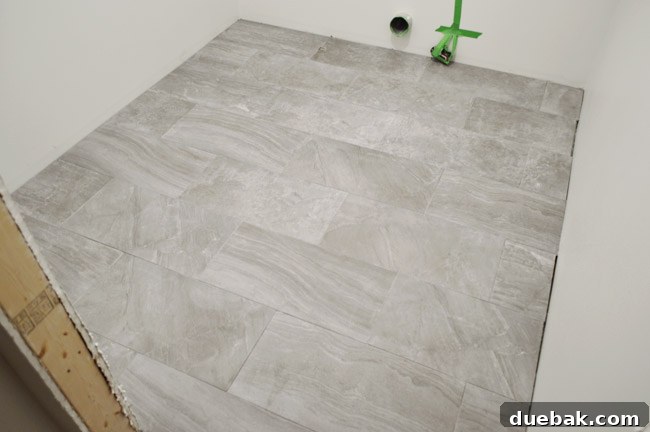
Here’s the floor immediately after the buffing process. The difference was remarkable – MUCH better. The tiles began to reveal their true color and shine, and the grout lines looked crisp and uniform. Phew, what a relief to see such a positive change!
Final Steps: Haze Removal and Sealing for Protection
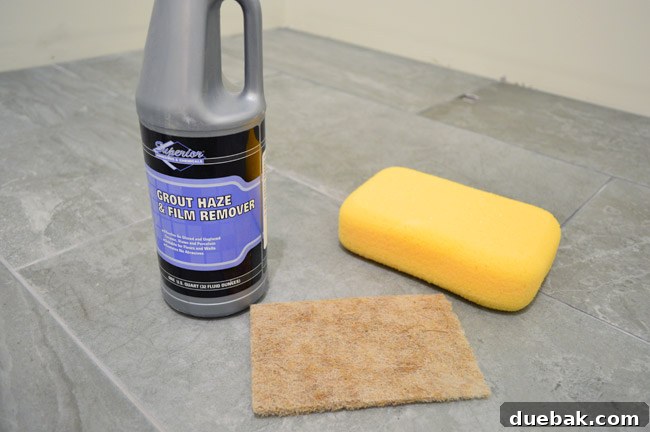
Even after the dry buffing, a subtle haze can sometimes linger. To ensure a pristine finish and long-term protection, we took two final, crucial steps. First, we allowed the grout to dry and cure for three full days, as per the manufacturer’s instructions. Despite our best efforts, things still looked a little hazy in certain lighting conditions. To address this, Sherry brought out some leftover grout haze remover we had from our sunroom project. This specialized product is designed to dissolve stubborn grout film without harming the tile or grout.
The application process is straightforward: you liberally spread the haze remover onto the tiled surface with a sponge, allowing it to penetrate and work its magic for a few minutes. Following this, you gently scrub the surface with a scrub pad to dislodge the dissolved residue. Finally, Sherry thoroughly wiped the entire room down with clean water a couple of times, ensuring all traces of the haze remover were completely removed. This step truly clarifies the tile and brings out its natural beauty.
After allowing the haze remover to dry for approximately 12 hours, the final protective measure was applied: a penetrating sealer. This sealer is vital for both the tile and the grout, creating an invisible barrier that helps protect against stains, moisture absorption, and general wear and tear. Applying the sealer is also quite easy – simply wipe it on with a clean sponge, let it soak into the porous grout and tile surface for a few moments, and then promptly wipe off any excess with clean paper towels. It’s important not to let excess sealer dry on the tile surface, as it can leave a visible film.
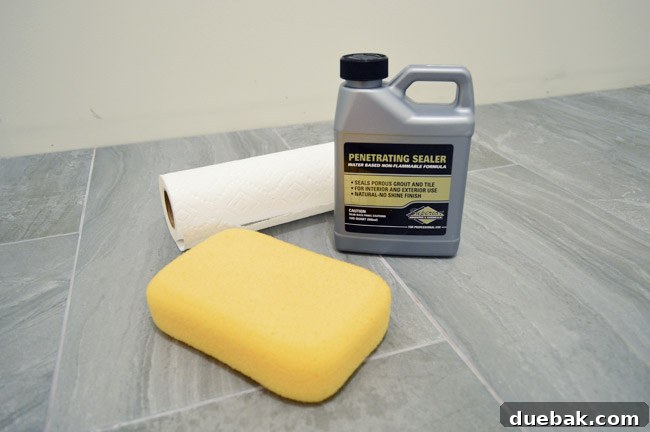
These two final steps – the grout haze remover and the penetrating sealer – definitely brought the tile to life, revealing its true color and brilliance. We cannot stress enough how important it is not to skip the haze remover step; the difference it makes is truly remarkable.
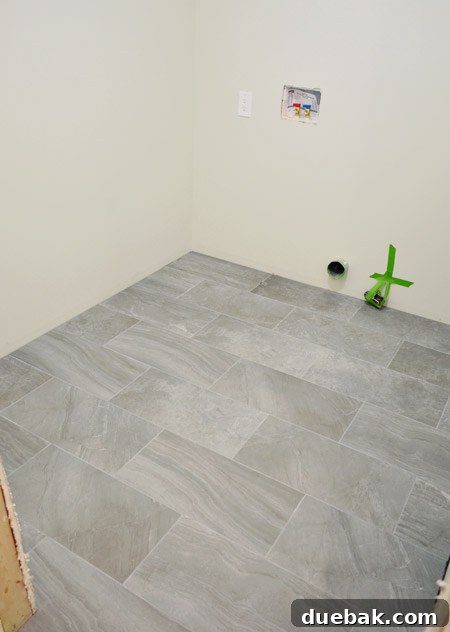
Sometimes, you don’t even realize the subtle film leftover from the grouting process is there until it’s gone. The clarity and depth of color that emerged after these final cleaning and sealing steps made all the effort worthwhile. Our laundry room floor now looks absolutely stunning, professional, and ready for years of use.
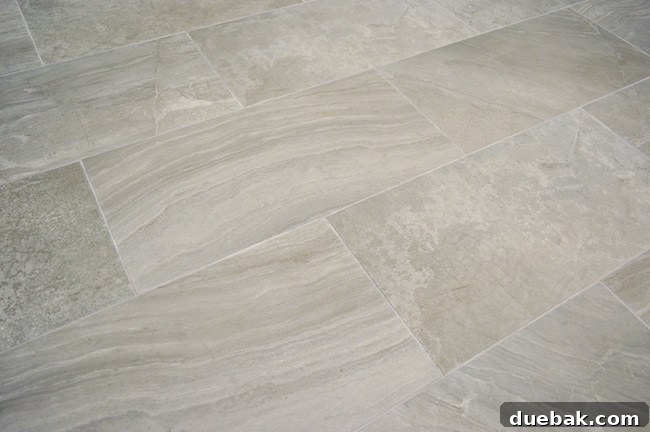
Project Cost Breakdown and Final Thoughts
Undertaking a DIY tile installation can offer significant savings compared to hiring a professional, and our laundry room project was no exception. Here’s a detailed breakdown of the costs involved for our beautiful new porcelain tile floor:
- Cement Board & Screws (from Home Depot): $48
- Blast Anthracite 12″ x 24″ Tiles (from The Tile Shop): $353
- Thinset Mortar (from The Tile Shop): $29
- Grout in Dolorean Gray (from Home Depot): $13
- Buckets, Sponges, Trowels, Spacers, Float: $8 (This low cost reflects that we already owned most of these basic tools. If you’re starting from scratch, budget an additional $25-35.)
- Superior Haze Remover: $0 (We had some leftover from a previous project; otherwise, it retails for about $9 at The Tile Shop.)
- Superior Penetrating Sealer: $0 (Also leftover from a prior project; typically costs around $13 at The Tile Shop.)
- TOTAL PROJECT COST: $451
In essence, the project amounted to approximately $350 for the gorgeous tiles and about $100 for all the necessary supplies. It’s important to note that I’ve excluded the cost of our new wet saw ($277) from this project’s total. While it was an invaluable tool, it’s a long-term investment for multiple projects, not a cost specific to this single laundry room installation. I wouldn’t want anyone to think that a nearly $300 tool is a mandatory expense for such a project. However, having experienced the incredible difference it made, if you’re currently working with an old, cheap tile saw, I wholeheartedly recommend considering an upgrade. I’m actually still a bit frustrated that I tackled our giant sunroom floor without the benefit of my new, superior tiling companion!
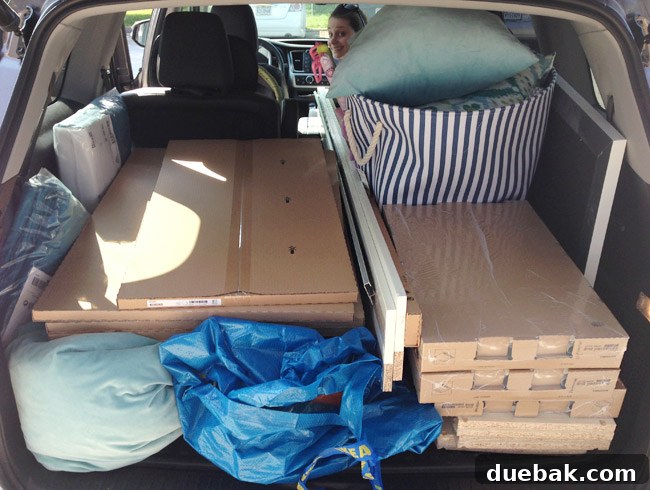
Completing this tiling job marks a significant milestone, meaning we can finally begin the exciting process of putting this room together. This is especially thrilling because we recently purchased our cabinets from Ikea. (Please disregard the random pillows in that basket in the photo; they were for a cousin we met up with on the same trip!) Our next step involves getting at least the upper cabinets hung before we bring in the heavy washer and dryer. Dropping cabinets on expensive new appliances is a risk we absolutely want to avoid. But once those are installed, we may finally be back in business, able to wash our clothes conveniently at home again. High five! Anyone? High five? Or are you leaving me hanging because I smell like a person who just tiled a room without a working washing machine?