
Transform Your Sunroom: The Ultimate Guide to Vaulted Ceiling Renovation
Imagine a space in your home that feels dramatically larger, brighter, and more inviting, simply by looking up. The dream of a vaulted ceiling is often associated with grand living rooms, but what about bringing that airy openness to a more intimate space like your sunroom? Our journey to achieving a stunning, high-impact vaulted ceiling in our sunroom has been an adventure of discovery, strategic planning, and a healthy dose of DIY determination. We’re excited to pull back the curtain and share every detail of how we transformed our sunroom by raising the ceiling, from initial structural assessments to the intricate process of installing new ceiling elements.
The Crucial First Step: Professional Structural Assessment
Embarking on any significant home renovation, especially one involving the ceiling, can be daunting. Visions of complex calculations and structural nightmares often float through a homeowner’s mind. Initially, we anticipated needing to consult a structural engineer, preparing ourselves for intricate mathematical computations and potentially costly reinforcements. However, a stroke of luck and good planning led us to a more straightforward path.
We enlisted the expertise of a professional builder we’ve worked with on previous projects, including a show home. His invaluable insight proved to be a game-changer for our sunroom ceiling renovation. His assessment quickly clarified a critical point: the existing cross beams in our sunroom were purely cosmetic. They weren’t load-bearing elements supporting the roof; instead, they simply provided the framing for the old, lower ceiling. This news was a massive relief, immediately simplifying the scope and potential cost of our project.
While the beams themselves weren’t structural, the original rafters above them were several decades old. To ensure the long-term integrity and safety of the new, higher ceiling, the builder recommended reinforcing these existing rafters. This involved adding new hangers, ties, and bolts—a somewhat tedious but entirely manageable task that required a significant amount of nailing, drilling, and ratcheting. Understanding the full scope of the work, even if it wasn’t a full structural overhaul, allowed us to plan our next steps effectively and avoid any unforeseen issues.
Strategic Outsourcing: When to Call the Pros
Despite our enthusiasm for DIY, we recognized the value of efficiency and specialized skills for certain aspects of the project. Our builder recommended contacting one of his trusted contractors, David, for an estimate on the reinforcement work. This was a smart move to weigh the cost and time benefits of hiring a professional versus tackling it ourselves. Professionals often possess specialized tools and experience that can expedite complex tasks, ensuring quality and saving valuable time.
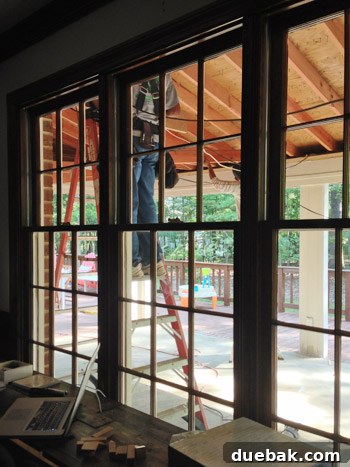
David’s estimate was compelling: he and a second worker could complete the entire reinforcement job in just two hours for $200. This was an undeniable “sold” moment for us. The cost-effectiveness and speed of professional execution made it an easy decision. Within days of our initial update, David and his team were on-site, swiftly and expertly reinforcing the rafters. This strategic outsourcing allowed us to move forward quickly and confidently, knowing the structural integrity of our new ceiling was professionally secured.
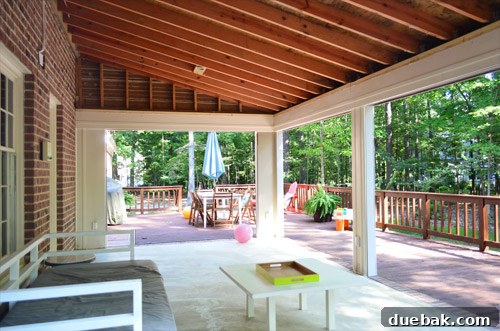
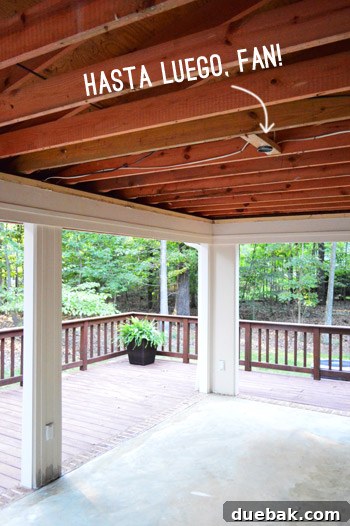
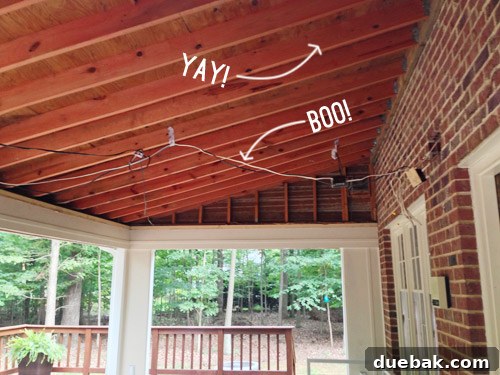
The immediate impact was incredible. Even though the room only gained approximately four feet of height on one side, the difference in perceived openness was profound. The sunroom instantly felt more spacious, airy, and inviting, a significant upgrade from its previous, somewhat confined state. The only remaining eyesore were the unsightly fan wires, temporarily marring the otherwise perfect view of our newly elevated ceiling.
Addressing Electrical Needs for a Vaulted Space
A vaulted ceiling often necessitates adjustments to existing electrical infrastructure. With the ceiling now significantly higher, the original fan wires were too short and needed to be extended. This was a task best left to our trusted electrician. We called our favorite local electrician, and his crew not only extended the necessary wiring to reach the new ceiling height but also cleverly converted our single fan box into two. This dual fan setup will provide much-needed additional airflow, ensuring the sunroom remains cool and comfortable even on the warmest days. Furthermore, we hoped the increased air circulation would also deter unwanted flying insects from making our sunroom their home.
While we awaited the final bill from the electricians, we anticipated it to be in the range of $250. This, combined with the contractor’s fee for reinforcement, brought our professional service costs for the “heavy lifting” aspects of the project to around $450. This figure was remarkably favorable compared to our initial estimates. Going into the project, we had conservatively budgeted around $1,000 for potential structural changes, including permits and more extensive beam work, not even accounting for electrical. Discovering the original ceiling framing was merely cosmetic proved to be a significant financial boon, allowing us to allocate more resources to the aesthetic finishing touches.
Our strategic blend of professional help for critical structural and electrical components, combined with our commitment to DIY for tasks like initial drywall removal, re-insulation, fan installation, and the final beadboard ceiling application, promised substantial savings. This approach allowed us to control costs while ensuring the safety and quality of the foundational work. This project echoes a familiar pattern; a few months after moving into our second house, we tackled an outdoor stone patio project that cost around $1,200. With the added costs for tile and beadboard for the sunroom ceiling, this project seems poised to land in a similar budget ballpark, perhaps becoming a cherished “exterior project tradition.”
Rebuilding the Canvas: Plywood Installation for Architectural Flow
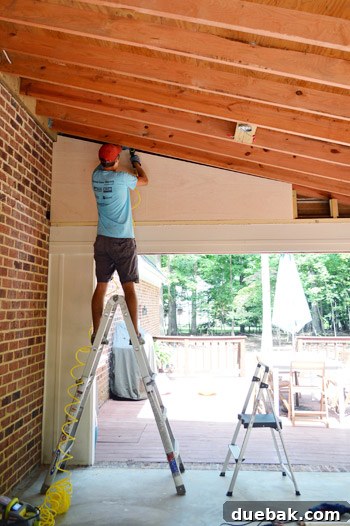
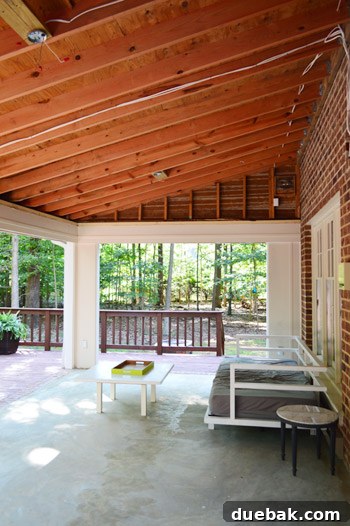
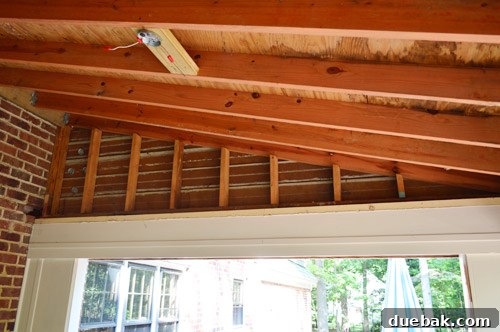
With the structural reinforcements complete and electrical concerns addressed, our focus shifted to rebuilding the exposed ceiling and preparing it for its final finish. We decided to begin with the two empty triangular spaces at either end of the room. Our choice of material for these areas was plywood, primarily because the rest of the sunroom’s existing framing already incorporated plywood. Painting these new plywood sections to match the overall room aesthetic would ensure a seamless and cohesive look, providing a clean canvas for the beadboard that would eventually cover the main ceiling area.
Mastering the Angles: Simplified Geometry for Perfect Cuts
The prospect of dealing with triangular spaces initially sent me into a momentary mathematical tailspin. My mind immediately conjured distant memories of 9th-grade geometry, leading me to frantically recall angles, calculate hypotenuses, and ponder the relevance of cosines. This brief flirtation with advanced mathematics, however, quickly gave way to a much simpler, more practical approach.
I soon realized I was significantly overcomplicating things. All that was truly needed were a few precise length measurements. Given that my plywood sheets were 8 feet (96 inches) long, I knew each triangular section would require two pieces of plywood. I measured the height of the gap at one end of the brick wall (40.5 inches) and then again 8 feet away from that end (17 inches). These two crucial measurements, clearly marked on a simple sketch, formed the basis for my cuts.
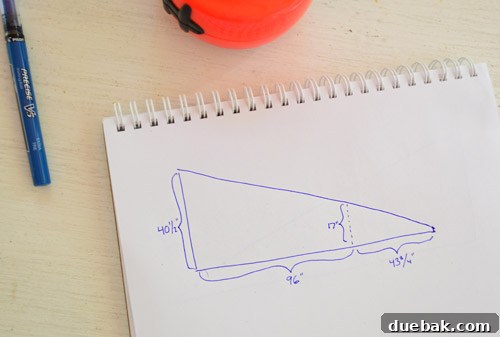
Since these measurements extended all the way to the raw ceiling, and the eventual beadboard ceiling would provide a polished edge, I simply trimmed 3 inches off each of these numbers. I then transferred these adjusted measurements to either end of my plywood sheet, and using a chalk line, snapped a perfectly straight line to connect them. This simple technique effortlessly defined the precise angle required for my first cut.
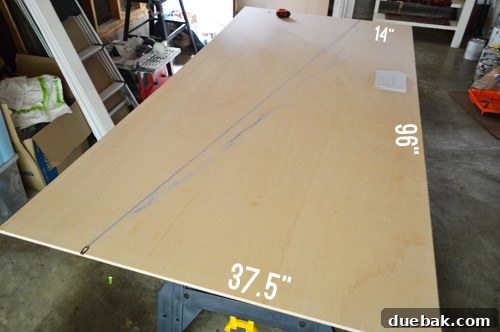
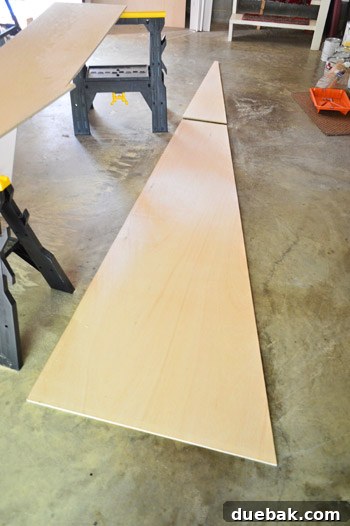
With the angle clearly marked, it was time to bring out the circular saw. The cut was clean and precise, perfectly matching the desired slope of the ceiling. For the second piece of plywood for that section, I leveraged a smart trick: the “scrap” side of the cut plywood inherently featured the identical angle. Knowing that this piece needed to align with the 14-inch side of the first piece, I marked that measurement on one end of the scrap and drew a perpendicular line from there to the existing angled edge, creating a perfect second piece.
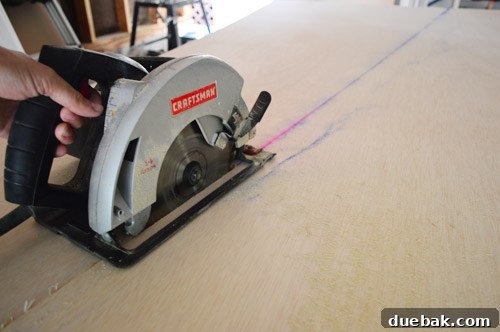
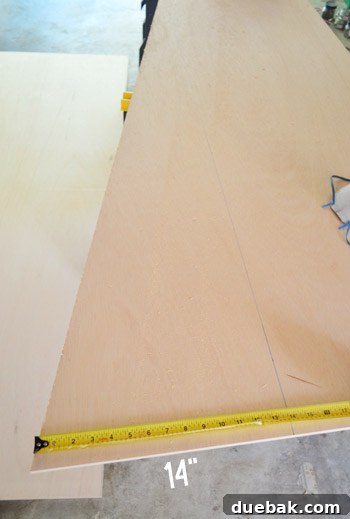
Once both pieces were cut, they were ready for installation, perfectly shaped to fit the triangular sections of the vaulted ceiling.
Seamless Integration: Preparing and Installing the Plywood
Before the plywood could be permanently installed, a small but crucial step was required: building out the existing studs. This was necessary to ensure that the new plywood pieces would sit perfectly flush with the existing wall structure, creating a smooth, uninterrupted surface. I accomplished this by cutting spare pieces of 2×6 inch lumber and securely screwing them into place, effectively extending the existing framing.
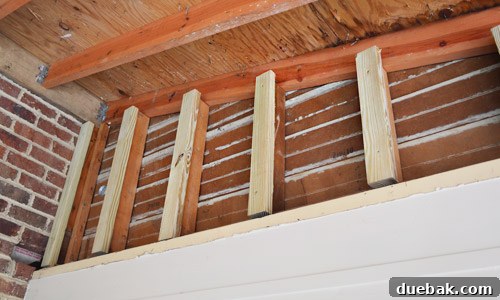
The moment of truth arrived when it was time to test the fit of the first large plywood board. A small wave of nervousness washed over me; wasting a large, expensive piece of plywood due to an inaccurate cut would have been quite disheartening. However, to my immense relief and satisfaction, the piece slid into place “like a glove”—a small but significant victory in our renovation journey.
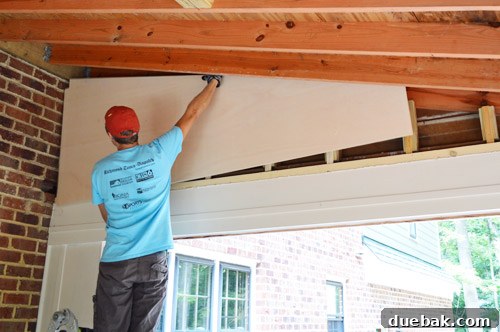
With the perfect fit confirmed, I temporarily secured the plywood with brad nails before going back to hammer in more heavy-duty nails by hand, ensuring a robust and lasting installation. The first side, including the smaller triangular piece, was now successfully installed.
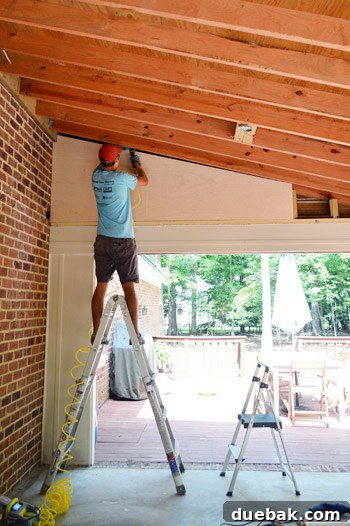
While the new plywood section fit beautifully, it wasn’t yet 100% seamless. There was a subtle line where the new plywood met the old wall along the bottom edge. This minor imperfection will be easily addressed with caulking and then covered with decorative trim, ensuring a polished finish. Additionally, the small vertical seam where the two plywood pieces meet will be made virtually invisible using Bondo or wood filler, creating a perfectly smooth surface ready for paint.
The Second Side: A Minor Electrical Hurdle
Despite the triumph of completing the first side, another triangular section awaited. It was back to the cutting board, quite literally, to replicate the success of the previous installation.
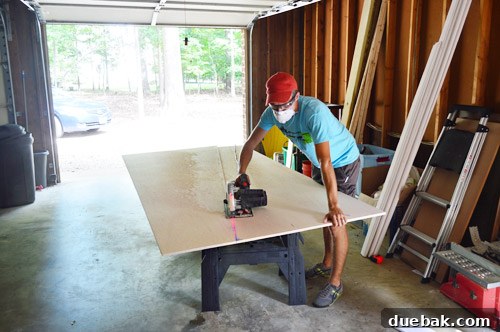
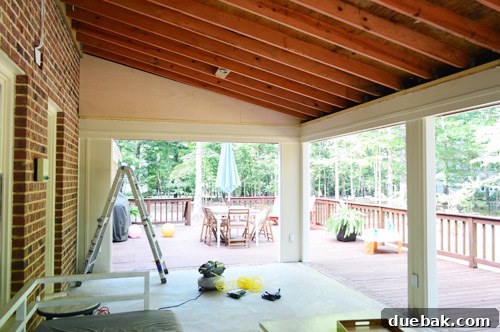
The second side presented a slight added challenge: cutting a precise hole for an electrical box. Our electricians had installed this box to properly corral some of the wiring, and for code compliance, it needed to remain visible and accessible. Careful measurement and cutting ensured the plywood fit perfectly around the box. We’re confident that once the plywood is primed and painted a crisp white, this electrical box will blend in seamlessly, becoming an inconspicuous part of the new ceiling.
A Transformed Space: The Impact of a Vaulted Ceiling
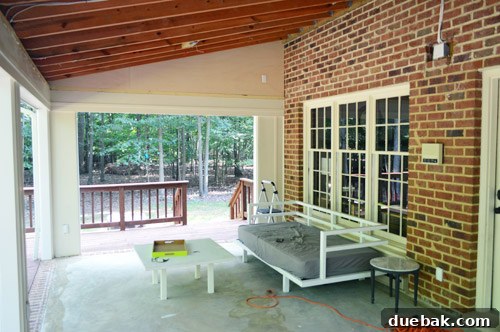
It’s truly astonishing how much more open and expansive the sunroom feels now that we’ve not only removed the doors, creating a wider entryway, but also significantly raised the ceiling. The room is almost unrecognizable from its previous state. The sense of confinement has been completely replaced by an invigorating feeling of airiness and light, proving the transformative power of strategic architectural changes. This vaulted ceiling DIY project has unequivocally redefined our sunroom.
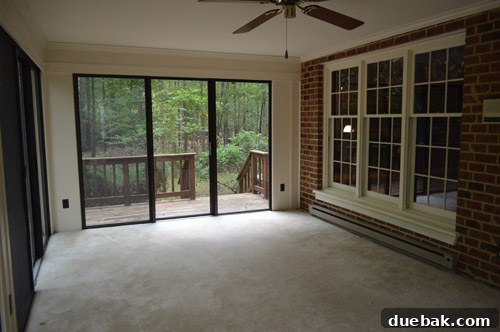
With the foundational work and the precise, “mathy” part of the plywood installation behind us, our excitement now pivots to the aesthetic culmination of this project: installing the light blue beadboard ceiling. This next phase will involve careful pricing of materials, meticulous measuring, priming, and painting each beadboard panel before it’s ready to be hung. We anticipate sharing an exciting update on this final, decorative stage early next week, bringing our vision of a beautiful, refreshed sunroom one step closer to reality. What home improvement projects have you been tackling lately?