
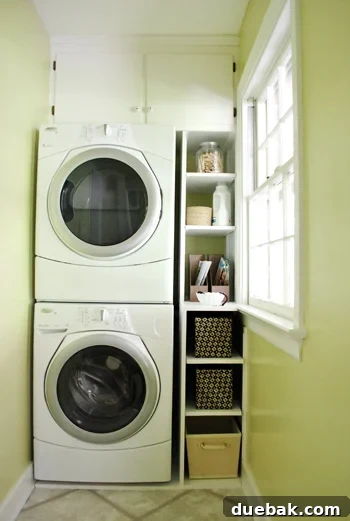
Transforming a mundane laundry space into a highly functional and aesthetically pleasing area can feel like a monumental task, especially when dealing with tight dimensions. Yet, with a touch of ingenuity and a DIY spirit, even the smallest laundry room can become a beacon of efficiency. Join us as we chronicle the latest chapter in our ongoing laundry room renovation, where custom-built shelving has taken center stage, proving that maximizing vertical space is key to unlocking a room’s full potential.
For those following our home improvement journey, our laundry room has seen quite the evolution. We’ve already completed several crucial updates, laying the groundwork for this latest project. To quickly bring you up to speed, our initial improvements included replacing the old washer and dryer with modern, efficient units. We then decluttered the space by removing unsightly window shutters and extraneous shelves, and added privacy by frosting the side door, details of which you can find here. Minor cosmetic issues were addressed by filling ceiling cracks, and a fresh coat of paint in Benjamin Moore’s “Sesame” (the same shade as our kitchen) dramatically brightened the room. With these foundational steps complete, the stage was set for our most impactful update yet: custom built-in shelving.
And now, for the grand reveal of our latest transformation, take a look at how the laundry room appears today with its brand-new, purpose-built storage solution:
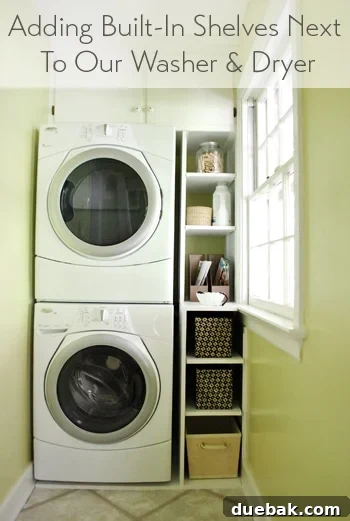
The Genesis of a Space-Saving Solution: Why Custom Shelves Were Essential
To truly appreciate the necessity and impact of these shelves, let’s rewind to the beginning. From our very first walk-through of this house, we identified this narrow sliver of space next to the washer and dryer as a prime candidate for maximizing functionality. The dimensions of the room, a mere 3.5 feet wide, presented a significant design challenge. This extreme narrowness meant that placing the washer and dryer on the opposite wall, under the window or fuse box, was simply not feasible, as their doors wouldn’t even have enough clearance to open. Such tight quarters underscored the urgent need for a bespoke storage solution.
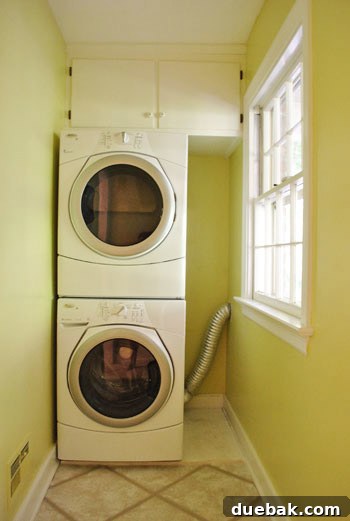
To vividly illustrate just how constrained this space is, I even resorted to some rather unconventional acrobatics – employing my “spider monkey” skills and flexible toes – to demonstrate the precise width. While highly effective for illustrative purposes, this is definitely *not* a recommended home experiment! This visual cue highlights why conventional storage options simply wouldn’t cut it. We couldn’t expand “out” into the room without creating obstacles for folding counters or drying racks, so the only logical direction for expansion was “up.”

Moreover, the existing built-in cabinets located directly above the dryer presented another accessibility issue. While functional for some, they were frustratingly out of Sherry’s comfortable reach (though she can thankfully reach the dryer buttons!). This further solidified our decision to create more accessible, vertical storage adjacent to the appliances. The final nail in the coffin for off-the-shelf solutions was the peculiar 14.5-inch gap; no ready-made bookshelf was both narrow enough to fit and deep enough to fully utilize the available nook. Most were too shallow, leaving valuable space wasted. The conclusion was clear: we had to build it ourselves. Surely, it couldn’t be more challenging than the behemoth console table we previously constructed, right?
Turns out, it was significantly easier! But before we dive into the construction details, let’s explore the critical planning phase that brought these shelves to life.
From Concept to Creation: Designing Our Custom Laundry Room Shelves
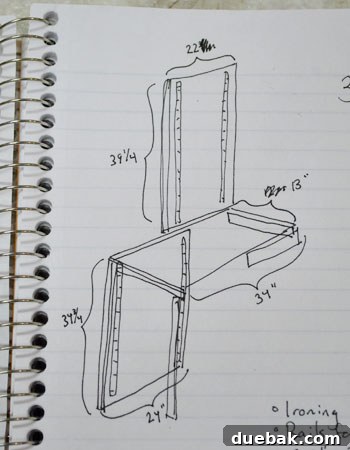
Our DIY journey began with meticulous measurements and a preliminary sketch, which, despite its humble appearance, served as the blueprint for our custom shelving unit. This initial drawing, a testament to my “technical drawing skills,” allowed us to visualize the structure and confirm dimensions.
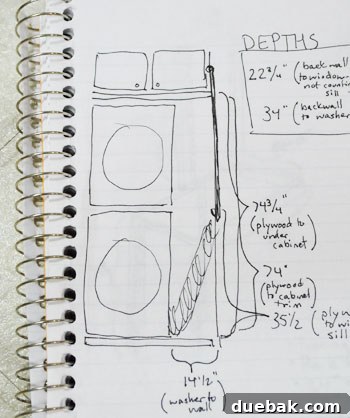
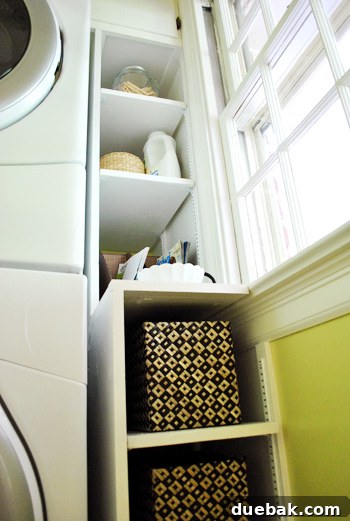
After considerable deliberation, we decided to integrate the existing right wall (featuring the window) as one side of our bookshelf, building a custom vertical divider to serve as the second side. A critical design challenge emerged: achieving a shelf depth equal to the appliances would partially obstruct the window. Our innovative solution was a two-tiered depth: the bottom half of the shelving unit would extend to the full depth of the washer, while the top half, positioned above the window sill, would match the window’s shallower depth. While this concept can be a bit challenging to grasp, this strategic approach allowed us to maximize storage without compromising natural light or the window’s functionality. My next drawing, although perhaps not an artistic masterpiece, was instrumental in determining precise wood cuts for this complex, two-tiered design.
Gathering Materials and Initial Assembly: Building the Foundation
With our plans finalized, it was time to gather the necessary materials. We opted for whitewood for its cost-effectiveness and ease of painting, supplemented by 1×2-inch poplar boards where thinner dimensions were required (as whitewood planks aren’t typically sold in such slim profiles). Much like our previous console project, I laminated two 1×12-inch boards side-by-side to create a wider, sturdier surface for the bottom and top sections of our vertical divider. The middle shelf, designed to connect the two divider halves, was constructed from a 1×10-inch board trimmed with 1×2-inch pieces. Additional 1×12-inch boards were procured for the adjustable shelves themselves, along with more miscellaneous 1×2-inch pieces for trim work. The invaluable service at Home Depot, where they handled most of the initial wood cuts, significantly streamlined our process, allowing me to return home with the bulk of our wood pile ready for assembly.
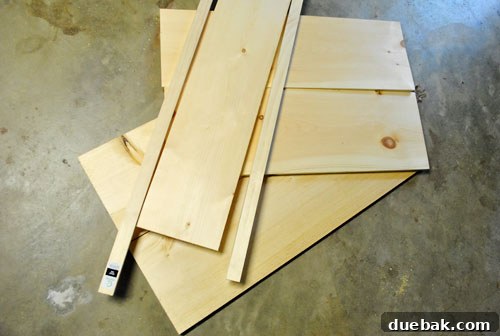
A crucial element of our design was ensuring the middle shelf sat perfectly flush with the window sill. To achieve this, I precisely cut and attached 1×2-inch trim pieces, creating a custom-sized notch that perfectly accommodated the sill. This meticulous detail, fortunately, worked out flawlessly during testing, confirming our measurements and design strategy.
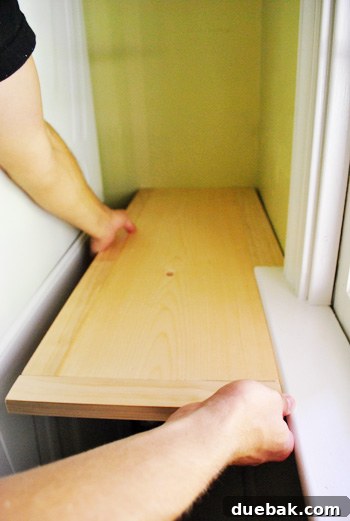
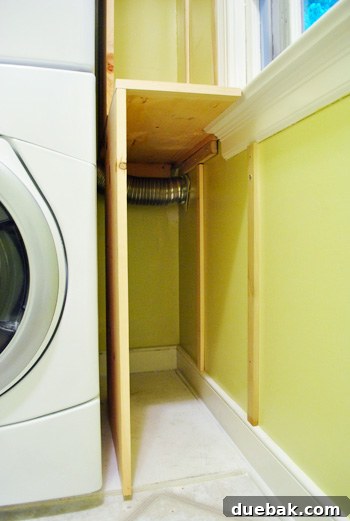
Next, I secured the bottom half of the vertical divider. It was screwed directly into the floor (which, for added stability, is actually a sturdy piece of plywood extending beneath the appliances – more on that here) and into the middle shelf using my trusty Kreg jig. A minor miscalculation in not accounting for the added trim on the middle shelf meant the divider hung over the plywood slightly, but a simple fix with another piece of 1×2-inch trim on the floor later provided a neat, finished edge.
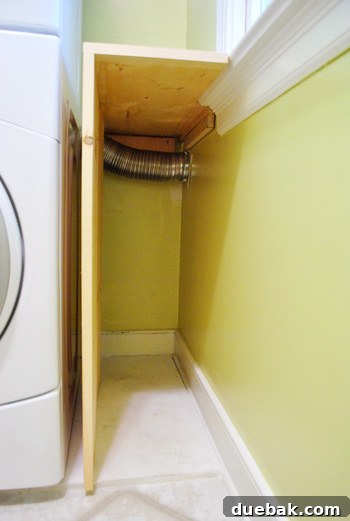
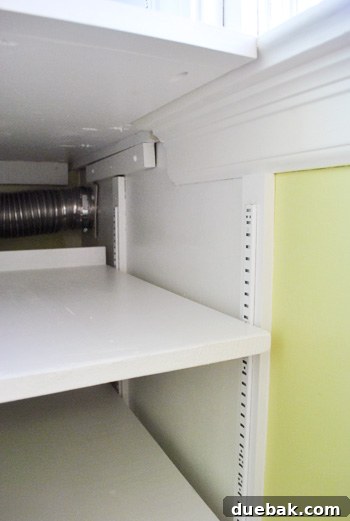
As depicted, I also installed several support pieces on the back and side walls for the middle shelf to rest upon. This was essential because the vertical divider doesn’t extend all the way to the back wall; this strategic gap ensures crucial access to the washer’s connections and the dryer duct, facilitating maintenance and proper ventilation.
Enhancing Safety and Completing the Structure
Speaking of the dryer duct, this project presented an opportune moment to upgrade an essential, yet often overlooked, component. We replaced our old, aluminum-foil-like dryer duct with a safer, rigid all-aluminum version from Lowe’s. This upgrade significantly reduces fire hazards and was a remarkably straightforward swap: simply remove the old duct, then clamp the new rigid duct into place with metal clamps and secure it to a metal wall piece. A quick and vital safety improvement!
With the safety upgrade complete, the top divider was then attached, mirroring the process for the bottom section. Notice how this upper portion is strategically set back to align perfectly with the window’s depth. This “two-tiered” profile is the essence of our custom design, allowing us to fully utilize every available inch of depth without awkwardly overlapping the window frame, thus maintaining both functionality and aesthetic integrity.
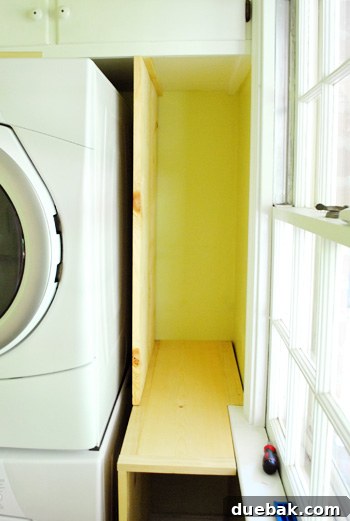
For the remaining shelves, adjustability and removability were paramount. Adjustable shelves offer unparalleled flexibility, allowing us to reconfigure the storage space as our needs evolve. Removability, on the other hand, provides crucial access to the rear of the washer and dryer should any maintenance or repairs be required. To achieve this, I purchased four 6-foot lengths of metal shelf tracks from Home Depot – the same durable kind we’ve used in our built-ins and master closet. These were then meticulously cut to the precise lengths required using metal cutters.

During installation, it became apparent that the gap between the newly constructed divider and the wall was slightly wider than our 1×12-inch shelf pieces. To bridge this gap and provide robust support for the metal tracks, I added some additional 1×2-inch wood strips. What initially seemed like a minor design oversight turned into a “happy accident,” as these added strips significantly enhanced the security of the metal tracks, preventing them from being solely anchored into drywall. This unexpected adjustment ultimately resulted in a sturdier and more reliable shelving system.
The Painting Process: Achieving a Flawless Finish
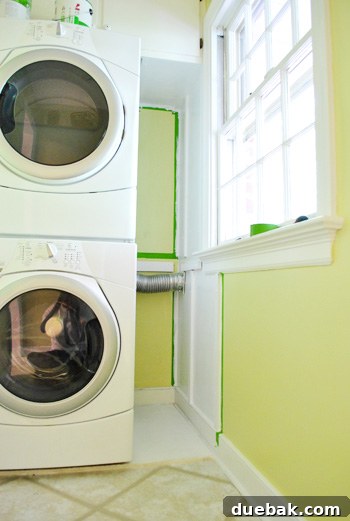
A less “happy” accident was realizing, at this stage, the immense difficulty of painting all the wood components directly in place within the narrow confines of the laundry room. To ensure a smooth, professional finish, we decided to disassemble the entire unit. This turned out to be a surprisingly quick and easy process, a valuable lesson for future projects and a testament to the benefits of removable components for potential appliance maintenance down the line.
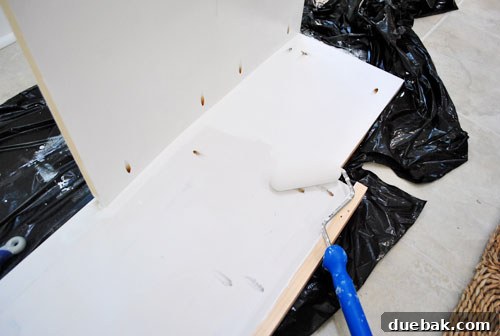
With the components carefully transported to our sunroom – a much more spacious and well-ventilated area for painting large pieces – we began the finishing process. We applied two swift coats of Kilz No-VOC primer, followed by two coats of Olympic Premium No-VOC semi-gloss off-the-shelf white paint. This rigorous priming and painting regimen was crucial for achieving our desired pristine white finish, completely eliminating any possibility of wood bleed-through. Interestingly, after lazily painting the shelves themselves with just two coats of paint (skipping the primer) the following day, we realized we might have been fine without primer on the framing too. Nevertheless, the extra step certainly didn’t hurt and ensured a long-lasting, immaculate result. In addition to painting the built-in components, we also painted the adjacent side wall white to visually integrate it seamlessly with the new shelving unit. However, we intentionally left the back wall in its original color, allowing for a subtle, unexpected pop of color to peek through the shelves once they were installed.
Final Installation and Functional Touches
Once the paint was thoroughly cured, I carefully reinstalled all the components, meticulously nailing in the metal shelf tracks, adding the essential shelf clips, and taking them for a test spin. The adjustable nature of these shelves immediately proved their worth, offering unparalleled flexibility in arranging our storage space.
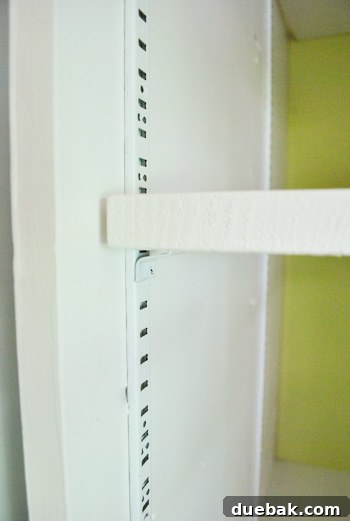
For the bottom half of the shelves, where they don’t extend all the way to the back wall, I added a small, discreet lip at the rear of each shelf. This simple yet effective addition serves as a practical barrier, preventing smaller items from sliding off the back and becoming lost in the narrow gap behind the appliances. Should anything somehow manage to sneak past this lip, the removability of the shelves ensures easy retrieval, highlighting the thoughtful design behind this functional feature.
The Finished Product: A Maximized and Organized Laundry Room
Enough with the “how we built it” technicalities – let’s admire the completed project in its full glory! The transformation is truly remarkable, turning a previously underutilized nook into a powerhouse of organized storage.
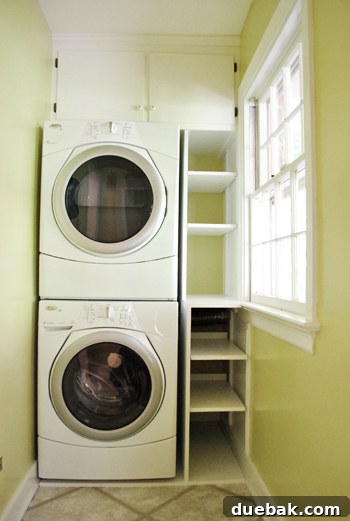
You might notice a deliberate 2-inch gap between the appliances and the shelving unit. This isn’t an oversight, but a carefully planned feature. It ensures that when the washer is in its high-spin cycle, creating vibrations and “rocking,” items on the shelves don’t start “knocking” or falling off. This functional gap prevents any unwanted collisions or disturbances, maintaining the integrity of both the appliances and the stored items. It’s a pragmatic design choice, not a euphemism!
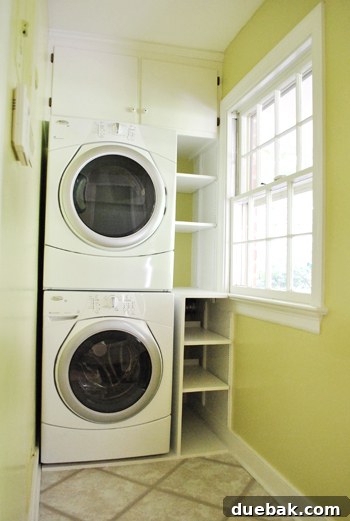
Admittedly, when completely empty, the shelving unit might not possess the inherent aesthetic appeal of fixed, uniform shelves. However, the unparalleled functionality of adjustable shelving far outweighs this minor visual preference. It provides the freedom to store a diverse range of items – from small bottles to tall baskets – without the constant worry of fit. This adaptability is precisely what makes the unit so incredibly practical for a working laundry space.
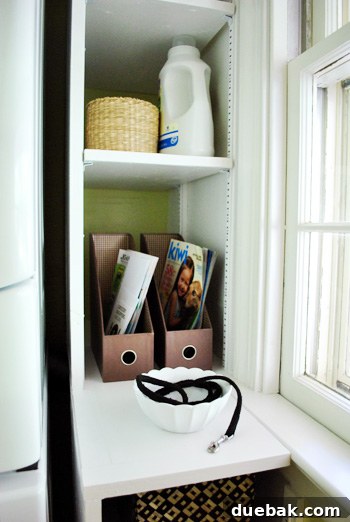
There’s no denying the significant gain in usable storage space, thanks to our diligent efforts to achieve maximum depth. While we’re still refining the exact organization, the shelves are ideal for housing obvious laundry essentials like detergent and an iron. Beyond that, they offer perfect spots for baskets that can cleverly organize seasonal items like winter gloves and scarves, or even larger ones for flip-flops and sandals. Just for fun, Sherry took the liberty of styling it up a bit with – you guessed it – some strategically placed baskets, instantly elevating its aesthetic appeal and functionality.
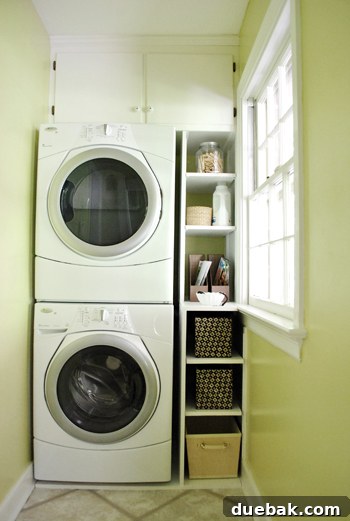
These were complemented by a few other beloved items we already owned, including magazine files, a charming scalloped bowl, and a jar brimming with clothespins, adding both utility and character to the space.
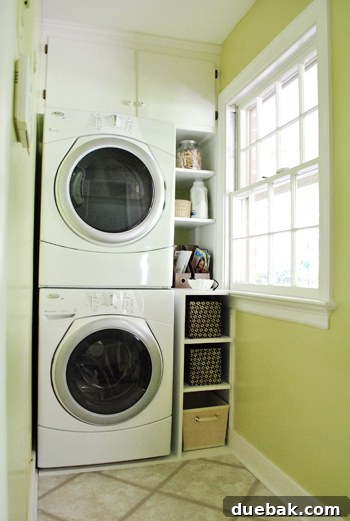
We’re even toying with the exciting idea of repurposing a portion of these shelves as our new “drop spot” for incoming mail, coupons, and other miscellaneous items, centralizing household organization. This multi-functional approach truly maximizes the utility of every inch, offering a glimpse into how the space might evolve in the long run.
Project Costs and Value Proposition
Regarding the investment, these custom built-ins certainly cost more than simply purchasing a not-quite-right, off-the-shelf solution (like this narrower, shallower version from Ikea). However, we wholeheartedly believe the added expense was justified. The seamless integration, the precise fit, and the ability to fully exploit every dimension of the space – coupled with the unmatched flexibility of adjustable shelving – make this a far superior and more valuable long-term solution. Here’s a transparent breakdown of the project budget:
- Wood (sourced from Home Depot & Lowe’s): $59
- Metal shelf tracks & shelf clips (from Home Depot): $15
- Primer & paint (Kilz No-VOC primer & Olympic No-VOC paint): Already owned
- Baskets, magazine files, decorative bowl, etc.: Already owned
- TOTAL: $74
Additionally, the crucial aluminum dryer transition duct, a vital safety upgrade, cost $10 from Lowe’s, making the overall functional investment remarkably modest for such a significant transformation.
If this project has sparked your imagination for creating your own custom shelves or exploring vertical storage solutions, you’ll find a wealth of inspiration in our comprehensive post featuring 16 innovative ideas for adding shelving to various spaces.
Looking Ahead: Our Updated Laundry Room To-Do List
With this major milestone achieved, our laundry room to-do list is looking considerably shorter, reflecting the significant progress we’ve made:
Paint the odd brown quarter round near the baseboards glossy whiteRedo all the dinged up trim (also in semi-gloss white)Paint the wallsReplace our dryer hose with a safer all-metal oneAdd adjustable built-in shelving in that nook next to the stacked washer & dryer- Replace the hinges and knobs on the upper cabinetry
- Get a new light fixture <- DIY something? maybe a small chandelier?
- Add a window treatment (maybe a homemade one?)
- Add other functional storage near the door for shoes, Burger’s leash, etc.
- Hang some art to keep it cheerful and obscure the giant metal fuse box
Even though we’re still roughly halfway through our complete laundry room overhaul, the progress over the past few weeks is incredibly encouraging. This once-neglected space has undergone a truly dramatic transformation, evolving from its initial cluttered state:
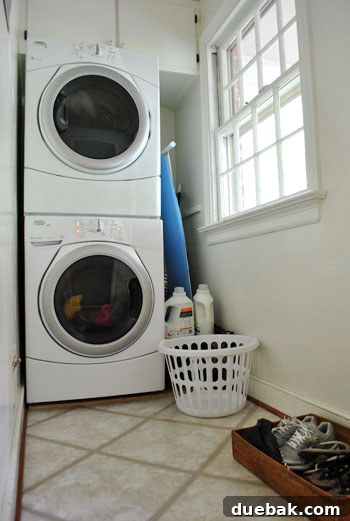
…to the organized and vastly more functional space it is today:
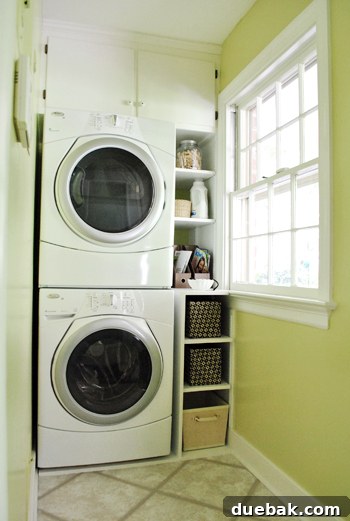
As for the ironing board, rest assured, we have a cunning plan for its storage! More details on that innovative solution will be shared once we’ve had a chance to tackle it and ensure its practicality. In the meantime, we’d love to hear about the storage solutions you’re currently loving (or desperately lusting after!) in your own laundry spaces. Do you boast some incredibly sweet custom cabinets or cleverly designed drawers? Perhaps a cool collapsible drying rack or an integrated ironing board? Or maybe you’re the proud owner of your very own dedicated laundry sink? We know there are some truly “pimped-out” laundry rooms out there, so please, share your ingenious ideas and inspiring setups with us!