
Building Your Ultimate DIY Toolkit: Essential Tools for Every Homeowner and Project
Embarking on home improvement projects or simply maintaining your living space requires the right set of tools. The question of “what tools should I own?” is one we frequently encounter, and it’s a valid one. While the perfect toolkit is deeply personal, tailored to the specific projects you undertake and the budget or space you have available, there are fundamental items that form the backbone of any effective workshop. Whether you’re a seasoned DIYer or just starting your journey, having reliable tools significantly enhances efficiency, accuracy, and the sheer joy of creating.
This comprehensive guide aims to demystify the vast world of tools by curating a list of essential items we’ve accumulated and relied upon over the years. Far from being an exhaustive inventory of every specialized tool imaginable, this selection focuses on versatile, foundational pieces that will serve you well across a wide array of basic home maintenance and building tasks. You’ll find everything from the universally recognized hammer to often-overlooked gems that prove invaluable in countless scenarios. So, whether you’re looking to establish your first toolkit, upgrade existing items, or find the perfect gift for a passionate DIYer in your life, consider this your definitive starting point.
The tools linked within this guide are, in most instances, the exact models we personally own and frequently use, or their most current equivalent. In cases where an item is no longer sold or if we’ve discovered a superior alternative, we’ve provided links to what we would purchase today. We’ve thoughtfully organized these 45 indispensable items into four distinct, logical categories to help you navigate and prioritize your acquisitions:
- Power Tools: For efficiency, speed, and precision in larger or repetitive tasks.
- Basic Manual Tools: The foundational hand tools that no workshop should be without.
- Tools for Measuring, Leveling, & More: Crucial for accuracy and ensuring professional results.
- Things To Have Around Your Workspace: Essentials that support productivity, safety, and organization.
It’s important to remember that this list is designed to cover the fundamental needs for general home projects. We’ve intentionally excluded highly specialized tools for tasks like painting, tiling, or drywalling, aiming to keep this guide focused and manageable. While 45 items might seem like a lot, these are core essentials that will empower you to tackle a vast range of common household challenges. We’ve built our own collection gradually over many years, and we strongly recommend a similar approach. Acquire tools as specific project needs arise, allowing you to invest in quality items that truly fit your requirements and spread your expenses over time. This mindful strategy prevents impulse buys and ensures every tool earns its place in your toolkit.
Power Tools: Unleash Efficiency and Precision
For many, power tools can initially seem daunting, particularly saws. However, once mastered, they become indispensable allies, transforming the speed and accuracy with which you can complete projects. They allow you to achieve results that would be incredibly time-consuming, if not impossible, by hand, opening up a new world of DIY possibilities. Here are the power tools that have become cornerstones of our workshop:
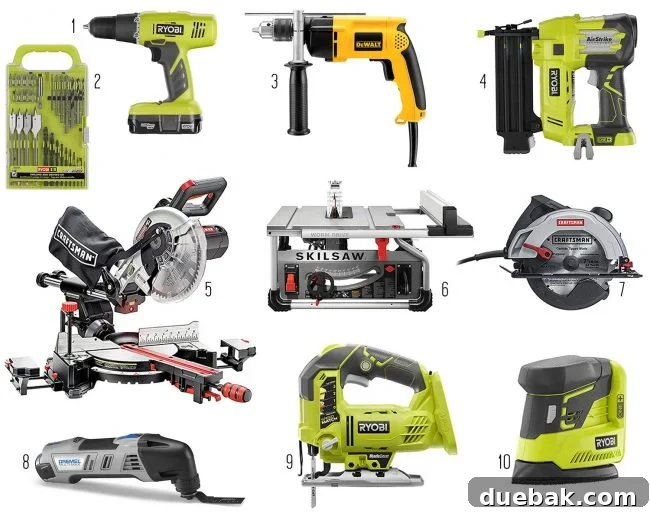
- Power Drill/Driver: This is undeniably our MOST USED tool. Essential for everything from assembling furniture and installing shelving to drilling pilot holes and driving screws, a good cordless drill/driver is a versatile workhorse for nearly any project. Its portability and ease of use make it invaluable.
- Drill/Driver Set: Complementing your drill, a comprehensive set of various screw heads and drill bits is crucial. Look for a kit that includes a wide range of sizes and types, including masonry bits for drilling into harder surfaces, ensuring you’re prepared for any material.
- Hammer Drill: When you need extra power and torque, a corded hammer drill steps up to the plate. Its hammer function makes light work of drilling into brick, stone, or concrete, which is a common task for mounting heavy fixtures or outdoor projects.
- Nail Gun: A battery-powered nail gun is a game-changer for building projects, trim work, or any task requiring precise, fast fastening. It offers unmatched convenience and a professional finish without the effort of traditional hammering.
- Miter Saw: This is our MOST USED SAW. Ideal for making incredibly precise crosscuts and angled cuts in wood, a miter saw (especially one with a sliding feature for wider boards) is perfect for framing, trim work, and any project demanding accurate, repeatable cuts.
- Table Saw: For ripping boards (cutting them lengthwise) or creating custom widths, a table saw is indispensable. It provides unparalleled accuracy for long, straight cuts, making it essential for flooring, paneling, and custom cabinetry projects.
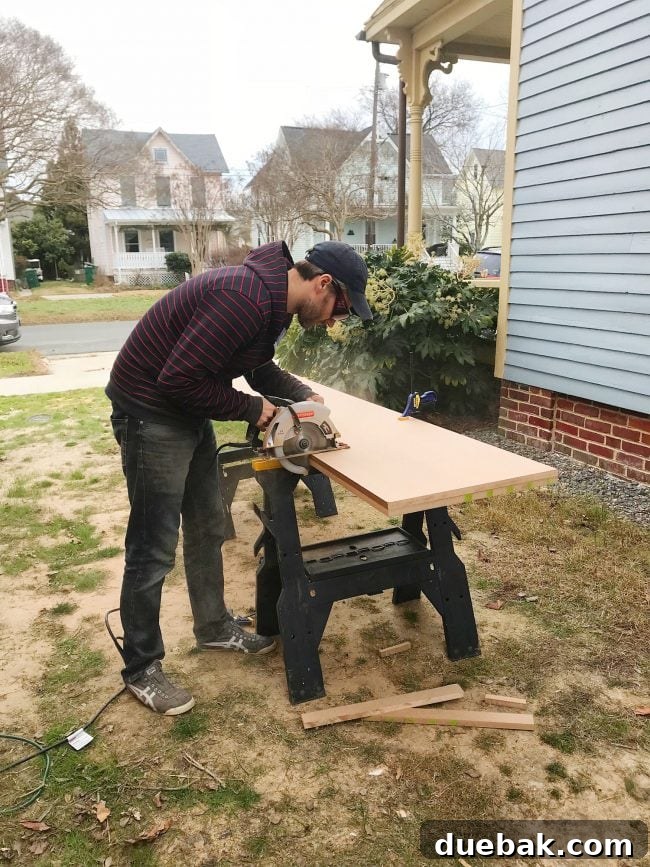
- Circular Saw: A highly portable and versatile saw, the circular saw is excellent for cutting large sheets of material like plywood, OSB, or even dimensional lumber. It’s perfect for breaking down sheet goods and on-site cuts where a miter or table saw isn’t practical.
- Dremel Multimax (Oscillating Tool): While not an everyday tool, an oscillating multi-tool like the Dremel Multimax shines in tight spaces and for intricate tasks. It’s incredibly versatile for cutting, sanding, grinding, and scraping, especially useful with specialized blades for metal.
- Jig Saw: When you need to cut curves, intricate shapes, or internal holes in materials, a jigsaw is your go-to. Its narrow blade allows for precise, non-linear cuts that other saws can’t achieve, making it ideal for decorative work or custom openings.
- Palm Sander: Achieving a smooth finish is crucial for many projects, and a power sander makes quick work of it. A palm sander is perfect for removing old finishes, smoothing rough surfaces, or preparing materials for painting or staining. Models with pointed tips are particularly useful for reaching into corners.
Basic Manual Tools: The Foundation of Every Toolkit
Before the advent of electricity, all work was done by hand, and many manual tools remain absolutely essential for their simplicity, reliability, and precision. These affordable hand tools are perfect for quick fixes, small adjustments, or tasks where power tools would be overkill. They are often available in starter kits, but we’ve highlighted a few indispensable items that you might not expect to use as often as you will.
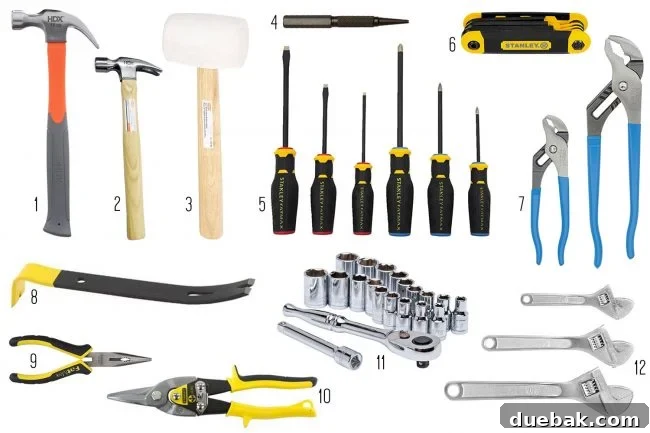
- Large Hammer: A solid large hammer is a fundamental tool for general construction, demolition, or driving larger nails. Its substantial weight provides effective force, and features like a bright handle can make it easy to locate in a busy workspace.
- Small Hammer: Perfect for delicate tasks like hanging picture frames, small repairs, or working in tight spaces, a lightweight small hammer is a household staple. Keep one handy in a kitchen drawer for everyday convenience.
- Rubber Mallet: When you need to tap components into place without causing damage or leaving marks, a rubber mallet is invaluable. Its soft head is ideal for assembling furniture, installing flooring, or working with delicate materials without scuffing.
- Nail Punch: This simple but effective tool is used to recess nail heads below the surface of wood, making them invisible once filled and painted. It’s essential for achieving a clean, professional finish on trim or woodworking projects.
- Screwdriver Set: Despite the prevalence of power drivers, a good old-fashioned screwdriver set with various flathead and Phillips head sizes is still a must-have. They’re perfect for delicate adjustments, manual tightening, or situations where electricity isn’t available.
- Hex Key Set (Allen Wrenches): Instead of hoarding all those tiny hex keys that come with flat-pack furniture, invest in a comprehensive set. These are essential for assembling many modern products, tightening bicycle parts, or making adjustments to machinery.
- Channellock Pliers (V-groove): These versatile pliers are known for their adjustable jaws and strong grip. V-groove versions offer an even tighter hold on round or irregular objects, making them excellent for plumbing, gripping nuts, or turning stubborn pipes.
- Pry Bar: A pry bar is an indispensable tool for demolition, removing old trim, opening crates, or extracting stubborn nails. Its leverage allows you to apply significant force with minimal effort, making tough tasks much easier.
- Needlenose Pliers: With their long, tapered jaws, needlenose pliers are perfect for working in confined spaces, bending wires, holding small objects, or retrieving dropped parts. They are incredibly handy for intricate electrical work or crafting.
- Metal Snips: For cutting thin sheet metal, ducting, or even heavy-gauge wires like floral and picture wire, metal snips are the specialized tool you need. They provide clean, precise cuts where other tools would struggle or create jagged edges.
- Ratchet & Socket Set: This set is a powerhouse for quickly tightening or loosening nuts and bolts of various sizes. Its ratcheting action allows for continuous turning without repositioning the wrench, making it highly efficient for automotive, machinery, or furniture assembly tasks.
- Adjustable Wrenches: A set of adjustable wrenches offers versatility, allowing you to grip fasteners of different sizes without needing a full collection of individual open-end wrenches. They complement Channellock pliers well, especially in confined areas.
Tools for Measuring, Leveling, & More: Precision is Key
While not as overtly exciting as power tools or manual heavy-hitters, these measuring, leveling, and layout tools are the true unsung heroes of any successful project. Accuracy is paramount in DIY, and these items ensure your cuts are straight, your installations are level, and your dimensions are correct, saving you time, frustration, and material waste in the long run. Often, the difference between a professional and amateur result lies in the diligent use of these essential tools.
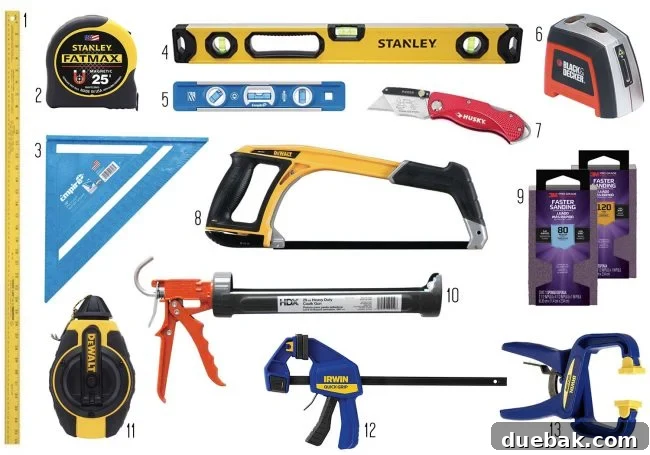
- Metal Yardstick: More than just for measuring, a metal yardstick (or meter stick) serves as an excellent straight edge for marking precise lines on various materials before cutting. Its rigidity ensures perfectly straight guidance for utility knives or pencils.
- Tape Measure: A reliable tape measure is arguably the most fundamental measuring tool. Look for one that’s comfortable to hold, has clear markings, and a sturdy lock. Having a smaller version in your car or purse is also smart for impromptu measurements of furniture or materials while shopping.
- Rafter Square (Speed Square): This triangular tool is incredibly versatile for framing, roofing, and general woodworking. It helps you quickly mark square lines, measure and mark angles (especially 45-degree cuts), and even serve as a saw guide for crosscuts.
- 24″ Level: A medium-sized level is perfect for most common tasks, from hanging cabinets and shelves to installing doors or windows. Its length provides sufficient accuracy for larger surfaces, ensuring everything is perfectly plumb and level.
- 9″ Level: For smaller jobs, tight spaces, or fine-tuning, a compact 9-inch magnetic level is invaluable. It’s ideal for leveling artwork, appliances, or ensuring small fixtures are perfectly straight. The magnetic feature is a bonus for metal surfaces.
- Laser Level: For tasks requiring multiple items to be perfectly aligned across a room, a simple laser level is a godsend. It projects a straight line across walls, making it effortless to hang picture collages, curtain rods, or align shelving with incredible accuracy.
- Utility Knife: A heavy-duty utility knife is incredibly versatile for cutting drywall, opening packages, scoring materials, or trimming excess. Always have extra sharp blades on hand for safety and efficiency.
- 5-in-1 Saw (Hand Saw): While power saws handle most cutting, a good manual hand saw is crucial for quick cuts, detailed work, or when electricity isn’t available. A multi-purpose saw, sometimes featuring different blade types, offers flexibility for various materials.
- Sanding Blocks: For hand sanding in areas a power sander can’t reach, or for fine-tuning a surface, sanding blocks are indispensable. Keeping a variety of grits allows you to smooth rough cuts or properly prepare surfaces for painting or finishing.
- Caulk Gun: Essential for sealing gaps, cracks, and joints around windows, doors, bathtubs, and sinks. A basic caulk gun ensures a clean, waterproof, and air-tight seal, improving insulation and preventing moisture damage.
- Chalk Line: For marking long, straight lines on large surfaces like plywood, flooring, or walls, a chalk line is far more efficient than a straight edge. It creates a crisp, temporary line by snapping a string coated with colored chalk.
- Trigger Clamps: These quick-release clamps are invaluable for holding materials firmly in place while you cut, glue, drill, or assemble. Their one-handed operation and strong grip make them extremely convenient for various woodworking and DIY tasks.
- Handi-Clamps (Spring Clamps): Smaller and even quicker to use than trigger clamps, handi-clamps are perfect for lighter holding tasks, securing tarps, or temporarily clamping smaller pieces. They offer immediate, flexible pressure when you need an extra set of “hands.”
Things To Have Around Your Workspace: Essential Support Supplies
Beyond the tools themselves, a productive and safe workspace relies on a collection of supporting supplies and organizational solutions. Whether you have a dedicated workshop, a shed, or a corner of your garage, these items will enhance your efficiency, protect you, and keep your tools and fasteners neatly organized, ensuring every project runs smoothly from start to finish.
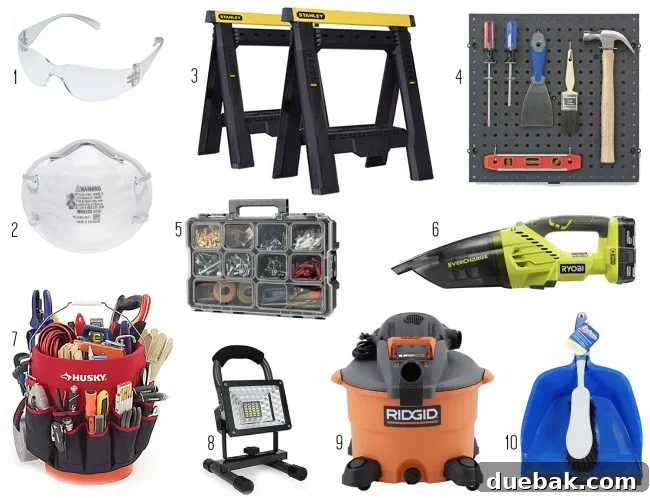
- Safety Goggles: Protecting your eyes from flying debris, dust, or chemical splashes is non-negotiable. Always keep at least one pair of comfortable, clear safety goggles readily available and wear them diligently when operating any power tools or engaging in dusty tasks.
- Dust Masks: While some jobs might require specialized respirators, basic dust masks are excellent for minimizing inhalation of sawdust, paint particles, or general airborne irritants during common DIY activities. Prioritize your respiratory health.
- Saw Horses: Lightweight, collapsible saw horses are incredibly versatile. They provide a stable platform for supporting lumber during cutting, can serve as a portable workbench, or even act as a drying rack for painted items. Their portability makes them ideal for any workspace.
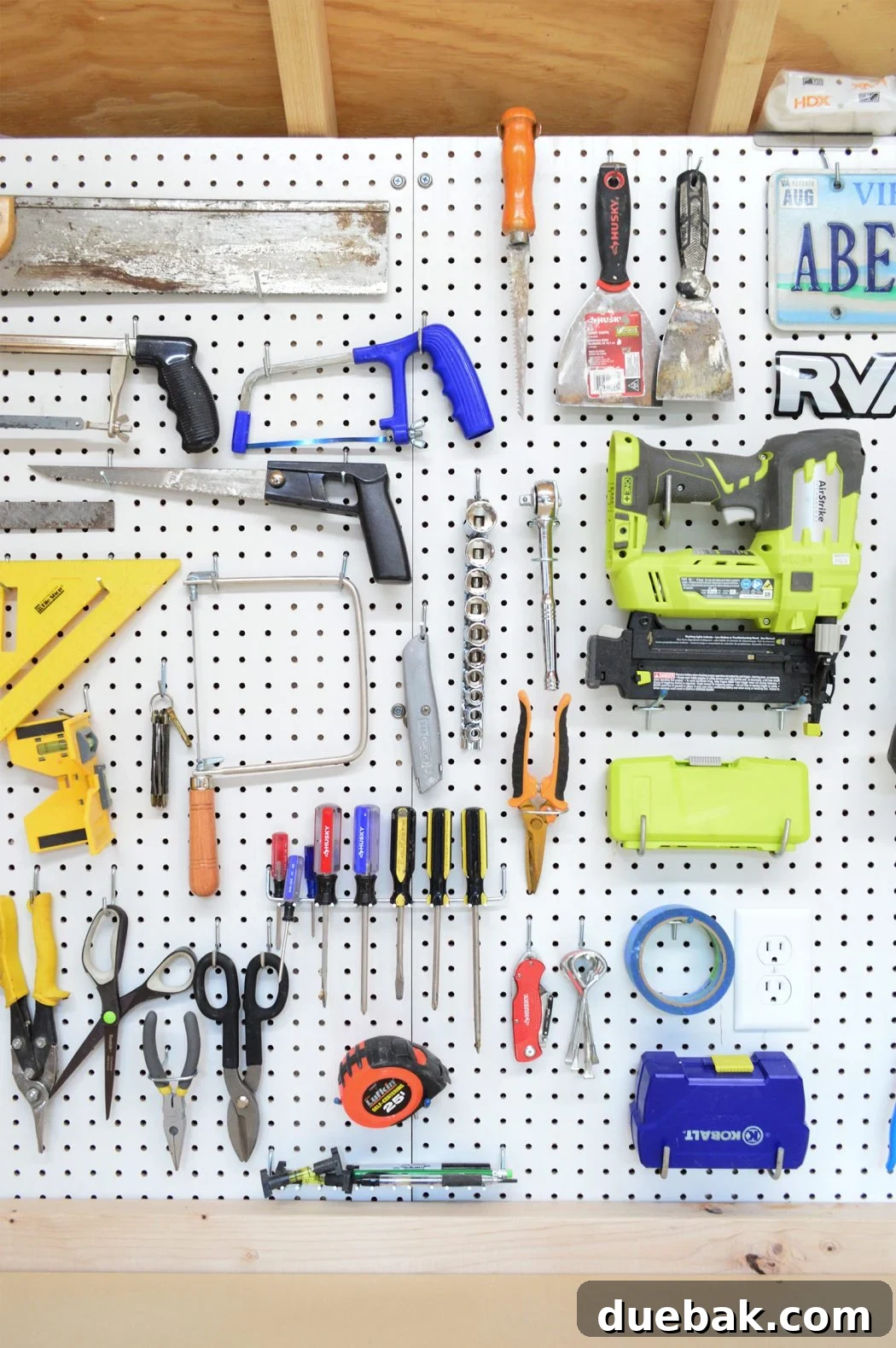
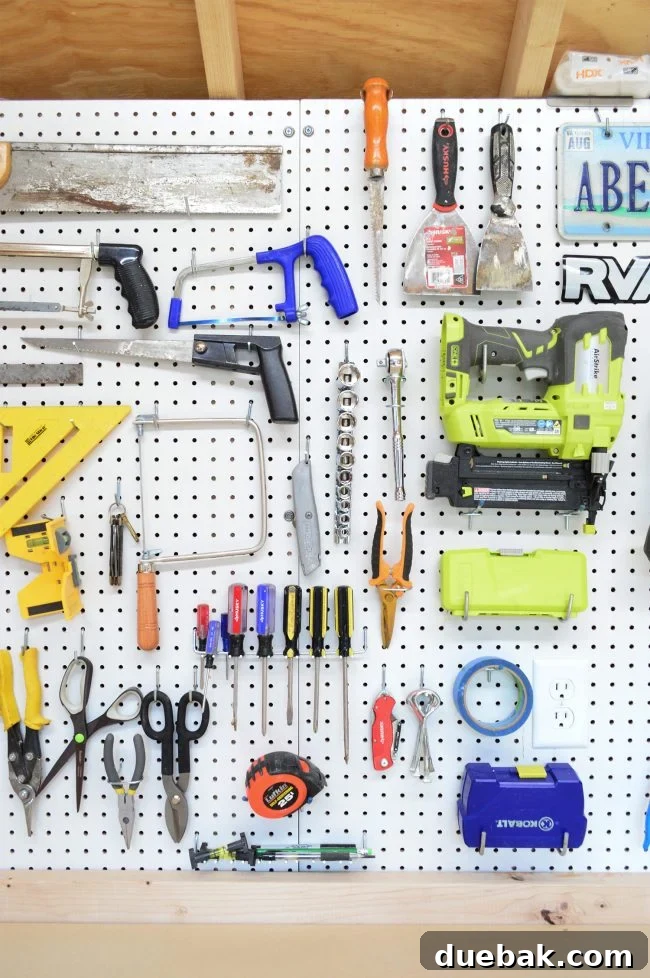
- Pegboard: An effective wall organizer like pegboard is a game-changer for keeping hand tools visible and accessible. Hooks, bins, and shelves can be configured to store a wide array of items, reducing clutter and making it easy to find what you need. Larger kits often come with useful accessories.
- Small Parts Organizers: A robust system for organizing screws, nails, washers, and other small fasteners is critical for efficiency. Portable organizers with multiple compartments allow you to easily carry specific hardware to your project site without digging through messy bins.
- Hand Vacuum: For quick cleanups of sawdust, debris, or spills, a cordless hand vacuum is invaluable. It allows you to maintain a tidy workspace effortlessly, preventing accumulations that can become hazardous or track dirt into your home.
- Portable Tool Organizer (Bucket Jockey): While tool bags can be convenient, items often get lost at the bottom. A bucket jockey or similar portable organizer with external and internal pockets keeps frequently used tools neatly arranged and easily accessible, improving workflow.
- Work Lights: Adequate lighting is crucial for safety and accuracy, especially in dimly lit garages or basements. Portable LED work lights provide bright, focused illumination exactly where you need it, reducing eye strain and preventing errors. Consider a versatile option that can be aimed in various directions.
- Wet/Dry Vac: For larger cleanup projects, tackling big spills, or general workshop maintenance, a powerful wet/dry vacuum is indispensable. It can handle everything from sawdust and wood shavings to liquids, making it a robust cleaning solution for any DIY space.
- Dust Pan Set: Sometimes the simplest tools are the best. For quick sweeping of small debris or spills, a good old-fashioned dust pan and brush set remains an essential cleaning standby for any workshop or home.
Building a well-equipped toolkit is an ongoing process and a rewarding investment in your home and your skills. By focusing on these essential items, you’ll be well-prepared to tackle a wide range of DIY projects with confidence and efficiency. Remember, quality tools are an investment that pays dividends through years of reliable service and the satisfaction of a job well done.
For more detailed insights into specific tools, check out our post on 5 Power Tools That Changed How We DIY (which includes a couple of powerful options not on this list!), and gain inspiration for an organized space with our guide on how we organized our shed.
*This post contains affiliate links, meaning we may earn a small commission if you make a purchase through our links, at no extra cost to you. This helps support our content creation and allows us to continue bringing you valuable DIY insights.*