
Transforming Our Laundry Room: A Deep Dive into IKEA Cabinet Installation for a Future-Proof Kitchen Remodel
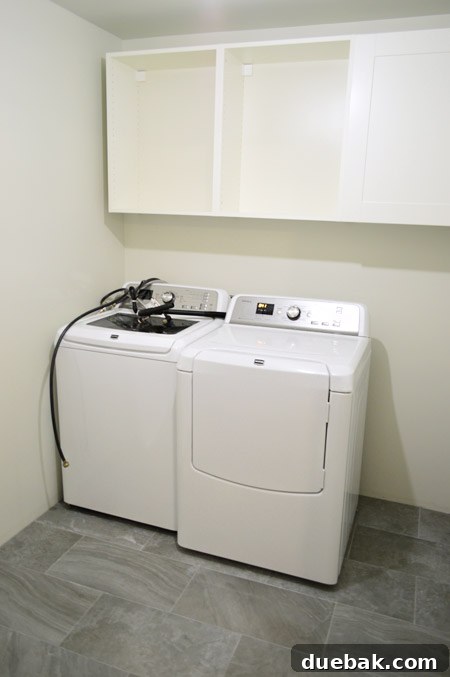
Embarking on a home renovation project often feels like a delicate dance between progress and unforeseen obstacles. Our recent laundry room transformation was no exception, beginning with a comical scene of partially installed IKEA cabinets and disconnected appliances. Just 24 hours ago, our laundry room was a chaotic mix of tools and unassembled furniture, a visual testament to our ambitious multi-project approach. Today, however, we’re thrilled to report a significant leap forward: fully re-installed, functioning appliances, and beautifully hung cabinet doors. While the intricacies of plumbing connections for the overflow drain and washer pan deserve their own detailed post next week, today, our focus is entirely on the journey and triumphs of installing IKEA cabinets.
Why IKEA? Our Low-Risk Test Run for a Dream Kitchen
Our decision to incorporate IKEA cabinets into our laundry room wasn’t just about practical storage; it was a strategic “test run” for a much larger project: our upcoming kitchen remodel. For years, we’ve heard glowing reviews about IKEA’s cabinet systems, frequently spotting them in high-end homes featured in prestigious design magazines like Dwell, Domino, and House Beautiful. Despite IKEA’s significant presence in other areas of our lives, we had never ventured into their cabinetry. This seemed like a missed opportunity, especially given the diverse cabinet solutions we’ve explored in previous homes. In our first house, we opted for custom cabinetry, a route that offered bespoke solutions but came with a premium price tag. For our second home, we embraced a more budget-friendly and sustainable approach, refinishing existing cabinets and integrating salvaged pieces from the Habitat ReStore. The laundry room, with its smaller scale and functional focus, presented the perfect low-risk environment to familiarize ourselves with the IKEA system, assess its quality, and determine if it truly is the right fit for our much-anticipated kitchen transformation.
Planning Our Laundry Room Cabinets with the IKEA Kitchen Planner
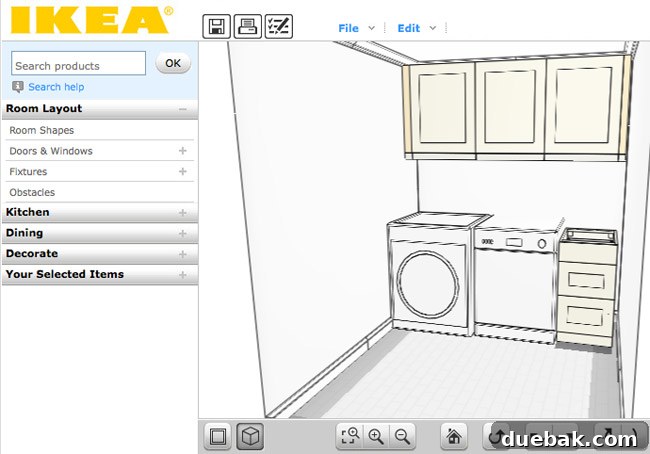
The journey began with IKEA’s invaluable online Kitchen Planner tool. This free and user-friendly software allowed us to meticulously map out our laundry room space and visualize various cabinet configurations. Interestingly, we had actually used this very tool before to conceptualize our previous kitchen layout, even though we weren’t planning to purchase IKEA cabinets at that time. Its intuitive interface makes it an excellent resource for anyone planning a space with standard dimensions. Our only minor challenge was adapting to the kitchen-centric options; since there wasn’t a “dryer” option, we simply inserted a “dishwasher” into our plan as a placeholder to accurately represent the appliance dimensions. Before long, we had a detailed plan and a comprehensive shopping list ready to print and take to the store.
Upon arriving at IKEA, the benefit of having a pre-existing plan became immediately clear. It significantly streamlined the process, allowing us to quickly engage with one of their knowledgeable kitchen experts. Their guidance proved invaluable, saving us from several unnecessary purchases. The expert meticulously reviewed our list, explaining which components weren’t essential for our specific laundry room installation. She also provided crucial advice on incorporating trim pieces to neatly conceal our under-cabinet lighting – a last-minute decision we made to enhance visibility for stain treatment and general tasks. This consultation highlighted the importance of both doing your homework beforehand and leveraging the expertise of in-store professionals.
Choosing the Right Cabinet Door Style: A Critical In-Person Decision
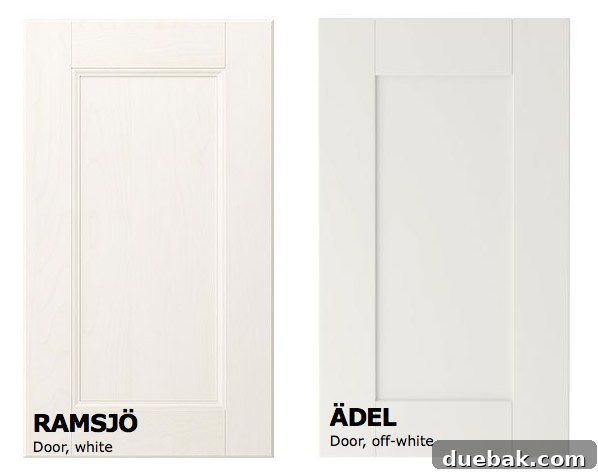
During our store visit, we also made a pivotal decision regarding our cabinet door style. Online, the Ramsjo door appeared to be the closest match to our desired aesthetic. However, seeing it in person revealed a distinct whitewashed wood look with noticeable pink undertones, which wasn’t what we envisioned. The Adel style, though labeled “off-white,” presented a much closer approximation to the solid white appearance we were aiming for. While not a pure, crisp white, we’ve come to expect a slightly creamy hue from many IKEA products, making the Adel a seemingly acceptable choice at the time.
The IKEA Shopping Experience and an Unexpected Roadblock
With our plan finalized and door style chosen, we were fortunate that all components were in stock. Approximately an hour and just over $800 later, our cart was full, and we were on our way home. The timing, a Friday afternoon, was less than ideal for navigating I-95 South near IKEA. While we had other errands in the area, this would certainly not be our chosen time for a dedicated IKEA trip. Our initial two-hour journey turned into an epic ordeal, as we first battled normal rush-hour and summer Friday traffic, only to encounter a complete highway closure due to an acid spill. What should have been a relatively quick drive stretched to nearly six hours, a true test of patience!
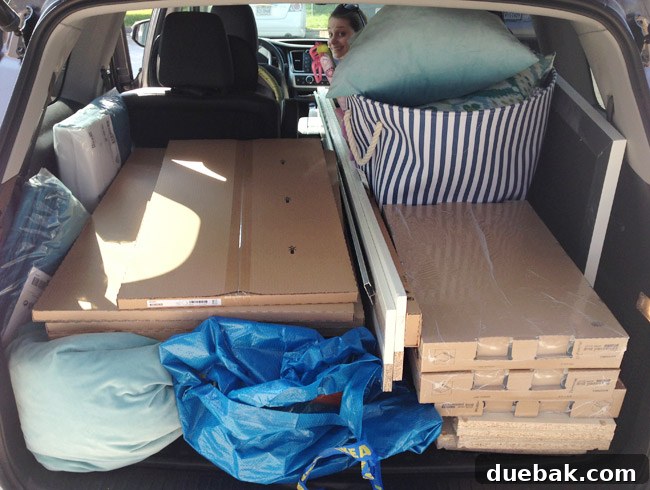
Arriving home significantly later than planned, our immediate satisfaction with the purchases was somewhat overshadowed by the exhausting journey. But the sight of the neatly stacked boxes promised new possibilities for our laundry room.

Assembling Our IKEA Cabinets: Easier Than Expected
Putting together IKEA cabinets is often cited as the most daunting part of an IKEA kitchen project. However, for our small laundry room setup, which involved only three upper cabinets and one lower unit, the assembly process was far less intimidating than anticipated. To maximize efficiency, we adopted an “assembly-line” approach for the three upper cabinets, tackling each step for all units before moving to the next. This method significantly sped up the process, allowing us to complete the frames relatively quickly. If you’re undertaking a larger project, this strategy can save considerable time and effort.
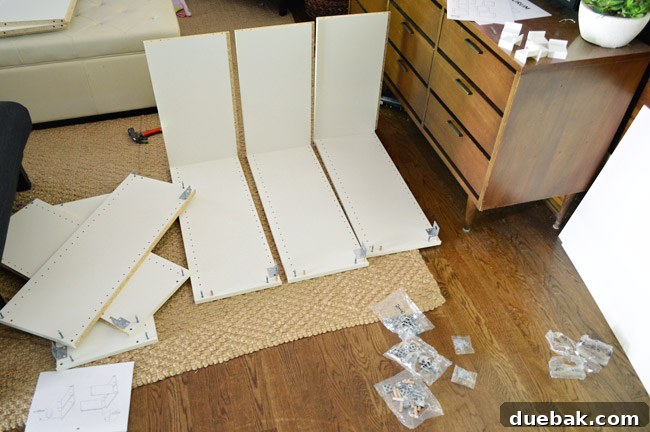
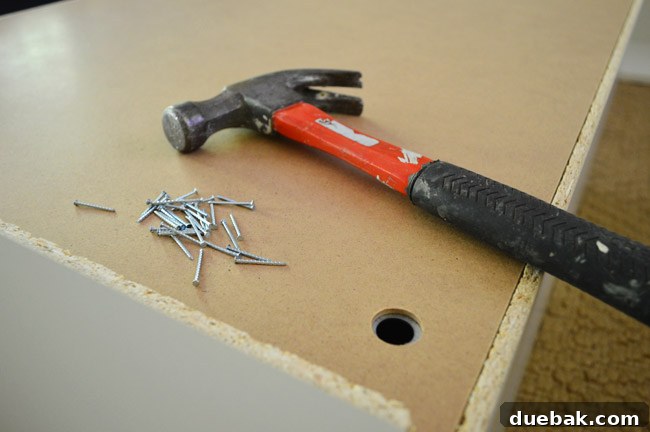
The most “annoying” part of the assembly, if we had to pick one, was nailing the thin back panels onto each cabinet frame. While not difficult, it was a somewhat repetitive task, requiring approximately 24 small nails per cabinet to ensure a secure and flush fit. This detail, though minor, is crucial for the cabinet’s structural integrity and aesthetic finish.
The Ingenious IKEA Cabinet Hanging System: A Game Changer for DIY Installation
One aspect of IKEA cabinetry that truly impressed us was their innovative hanging system for upper cabinets. Having seen numerous IKEA kitchens online and in magazines, we had never fully appreciated that these cabinets aren’t screwed directly to the wall in the traditional manner. Instead, they utilize a robust metal rail system that attaches securely to the wall studs. This design significantly simplifies the hanging process, making it much easier for DIYers to achieve perfect alignment and a level installation compared to traditional methods we’ve used in the past. The ability to precisely adjust cabinets along the rail offers a level of forgiveness that is incredibly valuable.
Precise Measurement and Installation of the Hanging Rail
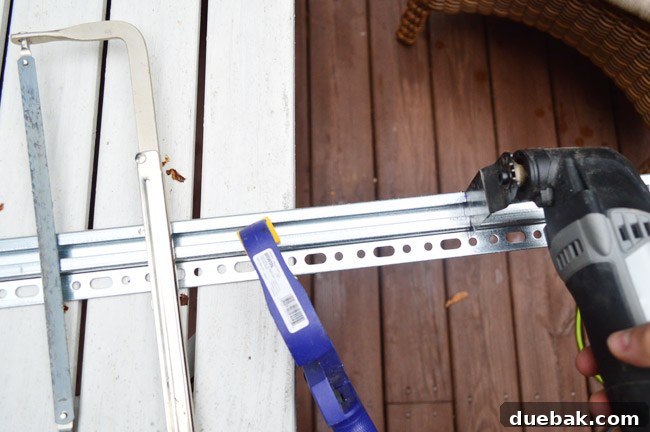
The metal hanging rail comes as a single 80-inch piece, which needed to be cut down to accommodate our three 24-inch wide cabinets. While the instructions suggested using a hacksaw, our Dremel tool made quick work of the task, providing a clean and efficient cut. This is a small but important detail, as a clean cut ensures the rail sits flush against the wall.
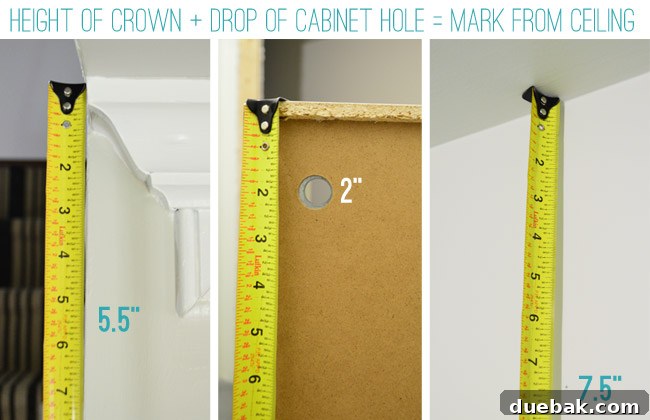
Determining the exact height for the rail required careful planning. We intend to finish our cabinets with crown molding that matches the existing trim in our home, so we had to account for the added height of this molding. Additionally, the cabinets attach to the rail a few inches down from their top edge, a crucial measurement to factor in for proper positioning. Precision at this stage prevents frustrating adjustments later on.
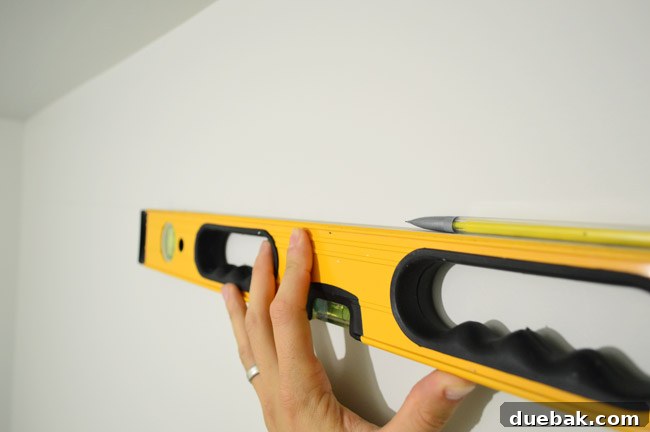
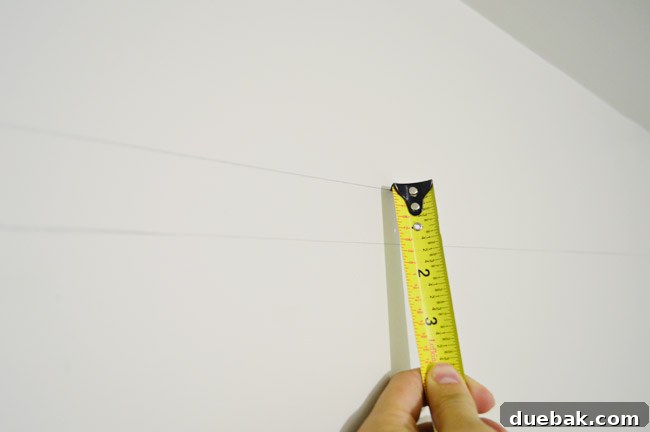
Once the precise mark for the rail’s placement was established at the center of the back wall, I used a long level to draw a perfectly straight line across the entire wall. This line served as our primary guide for the rail installation. However, I quickly realized that this line would be obscured once the solid metal rail was in place. To ensure a visible reference point during installation, I marked a second line a few inches higher, providing a clear visual guide above the rail.
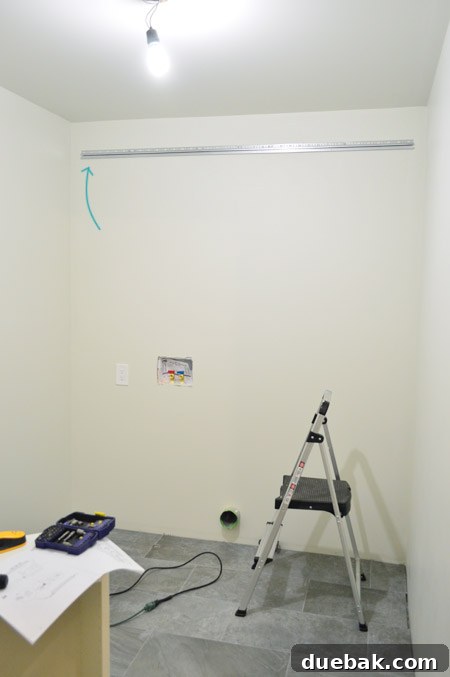
This second, higher line proved to be an indispensable aid, ensuring that the rail was mounted perfectly level even as we drilled and secured it.
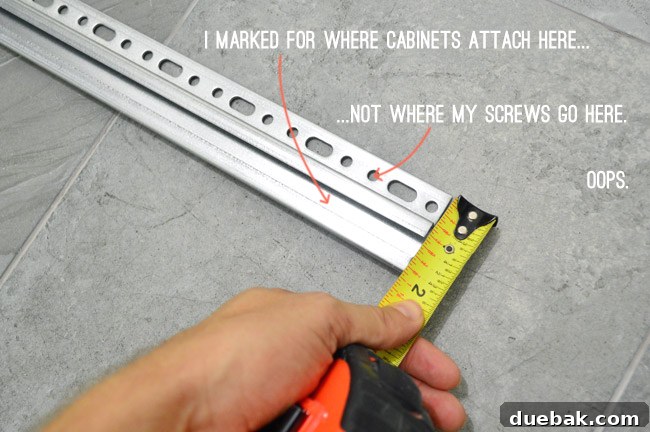
Before attaching the rail, we meticulously marked the locations of all wall studs. Anchoring the rail directly into these studs is crucial for a secure and stable installation. Our wall was thankfully flat, allowing for direct screwing of the metal rail into each stud. However, the IKEA instructions wisely advise shimming the rail if your wall has any significant waves or imperfections, ensuring a perfectly straight run for your cabinets.

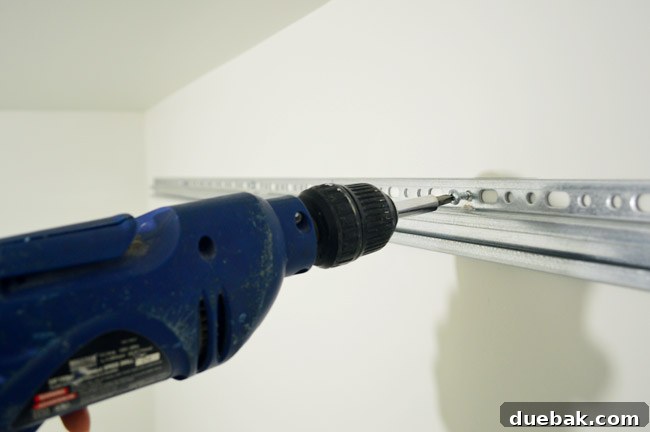
Hanging the Cabinet Frames
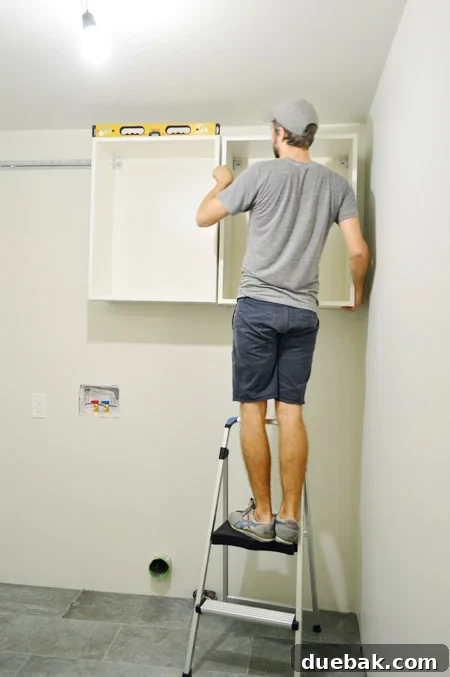
Once the rail was firmly in place, we slid in the specialized bolts from which each cabinet frame would hang. These bolts provide the primary support for the cabinets. A significant advantage of IKEA cabinet frames is their relatively light weight, especially before shelves and doors are added. This made it possible for one person to hoist and position them onto the bolts without excessive effort. My wife, Sherry, even managed to hang one herself with surprising ease. We installed the cabinets one at a time, starting with the middle unit, followed by the right, and then the left.
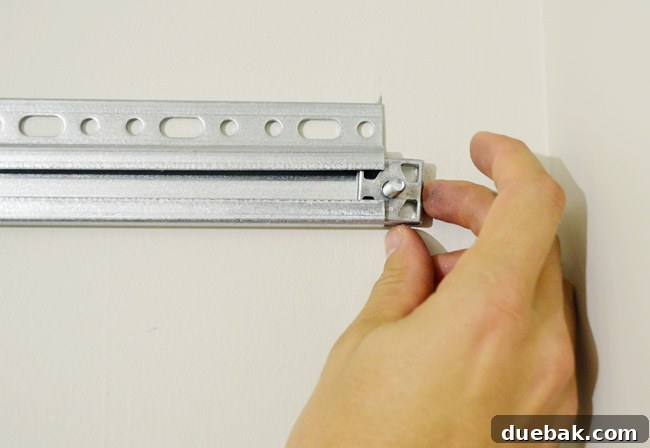
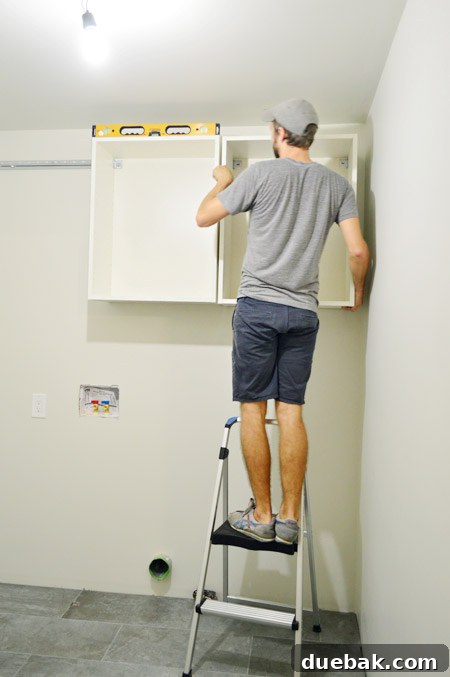
After each cabinet was resting securely on its two bolts, we added a metal clip and a nut, tightening everything with a wrench. The beauty of this clip system is its subtle adjustability, allowing for minor leveling tweaks if needed. As we progressed, we consistently used a level across the top of each cabinet to ensure perfect horizontal alignment, guaranteeing a professional finish across the entire run.
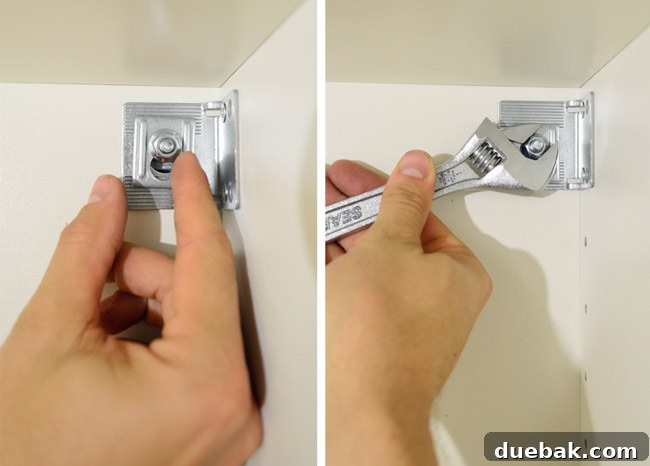
Connecting the Cabinet Units for a Seamless Look
With all three cabinets successfully hung and leveled, the next crucial step was to join them together to form a single, robust unit. We achieved this by clamping the adjacent cabinets tightly together at their edges, effectively eliminating any potential gaps. Once clamped, I drilled through one of the pre-drilled peg holes using a 3/16″ bit, ensuring the hole passed through both cabinet frames. A small but important lesson learned here: it’s best to use the very top and very bottom peg holes for this connection, as the intermediate holes are typically reserved for door hardware. While easily corrected, taking note of this detail can save a few minutes of re-drilling.
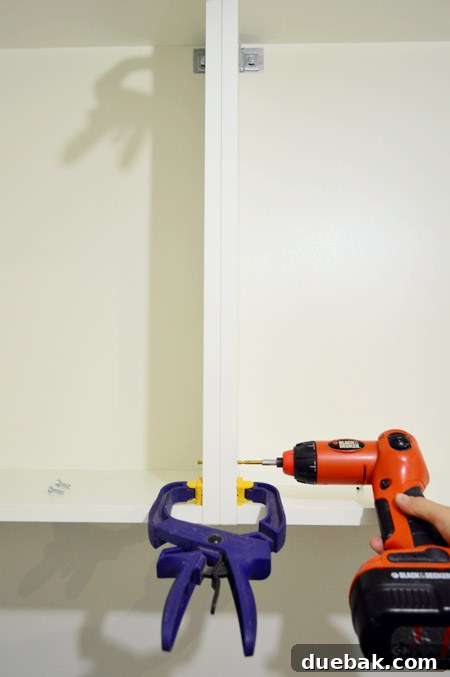
With holes drilled through both cabinets, we used the provided connecting screws to firmly join the units, creating a solid and integrated piece of furniture. This step is vital for the overall structural integrity and visual continuity of the cabinet run.
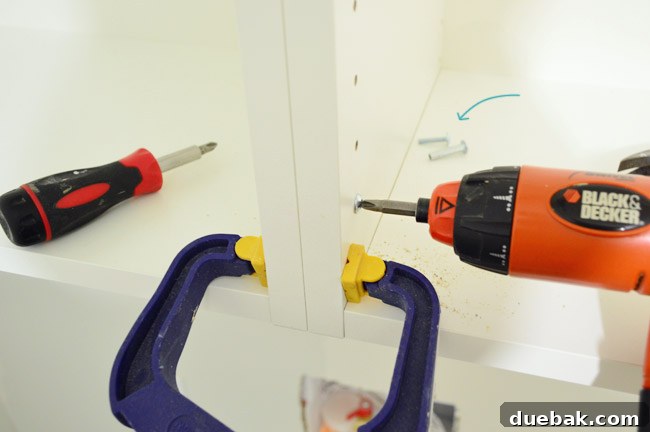
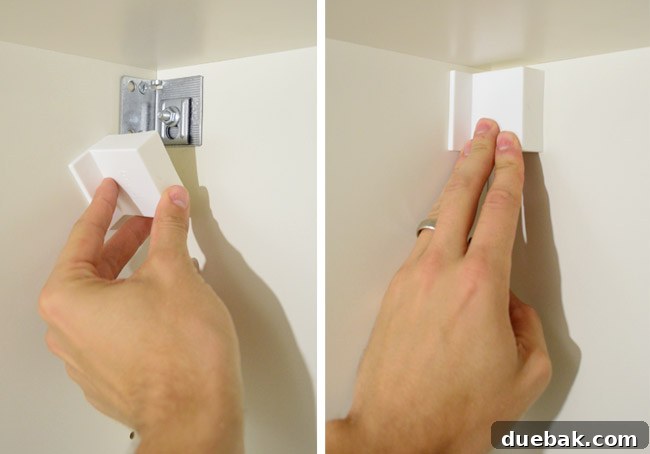
The final touch for the cabinet frames was snapping on the white plastic caps, neatly covering the visible hanging hardware at the back of each unit, providing a clean and finished appearance.
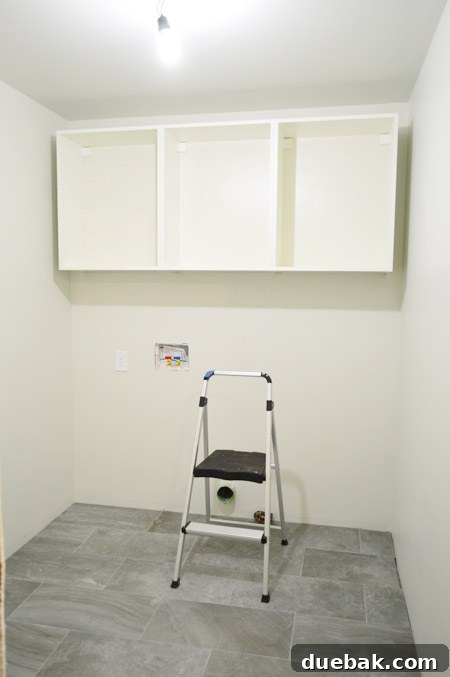
Here stand our three upper cabinets, proudly mounted on the wall. While already a significant improvement in terms of storage and function, they still awaited the final decorative touches: wood filler pieces for the exposed sides, crown molding for the top, and, of course, their shelves and doors.
The Door Dilemma: When “Off-White” Isn’t Quite Right
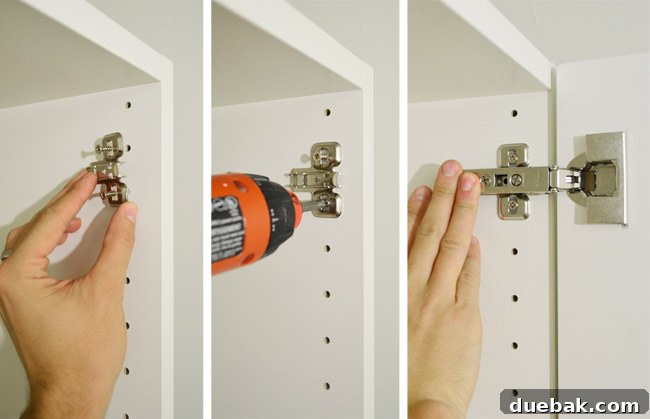
Adding the cabinet doors was surprisingly straightforward. IKEA’s hardware ingeniously uses a pressure-based attachment system, eliminating the need for additional drilling. Various adjustment screws allow for fine-tuning the door’s placement, though our first door seemed to sit perfectly against the frame right out of the box.
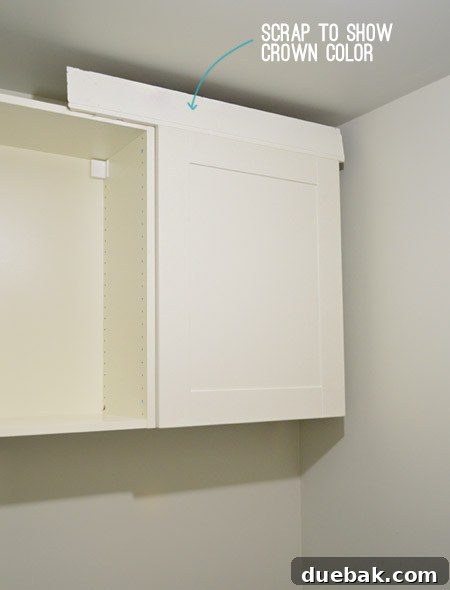
However, the moment of truth with the door color was less than ideal. While difficult to fully capture in photographs, the Adel door front, which we had chosen in-store, appeared considerably creamier than anticipated in our laundry room. It was noticeably several shades darker than the subtle creaminess we’ve observed in other IKEA furniture we own. Placed next to a scrap piece of Simply White baseboard – the exact paint color used for all our home’s trim, baseboards, and doors – the Adel doors took on a distinctly yellowish hue. This stark contrast was a significant disappointment.
The “Simply White” Revelation and a Fortunate Discovery
While we hadn’t expected a perfect match, the color difference was too pronounced to ignore. A quick post-purchase Google search (a step we deeply regret not taking *before* our IKEA trip) revealed a critical piece of information: IKEA sells a door style that many people claim matches Benjamin Moore’s Simply White almost perfectly. The irony was palpable – what are the odds of IKEA offering a door that aligns perfectly with our home’s precise trim and door color?! Meanwhile, the Adel style we purchased is said to match Benjamin Moore’s Paper Mache, a notably less bright white. We had sadly overlooked the Lidingo door style online because its image on the IKEA website made it appear much darker and yellower. This experience underscored the significant discrepancy between online product photos and real-life samples, especially for color-sensitive items like cabinet doors.
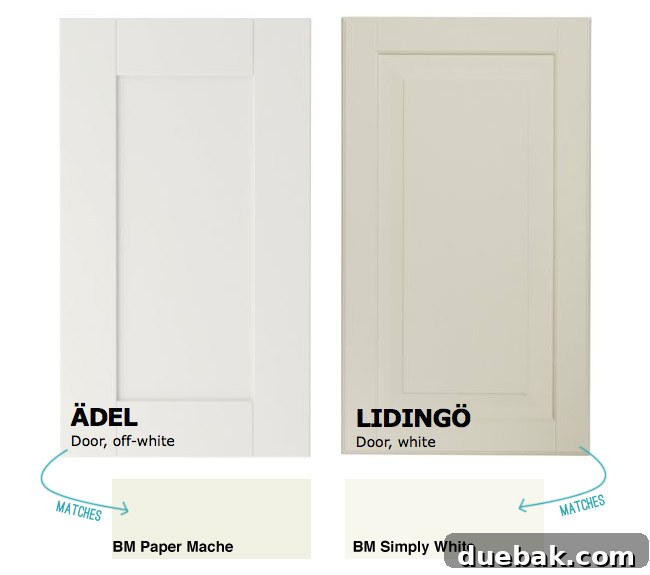
While the Lidingo door style doesn’t feature the crisp, clean lines of the shaker style we typically gravitate towards, its classic aesthetic perfectly complements our home’s overall design. We’ve admired it in several IKEA kitchens we’ve scouted online, particularly Dana’s kitchen at HouseTweaking, and learning she used them was a strong selling point. But the most compelling factor was undoubtedly the revelation that a door style existed that could seamlessly match all the existing doors and trim throughout our house. The odds truly felt miraculous!
A Miracle Return Trip and the Perfect Match
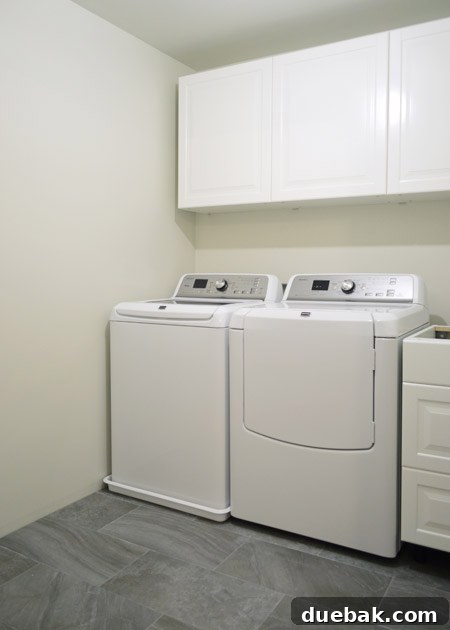
Our discovery of the Lidingo style prompted an immediate halt to door installation and the uncomfortable prospect of another return trip to IKEA. The thought of revisiting that highway closure traffic caused a genuine eye twitch and a flood of frustrating flashbacks. However, by some incredible stroke of luck, a minor miracle occurred: my parents were visiting family in Northern Virginia and graciously offered to swing by IKEA on their way home to pick up the new Lidingo doors for us. Their assistance was a true lifesaver, transforming a potential logistical nightmare into a seamless exchange. The difference between the Lidingo and Adel doors was striking and immediately apparent. We couldn’t wait to hang them last night after the kids were in bed. Even our base cabinet, though still needing to be secured to the wall and fitted with trim, hardware, a counter, and a toe kick, was tucked into place for a preview of the finished look.
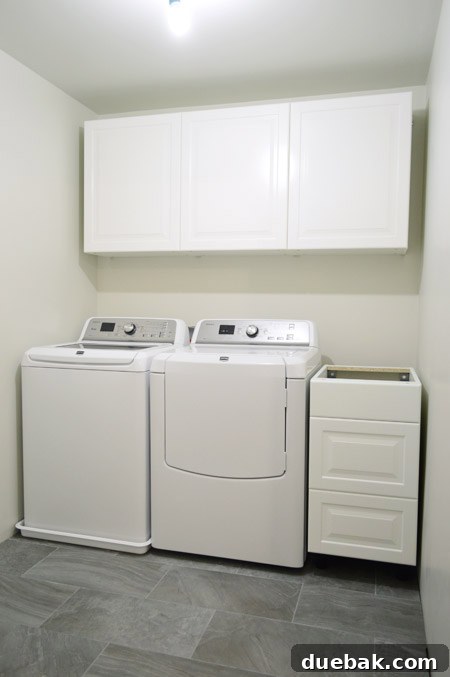
Our cabinet-related to-do list is still quite extensive, but these final details are what truly bring a space to life. We’re incredibly excited to dive into each step, knowing that every addition will contribute to the functionality and aesthetic appeal of our renewed laundry room. The vision is truly coming together.
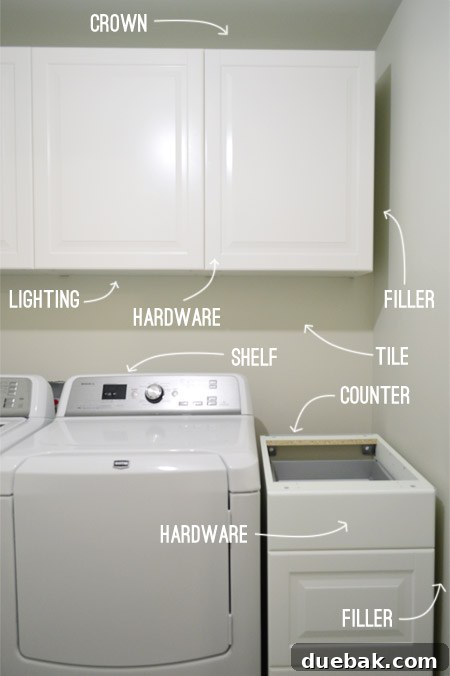
Looking Ahead: Adding Warmth and Functionality
While the room currently boasts a predominantly white palette, we’re eagerly anticipating the introduction of warm wood tones to create visual interest and break up the expanse of white. A beautiful butcher block counter is high on our list, alongside a few other strategic design elements. You can delve into those specific plans and ideas for adding personality to this space in this post.
We still need to return the initial set of Adel doors and drawer fronts (only one was unboxed, thankfully), but a planned trip through that area in a few weeks will make the drop-off a relatively minor inconvenience (here’s hoping for no unforeseen traffic issues!). Overall, this IKEA cabinet installation has been an incredibly rewarding learning experience, solidifying our confidence in using their system for our upcoming kitchen renovation. And finally, the sheer joy of being able to do laundry at home again? Pure bliss!