
Building Our Dream Deck: From Footing Fails to Foundation Success
Embarking on a significant home improvement project like building a deck is often a journey of highs and lows. The dream of a finished outdoor space, perfect for family meals, summer gatherings, and quiet evenings, propels you forward. Yet, the reality of DIY often introduces unexpected hurdles, requiring resilience, adaptability, and sometimes, a whole lot more digging. Our ambition to complete our deck by the end of summer, or perhaps even sooner, recently hit a major speed bump. Our initial deck footing inspection didn’t go as planned – a story of learning through setbacks, which you can read more about in this detailed post. But as the saying goes, if at first you don’t succeed, sometimes you just need to dig more holes.
This project has undeniably been a test of patience, moving along at a pace best described as a slow, determined crawl rather than a lightning sprint. However, with each challenge overcome, we creep closer to our vision of a beautiful, functional deck. This latest chapter in our deck-building saga involved re-evaluating our entire approach to the foundation, leading us down a path requiring significant rework and, yes, a fresh set of holes.
The Pivot to a Freestanding Deck: A New Foundation, A New Beginning
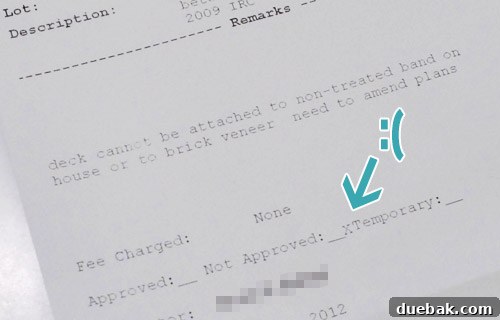
Our initial design, which aimed to attach ledger boards directly to the existing house structure, received a decisive “no” from the county on our first inspection. While it had initially been approved on paper, the on-site inspection revealed that the surfaces we intended to use for attachment were deemed unapproved. This setback meant a complete overhaul of our structural plans, transforming what was meant to be an attached deck into a free-standing one. This critical change, while adding complexity, ultimately ensures greater structural independence and avoids potential issues with the existing house envelope.
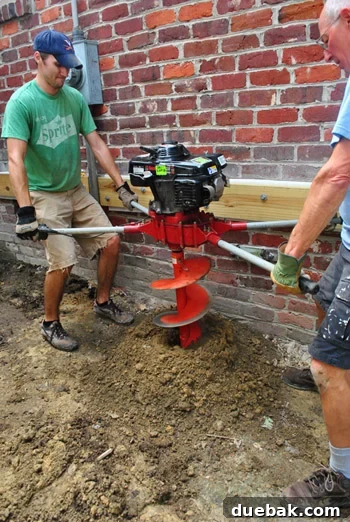
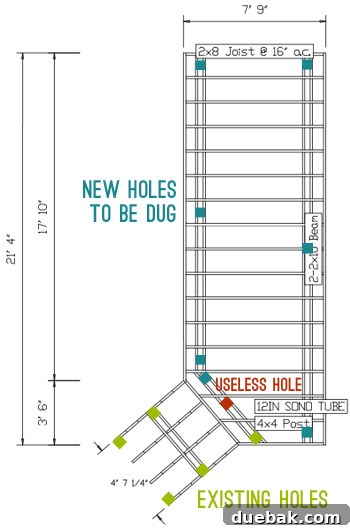
The transition to a freestanding deck design came with a clear mandate: more footings. A lot more. While five of our previously dug holes were still perfectly usable, only one proved entirely useless, leaving us with a significant deficit. Our new plan necessitated digging seven additional holes, bringing our grand total to twelve robust footings to adequately support the new, independent structure. This meant another rendezvous with the rental auger and another round of heavy manual labor, but armed with lessons learned, we approached it with renewed determination.
Gearing Up: Learning from Past Digging Experiences
Having already experienced the arduous nature of digging numerous holes for our initial deck footings, I knew it was tough but far from insurmountable. That first round left my dad and me exhausted, muscles aching and drenched in sweat. The thought of putting him through another seven holes felt a bit daunting, but the alternative—doing all twelve at once—would have been even more taxing. Plus, splitting the work meant only a $60 repeat rental fee for the auger from Home Depot, a small price for breaking up the colossal task. In hindsight, it could have been considerably worse, and we were grateful to tackle it in stages.
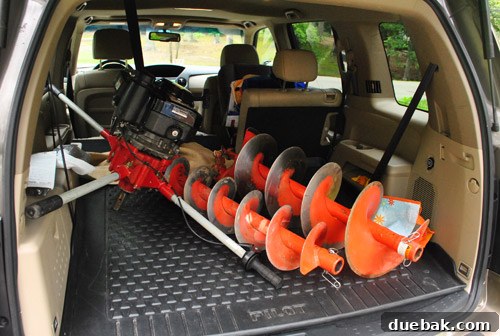
This time, we came prepared with the correct equipment. Recalling the extra effort required last time to manually widen holes that were initially dug with an undersized 8-inch auger bit, we made sure to borrow both the 8-inch and the crucial 12-inch auger bit. Our local building code specifies that deck footings must be 12 inches wide to ensure proper stability and load distribution. We were optimistic that the 12-inch bit, despite being heavier, would simplify the process and ultimately accelerate our progress. The task seemed straightforward enough, or so we thought, until we encountered a significant, unforeseen obstruction.
The Unexpected Obstacle: Confronting a Giant Concrete Slab
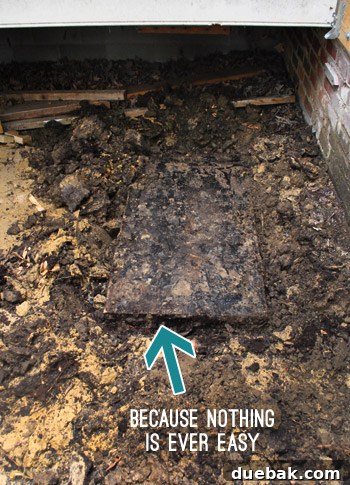
As I began digging my first “starter hole” by hand, a standard procedure to ensure accurate placement before deploying the power auger, my shovel struck something unyielding. The metallic thud echoed with a sense of dread. My initial thoughts gravitated towards a stubborn root or perhaps a buried brick, common nuisances in yard work. However, as I patiently cleared more dirt, the true nature of the obstruction revealed itself: a colossal, six-inch thick concrete slab. It was a remnant of the past, likely a landing for a staircase that once graced this area of the house, though its presence was entirely undocumented and wholly unexpected.
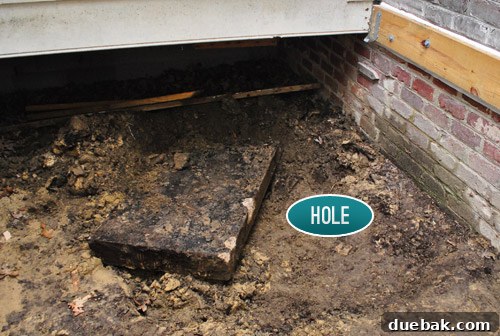
This wasn’t just any piece of concrete; its sheer thickness rendered a sledgehammer useless for breaking it apart, and its weight made it appear nearly immovable. We stared at it, a formidable barrier to our progress, momentarily deflating our enthusiasm. Yet, giving up wasn’t an option. With a bit of strategic thinking and good old-fashioned brute force, my dad and I devised a plan. We meticulously shimmed sturdy boards underneath the slab, creating leverage points. Through grunts, pushes, and coordinated effort, we managed to shift the massive slab just enough to the side, liberating the spot where our crucial footing needed to be dug. It was an exhausting but victorious battle against the unknown elements of our backyard.
Powering Through: The 12-Inch Auger Makes a Difference
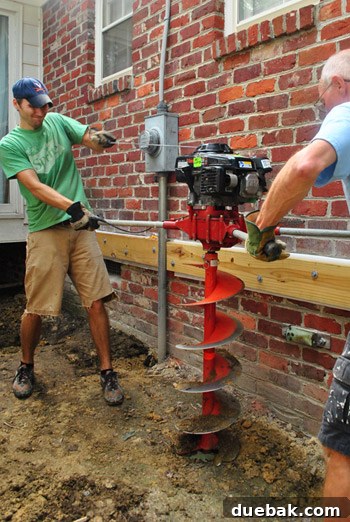
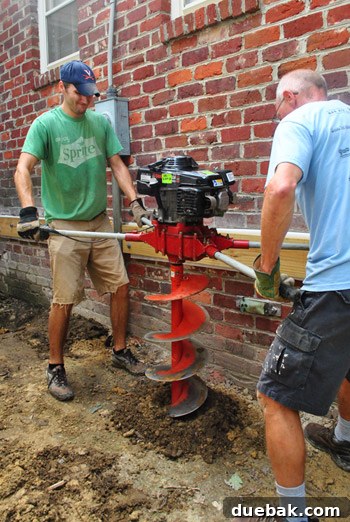
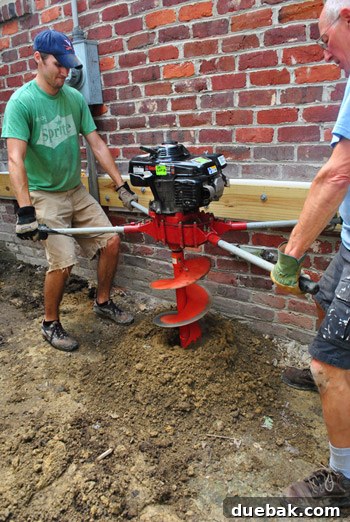
The energy expended moving that concrete slab left us both drained, and we hadn’t even started digging a single new hole yet. But with renewed purpose, I donned my “déjà vu” hat – a metaphorical nod to the familiar, challenging task ahead – and we fired up the auger. The hum of the engine signaled the real work was about to begin.
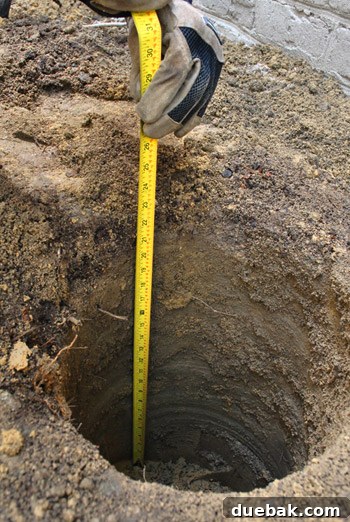
The 12-inch auger bit was noticeably heavier and required more effort to maneuver compared to its smaller counterpart, but the benefits quickly outweighed this challenge. The immediate satisfaction of seeing perfectly wide, 12-inch holes emerge from the earth without any additional manual widening or constant measurement checks was immense. This efficiency significantly sped up the process of reaching our required 21-inch depth for each footing, adhering to local building codes designed to prevent frost heave and ensure long-term stability for the deck. The rhythmic churn of the auger, digging deep into the soil, made quick work of the remaining seven holes, transforming a once daunting task into a manageable series of precise excavations.
The Final Touches and a Well-Earned Smile
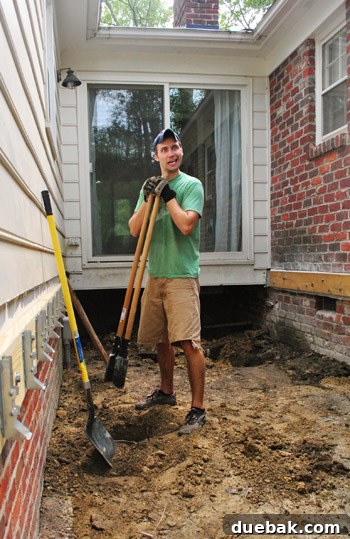
Even with the powerful auger, some manual labor remained. I still utilized a traditional post-hole digger to scoop out any loose dirt left behind by the auger, ensuring each hole was perfectly clean and ready for concrete. This small extra step ensures the concrete footings will have a solid, undisturbed base. Looking back, I lost track of time amidst the digging, the concrete slab challenge, and the general effort, but it likely took us around 90 minutes to complete all seven new holes. Considering the unexpected obstacle, this was a remarkable pace, and the best part? We weren’t nearly as fatigued as we were during the first round of digging. My wife, Sherry, attributed our improved endurance to the cooler weather, while I, perhaps with a touch of hubris, preferred to believe we were simply more muscular and experienced from our previous ordeal. Either way, the work felt less punishing.
And yes, apparently, I have a habit of making amusing faces to entertain Sherry while she diligently documents our progress. Always the charmer, indeed!
The Moment of Truth: Awaiting the Inspector’s Verdict
With all the holes meticulously dug and prepped, a palpable sense of apprehension filled the air. We crossed our fingers, bit our lips, and perhaps even felt a slight pang of anxiety as we called to schedule the inspector’s return for the very next day. Failing at something, especially after pouring so much effort into it, is deeply frustrating, and the thought of another rejection cost me a bit of sleep. The memory of the previous “fail” was still fresh, making this second inspection feel particularly high-stakes. We meticulously double-checked everything, ensuring every detail aligned with the revised plans and local code requirements, hoping to avoid any further hiccups. But I’ll spare you the suspense – the outcome this time was overwhelmingly positive, a true turning point in our deck-building adventure.
Success! The Elusive Approval Finally Granted
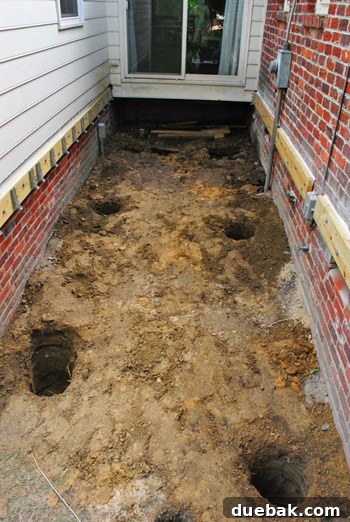
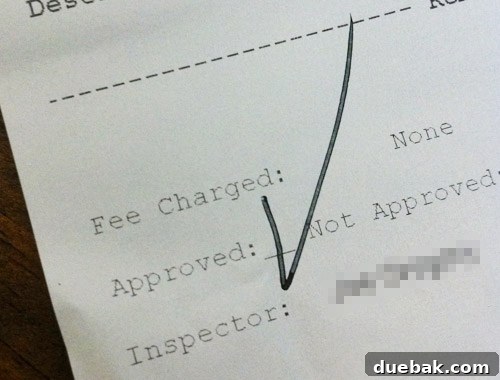
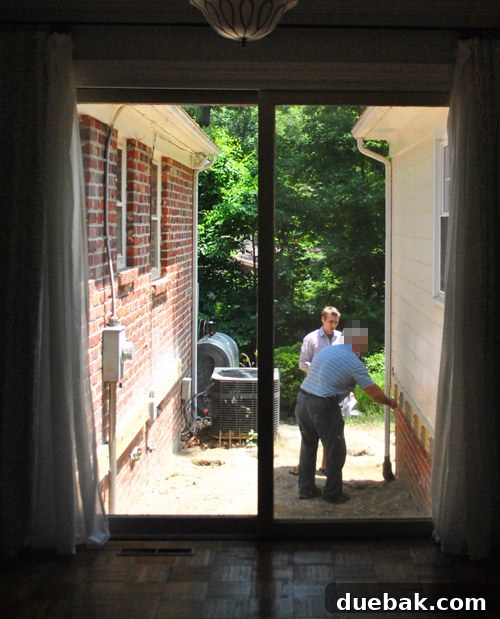
Woo to the hoo! The inspector’s visit could not have gone more smoothly. To our relief, it was a different inspector this time, which felt like a fresh start. He arrived, took a swift glance at our updated plans, then surveyed our meticulously dug holes. His verdict was delivered with a simple, reassuring phrase: “Looks good.” There were no lengthy measurements, no intricate comments on our now-repurposed ledger boards, no questions asked. The entire process was incredibly fast; Sherry barely managed to snap one quick picture before he was done. The relief was immense, washing over us like a wave after a long, stressful journey.
Strategic Repurposing: Our Ledger Boards Find New Life
Even after receiving the coveted approval, I seized the opportunity to clarify a few lingering questions with the inspector. Most importantly, I confirmed that we could indeed leave our previously attached ledger boards in place and repurpose them as rim boards for our new freestanding deck. This was fantastic news! While these boards would no longer bear the primary weight of the deck – a function now solely handled by the robust posts and footings – they could serve as valuable perimeter stability points, attaching to the house for lateral bracing, which is a critical requirement for freestanding structures. This clever workaround meant our initial efforts were not in vain. It saved us the arduous task of removing them, patching the siding, and essentially undoing weeks of work. The only remaining task related to these boards is to properly counterflash them (installing flashing over their top edge) to ensure optimal weather protection against moisture intrusion, a step I had already planned for anyway.
Celebrating the Win and Looking Ahead to Construction
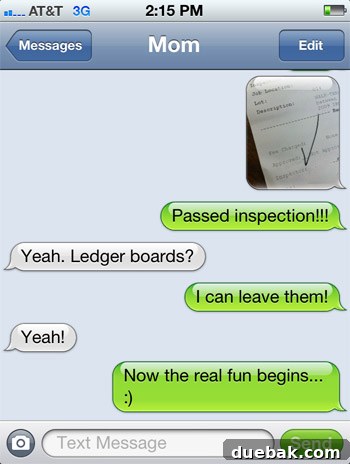
With the excitement of having successfully passed inspection bubbling over, my natural instinct was to share the good news immediately. So, I did what any proud DIYer would do: I texted my mom. Her enthusiastic response mirrored our own elation. It’s these small victories, shared with loved ones, that truly make the arduous journey of home improvement worthwhile and remind you why you started in the first place.
Now, with the foundation officially approved, the real construction can begin! My next step is to place orders for the additional materials we’ll need – primarily more posts and the essential girder boards that will form the primary framework of the deck. After that, it’s time to start assembling this darn thing, turning our approved footings into the sturdy base of our future outdoor oasis. And here’s hoping I get Inspector #2 when it’s time for our final inspection!
Community & Resilience: Your DIY Stories
On a related note of sharing and solidarity, we were incredibly grateful for all of you who commiserated with us last week by sharing your own stories of project failures and setbacks. It genuinely helped more than you can imagine to know we weren’t alone in our struggles. This week, let’s put a more positive spin on things: What recent problems have you successfully navigated, whether related to your home or entirely different aspects of life? Is there anything that initially seemed like a significant negative or a daunting challenge that, through perseverance or a change in perspective, ultimately turned out to work in your favor? We love hearing about how you’ve overcome obstacles and found creative solutions!
A Moment of Gratitude: Weathering the Storm
Psst- A huge thanks goes out to everyone who checked in on us after the crazy storm on Friday night! We experienced intense, tornado-like winds outside our window that evening and were without power until Sunday afternoon. Thankfully, our house was spared any significant damage, and we’re immensely grateful that our power has been restored. High fives to Dominion Power and all the other power companies from out of state who drove up to lend a hand in restoring services across the region. Your hard work in challenging conditions is truly appreciated!
Conclusion: Perseverance Paves the Way to Our Dream Deck
This phase of our DIY deck construction has been a true testament to the power of perseverance and adaptability. From the initial setback of a failed inspection to the unexpected battle with a buried concrete slab, each challenge has provided valuable lessons and, ultimately, brought us closer to our goal. Building a deck, especially a freestanding one that meets stringent local codes, is no small feat. It demands careful planning, diligent execution, and an unwavering spirit when things don’t go according to plan. With our footings now officially approved, we feel a surge of renewed energy and excitement for the next stages of construction. We’re eager to see our dream outdoor living space take shape, ready to create countless family memories by summer’s end. The journey continues, and we’re ready for whatever comes next, knowing that every hurdle overcome makes the final triumph even sweeter.