Elevate Your Entryway: A Comprehensive Guide to Upgrading Your Front Door Hardware
Is your front door hardware looking tired, outdated, or simply not matching your home’s aesthetic? Upgrading your entryway hardware is a powerful way to instantly boost curb appeal, enhance security, and add a touch of modern elegance to your home. We recently undertook this transformative project, motivated by an upcoming camera appearance that provided the perfect impetus to finally tackle our long-overdue front door renovation. Thanks to a clever budgeting move – returning some deceased hydrangeas to Lowe’s – we recouped $80, easily covering our $50 project cost with change to spare. This guide will walk you through the entire process, demonstrating how you can effortlessly switch out your front door hardware, achieve a cohesive look, and even repair minor surface imperfections along the way.
The original brass doorknob set on our front door was a glaring mismatch. It clashed significantly with our nearly-black oil-rubbed bronze porch lights and sleek black shutters, creating an inconsistent and uninviting aesthetic. Beyond the visual discord, the old deadbolt presented a significant functional annoyance: it required a physical key to lock it from the inside, a feature that was cumbersome and outdated for modern home security and convenience. We were more than ready to bid farewell to these relics, swiftly moving them from our door to their final resting place in the trash can.
Why Upgrading Your Front Door Hardware is a Smart Investment
Beyond personal preference, there are compelling reasons to consider a front door hardware upgrade:
- Enhanced Curb Appeal: The front door is often the focal point of your home’s exterior. Modern, stylish hardware can significantly elevate its appearance, making a strong first impression on guests and potential buyers alike.
- Improved Security: Older hardware, especially deadbolts requiring keys from the inside, can be less secure and convenient. Newer systems often offer enhanced locking mechanisms, anti-pick features, and advanced keying options for greater peace of mind.
- Increased Home Value: Updates that improve aesthetics and functionality, like new door hardware and a fresh coat of paint, contribute positively to your home’s overall market value and can even shorten selling times.
- Better Functionality: Worn-out knobs can stick, rattle, or be difficult to turn. New, high-quality hardware provides smooth operation, ensuring ease of entry and exit for everyone.
- Cohesive Design: Matching your door hardware to other exterior elements like light fixtures, house numbers, or shutters creates a harmonious and sophisticated look that ties your home’s outdoor aesthetic together.
Choosing the Right Replacement Hardware for Your Home
When selecting new hardware, consider both style and practicality to ensure it meets your aesthetic and functional needs. We opted for an oil-rubbed bronze finish to complement our existing exterior lighting and shutters. This finish offers a rich, dark aesthetic that can appear almost black, providing a sophisticated contrast or seamlessly blending with darker door colors.
Key factors to consider during your selection process:
- Finish: Popular options include polished brass, brushed nickel, oil-rubbed bronze, matte black, antique bronze, and chrome. Choose one that not only complements your home’s architectural style but also harmonizes with other existing exterior metallic elements.
- Style: From classic traditional designs to sleek contemporary lines, select a design that truly aligns with your home’s unique character and period.
- Functionality: Decide between a standard keyed entry, a modern keyless entry system (keypad or smart lock), or a combination of both for convenience. Crucially, ensure the deadbolt offers adequate security and is easy to operate from the inside (e.g., a thumb turn mechanism) for emergency egress.
- Brand and Quality: Reputable brands such as Quickset (which we used), Schlage, Kwikset, or Baldwin offer a wide range of durable and reliable options. Investing in higher quality hardware often means better security, smoother operation, and greater longevity.
- Compatibility: Most modern hardware is designed to fit standard door preparations (bore holes). However, it’s always wise to meticulously measure your existing backset (the distance from the door edge to the center of the bore hole) and the diameter of your bore holes to ensure a perfect and hassle-free fit.
Step-by-Step: Replacing Your Front Door Hardware Like a Pro
Tools You’ll Need:
- New doorknob and deadbolt set (confirm all parts are included)
- Screwdrivers (both Phillips head and flathead)
- Measuring tape or ruler
- Utility knife (optional, for scoring paint around hardware)
- Wood chisel and hammer (essential if bore hole adjustment is needed)
- Safety glasses and work gloves
- Clean cloths or rags
1. Careful Removal of the Old Hardware
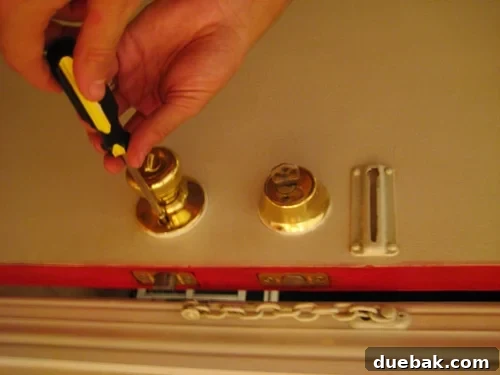
The first step in any hardware upgrade is the careful and methodical removal of the existing components. Begin by identifying all visible screws, typically found on the interior side of your doorknob and deadbolt assemblies. Using a Phillips head screwdriver, systematically loosen and remove these screws. For the doorknob, you may need to separate the two halves before gently pulling the latch mechanism from the door edge. The deadbolt typically disassembles in a similar fashion, with two halves secured by screws and a bolt mechanism that slides out from the door’s edge. Take your time during this process to ensure no accidental damage is done to the door’s surface. Once all components are detached, the old hardware can be easily pulled away, revealing the raw bore holes and latch cutouts.
2. Preparing the Door for New Hardware Installation
With the old hardware gone, the relatively easy task of slipping in the new oil-rubbed bronze doorknob and deadbolt began. However, a common challenge in DIY projects quickly emerged: the existing bore hole for the knob was slightly too small for the new hardware’s larger mechanism. Instead of rushing out for specialized tools, a resourceful, makeshift chisel – in our case, a sturdy flathead screwdriver combined with a hammer – allowed us to carefully carve out the necessary extra material from the bore hole in surprisingly little time. This highlights the importance of adaptability and ingenuity in DIY, turning potential obstacles into minor adjustments. Ensure you clean any dust, wood shavings, or debris from the holes before proceeding.
A word of caution for those tackling similar projects: when dealing with older doors or painted surfaces, be prepared for potential paint damage. As we removed the old brass hardware, some of the vibrant red paint peeled off with it – a minor but noticeable setback that required subsequent attention. This is a common occurrence, especially if paint has built up around the hardware over the years, and it’s something to anticipate and plan for in your restoration process. Having spackle and touch-up paint on hand can save you a trip to the hardware store later.
3. Installing the New Doorknob and Deadbolt
Installation typically reverses the removal process, but always consult the manufacturer’s specific instructions. Start by inserting the new latch mechanisms into the edge of the door, ensuring they are oriented correctly for the door’s swing (the bevel of the latch bolt usually faces the door frame). Next, feed the spindle or connecting rod of the doorknob through the latch mechanism and align the exterior and interior halves. Secure them with the provided screws, ensuring they are tightened firmly but not overtightened, which can warp the hardware. Repeat this precise process for the deadbolt, inserting the bolt mechanism first, then aligning and securing the two decorative escutcheons with screws. Always refer to the manufacturer’s instructions, as specific steps and orientations can vary between brands and models. Test both the doorknob and deadbolt multiple times by opening and closing the door, ensuring they operate smoothly, lock securely, and latch properly without resistance.
Restoring Your Door’s Finish: Expert Repairing of Paint Damage
The peeled paint posed an initial challenge, but one that was easily remedied with the right approach and a bit of patience. Initially, we attempted a simple “paint over” solution after some light sanding to smooth the edges. However, we quickly realized that this method left an undesirable ridge, making the transition between the new and existing coats visibly uneven and amateurish. For a truly professional and seamless finish, a more robust and meticulous technique was absolutely required.
1. Essential Surface Preparation and Spackling
Sherry expertly upped her game by applying spackle to the affected areas. Spackle is an excellent material for filling minor dents, holes, and uneven surfaces on wood, creating a perfectly smooth canvas for subsequent painting. Before application, ensure the area is meticulously clean and completely free of any loose paint chips, dust, or debris. Apply the spackle thinly and evenly with a flexible putty knife, slightly overfilling the damaged sections to allow for sanding. Allow it to dry completely, which can take a few hours depending on the thickness of the application and the ambient humidity. Rushing this step can lead to cracking or an uneven finish.
2. Sanding for a Flawless, Seamless Finish
Once the spackle is thoroughly dry and hardened, the next crucial step is meticulous sanding. Using fine-grit sandpaper (e.g., 180-220 grit), gently but firmly sand the spackled areas until they are perfectly flush with the surrounding door surface. The primary goal is to eliminate any ridges, lumps, or unevenness, creating a smooth, undetectable repair that feels uniform to the touch. Pay close attention to feathering the edges of the spackle into the existing paint. After sanding, meticulously wipe away all sanding dust with a slightly damp cloth to ensure optimal paint adhesion and prevent any gritty texture in the final finish.
3. Painting Your Door to Achieve Perfection
With the surface expertly prepared and flawlessly smooth, it was time for the final, transformative touch: a fresh coat of paint. We applied a few coats of Valspar’s Fabulous Red, a vibrant hue specifically chosen to perfectly complement our home’s exterior palette and seamlessly tie in with the rest of our front porch elements. This vibrant red instantly revitalized the door, making it look as good as new and completing the entire entryway transformation. When painting an exterior door, always choose high-quality exterior paint that offers superior durability, UV resistance, and weather protection. Apply multiple thin, even coats rather than one thick coat, allowing ample drying time between each application as per the paint manufacturer’s recommendations. This technique is essential for achieving the best results, preventing drips or unevenness, and ensuring the longevity of your door’s beautiful new finish.
The Perfect Finishing Touch: Adding a Distinctive Bull-Ring Knocker
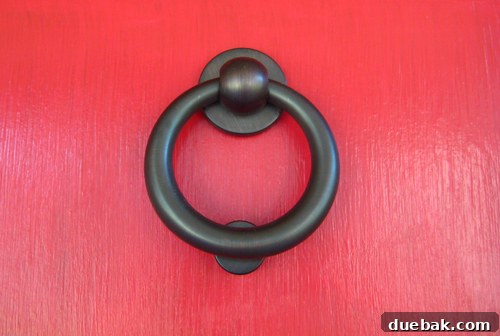
As a final flourish to our revamped entryway, we decided to incorporate a distinctive bull-ring knocker. This wasn’t just an impulse buy; it was a carefully selected piece intended to enhance the door’s character and provide a functional, elegant accent. We had to track it down at a specialty hardware store in Richmond called Pleasant’s Hardware, a testament to its unique appeal and quality. The hunt was well worth the effort, and the $23 price tag felt like a small investment for such a significant visual impact and added personality. Despite being labeled “antique bronze” rather than the “oil-rubbed bronze” of our main hardware, its color matched our new Quickset doorknob and deadbolt precisely, demonstrating that sometimes finishes with different names can still be perfectly compatible if you compare them in person.
Adding a door knocker is an excellent way to personalize your entryway, adding a layer of sophistication and a touch of classic charm. Consider the architectural style of your home and choose a knocker that not only complements its lines but also harmonizes with the finish of your main door hardware. Installation is usually straightforward, typically involving just a few screws, and it immediately elevates the door’s presence and inviting aesthetic.
Maintaining Your New Front Door Hardware for Lasting Beauty
To ensure your newly installed front door hardware retains its beauty, functionality, and security for many years to come, a little routine maintenance goes a long way:
- Regular Cleaning: Wipe down the hardware periodically (e.g., monthly) with a soft, damp cloth to remove accumulated dust, dirt, fingerprints, and environmental residues. Avoid using abrasive cleaners or harsh chemicals, which can strip or damage the finish over time.
- Lubrication: Every six months to a year, apply a silicone-based lubricant (such as WD-40 Specialist Silicone Lubricant or graphite powder) to the internal mechanisms of the lock and latch. This prevents friction, reduces wear, and ensures smooth, effortless operation, preventing sticking or squeaking.
- Check Fasteners: Periodically (perhaps seasonally) check all screws and fasteners on both the interior and exterior components of your hardware. Ensure they are snug and tight. Loose hardware can lead to premature wear, misalignment, and can compromise the security of your door.
- Inspect Finish: Regularly inspect the hardware’s finish for any chips, scratches, or signs of wear, especially in high-traffic areas. Small touch-up kits are often available from hardware manufacturers, or minor blemishes can sometimes be addressed with a suitable paint marker or polish. Addressing these issues early can prevent further deterioration and maintain the hardware’s aesthetic appeal.
Conclusion: A DIY Project Worth Undertaking for Every Homeowner
Upgrading your front door hardware is a highly rewarding DIY project that offers significant returns in terms of aesthetics, enhanced security, and overall home value. From the meticulous selection of the perfect oil-rubbed bronze doorknob and deadbolt to the expert repair of paint damage and the thoughtful addition of a distinctive bull-ring knocker, every step contributed to a stunning and cohesive transformation of our entryway. Our door is now not only fully functional, secure, and easy to use but also beautifully coordinated with our home’s exterior, exuding a welcoming and polished look.
By following these comprehensive steps and embracing a bit of DIY spirit, you too can achieve a professional-looking result and enjoy a refreshed, welcoming entryway that makes a memorable statement. This project proves that with a little effort, you can make a big impact on your home’s first impression.