
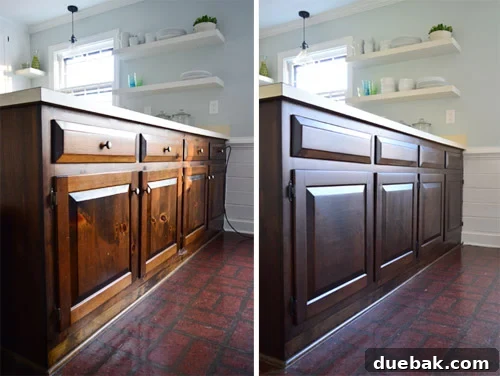
The stain on our kitchen cabinets felt too orange and dated. We liked the wood grain but wanted a deeper, more contemporary tone without the hassle of sanding or stripping the existing finish. Fortunately, we found a product that allowed us to skip the heavy stripping step and still achieve the look we wanted.
You can see our results above. Below is a clear, practical guide on how we did it.
What Stain Product Did You Use?
We used Minwax PolyShades, a product similar to a gel stain. Unlike traditional penetrating stains, PolyShades sits on top of the existing finish like a paint, so it doesn’t require stripping the old coat down to bare wood. Because it behaves more like paint, you need to be attentive when brushing to avoid drips or obvious brush marks.
We selected the Tudor color in a satin finish. Previously we had used a darker PolyShades (Espresso) on a bathroom vanity but wanted a slightly lighter tone for the kitchen. Keep in mind the color you start with affects the final result, so test in an inconspicuous spot first. When choosing shades, it’s wiser to go darker gradually—light to medium, medium to dark—rather than trying to jump too many shades at once.
PolyShades is oil-based, so you can skip an additional polyurethane sealer step that water-based stains typically require. That makes the process a bit simpler.
Can You Stain Your Cabinets Darker Without Sanding?
You can avoid fully stripping or power sanding the existing finish, but you will need to do some light sanding. Be cautious of tutorials that claim no sanding is required. A quick hand-sanding with 220-grit paper or a sanding block is enough to slightly roughen the surface so the new stain adheres for longer-lasting results.
What Materials Do You Need?
This project is forgiving in terms of tools—you don’t need chemical strippers, power sanders, or a separate polyurethane sealer. Here’s what we used:
- Minwax PolyShades or a similar gel stain (we needed about one quart for two coats)
- 2–3 stain-grade paint brushes small enough to fit the can opening
- 220-grit sandpaper or a sanding block
- Extra-fine steel wool (#000 grade)
- Screwdriver or drill to remove doors and hardware
- Drop cloths or old cardboard to protect floors
- Nitrile gloves (optional)
- Wood filler and a putty knife for patching holes (optional)
- Painter tripods or stands (optional)
- Degreaser or liquid deglosser for stubborn grease (optional)
You’ll also need a covered workspace—like a garage or basement—where you can lay out cabinet doors and drawers to stain and dry.
How Long Does It Take To Stain Your Cabinets Darker?
The process is straightforward but requires drying and curing time. Our project, which covered just the lower cabinets, took about five days total. Expect times to vary based on kitchen size and how many surfaces you’re refinishing.
- Prep day
- First staining day
- Second staining day
- Drying & curing
- Reassembly
Step 1: Remove Cabinet Doors & Hardware
Start by removing doors, drawer fronts, and all hardware—knobs, pulls, hinges—so you have unobstructed areas to stain. Lay doors and drawer fronts apart from the cabinet frames to avoid them sticking to one another while drying.
We propped our doors on old paint cans, but painter tripods or small sawhorses work well too.
Step 2: Patch Any Hardware Holes
If you’re changing hardware or eliminating handles, fill unused holes now. We removed knobs on the back side of a peninsula and filled the holes with wood filler, letting each application dry and sanding between coats. Two thin applications are better than one thick fill to minimize shrinking or dips. If possible, use a filler closer to the cabinet color to reduce the need for extra touch-up later.
We touched up puttied areas with additional stain coats to help blend them in.
Step 3: Give Your Cabinets A Light Sand
Gently sand all surfaces—doors, drawer fronts, and frames—with 220-grit paper to scuff the finish. The goal is not to remove the old stain but to create a tooth for the new coating to adhere to. After sanding, wipe everything down with a damp cloth to remove dust. For greasy or grimy spots, use a degreaser or liquid deglosser to ensure a clean surface before staining.
Step 4: Apply Your First Coat of Stain
Apply PolyShades with a good-quality brush, working methodically across frames, drawer fronts, and both sides of doors if you choose to do so. Keep in mind the wet color will appear lighter; it darkens as it dries. We applied two coats total to reach our desired depth.
Apply the stain evenly, then go back with long, smooth strokes in the direction of the wood grain to thin out excess and minimize brush marks. Resist the urge to leave the stain thick, as this can cause drips. Focus first on fully covering the area, then smooth it into an even finish.
Note: Some of our drawer fronts were dummy fronts mounted in place, so we left those attached during the process.
Tip: How to Avoid Drips and Brush Marks
After applying a coat, immediately go back over the surface with long, even strokes following the grain. That evens the application and reduces visible brush lines. If you see excess product pooling, lightly lift it off with your brush so it levels properly rather than running into drips.
Video demonstration: we filmed a short clip showing a single-coat application to illustrate this technique.
Step 5: Let Dry, Buff, & Recoat
Let the first coat dry fully—about 24 hours in our case. Once dry, decide if you need a second coat. We applied a second coat for a deeper, more consistent color. Before recoating, lightly buff the dried surface with extra-fine steel wool (#000) to scuff the sheen and promote adhesion for the next coat. This step won’t harm the finish but helps the subsequent coat bond better.
The color builds with each coat, and the wet appearance isn’t a reliable indicator of the final shade—so allow proper drying time before judging.
Step 6: Let Second Coat Dry
After the second coat dried, the cabinets achieved the darker, more contemporary look we wanted while still allowing the wood grain to show through. Because PolyShades is oil-based and includes a protective finish, no additional varnish or polyurethane sealer was needed.
Step 7: Reassemble Your Kitchen
Once everything was fully dry and cured, we reattached drawers, doors, and hardware. If you install new hardware, measure carefully and fill old holes as needed. We reused existing holes and chose darker knobs that blend into the refreshed finish for a cohesive look.
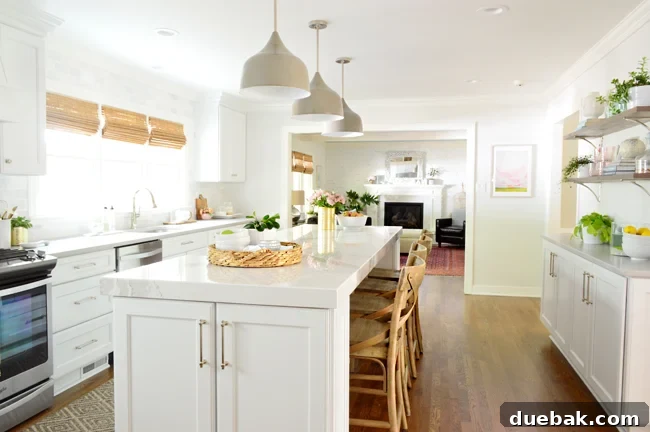
After completing this update, we later replaced countertops and, ultimately, remodeled the kitchen. The refinished cabinets held up well and served as a solid interim solution until the full renovation.
*This post originally contained affiliate links*
