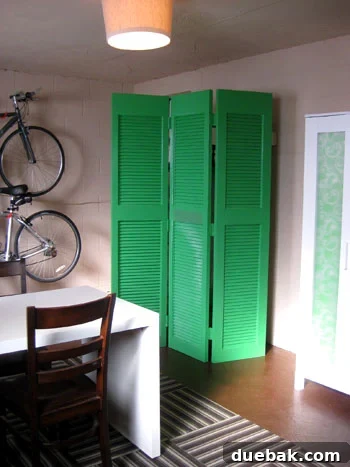
We originally planned this to be the final chapter of our basement makeover, but since we tackled two separate DIY projects — building a screen to hide our unsightly water heater and frosting the windows for full privacy while still letting light through — it made sense to split the content into two posts so each project could get clear, step-by-step coverage. Here’s how we built a custom screen to conceal our eyesore of a water heater using three secondhand bi-fold doors and one quart of bold green paint, for a total cost under $35. (Window-frosting instructions coming soon.)
First, a quick reminder of the offending water heater that inspired this solution. The rest of the basement had come a long way — we added a rug, installed a bike rack, improved the lighting, papered the inside of the armoires, hung art, brought in storage, and organized our paint — but the water heater and the small trap door to the crawlspace behind it still stuck out like a sore thumb. Replacing the heater with a tankless model was an option, but it was still functional and we try to work with what we have when possible. Instead, we decided to hide the unit and the trap door with a removable screen that allows easy access when needed and will continue to be useful even if the heater is replaced.
Step 1: Find three tall, sturdy bi-fold doors that can stand on their own and hide a 6′ water heater. We considered several ideas — hanging weatherproof curtains from the ceiling, or using bookcases on casters that could be moved for access — but a hinged screen felt right for the space. Bi-fold doors are essentially pre-cut panels designed to fold, so they make an easy, inexpensive base for a DIY screen. We hit up our local Habitat for Humanity ReStore during a door sale and found three solid bi-fold doors for just $18 total. They already included enough hinges to join the panels into one wide screen, so it was a perfect low-cost solution.
At checkout the cashier noticed our set had three panels instead of the usual four and asked about it. We explained that three panels would be ideal for making a single screen, and then she pointed out the challenge of getting them home. With some creative packing — reclining the front seat and fitting the doors into our Nissan — we managed to transport them without renting a truck. Tip: when you need to carry large items in a small car, recline a front seat and use the passenger seat belt to secure the load so it doesn’t shift while driving.
Step 2: Paint in place and hinge the doors together where the screen will live. Back at home, we laid the doors on a large piece of cardboard for protection, attached the hinges that came with the doors, and assembled the screen right in the basement so we wouldn’t have to move it later. We did a little bit of wood filler and sanding to smooth out imperfections, which is especially helpful on used doors, but overall the set was in good shape for the price.
Step 3: Paint the screen. We used one quart of semi-gloss latex paint by Behr, color-matched to Benjamin Moore’s Bunker Hill Green 566, and applied two coats. The paint provided full coverage and a cheerful pop of emerald that ties into other greens in the room. Because we already owned the can or chose an affordable quart, the paint step was inexpensive — about $14 — bringing the total project cost to approximately $32.
The finished screen conceals the water heater and trap door while remaining easily movable for access. It still leaves plenty of room — more than 35 inches — to walk by, roll out bikes, or move items through the basement. The bright green also complements the paper behind the armoire doors, green storage bins, and subtle green accents in the rug, giving the area a coordinated, intentional look instead of something half-finished.
Repurposing these bi-fold doors gave them a new life and solved our aesthetic problem without breaking the bank. We’ll follow up with the window-frosting tutorial and a full basement recap with before-and-after photos and a final budget breakdown. In the meantime, we’d love to hear if you’ve repurposed doors or windows in creative ways — share your DIY ideas and successes.