
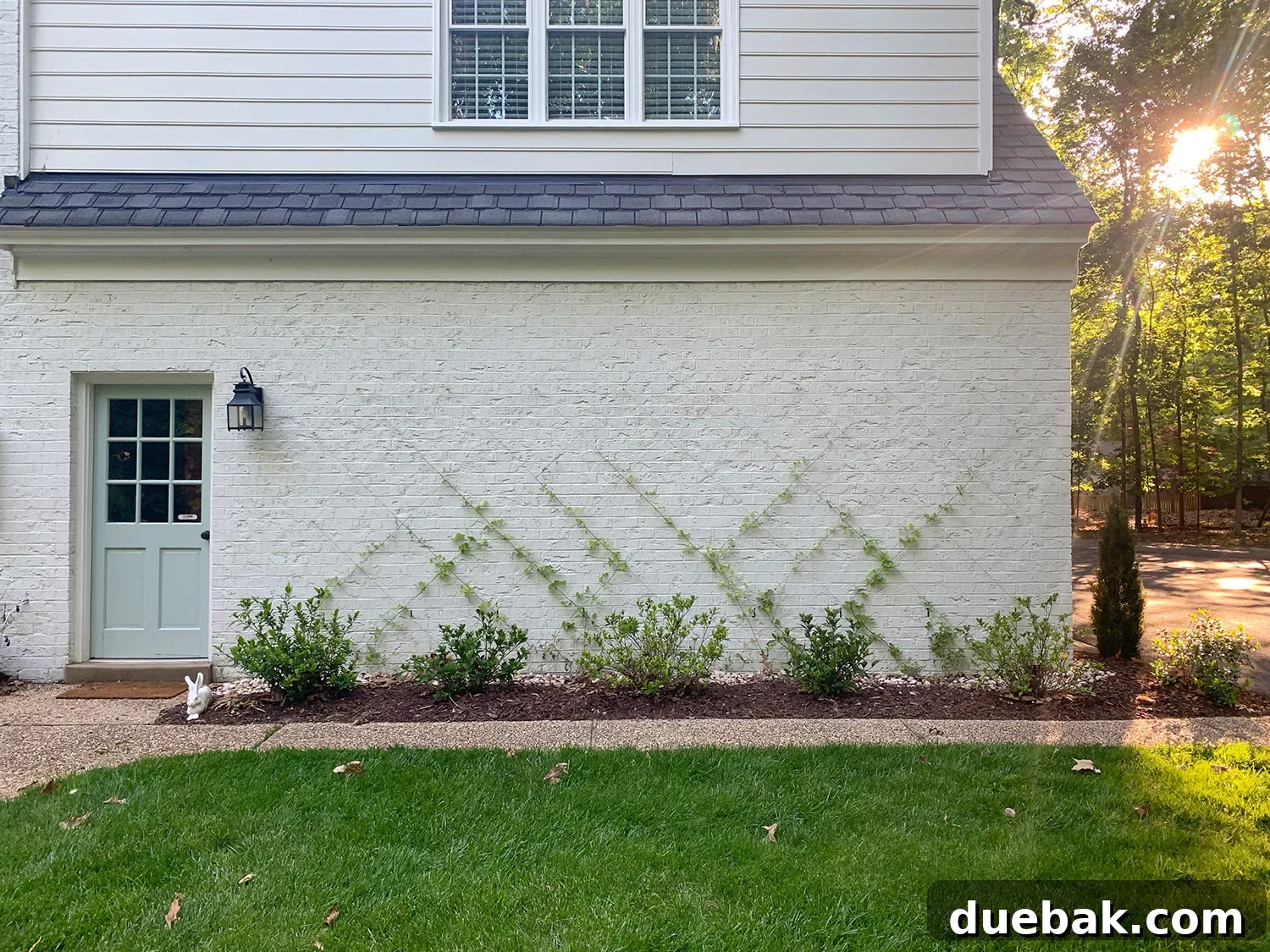
Behold our DIY wire trellis — a project I’d wanted to try for years and am thrilled with the result. With just basic tools, wire, hooks, and a climbing vine, a blank brick wall turned into a stylish garden feature. A bit of planning goes a long way. Here’s how to make your own.
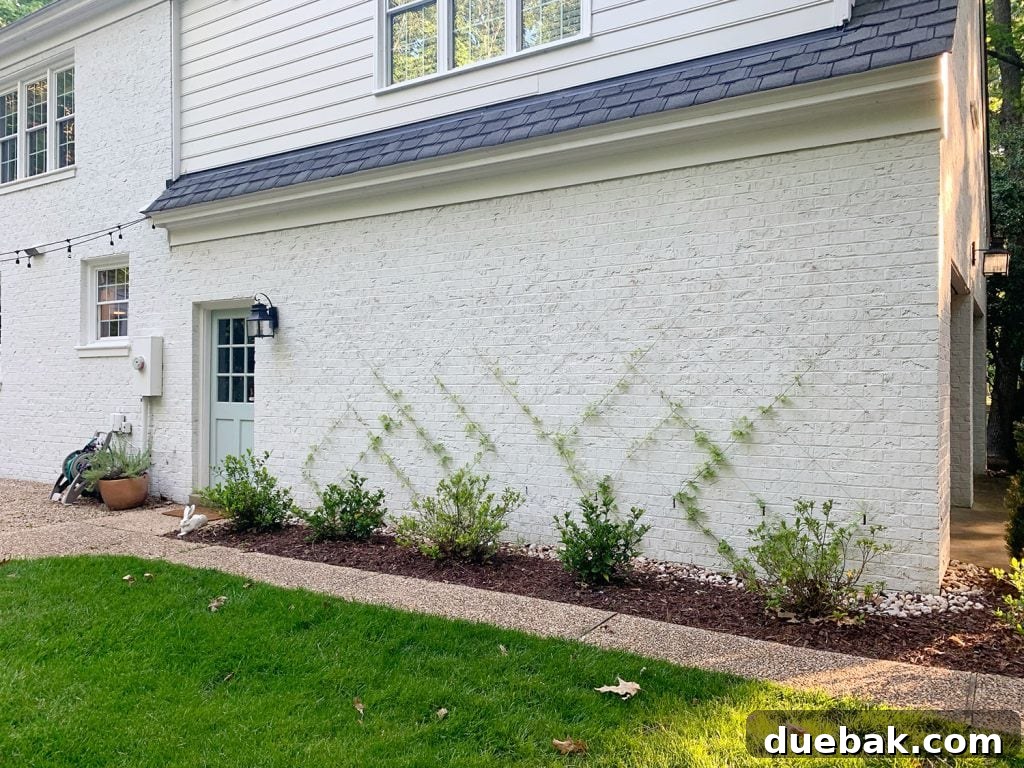
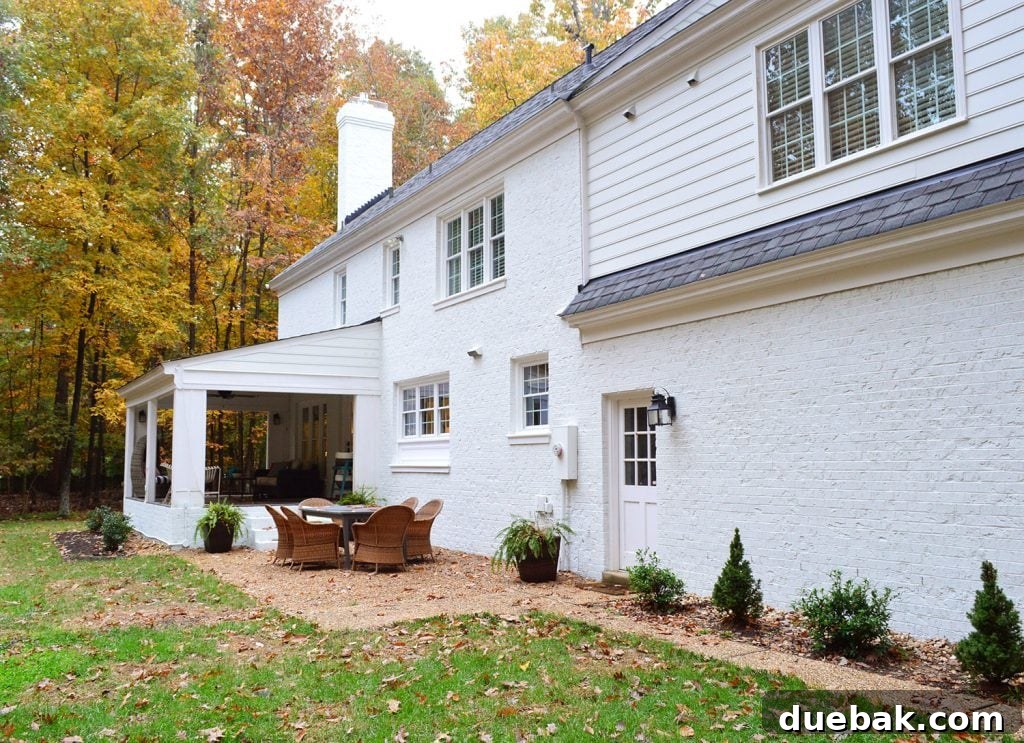
After we painted our house white last fall, the back of the garage begged for a diamond trellis. It felt like the perfect accent to elevate the look of the siding, so we set out to build one.
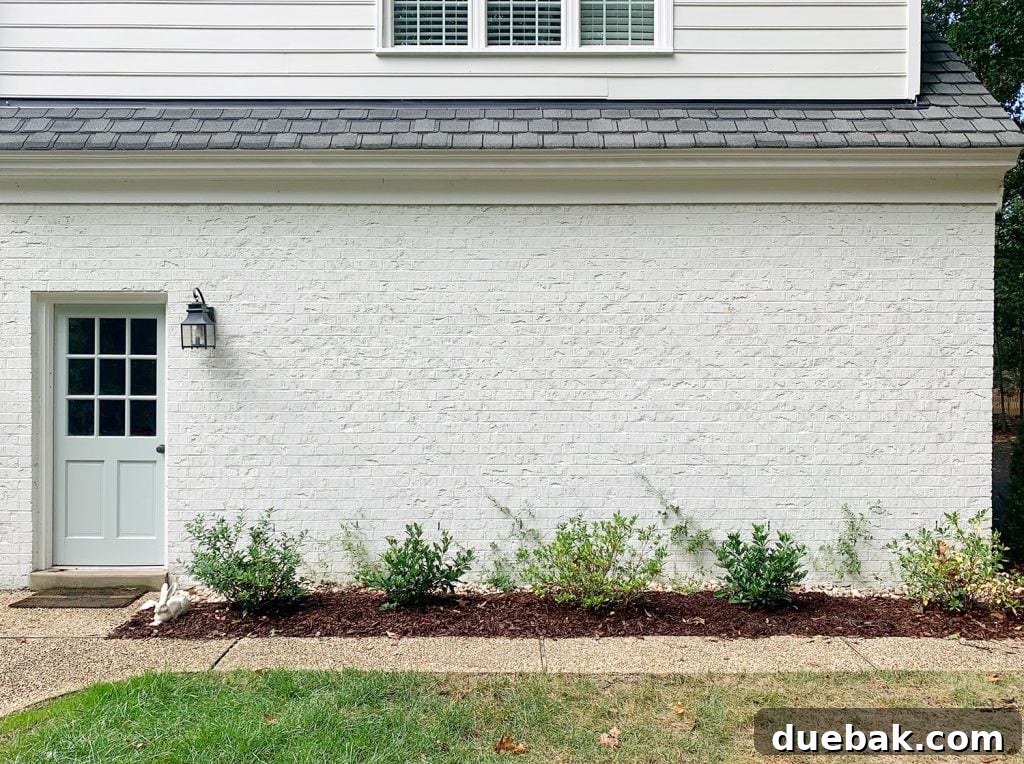
Wire Trellis Before & After
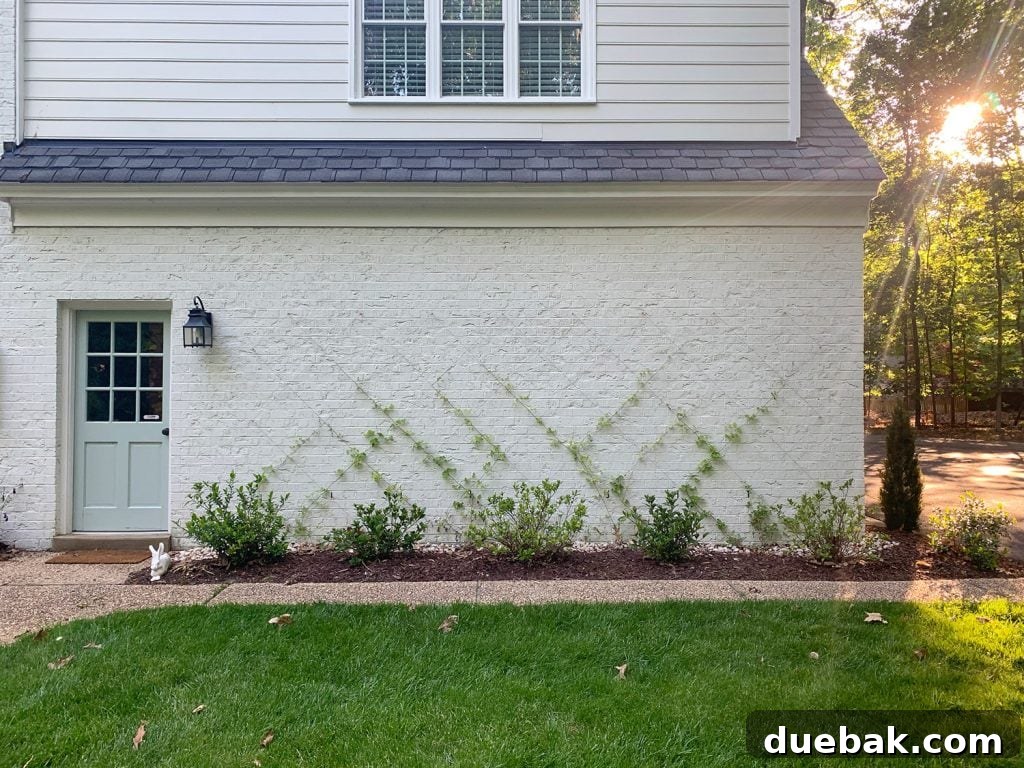
Before installing the wire, the wall looked plain and empty. The trellis added structure and a place for vines to climb, transforming the space in just a few months.
After installation you can see the diamond pattern of the wire trellis. At first the clematis were small and mostly hidden behind other plants, but they grew quickly.
Just a couple months later the vines had made impressive progress. We were sad to move shortly after, but proud of the growth in one season.
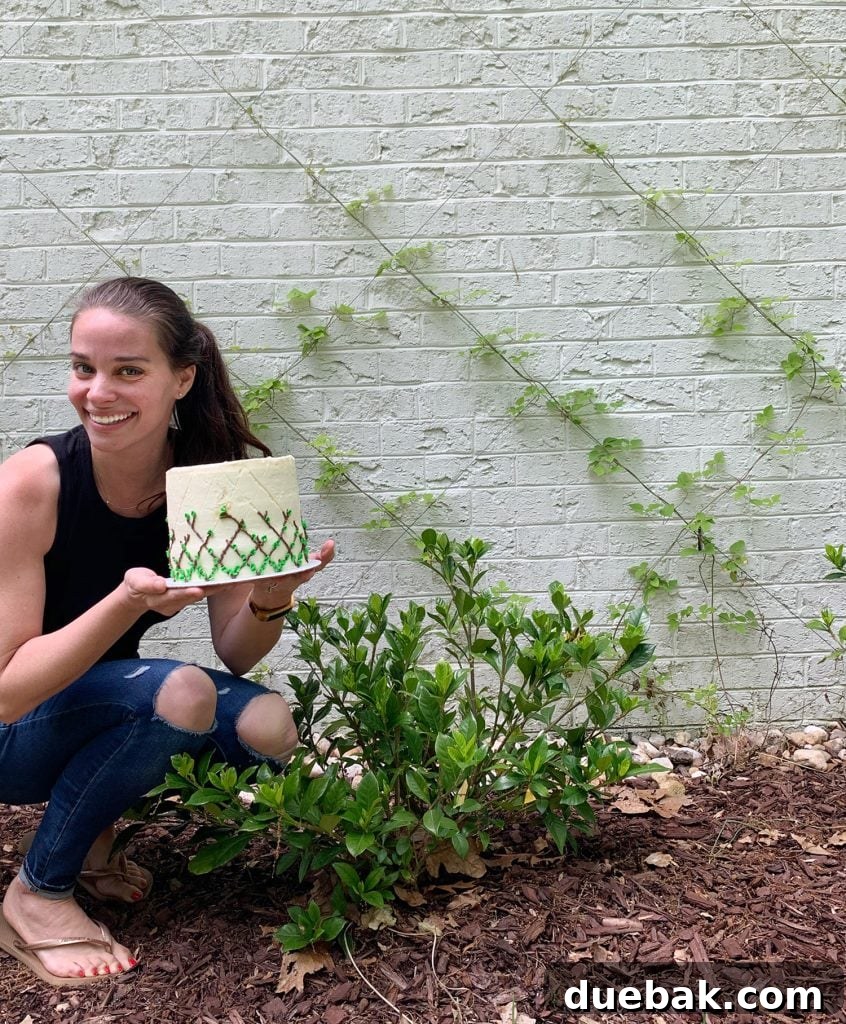
I was so excited about the progress a friend even baked a cake to celebrate our little victory. That enthusiasm made the whole project more fun.
Below are the steps we followed to create our DIY vine trellis so you can replicate it on your wall.
Materials & Tools
- 1/16″ galvanized steel wire rope (we used three 50 ft packs)
- 1/16″ aluminum ferrules (for creating secure loops)
- Stainless steel screw eye hooks (we used about 22)
- Plastic or masonry anchors (for brick installation)
- Hammer drill with masonry bits (for brick)*
- Wire cutters
- Needle-nose pliers
- Hammer
- Level
- Painter’s tape
- Marker or pen
- Your chosen climbing vine (we used clematis)
*Notes: These tools and anchors are for installing on brick. If you have different siding or a wooden fence, adjust anchors and drill bits accordingly.
Step 1: Plan Your Wire Trellis
Start by deciding the size, placement, and pattern of your trellis. We used a simple digital mockup to visualize options and ensure the trellis would be centered and aligned with nearby features like the door. Planning helped us determine spacing and how many anchor points we needed.
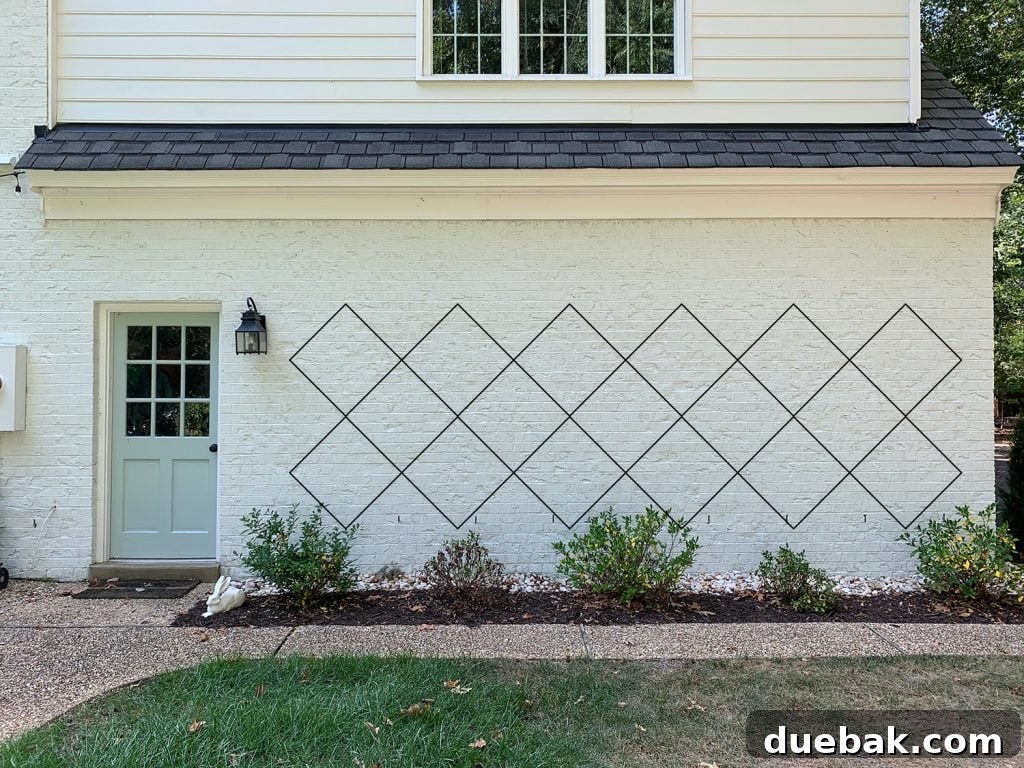
We experimented with open and closed diamond layouts until we settled on a scale that fit the wall. A smaller diamond pattern felt most balanced for our space.
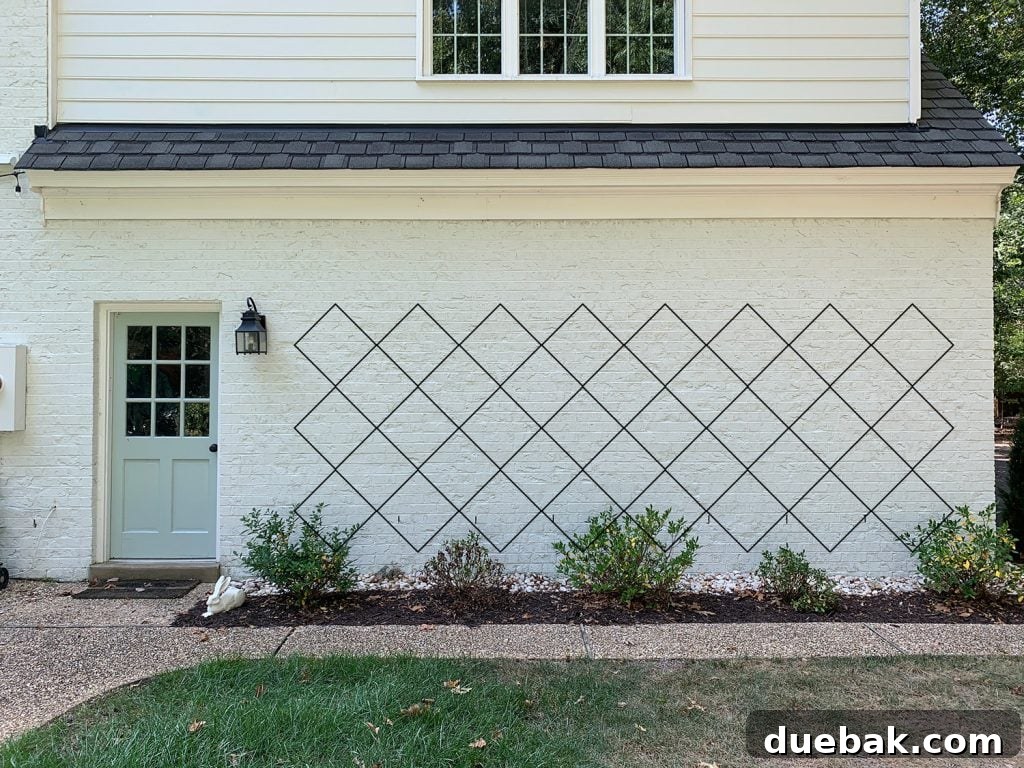
The planning stage also helped estimate material needs. If you can, include a tape measure in photos or notes to make measurements easier when transferring the design to the wall.
Step 2: Map Out Your Pattern on the Wall
Transfer the mockup to the wall by choosing reference points and marking anchor locations. We spaced our diamond intersections 25″ apart. Use painter’s tape and a marker to make temporary marks so you can adjust without marking the brick directly.
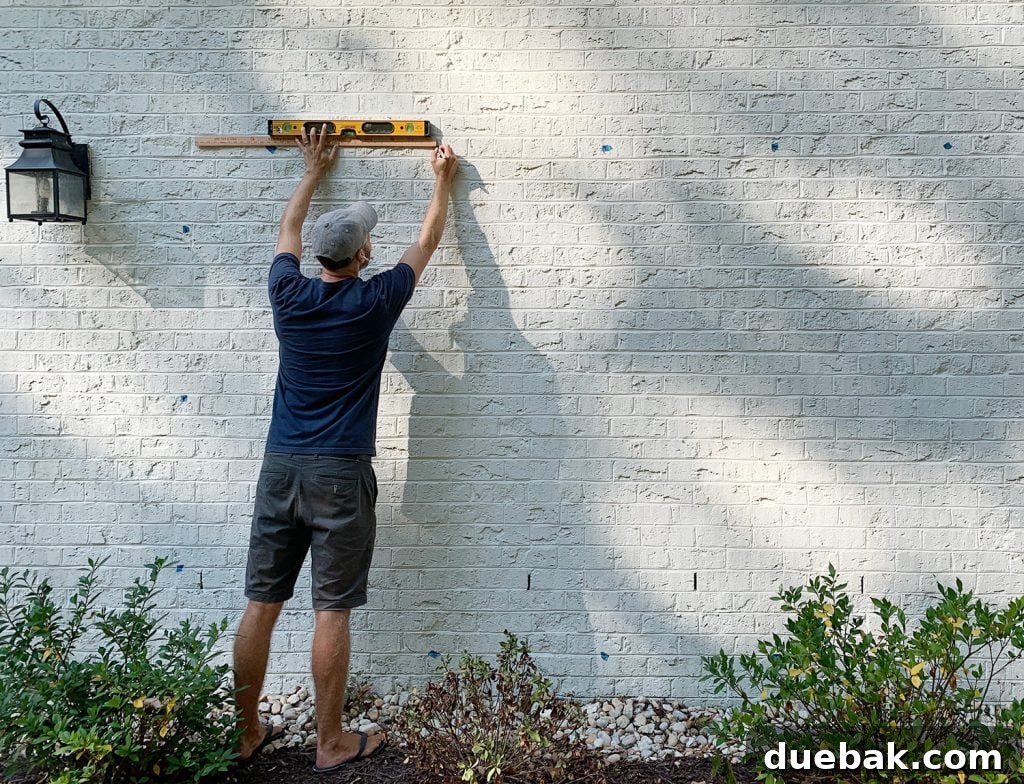
Check alignment with a level and a long straight edge. Double- and triple-check measurements — one misplaced anchor can throw off the whole pattern. It’s far easier to move tape than to redrill holes.
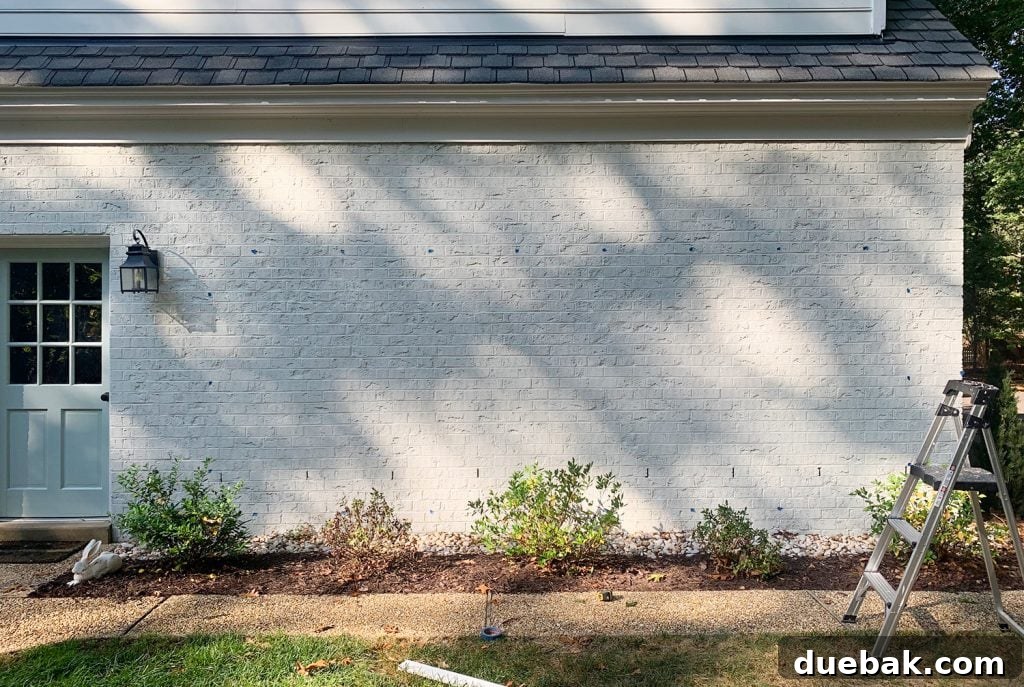
Step 3: Install Your Anchor Points
With the marks in place, drill pilot holes at each spot. A hammer drill and masonry bits make the job easier in brick. Start with shallow holes to ensure your placement, then enlarge them to fit the anchors.
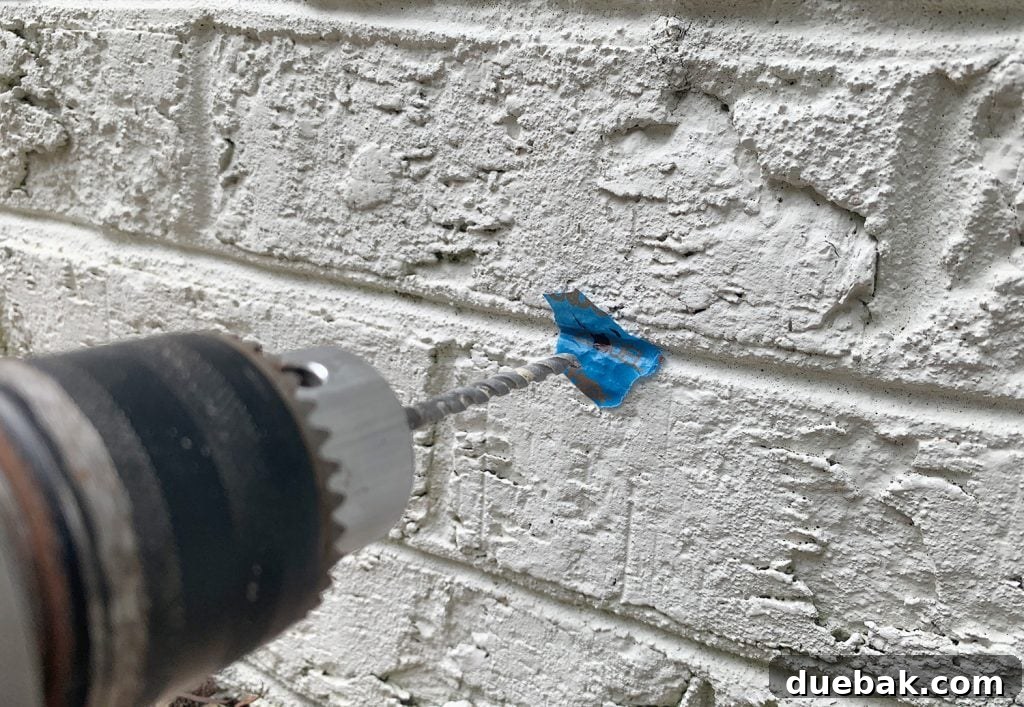
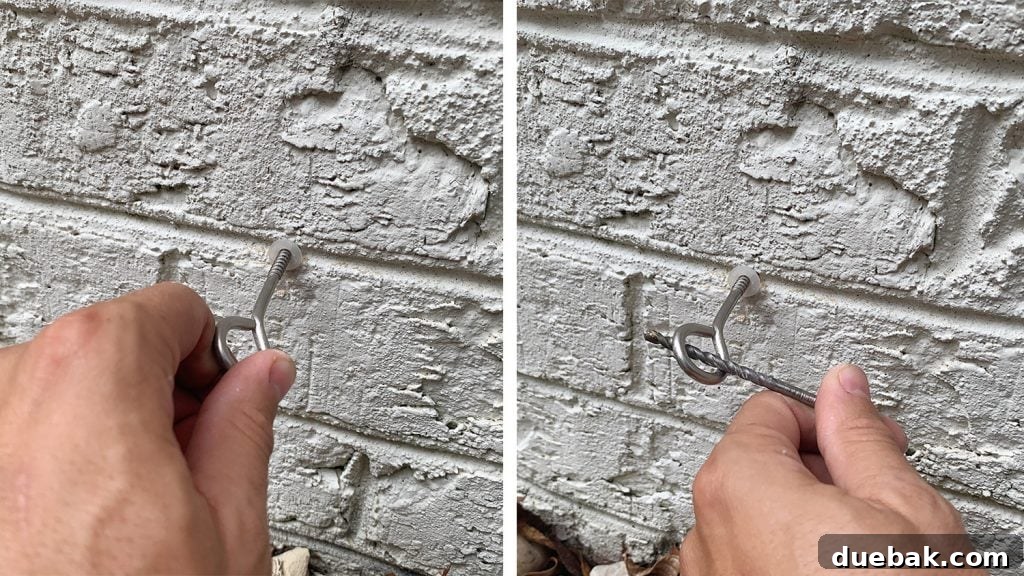
Tap plastic masonry anchors into the holes, then screw in the eye hooks. We used 3″ eye hooks so the wire sits a short distance off the wall, allowing vines space to grow and wrap around the cable.
Step 4: Attach the Wire
We used 1/16″ galvanized steel wire rope for the trellis cables. Open each spool and uncoil it before you start to avoid tangles. Create loops at wire ends using aluminum ferrules: thread the cable back through the ferrule to form a loop, then crimp the ferrule closed with pliers.
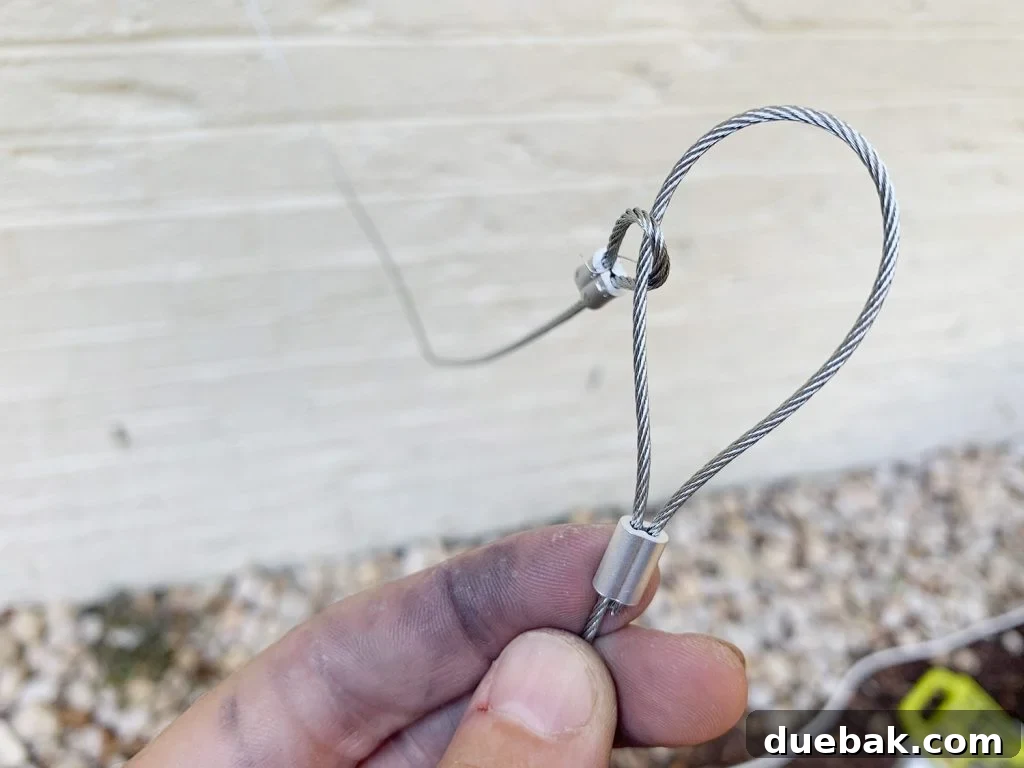
Attach the looped end to an eye hook and repeat for each cable run. Cutting cable with wire cutters works, though heavy gauge wire can dull snips. An alternate method is to place the wire on a hard surface and sever it with a chisel and hammer for a clean break.
Step 5: String the Wire
String the wire through the eye hooks to form the diamond pattern. Take care to follow the intended path so diamonds remain uniform. Looping the wire through each eye twice helps keep tension as you work.
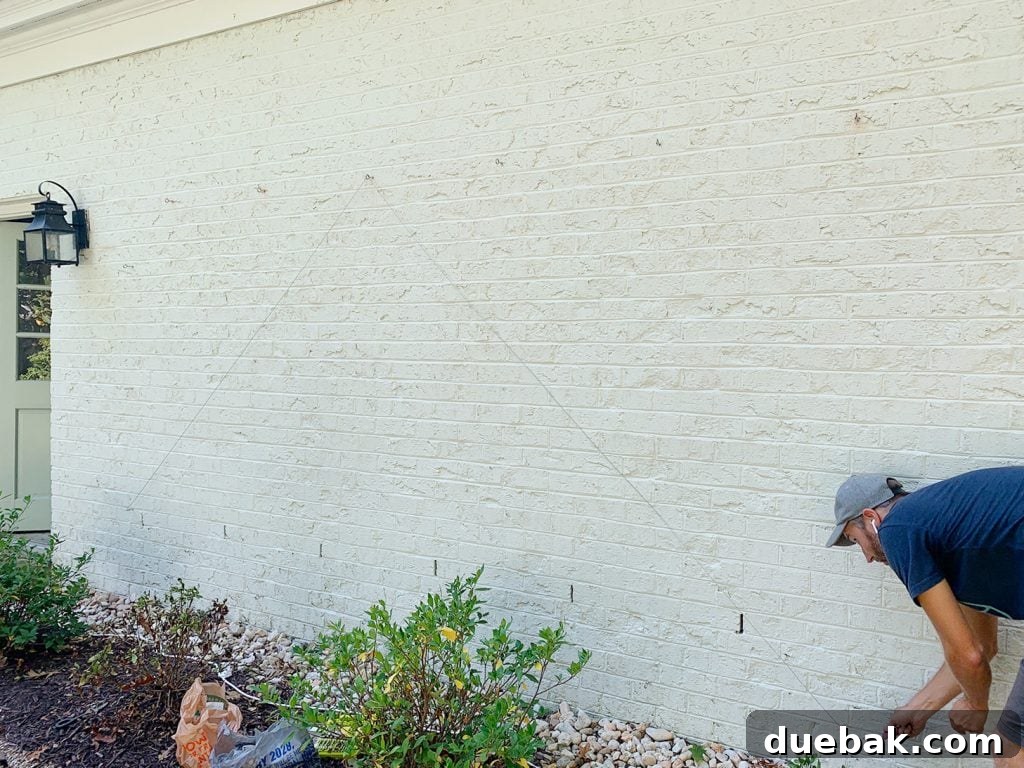
If desired, add a turnbuckle to maintain tension over time. We didn’t install one initially, but it’s an easy upgrade if the cables loosen.
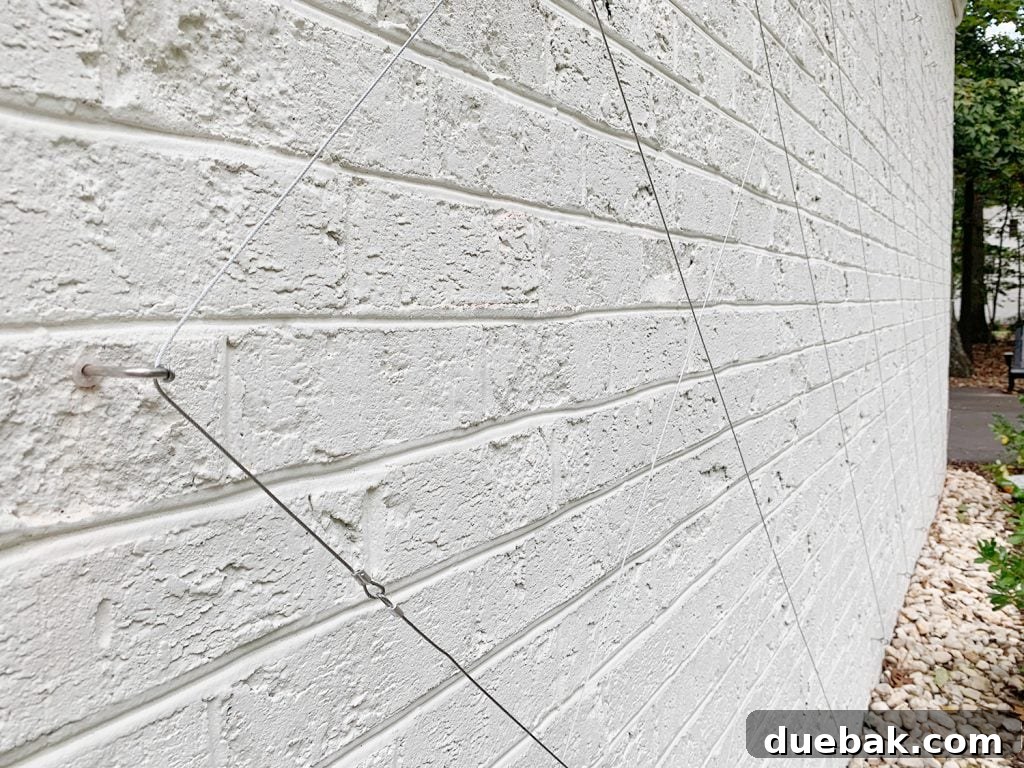
Having a second person to pull cable tight while you crimp ferrules makes the process smoother and ensures even tension.
Step 6: Add Your Vining Plant
Choose a climber suited to your climate and wall material. We were advised to plant clematis because it grows quickly, produces attractive flowers, and is less likely to damage brick compared with some vigorous ivies. We planted four clematis along the base of the trellis and gently guided their stems onto the wires.
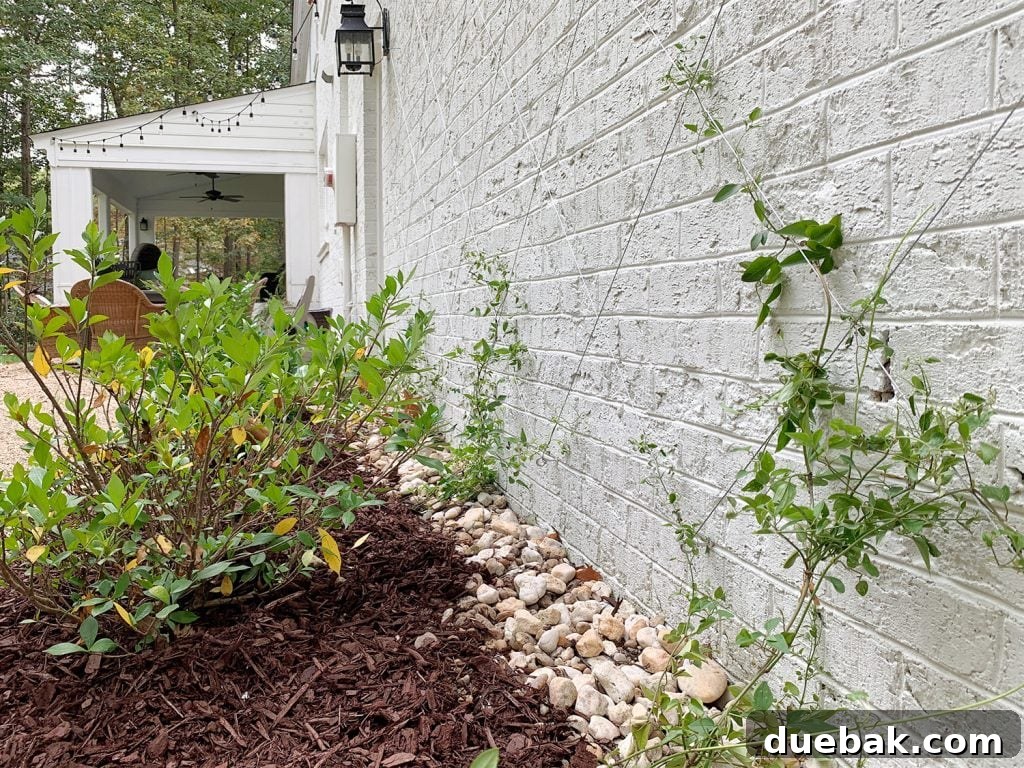
Secure new growth with soft plant ties if needed. Water regularly while the plants establish, and add mulch around the root zone to retain moisture.
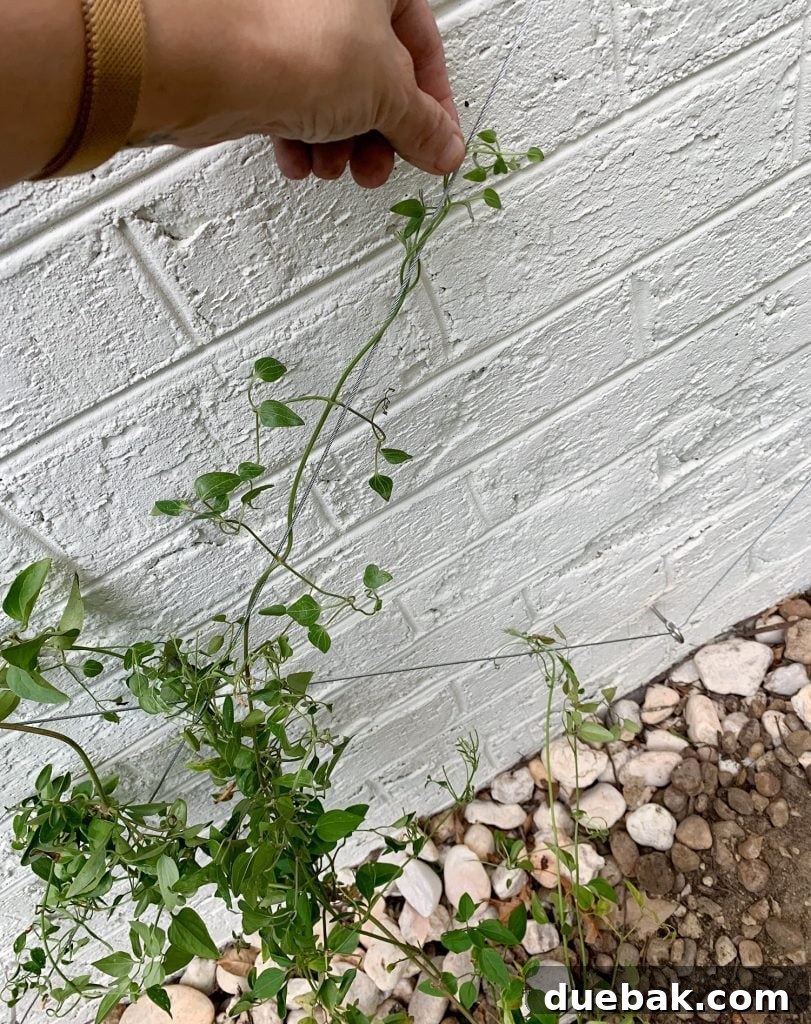
Step 7: Watch Your Trellis Grow
Patience is key. In a few weeks you’ll begin to see vines clinging and climbing the wire. Spring accelerated growth for our clematis and within a season the wall had become a living feature.
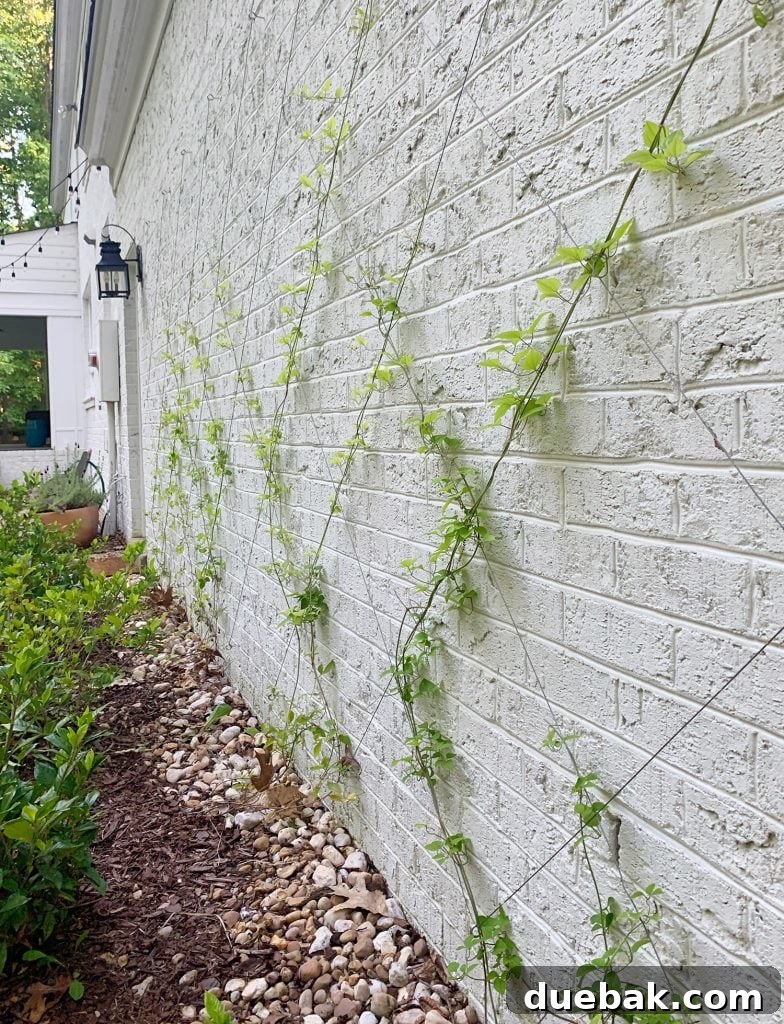
Watching the plants fill in was incredibly satisfying — and surprisingly entertaining for our little dog, who approved of the new green backdrop.
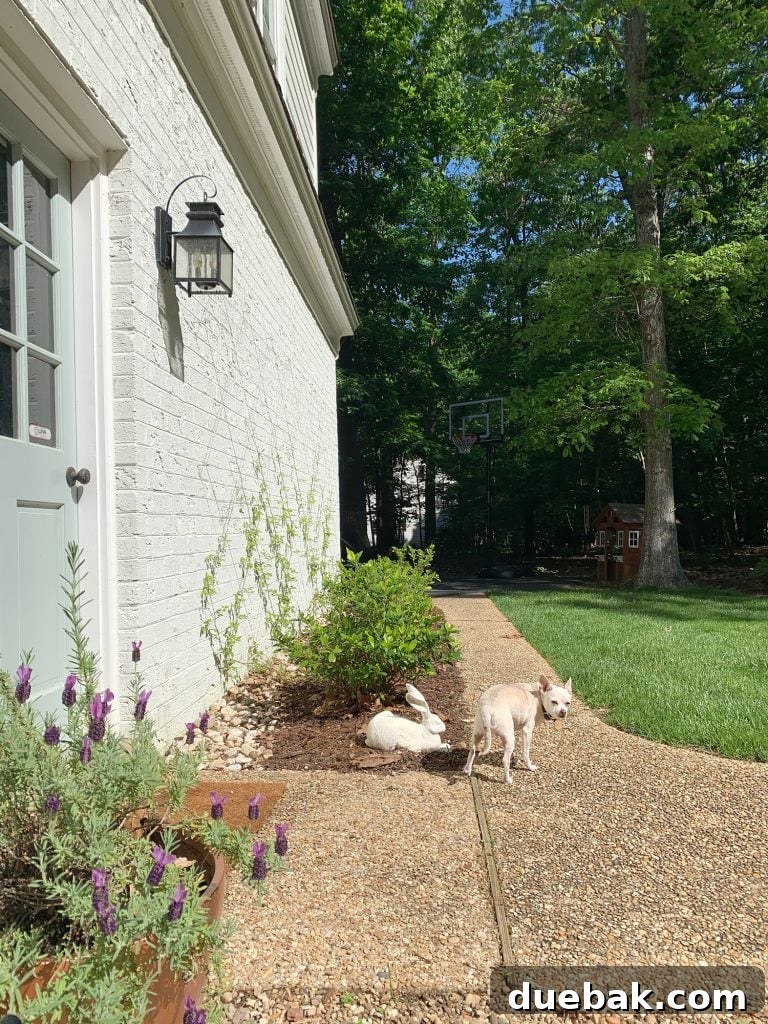
We wished we could have watched the trellis mature longer at that house, but have since continued similar plant projects elsewhere. For example, we installed horizontal wires on a pool fence for star jasmine and watched it become lush over a few years.
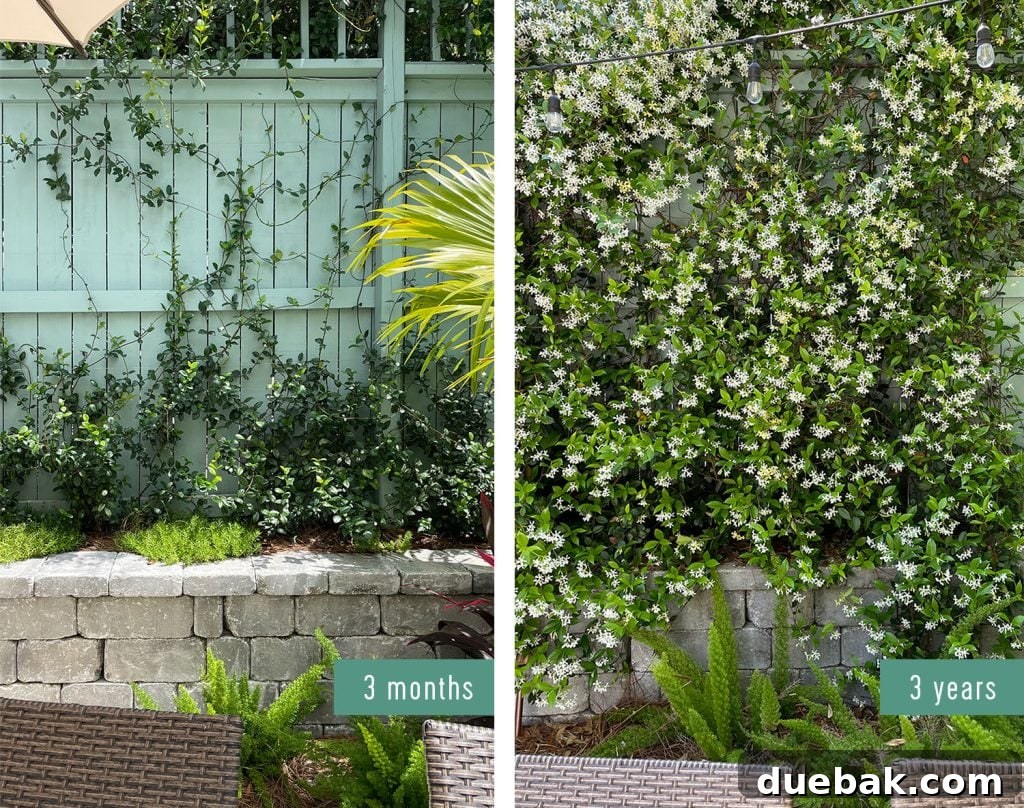
More Trellis & Plant Projects
- Easy DIY Privacy Trellis
- DIY Outdoor Plant Shelf
- How to Build a Window Plant Shelf
- How to Install Drip Irrigation
- Protecting Outdoor Plants in a Deep Freeze
- Fiddle Leaf Fig Care Guide
- Tree Philodendron Care Guide
- Monstera Deliciosa Care Guide
- Snake Plant Care Guide
If you follow these steps — plan carefully, mark precisely, use appropriate anchors, and guide your chosen vine onto the wires — you can create a durable, attractive trellis that will only improve as the plants mature.