

Navigating the Post-Move Avalanche: Taming the “Box Graveyard”
Moving to a new home is often an exhilarating journey, a fresh start filled with the promise of new memories and experiences. Yet, amidst the excitement of unpacking cherished belongings and envisioning future décor, there’s an often-overlooked, overwhelming aftermath that many of us face: the formidable “Box Graveyard.” This isn’t just a scattered collection of empty cartons; it’s an entire ecosystem of cardboard, bubble wrap, and crumpled packing paper that threatens to consume an entire room, turning a prospective sanctuary into a storage nightmare.
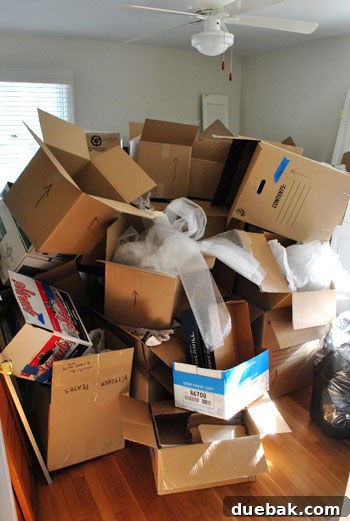
We’ve all dealt with rooms that felt a bit “boxy” at times, but this scenario takes that term to an entirely new level. Imagine stepping into what was once destined to be a serene guest bedroom, only to be met by a towering monument of defunct moving supplies. This is precisely the scene we affectionately – or perhaps resignedly – dubbed our “Box Graveyard.” It was, in essence, the guest bedroom filled to the brim, from floor to ceiling, with every single empty moving box and stray piece of packing material that had faithfully protected our possessions during the transition.
Embracing the Temporary Chaos: A Cathartic Release
As utterly disastrous and overwhelming as this sight might appear at first glance, we must confess to a peculiar, almost cathartic sensation that accompanied its creation. After weeks of meticulously planning, labeling, and carefully packing every single item with painstaking precision, there was a strange, primal satisfaction in simply tossing the empty boxes into one gargantuan, unapologetically disorderly pile. It was a momentary rebellion against the rigid structure of the moving process, a brief foray into what one might call our “wild side.” For a short while, the mess felt like a release, a tangible symbol of a significant life event successfully navigated, even if its remnants still loomed large.
This phase, however brief, allowed us to exhale, to momentarily set aside the demands of organization and simply exist in the immediate aftermath of a monumental task. The “Box Graveyard” wasn’t just a pile of trash; it was a monument to effort, a testament to the journey we had just completed. It represented the quiet, often unacknowledged chaos that underpins every major life transition, offering a moment of unburdened freedom before the next phase of tidying and settling in could begin. It’s a relatable phenomenon for anyone who has ever stared down the barrel of post-move exhaustion.
The Inevitable Call to Action: Reclaiming Our Space
Of course, the joy of reveling in a state of controlled chaos is, by its very nature, fleeting. While a temporary mess can be cathartic, prolonged disarray quickly sours into genuine stress. Almost as soon as the last box found its way to the burgeoning pile, the reality of needing to reclaim our guest room set in. The desire to restore order and functionality to our home became an undeniable imperative. This meant embarking on the next phase of the post-move process: dismantling the “Box Graveyard” piece by painstaking piece.
The task began with a methodical approach. I found myself systematically breaking down each cardboard box, flattening it into a more manageable, stackable form. Simultaneously, I began collecting the assorted packing materials – the acres of newspaper, the voluminous bubble wrap, and stray packing peanuts – into large, sturdy garbage bags. The intention behind this careful sorting was clear: not only to declutter but also to prepare these materials for a second life. Thanks to platforms like Craigslist, we planned for these resources to be reused by someone else, giving them a purpose beyond a single move.
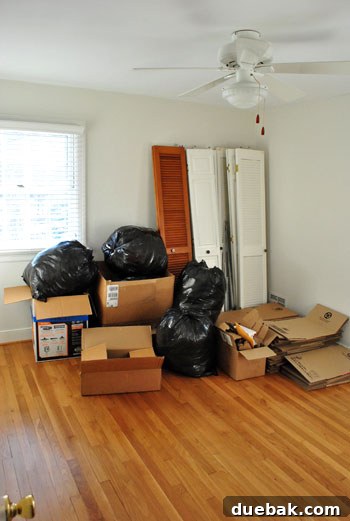
This process, though physically demanding, offered its own kind of satisfaction. The repetitive motion of folding cardboard, the rustle of packing paper being compressed, all contributed to a tangible sense of progress. Roughly two hours later, the transformation was remarkable. The walls of the guest room, once obscured by a cardboard fortress, became visible once more. The floor, previously a treacherous landscape of obstacles, was reclaimed. The room breathed a sigh of relief, and so did we.
Sustainable Solutions: Giving Boxes a Second Life
While the goal was to clear the room, our approach was rooted in sustainability and community. Simply tossing all those perfectly good boxes and packing materials into the landfill felt wasteful and contrary to our values. This is where the power of online communities and local initiatives truly shines. Platforms like Craigslist, Facebook Marketplace, and Freecycle offer fantastic avenues for connecting with others who are embarking on their own moving journeys and would gladly take these materials off your hands. It’s a win-win scenario: we declutter responsibly, and another family saves money on expensive new packing supplies.
Beyond individual reuse, local recycling centers are invaluable resources for any remaining cardboard that cannot be re-homed. Many cities also have specific guidelines for how to recycle different types of packing materials, from plastic bubble wrap to foam peanuts. Taking the time to sort these items not only reduces your environmental footprint but also contributes to a more circular economy. It’s a small effort that collectively makes a significant difference, preventing tons of perfectly usable materials from ending up in our overflowing landfills. This commitment to conscious disposal extends the life cycle of these items, embodying a truly responsible approach to post-move organization.
The Road to Full Reclamation: Beyond the Boxes
The sight of an unencumbered floor and visible walls might not be the pristine “after” shot that often graces home improvement magazines, but for us, it was a profound victory. It represented progress, a significant step towards fully reclaiming our guest room. The expectation is that a fellow Craigslister will soon take away the neatly stacked boxes and bagged packing supplies, officially returning the room to its intended purpose.
However, the journey to a fully organized and functional home often involves more than just dealing with boxes. Lingering tasks invariably remain. For us, it’s those bi-fold doors that still need to make their way over to the Habitat For Humanity ReStore. These larger, more cumbersome items often require a separate plan and effort. It’s a common scenario after a major move; there are always a few odds and ends, larger pieces of furniture, or specific donation items that require an extra push to finally clear out. Hopefully, we’ll get to those soon, bringing us one step closer to complete post-move serenity.
Your Turn: Share Your Post-Move Strategies!
Our experience with the “Box Graveyard” and its eventual dismantling is just one chapter in the universal saga of moving. It prompts an interesting question: Has anyone else out there used the “Box Graveyard” method, intentionally or unintentionally, as a temporary holding pattern? Or perhaps you’ve relied on some other form of controlled chaos, a unique strategy to help yourselves feel better or cope with the immense stress and exhaustion that inevitably follows a significant move?
We believe every move offers its own set of challenges and ingenious solutions. Whether it’s a meticulously planned box disposal system, a community effort to share resources, or simply a moment of surrendering to the mess before conquering it, we’d love to hear your stories. Share your tips, your tricks, your moving horror stories, or your proudest post-move decluttering triumphs in the comments below. Let’s collectively explore how we can make the “aftermath” of moving a less daunting and more sustainable process for everyone. After all, a truly settled home begins not just with unpacking, but with thoughtfully clearing away the last remnants of the journey.