

Mastering Your DIY Penny Tile Backsplash: A Comprehensive Installation Guide
Embarking on a DIY backsplash project can seem daunting, but with the right preparation and a clear understanding of each step, it’s a rewarding home improvement endeavor. Our recent progress update only scratched the surface, so we’re taking a step back to provide a more detailed, step-by-step guide for anyone inspired to tackle a similar project. From meticulous room preparation to the satisfying moment of laying the first tile, we’ll share our insights and lessons learned to help you achieve a stunning kitchen transformation.
Phase 1: Essential Preparation for a Flawless Finish
Before any tile can even touch the wall, thorough preparation is paramount. This foundational stage not only protects your existing kitchen elements but also ensures a smooth, clean surface for tile adhesion. We began by completely clearing our counters, removing every appliance, utensil holder, and decorative item. This creates an unobstructed workspace, minimizing potential messes and allowing for full access to the wall space.
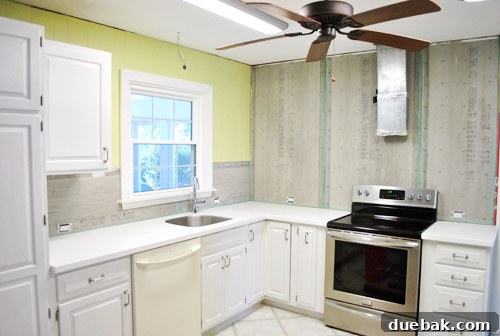
Next, we focused on protecting our brand-new countertops. For this crucial step, we utilized rosin paper, a recommendation we received from our counter installation professional specifically for backsplash projects. Unlike standard brown construction paper, rosin paper boasts an added moisture barrier, a critical feature that prevents any thinset drips or spills from seeping through and potentially damaging your counters. We meticulously covered the entire countertop surface with this protective layer. For an extra safeguard against sharp trowel corners and accidental impacts, we placed a layer of cardboard over the counters before securing the rosin paper. The rosin paper was then taped down securely, with painter’s tape extending right up to the wall, creating a clean boundary and ensuring no thinset could slip underneath.

Phase 2: Strategic Tile Planning and Initial Placement
With the room fully prepped, the exciting part began: planning our tile layout. Strategic placement is key, especially when working with small, intricate tiles like penny tile. We decided to initiate the tiling process in the corner beneath the microwave. This particular spot felt like an ideal, relatively inconspicuous area to acclimate ourselves to the technique and gain confidence. The section was conveniently about three sheets wide, which felt like an encouraging sign for an easy start, allowing us to get our “feet wet” without overwhelming ourselves with complex cuts immediately.

In our initial approach, we were cautious about mixing large batches of thinset. We worried that a full batch might dry out while we painstakingly made cuts with nippers, a scenario we regrettably experienced during our initial learning phase, as detailed in our previous post. While taking it slow helped us understand the process, we quickly learned a more efficient method: install as many full sheets of tile as possible first, then go back and fill in the edges and awkward spaces with cut pieces. Even if this requires mixing a fresh, smaller batch of thinset for the cut pieces, it significantly speeds up the overall installation. This strategy minimizes wasted thinset and keeps the momentum going.

A crucial design element we employed, particularly with penny tiles, is a staggered pattern. This technique is invaluable for disguising seams between tile sheets. By alternating where the horizontal seams fall, your eye is prevented from catching one long, continuous line. Instead, the visual breaks create a more mixed, cohesive appearance, leading to a much more seamless and professional effect once the grout is applied. This meticulous attention to detail ensures a polished final look that enhances the overall aesthetic of your kitchen.
Phase 3: Mastering Thinset Mixing and Application
With planning complete, it was finally time for the real action: applying tile to the wall. This began with mixing the thinset, a step that initially filled us with apprehension. We had a past mishap where we ruined an entire bag of grout during a previous bathroom project by misinterpreting the instructions and adding too much water. To avoid a repeat, we meticulously read the thinset bag’s instructions at least ten times. For added confidence and clarity, we consulted an Ask The Builder video on YouTube, which proved incredibly helpful. We’re pleased to report that this time, we successfully achieved the perfect thinset consistency, a critical factor for proper tile adhesion.
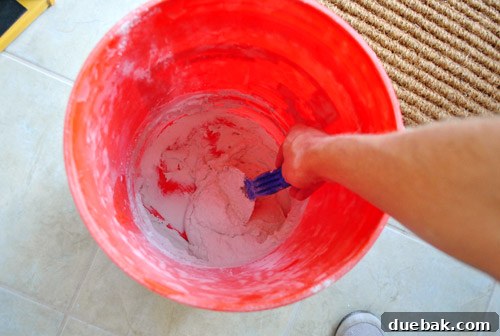
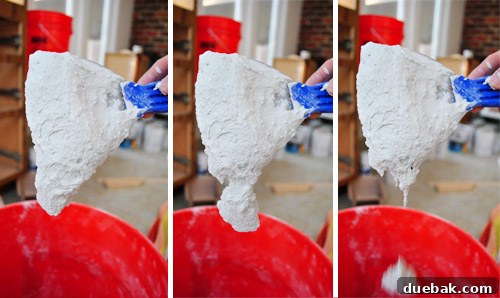
The ideal thinset consistency is often described as being similar to toothpaste or pancake batter – thick enough to hold its shape but loose enough to spread easily. To test this, it should slowly fall off a putty knife when held vertically, maintaining cohesion without being overly runny or stiff. Achieving this balance is crucial for both ease of application and optimal tile bonding. Too thin, and your tiles will slide; too thick, and it will be difficult to spread evenly and fully adhere the tiles.
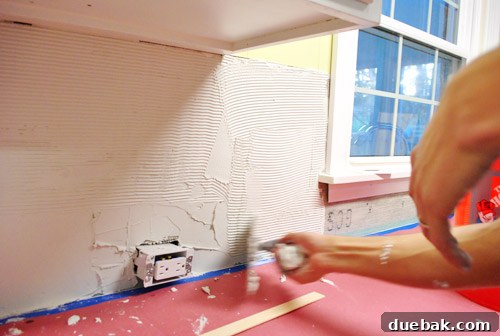
Once the thinset was mixed to perfection, we began applying it to the wall. Using the flat side of a 3/16″ notched trowel, we spread a thin, even layer across the surface. For tighter spaces, a putty knife proved more effective, allowing for precise application in areas where the larger trowel couldn’t fit comfortably. Even coverage is essential here, creating a uniform bed for the tiles.

After achieving a fairly even layer of thinset, we switched to the notched edge of the trowel. Holding it at an approximate 45-degree angle, we scraped along the thinset, creating distinct ridges or grooves. These grooves are vital as they provide the necessary “grip” for the tiles, allowing them to firmly set into the adhesive. Given our small penny tiles, we opted for a small 3/16″ trowel notch, ensuring the right amount of thinset coverage and optimal adhesion for their size. This step is often overlooked but critical for preventing tile slippage and ensuring a strong bond.
Phase 4: Laying the First Tiles and Overcoming Challenges
With the thinset ready, the moment of truth arrived. We pressed the first tile sheet firmly into the wall. It was a mixture of fear and excitement – the first visible sign of our project coming to life! This initial step felt monumental, setting the tone for the rest of the installation.
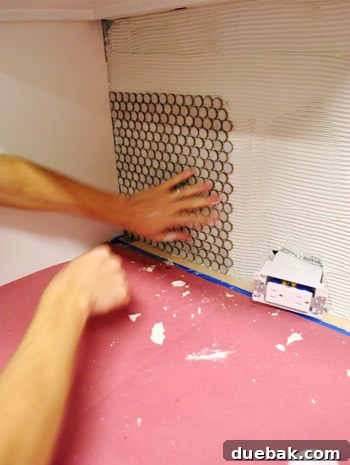
A small but critical detail during tile placement is maintaining a consistent gap between the bottom row of tiles and the countertop. For this, we used a very thin piece of scrap wood as a spacer. This gap, typically similar to the grout lines between individual tiles, is essential for accommodating caulk, which provides flexibility and prevents cracking where the tile meets the counter. Our wood spacer was roughly the thickness of a paint stick, perhaps even a touch thinner, ensuring just the right amount of space for a clean caulk line.
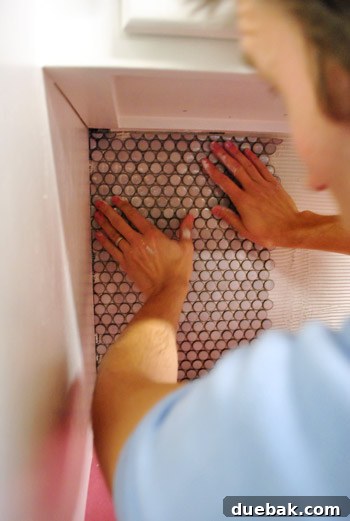
These initial sections of tiling proved relatively straightforward, largely because the existing countertops and cabinets provided natural guides, helping us keep the sheets straight and level. After all the meticulous preparation, the actual tiling process itself moved along at a reasonable pace, taking us about an hour and a half to reach the point shared in our previous update. However, the extensive prep work had taken its toll, leaving us too tired to continue into the night. It’s a common DIY dilemma – preparation often consumes more energy than anticipated!
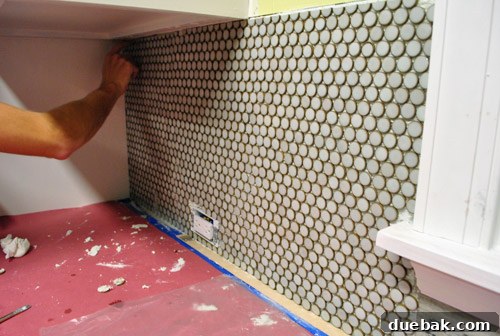
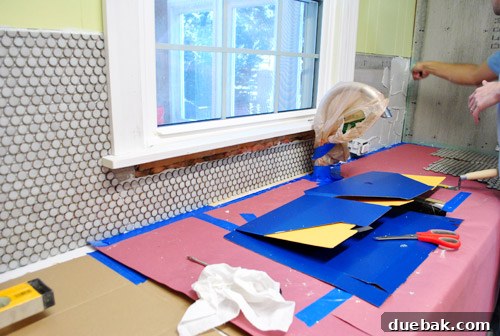
The next day, refreshed and re-energized, we resumed our tiling efforts along the sink wall. To simplify the process and avoid intricate cuts, we made a strategic decision to remove the piece of molding located directly under the window. Our plan was to reattach the molding on top of the finished tile, creating a seamless and polished look that eliminated the need for difficult tile trimming around it. This proactive approach saved us considerable time and effort.
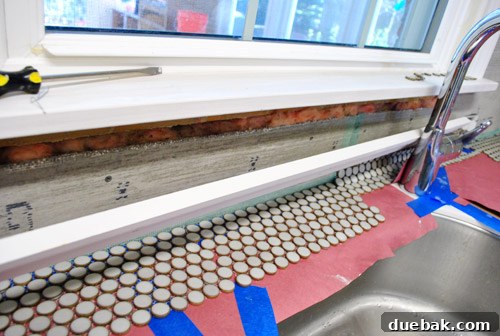
For this section, we adopted a slightly more flexible approach, opting not to plan out every single cut in advance. Instead, we focused on laying full tile sheets wherever possible. When we encountered obstacles like the disposal switch, we carefully removed the necessary full tiles before mixing thinset. We then back-filled these areas as we went, popping off half or full tiles from the sheets and meticulously fitting them into place to complete the pattern around the switch. This adaptive method proved highly efficient for this particular area.
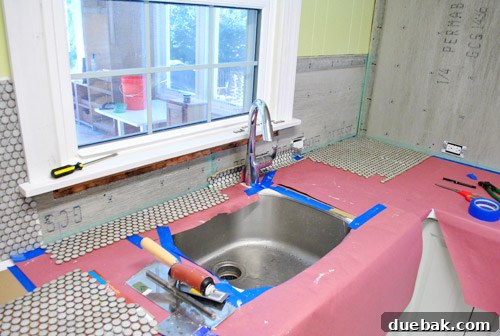
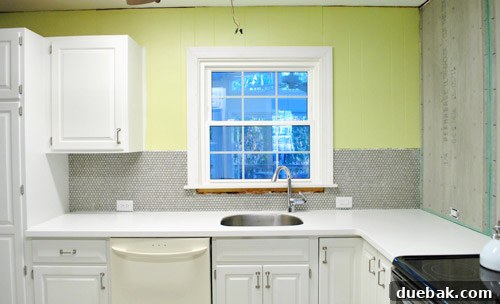
This entire segment of the backsplash installation progressed remarkably quickly, especially when compared to the initial day’s meticulous prep and cautious start. The rhythm of spreading thinset and laying tiles became more natural, allowing us to move with greater confidence and speed. While efficiency improved, our tiling progress was dictated by real-life demands. A short naptime for our daughter, Clara, meant we had to call it a day and clean up before we could move onto the large back wall. It was a bittersweet moment – one side of the kitchen was done, the “easy” side, but still a significant milestone! You might notice the window appears off-center in some photos; rest assured, once we install open shelving on the stove wall, there will be 14 inches of balanced space on either side, restoring symmetry. (Note: We’ll soon share how we plan to “cap” the exposed tile edges on either side of the window that won’t be covered by cabinets or shelves, complete with photos for better explanation.)
Phase 5: Anticipating the Final Stretch and Enjoying the Progress
Our sights are now set on the largest section: the back wall. We’re optimistic that this phase will progress relatively quickly. On one hand, it’s a substantial area to tile, demanding patience and precision. On the other hand, we’ve significantly honed our skills and efficiency, and this wall primarily consists of full tile sheets, meaning fewer time-consuming cuts. Our growing confidence and refined technique are sure to make a difference.
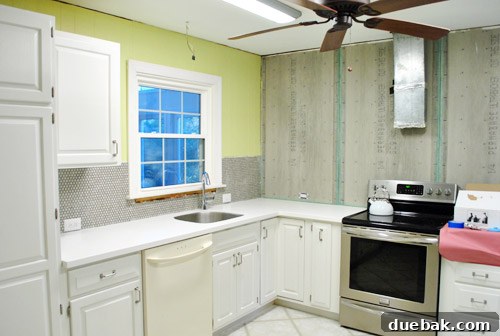
While we anticipate the completion of the back wall, we’re thoroughly enjoying the work we’ve accomplished so far. We are truly obsessed with the penny tile backsplash. The most surprising and delightful discovery is how it looks in the dark; it seems to gleam, almost as if it’s wet, casting a luxurious shine. This unexpected “fancy shine” dramatically elevates the entire kitchen, beautifully complementing our white Corian countertops and freshly painted cabinets. We eagerly await the grouting stage to fully realize the finished aesthetic and the installation of our stainless steel dishwasher, which is on hold until the new flooring is laid underneath it.
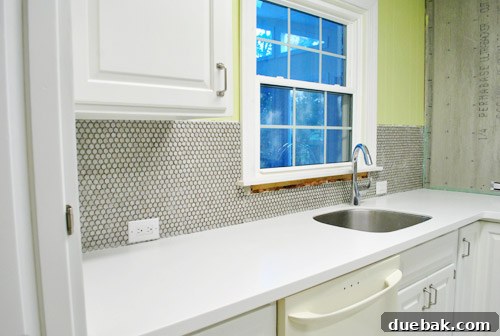
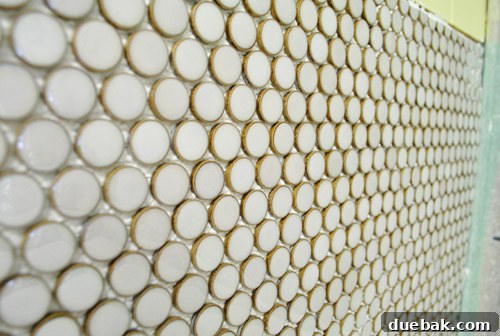
While penny tile might not be the quickest to apply due to its small size and sheet variations, its aesthetic appeal more than compensates for the extra effort. We’ve read numerous accounts online about people struggling to align penny tiles and hide seams. However, we found that our sheets were surprisingly easy to manipulate within the wet thinset, allowing us to slide them around until we achieved perfect alignment. This flexibility is a significant advantage, ensuring a smooth, uniform appearance despite the tile’s intricate pattern.
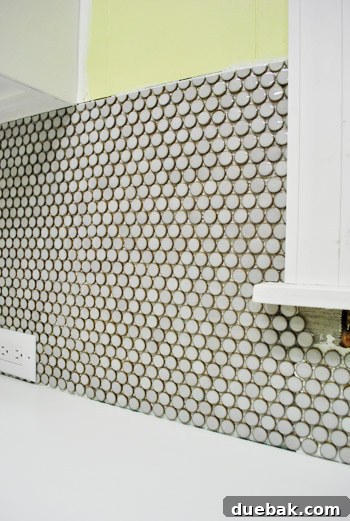
Our technique involves consistently standing back and “noodling” – adjusting and realigning – until we achieve perfectly even rows and seamless transitions. While this process can be tedious, the breathtaking finished result is, in our humble opinion, 100% worth every moment of effort. The visual impact of a well-installed penny tile backsplash is truly transformative, adding character and charm to any kitchen.
In preparing this post, we realized we had promised another video demonstrating our technique for spreading thinset, creating grooves, setting tiles, and making those crucial “scooch” adjustments. We completely spaced on it! But fear not, with an entire back wall still awaiting our attention, we promise the next post will feature that video. It’s a great opportunity to show you our exact methods in action.
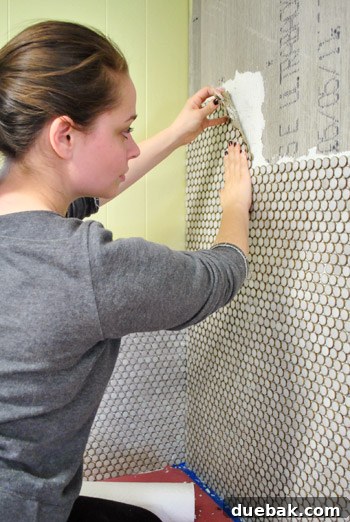
But wait, you didn’t think we stopped working, did you? Late last night, we managed to begin tackling a portion of the back wall. “Slowly but surely” is indeed the mantra for this project. While we wish we could simply snap our fingers and have the entire backsplash magically appear, real-life DIY involves consistent, methodical progress. Our ambitious goal is to have the entire backsplash fully completed by the end of this weekend. We’ll inch along, making steady headway, and hope to return on Monday with wide-angle shots showcasing our fully tiled kitchen! Just look at Sherry’s serious focus – she’s determined to get this done! Haha.
Is anyone else currently immersed in a tiling project? We began this endeavor with no clear timeline, unsure if it would take three weeks or just three days. So, to potentially share a completed tile job roughly a week after starting it feels incredibly exciting and gratifying. It’s a testament to what can be achieved by dedicating evenings and snatching moments during nap times. If you’re contemplating whether you can tackle a penny tile backsplash yourself, know that while it can be a slow-going process, it’s certainly not the most challenging home improvement task we’ve encountered – probably not even in our top ten. So, take heart: you absolutely can do it!