
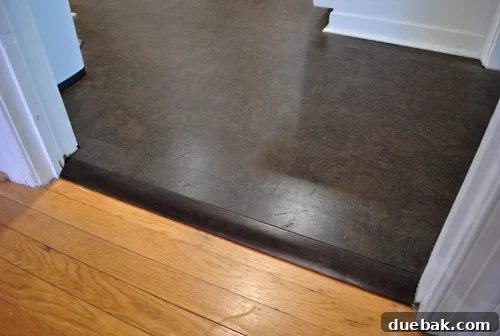
Welcome to the world of home improvement, where sometimes the smallest details make the biggest impact. After weeks, and even months, of enjoying our beautiful new cork flooring in the kitchen and dining areas, one crucial element remained unfinished: the transitions. These seemingly minor strips are essential for creating a seamless, safe, and polished look between different flooring types or levels. We recently tackled these final pieces, from high-traffic doorways to the unique challenge of a fireplace surround, and we’re excited to share our journey and the practical steps involved.
Mastering Cork Floor Transitions: A Comprehensive DIY Guide
For those of you who’ve followed our home renovation adventures, you know we’ve been documenting the transformation of our kitchen, particularly the installation of our Lisbon Cork flooring. While the main floor was laid, some of you may have noticed the temporary gaps and uneven edges where the cork met other rooms or features. This detail, often overlooked until the last minute, can significantly affect both the aesthetics and safety of your home. It’s a common DIY hurdle, especially with floating floors, and we’re here to demystify the process of installing perfect floor transitions.
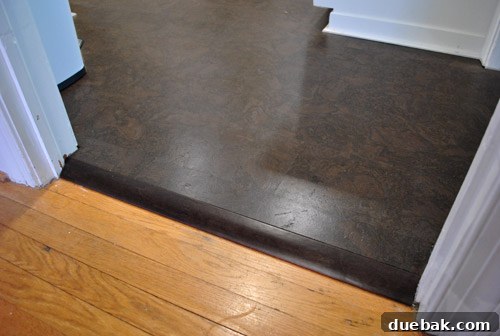
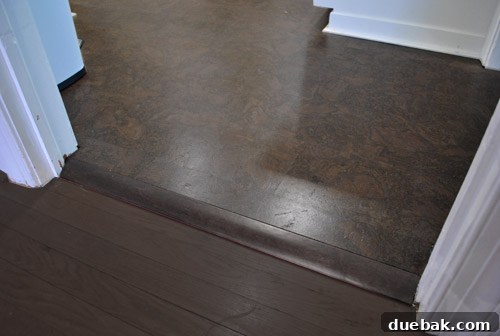
Our vision for these spaces has always been cohesive, and while the current juxtaposition of dark cork and orange-toned hardwood might seem stark, rest assured, this is a temporary phase. Our long-term plan involves refinishing the adjacent rooms’ hardwood to a darker shade, closely matching the rich tones of our cork flooring. Imagine a smooth, continuous flow that visually expands the space and ties everything together beautifully. The final result should resemble this conceptualized image, where the transition blends effortlessly, creating an illusion of unified flooring.
The Quest for the Perfect Cork Floor Transition Pieces
One of the initial challenges we faced with our Lisbon Cork flooring was the absence of matching transition strips. Unlike many common laminate or engineered wood products, specialty cork floors often don’t come with a full suite of coordinating accessories. This meant we had to embark on a quest to find the perfect solution.
Our first stop was Lumber Liquidators, where we purchased our cork. Interestingly, the salesperson advised against using cork-specific transitions, citing concerns about their durability. Cork, while resilient and comfortable underfoot, isn’t as hard as traditional wood, making cork transitions potentially less resistant to the inevitable kicks, bumps, and general wear and tear that these high-traffic areas endure. They offered oak transitions that could be stained to match, priced at around $45 for a 72-inch piece. This was a viable option, but we decided to explore further.
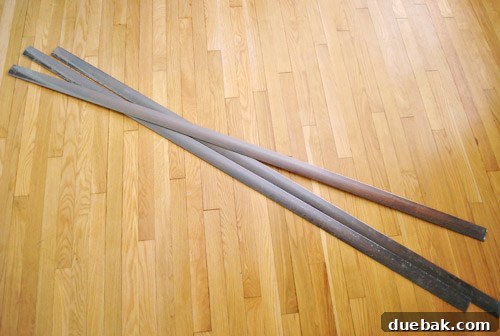
Our search eventually led us to Home Depot, where we discovered an engineered wood transition piece that was an almost perfect pre-matched color for our cork. Priced at a more budget-friendly $27 for a 48-inch piece, it seemed like an excellent find. The only drawback was their limited stock of longer pieces; they only carried 48-inch strips, necessitating a special order for the 72-inch lengths required for our wider doorways. This wait of a few weeks meant that only our shorter doorways received their transitions back in March when the floor was first laid. So, it was high time to finish the rest!
DIY Transition Installation: Our Process Explained
Surprisingly, detailed tutorials on installing transitions, especially for cork flooring, are few and far between online. While our method might not be textbook perfect, it yielded excellent results for us, and we’re happy to share our process. Since we didn’t photograph the installation of the initial kitchen transitions, let’s walk through the steps using a doorway we recently tackled, providing a clear visual guide to our technique.
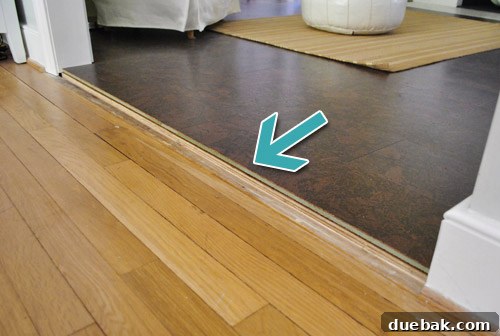
Understanding Reducer Transitions for Uneven Floors
A crucial aspect of our installation involved accommodating different floor heights. Our floating cork floor was laid over an existing subfloor, primarily due to the presence of an asbestos liner beneath our original vinyl tiles – a common scenario in older homes that often dictates layered flooring solutions rather than complete removal. This layering resulted in a slight step down, roughly 1/4 to 1/2 inch, where the new cork met the existing hardwood in our dining room. It’s important to note that these rooms weren’t originally connected in this open-concept manner until we undertook a major renovation to create a more expansive living space. In situations where floor levels aren’t identical, you need a specific type of transition piece called a “reducer.”
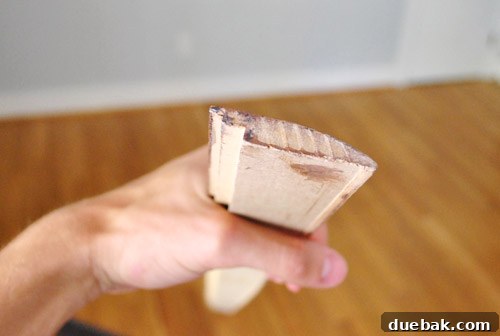
A reducer is designed with a gradual slope on one side, allowing it to smoothly connect a slightly higher floor to a slightly lower one. This design prevents the creation of an abrupt edge or a significant “speed bump” that could be a tripping hazard. While the photo below might humorously resemble a hand puppet attempting to swallow a piece of wood, it clearly illustrates the reducer’s profile: one side gently slopes down, while the other maintains a subtle step-up. The key to achieving the most seamless and aesthetically pleasing look with a reducer is to ensure the slope is gradual and avoids any dramatically curved or C-shaped designs, which can look awkward and less professional.
Step-by-Step Installation: From Cut to Finish
1. Preparing and Measuring the Transition Piece
Once we had our transition pieces, the first step was to remove the protective plastic film (which often appears scratched or marked in pictures). With the piece clean, we carefully measured the width of the doorway. Using a ballpoint pen, we marked the precise cut line on the transition strip. Accuracy here is paramount for a snug and professional fit. Always measure twice, cut once!
2. Making the Cut
For a clean and straight cut, we used our miter saw. This tool allows for precise, angled cuts, ensuring that the transition piece fits perfectly within the doorway without unsightly gaps. For standard doorways, a straight 90-degree cut is usually sufficient. Remember to wear appropriate safety gear, including eye protection, when operating power tools.
3. Securing the Transition: Nailing vs. Adhesive
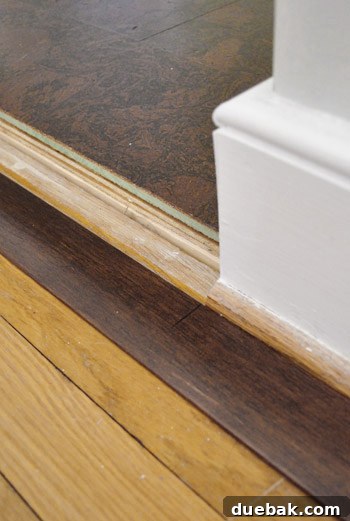
While some tutorials suggest using adhesive to secure transitions, our preference, based on past experience and durability, is nailing. All the transitions in our current home, and even in our previous one, have been securely nailed into place. This method provides a very strong and long-lasting hold, giving us peace of mind that the transitions won’t shift or come loose over time. Although we plan to invest in a nail gun soon, for this project, we opted for a more traditional approach.
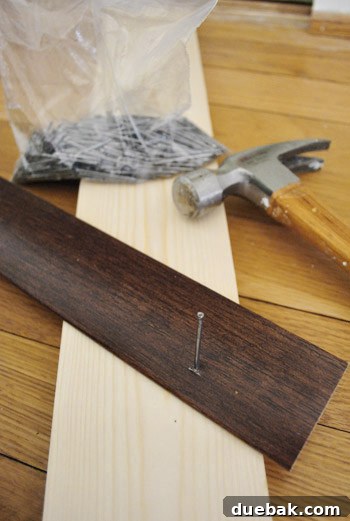
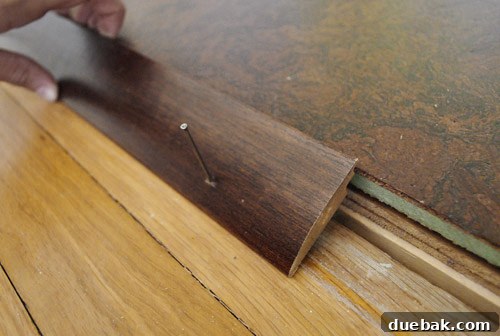
To avoid splitting the wood and ensure a clean nail entry, we pre-set the nails into the transition piece before positioning it in the doorway. This involves gently hammering the nail partway into the wood while supporting the underside with a scrap piece of wood. This technique creates a starter hole and prevents the nail from causing damage when fully driven in. Alternatively, for very delicate wood or if you’re concerned about splitting, pre-drilling a very small pilot hole can also be an effective method.
4. Positioning the Transition
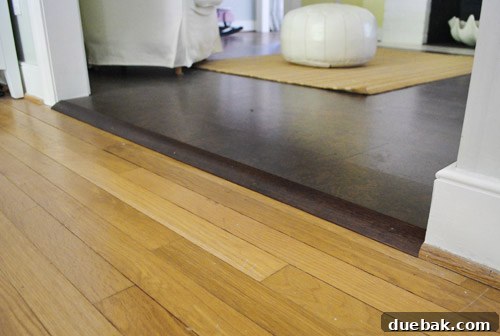
Careful positioning is key to a professional finish. For this particular doorway, which had the most significant height difference, we strategically rested the small lip on the higher end of the reducer directly on top of the cork flooring. This allowed the transition to sit perfectly flush with the cork, creating a stable base and ensuring the gradual slope seamlessly met the lower adjacent floor.
5. Finishing Touches: Sinking the Nails
Once the transition piece was perfectly positioned, we proceeded to fully hammer in the nails. A crucial tip for achieving a truly polished look and preventing damage to the wood surface is to use a nail punch. This inexpensive tool, typically costing around $3, allows you to sink the nail head slightly below the surface of the wood without the risk of accidentally denting or marring the transition piece with your hammer. The result is a smooth, flush finish that not only looks great but also eliminates any protruding nail heads that could snag or scratch. After completing these steps, the doorway transition looked incredibly good and, more importantly, was no longer the toe-stubbing hazard it had been for the past four months. It’s funny how the temporary floor color difference made the unfinished edge so obvious, perhaps a blessing in disguise that prevented any major trips!
Tackling the Fireplace Surround: A Mitered Challenge
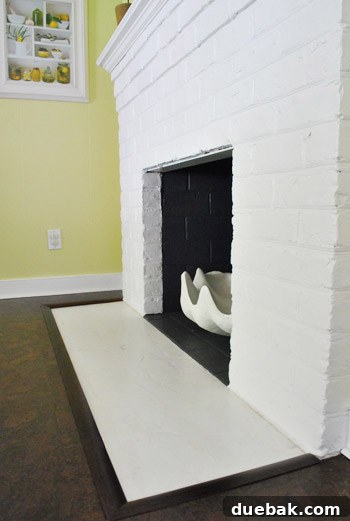
The transition along the hallway followed much the same process as the doorway. However, the fireplace surround presented a unique and slightly more complex challenge due to its corners. You might recall seeing the raw, unfinished edge of our fireplace most recently in our post about “Mixing Up the Mantel.” This area required precise miter cuts to create a continuous, framed look.
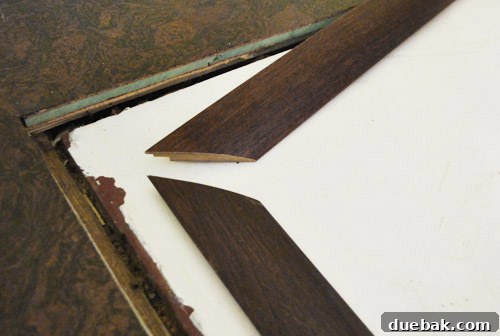
After carefully measuring each side of the fireplace opening, we used our miter saw to cut the transition pieces at 45-degree angles. When joined, these angles form a perfect 90-degree corner, creating a clean, professional frame around the fireplace hearth. This technique requires careful measurement and consistent angles to ensure a tight fit at the corners, which are critical for the finished aesthetic. The process of pre-setting nails and using a nail punch was the same, ensuring a secure and blemish-free installation.
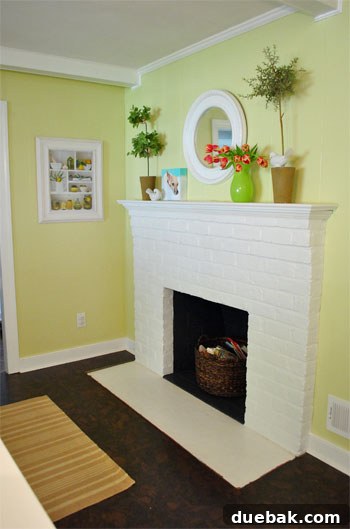
Currently, the fireplace hearth itself sits slightly lower than the newly installed cork floor, meaning we again needed to employ the trusty reducer transitions. While this current setup is a bit unconventional with the reducers around the fireplace, it’s a temporary solution. Our long-term plan involves retiling this area, choosing a tile that we absolutely love and that will raise the hearth to be perfectly flush with the cork. At that point, these “tide-us-over-for-now” transitions will be removed, replaced by a seamless tile edge that completes the fireplace vision.
The Power of Finishing Touches
Despite its temporary nature, our newly installed transition trim around the fireplace works remarkably well for now. It’s truly amazing how these seemingly small steps, like adding trim, can make such a monumental difference in making a space feel polished, complete, and thoughtfully designed. Three cheers for finally banishing those raw, unfinished edges!
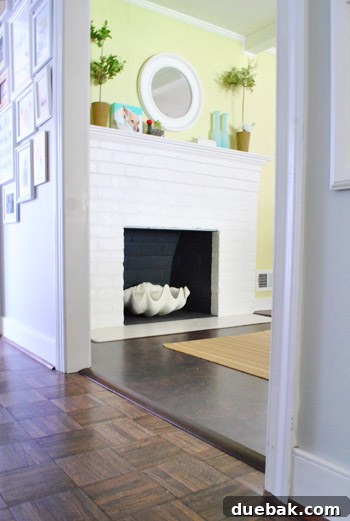
Here’s a view from the hallway, showcasing the fresh transition in that doorway, with the newly trimmed fireplace visible beyond it. Oh, and yes, for those with keen eyes, that is indeed a giant faux clam shell nestled within the fireplace. It was the one item from our Joss & Main collection that we absolutely had to keep for ourselves (you know how much Sherry adores giant fake clam shells!). It’s surprisingly huge and probably weighs twice as much as our daughter, Clara, but oddly enough, at least five of our friends and relatives have asked where they could get one for their own empty fireplaces. Perhaps we’ve inadvertently started a clam-shell-in-the-fireplace movement!
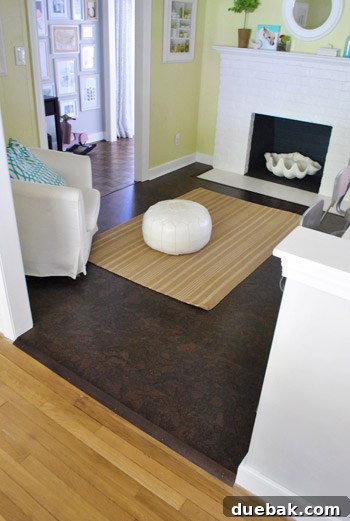
And now, for a grand reveal shot capturing all three freshly transitioned areas at once. Ta-dah! We have officially trimmed our way to a completed cork floor, making our kitchen and dining areas feel truly finished. Please excuse the placeholder rug you see there; it’s a leftover from our very first kitchen, but we’re hopeful to replace it with something perfectly suited to the space someday soon.
Your Transition Adventures?
Have you embarked on any floor transition adventures in your own home? Or perhaps you have some stubborn doorways or tricky areas that need a finishing touch? We were genuinely surprised by the scarcity of cork transition-specific posts online when we started this project. It highlights how unique challenges often require a bit of DIY ingenuity and sharing experiences. So, in the timeless words of Keenan Thompson: “What up with that?” Share your stories and tips in the comments below!