
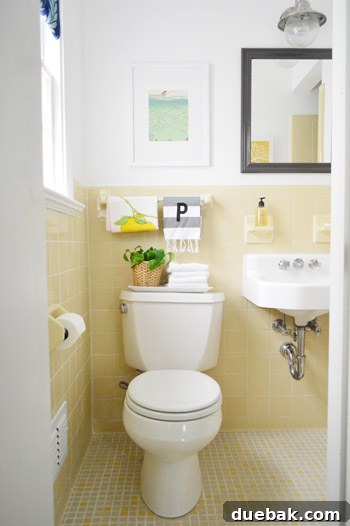
Q: You’re putting time and energy into this “temporary” job for your bathroom (not to mention some money), so why not just go ahead and do the full gut job? I know you guys watch money really well, but isn’t this not the most cost-effective in the long-run? 🙂 – Karen
A: Great question. We love saving money, but we also like making an old house feel comfortable and lived-in. Here’s our perspective. Like Karen, many people instinctively want to wait and do a full renovation all at once. We felt the same way when we first moved into a house. It was tempting to freeze a room until we had the budget for a complete redo.
Over time we discovered that a small, strategic “Phase 1” investment—some paint, a new mirror, or a quick flooring fix—can be worth it. These modest improvements make a space livable and pleasant while you save for a full renovation, and they often help you learn what really matters before you commit to a major gut job. If you discover what you don’t like in the middle of a full renovation, that can be expensive and time-consuming. A temporary upgrade lets you test ideas affordably.
Take our current bathroom project: we’re planning a Phase 1 update that will cost roughly $100–$200. We couldn’t stand the old carpet another day, so removing it and adding inexpensive touches made sense. A few cans of paint and a new mirror can transform a bathroom and those items can be reused elsewhere later. (The image we used is a digital rendering of our plan, and next week we hope to have the floors stenciled.)
Why not just gut it right away? From our first house experience we learned that living in a space for a while gives you time to figure out what will truly improve it. In our first kitchen, we lived with the layout for months and eventually realized that closing a door would free up a significant amount of counter space. If we had rushed into a full reno immediately, we would have missed that insight and ended up with new cabinetry but the same cramped layout.
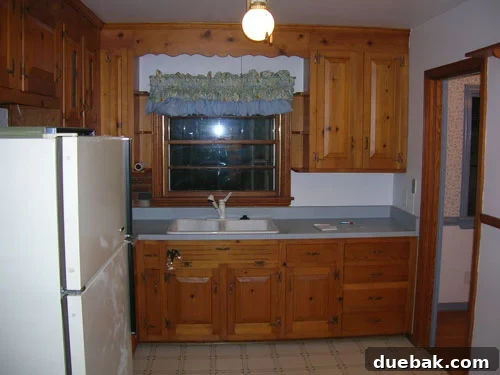
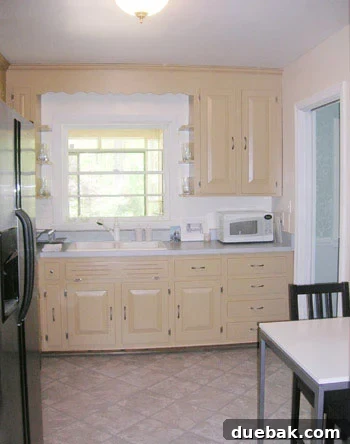
Soon after moving in we did a modest Phase 1 makeover: painted the cabinets and installed peel-and-stick flooring, and we updated a few appliances we later reused during the full renovation. The Phase 1 work cost about $150 for primer, paint, and flooring. It took a couple of weekends, but the payoff was immediate: we had a fresher, cleaner kitchen for over a year while we planned and saved. We even hosted a backyard wedding and 75 guests during that time—so living with an updated space really mattered.
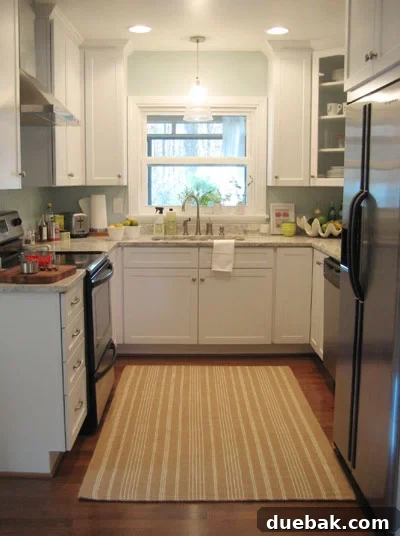
When the time was right we completed the full renovation and were glad we had taken the phased approach. Spending time planning and saving led to a kitchen that worked far better than anything we could have improvised immediately after moving in.
We followed the same pattern in the bathroom of that first house. It started with carpet and crocheted decor…
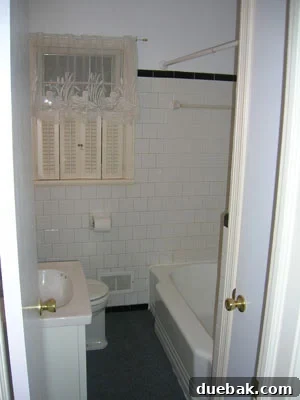
…and we performed simple updates such as pulling up carpet, re-caulking, painting, and adding art, lighting, and accessories to make it livable for a few years.
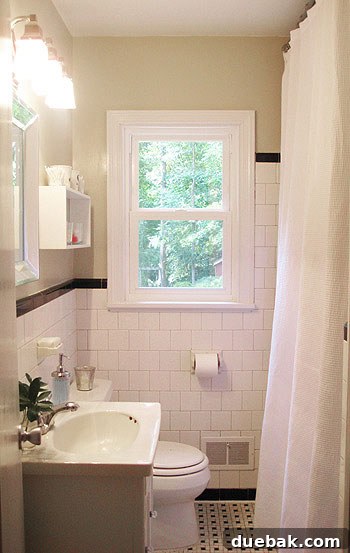
Ultimately, tile and flooring were cracked beyond repair, so when we had the budget a few years later we completed a full gut renovation. Because we’d taken time to plan and refine our ideas, the full bathroom redo cost around $1,800—including rebuilding walls and trim, installing a marble tile floor, new fixtures, a tiled tub/shower, and a custom vanity—which felt like a great value for a room we carefully designed and truly loved.
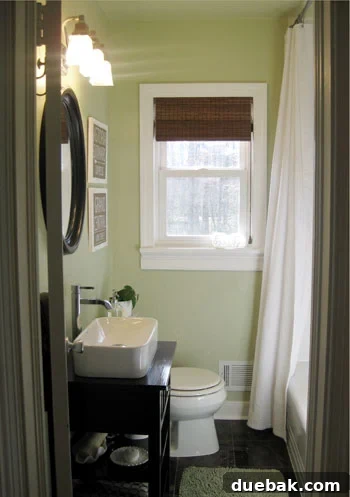
We’ve been using this phased approach for years—over seven now—and we expect most rooms in our current home will follow a similar progression. We plan to stay here long-term, so we don’t want to rush major decisions. That doesn’t mean we must live with dated finishes indefinitely; a coat of paint, new light fixtures, or updated faucets can make a space feel fresh while we save and refine our long-term plan.
Experimenting in a real space—rather than only imagining changes—helps you determine what works. In our first house bathroom we made some design missteps (painting a windowsill black and hanging a blue pashmina taught us what we didn’t like), and we corrected course. Those early experiments led to an interim space we could enjoy, and later to a full renovation we loved even more.
Small updates can add up to big gains. In some cases, Phase 1 improvements reveal that a full gut job isn’t necessary—saving money and effort. For example, our $51 guest bathroom mini-makeover involved paint, a window treatment, art, and removing an awkward mirror, and it transformed the room without major construction. Another hall bathroom update cost only $168 and produced a fresh, finished look by framing the mirror and adding a built-in shelf while keeping the existing tile.
The advantage of this method is flexibility. If Phase 1 fixes the problem, you’re done and probably relieved you didn’t jump into a full renovation. If Phase 1 is merely a stopgap, you still gain time to save and plan while enjoying a more comfortable space. That interim experience often clarifies what still bothers you—layout issues, damaged tile, or inadequate counter space—so when you do start a major project you do it with better information.
How do you strike a balance between wanting a cozy, updated space and avoiding big expenses you can’t afford? Everyone’s approach differs. Some people freeze a room and wait, while others sprinkle affordable updates along the way. We still have rooms waiting their turn, but we focus first on spaces that feel unbearable until they get a Phase 1 intervention.
Update – Want to know where we got something or which paint colors we used? Click the button below.
