
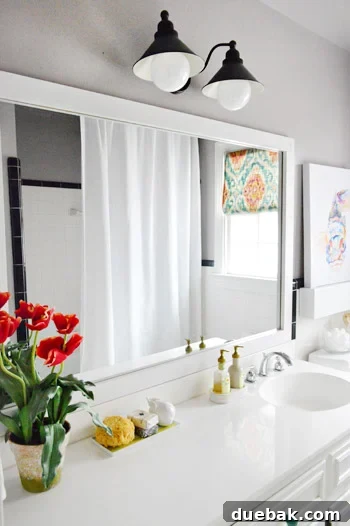
Transform Your Bathroom: DIY Frame for a Builder-Grade Mirror
Have you ever looked at your plain, unframed bathroom mirror and wished it had a little more character? We certainly have! That ubiquitous builder-grade mirror, while functional, often leaves bathrooms feeling unfinished and lacking personality. But fear not, a significant transformation doesn’t require a total overhaul. One of the most impactful and budget-friendly ways to elevate your bathroom’s aesthetic is by adding a custom frame to that existing mirror. This project not only brings a touch of sophistication but also masks any imperfections and integrates the mirror seamlessly into your decor scheme.
Why Upgrade Your Builder-Grade Bathroom Mirror?
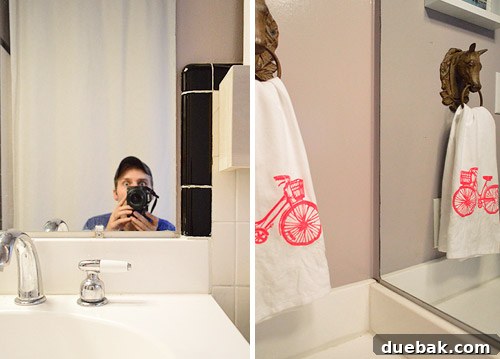
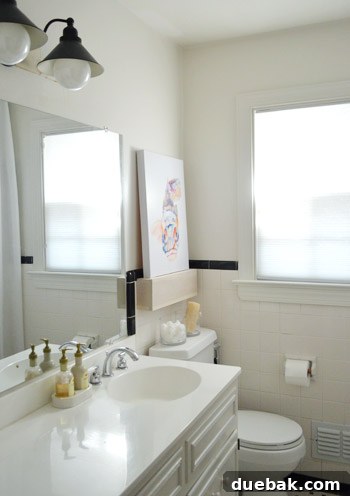
A bare, frameless mirror is a hallmark of many standard builder-grade bathrooms. While practical, it rarely adds to the room’s design appeal. Adding a frame instantly upgrades the space, making the mirror feel like a deliberate design choice rather than an afterthought. This simple enhancement can significantly impact the overall feel of your bathroom, making it appear more custom, luxurious, and cohesive. It’s an especially smart move if you’re content with your existing tiles and don’t plan a full gut renovation. For us, our classic black and white tiles were in excellent condition, so a mirror frame was the perfect touch to complete our hall bathroom mini-makeover.
While there are fantastic companies like MirrorMate that offer convenient, ready-made framing solutions, we, as avid DIY enthusiasts, were eager to tackle this project from scratch. We believed it was a straightforward task, despite the tight space around our mirror that presented a unique challenge for attaching the frame. But as any DIYer knows, a good challenge often leads to the most satisfying results!
Our Journey to a Framed Mirror: A DIY Adventure
Our goal was a clean, modern, and yet substantial look. We decided against overly ornate moldings or intricate window trim, opting instead for a super simple, flat, chunky piece of wood. This choice offered several advantages: it wouldn’t compete with other interesting design elements in the room, such as our patterned window shade or the new vanity knobs. Plus, it perfectly complemented the nearby chunky shelf, creating a harmonious and balanced aesthetic throughout the bathroom.
Gathering Your Materials & Tools
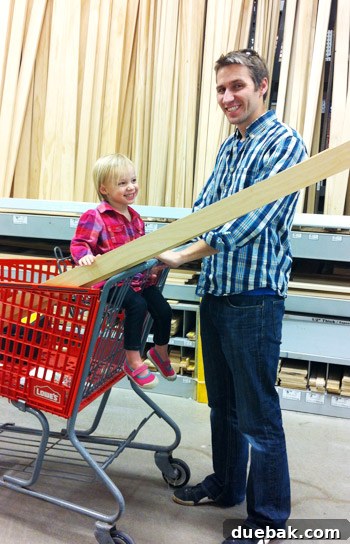
For this project, we selected 1 x 3-inch pieces of pine, cut to the precise lengths needed for our mirror. The total material cost was incredibly low, just $14! We sourced these from our local hardware store. Beyond the wood, you’ll want to gather the following tools and supplies:
- Pine boards (1×3 recommended)
- Miter saw (or miter box with hand saw)
- Measuring tape and pencil
- Safety glasses
- Drill with various bits (small pilot bit, larger bit)
- Dremel tool (optional, for cleaner notches)
- Flathead screwdriver and hammer (for router-less notching)
- Kreg Jig (or alternative joinery method like wood glue and clamps, or brackets)
- Wood screws appropriate for Kreg Jig
- Wood putty
- Primer and paint (Benjamin Moore Decorator’s White, semi-gloss recommended)
- Small foam roller or paintbrush
- Silicone caulk
- Painter’s tape
- Heavy-duty screws (for wall mounting)
Precision Cutting for a Perfect Fit
The first step was to cut the pine pieces to frame the mirror. Achieving crisp, professional-looking corners is key here. I used my miter saw to cut each corner at a precise 45-degree angle, allowing them to join together flawlessly for a clean mitered edge. If you don’t own a miter saw, don’t worry! You can achieve a similar effect with a miter box and a hand saw. Alternatively, you could opt for a simpler butt-joint frame, similar to the chalkboard frame we previously built, where the end pieces butt against the side pieces. This method is often easier for beginners and still yields a great result.
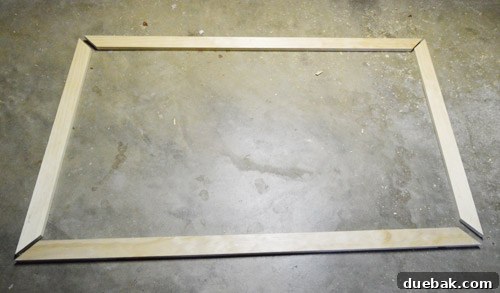
Conquering the Clips: The Notching Challenge
One of the main challenges in framing a builder-grade mirror is accommodating the plastic clips that hold it to the wall. These clips protrude slightly, meaning a flat frame won’t sit flush against the mirror unless you create notches in the wood. I carefully marked out where these clips would hit on the back of the frame pieces. To ensure sufficient wiggle room during installation, I decided to make these notches generously sized – roughly twice as tall and twice as wide as the clips themselves. This slight oversizing helps ensure the frame can be easily positioned without binding on the clips.
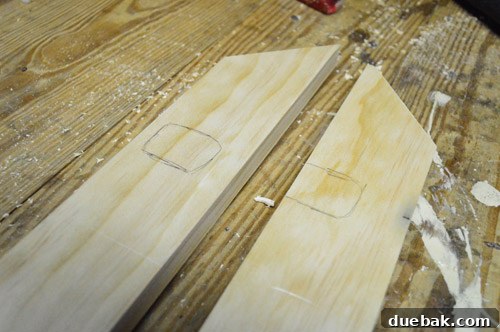
DIY Notching Without a Router: Step-by-Step Guide
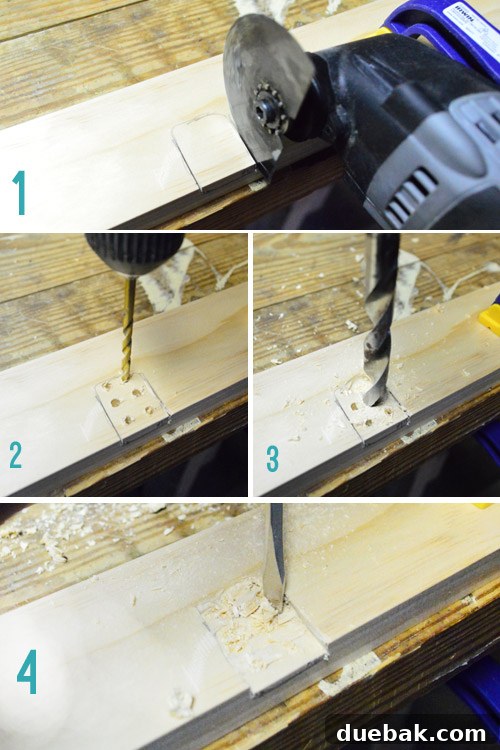
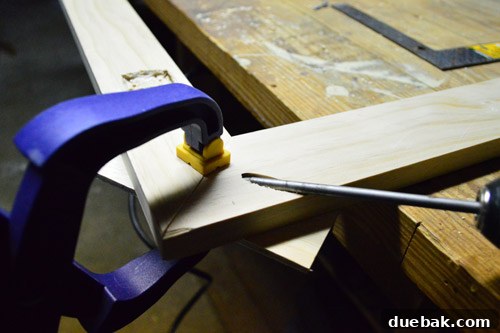
If the mention of a “router” made you cringe because you don’t own one, you’re in good company! My router was out of commission during this project, so I had to improvise. The good news is, you absolutely don’t need a router for these simple, shallow notches. Here’s a foolproof method using common household tools:
- Define Your Edges (Optional but Recommended): For a cleaner result, I used a Dremel tool to make shallow grooves along all four sides of my marked notch. This creates a guide and helps prevent the wood from splintering excessively. If you don’t have a Dremel, you can skip this step – the notches will still function perfectly.
- Pilot Holes Galore: Grab a small drill bit and make several shallow pilot holes within the marked notch area. Keep these holes relatively close together. The goal here is to remove as much material as possible, making the next steps easier. If all you have is a drill, you’re already well on your way!
- Expand the Holes: Switch to a larger drill bit and go back into each pilot hole. As you drill, the larger holes will start to merge, removing more wood and forming the basic shape of your notch.
- Chip Away Residual Wood: Finally, use a flathead screwdriver and a hammer to gently chip or pry away any remaining wood chunks that the drill couldn’t reach. Work carefully to avoid damaging the surrounding wood.
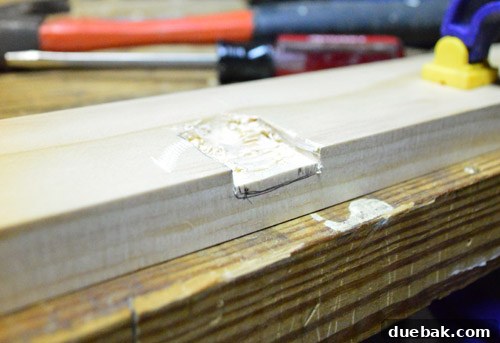
While this method might not produce the perfectly smooth finish of a router, it’s incredibly effective for these simple, concealed notches. Remember, these notches will be hidden by the mirror clips themselves, so perfection isn’t paramount. This particular notch shown in the image below runs along the bottom of the frame, which means it will be completely out of sight once installed.
Assembling Your Frame: The Kreg Jig Advantage
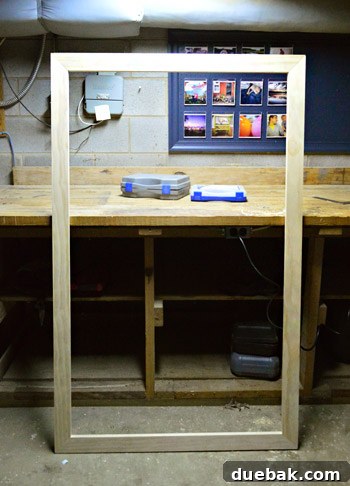
With all four notches successfully created (one for each clip), it was time to assemble the frame. I used my trusty Kreg Jig to create strong, concealed pocket holes for joining the corners. This method provides incredibly strong joints and allows for a clean, screw-free exterior finish. If you don’t have a Kreg Jig, you can still achieve sturdy joints using wood glue and clamps, reinforcing with small nails or screws, or even using corner brackets on the back side for added strength.
And just like that, our raw wooden frame was complete!
The All-Important Test Fit
Before moving on to painting, we brought the assembled frame inside for a crucial test fit. This step ensures that the frame is perfectly square and, more importantly, that our carefully carved notches align correctly with the mirror clips. This pre-installation check saves a lot of headaches later on. The image below provides a clearer view of how the notches snugly accommodate the clips, proving that even “unpretty” notches do their job perfectly once the frame is in place and discreetly hidden from view.
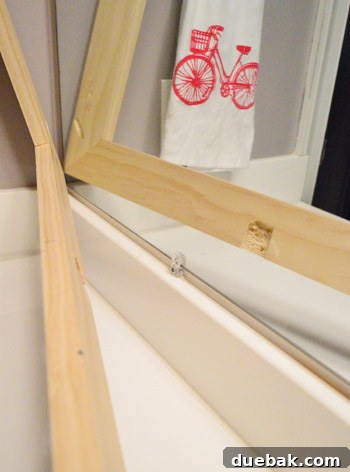
It fit perfectly! What a relief.
Priming and Painting for a Flawless Finish
With the fit confirmed, it was time for the finishing touches. After a day of drying and curing, I primed the entire frame to ensure excellent paint adhesion and a smooth finish. For the final coat, we chose Benjamin Moore’s Decorator’s White in a semi-gloss sheen. Using a small foam roller helped us achieve a beautifully smooth, brushstroke-free surface that looks incredibly professional. While we were at it, we also decided to repaint the previously grey-washed shelf in the background to match the new crisp white frame, as Sherry had mentioned in this post. This small detail ensures a cohesive and polished look throughout the bathroom.
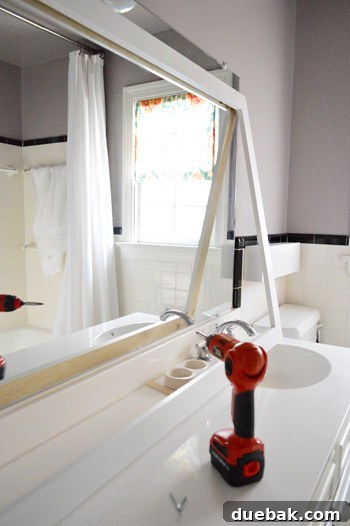
Secure Installation: Beyond Just Adhesive
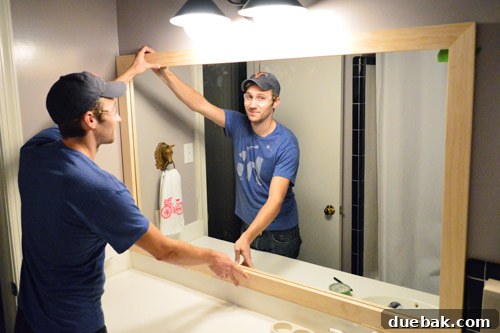
Many DIY mirror framing projects rely solely on heavy-duty caulk or construction adhesive to attach the frame directly to the mirror. However, after a previous less-than-successful attempt at gluing something to a mirror, I was understandably wary of this method. We prioritized security and opted for a more robust attachment. When we initially measured and cut our frame, we made sure it slightly overlapped the top edge of the mirror. This was strategic: the top edge was the only side not obstructed by a wall, the counter, or tile. This overlap allowed us to drive a couple of strong screws directly through the top of the frame and into the wall studs, securing the entire assembly firmly without risking damage to the mirror. The frame itself was relatively light, so heavy-duty anchoring wasn’t necessary, but stability was paramount.
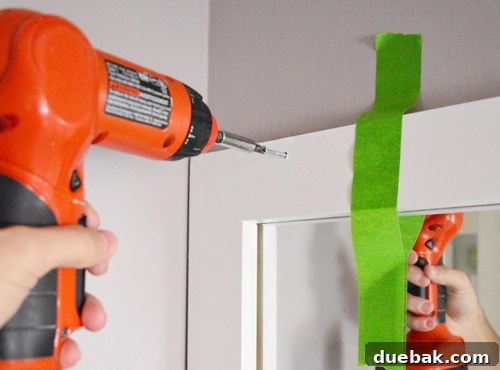
To ensure the bottom of the frame stayed perfectly flush and didn’t “flap out” over time, we applied a few small dots of clear silicone caulk between the bottom edge of the frame and the mirror. This provides a gentle, yet firm, bond to keep everything in place. We then taped the bottom edge of the frame to the mirror until the caulk fully dried and cured, ensuring a long-lasting hold. This dual-attachment method (screws at the top, caulk at the bottom) provides maximum security and peace of mind.
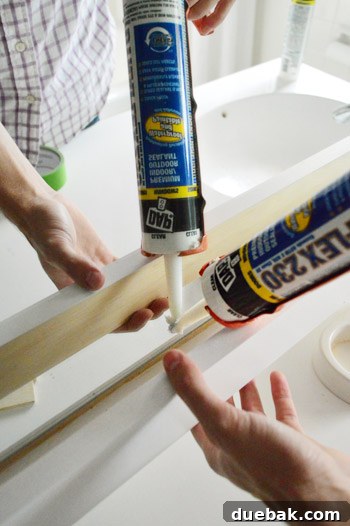
It’s been a few days since installation, and the frame is holding strong, even after several steamy baths for Clara. Success!
Once the caulk had completely dried, we simply filled the two screw holes at the top with wood putty, sanded them smooth, and painted over them with the matching Decorator’s White. The result? A completely seamless, custom-built look.
The Stunning Transformation: Before & After
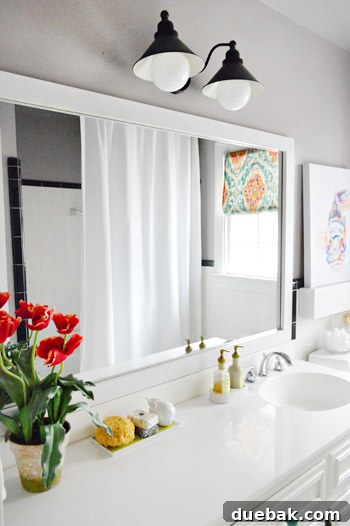
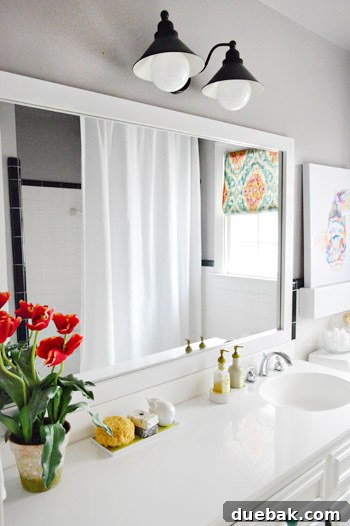
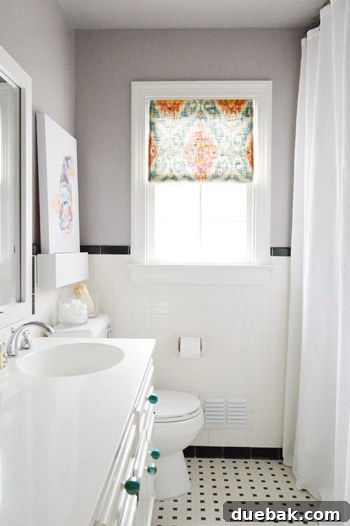
Can you believe the difference? This “after” shot speaks volumes about the power of a simple frame. It’s a remarkably cleaner and more finished aesthetic compared to its previous bare state:
Even for a relatively simple design, we are incredibly pleased with how this frame polished off what was once a large, somewhat awkward unframed mirror. Interestingly, in person, the framed mirror makes the room feel taller. It somehow draws the eye upwards more effectively than the frameless mirror did, creating a nice visual balance, especially with our extra-tall shower curtain on the opposite side of the room.
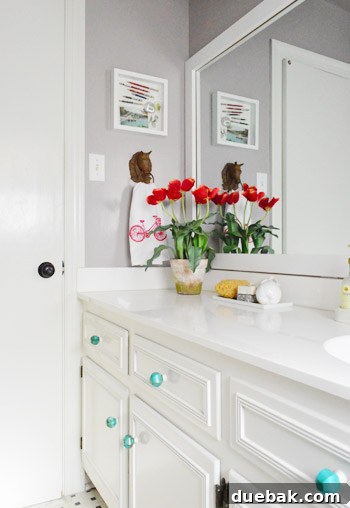
And there you have it! A brand new, custom mirror frame for a total cost of $14 and approximately three hours of dedicated work, including cutting, notching, priming, and painting. This project truly demonstrates that significant visual impact doesn’t always come with a hefty price tag or a complex process.
Our Budget-Friendly Bathroom Refresh: A Detailed Breakdown
With the mirror frame officially completing this phase of our bathroom upgrade, it’s the perfect time for a quick budget breakdown. Our mini-update came in well under our arbitrary mental budget of $200 – a number we often use when we’re not planning a major renovation like replacing tile.
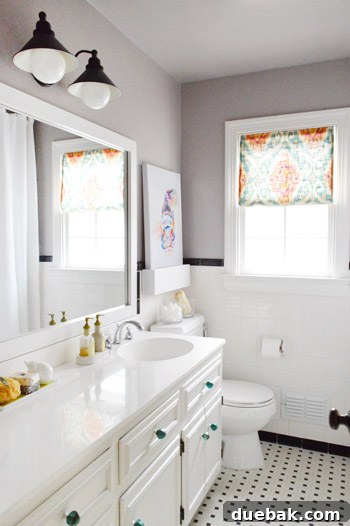
- New light fixture: $61 (from Joss & Main)
- Shelf: $6
- Paint (a quart of Elephant Gray by Benjamin Moore): $24
- Fish art: $30 (from Joss & Main)
- Knobs: $17 (from Hobby Lobby)
- Window shade fabric: $16 for a yard from Mary Jo’s (we used about $8 worth, Sherry has leftovers!)
- Window frosting: $0 (leftover from another project)
- Mirror frame: $14
- Shadowbox: Already owned/made
- Accessories: Already owned
- TOTAL: $168
*(If you didn’t already have a shadowbox, window frosting, and some accessories on hand, your total might be closer to $200-$210.)
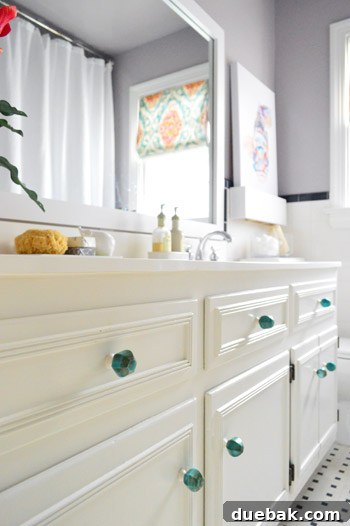
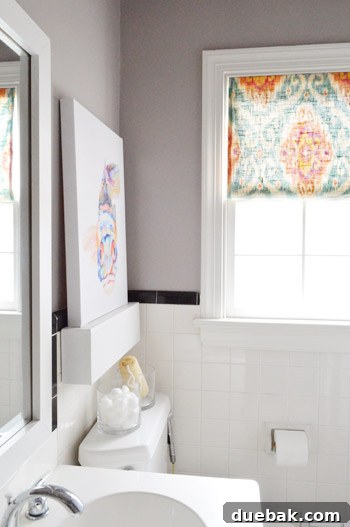
If we had to pick the absolute stars of this room’s transformation, it would undoubtedly be the vibrant window fabric paired with the charming fish art. These two elements inject such life and personality into the space, making us feel confident about keeping everything else in a relatively neutral palette. They truly wake things up!
Reflecting on the Project and Future Plans
So, there you have it. We can officially close the books on this bathroom for now. It’s incredibly satisfying to see how a series of small, budget-friendly DIY projects can culminate in such a dramatic and refreshing change. This space, which once felt so generic, now exudes character and style. While we’ve checked off this room, our DIY journey is far from over. There’s still another untouched bathroom on our to-do list – yes, guest bathroom, we’re looking at you!
And now, much like fans of The Talking Dead fondly recall each fallen zombie (please tell us you watch that!), we’ll take a fond look back at the bathroom that greeted us when we first moved into this house back in 2010. Forgive the less-than-ideal lighting; Sherry snapped this picture right as the moving truck pulled up, moments before we hauled in what felt like five million boxes.
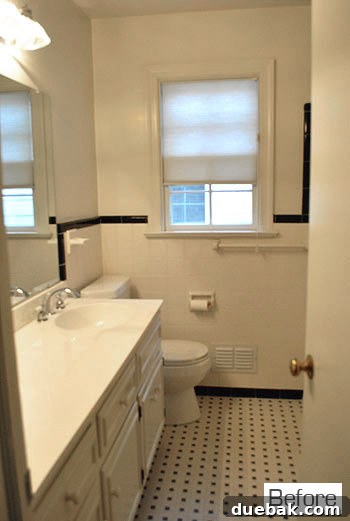
Honestly, I believe this room’s $168 upgrade stands out as one of our most favorite inexpensive room redos to date. Doesn’t the “after” shot truly make it feel like a completely new bathroom, even though we smartly worked with and celebrated the original 1960s tile? It’s proof that you don’t need to demolish everything to create a space you love.
What under-$200 upgrades are you currently tackling around your home? Are any of you creating your own mirror frames, building floating shelves, or embarking on other semi-straightforward DIY projects for your “loo”? As a fun sidenote, I think Sherry’s favorite line in our entire book was, “Who doesn’t enjoy a gussied loo?” So there you have it: a little window into my quirky wife’s soul, and a comprehensive guide to framing your own bathroom mirror!
Update – Interested in knowing where we sourced specific items in our home or the exact paint colors we used? Simply click the button below for all the details you need!