
We’re back with our weekly basement update, and since we’re getting closer to that glorious word—finished—this week’s project is quick and simple. It’s connected to the built-in cabinet to the right of the Ikea workstation we painted last week. That cabinet was bare, but we promised a storage solution. Here it is.
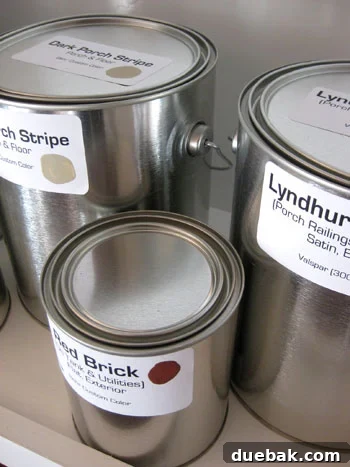
Yes, those are matching paint cans. Call us nerds if you like—fair. We’d been meaning to move our paint from the garage to the basement for a while. The basement’s temperature is much more stable because it’s underground: cooler in summer, warmer in winter. Paint can freeze, dry out, or otherwise deteriorate when exposed to extreme temperatures, so the basement is a smarter long-term storage spot. We used to keep cans in the house until we learned paint can off-gas and affect indoor air quality. A lesser-used basement or garage is a better option for that reason.
We could have dumped all our mismatched, crusty cans on a shelf and called it a day, but we love the organized look of our refreshed basement. We wanted a cohesive, practical storage solution. New, uniform cans not only look better, they also seal more tightly, helping paint last longer—saving us from the yearly casualties of dried-out paint. For a few dollars per can, replacing old lids and containers is worthwhile insurance to preserve $25+ gallons and quarts of paint.
True Value sells empty paint cans in gallon and quart sizes, which turned out to be perfect for unifying our open shelf and keeping paint fresh for years. We’ve worked with True Value before and appreciate the support they’ve given us, so these cans were an easy choice.
Transferring paint into new cans also forced us to sort through old colors and discard hues we no longer need—like that first living-room green or the yellow we used on the front door. We try to pare down, organize, and donate what we don’t use anymore. Repurposing paint gives it a second life and reduces waste. Note: never throw old paint in the regular trash. Take it to a recycling center or donate it to organizations that accept paint donations.
Before buying the empty cans we counted how many gallons and quarts we’d need, then picked up a few extras for future projects. John’s inner “account guy” suggested printable labels from Office Max so we could transfer the name, brand, finish, and formula onto each new can—handy for reorders if a color ever runs low. It felt a bit obsessive, but printing the labels took about 15 minutes and made our organization-loving hearts happy. John even got proud of his paint-labeling skills.
John also followed a pro tip and left a small thumbprint of each color on its label, which is an easy visual check when you need a quick match. The result is attractive, functional open storage that matches the rest of our basement while protecting paint with fresh seals free of years’ gunk. A little paint maintenance saves multiple trips to the store when you only need a touch-up. There’s nothing more frustrating than finding a dried-out can when you only need a tiny bit of paint.
What’s next on the basement list? We still need to obscure our no-privacy windows and build a DIY screen to conceal the unsightly water heater. Those projects will appear next week in what will be the final chapter of our basement makeover. After that we’ll move on to a major bathroom renovation—tile options are already causing late-night conversations and vivid dreams. Any big projects on your horizon before the holidays? Maybe you’re sprucing up for guests or timing renovations around travel plans. Share what you’re tackling.
Update: A reader suggested using a latch-on pour spout that attaches to the lip of a gallon or quart. It helps pour without getting paint around the rim, keeping the can looking new and sealing tightly every time. Great tip—we plan to pick one up.
Psst—If you want to follow our basement makeover from the beginning to nearly finished, you can find the earlier posts in our series covering each chapter of the project.