
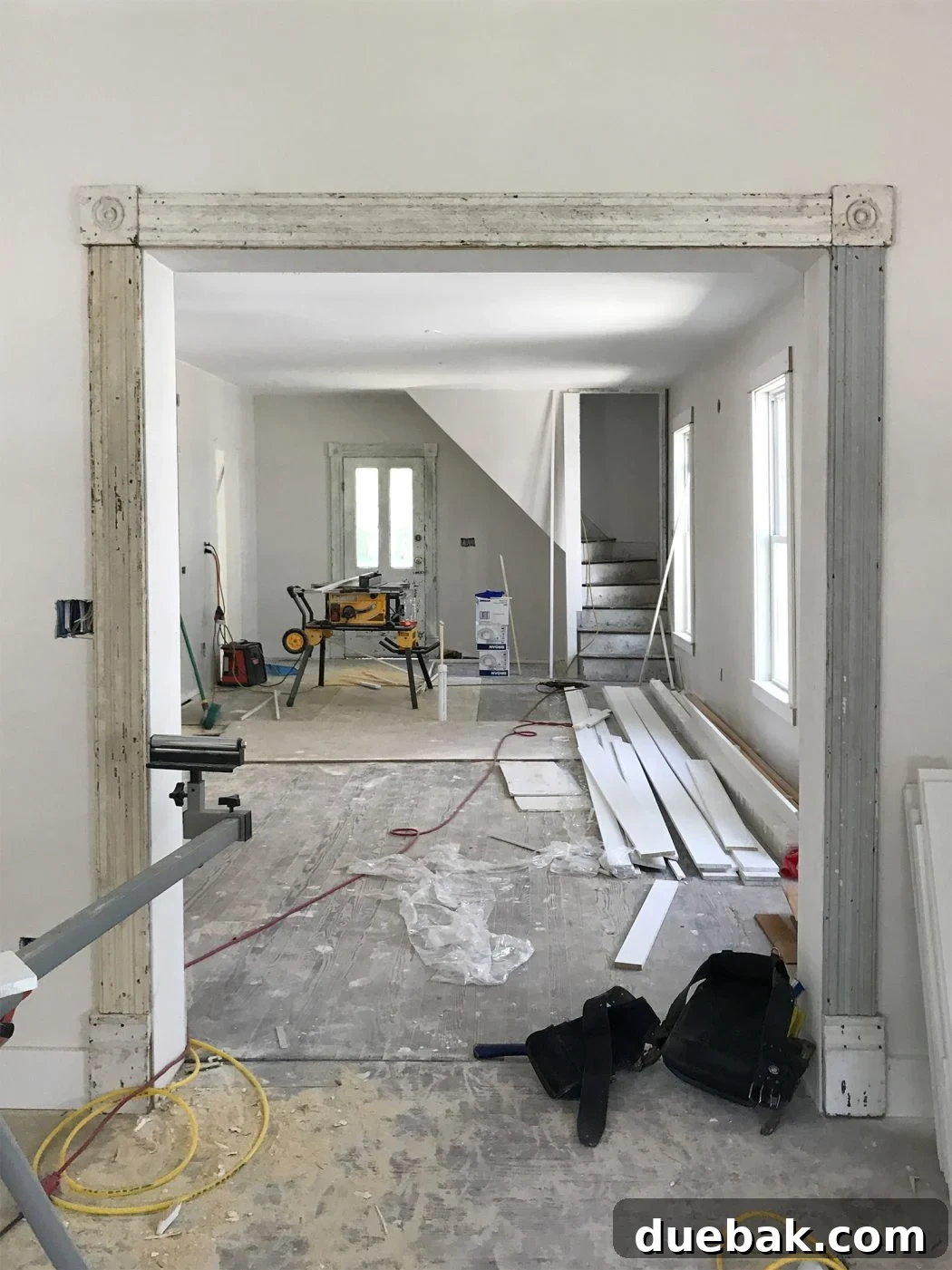
After nine months of steady progress on our beach house, things suddenly feel like they’re moving at lightning speed. This post covers a lot of updates—think of it as a delicious smorgasbord of progress. The foyer photo below captures that “good kind” of busy and messy that comes with renovations.
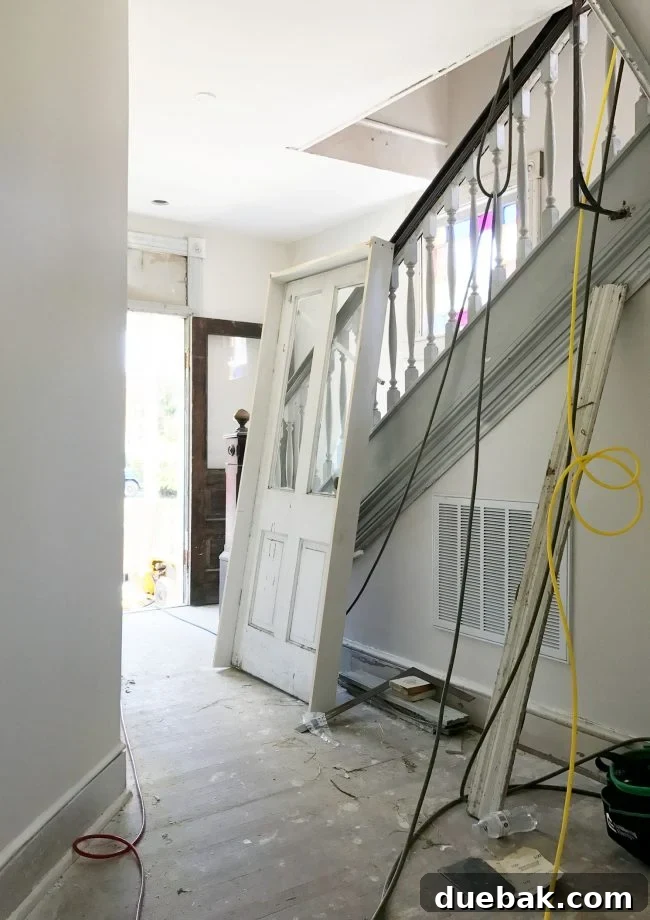
Compared to the true disaster we started with, this is a huge improvement. The not-visible but essential wins include a repaired, stable foundation, a new watertight roof, fresh siding, updated plumbing and electrical, a ready-to-install HVAC system, and clean, mold-free drywall. Small things that make a big difference.
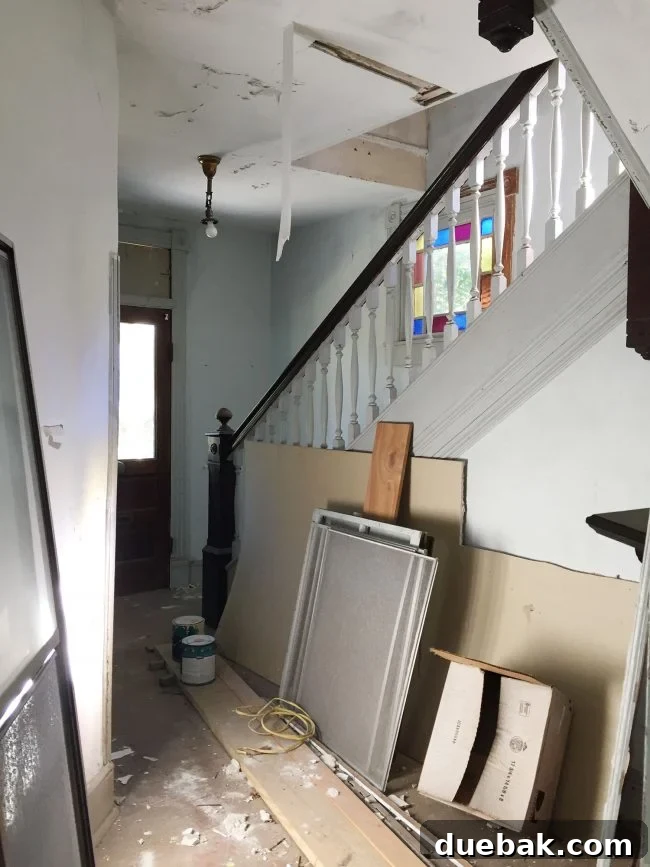
The most complete catch-up is in the video Sherry shot last week—it walks through much of the recent work in about ten minutes. If you’ve been tiling as much as we have lately, ten minutes feels pleasantly quick.
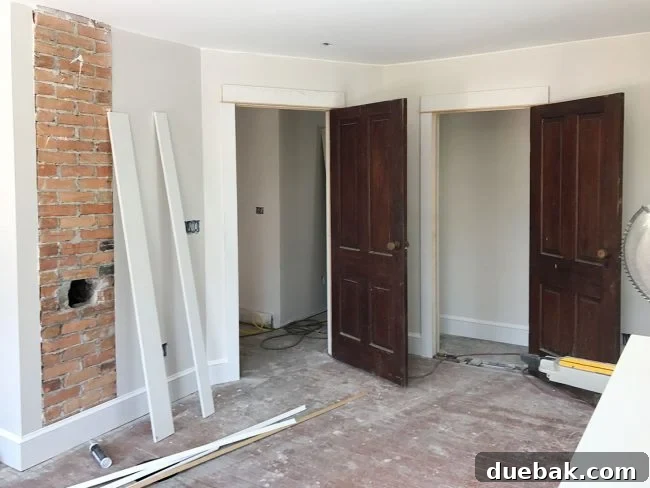
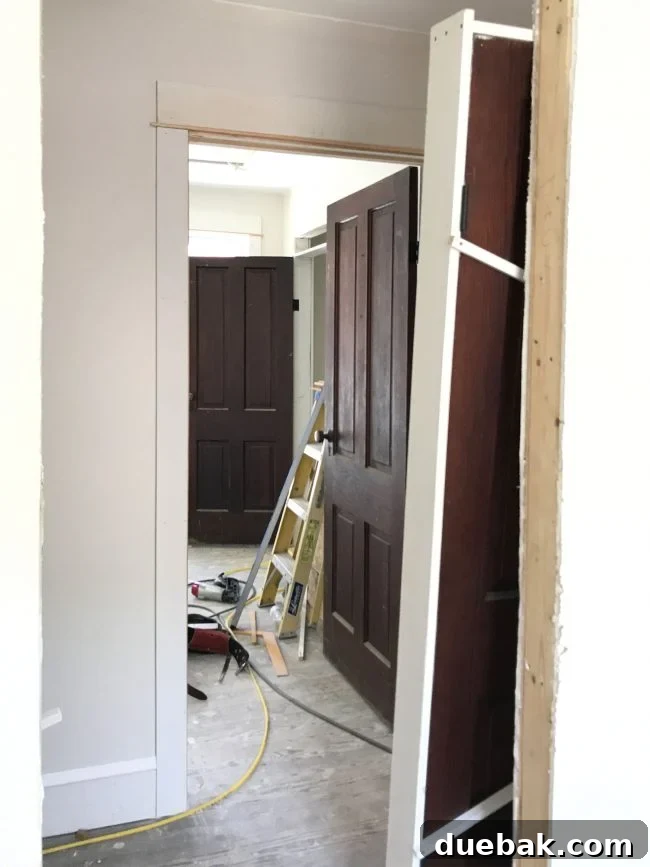
One of the most visually transformative changes has been the addition of trim and doors. Our contractor installed much of it while we were there tiling, so the work pictured isn’t fully finished yet, but you can already see how much more complete the house feels.
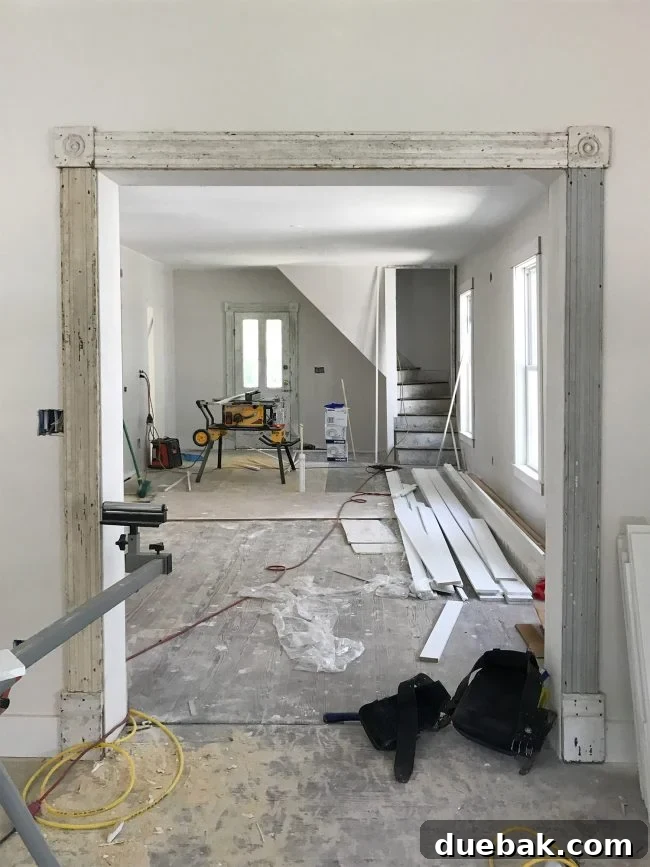
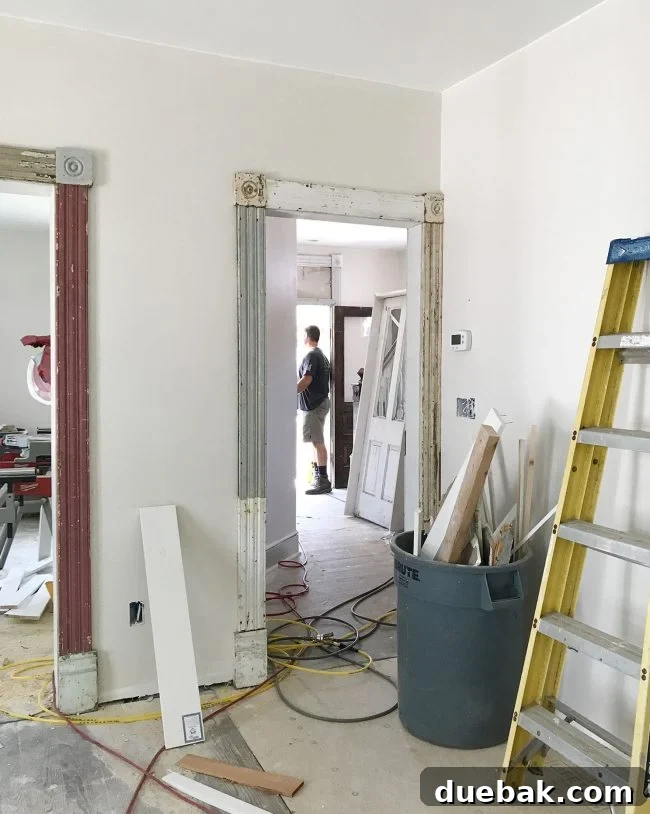
We salvaged as much original trim as possible, but a lot was too rotten to reuse. To make the most impact we prioritized the foyer, all downstairs doorways, and the stained-glass windows by the stairs with the original trim. The rest of the house received a simpler, chunky trim that fits other restored homes in the neighborhood.
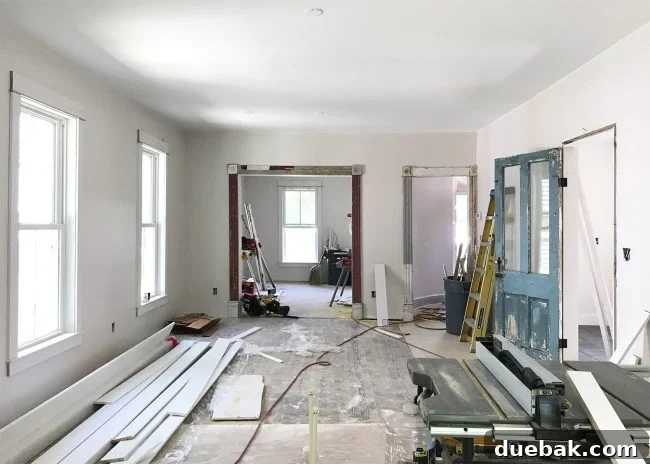
We left trim unpainted during installation by design. The contractor preferred to hang pieces first, then caulk and paint only the pieces that ended up being used, rather than prime and paint a larger set and risk repainting after fitting them. That also allowed us to reconsider color: seeing some of the remaining muted colors—like the soft gray on the front stairs and the pale blue-gray at one doorway—made us rethink painting all the trim bright white. We might match and reuse some of those tones in spots around the house.
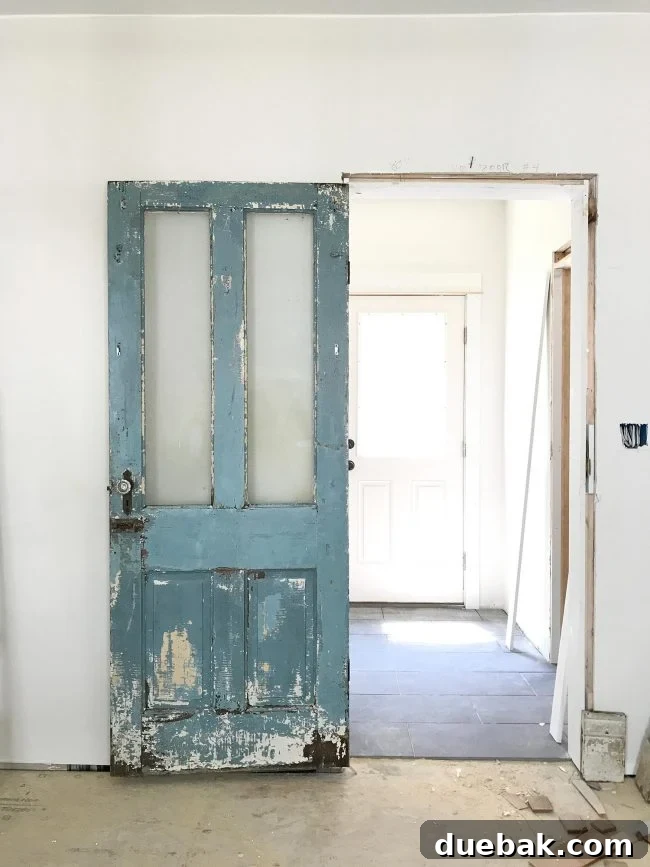
We also rehung original doors. Reusing them actually cost more than installing new pre-hung doors because our contractor had to build new jambs, but the character they bring is worth it. Our favorite is a chippy blue door between the mudroom and the kitchen/dining room. It will usually stay open, and we plan to clean and clear-coat it to preserve its worn look without ongoing chipping issues.
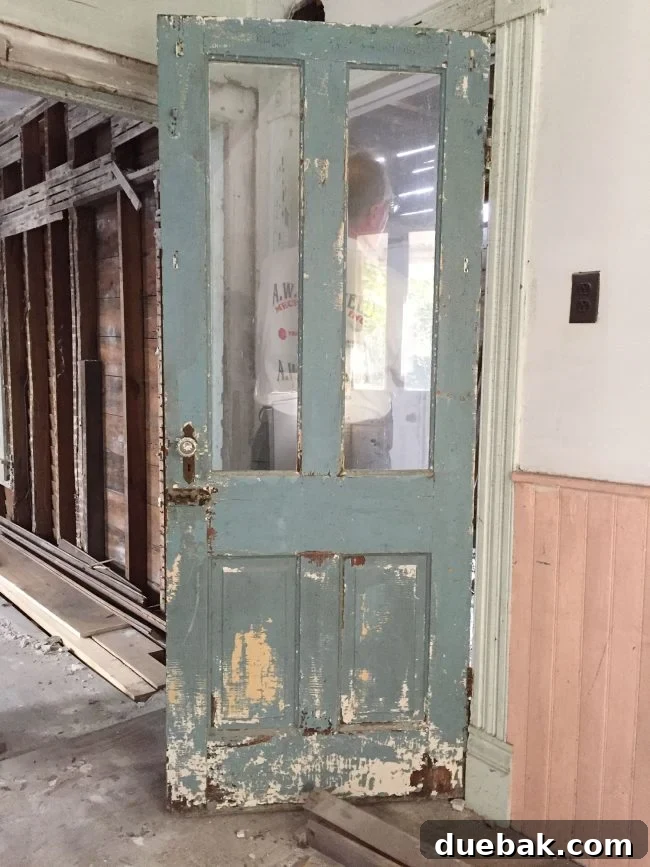
Here’s the door in a “before” photo from when we bought the house—funny detail: our HVAC guy is visible behind the glass in that shot from the fall when he came to quote the job.
Upstairs kept the original wood doors that were there previously. In the front bedroom we exposed a brick chimney behind the walls and left it visible in the living room below as well. The doors are darker and more scratched than we remembered—not in an attractive patina but in a rough, worn way—so we’re weighing options. We could sand and clear-seal to bring them closer to the heart-pine floors, but that’s time-intensive. Painting them a soft gray (matching the foyer stair trim) is another idea while we live with the space before deciding.
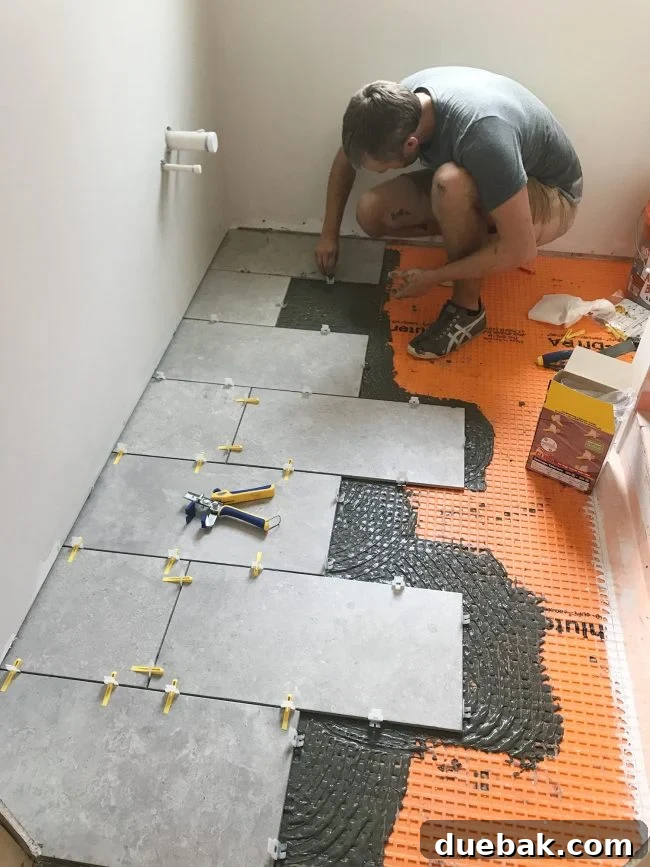
We’ve also been hands-on with tiling. Over two days we spent 19 hours tiling four floors (three bathrooms plus one attached mudroom), then returned to tile three shower pans. We still have three shower walls to tile and all the grouting to do, but tackling tile ourselves is saving us more than $12,000.
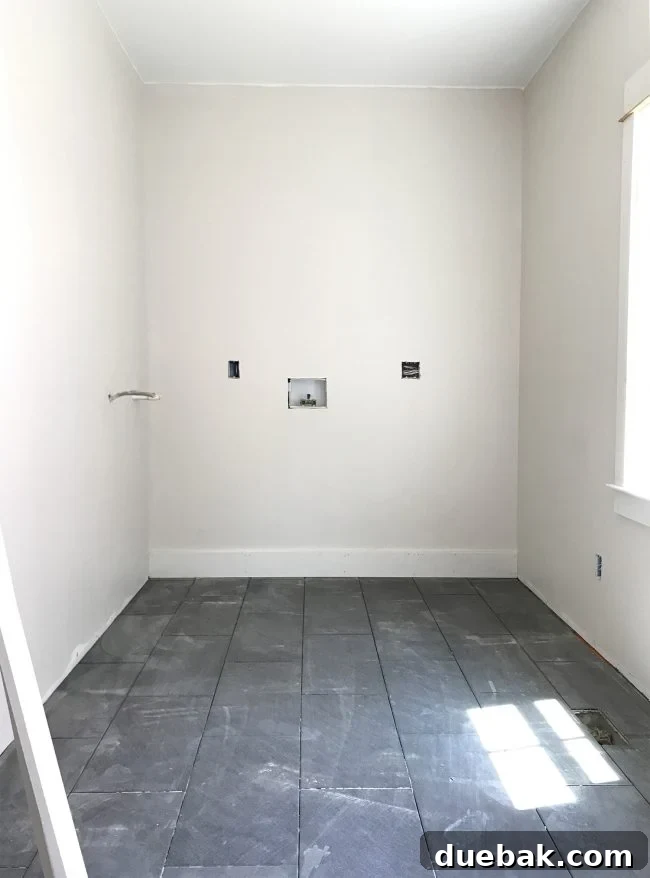
The mudroom and the downstairs full bath share a slate-look 12×24″ porcelain tile for durability and cost-effectiveness. Shower pans used a basketweave tile and the shower walls will get an extra-long white subway-style tile. Upstairs, the hall bath has a warm gray 12×24″ tile that reads almost like concrete; once grouted with a similar color the floor will read more uniform and less contrasted.
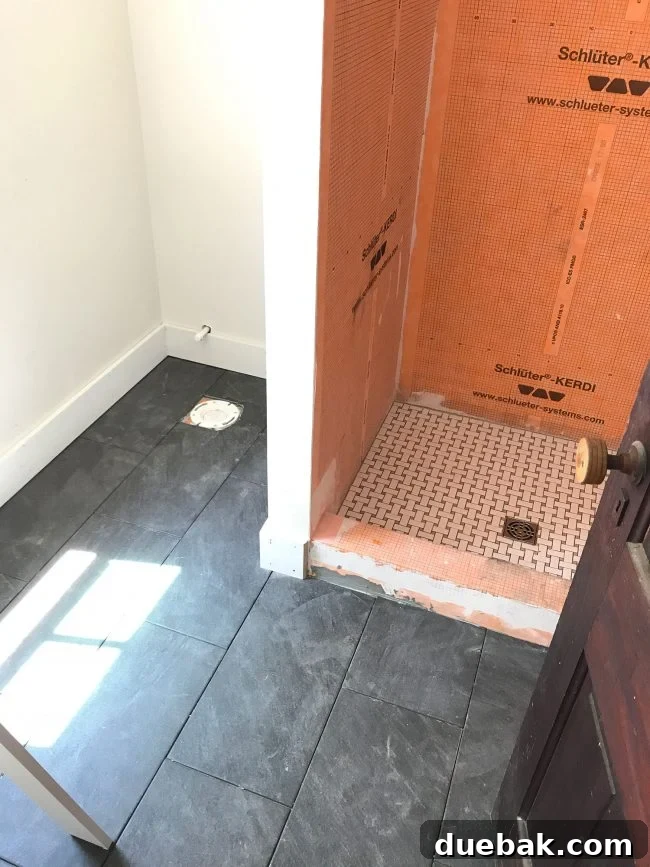
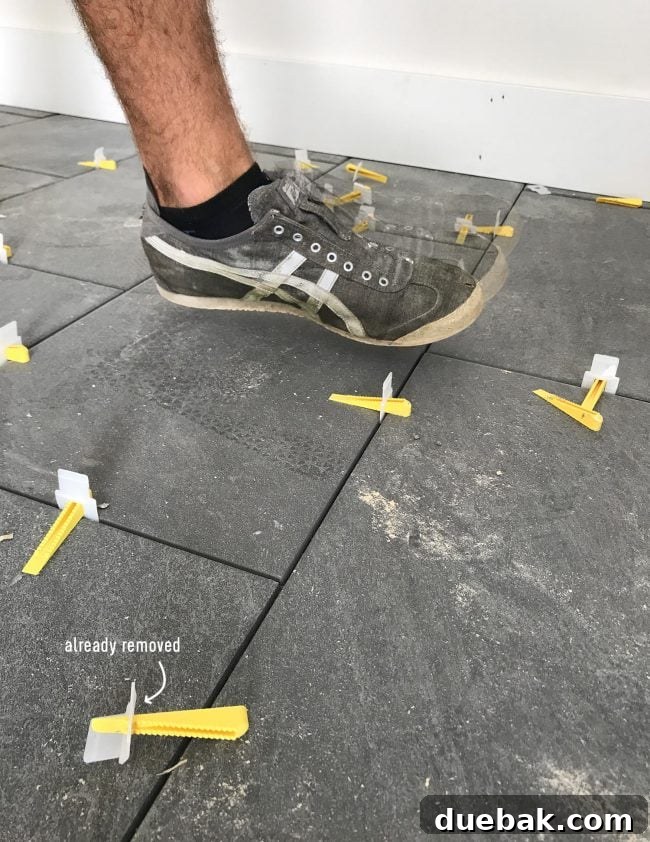
We’re mostly choosing classic tile that fits an old house but still lets us have fun—like the patterned blue accent tiles we added in the master bathroom. For substrates, our contractor recommended the orange Schluter system instead of cement board, and we used the LASH leveling system to prevent lippage on large-format tile. The plastic clips and wedges made getting perfectly level tiles fast and reliable; once set, the clips snap off below the tile line.
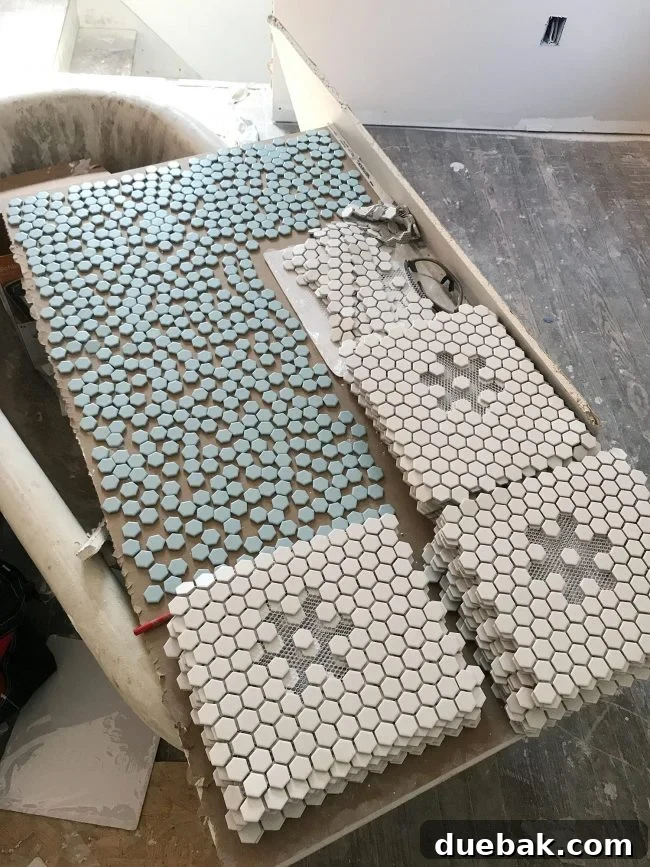
The upstairs master bathroom was our most time-consuming tile project. We installed vintage-style black-and-white hex sheets but replaced the black floral tiles with blue ones for a unique look. We prepped tiles on a temporary work table, dry-fit layouts to confirm the staggered pattern we preferred, then set everything in place—sometimes working after sunset by headlamp and phone flashlight.
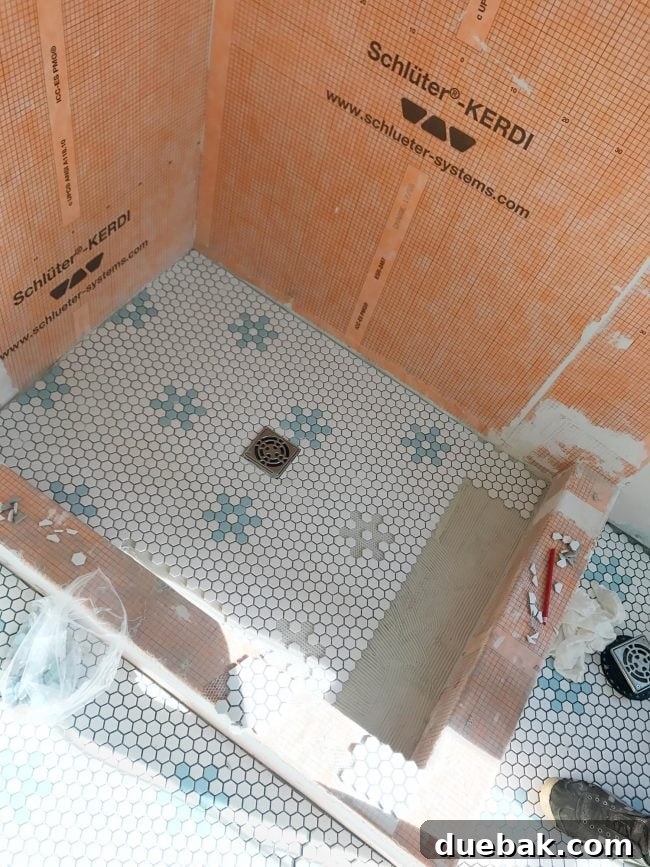
We extended the floor pattern into the shower pan so the visual flow continues into the glass-enclosed shower—aligning the pattern took patience, but it looks cohesive now and will read even better once grouted.
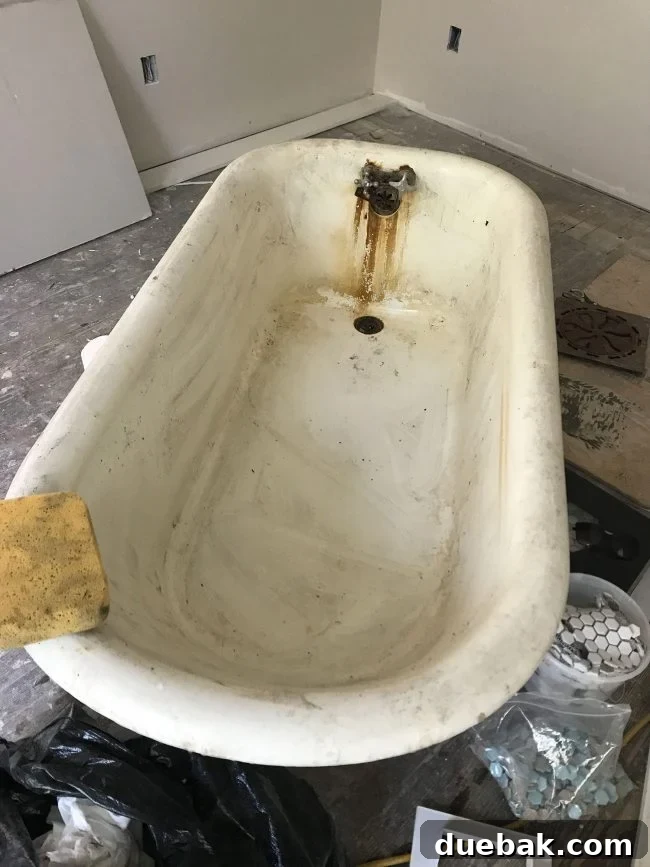
We also did an initial clean of the original clawfoot tub. With water and a sponge we removed much of the surface mineral staining and dust, and even some rust came off to reveal the white cast-iron underneath. We’re hopeful it can be reused without reglazing; if the basin responds well to a deeper clean, we’ll retain the original finish and simply prime and paint the tub’s exterior.
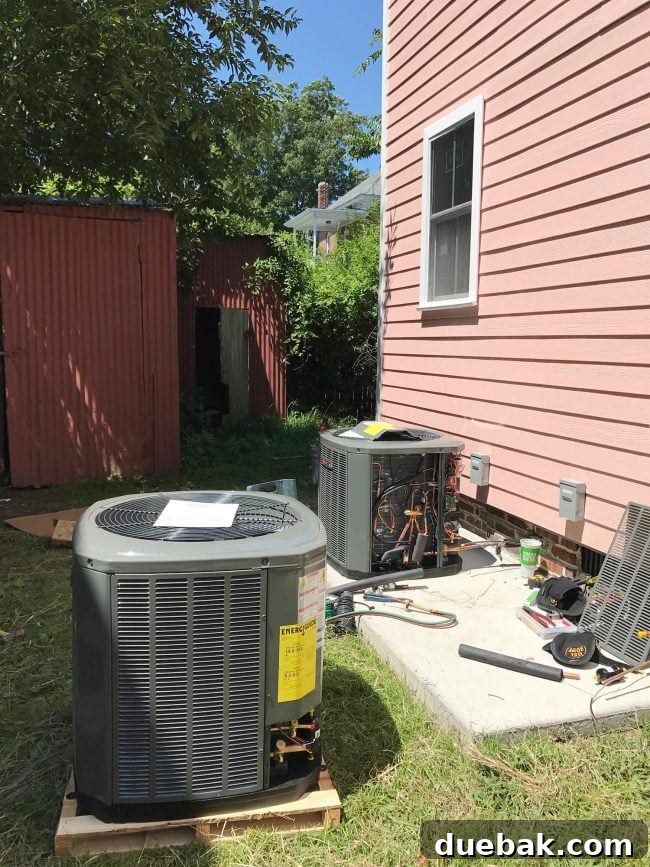
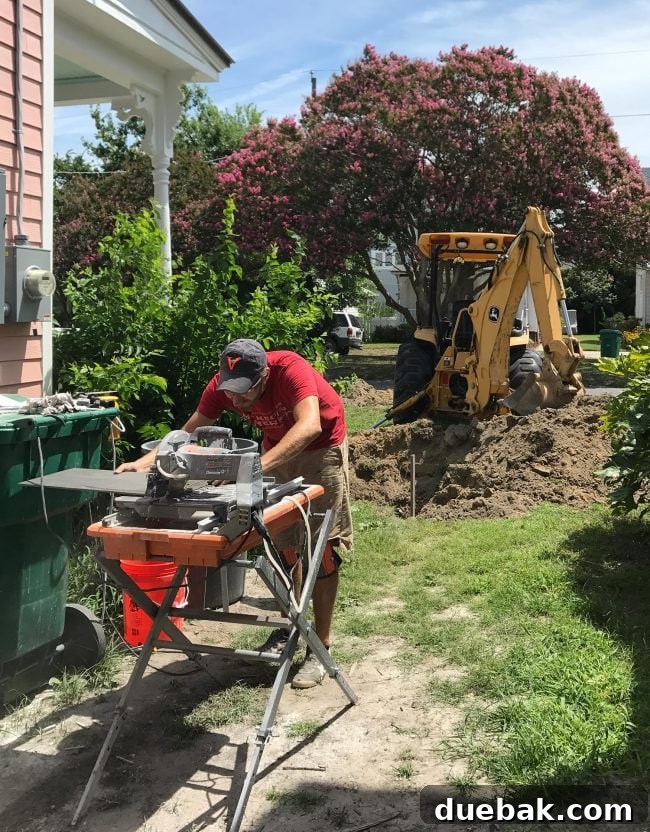
Big mechanical milestones, too: the HVAC company installed the outdoor A/C units, so we’ll be able to cool the house soon—a welcome relief for anyone who’s tiled on a 90-degree day. Even better, the town installed our long-missing water meter, and the plumber is working to hook us up. Decades-old quirks meant the original meter had been located several houses away on a different street, requiring a lot of investigative digging to find and repair an existing line. The town located an old line in front of our house and repaired it so we can finally have a proper water service in our yard.
All in all, it’s the good kind of mess—progress everywhere and momentum building.
If you want to review past beach house updates we’ve posted, check the earlier posts on drywall, the vintage stove, exterior progress, floor plans, color choices, style inspiration, and our initial “before” tour. We continue to document the project as it moves forward.
*This post contains affiliate links