
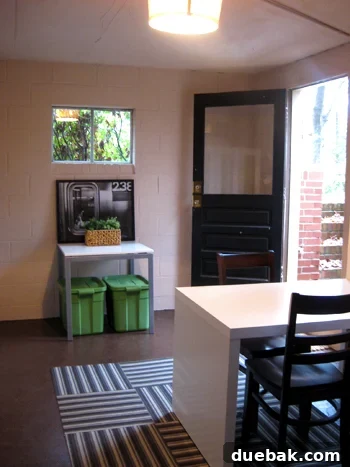
We transformed a grim, damp basement into a clean, functional storage room and here’s the full recap of how we did it.
At first the space looked like a spooky jail cell: unsealed cinder block walls let moisture seep through whenever it rained. It never flooded, but the slow oozing created damp floors and mildew, which made the room unusable for storing anything sensitive. Our first step was to kill the mildew with a bleach-and-water solution and then seal everything with two thick coats of oil-based Drylok on both the cinder block walls and the concrete floor. That solved the moisture problem completely — we even weathered a long stretch of storms and a Nor’easter without any leaks. (Drylok is strong stuff, so use a respirator and good ventilation when applying it.)
Next, we painted the concrete floor with a chocolate-brown floor paint for a rich, durable finish. The combination of the tan Drylok and the dark floor paint not only sealed the room but also made it look much more inviting. After the sealing and paint cures, we moved on to planning the layout.
Because this basement was intended primarily for storage, we needed a practical, budget-friendly floor plan that would accommodate large items like sporting gear, seasonal decorations, and our artificial Christmas tree. We settled on a setup that included two armoires for concealed storage, a bookcase for open storage, and a worktable so we could sort boxes without crouching on the floor. We used graph paper to sketch the layout and confirm placement before buying anything.
The shopping list was simple and low-cost: an Expedit shelf and desk (as part of a workstation), two Aneboda wardrobes, several white and green storage boxes, and a Torsby table we already owned. In the end we came in under budget for the furniture, spending $344 total on the Ikea pieces and storage boxes. For that price we furnished a 19′ x 13′ room with plenty of storage — a great value compared to typical armoires that can cost several hundred dollars each.
We added a tiled area rug made of modular carpet squares donated by Flor, which gave the floor pattern and a low-pile, durable surface that handles wet, leafy feet well. A bike rack from Target maximized vertical space and kept bikes off the floor. To replace the bare ceiling bulb, we inverted a $25 lampshade from Target and mounted it over the ceiling fixture for a softer, more polished look.
For flexible privacy around the water heater, we built a folding screen from secondhand bi-fold doors found at a Habitat For Humanity ReStore for $18. Hinged together and painted a bold green (color-matched to a popular paint sample), the screen hides the water heater while remaining easy to move for access to the other side of the basement.
Organization was a major focus. We stocked the armoires and shelves with lots of large plastic bins for seasonal items, and used inexpensive colorful bins that slide neatly under the table. To tidy up the semi-sheer wardrobe doors, we adhered wrapping paper with double-sided tape to obscure the bins and add pattern — a $6 solution that made a big visual impact.
We also set up a small paint center in the basement. Many of our old paint cans were sticky and poorly sealed, so we transferred paints into new metal containers with secure lids and labeled them at an office supply store. The organized, matching cans are now easy to identify and keep for long-term touch-ups. We added a cheap paint pour spout to each can to reduce mess and extend shelf life.
Finally, we applied frosted window film to both basement windows and the door glass for complete privacy while still allowing natural light to flood the room. The window film and supplies cost about $27 and took under an hour to install.
Budget summary:
- Drylok: $325
- Floor paint: already owned
- Ikea desk, bookcase, two armoires, storage boxes: $344
- Bike rack: $39
- Overhead lampshade: $25
- Plastic storage bins: $73
- Wrapping paper for armoire doors: $6
- Paint station supplies and labels: $58
- Carpet tiles: donated
- DIY water heater screen (reused materials): $32
- Frosted windows: $27
- Grand total: $930
Time investment:
- Prepping, Dryloking and painting the floor: 25 hours
- Assembling and placing furniture: 4 hours
- Purchasing bike rack and storage bins: 1 hour
- Organizing storage bins: 1 hour
- Papering armoire doors and installing lamp shade: 30 minutes
- Transferring paint and printing labels: 1 hour
- Installing carpet tiles: 20 minutes
- Building and painting water heater screen: 2 hours
- Frosting windows: 40 minutes
- Total time spent: 35 hours 30 minutes
We completed the project over a few weekends and weeknights across about six weeks. If you have more time and want to hurry, it could be done in a few concentrated days, allowing for proper drying time after sealing and painting.
In the end, the basement went from a damp, spider-inhabited storage pit to a bright, organized space that’s perfectly suited for long-term storage and easy access. We’re thrilled with the results and the cost-effectiveness of the makeover. Now we’re curious how others use their basements, garages, or attics — strictly storage, guest rooms, or converted living spaces? Share your ideas and solutions.