
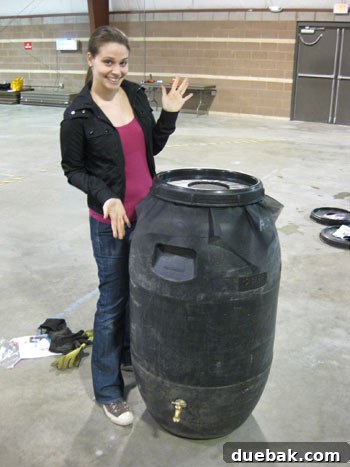
After spotting a rain barrel at Matt & Kristin’s bungalow last fall, Sherry and I were eager to capture and reuse rainwater at our own home. We signed up for a local rain barrel workshop and are sharing what we learned so you can build one yourself.
Why install a rain barrel? Positioned under a downspout, a rain barrel collects runoff you can use for watering gardens and lawns, washing cars, or filling birdbaths and ponds. A 1,000-square-foot roof can yield roughly 600 gallons per inch of rainfall, which adds up fast. Some people even connect barrels to soaker hoses for convenient garden watering—free water for thirsty plants.
Rain barrels are straightforward to assemble, but sourcing a suitable barrel can be the trickiest part. Ready-made barrels often cost $120 or more, so we were excited to find a hands-on workshop that provided tools, instruction, and a 50-gallon food-grade plastic barrel for just $40. Ours had previously shipped olives, which we found amusing.
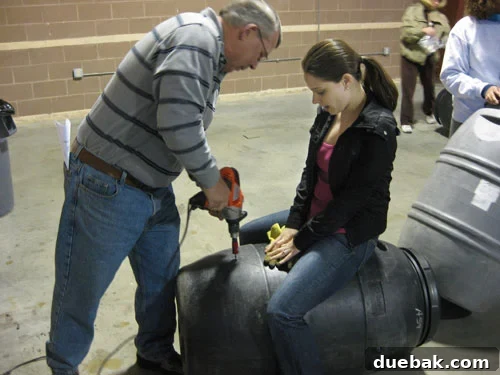
The first task is to drill the faucet hole. Drill it low enough that you can drain most of the water, but leave enough clearance to fit a watering can or hose underneath. At the workshop a volunteer used a drill with a hole saw to cut the opening in under 20 seconds while Sherry sat on the barrel to keep it from rolling.
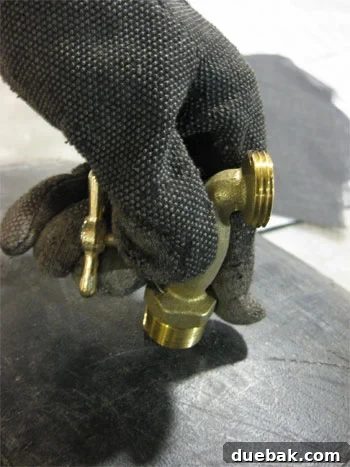
With the barrel on its side, thread the faucet (hose bibb) into the new hole. Screwing the faucet in and back out creates plastic threads that make final installation easier. Apply steady pressure so the threads catch, but avoid forcing the faucet and damaging the plastic.
After removing the faucet, apply a thin bead of caulk around the hole on the outside to form a watertight seal.
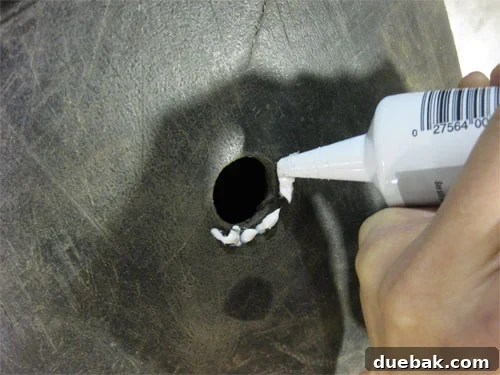
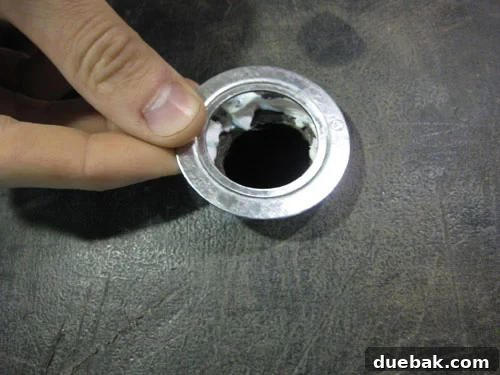
Place a reducing washer over the hole with the washer’s raised inner lip facing the barrel. The caulk acts as an adhesive to hold it in place.
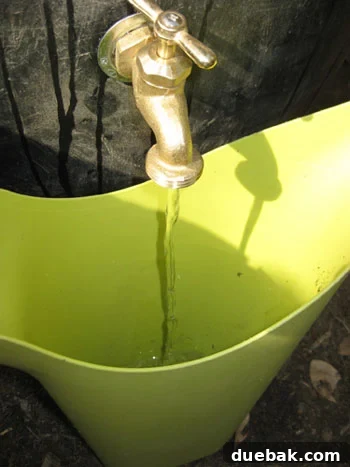
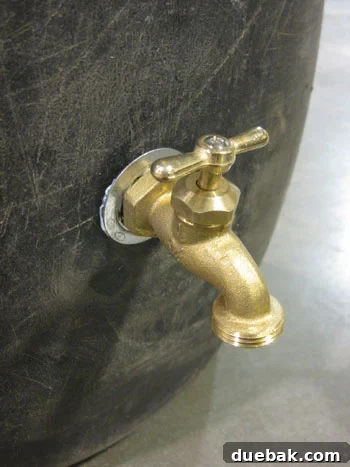
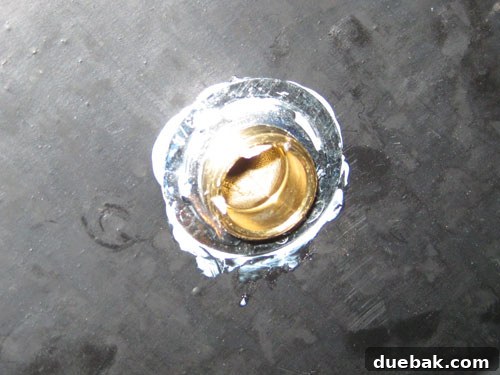
Screw the faucet back in. Because you pre-threaded the opening, this step is much easier. When tightened securely, the faucet will look like this on the outside.
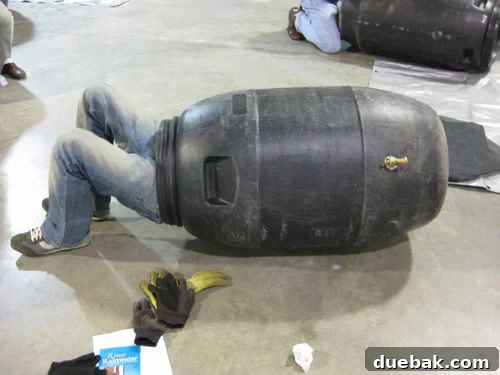
Next, seal the connection from the inside of the barrel. Crawl in (or have a petite helper do it) with the reducing washer, caulk, and a flashlight. Position the washer with caulk and thread a locknut onto the faucet from the inside. Pliers will help get the locknut nice and tight to prevent leaks.
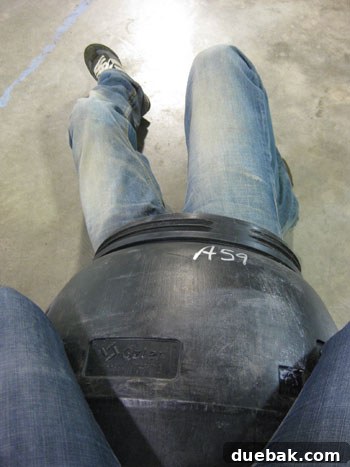
Keep someone sitting on the barrel while you work to prevent it from rolling. We got a few laughs and photos while finishing the inside work, but the important part is a snug, leak-free connection on both sides of the barrel wall.
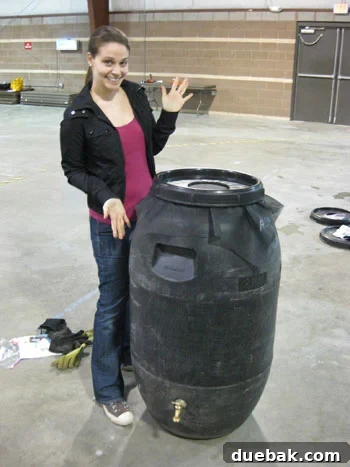
We could have added a rigid nipple near the top as an overflow spout to link multiple barrels, but for now we left overflow to spill over the top. The barrels we received already had 6″ holes in their lids, so we secured a tight mesh screen over the opening to keep mosquitoes and other pests out, then screwed the lid back on.
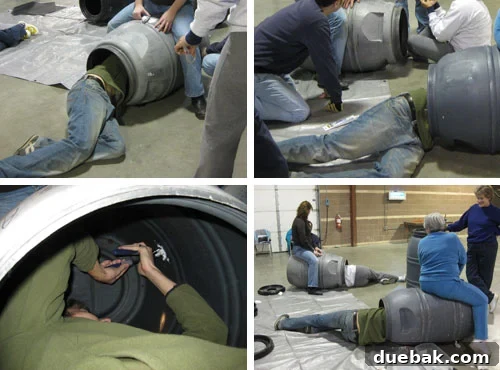
I ended up helping a few others finish their locknuts, which meant more barrel-crawling and more photos. It was a quick way to gain confidence in the final steps.
At home we chose a downspout at the edge of the driveway that’s mostly hidden from view. Rain barrels aren’t exactly high-design features, so we placed ours where it’s convenient for Sherry’s new back garden and less visible from the street.
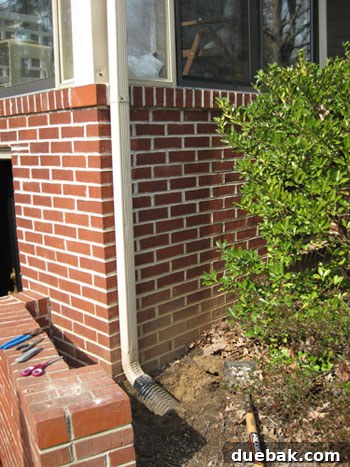
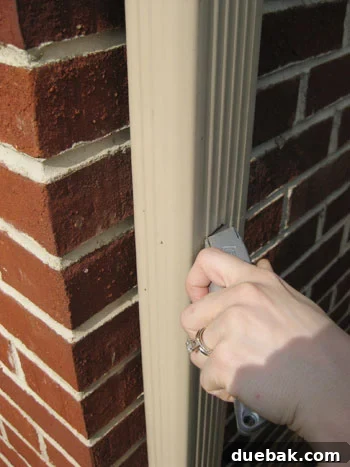
To direct the downspout into the barrel, we adjusted the height of the outlet. We detached the elbow and removed the underground tubing, then trimmed the downspout to the correct length. A box cutter worked fine for a quick cut. Once the end spout was reattached, we slid the barrel into place beneath it.
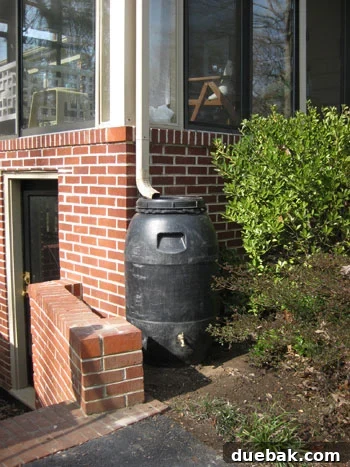
Important safety tip: place the barrel on level, stable ground. A full 50-gallon barrel can weigh around 400–450 pounds, so make sure the surface is even. Use a shovel to level the ground and add sand or pavers if needed to prevent tipping.
We’re looking forward to our first real rain and to seeing how much water the barrel saves. If you already use a rain barrel, we’d love to hear any tips for beginners.